Compare GC-MS vs Raman Spectroscopy for Organic Compounds
SEP 22, 20259 MIN READ
Generate Your Research Report Instantly with AI Agent
Patsnap Eureka helps you evaluate technical feasibility & market potential.
Spectroscopic Analysis Background and Objectives
Spectroscopic analysis techniques have evolved significantly over the past century, with Gas Chromatography-Mass Spectrometry (GC-MS) and Raman Spectroscopy emerging as powerful analytical tools for organic compound identification and characterization. These technologies represent different approaches to molecular analysis, each with distinct historical development paths and underlying physical principles.
GC-MS technology originated in the 1950s when the combination of gas chromatography with mass spectrometry created a powerful hybrid analytical method. This technique has since become a cornerstone in analytical chemistry, particularly for complex organic mixture analysis. The evolution of GC-MS has been marked by continuous improvements in sensitivity, resolution, and data processing capabilities, making it increasingly valuable across multiple industries.
Raman spectroscopy, discovered by C.V. Raman in 1928, has experienced a renaissance in recent decades with the advent of laser technology, advanced detectors, and computational methods. Initially limited by weak signal intensity, modern Raman systems now offer non-destructive, rapid analysis with minimal sample preparation, driving its adoption in pharmaceutical, forensic, and materials science applications.
The technological trajectory of both methods demonstrates a clear trend toward miniaturization, automation, and integration with other analytical techniques. Recent developments include portable GC-MS units for field analysis and handheld Raman spectrometers enabling point-of-need testing, reflecting the industry's movement toward more accessible and versatile analytical solutions.
The primary objective of this technical research is to conduct a comprehensive comparative analysis of GC-MS and Raman spectroscopy for organic compound analysis. This comparison aims to evaluate their respective strengths, limitations, and complementary aspects across various application scenarios, with particular focus on sensitivity thresholds, compound specificity, sample requirements, and operational considerations.
Additionally, this research seeks to identify emerging trends and innovations in both technologies that may influence their future applications. By examining recent advancements such as surface-enhanced Raman spectroscopy (SERS) and novel GC-MS ionization techniques, we aim to forecast how these technologies might evolve to address current analytical challenges in organic compound characterization.
The ultimate goal is to provide strategic insights for technology investment decisions, application-specific method selection, and potential areas for technological integration or hybridization that could overcome the individual limitations of each technique while capitalizing on their respective advantages.
GC-MS technology originated in the 1950s when the combination of gas chromatography with mass spectrometry created a powerful hybrid analytical method. This technique has since become a cornerstone in analytical chemistry, particularly for complex organic mixture analysis. The evolution of GC-MS has been marked by continuous improvements in sensitivity, resolution, and data processing capabilities, making it increasingly valuable across multiple industries.
Raman spectroscopy, discovered by C.V. Raman in 1928, has experienced a renaissance in recent decades with the advent of laser technology, advanced detectors, and computational methods. Initially limited by weak signal intensity, modern Raman systems now offer non-destructive, rapid analysis with minimal sample preparation, driving its adoption in pharmaceutical, forensic, and materials science applications.
The technological trajectory of both methods demonstrates a clear trend toward miniaturization, automation, and integration with other analytical techniques. Recent developments include portable GC-MS units for field analysis and handheld Raman spectrometers enabling point-of-need testing, reflecting the industry's movement toward more accessible and versatile analytical solutions.
The primary objective of this technical research is to conduct a comprehensive comparative analysis of GC-MS and Raman spectroscopy for organic compound analysis. This comparison aims to evaluate their respective strengths, limitations, and complementary aspects across various application scenarios, with particular focus on sensitivity thresholds, compound specificity, sample requirements, and operational considerations.
Additionally, this research seeks to identify emerging trends and innovations in both technologies that may influence their future applications. By examining recent advancements such as surface-enhanced Raman spectroscopy (SERS) and novel GC-MS ionization techniques, we aim to forecast how these technologies might evolve to address current analytical challenges in organic compound characterization.
The ultimate goal is to provide strategic insights for technology investment decisions, application-specific method selection, and potential areas for technological integration or hybridization that could overcome the individual limitations of each technique while capitalizing on their respective advantages.
Market Applications for Organic Compound Analysis
The organic compound analysis market is experiencing robust growth driven by increasing demands across multiple industries. Pharmaceutical and biotechnology sectors represent the largest application segments, where precise identification and quantification of organic compounds are critical for drug discovery, development, and quality control processes. Both GC-MS and Raman spectroscopy play vital roles in these sectors, with GC-MS traditionally dominating complex mixture analysis and Raman gaining traction for non-destructive in-process monitoring.
In the food and beverage industry, organic compound analysis ensures product safety, quality, and authenticity. GC-MS excels in detecting trace contaminants, pesticide residues, and flavor compounds, while Raman spectroscopy offers advantages in rapid on-line quality control and packaging material analysis without sample preparation.
Environmental monitoring represents another significant market application, with regulatory agencies worldwide mandating testing for organic pollutants in air, water, and soil. GC-MS remains the gold standard for environmental analysis due to its sensitivity and ability to identify compounds in complex environmental matrices. Raman spectroscopy is emerging as a complementary field technique for preliminary screening and in-situ analysis.
The petrochemical and polymer industries rely heavily on organic compound analysis for process optimization and quality control. GC-MS provides detailed compositional analysis of petroleum products, while Raman spectroscopy offers unique capabilities for polymer characterization, including crystallinity determination and distribution mapping of components.
Forensic science applications constitute a specialized but growing market segment. GC-MS is extensively used for toxicological screening, drug analysis, and arson investigation, while Raman spectroscopy enables non-destructive analysis of evidence materials, including illicit substances, inks, and explosives.
Academic and research institutions represent a significant market for both technologies, driving innovation in methodologies and applications. The educational sector also contributes to market growth through training programs and research initiatives.
Emerging applications in personalized medicine, metabolomics, and point-of-care diagnostics are expanding the market potential for both technologies. Portable and miniaturized versions of both GC-MS and Raman systems are gaining popularity for field applications, on-site testing, and rapid decision-making scenarios.
The global market for organic compound analysis technologies continues to expand, with regional variations in adoption rates. North America and Europe lead in market share, while Asia-Pacific regions show the fastest growth rates, particularly in pharmaceutical manufacturing and environmental monitoring applications.
In the food and beverage industry, organic compound analysis ensures product safety, quality, and authenticity. GC-MS excels in detecting trace contaminants, pesticide residues, and flavor compounds, while Raman spectroscopy offers advantages in rapid on-line quality control and packaging material analysis without sample preparation.
Environmental monitoring represents another significant market application, with regulatory agencies worldwide mandating testing for organic pollutants in air, water, and soil. GC-MS remains the gold standard for environmental analysis due to its sensitivity and ability to identify compounds in complex environmental matrices. Raman spectroscopy is emerging as a complementary field technique for preliminary screening and in-situ analysis.
The petrochemical and polymer industries rely heavily on organic compound analysis for process optimization and quality control. GC-MS provides detailed compositional analysis of petroleum products, while Raman spectroscopy offers unique capabilities for polymer characterization, including crystallinity determination and distribution mapping of components.
Forensic science applications constitute a specialized but growing market segment. GC-MS is extensively used for toxicological screening, drug analysis, and arson investigation, while Raman spectroscopy enables non-destructive analysis of evidence materials, including illicit substances, inks, and explosives.
Academic and research institutions represent a significant market for both technologies, driving innovation in methodologies and applications. The educational sector also contributes to market growth through training programs and research initiatives.
Emerging applications in personalized medicine, metabolomics, and point-of-care diagnostics are expanding the market potential for both technologies. Portable and miniaturized versions of both GC-MS and Raman systems are gaining popularity for field applications, on-site testing, and rapid decision-making scenarios.
The global market for organic compound analysis technologies continues to expand, with regional variations in adoption rates. North America and Europe lead in market share, while Asia-Pacific regions show the fastest growth rates, particularly in pharmaceutical manufacturing and environmental monitoring applications.
Technical Limitations and Challenges in Spectroscopy
Both GC-MS and Raman spectroscopy face significant technical limitations when analyzing organic compounds. GC-MS encounters challenges with thermally labile compounds that decompose during the high-temperature gas chromatography process, potentially leading to misleading results or complete analysis failure. Additionally, compounds with high molecular weights or low volatility often require derivatization, introducing complexity and potential sources of error.
Sample preparation for GC-MS is time-consuming and requires skilled technicians, with extensive extraction and clean-up procedures necessary to avoid column contamination. The technique also struggles with isomer differentiation unless specialized columns are employed, and quantification accuracy depends heavily on proper calibration and internal standards.
Raman spectroscopy, while offering non-destructive analysis, suffers from inherent sensitivity limitations. The Raman effect is fundamentally weak, with only approximately 1 in 10 million photons undergoing Raman scattering, resulting in poor detection limits compared to GC-MS. This becomes particularly problematic when analyzing trace organic compounds in complex matrices.
Fluorescence interference presents a significant challenge for Raman analysis of organic compounds, as many organic molecules fluoresce when excited by the laser, potentially overwhelming the weaker Raman signal. This often necessitates specialized instrumentation or sample preparation techniques to mitigate this effect.
Sample heating from laser exposure can alter or damage heat-sensitive organic compounds during Raman analysis, compromising data integrity. Furthermore, the technique struggles with mixtures, as overlapping spectral bands from different compounds create interpretation difficulties, especially in complex organic samples.
Instrumentation challenges exist for both technologies. GC-MS systems require regular maintenance, with column degradation and MS detector sensitivity drift affecting long-term stability. Modern Raman systems face trade-offs between resolution, sensitivity, and cost, with high-end systems featuring advanced capabilities like surface-enhanced Raman spectroscopy (SERS) remaining prohibitively expensive for many laboratories.
Data interpretation presents another significant challenge. GC-MS spectral libraries, while extensive, still lack comprehensive coverage of all organic compounds. Raman spectral interpretation requires considerable expertise, particularly for complex organic mixtures where band assignments can be ambiguous.
Recent technological advances are addressing some limitations, with developments in ambient ionization techniques for GC-MS and portable Raman devices expanding application possibilities. However, fundamental physical constraints continue to limit both techniques, necessitating careful consideration of analytical requirements when selecting between these complementary approaches.
Sample preparation for GC-MS is time-consuming and requires skilled technicians, with extensive extraction and clean-up procedures necessary to avoid column contamination. The technique also struggles with isomer differentiation unless specialized columns are employed, and quantification accuracy depends heavily on proper calibration and internal standards.
Raman spectroscopy, while offering non-destructive analysis, suffers from inherent sensitivity limitations. The Raman effect is fundamentally weak, with only approximately 1 in 10 million photons undergoing Raman scattering, resulting in poor detection limits compared to GC-MS. This becomes particularly problematic when analyzing trace organic compounds in complex matrices.
Fluorescence interference presents a significant challenge for Raman analysis of organic compounds, as many organic molecules fluoresce when excited by the laser, potentially overwhelming the weaker Raman signal. This often necessitates specialized instrumentation or sample preparation techniques to mitigate this effect.
Sample heating from laser exposure can alter or damage heat-sensitive organic compounds during Raman analysis, compromising data integrity. Furthermore, the technique struggles with mixtures, as overlapping spectral bands from different compounds create interpretation difficulties, especially in complex organic samples.
Instrumentation challenges exist for both technologies. GC-MS systems require regular maintenance, with column degradation and MS detector sensitivity drift affecting long-term stability. Modern Raman systems face trade-offs between resolution, sensitivity, and cost, with high-end systems featuring advanced capabilities like surface-enhanced Raman spectroscopy (SERS) remaining prohibitively expensive for many laboratories.
Data interpretation presents another significant challenge. GC-MS spectral libraries, while extensive, still lack comprehensive coverage of all organic compounds. Raman spectral interpretation requires considerable expertise, particularly for complex organic mixtures where band assignments can be ambiguous.
Recent technological advances are addressing some limitations, with developments in ambient ionization techniques for GC-MS and portable Raman devices expanding application possibilities. However, fundamental physical constraints continue to limit both techniques, necessitating careful consideration of analytical requirements when selecting between these complementary approaches.
Current GC-MS and Raman Spectroscopy Solutions
01 Combined GC-MS and Raman spectroscopy systems for enhanced analysis
Integration of Gas Chromatography-Mass Spectrometry (GC-MS) with Raman spectroscopy creates powerful analytical platforms that provide complementary data. These combined systems enable more comprehensive chemical characterization by leveraging the molecular identification capabilities of GC-MS with the structural information from Raman spectroscopy. Such integrated approaches improve detection sensitivity, specificity, and can analyze complex mixtures with minimal sample preparation.- Combined GC-MS and Raman spectroscopy systems for enhanced analysis: Integration of Gas Chromatography-Mass Spectrometry (GC-MS) with Raman spectroscopy creates powerful analytical platforms that provide complementary data. These combined systems offer both molecular identification capabilities of GC-MS and structural information from Raman spectroscopy, enabling more comprehensive sample characterization. The integration allows for detection of trace compounds while simultaneously analyzing molecular structures, significantly improving analytical capabilities across various scientific fields.
- Portable and field-deployable spectroscopic analysis systems: Advancements in miniaturization have led to the development of portable GC-MS and Raman spectroscopy instruments that can be deployed in field settings. These systems enable on-site analysis without sample transportation to laboratories, providing real-time results for environmental monitoring, forensic investigations, and industrial quality control. Portable systems typically incorporate ruggedized components, battery operation, and simplified interfaces while maintaining sufficient analytical sensitivity and specificity for field applications.
- Data processing and analysis algorithms for spectroscopic data: Sophisticated algorithms and software solutions have been developed to process and interpret complex data generated by GC-MS and Raman spectroscopy. These computational methods include machine learning approaches, multivariate statistical analysis, and automated peak identification systems that enhance the accuracy of compound identification and quantification. Advanced data processing techniques allow for the detection of subtle spectral differences, removal of background noise, and improved analysis of complex mixtures with overlapping signals.
- Applications in biomedical and pharmaceutical analysis: GC-MS and Raman spectroscopy are increasingly applied in biomedical research and pharmaceutical development for analyzing biological samples, drug formulations, and metabolites. These techniques enable the identification of biomarkers for disease diagnosis, quality control of pharmaceutical products, and monitoring of drug metabolism. The non-destructive nature of Raman spectroscopy is particularly valuable for analyzing biological tissues and cells, while GC-MS provides high sensitivity for detecting trace compounds in complex biological matrices.
- Environmental and industrial monitoring applications: GC-MS and Raman spectroscopy technologies are widely used for environmental monitoring and industrial process control. These analytical methods enable detection and quantification of pollutants in air, water, and soil samples, as well as quality control in manufacturing processes. The techniques allow for real-time monitoring of chemical processes, detection of contaminants at trace levels, and characterization of complex environmental samples. Applications include monitoring of industrial emissions, water quality assessment, and detection of hazardous substances in various matrices.
02 Portable and miniaturized spectroscopic devices
Advancements in miniaturization technology have led to the development of portable GC-MS and Raman spectroscopy devices. These compact instruments enable on-site analysis in various fields including environmental monitoring, forensics, and industrial quality control. Portable systems typically incorporate microfluidic components, miniaturized lasers, and specialized detectors to maintain analytical performance while reducing size, weight, and power requirements.Expand Specific Solutions03 Data processing and analysis algorithms for spectroscopic data
Sophisticated algorithms and computational methods have been developed to process and interpret complex data from GC-MS and Raman spectroscopy. These include machine learning approaches, multivariate statistical analysis, and chemometric techniques that enhance the extraction of meaningful information from spectral data. Advanced software solutions enable automated peak identification, background subtraction, and can correlate results across multiple analytical techniques for more accurate compound identification.Expand Specific Solutions04 Application-specific spectroscopic methods for biological and pharmaceutical analysis
Specialized GC-MS and Raman spectroscopy methods have been developed for biological sample analysis and pharmaceutical applications. These techniques are optimized for detecting biomarkers, analyzing metabolites, characterizing drug formulations, and monitoring biological processes. Modified sampling interfaces, specialized sample preparation protocols, and targeted detection methods enhance sensitivity for specific compounds of interest in complex biological matrices.Expand Specific Solutions05 Real-time monitoring and in-situ analysis capabilities
Advanced GC-MS and Raman spectroscopy systems enable real-time monitoring and in-situ analysis of chemical processes. These technologies incorporate continuous sampling mechanisms, rapid data acquisition, and automated analysis workflows to provide immediate feedback on chemical compositions and reactions. Applications include industrial process monitoring, environmental surveillance, and reaction kinetics studies where temporal resolution is critical for understanding dynamic chemical systems.Expand Specific Solutions
Leading Manufacturers and Research Institutions
The GC-MS vs Raman Spectroscopy market for organic compound analysis is in a mature growth phase, with an estimated global market size exceeding $5 billion. GC-MS technology demonstrates higher maturity, dominated by established players like Shimadzu, Agilent Technologies, and Waters Technology, who offer comprehensive analytical solutions with advanced data processing capabilities. Raman spectroscopy represents a growing segment with increasing adoption due to its non-destructive and real-time analysis capabilities, with companies like Thermo Fisher Scientific and Horiba leading innovation. Academic institutions including Zhejiang University and California Institute of Technology are driving next-generation applications through research partnerships with industry leaders like LG Chem and Hitachi, focusing on miniaturization, portability, and AI-enhanced data interpretation to expand market applications.
Shimadzu Corp.
Technical Solution: Shimadzu Corporation has pioneered integrated GC-MS solutions with their GCMS-TQ series featuring triple quadrupole technology that achieves femtogram-level sensitivity for targeted organic compound analysis. Their Smart MRM technology automatically optimizes multiple reaction monitoring parameters, reducing method development time by up to 80%. For complex matrices, Shimadzu's Advanced Flow Technology provides multidimensional GC separation capabilities, significantly enhancing peak capacity and compound identification. In the Raman spectroscopy domain, Shimadzu offers the IRTracer-100 and IRSpirit systems with patented LabSolutions IR software that includes extensive spectral libraries containing over 12,000 organic compound references. Their Raman systems incorporate Dynamically Aligned interferometers that maintain optical alignment automatically, achieving signal-to-noise ratios up to 60,000:1. Shimadzu has also developed hybrid approaches combining chromatographic separation with spectroscopic detection, allowing complementary data acquisition from a single sample, particularly valuable for complex organic mixture analysis.
Shimadzu's strength is their comprehensive approach to analytical instrumentation, offering both GC-MS and Raman technologies with high sensitivity and reliability. Their systems feature exceptional automation capabilities that reduce operator intervention and improve reproducibility. The main weakness is that their Raman offerings, while high-quality, don't have the same market penetration as their GC-MS systems, potentially limiting application-specific development for specialized organic compound analysis compared to Raman-focused competitors.
Hitachi Ltd.
Technical Solution: Hitachi has developed the ChromasterUltra RS integrated analytical platform that combines chromatography with spectroscopic techniques for comprehensive organic compound analysis. Their GC-MS systems feature proprietary Cold-Trap technology that improves volatile organic compound recovery by up to 95% compared to conventional systems. Hitachi's AccuTOF GC-MS systems utilize Direct Analysis in Real Time (DART) ionization, enabling rapid analysis of organic compounds without sample preparation, reducing analysis time from hours to minutes. For Raman applications, Hitachi offers the Ramascope 1000 with their patented Spatial Offset Raman Spectroscopy (SORS) technology that can analyze organic compounds through packaging materials and containers with up to 8mm thickness. Their systems incorporate advanced chemometric software that automatically identifies spectral patterns in complex mixtures, achieving identification accuracy rates of over 95% for common organic compounds. Hitachi has also pioneered miniaturized Raman systems for field deployment that maintain 85% of the analytical capability of laboratory systems while reducing instrument footprint by 70%.
Hitachi's strength lies in their integration of multiple analytical technologies into unified platforms, allowing complementary data collection that enhances identification confidence. Their systems feature exceptional automation and miniaturization capabilities suitable for both laboratory and field applications. The primary weakness is their more limited presence in the Western analytical instrument market compared to competitors like Agilent and Shimadzu, resulting in potentially less comprehensive application support in certain regions.
Key Technologies and Patents in Spectroscopic Analysis
Method and system for filtering gas chromatography-mass spectrometry data
PatentWO2013144790A1
Innovation
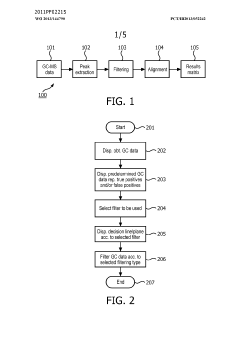
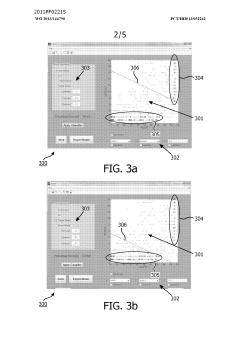
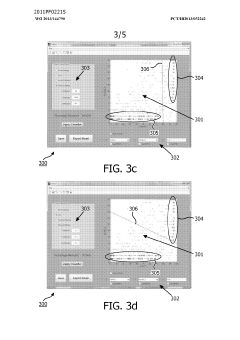
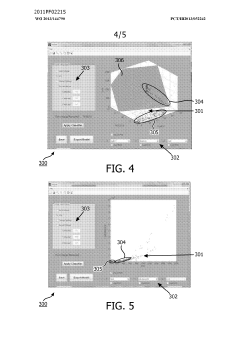
- A method and system for filtering GC-MS data that distinguishes between true and false positives, allowing users to visually select filtering methods based on predetermined data structures and decision lines or planes, reducing data noise and improving processing efficiency.
Method for preparing organic electronic device
PatentActiveUS20210028394A1
Innovation
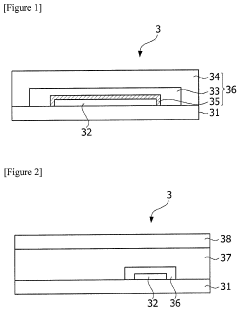
- A method involving the formation of a sealing film using a photocurable ink composition applied on an organic electronic element, which undergoes heat treatment and UV curing to minimize out-gas and enhance film flatness, utilizing a specific composition including epoxy compounds and oxetane groups for improved adhesion and moisture barrier properties.
Cost-Benefit Analysis of Competing Technologies
When evaluating GC-MS and Raman spectroscopy for organic compound analysis, cost-benefit considerations are crucial for organizational decision-making. The initial investment for GC-MS systems typically ranges from $50,000 to $150,000, while Raman spectrometers generally cost between $20,000 and $100,000, making Raman potentially more accessible for smaller laboratories or organizations with limited capital budgets.
Operational costs present significant differences between these technologies. GC-MS requires carrier gases (helium or hydrogen), which represent ongoing expenses, particularly with recent helium shortages driving prices upward. Additionally, GC-MS columns need periodic replacement (every 100-200 analyses), adding approximately $300-800 per replacement to maintenance costs. Conversely, Raman spectroscopy has minimal consumable requirements, resulting in lower recurring operational expenses.
Sample preparation efficiency favors Raman spectroscopy, which often requires minimal or no sample preparation and can analyze samples directly through containers, reducing labor costs and analysis time. GC-MS typically demands extensive sample preparation including extraction, derivatization, and concentration steps, requiring skilled technicians and increasing per-sample costs by an estimated 30-50%.
Training requirements and personnel expertise represent another significant cost factor. GC-MS operation demands specialized training and often requires dedicated technicians with analytical chemistry backgrounds, commanding higher salaries. Raman systems, particularly newer models with user-friendly interfaces, require less specialized training, potentially reducing personnel costs by 15-25%.
Time-to-result considerations reveal that while GC-MS analysis typically takes 20-60 minutes per sample, Raman spectroscopy can deliver results in seconds to minutes, significantly improving laboratory throughput and efficiency. This time advantage translates to higher sample processing capacity and potentially greater revenue generation.
Maintenance requirements favor Raman spectroscopy, which typically requires annual calibration and occasional laser replacement. GC-MS systems demand more frequent maintenance, including detector cleaning, vacuum system maintenance, and electronic component servicing, resulting in higher downtime and service contract costs (approximately $5,000-15,000 annually).
Return on investment calculations indicate that while GC-MS may provide superior analytical capabilities for complex mixtures, Raman spectroscopy often delivers faster ROI through lower operational costs, higher throughput, and reduced downtime, particularly for applications requiring rapid, non-destructive analysis of relatively pure compounds or known substance verification.
Operational costs present significant differences between these technologies. GC-MS requires carrier gases (helium or hydrogen), which represent ongoing expenses, particularly with recent helium shortages driving prices upward. Additionally, GC-MS columns need periodic replacement (every 100-200 analyses), adding approximately $300-800 per replacement to maintenance costs. Conversely, Raman spectroscopy has minimal consumable requirements, resulting in lower recurring operational expenses.
Sample preparation efficiency favors Raman spectroscopy, which often requires minimal or no sample preparation and can analyze samples directly through containers, reducing labor costs and analysis time. GC-MS typically demands extensive sample preparation including extraction, derivatization, and concentration steps, requiring skilled technicians and increasing per-sample costs by an estimated 30-50%.
Training requirements and personnel expertise represent another significant cost factor. GC-MS operation demands specialized training and often requires dedicated technicians with analytical chemistry backgrounds, commanding higher salaries. Raman systems, particularly newer models with user-friendly interfaces, require less specialized training, potentially reducing personnel costs by 15-25%.
Time-to-result considerations reveal that while GC-MS analysis typically takes 20-60 minutes per sample, Raman spectroscopy can deliver results in seconds to minutes, significantly improving laboratory throughput and efficiency. This time advantage translates to higher sample processing capacity and potentially greater revenue generation.
Maintenance requirements favor Raman spectroscopy, which typically requires annual calibration and occasional laser replacement. GC-MS systems demand more frequent maintenance, including detector cleaning, vacuum system maintenance, and electronic component servicing, resulting in higher downtime and service contract costs (approximately $5,000-15,000 annually).
Return on investment calculations indicate that while GC-MS may provide superior analytical capabilities for complex mixtures, Raman spectroscopy often delivers faster ROI through lower operational costs, higher throughput, and reduced downtime, particularly for applications requiring rapid, non-destructive analysis of relatively pure compounds or known substance verification.
Environmental Impact and Sustainability Considerations
When comparing GC-MS and Raman spectroscopy for organic compound analysis, environmental impact and sustainability considerations play an increasingly critical role in analytical method selection. GC-MS systems typically consume significant electrical power during operation, with instruments requiring continuous energy for maintaining high temperatures in the GC oven and powering the mass spectrometer components. Additionally, GC-MS analysis necessitates the use of carrier gases such as helium, which is facing global supply challenges and price increases due to its non-renewable nature.
The solvent consumption in GC-MS represents another substantial environmental concern. Sample preparation often requires organic solvents like hexane, acetone, and dichloromethane, many of which are classified as volatile organic compounds (VOCs) that contribute to air pollution and pose potential health risks to laboratory personnel. The disposal of these solvents further compounds environmental issues, requiring specialized waste management protocols.
In contrast, Raman spectroscopy offers several environmental advantages. The technique generally consumes less energy than GC-MS, with modern portable Raman devices designed for low power consumption. Most significantly, Raman analysis typically requires minimal or no sample preparation and operates without consumable solvents or gases, substantially reducing the chemical waste footprint associated with analytical procedures.
The lifecycle assessment of both technologies reveals important distinctions. GC-MS instruments contain numerous electronic components and specialized materials that present end-of-life disposal challenges. Conversely, Raman spectrometers, while still containing electronic components, generally incorporate fewer hazardous materials and may offer longer operational lifespans with proper maintenance.
Recent sustainability innovations are addressing these environmental concerns. For GC-MS, developments include more energy-efficient systems, alternative carrier gases like hydrogen or nitrogen to replace helium, and greener extraction techniques that minimize solvent use. In the Raman field, advancements focus on more energy-efficient lasers, miniaturized portable devices with reduced material requirements, and improved algorithms that enhance sensitivity without increasing power demands.
Laboratory sustainability certifications increasingly recognize these differences, with points awarded for reduced solvent use, energy efficiency, and minimized waste generation. Organizations implementing green chemistry principles are increasingly evaluating analytical methods not only on performance metrics but also on their environmental impact, creating a growing market advantage for more sustainable analytical approaches like Raman spectroscopy in appropriate applications.
The solvent consumption in GC-MS represents another substantial environmental concern. Sample preparation often requires organic solvents like hexane, acetone, and dichloromethane, many of which are classified as volatile organic compounds (VOCs) that contribute to air pollution and pose potential health risks to laboratory personnel. The disposal of these solvents further compounds environmental issues, requiring specialized waste management protocols.
In contrast, Raman spectroscopy offers several environmental advantages. The technique generally consumes less energy than GC-MS, with modern portable Raman devices designed for low power consumption. Most significantly, Raman analysis typically requires minimal or no sample preparation and operates without consumable solvents or gases, substantially reducing the chemical waste footprint associated with analytical procedures.
The lifecycle assessment of both technologies reveals important distinctions. GC-MS instruments contain numerous electronic components and specialized materials that present end-of-life disposal challenges. Conversely, Raman spectrometers, while still containing electronic components, generally incorporate fewer hazardous materials and may offer longer operational lifespans with proper maintenance.
Recent sustainability innovations are addressing these environmental concerns. For GC-MS, developments include more energy-efficient systems, alternative carrier gases like hydrogen or nitrogen to replace helium, and greener extraction techniques that minimize solvent use. In the Raman field, advancements focus on more energy-efficient lasers, miniaturized portable devices with reduced material requirements, and improved algorithms that enhance sensitivity without increasing power demands.
Laboratory sustainability certifications increasingly recognize these differences, with points awarded for reduced solvent use, energy efficiency, and minimized waste generation. Organizations implementing green chemistry principles are increasingly evaluating analytical methods not only on performance metrics but also on their environmental impact, creating a growing market advantage for more sustainable analytical approaches like Raman spectroscopy in appropriate applications.
Unlock deeper insights with Patsnap Eureka Quick Research — get a full tech report to explore trends and direct your research. Try now!
Generate Your Research Report Instantly with AI Agent
Supercharge your innovation with Patsnap Eureka AI Agent Platform!