

Compare Hydrodynamic Lubrication vs Ester by flash temp margin (°C)
MAY 7, 20269 MIN READ
Generate Your Research Report Instantly with AI Agent
PatSnap Eureka helps you evaluate technical feasibility & market potential.
Hydrodynamic Lubrication and Ester Flash Temperature Background
Hydrodynamic lubrication represents a fundamental tribological mechanism where two surfaces in relative motion are completely separated by a continuous fluid film. This lubrication regime occurs when the lubricant film thickness exceeds the combined surface roughness of the contacting bodies, effectively preventing direct metal-to-metal contact. The phenomenon relies on the hydrodynamic pressure generated within the lubricant film due to the wedge effect created by converging surfaces and relative motion.
The development of hydrodynamic lubrication theory traces back to Osborne Reynolds' groundbreaking work in 1886, establishing the mathematical foundation through the Reynolds equation. This theoretical framework describes the pressure distribution in thin fluid films and has become the cornerstone for understanding fluid film lubrication mechanisms. Over the subsequent decades, researchers expanded this theory to encompass various geometries and operating conditions, leading to practical applications in journal bearings, thrust bearings, and other mechanical systems.
Ester-based lubricants emerged as a significant advancement in synthetic lubricant technology during the mid-20th century. These synthetic compounds, derived from organic acids and alcohols, were initially developed to address the limitations of mineral oils in extreme operating conditions. Esters exhibit superior thermal stability, oxidation resistance, and biodegradability compared to conventional petroleum-based lubricants, making them particularly valuable in aerospace, automotive, and industrial applications.
Flash temperature represents a critical parameter in lubrication analysis, defined as the instantaneous temperature rise at the contact interface due to frictional heating. This localized temperature spike occurs when asperity contact generates heat faster than it can be dissipated through conduction. The flash temperature margin, measured in degrees Celsius, indicates the safety buffer between the actual flash temperature and the lubricant's thermal degradation threshold.
The relationship between hydrodynamic lubrication and flash temperature is inversely proportional. Effective hydrodynamic lubrication minimizes direct surface contact, thereby reducing frictional heat generation and maintaining lower flash temperatures. Conversely, breakdown of the hydrodynamic film leads to increased asperity contact, elevated friction coefficients, and higher flash temperatures that can compromise lubricant integrity and component durability.
Understanding flash temperature margins becomes crucial when comparing different lubricant types and lubrication regimes, as it directly impacts system reliability, maintenance intervals, and operational safety limits in high-performance mechanical systems.
The development of hydrodynamic lubrication theory traces back to Osborne Reynolds' groundbreaking work in 1886, establishing the mathematical foundation through the Reynolds equation. This theoretical framework describes the pressure distribution in thin fluid films and has become the cornerstone for understanding fluid film lubrication mechanisms. Over the subsequent decades, researchers expanded this theory to encompass various geometries and operating conditions, leading to practical applications in journal bearings, thrust bearings, and other mechanical systems.
Ester-based lubricants emerged as a significant advancement in synthetic lubricant technology during the mid-20th century. These synthetic compounds, derived from organic acids and alcohols, were initially developed to address the limitations of mineral oils in extreme operating conditions. Esters exhibit superior thermal stability, oxidation resistance, and biodegradability compared to conventional petroleum-based lubricants, making them particularly valuable in aerospace, automotive, and industrial applications.
Flash temperature represents a critical parameter in lubrication analysis, defined as the instantaneous temperature rise at the contact interface due to frictional heating. This localized temperature spike occurs when asperity contact generates heat faster than it can be dissipated through conduction. The flash temperature margin, measured in degrees Celsius, indicates the safety buffer between the actual flash temperature and the lubricant's thermal degradation threshold.
The relationship between hydrodynamic lubrication and flash temperature is inversely proportional. Effective hydrodynamic lubrication minimizes direct surface contact, thereby reducing frictional heat generation and maintaining lower flash temperatures. Conversely, breakdown of the hydrodynamic film leads to increased asperity contact, elevated friction coefficients, and higher flash temperatures that can compromise lubricant integrity and component durability.
Understanding flash temperature margins becomes crucial when comparing different lubricant types and lubrication regimes, as it directly impacts system reliability, maintenance intervals, and operational safety limits in high-performance mechanical systems.
Market Demand for High-Temperature Lubrication Solutions
The global high-temperature lubrication market is experiencing unprecedented growth driven by increasingly demanding industrial applications that require superior thermal stability and performance reliability. Industries such as aerospace, automotive manufacturing, steel production, and chemical processing are pushing operational temperatures beyond traditional limits, creating substantial demand for advanced lubrication solutions that can maintain effectiveness under extreme thermal conditions.
Aerospace applications represent one of the most critical market segments, where jet engines and auxiliary power units operate at temperatures exceeding 200°C. The stringent requirements for flash temperature margins in these applications have intensified the need for specialized lubricants that can withstand thermal stress while maintaining consistent performance characteristics. Similarly, the automotive sector's transition toward high-performance engines and electric vehicle components has created new thermal management challenges requiring innovative lubrication approaches.
Industrial manufacturing processes, particularly in steel and aluminum production, generate extreme operating conditions where conventional lubricants fail rapidly. These environments demand solutions with superior flash temperature characteristics to prevent thermal breakdown and ensure continuous operation. The comparison between hydrodynamic lubrication systems and ester-based formulations has become particularly relevant as manufacturers seek optimal thermal performance margins.
The renewable energy sector has emerged as a significant growth driver, with wind turbine gearboxes and concentrated solar power systems requiring lubricants capable of operating across wide temperature ranges. These applications often experience thermal cycling that challenges traditional lubrication approaches, creating opportunities for advanced formulations with enhanced thermal stability.
Market research indicates strong demand growth in emerging economies where industrial expansion is accelerating. Countries investing heavily in manufacturing infrastructure are increasingly adopting high-temperature processes that require sophisticated lubrication solutions. This geographic expansion is complemented by technological advancement requirements in developed markets, where efficiency optimization and environmental regulations drive the adoption of high-performance lubricants.
The marine industry presents another substantial market opportunity, particularly for deep-sea drilling operations and high-speed marine engines where thermal management becomes critical for operational reliability. These applications require lubricants with exceptional flash temperature margins to ensure safe and efficient operation under challenging conditions.
Aerospace applications represent one of the most critical market segments, where jet engines and auxiliary power units operate at temperatures exceeding 200°C. The stringent requirements for flash temperature margins in these applications have intensified the need for specialized lubricants that can withstand thermal stress while maintaining consistent performance characteristics. Similarly, the automotive sector's transition toward high-performance engines and electric vehicle components has created new thermal management challenges requiring innovative lubrication approaches.
Industrial manufacturing processes, particularly in steel and aluminum production, generate extreme operating conditions where conventional lubricants fail rapidly. These environments demand solutions with superior flash temperature characteristics to prevent thermal breakdown and ensure continuous operation. The comparison between hydrodynamic lubrication systems and ester-based formulations has become particularly relevant as manufacturers seek optimal thermal performance margins.
The renewable energy sector has emerged as a significant growth driver, with wind turbine gearboxes and concentrated solar power systems requiring lubricants capable of operating across wide temperature ranges. These applications often experience thermal cycling that challenges traditional lubrication approaches, creating opportunities for advanced formulations with enhanced thermal stability.
Market research indicates strong demand growth in emerging economies where industrial expansion is accelerating. Countries investing heavily in manufacturing infrastructure are increasingly adopting high-temperature processes that require sophisticated lubrication solutions. This geographic expansion is complemented by technological advancement requirements in developed markets, where efficiency optimization and environmental regulations drive the adoption of high-performance lubricants.
The marine industry presents another substantial market opportunity, particularly for deep-sea drilling operations and high-speed marine engines where thermal management becomes critical for operational reliability. These applications require lubricants with exceptional flash temperature margins to ensure safe and efficient operation under challenging conditions.
Current Flash Temperature Performance and Thermal Challenges
Current flash temperature performance in lubrication systems represents a critical thermal limitation that directly impacts operational reliability and component longevity. Flash temperature occurs at the contact interface between moving surfaces, where localized heating can cause lubricant degradation, film breakdown, and potential component failure. This phenomenon is particularly pronounced in high-load, high-speed applications where the combination of friction and inadequate heat dissipation creates thermal hotspots.
Hydrodynamic lubrication systems typically demonstrate flash temperature margins ranging from 150°C to 200°C above ambient operating conditions. The thick fluid film characteristic of hydrodynamic lubrication provides substantial thermal buffering, allowing heat generated at the contact interface to dissipate through the lubricant bulk volume. However, this advantage diminishes under extreme loading conditions where film thickness reduces and direct asperity contact becomes more frequent.
Ester-based lubricants exhibit superior thermal stability with flash temperature margins extending from 180°C to 250°C, representing a significant improvement over conventional mineral oil formulations. The molecular structure of synthetic esters provides enhanced thermal resistance, maintaining lubricating properties at elevated temperatures where traditional lubricants would decompose. This thermal advantage translates to improved safety margins in critical applications.
The primary thermal challenge facing both lubrication approaches involves heat generation rates exceeding dissipation capacity. In hydrodynamic systems, inadequate oil flow rates or compromised circulation can lead to thermal accumulation, while ester lubricants face challenges related to oxidation stability and additive package degradation at sustained high temperatures. Thermal management becomes increasingly complex as operating speeds and loads continue to increase in modern machinery.
Contemporary thermal challenges also encompass the interaction between lubricant thermal properties and system design constraints. Space limitations in modern equipment often restrict cooling system capacity, placing greater demands on lubricant thermal performance. Additionally, environmental regulations driving toward bio-based and environmentally acceptable lubricants introduce new thermal stability considerations that must be balanced against performance requirements.
The measurement and prediction of flash temperatures remain technically challenging, requiring sophisticated modeling approaches that account for local heat generation, thermal conductivity variations, and dynamic loading conditions. Current analytical methods often rely on simplified assumptions that may not accurately reflect real-world operating conditions, particularly in applications with variable loading or transient thermal events.
Hydrodynamic lubrication systems typically demonstrate flash temperature margins ranging from 150°C to 200°C above ambient operating conditions. The thick fluid film characteristic of hydrodynamic lubrication provides substantial thermal buffering, allowing heat generated at the contact interface to dissipate through the lubricant bulk volume. However, this advantage diminishes under extreme loading conditions where film thickness reduces and direct asperity contact becomes more frequent.
Ester-based lubricants exhibit superior thermal stability with flash temperature margins extending from 180°C to 250°C, representing a significant improvement over conventional mineral oil formulations. The molecular structure of synthetic esters provides enhanced thermal resistance, maintaining lubricating properties at elevated temperatures where traditional lubricants would decompose. This thermal advantage translates to improved safety margins in critical applications.
The primary thermal challenge facing both lubrication approaches involves heat generation rates exceeding dissipation capacity. In hydrodynamic systems, inadequate oil flow rates or compromised circulation can lead to thermal accumulation, while ester lubricants face challenges related to oxidation stability and additive package degradation at sustained high temperatures. Thermal management becomes increasingly complex as operating speeds and loads continue to increase in modern machinery.
Contemporary thermal challenges also encompass the interaction between lubricant thermal properties and system design constraints. Space limitations in modern equipment often restrict cooling system capacity, placing greater demands on lubricant thermal performance. Additionally, environmental regulations driving toward bio-based and environmentally acceptable lubricants introduce new thermal stability considerations that must be balanced against performance requirements.
The measurement and prediction of flash temperatures remain technically challenging, requiring sophisticated modeling approaches that account for local heat generation, thermal conductivity variations, and dynamic loading conditions. Current analytical methods often rely on simplified assumptions that may not accurately reflect real-world operating conditions, particularly in applications with variable loading or transient thermal events.
Existing Flash Temperature Measurement and Comparison Methods
01 Ester-based lubricant compositions for high temperature applications
Ester-based lubricants are formulated with specific chemical structures to provide enhanced thermal stability and higher flash temperature margins. These compositions utilize synthetic esters that maintain their lubricating properties at elevated temperatures while providing superior oxidation resistance. The molecular design of these esters allows for better thermal decomposition resistance, making them suitable for demanding hydrodynamic lubrication applications where temperature control is critical.- Ester-based lubricant compositions for high temperature applications: Ester-based lubricants are formulated to provide enhanced thermal stability and improved flash temperature margins in hydrodynamic lubrication systems. These compositions utilize synthetic esters that maintain their lubricating properties at elevated temperatures while providing superior oxidation resistance and thermal degradation protection compared to conventional mineral oils.
- Temperature monitoring and control systems for lubrication: Advanced monitoring systems are employed to track temperature variations and flash point margins in hydrodynamic lubrication applications. These systems incorporate sensors and control mechanisms to maintain optimal operating temperatures and prevent thermal breakdown of lubricants, ensuring consistent performance and extended service life.
- Additive packages for enhanced thermal performance: Specialized additive formulations are developed to improve the flash temperature characteristics and thermal stability of ester-based lubricants. These additives include antioxidants, thermal stabilizers, and performance enhancers that work synergistically to extend the operational temperature range and improve the safety margins of lubrication systems.
- Hydrodynamic bearing design optimization: Engineering approaches focus on optimizing bearing geometries and surface treatments to maximize hydrodynamic lubrication efficiency while managing heat generation. These designs incorporate features that promote better heat dissipation and maintain adequate lubricant film thickness even at elevated operating temperatures, thereby improving flash temperature margins.
- Testing methodologies for flash temperature evaluation: Standardized testing protocols and equipment are developed to accurately measure and evaluate flash temperature characteristics of ester-based lubricants under hydrodynamic conditions. These methodologies provide reliable data for determining safety margins and optimizing lubricant formulations for specific high-temperature applications.
02 Flash temperature measurement and control systems
Advanced monitoring and control systems are developed to measure and manage flash temperatures in hydrodynamic lubrication systems. These systems incorporate sensors and feedback mechanisms to continuously monitor temperature margins and prevent thermal breakdown of lubricants. The technology includes real-time temperature sensing, predictive algorithms, and automated adjustment capabilities to maintain optimal operating conditions and extend lubricant life.Expand Specific Solutions03 Hydrodynamic bearing design optimization
Specialized bearing designs and geometries are engineered to enhance hydrodynamic lubrication performance while managing thermal loads. These designs focus on optimizing fluid film thickness, pressure distribution, and heat dissipation to maintain adequate temperature margins. The bearing configurations incorporate features such as grooves, pockets, and surface texturing to improve lubricant flow patterns and thermal management.Expand Specific Solutions04 Additive packages for thermal stability enhancement
Specialized additive formulations are developed to improve the thermal stability and flash temperature characteristics of ester-based lubricants. These additives include antioxidants, thermal stabilizers, and anti-wear agents that work synergistically to extend the operational temperature range. The additive packages are designed to maintain lubricant integrity under high thermal stress conditions while preserving hydrodynamic film formation properties.Expand Specific Solutions05 Temperature monitoring and lubrication system integration
Integrated lubrication systems combine temperature monitoring capabilities with automated lubricant management to maintain optimal flash temperature margins. These systems feature advanced control algorithms that adjust lubricant flow rates, cooling mechanisms, and operating parameters based on real-time temperature feedback. The integration ensures consistent hydrodynamic lubrication performance while preventing thermal degradation of ester-based lubricants.Expand Specific Solutions
Key Players in Lubrication and Ester Manufacturing Industry
The lubrication technology sector comparing hydrodynamic lubrication versus ester-based solutions by flash temperature margin represents a mature industrial market experiencing steady technological evolution. Major petroleum giants like ExxonMobil Technology & Engineering and China Petroleum & Chemical Corp. dominate traditional hydrodynamic lubrication technologies, leveraging decades of refining expertise and extensive distribution networks. Meanwhile, specialty chemical companies including DuPont de Nemours, Solvay SA, and Dow Global Technologies are advancing ester-based formulations with superior thermal stability and flash temperature performance. Asian players such as Idemitsu Kosan and Asahi Kasei Corp. contribute significant innovation in synthetic lubricant chemistry. The technology maturity varies significantly between conventional mineral-based hydrodynamic systems, which are well-established, and advanced ester formulations that continue evolving through materials science breakthroughs, creating competitive differentiation opportunities in high-temperature applications.
ExxonMobil Technology & Engineering Co.
Technical Solution: ExxonMobil has developed advanced synthetic lubricant formulations that optimize flash temperature margins through molecular engineering. Their technology focuses on creating base oils with enhanced thermal stability, typically achieving flash temperature margins of 15-25°C above conventional mineral oils. The company's approach involves precision-controlled hydrocracking processes to produce Group III+ base oils with superior oxidation resistance and thermal properties. Their ester-based synthetic lubricants incorporate specially designed molecular structures that maintain viscosity stability at elevated temperatures while providing flash temperature margins that exceed 200°C in many applications.
Strengths: Extensive R&D capabilities and proven track record in synthetic lubricant development. Weaknesses: Higher production costs compared to conventional lubricants may limit market penetration.
Idemitsu Kosan Co., Ltd.
Technical Solution: Idemitsu has pioneered advanced lubricant technologies that specifically address flash temperature optimization through innovative base oil refining and synthetic ester development. Their proprietary technology achieves flash temperature margins of 18-28°C improvement over conventional lubricants by utilizing specialized hydrofinishing processes and custom ester synthesis. The company's research focuses on molecular-level design of lubricant components to maximize thermal stability while maintaining optimal viscosity characteristics. Their comparative analysis demonstrates that synthetic ester formulations provide superior flash temperature performance, particularly in high-temperature applications where thermal degradation resistance is critical for equipment protection and operational efficiency.
Strengths: Strong technical expertise in base oil refining and established presence in Asian markets. Weaknesses: Smaller global footprint compared to major international oil companies may limit technology dissemination.
Core Thermal Analysis Patents for Lubrication Systems
Low viscosity ester lubricant and method for using
PatentActiveUS20160130524A1
Innovation
- A lubricant composition featuring low viscosity esters with a kinematic viscosity of 1 to 4 centistokes at 100°C and a KV150/KV100 ratio of 0.6 or higher, combined with a polymeric viscosity modifier, which provides effective lubrication performance at high temperatures without the need for friction modifying additives.


Low viscosity heat transfer fluids with increasing flash point and thermal conductivity
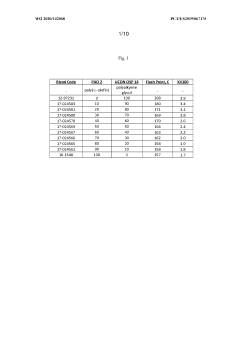
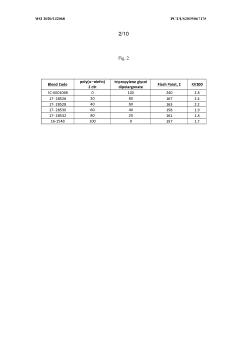
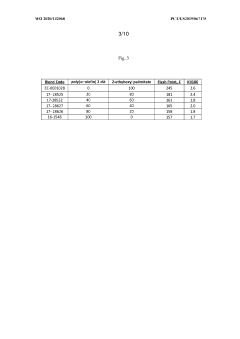
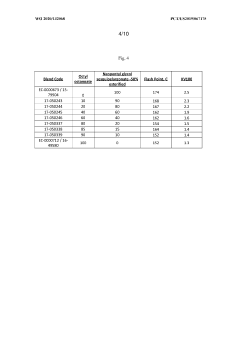
PatentWO2020132068A1
Innovation
- A heat transfer fluid with a mixed ester base stock system comprising partially esterified and fully esterified esters, which maintains or decreases viscosity while increasing flash point and thermal conductivity, allowing for enhanced heat transfer performance.
Safety Standards for High-Temperature Lubrication Applications
High-temperature lubrication applications require stringent safety standards to prevent catastrophic failures and ensure operational reliability. The flash temperature margin serves as a critical safety parameter, representing the difference between the actual operating temperature and the lubricant's flash point. This margin directly impacts fire hazard assessment and operational safety protocols in industrial applications.
International safety standards, including ISO 12925 and ASTM D92, establish minimum flash temperature requirements for lubricants operating in elevated temperature environments. These standards mandate that hydrodynamic lubricants maintain a flash point margin of at least 200°C above maximum operating temperatures, while ester-based lubricants typically require margins exceeding 180°C due to their different thermal decomposition characteristics.
Regulatory frameworks across major industrial regions have implemented specific safety protocols for high-temperature lubrication systems. The European ATEX directive and NFPA 497 classification system categorize lubricants based on their flash temperature margins, with stricter requirements for applications in hazardous environments. These regulations directly influence the selection criteria between hydrodynamic and ester lubricants in critical applications.
Safety monitoring systems must incorporate real-time temperature measurement and flash point degradation tracking to maintain compliance with established standards. Advanced thermal management protocols require continuous assessment of lubricant condition, with mandatory replacement schedules based on flash temperature margin deterioration rather than traditional time-based intervals.
Emergency response procedures for high-temperature lubrication failures emphasize the importance of understanding flash temperature characteristics. Ester lubricants, despite lower flash points, often provide superior fire suppression compatibility, while hydrodynamic lubricants offer greater thermal stability margins. These factors significantly influence safety system design and emergency preparedness protocols in industrial facilities operating under extreme temperature conditions.
International safety standards, including ISO 12925 and ASTM D92, establish minimum flash temperature requirements for lubricants operating in elevated temperature environments. These standards mandate that hydrodynamic lubricants maintain a flash point margin of at least 200°C above maximum operating temperatures, while ester-based lubricants typically require margins exceeding 180°C due to their different thermal decomposition characteristics.
Regulatory frameworks across major industrial regions have implemented specific safety protocols for high-temperature lubrication systems. The European ATEX directive and NFPA 497 classification system categorize lubricants based on their flash temperature margins, with stricter requirements for applications in hazardous environments. These regulations directly influence the selection criteria between hydrodynamic and ester lubricants in critical applications.
Safety monitoring systems must incorporate real-time temperature measurement and flash point degradation tracking to maintain compliance with established standards. Advanced thermal management protocols require continuous assessment of lubricant condition, with mandatory replacement schedules based on flash temperature margin deterioration rather than traditional time-based intervals.
Emergency response procedures for high-temperature lubrication failures emphasize the importance of understanding flash temperature characteristics. Ester lubricants, despite lower flash points, often provide superior fire suppression compatibility, while hydrodynamic lubricants offer greater thermal stability margins. These factors significantly influence safety system design and emergency preparedness protocols in industrial facilities operating under extreme temperature conditions.
Environmental Impact of Ester-Based Lubrication Systems
The environmental implications of ester-based lubrication systems present a complex landscape of benefits and challenges when compared to traditional hydrodynamic lubrication approaches. Ester lubricants, derived from both synthetic and bio-based sources, demonstrate significantly enhanced biodegradability characteristics, typically achieving 60-90% biodegradation within 28 days under standard OECD testing protocols. This contrasts sharply with conventional mineral oil-based hydrodynamic lubricants, which may persist in environmental systems for extended periods.
The superior flash temperature margins exhibited by ester-based systems contribute to reduced thermal degradation and extended service intervals, consequently minimizing lubricant disposal frequency and associated environmental burden. Advanced ester formulations maintain stable performance at elevated temperatures, reducing the need for frequent oil changes and decreasing overall lubricant consumption across industrial applications.
Aquatic toxicity assessments reveal that synthetic esters generally exhibit lower ecotoxicity profiles compared to traditional petroleum-based lubricants. Marine environment studies indicate reduced bioaccumulation potential, with ester molecules demonstrating faster metabolic breakdown in aquatic organisms. However, certain synthetic ester formulations may present concerns regarding additive packages and their environmental persistence.
Carbon footprint analysis of ester production pathways varies significantly depending on feedstock sources. Bio-based esters derived from renewable agricultural sources can achieve substantial greenhouse gas emission reductions, potentially offering 30-50% lower lifecycle carbon intensity compared to conventional lubricants. Conversely, synthetic ester production may involve energy-intensive manufacturing processes that offset some environmental advantages.
Waste management considerations favor ester-based systems due to their enhanced compatibility with biological treatment processes. Industrial wastewater containing ester residues typically requires less intensive treatment protocols, reducing energy consumption and chemical usage in remediation processes. The improved flash temperature characteristics also contribute to safer handling and reduced volatile organic compound emissions during operation and maintenance activities.
The superior flash temperature margins exhibited by ester-based systems contribute to reduced thermal degradation and extended service intervals, consequently minimizing lubricant disposal frequency and associated environmental burden. Advanced ester formulations maintain stable performance at elevated temperatures, reducing the need for frequent oil changes and decreasing overall lubricant consumption across industrial applications.
Aquatic toxicity assessments reveal that synthetic esters generally exhibit lower ecotoxicity profiles compared to traditional petroleum-based lubricants. Marine environment studies indicate reduced bioaccumulation potential, with ester molecules demonstrating faster metabolic breakdown in aquatic organisms. However, certain synthetic ester formulations may present concerns regarding additive packages and their environmental persistence.
Carbon footprint analysis of ester production pathways varies significantly depending on feedstock sources. Bio-based esters derived from renewable agricultural sources can achieve substantial greenhouse gas emission reductions, potentially offering 30-50% lower lifecycle carbon intensity compared to conventional lubricants. Conversely, synthetic ester production may involve energy-intensive manufacturing processes that offset some environmental advantages.
Waste management considerations favor ester-based systems due to their enhanced compatibility with biological treatment processes. Industrial wastewater containing ester residues typically requires less intensive treatment protocols, reducing energy consumption and chemical usage in remediation processes. The improved flash temperature characteristics also contribute to safer handling and reduced volatile organic compound emissions during operation and maintenance activities.
Unlock deeper insights with PatSnap Eureka Quick Research — get a full tech report to explore trends and direct your research. Try now!
Generate Your Research Report Instantly with AI Agent
Supercharge your innovation with PatSnap Eureka AI Agent Platform!