
Comparing AI vs RPA: Supply Chain Process Efficiency
FEB 28, 20269 MIN READ
Generate Your Research Report Instantly with AI Agent
Patsnap Eureka helps you evaluate technical feasibility & market potential.
AI vs RPA in Supply Chain: Background and Objectives
The modern supply chain landscape has undergone dramatic transformation over the past decade, driven by increasing customer expectations for faster delivery, greater transparency, and enhanced service quality. Traditional supply chain management approaches, characterized by manual processes and siloed systems, are proving inadequate in addressing the complexities of global commerce, multi-channel distribution, and real-time demand fluctuations.
Supply chain operations encompass a vast array of interconnected processes including demand forecasting, inventory management, procurement, production planning, logistics coordination, and customer service. These processes generate enormous volumes of data while requiring rapid decision-making capabilities to maintain competitive advantage. The challenge lies in efficiently processing this information while minimizing human error and operational costs.
Robotic Process Automation emerged as an early solution to address repetitive, rule-based tasks within supply chain operations. RPA technology enables organizations to automate routine processes such as order processing, invoice generation, and inventory updates by mimicking human interactions with existing software systems. This approach has demonstrated significant value in reducing processing time and improving accuracy for standardized workflows.
Artificial Intelligence represents a more advanced technological approach, offering capabilities that extend beyond simple automation to include predictive analytics, pattern recognition, and autonomous decision-making. AI technologies such as machine learning, natural language processing, and computer vision can analyze complex datasets, identify trends, and optimize supply chain performance in ways that traditional automation cannot achieve.
The convergence of these technologies presents organizations with critical decisions regarding technology investment and implementation strategies. While RPA offers immediate benefits for process standardization, AI promises transformational capabilities for supply chain optimization and competitive differentiation.
The primary objective of this comparative analysis is to evaluate the relative effectiveness of AI versus RPA technologies in enhancing supply chain process efficiency. This evaluation encompasses assessment of implementation complexity, cost-benefit ratios, scalability potential, and long-term strategic value. Additionally, the analysis aims to identify optimal use cases for each technology and explore potential synergies between AI and RPA implementations.
Understanding these technological capabilities and their appropriate applications is essential for organizations seeking to modernize their supply chain operations while maximizing return on technology investments and maintaining operational resilience in an increasingly dynamic business environment.
Supply chain operations encompass a vast array of interconnected processes including demand forecasting, inventory management, procurement, production planning, logistics coordination, and customer service. These processes generate enormous volumes of data while requiring rapid decision-making capabilities to maintain competitive advantage. The challenge lies in efficiently processing this information while minimizing human error and operational costs.
Robotic Process Automation emerged as an early solution to address repetitive, rule-based tasks within supply chain operations. RPA technology enables organizations to automate routine processes such as order processing, invoice generation, and inventory updates by mimicking human interactions with existing software systems. This approach has demonstrated significant value in reducing processing time and improving accuracy for standardized workflows.
Artificial Intelligence represents a more advanced technological approach, offering capabilities that extend beyond simple automation to include predictive analytics, pattern recognition, and autonomous decision-making. AI technologies such as machine learning, natural language processing, and computer vision can analyze complex datasets, identify trends, and optimize supply chain performance in ways that traditional automation cannot achieve.
The convergence of these technologies presents organizations with critical decisions regarding technology investment and implementation strategies. While RPA offers immediate benefits for process standardization, AI promises transformational capabilities for supply chain optimization and competitive differentiation.
The primary objective of this comparative analysis is to evaluate the relative effectiveness of AI versus RPA technologies in enhancing supply chain process efficiency. This evaluation encompasses assessment of implementation complexity, cost-benefit ratios, scalability potential, and long-term strategic value. Additionally, the analysis aims to identify optimal use cases for each technology and explore potential synergies between AI and RPA implementations.
Understanding these technological capabilities and their appropriate applications is essential for organizations seeking to modernize their supply chain operations while maximizing return on technology investments and maintaining operational resilience in an increasingly dynamic business environment.
Market Demand for Supply Chain Process Automation
The global supply chain automation market is experiencing unprecedented growth driven by increasing operational complexity and the need for enhanced efficiency across industries. Organizations worldwide are recognizing that traditional manual processes can no longer meet the demands of modern supply chain operations, which require real-time visibility, rapid decision-making, and seamless coordination across multiple stakeholders.
Manufacturing sectors represent the largest demand segment for supply chain automation technologies, with automotive, electronics, and consumer goods industries leading adoption rates. These sectors face mounting pressure to reduce operational costs while maintaining quality standards and meeting increasingly stringent delivery timelines. The complexity of global supply networks, involving multiple suppliers, distributors, and logistics partners, has created an urgent need for automated solutions that can manage intricate workflows without human intervention.
E-commerce expansion has significantly amplified demand for supply chain automation, particularly in warehouse management, inventory optimization, and order fulfillment processes. The exponential growth in online retail has created bottlenecks in traditional supply chain operations, forcing companies to seek automated solutions that can handle high-volume, variable demand patterns while maintaining accuracy and speed.
Regulatory compliance requirements across different industries have emerged as another critical driver for automation adoption. Companies operating in pharmaceuticals, food and beverage, and chemical industries face stringent traceability and documentation requirements that manual processes struggle to maintain consistently. Automated systems provide the necessary audit trails and compliance reporting capabilities that these regulated industries demand.
The COVID-19 pandemic has accelerated market demand by exposing vulnerabilities in manual supply chain processes. Organizations experienced significant disruptions when human-dependent operations faced restrictions, highlighting the critical need for resilient, automated systems that can maintain continuity during unforeseen circumstances.
Small and medium enterprises are increasingly entering the automation market as cloud-based solutions become more accessible and cost-effective. This democratization of automation technology is expanding the total addressable market beyond large corporations to include businesses that previously considered automation financially prohibitive.
Geographic demand patterns show strong growth in Asia-Pacific regions, driven by manufacturing expansion and digital transformation initiatives. North American and European markets demonstrate mature adoption rates with focus shifting toward advanced automation capabilities and integration of artificial intelligence technologies into existing supply chain infrastructure.
Manufacturing sectors represent the largest demand segment for supply chain automation technologies, with automotive, electronics, and consumer goods industries leading adoption rates. These sectors face mounting pressure to reduce operational costs while maintaining quality standards and meeting increasingly stringent delivery timelines. The complexity of global supply networks, involving multiple suppliers, distributors, and logistics partners, has created an urgent need for automated solutions that can manage intricate workflows without human intervention.
E-commerce expansion has significantly amplified demand for supply chain automation, particularly in warehouse management, inventory optimization, and order fulfillment processes. The exponential growth in online retail has created bottlenecks in traditional supply chain operations, forcing companies to seek automated solutions that can handle high-volume, variable demand patterns while maintaining accuracy and speed.
Regulatory compliance requirements across different industries have emerged as another critical driver for automation adoption. Companies operating in pharmaceuticals, food and beverage, and chemical industries face stringent traceability and documentation requirements that manual processes struggle to maintain consistently. Automated systems provide the necessary audit trails and compliance reporting capabilities that these regulated industries demand.
The COVID-19 pandemic has accelerated market demand by exposing vulnerabilities in manual supply chain processes. Organizations experienced significant disruptions when human-dependent operations faced restrictions, highlighting the critical need for resilient, automated systems that can maintain continuity during unforeseen circumstances.
Small and medium enterprises are increasingly entering the automation market as cloud-based solutions become more accessible and cost-effective. This democratization of automation technology is expanding the total addressable market beyond large corporations to include businesses that previously considered automation financially prohibitive.
Geographic demand patterns show strong growth in Asia-Pacific regions, driven by manufacturing expansion and digital transformation initiatives. North American and European markets demonstrate mature adoption rates with focus shifting toward advanced automation capabilities and integration of artificial intelligence technologies into existing supply chain infrastructure.
Current State of AI and RPA in Supply Chain Operations
The current landscape of AI and RPA implementation in supply chain operations reveals a rapidly evolving technological ecosystem where both solutions are gaining significant traction across different operational domains. Organizations worldwide are increasingly adopting these technologies to address persistent challenges in supply chain management, including demand forecasting accuracy, inventory optimization, procurement efficiency, and logistics coordination.
RPA has established a strong foothold in supply chain operations, particularly in high-volume, rule-based processes that require minimal decision-making complexity. Current implementations predominantly focus on order processing, invoice management, inventory tracking, and supplier onboarding activities. Major enterprises report RPA deployment rates exceeding 60% for transactional supply chain processes, with average processing time reductions of 40-70% compared to manual operations.
AI adoption in supply chain operations demonstrates a more sophisticated but varied implementation pattern. Machine learning algorithms are extensively deployed for demand forecasting, with accuracy improvements ranging from 15-35% over traditional statistical methods. Predictive analytics applications have gained momentum in maintenance scheduling, quality control, and risk management, while natural language processing technologies are increasingly utilized for supplier communication and contract analysis.
The geographical distribution of these technologies shows concentrated adoption in North America and Europe, where mature digital infrastructure supports advanced implementation. Asian markets, particularly China and Japan, demonstrate rapid AI integration in manufacturing and logistics operations, while RPA adoption remains more globally distributed due to its lower technical complexity requirements.
Current implementation challenges vary significantly between the two technologies. RPA faces limitations in handling unstructured data and exception scenarios, requiring frequent maintenance when underlying systems change. AI implementations encounter obstacles related to data quality, model interpretability, and integration complexity with existing enterprise systems.
The hybrid approach combining both technologies is emerging as a preferred strategy among leading organizations. This integration leverages RPA's process automation capabilities with AI's cognitive functions, creating more comprehensive solutions for complex supply chain scenarios. Early adopters report enhanced operational flexibility and improved decision-making capabilities through this combined technological framework.
RPA has established a strong foothold in supply chain operations, particularly in high-volume, rule-based processes that require minimal decision-making complexity. Current implementations predominantly focus on order processing, invoice management, inventory tracking, and supplier onboarding activities. Major enterprises report RPA deployment rates exceeding 60% for transactional supply chain processes, with average processing time reductions of 40-70% compared to manual operations.
AI adoption in supply chain operations demonstrates a more sophisticated but varied implementation pattern. Machine learning algorithms are extensively deployed for demand forecasting, with accuracy improvements ranging from 15-35% over traditional statistical methods. Predictive analytics applications have gained momentum in maintenance scheduling, quality control, and risk management, while natural language processing technologies are increasingly utilized for supplier communication and contract analysis.
The geographical distribution of these technologies shows concentrated adoption in North America and Europe, where mature digital infrastructure supports advanced implementation. Asian markets, particularly China and Japan, demonstrate rapid AI integration in manufacturing and logistics operations, while RPA adoption remains more globally distributed due to its lower technical complexity requirements.
Current implementation challenges vary significantly between the two technologies. RPA faces limitations in handling unstructured data and exception scenarios, requiring frequent maintenance when underlying systems change. AI implementations encounter obstacles related to data quality, model interpretability, and integration complexity with existing enterprise systems.
The hybrid approach combining both technologies is emerging as a preferred strategy among leading organizations. This integration leverages RPA's process automation capabilities with AI's cognitive functions, creating more comprehensive solutions for complex supply chain scenarios. Early adopters report enhanced operational flexibility and improved decision-making capabilities through this combined technological framework.
Existing AI and RPA Implementation Approaches
01 AI-driven intelligent process automation and optimization
Artificial intelligence technologies are integrated with robotic process automation to enable intelligent decision-making and process optimization. Machine learning algorithms analyze historical process data to identify patterns and optimize workflow execution. Natural language processing and computer vision capabilities enhance the automation system's ability to handle unstructured data and complex tasks, significantly improving overall process efficiency.- AI-driven intelligent process automation and optimization: Artificial intelligence technologies are integrated with robotic process automation to enable intelligent decision-making and process optimization. Machine learning algorithms analyze historical process data to identify patterns and optimize workflow execution. Natural language processing and computer vision capabilities enhance the automation system's ability to handle unstructured data and complex tasks, significantly improving overall process efficiency.
- RPA bot orchestration and task scheduling: Advanced orchestration mechanisms coordinate multiple RPA bots to execute complex business processes in parallel or sequential manner. Intelligent task scheduling algorithms allocate workloads based on bot availability, priority levels, and resource constraints. Dynamic load balancing ensures optimal utilization of automation resources, reducing processing time and increasing throughput for high-volume operations.
- Process mining and bottleneck identification: Process mining techniques extract knowledge from event logs to discover actual process flows and identify inefficiencies. AI-powered analytics detect bottlenecks, redundant steps, and deviation patterns in business processes. Visualization tools present process maps and performance metrics, enabling data-driven decisions for process redesign and automation opportunities that maximize efficiency gains.
- Cognitive automation with exception handling: Cognitive capabilities enable RPA systems to handle exceptions and edge cases that traditionally required human intervention. Machine learning models are trained to recognize anomalies and make contextual decisions based on business rules and historical outcomes. Self-learning mechanisms continuously improve exception handling accuracy, reducing manual intervention requirements and maintaining high process efficiency even in complex scenarios.
- Integration of AI and RPA with enterprise systems: Seamless integration frameworks connect AI-enhanced RPA solutions with existing enterprise resource planning, customer relationship management, and other business systems. API-based architectures and middleware solutions enable real-time data exchange and process synchronization across multiple platforms. Unified automation platforms provide centralized monitoring, governance, and analytics capabilities, ensuring consistent process efficiency improvements across the entire organization.
02 RPA bot orchestration and task scheduling systems
Advanced orchestration platforms manage multiple RPA bots simultaneously, coordinating their activities and distributing workloads efficiently. Intelligent task scheduling algorithms prioritize processes based on business rules, resource availability, and urgency levels. Dynamic load balancing mechanisms ensure optimal utilization of automation resources while preventing bottlenecks and system overload.Expand Specific Solutions03 Process mining and bottleneck identification
Process mining technologies extract insights from event logs and system data to visualize actual process flows and identify inefficiencies. Advanced analytics detect bottlenecks, redundant steps, and deviation patterns in business processes. These insights enable targeted improvements and guide the implementation of automation solutions in areas with the highest potential for efficiency gains.Expand Specific Solutions04 Cognitive automation with exception handling
Cognitive automation systems combine RPA with artificial intelligence to handle exceptions and edge cases that traditional automation cannot process. Machine learning models are trained to recognize anomalies and make contextual decisions without human intervention. Self-learning capabilities allow the system to continuously improve its exception handling performance over time, reducing manual intervention requirements.Expand Specific Solutions05 Performance monitoring and continuous improvement frameworks
Real-time monitoring systems track key performance indicators of automated processes, including execution time, error rates, and throughput metrics. Analytics dashboards provide visibility into automation performance and identify opportunities for further optimization. Continuous improvement frameworks leverage feedback loops and A/B testing methodologies to iteratively enhance process efficiency and automation effectiveness.Expand Specific Solutions
Key Players in AI and RPA Supply Chain Solutions
The AI vs RPA comparison in supply chain process efficiency represents a rapidly evolving market at the intersection of mature and emerging technologies. The industry is experiencing significant growth, with the global RPA market expanding rapidly while AI integration accelerates transformation. Technology maturity varies considerably across players: established RPA leaders like UiPath, Blue Prism, and Automation Anywhere offer proven automation solutions, while tech giants IBM, SAP, and ServiceNow integrate AI capabilities into comprehensive platforms. Chinese companies including Laiye Technology and iFlytek demonstrate strong AI-powered automation capabilities, particularly in conversational AI and intelligent processing. Traditional enterprises like Accenture and consulting firms are bridging implementation gaps. The competitive landscape shows convergence toward hybrid AI-RPA solutions, with market leaders focusing on intelligent automation that combines rule-based RPA with cognitive AI capabilities for enhanced supply chain optimization and decision-making processes.
UiPath, Inc.
Technical Solution: UiPath provides a comprehensive automation platform that combines RPA with AI capabilities for supply chain optimization. Their solution includes Process Mining to discover inefficiencies, Task Mining for detailed process analysis, and AI-powered Document Understanding for invoice processing and purchase order automation. The platform offers pre-built supply chain automation templates covering procurement, inventory management, and logistics coordination. UiPath's hyperautomation approach integrates machine learning models with robotic process automation to enable intelligent decision-making in supply chain workflows, achieving up to 80% reduction in processing time for routine supply chain tasks while maintaining 99.5% accuracy rates.
Strengths: Market-leading RPA platform with strong AI integration, extensive supply chain automation templates, proven ROI with significant processing time reduction. Weaknesses: High licensing costs for enterprise deployments, requires significant technical expertise for complex implementations.
International Business Machines Corp.
Technical Solution: IBM Watson Supply Chain leverages advanced AI and machine learning algorithms to optimize supply chain processes through predictive analytics, demand forecasting, and risk management. The platform combines cognitive computing with automation to provide real-time visibility across the entire supply chain network. IBM's solution includes Watson AI for supply chain insights, blockchain integration for transparency, and IoT connectivity for asset tracking. Their approach focuses on cognitive automation rather than traditional RPA, using natural language processing and computer vision to handle complex supply chain documents and communications. The system can predict supply disruptions with 85% accuracy and reduce inventory costs by up to 20% through intelligent demand planning.
Strengths: Advanced AI capabilities with strong predictive analytics, comprehensive enterprise integration, proven track record in large-scale implementations. Weaknesses: Complex implementation process, high total cost of ownership, steep learning curve for users.
Core Technologies in AI-RPA Supply Chain Integration
Robotic process automation for supply chain management operations
PatentActiveUS20180329399A1
Innovation
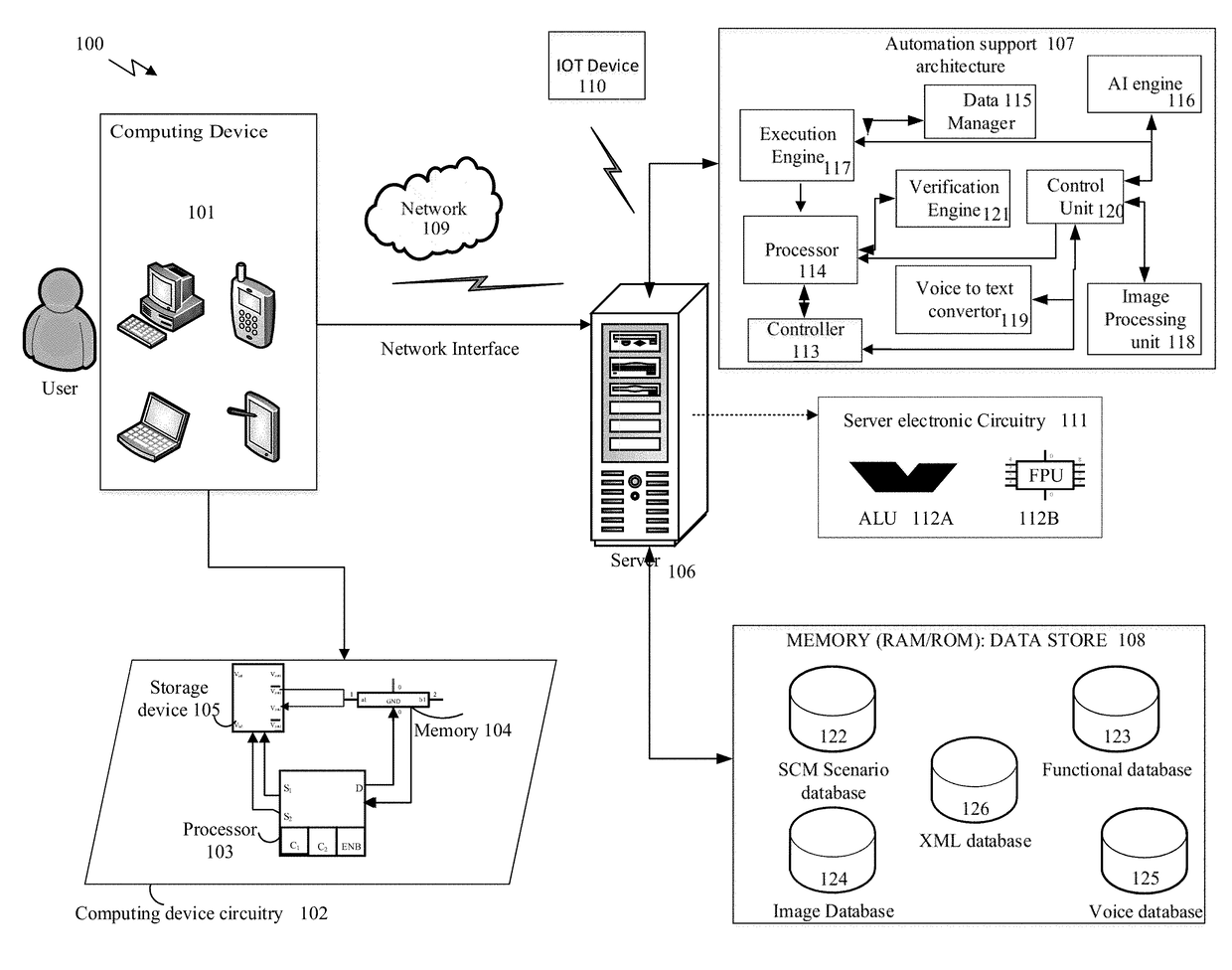
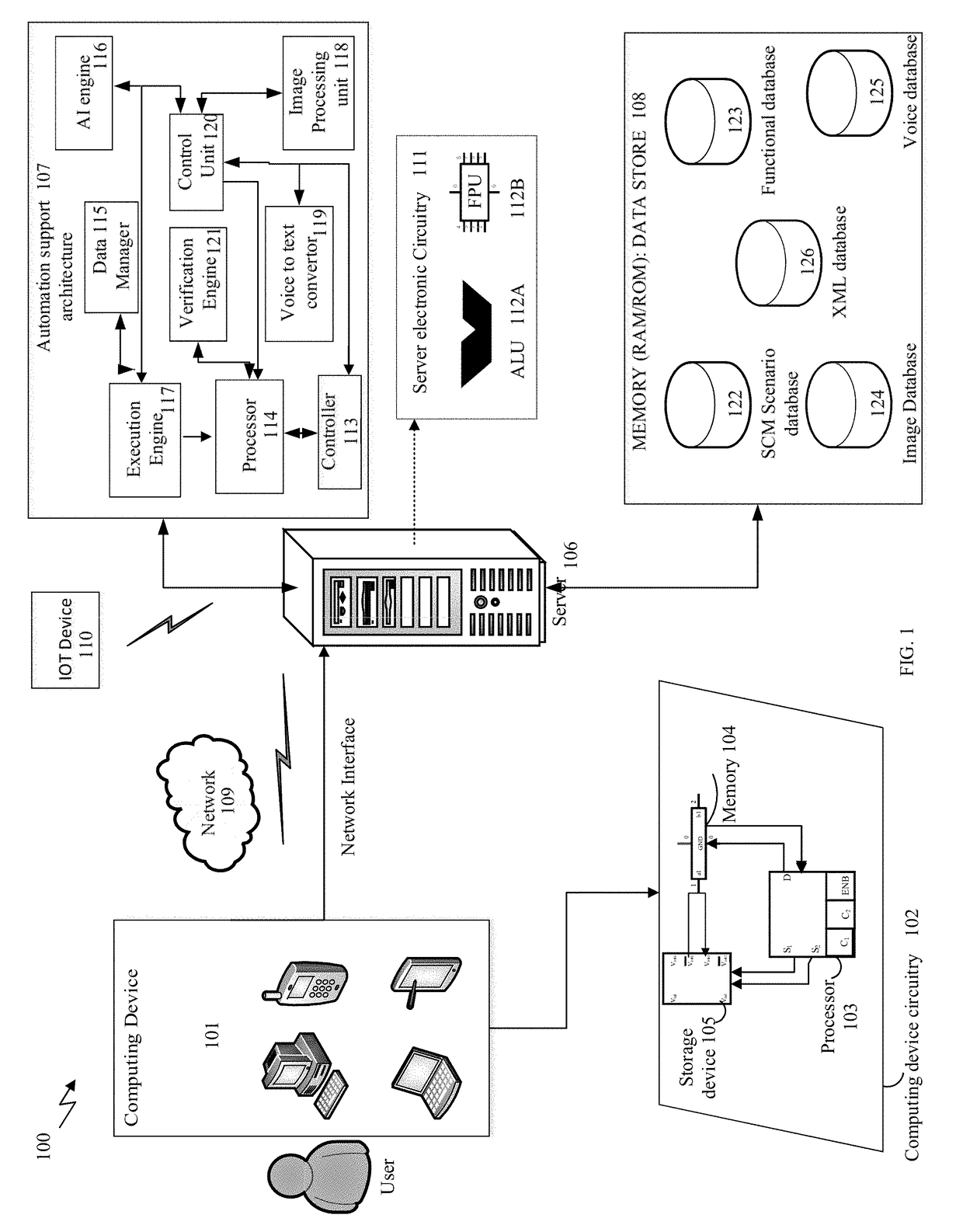
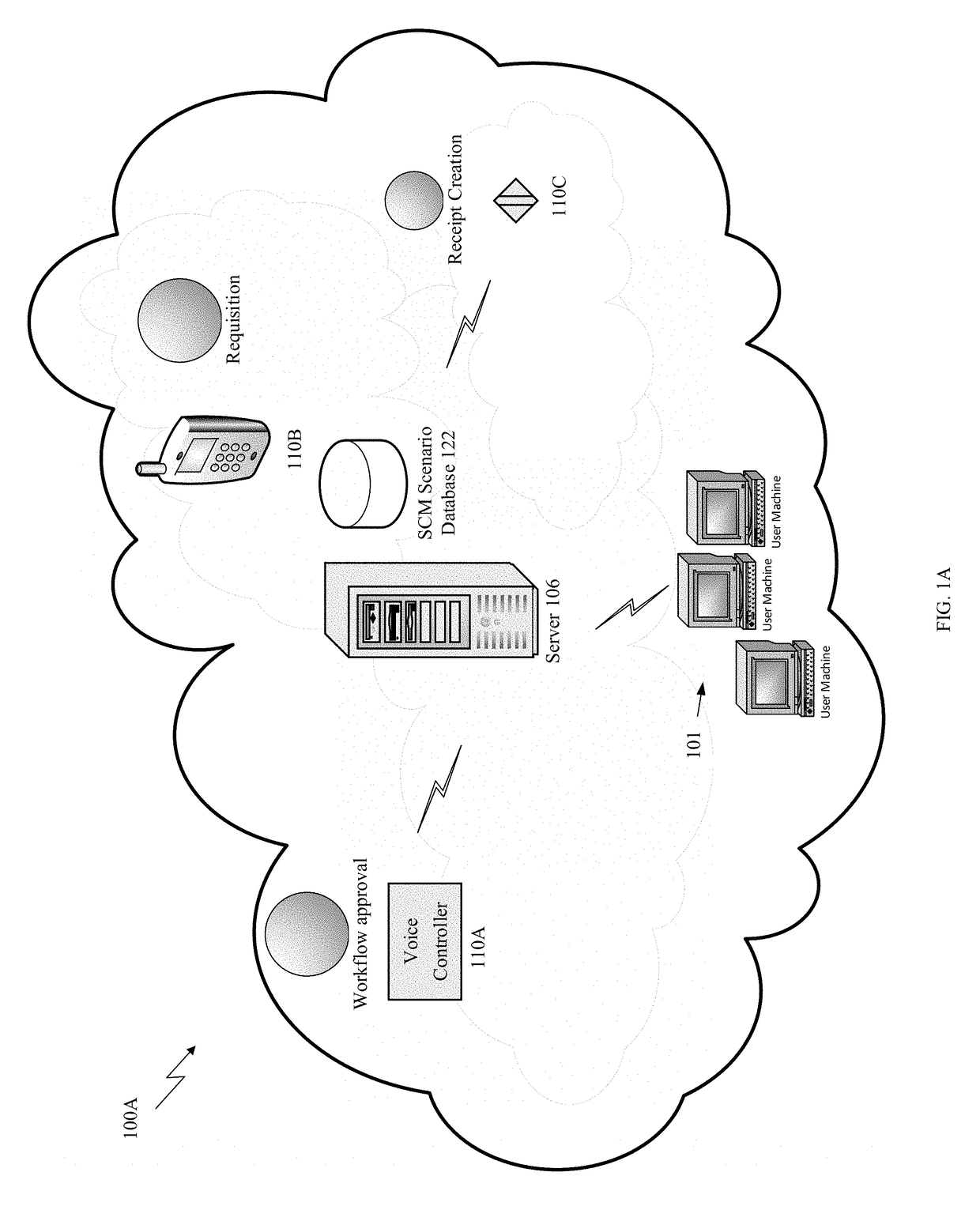
- A robotic process automation system that uses an electronic user interface to automatically generate code for supply chain management scenarios, employing a controller configured as a bot with AI-based dynamic processing logic to reduce processing time and error, utilizing a sub-network of servers and IOT devices for secure communication and fixture creation based on application objects.

EVALUATING IMPACT OF PROCESS AUTOMATION ON KPIs
PatentActiveUS20200019822A1
Innovation
- An AI-based process KPI qualifying and monitoring system that gathers data from multiple sources, employs machine learning and natural language processing to classify, rank, and analyze KPIs, providing a dynamic fitment score system that automatically selects relevant KPIs and recommends actions to improve their usability, thereby mitigating the need for manual filtering and ensuring data accuracy and relevance.


ROI and Performance Metrics Comparison Framework
Establishing a comprehensive ROI and performance metrics comparison framework for AI versus RPA in supply chain operations requires careful consideration of both quantitative and qualitative measurement approaches. The framework must account for the distinct operational characteristics and value propositions of each technology while providing standardized benchmarks for meaningful comparison.
Financial return metrics form the foundation of this comparison framework. Traditional ROI calculations should encompass initial implementation costs, ongoing operational expenses, and maintenance requirements for both AI and RPA solutions. AI implementations typically require higher upfront investments in data infrastructure, model development, and specialized talent acquisition, while RPA solutions generally demonstrate lower initial capital requirements but may incur higher long-term scaling costs. The framework should incorporate total cost of ownership models spanning three to five-year periods to capture the full economic impact of each technology deployment.
Operational efficiency metrics provide critical insights into performance differentiation between AI and RPA implementations. Process automation speed, error reduction rates, and throughput improvements serve as primary indicators of operational value. RPA solutions typically excel in high-volume, repetitive task automation with measurable cycle time reductions, while AI implementations demonstrate superior performance in complex decision-making scenarios requiring pattern recognition and predictive capabilities. The framework should establish baseline measurements for process completion times, accuracy rates, and exception handling capabilities.
Scalability and adaptability metrics distinguish the long-term value potential of AI versus RPA solutions. AI systems generally exhibit superior learning capabilities and can adapt to changing business conditions without extensive reprogramming, while RPA solutions may require significant reconfiguration when underlying processes change. The framework should evaluate deployment flexibility, maintenance requirements, and the ability to handle process variations or unexpected scenarios.
Strategic value metrics capture the broader organizational impact beyond immediate operational improvements. These include enhanced decision-making capabilities, improved customer satisfaction scores, and competitive advantage generation. AI implementations often deliver strategic benefits through predictive analytics and intelligent automation, while RPA solutions primarily focus on operational cost reduction and process standardization. The framework should incorporate both hard metrics such as customer response times and soft metrics including employee satisfaction and strategic agility improvements.
Financial return metrics form the foundation of this comparison framework. Traditional ROI calculations should encompass initial implementation costs, ongoing operational expenses, and maintenance requirements for both AI and RPA solutions. AI implementations typically require higher upfront investments in data infrastructure, model development, and specialized talent acquisition, while RPA solutions generally demonstrate lower initial capital requirements but may incur higher long-term scaling costs. The framework should incorporate total cost of ownership models spanning three to five-year periods to capture the full economic impact of each technology deployment.
Operational efficiency metrics provide critical insights into performance differentiation between AI and RPA implementations. Process automation speed, error reduction rates, and throughput improvements serve as primary indicators of operational value. RPA solutions typically excel in high-volume, repetitive task automation with measurable cycle time reductions, while AI implementations demonstrate superior performance in complex decision-making scenarios requiring pattern recognition and predictive capabilities. The framework should establish baseline measurements for process completion times, accuracy rates, and exception handling capabilities.
Scalability and adaptability metrics distinguish the long-term value potential of AI versus RPA solutions. AI systems generally exhibit superior learning capabilities and can adapt to changing business conditions without extensive reprogramming, while RPA solutions may require significant reconfiguration when underlying processes change. The framework should evaluate deployment flexibility, maintenance requirements, and the ability to handle process variations or unexpected scenarios.
Strategic value metrics capture the broader organizational impact beyond immediate operational improvements. These include enhanced decision-making capabilities, improved customer satisfaction scores, and competitive advantage generation. AI implementations often deliver strategic benefits through predictive analytics and intelligent automation, while RPA solutions primarily focus on operational cost reduction and process standardization. The framework should incorporate both hard metrics such as customer response times and soft metrics including employee satisfaction and strategic agility improvements.
Implementation Risk Assessment and Mitigation Strategies
Implementation of AI and RPA technologies in supply chain operations presents distinct risk profiles that require comprehensive assessment and targeted mitigation strategies. Understanding these risks is crucial for organizations seeking to optimize their supply chain process efficiency through automation technologies.
AI implementation carries inherent risks related to data quality and algorithmic bias. Poor data inputs can lead to flawed decision-making processes, potentially disrupting critical supply chain operations. Model drift represents another significant concern, where AI systems gradually lose accuracy over time due to changing business conditions. Organizations must establish robust data governance frameworks and implement continuous model monitoring systems to address these challenges.
RPA deployment faces different risk categories, primarily centered around process stability and system integration. Bot failures can occur when underlying systems undergo updates or modifications, leading to process interruptions. Additionally, RPA solutions may struggle with exception handling, potentially causing bottlenecks when encountering unexpected scenarios that fall outside programmed parameters.
Security vulnerabilities present common risks for both technologies. AI systems may be susceptible to adversarial attacks that manipulate input data to produce incorrect outputs. RPA bots operating with elevated system privileges could become targets for cyber attacks, potentially compromising sensitive supply chain data and operations.
Change management represents a critical risk factor across both implementations. Employee resistance to automation technologies can undermine adoption efforts and reduce expected efficiency gains. Organizations must develop comprehensive training programs and clear communication strategies to facilitate smooth transitions and maintain workforce engagement.
Mitigation strategies should include establishing robust testing environments for both AI models and RPA bots before production deployment. Implementing fallback procedures ensures business continuity when automated systems encounter failures. Regular audits and performance monitoring help identify potential issues before they impact operations. Additionally, maintaining hybrid approaches that combine automated processes with human oversight provides essential safety nets while maximizing the efficiency benefits of both AI and RPA technologies in supply chain management.
AI implementation carries inherent risks related to data quality and algorithmic bias. Poor data inputs can lead to flawed decision-making processes, potentially disrupting critical supply chain operations. Model drift represents another significant concern, where AI systems gradually lose accuracy over time due to changing business conditions. Organizations must establish robust data governance frameworks and implement continuous model monitoring systems to address these challenges.
RPA deployment faces different risk categories, primarily centered around process stability and system integration. Bot failures can occur when underlying systems undergo updates or modifications, leading to process interruptions. Additionally, RPA solutions may struggle with exception handling, potentially causing bottlenecks when encountering unexpected scenarios that fall outside programmed parameters.
Security vulnerabilities present common risks for both technologies. AI systems may be susceptible to adversarial attacks that manipulate input data to produce incorrect outputs. RPA bots operating with elevated system privileges could become targets for cyber attacks, potentially compromising sensitive supply chain data and operations.
Change management represents a critical risk factor across both implementations. Employee resistance to automation technologies can undermine adoption efforts and reduce expected efficiency gains. Organizations must develop comprehensive training programs and clear communication strategies to facilitate smooth transitions and maintain workforce engagement.
Mitigation strategies should include establishing robust testing environments for both AI models and RPA bots before production deployment. Implementing fallback procedures ensures business continuity when automated systems encounter failures. Regular audits and performance monitoring help identify potential issues before they impact operations. Additionally, maintaining hybrid approaches that combine automated processes with human oversight provides essential safety nets while maximizing the efficiency benefits of both AI and RPA technologies in supply chain management.
Unlock deeper insights with Patsnap Eureka Quick Research — get a full tech report to explore trends and direct your research. Try now!
Generate Your Research Report Instantly with AI Agent
Supercharge your innovation with Patsnap Eureka AI Agent Platform!