

Comparing Catalyst Sintering in Electrolyzer Stacks Vs Standard Designs
MAY 20, 20269 MIN READ
Generate Your Research Report Instantly with AI Agent
PatSnap Eureka helps you evaluate technical feasibility & market potential.
Electrolyzer Catalyst Sintering Background and Objectives
Electrolyzer technology has emerged as a critical component in the global transition toward sustainable energy systems, particularly for hydrogen production through water electrolysis. The process relies heavily on catalytic materials to facilitate the oxygen evolution reaction (OER) and hydrogen evolution reaction (HER), making catalyst performance and durability fundamental to overall system efficiency and economic viability.
Catalyst sintering represents one of the most significant degradation mechanisms affecting electrolyzer performance over extended operational periods. This phenomenon involves the agglomeration and growth of catalyst particles at elevated temperatures, leading to reduced active surface area and consequent decline in catalytic activity. The sintering process becomes particularly pronounced under the harsh operating conditions typical of industrial electrolyzers, including high temperatures, corrosive environments, and dynamic load cycling.
Traditional electrolyzer designs have historically employed standard catalyst configurations optimized for laboratory or small-scale applications. However, the scaling up to industrial stack configurations introduces unique thermal management challenges and operational stresses that can significantly accelerate catalyst sintering rates. The confined geometry of electrolyzer stacks, combined with higher current densities and thermal gradients, creates conditions that may fundamentally alter sintering kinetics compared to standard designs.
The comparative analysis of catalyst sintering behavior between electrolyzer stacks and standard designs has become increasingly important as the industry pushes toward larger-scale deployment. Understanding these differences is crucial for developing mitigation strategies, optimizing catalyst formulations, and establishing realistic performance projections for commercial electrolyzer systems.
The primary objective of this investigation is to establish a comprehensive understanding of how operational and design parameters specific to electrolyzer stacks influence catalyst sintering mechanisms. This includes quantifying the acceleration factors associated with stack configurations, identifying critical temperature and current density thresholds, and evaluating the effectiveness of various sintering mitigation approaches.
Secondary objectives encompass the development of predictive models for catalyst degradation in stack environments, the establishment of standardized testing protocols that accurately reflect real-world operating conditions, and the identification of novel catalyst architectures or protective strategies specifically tailored for stack applications. These insights will ultimately inform next-generation electrolyzer designs and catalyst development programs aimed at achieving the durability targets necessary for widespread commercial adoption.
Catalyst sintering represents one of the most significant degradation mechanisms affecting electrolyzer performance over extended operational periods. This phenomenon involves the agglomeration and growth of catalyst particles at elevated temperatures, leading to reduced active surface area and consequent decline in catalytic activity. The sintering process becomes particularly pronounced under the harsh operating conditions typical of industrial electrolyzers, including high temperatures, corrosive environments, and dynamic load cycling.
Traditional electrolyzer designs have historically employed standard catalyst configurations optimized for laboratory or small-scale applications. However, the scaling up to industrial stack configurations introduces unique thermal management challenges and operational stresses that can significantly accelerate catalyst sintering rates. The confined geometry of electrolyzer stacks, combined with higher current densities and thermal gradients, creates conditions that may fundamentally alter sintering kinetics compared to standard designs.
The comparative analysis of catalyst sintering behavior between electrolyzer stacks and standard designs has become increasingly important as the industry pushes toward larger-scale deployment. Understanding these differences is crucial for developing mitigation strategies, optimizing catalyst formulations, and establishing realistic performance projections for commercial electrolyzer systems.
The primary objective of this investigation is to establish a comprehensive understanding of how operational and design parameters specific to electrolyzer stacks influence catalyst sintering mechanisms. This includes quantifying the acceleration factors associated with stack configurations, identifying critical temperature and current density thresholds, and evaluating the effectiveness of various sintering mitigation approaches.
Secondary objectives encompass the development of predictive models for catalyst degradation in stack environments, the establishment of standardized testing protocols that accurately reflect real-world operating conditions, and the identification of novel catalyst architectures or protective strategies specifically tailored for stack applications. These insights will ultimately inform next-generation electrolyzer designs and catalyst development programs aimed at achieving the durability targets necessary for widespread commercial adoption.
Market Demand for Durable Electrolyzer Technologies
The global electrolyzer market is experiencing unprecedented growth driven by the urgent need for clean hydrogen production to support decarbonization efforts across multiple industries. As governments worldwide implement stringent carbon reduction policies and invest heavily in hydrogen infrastructure, the demand for reliable and long-lasting electrolyzer systems has become a critical market driver. The durability of these systems directly impacts the total cost of ownership and operational efficiency, making catalyst longevity a paramount concern for industrial operators.
Industrial applications represent the largest segment of electrolyzer demand, particularly in steel production, chemical manufacturing, and refining processes where hydrogen serves as both a feedstock and reducing agent. These sectors require continuous operation with minimal downtime, creating substantial market pressure for electrolyzer technologies that can withstand prolonged use without significant performance degradation. The catalyst sintering issue becomes particularly acute in these high-utilization scenarios, where traditional designs may require frequent maintenance or replacement.
The renewable energy integration sector presents another significant market opportunity for durable electrolyzer technologies. As wind and solar installations expand globally, the need for efficient energy storage solutions through power-to-gas conversion has intensified. Electrolyzers in these applications face unique challenges from intermittent operation cycles and varying power inputs, which can accelerate catalyst degradation through thermal cycling and current density fluctuations.
Transportation fuel production represents an emerging but rapidly growing market segment, with hydrogen fuel cell vehicles and synthetic fuel production driving demand for large-scale electrolysis capacity. Fleet operators and fuel producers require guaranteed system availability and predictable maintenance schedules, making catalyst durability a key purchasing criterion. The economic viability of hydrogen fuel production depends heavily on minimizing operational disruptions and extending equipment lifecycles.
Market research indicates that durability concerns are among the top three factors influencing electrolyzer procurement decisions, alongside initial capital costs and energy efficiency. End users increasingly prioritize total cost of ownership calculations that account for maintenance frequency, replacement part costs, and production downtime. This shift in purchasing criteria has created substantial market opportunities for manufacturers who can demonstrate superior catalyst longevity and reduced sintering rates in their electrolyzer designs.
Industrial applications represent the largest segment of electrolyzer demand, particularly in steel production, chemical manufacturing, and refining processes where hydrogen serves as both a feedstock and reducing agent. These sectors require continuous operation with minimal downtime, creating substantial market pressure for electrolyzer technologies that can withstand prolonged use without significant performance degradation. The catalyst sintering issue becomes particularly acute in these high-utilization scenarios, where traditional designs may require frequent maintenance or replacement.
The renewable energy integration sector presents another significant market opportunity for durable electrolyzer technologies. As wind and solar installations expand globally, the need for efficient energy storage solutions through power-to-gas conversion has intensified. Electrolyzers in these applications face unique challenges from intermittent operation cycles and varying power inputs, which can accelerate catalyst degradation through thermal cycling and current density fluctuations.
Transportation fuel production represents an emerging but rapidly growing market segment, with hydrogen fuel cell vehicles and synthetic fuel production driving demand for large-scale electrolysis capacity. Fleet operators and fuel producers require guaranteed system availability and predictable maintenance schedules, making catalyst durability a key purchasing criterion. The economic viability of hydrogen fuel production depends heavily on minimizing operational disruptions and extending equipment lifecycles.
Market research indicates that durability concerns are among the top three factors influencing electrolyzer procurement decisions, alongside initial capital costs and energy efficiency. End users increasingly prioritize total cost of ownership calculations that account for maintenance frequency, replacement part costs, and production downtime. This shift in purchasing criteria has created substantial market opportunities for manufacturers who can demonstrate superior catalyst longevity and reduced sintering rates in their electrolyzer designs.
Current Catalyst Sintering Challenges in Electrolyzer Systems
Catalyst sintering represents one of the most critical degradation mechanisms affecting the long-term performance and economic viability of electrolyzer systems. This phenomenon involves the agglomeration of catalyst nanoparticles under operational conditions, leading to reduced electrochemically active surface area and subsequent performance deterioration. The challenge is particularly pronounced in both proton exchange membrane (PEM) and alkaline electrolyzers, where precious metal catalysts such as platinum and iridium are subjected to harsh operating environments.
The primary driver of catalyst sintering in electrolyzer systems stems from the combination of elevated temperatures, electrochemical potential cycling, and corrosive environments. Operating temperatures typically ranging from 60-80°C in PEM electrolyzers, coupled with local hot spots that can exceed 100°C, create thermodynamically favorable conditions for particle migration and coalescence. The situation is exacerbated by the inherently dynamic nature of renewable energy-driven electrolysis, where frequent start-stop cycles and load variations impose additional thermal and electrochemical stress on catalyst structures.
Electrochemical dissolution and redeposition mechanisms constitute another significant challenge, particularly for oxygen evolution reaction catalysts. Iridium-based catalysts, while demonstrating superior stability compared to other materials, still experience gradual dissolution under the high anodic potentials required for oxygen evolution. This dissolution-redeposition process leads to Ostwald ripening, where smaller particles dissolve preferentially and redeposit on larger particles, resulting in overall particle size growth and surface area loss.
The support material degradation presents an additional layer of complexity in catalyst sintering challenges. Carbon-based supports, commonly used in fuel cells, are unsuitable for electrolyzer anodes due to corrosion under oxidizing conditions. Alternative supports such as titanium-based materials or conductive oxides, while more stable, often provide weaker catalyst-support interactions, making catalyst particles more susceptible to sintering and detachment.
Mass transport limitations within the catalyst layer further compound sintering issues. As particles agglomerate, the porous structure of the catalyst layer becomes compromised, leading to reduced gas and ion transport efficiency. This creates localized concentration gradients and potential distributions that can accelerate further degradation through feedback mechanisms.
The economic implications of catalyst sintering are particularly severe given the high cost of precious metal catalysts, especially iridium, which can account for up to 50% of the total stack cost in PEM electrolyzers. Current catalyst loadings of 2-4 mg/cm² for iridium-based oxygen evolution catalysts represent a significant capital investment that must be protected through effective sintering mitigation strategies.
The primary driver of catalyst sintering in electrolyzer systems stems from the combination of elevated temperatures, electrochemical potential cycling, and corrosive environments. Operating temperatures typically ranging from 60-80°C in PEM electrolyzers, coupled with local hot spots that can exceed 100°C, create thermodynamically favorable conditions for particle migration and coalescence. The situation is exacerbated by the inherently dynamic nature of renewable energy-driven electrolysis, where frequent start-stop cycles and load variations impose additional thermal and electrochemical stress on catalyst structures.
Electrochemical dissolution and redeposition mechanisms constitute another significant challenge, particularly for oxygen evolution reaction catalysts. Iridium-based catalysts, while demonstrating superior stability compared to other materials, still experience gradual dissolution under the high anodic potentials required for oxygen evolution. This dissolution-redeposition process leads to Ostwald ripening, where smaller particles dissolve preferentially and redeposit on larger particles, resulting in overall particle size growth and surface area loss.
The support material degradation presents an additional layer of complexity in catalyst sintering challenges. Carbon-based supports, commonly used in fuel cells, are unsuitable for electrolyzer anodes due to corrosion under oxidizing conditions. Alternative supports such as titanium-based materials or conductive oxides, while more stable, often provide weaker catalyst-support interactions, making catalyst particles more susceptible to sintering and detachment.
Mass transport limitations within the catalyst layer further compound sintering issues. As particles agglomerate, the porous structure of the catalyst layer becomes compromised, leading to reduced gas and ion transport efficiency. This creates localized concentration gradients and potential distributions that can accelerate further degradation through feedback mechanisms.
The economic implications of catalyst sintering are particularly severe given the high cost of precious metal catalysts, especially iridium, which can account for up to 50% of the total stack cost in PEM electrolyzers. Current catalyst loadings of 2-4 mg/cm² for iridium-based oxygen evolution catalysts represent a significant capital investment that must be protected through effective sintering mitigation strategies.
Existing Anti-Sintering Solutions for Electrolyzer Catalysts
01 Sintering temperature and atmosphere control methods
Various methods for controlling sintering temperature and atmosphere conditions to optimize catalyst performance. These approaches focus on precise temperature management and controlled atmospheric environments during the sintering process to achieve desired catalyst properties and prevent degradation.- Catalyst preparation methods to prevent sintering: Various preparation techniques can be employed to create catalysts with enhanced resistance to sintering. These methods focus on controlling particle size, distribution, and morphology during the synthesis process. Special preparation conditions, including temperature control, pH adjustment, and the use of specific precursors, can help create more stable catalyst structures that maintain their activity over extended periods of operation.
- Support materials and stabilizers for catalyst sintering resistance: The selection of appropriate support materials and the incorporation of stabilizing agents play a crucial role in preventing catalyst sintering. High surface area supports with specific pore structures can help anchor active metal particles and prevent their migration and agglomeration. Stabilizing additives can create barriers that maintain particle separation and preserve the catalyst's active surface area during high-temperature operations.
- Sintering apparatus and equipment design: Specialized equipment and apparatus designs are developed to optimize the sintering process for catalyst preparation. These systems incorporate precise temperature control, atmosphere management, and heating profiles to achieve desired catalyst properties while minimizing unwanted sintering effects. The equipment design considerations include reactor geometry, gas flow patterns, and heat distribution mechanisms.
- Temperature and atmosphere control during catalyst sintering: Controlling sintering conditions, particularly temperature profiles and atmospheric composition, is essential for producing catalysts with optimal properties. Specific temperature ranges, heating rates, and cooling procedures are employed to achieve desired particle sizes and prevent excessive agglomeration. The use of controlled atmospheres, including inert gases or reducing environments, helps maintain catalyst stability during the sintering process.
- Anti-sintering additives and promoters: Chemical additives and promoters can be incorporated into catalyst formulations to enhance their resistance to sintering under operating conditions. These compounds work by creating physical or chemical barriers that prevent particle migration and coalescence. The additives may include rare earth elements, alkali metals, or other compounds that help maintain catalyst dispersion and activity over extended operational periods.
02 Catalyst support material optimization
Development of advanced support materials and structures to enhance catalyst sintering resistance. These innovations involve specialized substrates and carrier materials that provide better thermal stability and maintain catalyst dispersion during high-temperature processing.Expand Specific Solutions03 Sintering equipment and apparatus design
Specialized equipment and apparatus configurations designed for catalyst sintering processes. These systems incorporate advanced heating mechanisms, gas flow control, and monitoring capabilities to ensure uniform and controlled sintering conditions.Expand Specific Solutions04 Anti-sintering additives and promoters
Chemical additives and promoter compounds that prevent or reduce catalyst sintering during high-temperature operations. These materials help maintain catalyst activity and prevent particle agglomeration through various stabilization mechanisms.Expand Specific Solutions05 Sintering process monitoring and characterization
Methods and techniques for monitoring and characterizing catalyst sintering behavior during processing. These approaches involve real-time analysis and measurement systems to track sintering progress and optimize process parameters for improved catalyst performance.Expand Specific Solutions
Key Players in Electrolyzer and Catalyst Manufacturing
The electrolyzer catalyst sintering technology landscape represents an emerging sector within the broader hydrogen economy, currently in its early commercialization phase with significant growth potential driven by global decarbonization initiatives. The market exhibits substantial expansion prospects as hydrogen production scales up, though precise market sizing remains challenging due to the nascent nature of specialized electrolyzer components. Technology maturity varies considerably across market participants, with established industrial giants like Siemens AG, ABB Ltd., and Air Liquide SA leveraging their extensive electrolysis expertise, while research institutions including CEA, Fraunhofer-Gesellschaft, Technical University of Denmark, and Tsinghua University drive fundamental catalyst development. Automotive manufacturers such as Hyundai Motor, Nissan, and GM Global Technology Operations are integrating these technologies into fuel cell applications, while specialized companies like Topsoe A/S and emerging players like Sungrow Hydrogen focus on dedicated electrolyzer solutions, creating a diverse competitive ecosystem spanning from laboratory research to industrial implementation.
Topsoe A/S
Technical Solution: Topsoe has developed advanced catalyst technologies specifically designed to minimize sintering in electrolyzer stacks through innovative support structures and optimized operating conditions. Their approach focuses on maintaining catalyst particle dispersion and preventing agglomeration under high-temperature electrochemical conditions. The company utilizes proprietary coating techniques and thermal management strategies to extend catalyst lifetime in stack configurations compared to standard designs. Their research demonstrates significant improvements in catalyst stability and electrochemical performance over extended operational periods.
Strengths: Industry-leading expertise in catalyst technology and proven track record in electrochemical applications. Weaknesses: Limited scalability for mass production and higher initial costs.
ABB Ltd.
Technical Solution: ABB has developed integrated power electronics and thermal management solutions that specifically target catalyst sintering prevention in electrolyzer stacks. Their technology combines advanced power conversion systems with precise temperature control mechanisms to maintain optimal catalyst operating conditions. The company's approach includes modular stack designs with enhanced cooling systems and real-time performance monitoring capabilities. Their research focuses on correlating electrical parameters with catalyst health indicators to predict and prevent sintering-related degradation in electrolyzer applications.
Strengths: Comprehensive power electronics expertise and strong industrial automation background. Weaknesses: Higher system complexity and increased maintenance requirements for integrated solutions.
Core Innovations in Catalyst Stability Enhancement
Electrode structure, solid oxide cell, and method for manufacturing electrode structure
PatentWO2025181943A1
Innovation
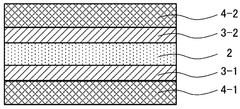
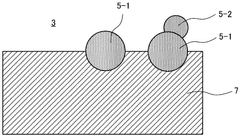
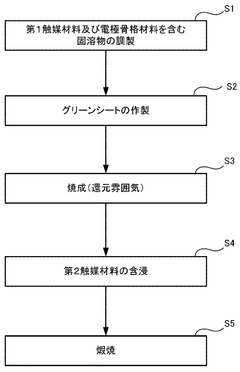
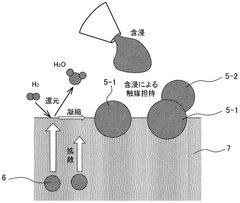
- An electrode structure is designed with first catalyst particles partially embedded and partially exposed in an electrode skeleton, and second catalyst particles bonded to the first catalyst particles, formed from the same components, to prevent particle movement and aggregation during high-temperature operation.
Electrolytic cell stack, electrolytic cell cartridge, electrolytic cell module, and method for manufacturing electrolytic cell stack
PatentWO2025220485A1
Innovation
- The electrolysis cell stack design incorporates larger heat transfer areas for the hydrogen gas discharge-side heat exchanger compared to the feed gas supply-side heat exchanger, with integrated heat exchangers on both sides of the cell stack to manage temperature and reduce internal resistance, using materials resistant to high temperatures for sealing and integration.


Environmental Impact Assessment of Catalyst Degradation
The environmental implications of catalyst degradation in electrolyzer systems present significant challenges that extend beyond immediate operational concerns. When comparing sintering patterns between stack configurations and standard designs, the environmental footprint varies considerably due to different degradation mechanisms and material utilization efficiencies.
Catalyst sintering in electrolyzer stacks typically results in more concentrated degradation patterns, leading to localized environmental impacts. The agglomeration of precious metal particles creates hotspots of material loss that can be more effectively contained and managed during maintenance cycles. However, the higher operating temperatures and current densities in stack configurations accelerate the sintering process, potentially increasing the frequency of catalyst replacement and associated environmental burdens.
Standard electrolyzer designs exhibit more distributed catalyst degradation patterns, which can complicate environmental impact assessment. The gradual sintering across larger surface areas may appear less severe initially but often results in more extensive material waste over extended operational periods. This distributed degradation pattern makes selective catalyst recovery more challenging, potentially leading to higher overall environmental costs.
The lifecycle environmental assessment reveals that sintered catalyst materials pose unique challenges for recycling and disposal. Agglomerated precious metal particles require energy-intensive separation processes, contributing to increased carbon footprint during recovery operations. The formation of mixed metal phases during sintering can also complicate purification processes, reducing the efficiency of material recovery and increasing waste generation.
Water quality impacts represent another critical environmental consideration. Catalyst degradation products can potentially leach into process water streams, requiring enhanced filtration and treatment systems. Stack configurations may concentrate these contaminants, facilitating more effective treatment, while standard designs may distribute pollutants across larger volumes, complicating remediation efforts.
The environmental benefits of improved catalyst utilization in optimized designs must be weighed against the increased complexity of end-of-life management. Advanced stack configurations that minimize sintering may reduce overall environmental impact despite requiring more sophisticated recycling processes.
Catalyst sintering in electrolyzer stacks typically results in more concentrated degradation patterns, leading to localized environmental impacts. The agglomeration of precious metal particles creates hotspots of material loss that can be more effectively contained and managed during maintenance cycles. However, the higher operating temperatures and current densities in stack configurations accelerate the sintering process, potentially increasing the frequency of catalyst replacement and associated environmental burdens.
Standard electrolyzer designs exhibit more distributed catalyst degradation patterns, which can complicate environmental impact assessment. The gradual sintering across larger surface areas may appear less severe initially but often results in more extensive material waste over extended operational periods. This distributed degradation pattern makes selective catalyst recovery more challenging, potentially leading to higher overall environmental costs.
The lifecycle environmental assessment reveals that sintered catalyst materials pose unique challenges for recycling and disposal. Agglomerated precious metal particles require energy-intensive separation processes, contributing to increased carbon footprint during recovery operations. The formation of mixed metal phases during sintering can also complicate purification processes, reducing the efficiency of material recovery and increasing waste generation.
Water quality impacts represent another critical environmental consideration. Catalyst degradation products can potentially leach into process water streams, requiring enhanced filtration and treatment systems. Stack configurations may concentrate these contaminants, facilitating more effective treatment, while standard designs may distribute pollutants across larger volumes, complicating remediation efforts.
The environmental benefits of improved catalyst utilization in optimized designs must be weighed against the increased complexity of end-of-life management. Advanced stack configurations that minimize sintering may reduce overall environmental impact despite requiring more sophisticated recycling processes.
Cost-Performance Trade-offs in Electrolyzer Durability
The durability of electrolyzer systems presents a complex landscape of cost-performance trade-offs, particularly when examining catalyst sintering behavior across different design architectures. Traditional electrolyzer designs typically prioritize initial cost optimization, often employing catalyst loadings and operating parameters that may compromise long-term stability. In contrast, advanced stack configurations incorporate design elements specifically engineered to mitigate catalyst degradation, though these enhancements come with increased upfront investment requirements.
Catalyst sintering represents one of the most significant durability challenges in electrolyzer operation, directly impacting the economic viability of hydrogen production systems. The trade-off between catalyst loading density and operational lifetime creates a critical decision point for system designers. Higher catalyst loadings can extend operational life by providing redundancy against sintering losses, but substantially increase material costs. Conversely, minimal catalyst loadings reduce initial investment but may result in accelerated performance degradation and more frequent replacement cycles.
Operating parameter optimization reveals another dimension of cost-performance balance. Stack designs that incorporate advanced thermal management and current density control can operate catalysts within optimal temperature ranges, significantly reducing sintering rates. However, these sophisticated control systems require additional hardware investment and increase system complexity. The economic benefit of extended catalyst life must be weighed against the increased capital expenditure and maintenance requirements of advanced control systems.
The temporal aspect of these trade-offs adds further complexity to economic analysis. While standard designs may demonstrate lower initial costs, the total cost of ownership often favors more durable configurations over extended operational periods. Catalyst replacement costs, system downtime, and performance degradation penalties can substantially impact the economic case for hydrogen production. Advanced stack designs that minimize catalyst sintering may achieve break-even points within 3-5 years of operation, depending on utilization rates and hydrogen pricing structures.
Market dynamics also influence the optimal balance between durability and cost. In applications requiring high availability and consistent performance, such as industrial hydrogen supply, the premium for enhanced durability becomes economically justified. Conversely, in emerging markets or applications with lower utilization factors, cost-optimized designs may provide superior economic returns despite reduced operational lifespans.
Catalyst sintering represents one of the most significant durability challenges in electrolyzer operation, directly impacting the economic viability of hydrogen production systems. The trade-off between catalyst loading density and operational lifetime creates a critical decision point for system designers. Higher catalyst loadings can extend operational life by providing redundancy against sintering losses, but substantially increase material costs. Conversely, minimal catalyst loadings reduce initial investment but may result in accelerated performance degradation and more frequent replacement cycles.
Operating parameter optimization reveals another dimension of cost-performance balance. Stack designs that incorporate advanced thermal management and current density control can operate catalysts within optimal temperature ranges, significantly reducing sintering rates. However, these sophisticated control systems require additional hardware investment and increase system complexity. The economic benefit of extended catalyst life must be weighed against the increased capital expenditure and maintenance requirements of advanced control systems.
The temporal aspect of these trade-offs adds further complexity to economic analysis. While standard designs may demonstrate lower initial costs, the total cost of ownership often favors more durable configurations over extended operational periods. Catalyst replacement costs, system downtime, and performance degradation penalties can substantially impact the economic case for hydrogen production. Advanced stack designs that minimize catalyst sintering may achieve break-even points within 3-5 years of operation, depending on utilization rates and hydrogen pricing structures.
Market dynamics also influence the optimal balance between durability and cost. In applications requiring high availability and consistent performance, such as industrial hydrogen supply, the premium for enhanced durability becomes economically justified. Conversely, in emerging markets or applications with lower utilization factors, cost-optimized designs may provide superior economic returns despite reduced operational lifespans.
Unlock deeper insights with PatSnap Eureka Quick Research — get a full tech report to explore trends and direct your research. Try now!
Generate Your Research Report Instantly with AI Agent
Supercharge your innovation with PatSnap Eureka AI Agent Platform!