

Comparing CXL Memory Modules With Optane Technology
JUN 3, 20269 MIN READ
Generate Your Research Report Instantly with AI Agent
PatSnap Eureka helps you evaluate technical feasibility & market potential.
CXL Memory Technology Background and Objectives
The evolution of memory technology has been driven by the persistent demand for higher performance, greater capacity, and improved efficiency in computing systems. Traditional memory architectures have faced increasing limitations as data-intensive applications and artificial intelligence workloads continue to expand. The emergence of Compute Express Link (CXL) technology represents a paradigm shift in memory system design, offering a standardized approach to memory expansion and disaggregation that addresses the growing memory wall challenge in modern computing.
CXL technology builds upon the PCIe infrastructure to create a unified interconnect standard that enables coherent memory access across diverse computing resources. This innovation emerged from the recognition that traditional memory hierarchies, constrained by physical proximity and limited scalability, could no longer meet the demands of next-generation applications. The technology facilitates seamless integration of various memory types, including traditional DRAM, persistent memory, and specialized accelerator memory, within a single coherent memory space.
The development trajectory of CXL has been marked by rapid industry adoption and continuous specification evolution. Starting with CXL 1.0 in 2019, the standard has progressed through multiple iterations, each introducing enhanced capabilities for memory pooling, sharing, and management. The technology's foundation rests on three key protocols: CXL.io for device discovery and configuration, CXL.cache for coherent caching, and CXL.mem for memory access, collectively enabling sophisticated memory architectures previously unattainable.
The primary objective of CXL memory technology centers on breaking down traditional memory silos and creating flexible, scalable memory infrastructures. This includes enabling memory disaggregation at the rack level, supporting heterogeneous memory types within unified address spaces, and providing the foundation for software-defined memory architectures. The technology aims to optimize total cost of ownership while delivering superior performance characteristics compared to conventional memory expansion methods.
Furthermore, CXL technology seeks to address the specific challenges posed by emerging workloads such as machine learning inference, real-time analytics, and high-performance computing applications. These objectives encompass not only raw performance improvements but also enhanced reliability, simplified system management, and reduced complexity in memory provisioning and allocation across distributed computing environments.
CXL technology builds upon the PCIe infrastructure to create a unified interconnect standard that enables coherent memory access across diverse computing resources. This innovation emerged from the recognition that traditional memory hierarchies, constrained by physical proximity and limited scalability, could no longer meet the demands of next-generation applications. The technology facilitates seamless integration of various memory types, including traditional DRAM, persistent memory, and specialized accelerator memory, within a single coherent memory space.
The development trajectory of CXL has been marked by rapid industry adoption and continuous specification evolution. Starting with CXL 1.0 in 2019, the standard has progressed through multiple iterations, each introducing enhanced capabilities for memory pooling, sharing, and management. The technology's foundation rests on three key protocols: CXL.io for device discovery and configuration, CXL.cache for coherent caching, and CXL.mem for memory access, collectively enabling sophisticated memory architectures previously unattainable.
The primary objective of CXL memory technology centers on breaking down traditional memory silos and creating flexible, scalable memory infrastructures. This includes enabling memory disaggregation at the rack level, supporting heterogeneous memory types within unified address spaces, and providing the foundation for software-defined memory architectures. The technology aims to optimize total cost of ownership while delivering superior performance characteristics compared to conventional memory expansion methods.
Furthermore, CXL technology seeks to address the specific challenges posed by emerging workloads such as machine learning inference, real-time analytics, and high-performance computing applications. These objectives encompass not only raw performance improvements but also enhanced reliability, simplified system management, and reduced complexity in memory provisioning and allocation across distributed computing environments.
Market Demand for High-Performance Memory Solutions
The enterprise memory landscape is experiencing unprecedented demand driven by the exponential growth of data-intensive applications across multiple sectors. Cloud computing providers, artificial intelligence platforms, and high-performance computing environments require memory solutions that can handle massive datasets while maintaining low latency and high throughput. Traditional DRAM architectures are reaching physical and economic limitations, creating a critical gap between performance requirements and available solutions.
Data centers worldwide are grappling with the memory wall phenomenon, where processor speeds continue to advance while memory bandwidth and capacity improvements lag significantly behind. This disparity has intensified the search for innovative memory technologies that can bridge the performance gap. The emergence of memory-centric computing architectures and in-memory databases has further amplified the need for high-capacity, high-speed memory solutions that can support real-time analytics and machine learning workloads.
The artificial intelligence and machine learning sectors represent particularly demanding use cases for advanced memory technologies. Training large language models and deep neural networks requires substantial memory bandwidth and capacity to handle the continuous data flow between processors and storage systems. Traditional memory hierarchies create bottlenecks that significantly impact training times and operational efficiency, driving organizations to seek alternative memory architectures.
Edge computing applications are creating additional market pressure for memory solutions that combine high performance with energy efficiency. As processing moves closer to data sources, memory systems must deliver enterprise-grade performance while operating within constrained power and thermal envelopes. This requirement has sparked interest in persistent memory technologies that can maintain data integrity while providing near-DRAM performance characteristics.
The financial services industry, particularly high-frequency trading platforms, demands ultra-low latency memory solutions capable of processing millions of transactions per second. These applications cannot tolerate the latency penalties associated with traditional storage hierarchies, necessitating memory technologies that blur the lines between volatile and non-volatile storage while maintaining consistent performance under extreme workloads.
Enterprise virtualization environments are driving demand for memory solutions that can support higher consolidation ratios while maintaining application performance isolation. The ability to dynamically allocate and reallocate memory resources across virtual machines requires flexible memory architectures that can adapt to changing workload demands without compromising system stability or performance predictability.
Data centers worldwide are grappling with the memory wall phenomenon, where processor speeds continue to advance while memory bandwidth and capacity improvements lag significantly behind. This disparity has intensified the search for innovative memory technologies that can bridge the performance gap. The emergence of memory-centric computing architectures and in-memory databases has further amplified the need for high-capacity, high-speed memory solutions that can support real-time analytics and machine learning workloads.
The artificial intelligence and machine learning sectors represent particularly demanding use cases for advanced memory technologies. Training large language models and deep neural networks requires substantial memory bandwidth and capacity to handle the continuous data flow between processors and storage systems. Traditional memory hierarchies create bottlenecks that significantly impact training times and operational efficiency, driving organizations to seek alternative memory architectures.
Edge computing applications are creating additional market pressure for memory solutions that combine high performance with energy efficiency. As processing moves closer to data sources, memory systems must deliver enterprise-grade performance while operating within constrained power and thermal envelopes. This requirement has sparked interest in persistent memory technologies that can maintain data integrity while providing near-DRAM performance characteristics.
The financial services industry, particularly high-frequency trading platforms, demands ultra-low latency memory solutions capable of processing millions of transactions per second. These applications cannot tolerate the latency penalties associated with traditional storage hierarchies, necessitating memory technologies that blur the lines between volatile and non-volatile storage while maintaining consistent performance under extreme workloads.
Enterprise virtualization environments are driving demand for memory solutions that can support higher consolidation ratios while maintaining application performance isolation. The ability to dynamically allocate and reallocate memory resources across virtual machines requires flexible memory architectures that can adapt to changing workload demands without compromising system stability or performance predictability.
Current State of CXL vs Optane Memory Technologies
CXL (Compute Express Link) memory modules represent an emerging memory architecture that leverages PCIe infrastructure to provide cache-coherent memory expansion and pooling capabilities. Currently, CXL memory operates as byte-addressable memory that can be dynamically allocated across multiple processors and accelerators. The technology enables memory disaggregation at the rack level, allowing systems to scale memory capacity independently from compute resources. Major implementations include Samsung's CXL-DRAM modules and SK Hynix's DDR5-based CXL memory solutions, which are now entering production phases with capacities ranging from 64GB to 512GB per module.
Intel's Optane technology, based on 3D XPoint non-volatile memory, has established itself as a mature solution bridging the gap between DRAM and traditional storage. Optane operates in two primary modes: as persistent memory (PMEM) providing byte-addressable non-volatile storage, and as storage-class memory offering ultra-low latency block storage. Current Optane implementations include the discontinued but still widely deployed 100 series and 200 series modules, with capacities reaching up to 512GB per DIMM. The technology demonstrates access latencies approximately 3-4 times slower than DRAM but significantly faster than NAND flash storage.
Performance characteristics reveal distinct advantages for each technology. CXL memory modules exhibit latencies ranging from 150-300 nanoseconds depending on the memory tier and distance from the processor, while maintaining full cache coherency across the memory fabric. Optane technology delivers read latencies around 350 nanoseconds for memory mode operations, with write operations showing higher latency variations. CXL's bandwidth scales with PCIe generation, currently achieving up to 64 GB/s per x16 connection in PCIe 5.0 implementations.
The deployment landscape shows CXL gaining momentum in hyperscale data centers and high-performance computing environments where memory pooling and disaggregation provide significant operational benefits. Major cloud service providers are actively evaluating CXL memory solutions for workloads requiring large memory footprints with dynamic allocation capabilities. Optane maintains strong positioning in enterprise applications requiring persistent memory semantics, particularly in database acceleration, in-memory analytics, and storage caching scenarios where data persistence across power cycles remains critical.
Technical maturity levels differ significantly between the technologies. Optane represents a proven solution with established ecosystem support, comprehensive software stack integration, and well-understood performance characteristics. CXL memory modules are in early commercial deployment phases, with ongoing standardization efforts and evolving software support frameworks. The CXL ecosystem continues developing memory management protocols, quality of service mechanisms, and security features necessary for production enterprise deployments.
Intel's Optane technology, based on 3D XPoint non-volatile memory, has established itself as a mature solution bridging the gap between DRAM and traditional storage. Optane operates in two primary modes: as persistent memory (PMEM) providing byte-addressable non-volatile storage, and as storage-class memory offering ultra-low latency block storage. Current Optane implementations include the discontinued but still widely deployed 100 series and 200 series modules, with capacities reaching up to 512GB per DIMM. The technology demonstrates access latencies approximately 3-4 times slower than DRAM but significantly faster than NAND flash storage.
Performance characteristics reveal distinct advantages for each technology. CXL memory modules exhibit latencies ranging from 150-300 nanoseconds depending on the memory tier and distance from the processor, while maintaining full cache coherency across the memory fabric. Optane technology delivers read latencies around 350 nanoseconds for memory mode operations, with write operations showing higher latency variations. CXL's bandwidth scales with PCIe generation, currently achieving up to 64 GB/s per x16 connection in PCIe 5.0 implementations.
The deployment landscape shows CXL gaining momentum in hyperscale data centers and high-performance computing environments where memory pooling and disaggregation provide significant operational benefits. Major cloud service providers are actively evaluating CXL memory solutions for workloads requiring large memory footprints with dynamic allocation capabilities. Optane maintains strong positioning in enterprise applications requiring persistent memory semantics, particularly in database acceleration, in-memory analytics, and storage caching scenarios where data persistence across power cycles remains critical.
Technical maturity levels differ significantly between the technologies. Optane represents a proven solution with established ecosystem support, comprehensive software stack integration, and well-understood performance characteristics. CXL memory modules are in early commercial deployment phases, with ongoing standardization efforts and evolving software support frameworks. The CXL ecosystem continues developing memory management protocols, quality of service mechanisms, and security features necessary for production enterprise deployments.
Existing CXL and Optane Implementation Solutions
01 CXL memory interface and protocol implementation
Technologies for implementing Compute Express Link interface protocols that enable high-speed communication between processors and memory devices. These implementations focus on optimizing data transfer rates, reducing latency, and ensuring compatibility with existing memory architectures while providing enhanced bandwidth capabilities for modern computing systems.- CXL memory interface and protocol implementation: Technologies for implementing Compute Express Link interface protocols that enable high-speed communication between processors and memory devices. These implementations focus on optimizing data transfer rates, reducing latency, and ensuring compatibility with existing memory architectures while providing enhanced bandwidth for memory-intensive applications.
- Memory module architecture and design optimization: Advanced memory module designs that incorporate specialized architectures for improved performance and efficiency. These designs focus on optimizing memory access patterns, enhancing data storage capabilities, and providing better integration with high-performance computing systems through innovative module configurations and connection methods.
- Non-volatile memory integration and management: Systems and methods for integrating non-volatile memory technologies into computing architectures, focusing on memory persistence, data integrity, and performance optimization. These technologies enable efficient management of persistent memory resources and provide enhanced storage capabilities for high-performance applications.
- Memory controller and cache optimization: Advanced memory controller designs and cache management systems that optimize memory access patterns and improve overall system performance. These technologies focus on intelligent memory allocation, cache coherency protocols, and efficient data movement between different memory tiers in modern computing systems.
- High-speed memory interconnect and fabric technologies: Technologies for creating high-bandwidth, low-latency interconnects between memory components and processing units. These solutions enable scalable memory fabric architectures that support distributed memory systems and provide efficient communication pathways for data-intensive computing applications.
02 Memory module architecture and design optimization
Advanced memory module designs that incorporate specialized architectures for improved performance and efficiency. These designs focus on optimizing memory access patterns, enhancing data storage capabilities, and providing better integration with host systems through innovative module configurations and interface designs.Expand Specific Solutions03 Non-volatile memory integration and management
Systems and methods for integrating non-volatile memory technologies with traditional memory hierarchies. These approaches focus on managing data persistence, optimizing write and read operations, and providing seamless integration between volatile and non-volatile memory components to enhance overall system performance.Expand Specific Solutions04 Memory pooling and resource sharing mechanisms
Technologies that enable efficient sharing and pooling of memory resources across multiple computing nodes or processors. These mechanisms provide dynamic allocation capabilities, improved resource utilization, and enhanced scalability for distributed computing environments through advanced memory management protocols.Expand Specific Solutions05 Cache coherency and memory consistency protocols
Advanced protocols and mechanisms for maintaining cache coherency and memory consistency in multi-processor systems utilizing high-speed memory interfaces. These solutions address synchronization challenges, ensure data integrity across multiple memory domains, and optimize performance in complex memory hierarchies.Expand Specific Solutions
Key Players in CXL and Optane Memory Markets
The CXL memory modules versus Optane technology landscape represents a transitional phase in the memory industry, where traditional memory hierarchies are being redefined through emerging interconnect standards and storage-class memory innovations. The market is experiencing significant growth driven by AI workloads and data-intensive applications requiring high-bandwidth, low-latency memory solutions. Technology maturity varies considerably across players, with established memory giants like Samsung Electronics, Micron Technology, SK hynix, and Intel leading through their extensive DRAM and NAND expertise, while Intel's discontinued Optane creates opportunities for emerging companies. Specialized firms like Primemas focus on CXL-enabled memory systems, and Chinese companies including Inspur, xFusion, and Longsys are rapidly developing competitive solutions. The ecosystem spans from semiconductor manufacturers to system integrators, indicating a maturing but still evolving competitive environment where CXL adoption accelerates memory disaggregation trends.
Micron Technology, Inc.
Technical Solution: Micron focuses on CXL memory modules using traditional DRAM and emerging memory technologies as alternatives to Optane. The company develops CXL-attached memory expanders and memory pooling solutions that provide high-bandwidth, low-latency access to large memory pools. Micron's CXL strategy emphasizes DDR-based memory modules with CXL interfaces, enabling memory disaggregation and capacity expansion beyond traditional DIMM limitations. Their solutions target cloud computing and AI workloads requiring massive memory capacity.
Strengths: Leading DRAM manufacturer with strong CXL development capabilities, cost-effective memory solutions. Weaknesses: Lacks native persistent memory technology like Optane, dependent on volatile memory architectures for CXL implementations.
Samsung Electronics Co., Ltd.
Technical Solution: Samsung develops CXL memory solutions leveraging their advanced DRAM and emerging storage-class memory technologies. The company's approach includes CXL-enabled memory modules that combine high-density DRAM with intelligent memory controllers for memory pooling and expansion applications. Samsung's CXL strategy focuses on providing scalable memory architectures for enterprise servers and cloud infrastructure, offering alternatives to Intel's Optane through their own persistent memory research and development initiatives.
Strengths: Advanced memory manufacturing capabilities, strong R&D in emerging memory technologies, comprehensive semiconductor ecosystem. Weaknesses: Later entry into persistent memory market compared to Intel's Optane, still developing competitive storage-class memory solutions.
Core Technical Innovations in Memory Architecture
Improving memory training performance by utilizing compute express link (CXL) device-supported memory
PatentWO2022036536A1
Innovation
- Utilizing CXL device-supported memory as global boot memory to accelerate memory training process during system initialization, which reduces boot time compared to traditional memory training methods.
- Integration of hardware and software components in CXL architecture to optimize memory training performance, enabling faster system startup and improved overall processing efficiency.
- Implementation of CXL device memory as a dedicated boot memory resource that operates independently from main system memory during the boot process.


Compute express link memory device and computing device
PatentPendingUS20240394331A1
Innovation
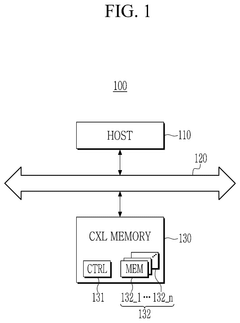
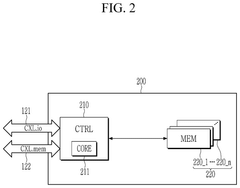
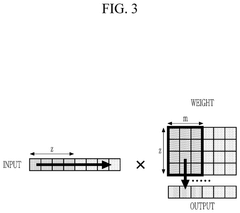
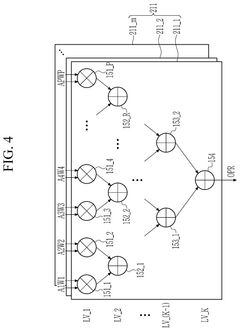
- A Compute Express Link (CXL) memory device and system that selects appropriate calculation circuits based on the type of calculation, utilizing a CXL interface for efficient data processing and memory management, allowing for high-bandwidth and large-capacity memory operations.
Performance Benchmarking and Comparison Framework
Establishing a comprehensive performance benchmarking framework for comparing CXL memory modules with Optane technology requires careful consideration of multiple evaluation dimensions and standardized testing methodologies. The framework must address the fundamental differences in architecture, access patterns, and use case scenarios between these two memory technologies.
The primary performance metrics should encompass latency measurements across various access patterns, including sequential and random read/write operations. Bandwidth evaluation must consider both sustained throughput and burst performance characteristics. Memory access latency becomes particularly critical when comparing CXL's cache-coherent protocol overhead against Optane's direct storage-class memory access patterns.
Workload-specific benchmarking scenarios should include database operations, in-memory analytics, virtualization environments, and high-performance computing applications. Each scenario requires tailored test configurations to accurately reflect real-world performance characteristics. Database workloads should focus on transaction processing speeds and query response times, while analytics workloads should emphasize large dataset processing capabilities.
The testing environment standardization involves controlling variables such as CPU architecture, memory controller specifications, and system configuration parameters. Consistent hardware platforms ensure reliable comparison results across different test iterations. Power consumption measurements should be integrated throughout all performance tests to provide comprehensive efficiency analysis.
Statistical analysis methodologies must account for performance variance and establish confidence intervals for benchmark results. Multiple test runs with different data patterns help identify performance consistency and potential bottlenecks. The framework should incorporate both synthetic benchmarks and application-specific performance indicators.
Scalability testing requires evaluating performance characteristics under varying memory capacities and concurrent access loads. This includes measuring performance degradation patterns as memory utilization increases and assessing multi-threaded application performance. The framework must also consider thermal throttling effects and sustained performance under continuous workloads.
The primary performance metrics should encompass latency measurements across various access patterns, including sequential and random read/write operations. Bandwidth evaluation must consider both sustained throughput and burst performance characteristics. Memory access latency becomes particularly critical when comparing CXL's cache-coherent protocol overhead against Optane's direct storage-class memory access patterns.
Workload-specific benchmarking scenarios should include database operations, in-memory analytics, virtualization environments, and high-performance computing applications. Each scenario requires tailored test configurations to accurately reflect real-world performance characteristics. Database workloads should focus on transaction processing speeds and query response times, while analytics workloads should emphasize large dataset processing capabilities.
The testing environment standardization involves controlling variables such as CPU architecture, memory controller specifications, and system configuration parameters. Consistent hardware platforms ensure reliable comparison results across different test iterations. Power consumption measurements should be integrated throughout all performance tests to provide comprehensive efficiency analysis.
Statistical analysis methodologies must account for performance variance and establish confidence intervals for benchmark results. Multiple test runs with different data patterns help identify performance consistency and potential bottlenecks. The framework should incorporate both synthetic benchmarks and application-specific performance indicators.
Scalability testing requires evaluating performance characteristics under varying memory capacities and concurrent access loads. This includes measuring performance degradation patterns as memory utilization increases and assessing multi-threaded application performance. The framework must also consider thermal throttling effects and sustained performance under continuous workloads.
Cost-Benefit Analysis of Memory Technology Adoption
The adoption of advanced memory technologies requires careful evaluation of financial implications and operational benefits. When comparing CXL memory modules with Intel Optane technology, organizations must assess both immediate costs and long-term value propositions to make informed investment decisions.
Initial capital expenditure represents a significant consideration in memory technology adoption. CXL memory modules typically demonstrate lower per-gigabyte costs compared to Optane technology, particularly as manufacturing scales increase. The standardized nature of CXL interfaces reduces vendor lock-in risks and enables competitive pricing across multiple suppliers. Conversely, Optane technology commands premium pricing due to its proprietary 3D XPoint architecture and specialized manufacturing requirements.
Operational cost analysis reveals distinct advantages for each technology. CXL memory modules offer reduced power consumption per bit stored, translating to lower electricity costs in large-scale deployments. The hot-pluggable nature of CXL modules minimizes system downtime during maintenance operations, reducing operational disruption costs. Optane technology, while consuming more power, provides exceptional endurance characteristics that extend replacement cycles and reduce maintenance frequency.
Performance-driven cost benefits vary significantly based on application requirements. CXL memory expansion delivers substantial value in memory-intensive workloads by eliminating expensive system upgrades. The ability to dynamically allocate memory resources across multiple processors reduces hardware redundancy costs. Optane technology excels in scenarios requiring persistent memory capabilities, eliminating complex backup infrastructure and reducing data recovery costs.
Total cost of ownership calculations must incorporate technology lifecycle considerations. CXL memory modules benefit from rapid technological advancement and decreasing costs, suggesting favorable long-term economics. The modular architecture enables incremental capacity expansion, optimizing capital allocation. Optane technology offers predictable performance characteristics and proven reliability, reducing risk-related costs in mission-critical applications.
Return on investment timelines differ substantially between technologies. CXL implementations typically achieve cost recovery within 18-24 months through improved system utilization and reduced infrastructure requirements. Optane deployments may require longer payback periods but deliver sustained performance benefits and operational simplification that justify premium investments in specific use cases.
Initial capital expenditure represents a significant consideration in memory technology adoption. CXL memory modules typically demonstrate lower per-gigabyte costs compared to Optane technology, particularly as manufacturing scales increase. The standardized nature of CXL interfaces reduces vendor lock-in risks and enables competitive pricing across multiple suppliers. Conversely, Optane technology commands premium pricing due to its proprietary 3D XPoint architecture and specialized manufacturing requirements.
Operational cost analysis reveals distinct advantages for each technology. CXL memory modules offer reduced power consumption per bit stored, translating to lower electricity costs in large-scale deployments. The hot-pluggable nature of CXL modules minimizes system downtime during maintenance operations, reducing operational disruption costs. Optane technology, while consuming more power, provides exceptional endurance characteristics that extend replacement cycles and reduce maintenance frequency.
Performance-driven cost benefits vary significantly based on application requirements. CXL memory expansion delivers substantial value in memory-intensive workloads by eliminating expensive system upgrades. The ability to dynamically allocate memory resources across multiple processors reduces hardware redundancy costs. Optane technology excels in scenarios requiring persistent memory capabilities, eliminating complex backup infrastructure and reducing data recovery costs.
Total cost of ownership calculations must incorporate technology lifecycle considerations. CXL memory modules benefit from rapid technological advancement and decreasing costs, suggesting favorable long-term economics. The modular architecture enables incremental capacity expansion, optimizing capital allocation. Optane technology offers predictable performance characteristics and proven reliability, reducing risk-related costs in mission-critical applications.
Return on investment timelines differ substantially between technologies. CXL implementations typically achieve cost recovery within 18-24 months through improved system utilization and reduced infrastructure requirements. Optane deployments may require longer payback periods but deliver sustained performance benefits and operational simplification that justify premium investments in specific use cases.
Unlock deeper insights with PatSnap Eureka Quick Research — get a full tech report to explore trends and direct your research. Try now!
Generate Your Research Report Instantly with AI Agent
Supercharge your innovation with PatSnap Eureka AI Agent Platform!