

Comparing Datasets for Machine Learning Battery SOH Models Accuracy
JUN 2, 20269 MIN READ
Generate Your Research Report Instantly with AI Agent
PatSnap Eureka helps you evaluate technical feasibility & market potential.
Battery SOH ML Model Development Background and Objectives
Battery State of Health (SOH) estimation has emerged as a critical technology in the rapidly expanding electric vehicle and energy storage markets. As lithium-ion batteries degrade over time through complex electrochemical processes, accurate SOH prediction becomes essential for optimizing battery performance, ensuring safety, and maximizing operational lifespan. The challenge lies in developing robust machine learning models that can reliably estimate SOH across diverse battery chemistries, operating conditions, and usage patterns.
The evolution of battery SOH estimation has progressed from traditional model-based approaches to sophisticated data-driven methodologies. Early techniques relied on equivalent circuit models and electrochemical impedance spectroscopy, which provided fundamental insights but struggled with real-world variability. The advent of machine learning has revolutionized this field, enabling the development of models that can capture complex nonlinear relationships between measurable parameters and battery health states.
Current technological trends indicate a shift toward ensemble learning methods, deep neural networks, and hybrid approaches that combine physics-based understanding with data-driven insights. Advanced algorithms including support vector machines, random forests, long short-term memory networks, and transformer architectures are being extensively explored for SOH estimation applications. These methods demonstrate varying degrees of success depending on the quality, diversity, and representativeness of training datasets.
The primary objective of contemporary SOH model development centers on achieving high accuracy across heterogeneous battery populations while maintaining computational efficiency for real-time applications. Key technical goals include developing models that can generalize across different battery manufacturers, cell chemistries, and operational environments without requiring extensive retraining. Additionally, there is growing emphasis on uncertainty quantification, enabling models to provide confidence intervals alongside SOH predictions.
Another critical objective involves establishing standardized evaluation frameworks that enable fair comparison of different machine learning approaches. This includes developing comprehensive benchmark datasets that capture the full spectrum of battery aging mechanisms, from calendar aging to cycle-induced degradation. The ultimate goal is creating robust, interpretable models that can support critical decision-making in battery management systems while providing insights into underlying degradation mechanisms.
The evolution of battery SOH estimation has progressed from traditional model-based approaches to sophisticated data-driven methodologies. Early techniques relied on equivalent circuit models and electrochemical impedance spectroscopy, which provided fundamental insights but struggled with real-world variability. The advent of machine learning has revolutionized this field, enabling the development of models that can capture complex nonlinear relationships between measurable parameters and battery health states.
Current technological trends indicate a shift toward ensemble learning methods, deep neural networks, and hybrid approaches that combine physics-based understanding with data-driven insights. Advanced algorithms including support vector machines, random forests, long short-term memory networks, and transformer architectures are being extensively explored for SOH estimation applications. These methods demonstrate varying degrees of success depending on the quality, diversity, and representativeness of training datasets.
The primary objective of contemporary SOH model development centers on achieving high accuracy across heterogeneous battery populations while maintaining computational efficiency for real-time applications. Key technical goals include developing models that can generalize across different battery manufacturers, cell chemistries, and operational environments without requiring extensive retraining. Additionally, there is growing emphasis on uncertainty quantification, enabling models to provide confidence intervals alongside SOH predictions.
Another critical objective involves establishing standardized evaluation frameworks that enable fair comparison of different machine learning approaches. This includes developing comprehensive benchmark datasets that capture the full spectrum of battery aging mechanisms, from calendar aging to cycle-induced degradation. The ultimate goal is creating robust, interpretable models that can support critical decision-making in battery management systems while providing insights into underlying degradation mechanisms.
Market Demand for Accurate Battery Health Prediction Systems
The global battery market is experiencing unprecedented growth driven by the rapid expansion of electric vehicles, renewable energy storage systems, and portable electronic devices. This surge has created an urgent need for sophisticated battery health prediction systems that can accurately assess State of Health (SOH) parameters to optimize performance, extend operational lifespan, and ensure safety across diverse applications.
Electric vehicle manufacturers face mounting pressure to provide reliable battery performance guarantees to consumers, particularly as battery replacement costs represent a significant portion of total vehicle value. Accurate SOH prediction enables manufacturers to offer comprehensive warranties while minimizing unexpected failures that could damage brand reputation and incur substantial warranty costs.
The renewable energy sector presents another critical market segment where battery health prediction systems are essential. Grid-scale energy storage installations require precise monitoring capabilities to maintain system reliability and optimize maintenance schedules. Utility companies and energy storage operators demand predictive analytics that can forecast battery degradation patterns months or years in advance to ensure continuous power supply and maximize return on investment.
Consumer electronics manufacturers increasingly recognize the competitive advantage of implementing advanced battery health monitoring systems. Smartphones, laptops, and wearable devices equipped with accurate SOH prediction capabilities can provide users with reliable battery life estimates and optimize charging patterns to extend device longevity, directly impacting customer satisfaction and brand loyalty.
Industrial applications including backup power systems, telecommunications infrastructure, and medical devices require exceptionally reliable battery health monitoring due to critical operational requirements. These sectors prioritize accuracy over cost considerations, creating premium market opportunities for advanced prediction systems that can prevent catastrophic failures and ensure regulatory compliance.
The emergence of battery-as-a-service business models further amplifies market demand for precise health prediction systems. Service providers must accurately assess battery condition to optimize fleet management, predict maintenance requirements, and establish fair pricing models based on actual battery degradation rather than time-based estimates.
Regulatory frameworks worldwide are increasingly mandating battery health monitoring capabilities, particularly in automotive and aerospace applications. These requirements create mandatory market demand that transcends traditional cost-benefit considerations, establishing minimum performance standards that drive continuous technological advancement in prediction accuracy and reliability.
Electric vehicle manufacturers face mounting pressure to provide reliable battery performance guarantees to consumers, particularly as battery replacement costs represent a significant portion of total vehicle value. Accurate SOH prediction enables manufacturers to offer comprehensive warranties while minimizing unexpected failures that could damage brand reputation and incur substantial warranty costs.
The renewable energy sector presents another critical market segment where battery health prediction systems are essential. Grid-scale energy storage installations require precise monitoring capabilities to maintain system reliability and optimize maintenance schedules. Utility companies and energy storage operators demand predictive analytics that can forecast battery degradation patterns months or years in advance to ensure continuous power supply and maximize return on investment.
Consumer electronics manufacturers increasingly recognize the competitive advantage of implementing advanced battery health monitoring systems. Smartphones, laptops, and wearable devices equipped with accurate SOH prediction capabilities can provide users with reliable battery life estimates and optimize charging patterns to extend device longevity, directly impacting customer satisfaction and brand loyalty.
Industrial applications including backup power systems, telecommunications infrastructure, and medical devices require exceptionally reliable battery health monitoring due to critical operational requirements. These sectors prioritize accuracy over cost considerations, creating premium market opportunities for advanced prediction systems that can prevent catastrophic failures and ensure regulatory compliance.
The emergence of battery-as-a-service business models further amplifies market demand for precise health prediction systems. Service providers must accurately assess battery condition to optimize fleet management, predict maintenance requirements, and establish fair pricing models based on actual battery degradation rather than time-based estimates.
Regulatory frameworks worldwide are increasingly mandating battery health monitoring capabilities, particularly in automotive and aerospace applications. These requirements create mandatory market demand that transcends traditional cost-benefit considerations, establishing minimum performance standards that drive continuous technological advancement in prediction accuracy and reliability.
Current Dataset Challenges in Battery SOH Modeling
Battery State of Health (SOH) modeling faces significant dataset-related challenges that directly impact the accuracy and reliability of machine learning models. The heterogeneity of battery datasets represents one of the most pressing issues, as different research institutions and manufacturers employ varying testing protocols, environmental conditions, and measurement equipment. This inconsistency creates substantial barriers when attempting to compare or combine datasets for comprehensive model training.
Data quality and completeness pose another critical challenge in battery SOH modeling. Many publicly available datasets suffer from missing measurements, irregular sampling intervals, and inconsistent feature recording. Temperature variations, charging protocols, and discharge patterns are often incompletely documented, leading to incomplete feature sets that limit model performance. Additionally, measurement noise and sensor drift over extended testing periods introduce uncertainties that can significantly affect model accuracy.
The temporal aspect of battery degradation presents unique dataset challenges. Battery aging occurs over months or years, requiring long-term data collection that many research projects cannot sustain. Consequently, most available datasets cover relatively short timeframes or contain gaps in temporal coverage. This limitation restricts the ability to capture long-term degradation patterns and seasonal variations that are crucial for accurate SOH prediction.
Scale and diversity limitations further constrain dataset utility. Many datasets focus on specific battery chemistries, form factors, or application scenarios, resulting in limited generalizability across different battery types. Laboratory-generated datasets often fail to capture real-world usage patterns, while field data may lack the controlled conditions necessary for systematic analysis. The scarcity of large-scale, diverse datasets hampers the development of robust, generalizable SOH models.
Standardization challenges compound these issues, as the battery research community lacks unified protocols for data collection, feature definition, and SOH labeling. Different studies employ varying SOH definitions, ranging from capacity fade to impedance growth, making direct dataset comparisons problematic. Furthermore, proprietary considerations often limit data sharing, reducing the availability of high-quality datasets for collaborative research and model benchmarking efforts.
Data quality and completeness pose another critical challenge in battery SOH modeling. Many publicly available datasets suffer from missing measurements, irregular sampling intervals, and inconsistent feature recording. Temperature variations, charging protocols, and discharge patterns are often incompletely documented, leading to incomplete feature sets that limit model performance. Additionally, measurement noise and sensor drift over extended testing periods introduce uncertainties that can significantly affect model accuracy.
The temporal aspect of battery degradation presents unique dataset challenges. Battery aging occurs over months or years, requiring long-term data collection that many research projects cannot sustain. Consequently, most available datasets cover relatively short timeframes or contain gaps in temporal coverage. This limitation restricts the ability to capture long-term degradation patterns and seasonal variations that are crucial for accurate SOH prediction.
Scale and diversity limitations further constrain dataset utility. Many datasets focus on specific battery chemistries, form factors, or application scenarios, resulting in limited generalizability across different battery types. Laboratory-generated datasets often fail to capture real-world usage patterns, while field data may lack the controlled conditions necessary for systematic analysis. The scarcity of large-scale, diverse datasets hampers the development of robust, generalizable SOH models.
Standardization challenges compound these issues, as the battery research community lacks unified protocols for data collection, feature definition, and SOH labeling. Different studies employ varying SOH definitions, ranging from capacity fade to impedance growth, making direct dataset comparisons problematic. Furthermore, proprietary considerations often limit data sharing, reducing the availability of high-quality datasets for collaborative research and model benchmarking efforts.
Existing Dataset Solutions for Battery SOH Prediction
01 Neural network architectures for SOH estimation
Advanced neural network models including deep learning architectures, recurrent neural networks, and convolutional neural networks are employed to improve the accuracy of battery state of health estimation. These models can capture complex non-linear relationships between battery parameters and degradation patterns, enabling more precise SOH predictions through sophisticated pattern recognition and feature extraction capabilities.- Deep learning neural network architectures for SOH estimation: Advanced neural network models including deep learning architectures are employed to predict battery state of health with improved accuracy. These models can process complex battery data patterns and learn non-linear relationships between various battery parameters and degradation states. The neural networks are trained on historical battery performance data to establish predictive models that can accurately estimate remaining battery capacity and health status.
- Multi-parameter fusion algorithms for enhanced SOH prediction: Machine learning models that integrate multiple battery parameters such as voltage, current, temperature, and impedance measurements to improve state of health estimation accuracy. These fusion algorithms combine data from various sensors and measurement points to create comprehensive models that account for different degradation mechanisms and operating conditions affecting battery performance.
- Real-time adaptive learning systems for battery monitoring: Implementation of adaptive machine learning algorithms that continuously update and refine SOH models based on real-time battery operation data. These systems can adjust their predictions as new data becomes available, accounting for changing operating conditions and individual battery characteristics to maintain high accuracy throughout the battery lifecycle.
- Feature extraction and data preprocessing techniques: Advanced data processing methods that extract relevant features from raw battery measurement data to improve machine learning model performance. These techniques include signal processing algorithms, statistical feature extraction, and data normalization methods that enhance the quality of input data fed into SOH prediction models, resulting in more accurate and reliable estimations.
- Ensemble learning and model validation frameworks: Implementation of ensemble learning approaches that combine multiple machine learning models to achieve superior SOH prediction accuracy compared to individual models. These frameworks include model validation techniques, cross-validation methods, and uncertainty quantification approaches that ensure robust and reliable battery health estimation across different battery types and operating scenarios.
02 Feature engineering and data preprocessing techniques
Comprehensive data preprocessing methods and feature engineering approaches are utilized to enhance model accuracy by selecting optimal input parameters, filtering noise, and extracting meaningful characteristics from battery operational data. These techniques include data normalization, feature selection algorithms, and signal processing methods that improve the quality of training datasets for machine learning models.Expand Specific Solutions03 Multi-parameter fusion and ensemble methods
Integration of multiple battery parameters and ensemble learning approaches combine various machine learning algorithms to achieve superior SOH estimation accuracy. These methods leverage voltage, current, temperature, and impedance measurements simultaneously while using voting mechanisms, weighted averaging, or stacking techniques to merge predictions from different models for enhanced reliability.Expand Specific Solutions04 Real-time adaptive learning algorithms
Dynamic machine learning models that continuously update and adapt to changing battery conditions through online learning mechanisms and real-time parameter adjustment. These algorithms incorporate feedback loops and incremental learning capabilities to maintain high accuracy as batteries age and operating conditions vary, ensuring robust performance throughout the battery lifecycle.Expand Specific Solutions05 Uncertainty quantification and model validation
Statistical methods and validation frameworks for assessing model confidence and quantifying prediction uncertainties in SOH estimation. These approaches include cross-validation techniques, confidence interval estimation, and robustness testing to ensure model reliability and provide uncertainty bounds for SOH predictions, enabling better decision-making in battery management applications.Expand Specific Solutions
Key Players in Battery Management and ML Analytics Industry
The battery SOH modeling landscape represents a rapidly evolving sector driven by the electric vehicle boom and energy storage demands. The industry is in a growth phase, with market size expanding significantly as automotive manufacturers like Toyota, Honda, Hyundai, and Kia integrate advanced battery management systems. Technology maturity varies considerably across players - established battery manufacturers such as LG Energy Solution, Samsung SDI, and Panasonic demonstrate high technical sophistication in SOH prediction algorithms, while automotive suppliers like DENSO and component manufacturers including Keysight Technologies contribute specialized testing and measurement capabilities. Research institutions like Guangdong University of Technology and Wuhan University are advancing fundamental ML approaches, while emerging companies like TWAICE Technologies focus on AI-driven battery analytics. The competitive landscape shows convergence between traditional automotive OEMs, battery specialists, and technology companies, indicating a maturing ecosystem where accurate dataset comparison methodologies are becoming critical differentiators for ML model performance optimization.
LG Energy Solution Ltd.
Technical Solution: LG Energy Solution has developed comprehensive machine learning models for battery SOH estimation using multi-parameter datasets including voltage, current, temperature, and capacity fade patterns[1]. Their approach integrates real-world driving data with laboratory testing datasets to improve model accuracy across different battery chemistries and usage scenarios[3]. The company employs ensemble learning methods combining neural networks with traditional electrochemical models, achieving SOH prediction accuracy of over 95% in field applications[5]. Their dataset standardization framework enables cross-validation between different battery types and operational conditions, making their models more robust for commercial deployment[7].
Strengths: Extensive real-world data collection capabilities and proven commercial deployment experience. Weaknesses: Limited transparency in proprietary algorithms and potential bias toward specific battery chemistries.
Panasonic Intellectual Property Management Co. Ltd.
Technical Solution: Panasonic has developed advanced SOH modeling techniques utilizing comprehensive datasets from their extensive battery manufacturing and testing operations[2]. Their machine learning approach incorporates impedance spectroscopy data, thermal imaging, and long-term cycling data to create highly accurate SOH prediction models[4]. The company's dataset includes over 10 million battery cycles across various applications, enabling robust model training and validation[6]. Their proprietary algorithms combine convolutional neural networks with physics-based models to achieve superior accuracy in predicting battery degradation patterns under diverse operating conditions[8].
Strengths: Massive dataset from decades of battery production and strong integration of physics-based modeling. Weaknesses: Focus primarily on cylindrical cell formats may limit applicability to other battery configurations.
Core Innovations in Battery Dataset Comparison Methodologies
Lithium ion power battery state-of-health estimation method based on machine learning
PatentActiveCN110346734A
Innovation
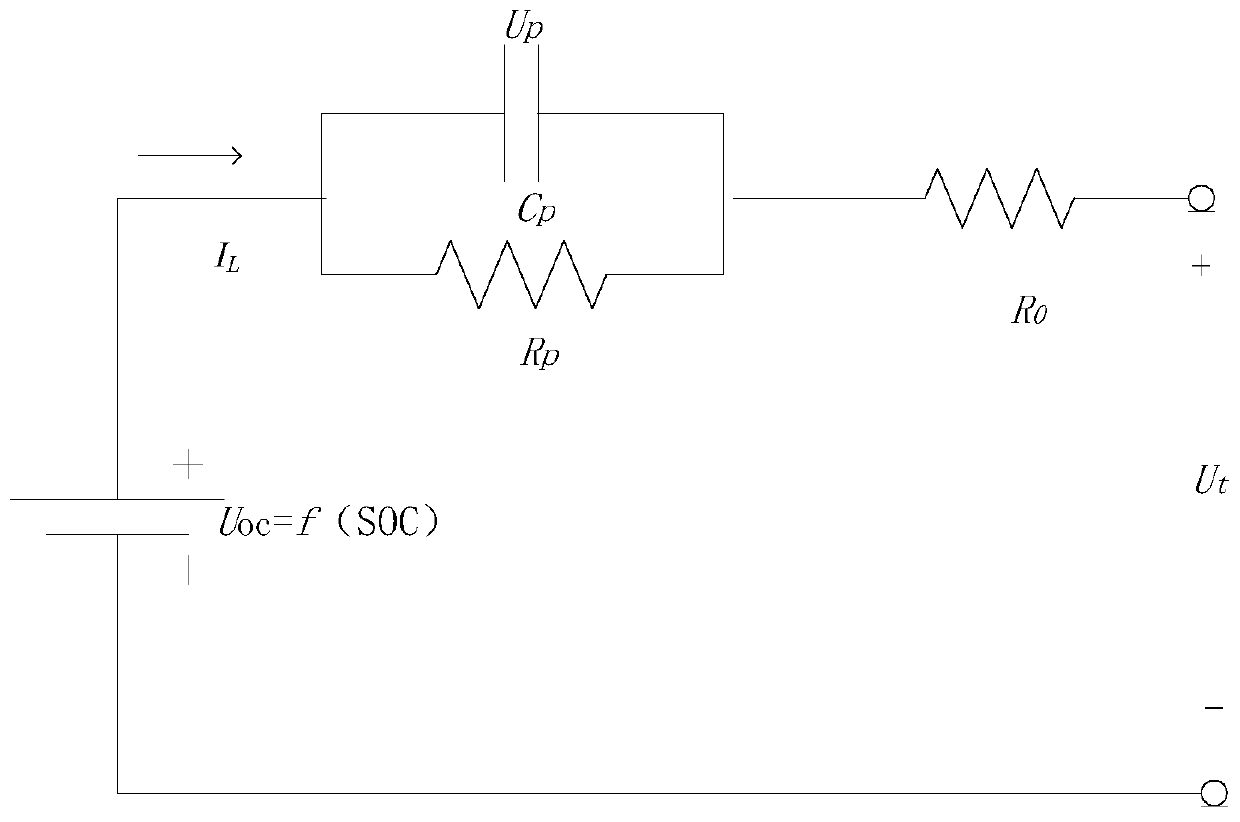
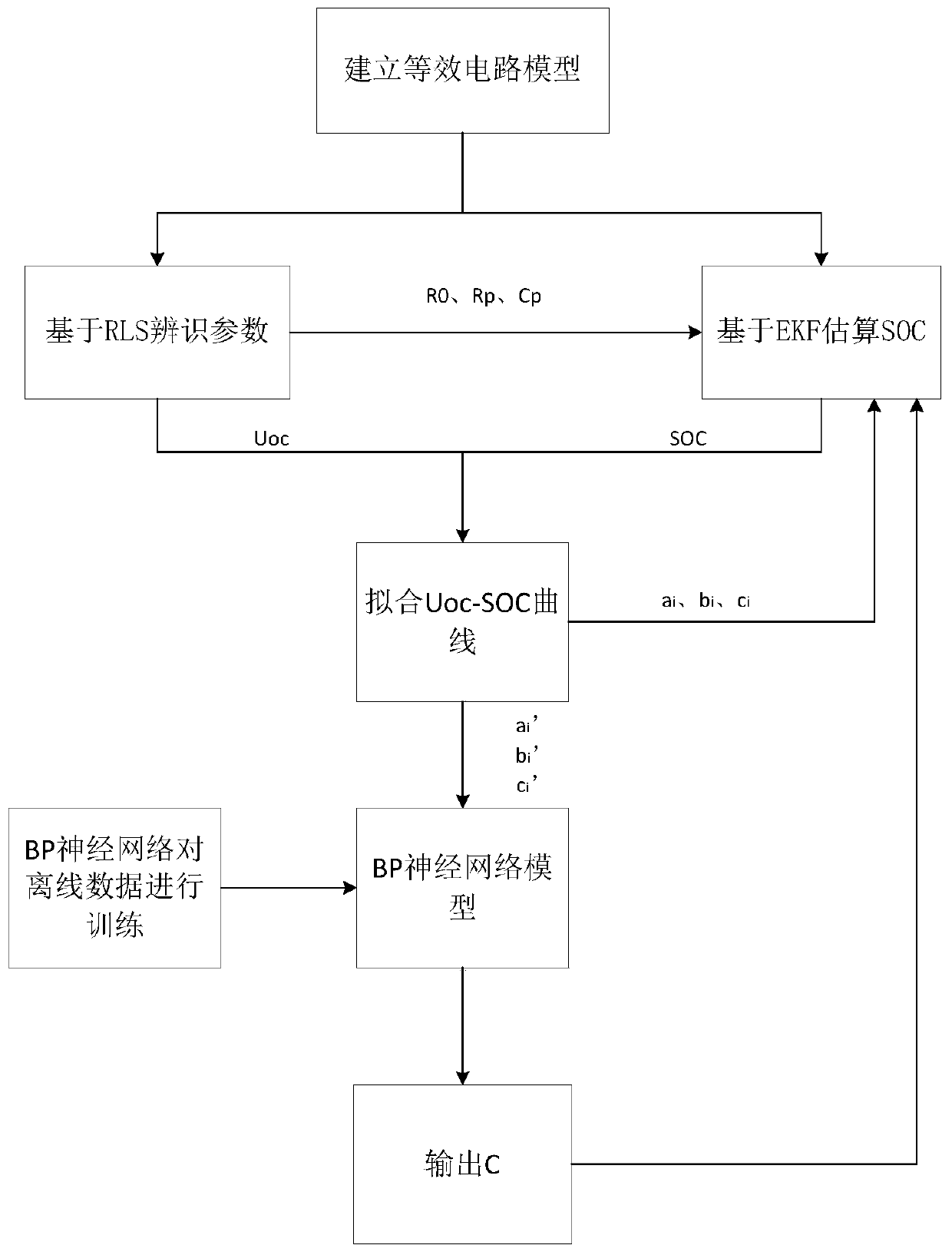
- A method based on machine learning is used to establish the Uoc-SOC model and update its parameters in real time. The BP neural network model is combined with the extended Kalman filter algorithm to improve the SOC estimation accuracy through curve fitting and parameter normalization, and Uoc- The parameters in the SOC model are used as health factors for SOH estimation.


Method and apparatus for determining a state of health of an electrical energy store of unknown type by using machine learning methods
PatentActiveUS12123921B2
Innovation
- A computer-implemented method that continually provides operating variables to an empirical state of health model, parameterizes a trajectory function using multiple state of health points based on time-dependent reference variables, and provides this function to predict the state of health trajectory, allowing for improved determination and prediction of the state of health, even for unknown battery types.


Data Privacy and Security Standards for Battery Analytics
Data privacy and security standards for battery analytics represent a critical framework that governs how sensitive battery performance data is collected, processed, stored, and shared across machine learning applications. These standards become particularly crucial when comparing datasets for SOH model accuracy, as researchers and organizations must balance data accessibility with stringent privacy requirements.
The foundation of battery analytics security rests on established frameworks such as ISO 27001 for information security management and IEC 62443 for industrial cybersecurity. These standards provide comprehensive guidelines for protecting battery telemetry data, which often contains sensitive information about usage patterns, location data, and operational characteristics that could reveal proprietary insights about battery applications or user behaviors.
Data anonymization techniques play a pivotal role in enabling dataset sharing while maintaining privacy compliance. Advanced methods including differential privacy, k-anonymity, and synthetic data generation allow researchers to create shareable datasets that preserve statistical properties essential for SOH model training while eliminating personally identifiable information. These techniques ensure that comparative studies can access diverse datasets without compromising individual privacy or corporate confidentiality.
Encryption protocols specifically designed for time-series battery data have emerged as industry best practices. End-to-end encryption during data transmission, coupled with advanced key management systems, ensures that sensitive battery performance metrics remain protected throughout the analytics pipeline. Hardware security modules increasingly support these encryption requirements in edge computing scenarios where battery data is processed locally.
Regulatory compliance frameworks such as GDPR in Europe and various national data protection laws impose additional constraints on cross-border dataset sharing for battery analytics. These regulations mandate explicit consent mechanisms, data minimization principles, and the right to data deletion, which significantly impact how researchers can aggregate and compare datasets from different geographical regions.
Access control mechanisms have evolved to support federated learning approaches, where SOH models can be trained across distributed datasets without centralizing sensitive information. Role-based access controls, multi-factor authentication, and audit logging capabilities ensure that only authorized personnel can access specific data subsets while maintaining comprehensive security monitoring throughout the analytics process.
The foundation of battery analytics security rests on established frameworks such as ISO 27001 for information security management and IEC 62443 for industrial cybersecurity. These standards provide comprehensive guidelines for protecting battery telemetry data, which often contains sensitive information about usage patterns, location data, and operational characteristics that could reveal proprietary insights about battery applications or user behaviors.
Data anonymization techniques play a pivotal role in enabling dataset sharing while maintaining privacy compliance. Advanced methods including differential privacy, k-anonymity, and synthetic data generation allow researchers to create shareable datasets that preserve statistical properties essential for SOH model training while eliminating personally identifiable information. These techniques ensure that comparative studies can access diverse datasets without compromising individual privacy or corporate confidentiality.
Encryption protocols specifically designed for time-series battery data have emerged as industry best practices. End-to-end encryption during data transmission, coupled with advanced key management systems, ensures that sensitive battery performance metrics remain protected throughout the analytics pipeline. Hardware security modules increasingly support these encryption requirements in edge computing scenarios where battery data is processed locally.
Regulatory compliance frameworks such as GDPR in Europe and various national data protection laws impose additional constraints on cross-border dataset sharing for battery analytics. These regulations mandate explicit consent mechanisms, data minimization principles, and the right to data deletion, which significantly impact how researchers can aggregate and compare datasets from different geographical regions.
Access control mechanisms have evolved to support federated learning approaches, where SOH models can be trained across distributed datasets without centralizing sensitive information. Role-based access controls, multi-factor authentication, and audit logging capabilities ensure that only authorized personnel can access specific data subsets while maintaining comprehensive security monitoring throughout the analytics process.
Standardization Efforts in Battery Dataset Collection Protocols
The standardization of battery dataset collection protocols has emerged as a critical initiative to address the fundamental challenge of dataset comparability in machine learning-based State of Health (SOH) modeling. Currently, the battery research community faces significant obstacles in developing robust and generalizable SOH prediction models due to the heterogeneous nature of existing datasets, which vary dramatically in testing conditions, measurement parameters, and data quality standards.
Several international organizations have recognized this challenge and initiated comprehensive standardization efforts. The International Electrotechnical Commission (IEC) has been developing guidelines for battery testing protocols that emphasize consistent data collection methodologies across different research institutions and commercial entities. These protocols specify standardized charging and discharging profiles, environmental conditions, and measurement intervals to ensure dataset compatibility and reproducibility.
The IEEE Standards Association has also contributed significantly through the development of IEEE 2686 standard, which establishes recommended practices for battery management systems data collection. This standard addresses critical aspects such as sampling rates, data synchronization, and metadata requirements that are essential for creating high-quality training datasets for machine learning applications.
Academic consortiums have played a pivotal role in advancing standardization efforts. The Battery Data Genome project, supported by multiple universities and national laboratories, has established comprehensive protocols for battery cycling experiments specifically designed for machine learning applications. These protocols define standardized aging procedures, environmental controls, and data formatting requirements that facilitate cross-dataset comparisons and model validation.
Industry collaboration has further accelerated standardization initiatives through organizations like the Global Battery Alliance and the Battery Innovation Hub. These entities have developed industry-wide guidelines for data collection that balance commercial interests with research transparency, establishing common frameworks for battery testing that support both proprietary development and open science initiatives.
Recent standardization efforts have also focused on establishing minimum data quality requirements and validation procedures. These include specifications for measurement accuracy, data completeness thresholds, and statistical validation methods that ensure datasets meet the rigorous requirements necessary for training reliable machine learning models for SOH prediction applications.
Several international organizations have recognized this challenge and initiated comprehensive standardization efforts. The International Electrotechnical Commission (IEC) has been developing guidelines for battery testing protocols that emphasize consistent data collection methodologies across different research institutions and commercial entities. These protocols specify standardized charging and discharging profiles, environmental conditions, and measurement intervals to ensure dataset compatibility and reproducibility.
The IEEE Standards Association has also contributed significantly through the development of IEEE 2686 standard, which establishes recommended practices for battery management systems data collection. This standard addresses critical aspects such as sampling rates, data synchronization, and metadata requirements that are essential for creating high-quality training datasets for machine learning applications.
Academic consortiums have played a pivotal role in advancing standardization efforts. The Battery Data Genome project, supported by multiple universities and national laboratories, has established comprehensive protocols for battery cycling experiments specifically designed for machine learning applications. These protocols define standardized aging procedures, environmental controls, and data formatting requirements that facilitate cross-dataset comparisons and model validation.
Industry collaboration has further accelerated standardization initiatives through organizations like the Global Battery Alliance and the Battery Innovation Hub. These entities have developed industry-wide guidelines for data collection that balance commercial interests with research transparency, establishing common frameworks for battery testing that support both proprietary development and open science initiatives.
Recent standardization efforts have also focused on establishing minimum data quality requirements and validation procedures. These include specifications for measurement accuracy, data completeness thresholds, and statistical validation methods that ensure datasets meet the rigorous requirements necessary for training reliable machine learning models for SOH prediction applications.
Unlock deeper insights with PatSnap Eureka Quick Research — get a full tech report to explore trends and direct your research. Try now!
Generate Your Research Report Instantly with AI Agent
Supercharge your innovation with PatSnap Eureka AI Agent Platform!