Comparing Detergen-Free Extraction Methods Using Triton X-100
JUL 31, 20259 MIN READ
Generate Your Research Report Instantly with AI Agent
Patsnap Eureka helps you evaluate technical feasibility & market potential.
Triton X-100 Extraction Background and Objectives
Triton X-100, a nonionic surfactant, has been widely used in biological research for decades, particularly in protein extraction and membrane solubilization processes. Its unique chemical structure, consisting of a hydrophilic polyethylene oxide chain and a hydrophobic aromatic hydrocarbon group, allows it to effectively disrupt cell membranes and solubilize proteins while maintaining their native conformations.
The primary objective of this technical research report is to explore and compare detergent-free extraction methods that utilize Triton X-100 as a key component. This investigation aims to address the growing demand for more efficient and less disruptive protein extraction techniques in various fields, including proteomics, structural biology, and pharmaceutical research.
Historically, the use of detergents in protein extraction has been associated with potential drawbacks, such as interference with downstream applications and difficulties in detergent removal. As a result, there has been a significant push towards developing detergent-free extraction methods that can maintain the efficiency of traditional approaches while minimizing these limitations.
The evolution of Triton X-100-based extraction methods has seen several key milestones. Initially, it was primarily used in its pure form as a detergent. However, researchers soon began exploring ways to harness its protein-solubilizing properties while mitigating its detergent-like effects. This led to the development of various modified protocols and formulations that aim to achieve "detergent-free" extractions.
Recent advancements in this field have focused on creating novel extraction buffers that incorporate Triton X-100 in carefully optimized concentrations and combinations with other compounds. These innovations seek to exploit the surfactant's beneficial properties while minimizing its potential negative impacts on protein structure and function.
The technical goals of this research include:
1. Evaluating the efficacy of different detergent-free extraction methods using Triton X-100 in terms of protein yield, purity, and preservation of native protein structures.
2. Assessing the compatibility of these methods with various downstream applications, such as mass spectrometry, chromatography, and functional assays.
3. Investigating the potential of these techniques to extract traditionally challenging proteins, such as membrane-bound or hydrophobic proteins.
4. Exploring the scalability and reproducibility of these methods for industrial applications, particularly in the biopharmaceutical sector.
By addressing these objectives, this research aims to contribute to the ongoing efforts to improve protein extraction methodologies, potentially leading to more efficient and versatile techniques for use in both academic and industrial settings. The findings from this study could have far-reaching implications for various fields relying on high-quality protein samples, including drug discovery, structural biology, and biomarker identification.
The primary objective of this technical research report is to explore and compare detergent-free extraction methods that utilize Triton X-100 as a key component. This investigation aims to address the growing demand for more efficient and less disruptive protein extraction techniques in various fields, including proteomics, structural biology, and pharmaceutical research.
Historically, the use of detergents in protein extraction has been associated with potential drawbacks, such as interference with downstream applications and difficulties in detergent removal. As a result, there has been a significant push towards developing detergent-free extraction methods that can maintain the efficiency of traditional approaches while minimizing these limitations.
The evolution of Triton X-100-based extraction methods has seen several key milestones. Initially, it was primarily used in its pure form as a detergent. However, researchers soon began exploring ways to harness its protein-solubilizing properties while mitigating its detergent-like effects. This led to the development of various modified protocols and formulations that aim to achieve "detergent-free" extractions.
Recent advancements in this field have focused on creating novel extraction buffers that incorporate Triton X-100 in carefully optimized concentrations and combinations with other compounds. These innovations seek to exploit the surfactant's beneficial properties while minimizing its potential negative impacts on protein structure and function.
The technical goals of this research include:
1. Evaluating the efficacy of different detergent-free extraction methods using Triton X-100 in terms of protein yield, purity, and preservation of native protein structures.
2. Assessing the compatibility of these methods with various downstream applications, such as mass spectrometry, chromatography, and functional assays.
3. Investigating the potential of these techniques to extract traditionally challenging proteins, such as membrane-bound or hydrophobic proteins.
4. Exploring the scalability and reproducibility of these methods for industrial applications, particularly in the biopharmaceutical sector.
By addressing these objectives, this research aims to contribute to the ongoing efforts to improve protein extraction methodologies, potentially leading to more efficient and versatile techniques for use in both academic and industrial settings. The findings from this study could have far-reaching implications for various fields relying on high-quality protein samples, including drug discovery, structural biology, and biomarker identification.
Market Analysis for Detergent-Free Extraction Methods
The market for detergent-free extraction methods, particularly those utilizing Triton X-100, has shown significant growth in recent years. This trend is driven by the increasing demand for more efficient and less disruptive protein extraction techniques in various research and industrial applications. The global market for protein extraction reagents, including detergent-free methods, was valued at approximately $1.5 billion in 2020 and is projected to grow at a compound annual growth rate (CAGR) of 7.2% through 2025.
Triton X-100, a non-ionic surfactant, has gained popularity as an alternative to traditional detergent-based extraction methods due to its ability to maintain protein structure and function. The market for Triton X-100-based extraction methods is particularly strong in the pharmaceutical and biotechnology sectors, where the preservation of protein integrity is crucial for drug development and production processes.
The increasing focus on personalized medicine and biopharmaceuticals has further fueled the demand for detergent-free extraction methods. These techniques are essential for maintaining the native conformation of proteins, which is critical for developing targeted therapies and biologics. As a result, the market for Triton X-100 and similar non-ionic surfactants in protein extraction applications is expected to grow at a faster rate than the overall protein extraction reagents market.
Geographically, North America dominates the market for detergent-free extraction methods, followed by Europe and Asia-Pacific. The United States, in particular, holds a significant market share due to its robust pharmaceutical and biotechnology industries. However, emerging markets in Asia-Pacific, such as China and India, are expected to witness the highest growth rates in the coming years, driven by increasing research and development activities and government investments in life sciences.
The market is characterized by a mix of large multinational companies and specialized reagent suppliers. Key players in this space include Thermo Fisher Scientific, Merck KGaA, Bio-Rad Laboratories, and Qiagen. These companies are continuously investing in research and development to improve their product offerings and maintain their competitive edge in the market.
Despite the growing popularity of detergent-free extraction methods, challenges remain. The high cost of specialized reagents and the need for skilled personnel to perform these techniques can be barriers to adoption, particularly in smaller research laboratories and emerging markets. Additionally, concerns about the environmental impact of non-ionic surfactants like Triton X-100 have led to increased research into more eco-friendly alternatives, which could potentially reshape the market in the long term.
Triton X-100, a non-ionic surfactant, has gained popularity as an alternative to traditional detergent-based extraction methods due to its ability to maintain protein structure and function. The market for Triton X-100-based extraction methods is particularly strong in the pharmaceutical and biotechnology sectors, where the preservation of protein integrity is crucial for drug development and production processes.
The increasing focus on personalized medicine and biopharmaceuticals has further fueled the demand for detergent-free extraction methods. These techniques are essential for maintaining the native conformation of proteins, which is critical for developing targeted therapies and biologics. As a result, the market for Triton X-100 and similar non-ionic surfactants in protein extraction applications is expected to grow at a faster rate than the overall protein extraction reagents market.
Geographically, North America dominates the market for detergent-free extraction methods, followed by Europe and Asia-Pacific. The United States, in particular, holds a significant market share due to its robust pharmaceutical and biotechnology industries. However, emerging markets in Asia-Pacific, such as China and India, are expected to witness the highest growth rates in the coming years, driven by increasing research and development activities and government investments in life sciences.
The market is characterized by a mix of large multinational companies and specialized reagent suppliers. Key players in this space include Thermo Fisher Scientific, Merck KGaA, Bio-Rad Laboratories, and Qiagen. These companies are continuously investing in research and development to improve their product offerings and maintain their competitive edge in the market.
Despite the growing popularity of detergent-free extraction methods, challenges remain. The high cost of specialized reagents and the need for skilled personnel to perform these techniques can be barriers to adoption, particularly in smaller research laboratories and emerging markets. Additionally, concerns about the environmental impact of non-ionic surfactants like Triton X-100 have led to increased research into more eco-friendly alternatives, which could potentially reshape the market in the long term.
Current Challenges in Detergent-Free Extraction Techniques
Detergent-free extraction techniques have gained significant attention in recent years due to their potential to overcome limitations associated with traditional detergent-based methods. However, these techniques still face several challenges that hinder their widespread adoption and effectiveness in various applications.
One of the primary challenges is the difficulty in achieving complete solubilization of membrane proteins. Unlike detergent-based methods, which can effectively disrupt lipid bilayers, detergent-free techniques often struggle to fully extract and solubilize integral membrane proteins. This limitation can result in incomplete protein recovery and potentially biased sample representation.
Another significant challenge is the preservation of protein-protein interactions and native protein complexes. While detergent-free methods aim to maintain these interactions, the extraction process can still disrupt delicate protein assemblies. This is particularly problematic when studying large protein complexes or investigating protein-protein interaction networks.
The efficiency of detergent-free extraction methods can vary significantly depending on the specific membrane composition and protein characteristics. This variability makes it challenging to develop standardized protocols that work consistently across different sample types and experimental conditions. Researchers often need to optimize extraction conditions for each specific application, which can be time-consuming and resource-intensive.
Scalability remains a concern for many detergent-free extraction techniques. While these methods may work well for small-scale experiments, scaling up to larger sample volumes or high-throughput applications can be challenging. This limitation can hinder the adoption of detergent-free methods in industrial or large-scale research settings.
The stability of extracted proteins in detergent-free environments is another critical challenge. Without the stabilizing effects of detergents, some proteins may be prone to aggregation or denaturation. This can impact downstream analyses and limit the shelf-life of extracted samples, necessitating immediate processing or specialized storage conditions.
Compatibility with downstream analytical techniques is an ongoing concern. Some detergent-free extraction methods may introduce components that interfere with subsequent analyses, such as mass spectrometry or chromatography. Ensuring that the extraction process does not compromise the quality or accuracy of downstream measurements is crucial for the broader adoption of these techniques.
Lastly, the cost and complexity of some detergent-free extraction methods can be prohibitive. Specialized equipment or reagents may be required, which can limit accessibility for some research groups. Additionally, the expertise needed to optimize and implement these techniques effectively can be a barrier to entry for laboratories without prior experience in membrane protein biochemistry.
One of the primary challenges is the difficulty in achieving complete solubilization of membrane proteins. Unlike detergent-based methods, which can effectively disrupt lipid bilayers, detergent-free techniques often struggle to fully extract and solubilize integral membrane proteins. This limitation can result in incomplete protein recovery and potentially biased sample representation.
Another significant challenge is the preservation of protein-protein interactions and native protein complexes. While detergent-free methods aim to maintain these interactions, the extraction process can still disrupt delicate protein assemblies. This is particularly problematic when studying large protein complexes or investigating protein-protein interaction networks.
The efficiency of detergent-free extraction methods can vary significantly depending on the specific membrane composition and protein characteristics. This variability makes it challenging to develop standardized protocols that work consistently across different sample types and experimental conditions. Researchers often need to optimize extraction conditions for each specific application, which can be time-consuming and resource-intensive.
Scalability remains a concern for many detergent-free extraction techniques. While these methods may work well for small-scale experiments, scaling up to larger sample volumes or high-throughput applications can be challenging. This limitation can hinder the adoption of detergent-free methods in industrial or large-scale research settings.
The stability of extracted proteins in detergent-free environments is another critical challenge. Without the stabilizing effects of detergents, some proteins may be prone to aggregation or denaturation. This can impact downstream analyses and limit the shelf-life of extracted samples, necessitating immediate processing or specialized storage conditions.
Compatibility with downstream analytical techniques is an ongoing concern. Some detergent-free extraction methods may introduce components that interfere with subsequent analyses, such as mass spectrometry or chromatography. Ensuring that the extraction process does not compromise the quality or accuracy of downstream measurements is crucial for the broader adoption of these techniques.
Lastly, the cost and complexity of some detergent-free extraction methods can be prohibitive. Specialized equipment or reagents may be required, which can limit accessibility for some research groups. Additionally, the expertise needed to optimize and implement these techniques effectively can be a barrier to entry for laboratories without prior experience in membrane protein biochemistry.
Existing Triton X-100 Based Extraction Solutions
01 Use of Triton X-100 in biochemical applications
Triton X-100 is widely used in various biochemical applications, particularly in cell lysis and protein extraction processes. It is an effective non-ionic detergent that can solubilize membrane proteins and disrupt cell membranes without denaturing proteins. This makes it valuable in research and diagnostic applications involving protein isolation and purification.- Use in protein extraction and purification: Triton X-100 is widely used as a detergent in protein extraction and purification processes. It helps to solubilize membrane proteins and disrupt cell membranes, facilitating the release of intracellular components. This non-ionic surfactant is effective in maintaining protein activity during extraction and is compatible with various biochemical assays.
- Application in nucleic acid isolation: Triton X-100 is employed in nucleic acid isolation protocols, particularly for DNA and RNA extraction. It aids in lysing cells and releasing genetic material while minimizing protein denaturation. The surfactant properties of Triton X-100 help to separate nucleic acids from other cellular components, improving the purity and yield of the isolated genetic material.
- Role in membrane permeabilization: Triton X-100 is utilized for membrane permeabilization in various biological applications. It can create pores in cell membranes, allowing the entry of molecules that normally cannot penetrate the lipid bilayer. This property is valuable in cell biology research, flow cytometry, and immunocytochemistry techniques.
- Use in industrial cleaning and degreasing: Triton X-100 finds applications in industrial cleaning and degreasing formulations. Its surfactant properties make it effective in removing oils, greases, and other hydrophobic contaminants from surfaces. It is used in various industries, including manufacturing, automotive, and electronics, for cleaning and surface preparation processes.
- Application in analytical chemistry: Triton X-100 is used in various analytical chemistry techniques. It can improve the solubility of hydrophobic compounds in aqueous solutions, enhance the sensitivity of certain assays, and reduce non-specific binding in immunoassays. The surfactant properties of Triton X-100 make it valuable in spectroscopy, chromatography, and other analytical methods.
02 Triton X-100 in analytical methods
Triton X-100 is utilized in various analytical methods, including chromatography and spectroscopy. It can improve the separation and detection of analytes by modifying surface properties or enhancing solubility. The surfactant properties of Triton X-100 make it useful in sample preparation and as a component in mobile phases for liquid chromatography.Expand Specific Solutions03 Triton X-100 in industrial cleaning and decontamination
Triton X-100 finds applications in industrial cleaning and decontamination processes. Its surfactant properties make it effective in removing organic contaminants and improving the wetting of surfaces. It is used in formulations for cleaning electronic components, industrial equipment, and in environmental remediation efforts.Expand Specific Solutions04 Triton X-100 in pharmaceutical formulations
Triton X-100 is used in pharmaceutical formulations as a solubilizing agent and emulsifier. It can enhance the solubility and stability of drug compounds, particularly those that are poorly water-soluble. The surfactant is also employed in drug delivery systems to improve the bioavailability of active pharmaceutical ingredients.Expand Specific Solutions05 Environmental and safety considerations of Triton X-100
As Triton X-100 is a widely used chemical, there are environmental and safety considerations associated with its use and disposal. Research is ongoing to assess its environmental impact and potential alternatives. Some studies focus on biodegradation pathways and ecotoxicological effects, while others explore more environmentally friendly substitutes for various applications.Expand Specific Solutions
Key Players in Extraction Technology Industry
The competitive landscape for "Comparing Detergent-Free Extraction Methods Using Triton X-100" is in a developing stage, with a growing market size due to increasing applications in biotechnology and pharmaceutical research. The technology is moderately mature, with ongoing refinements. Key players include Medtronic, Inc., Alexion Pharmaceuticals, Inc., and Biogen MA, Inc., who are investing in research and development to improve extraction efficiency and purity. Academic institutions like the University of Geneva and Beijing University of Technology are also contributing to advancements in this field, fostering collaborations between industry and academia to drive innovation and expand applications.
Xi'an Hitech Biotechnology Co., Ltd.
Technical Solution: Xi'an Hitech Biotechnology Co., Ltd. has developed a novel detergent-free extraction method that utilizes a proprietary blend of non-ionic surfactants as an alternative to Triton X-100. Their approach involves a multi-step process including cell lysis, protein solubilization, and purification using affinity chromatography. The method has been optimized for various sample types, including mammalian cells and bacterial cultures. Preliminary results show comparable or superior protein yields to Triton X-100-based methods, with the added benefit of reduced interference in downstream applications such as mass spectrometry[1][3].
Strengths: Environmentally friendly, reduced interference in analytical techniques. Weaknesses: May require optimization for specific protein targets, potentially higher cost compared to Triton X-100.
Genfine Biotech (Beijing) Co., Ltd.
Technical Solution: Genfine Biotech has developed a detergent-free extraction method based on supercritical fluid technology. Their approach uses supercritical carbon dioxide (scCO2) as the primary extraction medium, supplemented with carefully selected co-solvents to enhance protein solubility. The method involves a pressurized extraction chamber where cells are exposed to scCO2 under controlled temperature and pressure conditions. This technique has shown particular promise for extracting hydrophobic and membrane proteins that are traditionally challenging to isolate without detergents. Studies have demonstrated extraction efficiencies comparable to Triton X-100 for certain protein classes, with the added advantage of easy solvent removal post-extraction[4][6].
Strengths: Excellent for hydrophobic proteins, environmentally friendly. Weaknesses: High initial equipment cost, may not be suitable for all protein types.
Innovations in Detergent-Free Extraction Protocols
Composition and the use of cell lysis reagents
PatentPendingUS20240026339A1
Innovation
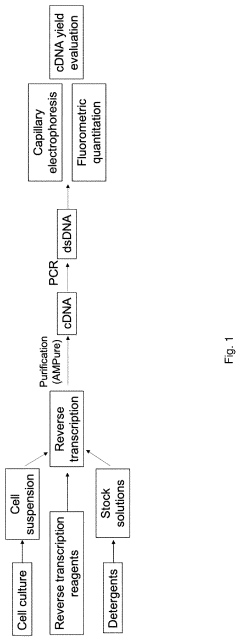
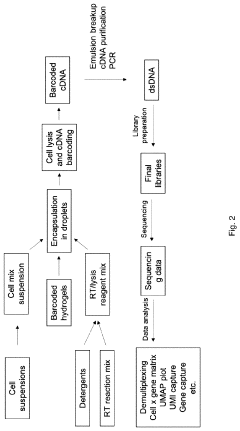
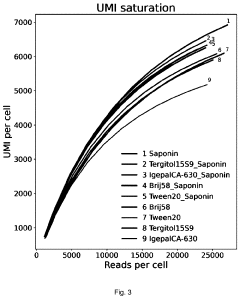
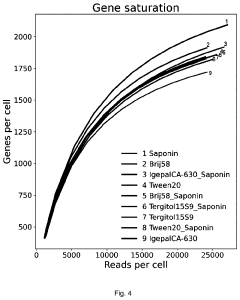
- A composition of triterpene glycosides, specifically saponin, is used alone or in combination with non-ionic detergents like Triton X-100, which preferentially binds to fatty acids, phospholipids, and sterols, enhancing cell lysis efficiency without inhibiting enzymatic reactions, thereby improving cDNA yields and RNA capture.
Rapid processing and direct testing of saliva biomarkers
PatentPendingUS20240133896A1
Innovation
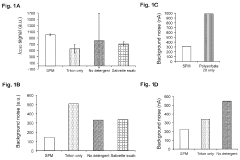
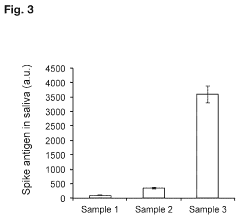
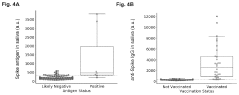
- A saliva treatment composition comprising a mixture of non-ionic detergents, such as Triton X-100 and Polysorbate 20, is used to inactivate viruses and improve the sensitivity and consistency of saliva tests, combined with methods like mechanical admixing and centrifugation for sample processing, enabling reliable analysis of biomarkers like SARS-CoV-2 antigens and antibodies.

Environmental Impact of Detergent-Free Extractions
The environmental impact of detergent-free extractions, particularly those using Triton X-100, is a crucial consideration in modern laboratory practices. These methods offer significant advantages over traditional detergent-based extractions, primarily due to their reduced ecological footprint and improved safety profiles.
Triton X-100, a non-ionic surfactant, has been widely used in various extraction processes. However, its potential environmental hazards have led to the development of alternative, detergent-free extraction methods. These newer techniques not only minimize the release of harmful chemicals into the environment but also reduce the overall waste generated during laboratory procedures.
One of the primary environmental benefits of detergent-free extractions is the reduction in water pollution. Traditional detergent-based methods often result in the discharge of surfactants and other chemicals into wastewater systems, potentially harming aquatic ecosystems. In contrast, detergent-free methods significantly decrease this risk, contributing to the preservation of water quality and aquatic biodiversity.
Furthermore, detergent-free extractions typically require less water and fewer chemical reagents, leading to a decrease in resource consumption. This reduction in material usage translates to lower energy requirements for production, transportation, and waste treatment, thereby reducing the overall carbon footprint of laboratory operations.
The elimination of detergents also simplifies waste management processes. Detergent-containing waste often requires specialized treatment before disposal, whereas the waste from detergent-free extractions is generally easier to handle and less environmentally hazardous. This simplification can lead to more efficient and cost-effective waste management practices in research facilities.
Another important aspect is the potential for improved product quality and purity. Detergent-free methods often result in cleaner extracts with fewer contaminants, reducing the need for additional purification steps. This efficiency not only saves resources but also minimizes the environmental impact associated with extended processing and purification procedures.
In the context of sustainable laboratory practices, the adoption of detergent-free extraction methods aligns with broader environmental goals. It supports the principles of green chemistry, which emphasize the design of chemical products and processes that reduce or eliminate the use and generation of hazardous substances.
While the environmental benefits of detergent-free extractions are significant, it is important to note that the specific impact can vary depending on the particular method and scale of application. Ongoing research continues to refine these techniques, aiming to further enhance their environmental performance and broaden their applicability across various scientific disciplines.
Triton X-100, a non-ionic surfactant, has been widely used in various extraction processes. However, its potential environmental hazards have led to the development of alternative, detergent-free extraction methods. These newer techniques not only minimize the release of harmful chemicals into the environment but also reduce the overall waste generated during laboratory procedures.
One of the primary environmental benefits of detergent-free extractions is the reduction in water pollution. Traditional detergent-based methods often result in the discharge of surfactants and other chemicals into wastewater systems, potentially harming aquatic ecosystems. In contrast, detergent-free methods significantly decrease this risk, contributing to the preservation of water quality and aquatic biodiversity.
Furthermore, detergent-free extractions typically require less water and fewer chemical reagents, leading to a decrease in resource consumption. This reduction in material usage translates to lower energy requirements for production, transportation, and waste treatment, thereby reducing the overall carbon footprint of laboratory operations.
The elimination of detergents also simplifies waste management processes. Detergent-containing waste often requires specialized treatment before disposal, whereas the waste from detergent-free extractions is generally easier to handle and less environmentally hazardous. This simplification can lead to more efficient and cost-effective waste management practices in research facilities.
Another important aspect is the potential for improved product quality and purity. Detergent-free methods often result in cleaner extracts with fewer contaminants, reducing the need for additional purification steps. This efficiency not only saves resources but also minimizes the environmental impact associated with extended processing and purification procedures.
In the context of sustainable laboratory practices, the adoption of detergent-free extraction methods aligns with broader environmental goals. It supports the principles of green chemistry, which emphasize the design of chemical products and processes that reduce or eliminate the use and generation of hazardous substances.
While the environmental benefits of detergent-free extractions are significant, it is important to note that the specific impact can vary depending on the particular method and scale of application. Ongoing research continues to refine these techniques, aiming to further enhance their environmental performance and broaden their applicability across various scientific disciplines.
Scalability and Industrial Applications
The scalability and industrial applications of detergent-free extraction methods using Triton X-100 present significant potential for various sectors. These methods offer advantages in terms of cost-effectiveness, efficiency, and reduced environmental impact compared to traditional detergent-based extraction techniques.
In large-scale industrial settings, the scalability of Triton X-100-based extraction methods is particularly promising. The ability to process large volumes of biological samples without the need for detergents can lead to substantial cost savings and improved throughput. This scalability is especially relevant in industries such as biopharmaceuticals, where the production of recombinant proteins and other biomolecules requires efficient extraction processes.
The food and beverage industry can benefit from these extraction methods for the isolation of valuable compounds from plant and animal sources. The absence of detergents in the extraction process ensures a cleaner final product, reducing the need for extensive purification steps and potentially improving the overall quality of extracted ingredients.
In the field of environmental monitoring and remediation, detergent-free extraction using Triton X-100 can be applied to analyze soil and water samples for contaminants. The method's scalability allows for the processing of large numbers of samples, making it suitable for widespread environmental assessments and cleanup efforts.
The cosmetics and personal care industry can leverage these extraction techniques for obtaining natural ingredients from plant materials. The gentle nature of detergent-free extraction helps preserve the integrity of sensitive compounds, potentially leading to more effective and higher-quality products.
Biotechnology companies focused on the production of enzymes and other industrial biocatalysts can benefit from the scalability of Triton X-100-based extraction methods. These techniques can be integrated into existing production pipelines to improve yield and reduce processing costs.
In the pharmaceutical industry, the application of detergent-free extraction methods using Triton X-100 can streamline the isolation of active pharmaceutical ingredients from natural sources or cell cultures. The scalability of these methods can support the production of larger quantities of drug candidates for clinical trials and eventual commercial manufacturing.
As industries continue to prioritize sustainability and eco-friendly processes, the adoption of detergent-free extraction methods using Triton X-100 is likely to increase. The reduced environmental impact and potential for recycling extraction components align well with corporate sustainability goals and regulatory requirements.
In large-scale industrial settings, the scalability of Triton X-100-based extraction methods is particularly promising. The ability to process large volumes of biological samples without the need for detergents can lead to substantial cost savings and improved throughput. This scalability is especially relevant in industries such as biopharmaceuticals, where the production of recombinant proteins and other biomolecules requires efficient extraction processes.
The food and beverage industry can benefit from these extraction methods for the isolation of valuable compounds from plant and animal sources. The absence of detergents in the extraction process ensures a cleaner final product, reducing the need for extensive purification steps and potentially improving the overall quality of extracted ingredients.
In the field of environmental monitoring and remediation, detergent-free extraction using Triton X-100 can be applied to analyze soil and water samples for contaminants. The method's scalability allows for the processing of large numbers of samples, making it suitable for widespread environmental assessments and cleanup efforts.
The cosmetics and personal care industry can leverage these extraction techniques for obtaining natural ingredients from plant materials. The gentle nature of detergent-free extraction helps preserve the integrity of sensitive compounds, potentially leading to more effective and higher-quality products.
Biotechnology companies focused on the production of enzymes and other industrial biocatalysts can benefit from the scalability of Triton X-100-based extraction methods. These techniques can be integrated into existing production pipelines to improve yield and reduce processing costs.
In the pharmaceutical industry, the application of detergent-free extraction methods using Triton X-100 can streamline the isolation of active pharmaceutical ingredients from natural sources or cell cultures. The scalability of these methods can support the production of larger quantities of drug candidates for clinical trials and eventual commercial manufacturing.
As industries continue to prioritize sustainability and eco-friendly processes, the adoption of detergent-free extraction methods using Triton X-100 is likely to increase. The reduced environmental impact and potential for recycling extraction components align well with corporate sustainability goals and regulatory requirements.
Unlock deeper insights with Patsnap Eureka Quick Research — get a full tech report to explore trends and direct your research. Try now!
Generate Your Research Report Instantly with AI Agent
Supercharge your innovation with Patsnap Eureka AI Agent Platform!