

Comparing Efficiency Boosters for Organic Solar Windows Using Nanostructures
MAY 11, 20269 MIN READ
Generate Your Research Report Instantly with AI Agent
PatSnap Eureka helps you evaluate technical feasibility & market potential.
Organic Solar Window Technology Background and Efficiency Goals
Organic solar windows represent a revolutionary convergence of photovoltaic technology and architectural design, emerging from decades of research in organic photovoltaics (OPV) and transparent conducting materials. This technology traces its origins to the discovery of photoconductivity in organic materials in the 1960s, followed by the development of the first organic solar cell by Tang in 1986. The concept evolved significantly with advances in polymer-based photovoltaics and the introduction of bulk heterojunction architectures in the 1990s.
The integration of transparency requirements with energy conversion capabilities has driven continuous innovation in material science and device engineering. Early transparent solar cells suffered from the fundamental trade-off between optical transparency and light absorption efficiency. However, breakthrough developments in selective wavelength absorption, particularly in near-infrared regions, have enabled the creation of visually transparent devices that maintain reasonable power conversion efficiencies.
Current market drivers for organic solar windows include the growing demand for building-integrated photovoltaics (BIPV), stringent energy efficiency regulations in construction, and the global push toward net-zero energy buildings. The technology addresses the critical need for multifunctional building materials that can simultaneously provide natural lighting, thermal management, and renewable energy generation without compromising architectural aesthetics.
The primary technical objectives for organic solar windows focus on achieving power conversion efficiencies exceeding 15% while maintaining visible light transmission above 70%. These targets represent significant improvements over current commercial transparent OPV devices, which typically achieve 8-12% efficiency with similar transparency levels. Additional performance goals include operational stability exceeding 20 years under real-world conditions, cost reduction to below $50 per square meter, and scalable manufacturing processes compatible with existing glass production infrastructure.
Nanostructure integration has emerged as a critical pathway for achieving these ambitious efficiency targets. The incorporation of plasmonic nanoparticles, quantum dots, and photonic crystals offers unprecedented opportunities to manipulate light-matter interactions within the active layers. These nanostructures can enhance light trapping, improve charge carrier mobility, and enable selective spectral filtering, thereby addressing the inherent limitations of conventional organic solar window designs.
The technological roadmap envisions achieving commercial viability through systematic optimization of nanostructure-enhanced architectures, with intermediate milestones including demonstration of 12% efficiency by 2025 and 15% efficiency by 2028, while maintaining the essential transparency and durability requirements for building integration applications.
The integration of transparency requirements with energy conversion capabilities has driven continuous innovation in material science and device engineering. Early transparent solar cells suffered from the fundamental trade-off between optical transparency and light absorption efficiency. However, breakthrough developments in selective wavelength absorption, particularly in near-infrared regions, have enabled the creation of visually transparent devices that maintain reasonable power conversion efficiencies.
Current market drivers for organic solar windows include the growing demand for building-integrated photovoltaics (BIPV), stringent energy efficiency regulations in construction, and the global push toward net-zero energy buildings. The technology addresses the critical need for multifunctional building materials that can simultaneously provide natural lighting, thermal management, and renewable energy generation without compromising architectural aesthetics.
The primary technical objectives for organic solar windows focus on achieving power conversion efficiencies exceeding 15% while maintaining visible light transmission above 70%. These targets represent significant improvements over current commercial transparent OPV devices, which typically achieve 8-12% efficiency with similar transparency levels. Additional performance goals include operational stability exceeding 20 years under real-world conditions, cost reduction to below $50 per square meter, and scalable manufacturing processes compatible with existing glass production infrastructure.
Nanostructure integration has emerged as a critical pathway for achieving these ambitious efficiency targets. The incorporation of plasmonic nanoparticles, quantum dots, and photonic crystals offers unprecedented opportunities to manipulate light-matter interactions within the active layers. These nanostructures can enhance light trapping, improve charge carrier mobility, and enable selective spectral filtering, thereby addressing the inherent limitations of conventional organic solar window designs.
The technological roadmap envisions achieving commercial viability through systematic optimization of nanostructure-enhanced architectures, with intermediate milestones including demonstration of 12% efficiency by 2025 and 15% efficiency by 2028, while maintaining the essential transparency and durability requirements for building integration applications.
Market Demand for Transparent Photovoltaic Building Integration
The global building-integrated photovoltaics market is experiencing unprecedented growth driven by stringent environmental regulations and ambitious carbon neutrality targets across major economies. Government mandates for net-zero energy buildings and green building certifications are creating substantial demand for transparent photovoltaic solutions that can seamlessly integrate into architectural designs without compromising aesthetic appeal.
Commercial real estate developers are increasingly seeking transparent solar solutions to meet Leadership in Energy and Environmental Design certification requirements while maintaining the visual transparency essential for modern office buildings. The technology addresses the critical challenge of balancing energy generation with natural lighting needs, particularly in high-rise urban environments where conventional rooftop solar installations face space limitations.
Residential construction markets are demonstrating growing interest in transparent photovoltaic windows as homeowners become more environmentally conscious and seek energy independence. The appeal extends beyond environmental benefits to include potential reductions in electricity costs and increased property values, making transparent solar windows an attractive long-term investment for residential applications.
The automotive industry represents an emerging application sector where transparent photovoltaic integration could power auxiliary systems in electric vehicles, extending driving range and reducing battery dependency. This cross-industry demand is driving innovation in nanostructured organic solar cell efficiency improvements to meet diverse performance requirements across different market segments.
Urban planning initiatives worldwide are incorporating renewable energy generation requirements into building codes, creating regulatory pressure for transparent photovoltaic adoption. Smart city developments particularly favor building-integrated solutions that contribute to distributed energy generation while maintaining urban aesthetics and functionality.
Market demand is further amplified by advances in nanostructure technology that enhance light absorption and energy conversion efficiency while maintaining optical transparency. These technological improvements are making transparent photovoltaic windows increasingly viable for mainstream commercial deployment, expanding the addressable market beyond niche applications to broad-scale building integration projects.
Commercial real estate developers are increasingly seeking transparent solar solutions to meet Leadership in Energy and Environmental Design certification requirements while maintaining the visual transparency essential for modern office buildings. The technology addresses the critical challenge of balancing energy generation with natural lighting needs, particularly in high-rise urban environments where conventional rooftop solar installations face space limitations.
Residential construction markets are demonstrating growing interest in transparent photovoltaic windows as homeowners become more environmentally conscious and seek energy independence. The appeal extends beyond environmental benefits to include potential reductions in electricity costs and increased property values, making transparent solar windows an attractive long-term investment for residential applications.
The automotive industry represents an emerging application sector where transparent photovoltaic integration could power auxiliary systems in electric vehicles, extending driving range and reducing battery dependency. This cross-industry demand is driving innovation in nanostructured organic solar cell efficiency improvements to meet diverse performance requirements across different market segments.
Urban planning initiatives worldwide are incorporating renewable energy generation requirements into building codes, creating regulatory pressure for transparent photovoltaic adoption. Smart city developments particularly favor building-integrated solutions that contribute to distributed energy generation while maintaining urban aesthetics and functionality.
Market demand is further amplified by advances in nanostructure technology that enhance light absorption and energy conversion efficiency while maintaining optical transparency. These technological improvements are making transparent photovoltaic windows increasingly viable for mainstream commercial deployment, expanding the addressable market beyond niche applications to broad-scale building integration projects.
Current State and Challenges of Organic Solar Window Efficiency
Organic solar windows represent a promising intersection of renewable energy generation and building-integrated photovoltaics, yet their current efficiency levels remain significantly below commercial viability thresholds. The state-of-the-art organic photovoltaic windows typically achieve power conversion efficiencies ranging from 2% to 8%, substantially lower than conventional silicon solar panels that exceed 20% efficiency. This performance gap stems from fundamental limitations in organic semiconductor materials and the inherent trade-off between transparency and light absorption required for window applications.
The transparency requirement poses the most significant challenge for organic solar windows, as maintaining visual clarity while capturing sufficient photons for electricity generation creates an inherent contradiction. Current organic photovoltaic materials must selectively absorb specific wavelengths while transmitting visible light, limiting the available solar spectrum for energy conversion. This selective absorption constraint directly impacts the theoretical maximum efficiency achievable in transparent solar applications.
Charge carrier mobility represents another critical bottleneck in organic solar window performance. Organic semiconductors typically exhibit lower electron and hole mobilities compared to inorganic counterparts, leading to increased recombination losses and reduced fill factors. The amorphous or semi-crystalline nature of many organic materials results in trap states and energy barriers that impede efficient charge transport, particularly over the larger areas required for window applications.
Interface engineering challenges further complicate organic solar window development. The multiple layers required for efficient charge extraction, including transparent electrodes, hole transport layers, active layers, and electron transport layers, must maintain both optical transparency and electrical performance. Achieving optimal energy level alignment while preserving transparency across these interfaces requires precise material selection and processing optimization.
Stability concerns present long-term viability challenges for organic solar windows. Exposure to ultraviolet radiation, oxygen, and moisture can degrade organic photovoltaic materials, leading to efficiency losses over time. The encapsulation requirements for maintaining performance in building applications add complexity and cost while potentially compromising optical properties.
Manufacturing scalability represents an additional hurdle for widespread adoption. Current laboratory-scale fabrication techniques often cannot be directly translated to large-area window production while maintaining uniform performance and optical quality. The development of roll-to-roll processing methods and quality control systems for transparent organic photovoltaics remains an ongoing challenge that impacts commercial feasibility and cost-effectiveness.
The transparency requirement poses the most significant challenge for organic solar windows, as maintaining visual clarity while capturing sufficient photons for electricity generation creates an inherent contradiction. Current organic photovoltaic materials must selectively absorb specific wavelengths while transmitting visible light, limiting the available solar spectrum for energy conversion. This selective absorption constraint directly impacts the theoretical maximum efficiency achievable in transparent solar applications.
Charge carrier mobility represents another critical bottleneck in organic solar window performance. Organic semiconductors typically exhibit lower electron and hole mobilities compared to inorganic counterparts, leading to increased recombination losses and reduced fill factors. The amorphous or semi-crystalline nature of many organic materials results in trap states and energy barriers that impede efficient charge transport, particularly over the larger areas required for window applications.
Interface engineering challenges further complicate organic solar window development. The multiple layers required for efficient charge extraction, including transparent electrodes, hole transport layers, active layers, and electron transport layers, must maintain both optical transparency and electrical performance. Achieving optimal energy level alignment while preserving transparency across these interfaces requires precise material selection and processing optimization.
Stability concerns present long-term viability challenges for organic solar windows. Exposure to ultraviolet radiation, oxygen, and moisture can degrade organic photovoltaic materials, leading to efficiency losses over time. The encapsulation requirements for maintaining performance in building applications add complexity and cost while potentially compromising optical properties.
Manufacturing scalability represents an additional hurdle for widespread adoption. Current laboratory-scale fabrication techniques often cannot be directly translated to large-area window production while maintaining uniform performance and optical quality. The development of roll-to-roll processing methods and quality control systems for transparent organic photovoltaics remains an ongoing challenge that impacts commercial feasibility and cost-effectiveness.
Existing Nanostructure Solutions for Solar Window Efficiency
01 Organic photovoltaic cell materials and structures
Development of organic semiconductor materials and cell architectures specifically designed for transparent solar applications. These materials focus on optimizing light absorption while maintaining transparency for window applications. The structures include various organic compounds that can convert sunlight to electricity while allowing visible light transmission.- Organic photovoltaic cell materials and structures: Development of organic semiconductor materials and cell architectures specifically designed for solar window applications. These materials focus on achieving optimal light absorption while maintaining transparency for window functionality. The structures include various layer configurations and material compositions to enhance photovoltaic conversion efficiency in transparent or semi-transparent solar cells.
- Transparent conductive electrodes and substrates: Implementation of transparent conductive materials and substrate technologies that enable efficient charge collection while preserving optical transparency. These technologies involve advanced electrode designs and substrate materials that minimize optical losses while maximizing electrical conductivity for improved solar cell performance in window applications.
- Light management and optical optimization: Techniques for managing light transmission, reflection, and absorption in organic solar windows to optimize both energy conversion efficiency and visual transparency. These approaches include optical coatings, light-trapping structures, and wavelength-selective absorption methods to enhance overall system performance.
- Manufacturing processes and fabrication methods: Advanced manufacturing techniques and fabrication processes specifically developed for producing organic solar windows at scale. These methods focus on cost-effective production while maintaining high efficiency and reliability, including coating techniques, printing methods, and assembly processes suitable for large-area window applications.
- Integration systems and building applications: Complete integration solutions for incorporating organic solar windows into building structures and architectural designs. These systems address electrical connections, energy management, and building integration challenges while ensuring compatibility with existing construction methods and building codes for practical deployment.
02 Transparent conductive electrodes and substrates
Implementation of transparent conducting materials that serve as electrodes in organic solar windows. These materials must balance electrical conductivity with optical transparency to ensure efficient charge collection while maintaining window functionality. Various substrate materials and electrode configurations are optimized for both performance and transparency.Expand Specific Solutions03 Light management and optical enhancement techniques
Methods to improve light harvesting and optical properties in organic solar windows through advanced light management strategies. These techniques include optical coatings, light-trapping structures, and wavelength-selective absorption to maximize energy conversion efficiency while preserving visual transparency.Expand Specific Solutions04 Device fabrication and manufacturing processes
Manufacturing techniques and fabrication processes specifically developed for producing organic solar windows at scale. These processes address challenges in creating uniform, large-area devices while maintaining both electrical performance and optical quality suitable for architectural applications.Expand Specific Solutions05 Integration systems and building applications
Methods for integrating organic solar windows into building structures and architectural systems. This includes electrical connection schemes, mounting systems, and building-integrated photovoltaic solutions that allow solar windows to function as both energy generators and building envelope components.Expand Specific Solutions
Key Players in Organic Solar Window and Nanostructure Industry
The organic solar windows nanostructure efficiency enhancement field represents an emerging technology sector in the early commercialization stage, with significant growth potential driven by building-integrated photovoltaics demand. The market remains relatively small but expanding, particularly in Europe and Asia-Pacific regions where sustainable building solutions are prioritized. Technology maturity varies considerably across players, with established corporations like Samsung Electronics and L'Oréal leveraging advanced materials expertise, while specialized firms like Heliatek and Nanosys focus on dedicated organic photovoltaic and quantum dot technologies respectively. Leading research institutions including MIT, Zhejiang University, and CNRS drive fundamental breakthroughs in nanostructure optimization, while government laboratories like Pacific Northwest National Laboratory and CEA provide critical infrastructure support. The competitive landscape shows strong academic-industry collaboration, particularly evident through partnerships involving Dresden University of Technology with Heliatek, indicating technology transfer from research to commercial applications is accelerating.
Samsung Electronics Co., Ltd.
Technical Solution: Samsung has developed advanced nanostructured organic photovoltaic (OPV) technologies for transparent solar windows, incorporating plasmonic nanoparticles and quantum dots to enhance light absorption and charge carrier mobility. Their approach utilizes silver and gold nanoparticles embedded in the active layer to create localized surface plasmon resonance effects, which can increase photon absorption by up to 25% while maintaining transparency levels above 70%. The company has also integrated nanostructured electrodes using graphene and carbon nanotube composites to improve conductivity and reduce series resistance in transparent solar cells.
Strengths: Strong manufacturing capabilities and integration expertise, proven track record in display technologies. Weaknesses: Limited focus on specialized organic solar materials compared to dedicated photovoltaic companies.
Zhejiang University
Technical Solution: Zhejiang University has developed comprehensive research programs on nanostructured organic solar windows, focusing on novel donor-acceptor material systems enhanced with various nanostructure configurations. Their work includes the development of core-shell nanoparticles, nanorod arrays, and hierarchical nanostructures to improve light absorption and charge transport in transparent organic photovoltaic devices. The university's research demonstrates the integration of plasmonic nanoparticles, upconversion nanocrystals, and organic-inorganic perovskite nanostructures to achieve enhanced spectral response and improved power conversion efficiency. Their systematic studies on nanostructure morphology control and interface engineering have shown significant improvements in device performance and stability.
Strengths: Strong research output with comprehensive studies on multiple nanostructure approaches and good collaboration networks. Weaknesses: Academic focus with limited direct commercial application and technology transfer capabilities compared to industry players.
Core Nanostructure Innovations for Organic Solar Enhancement
Organic polymer solar cell having nano-structure interface and manufacturing method therefor
PatentInactiveTW201119112A
Innovation
- The formation of a nanostructured interface between light-absorbing active layers through processes like nano-compression molding, embossing, or rolling, which enhances exciton separation and increases contact area and interface roughness, utilizing a nano-imprinted mold to create nanostructures on the organic polymer material layers.


Energy-Efficient Transparent Solar Film
PatentInactiveUS20130258456A1
Innovation
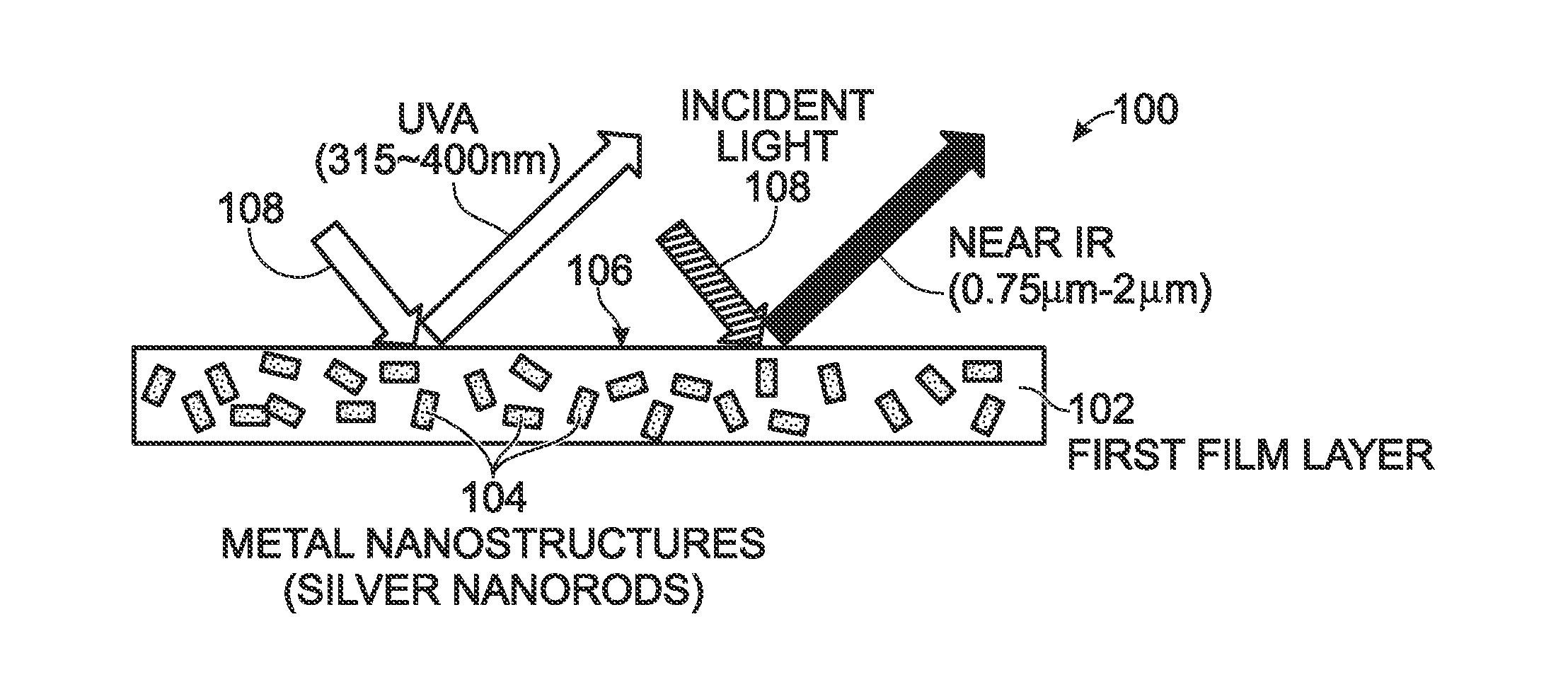
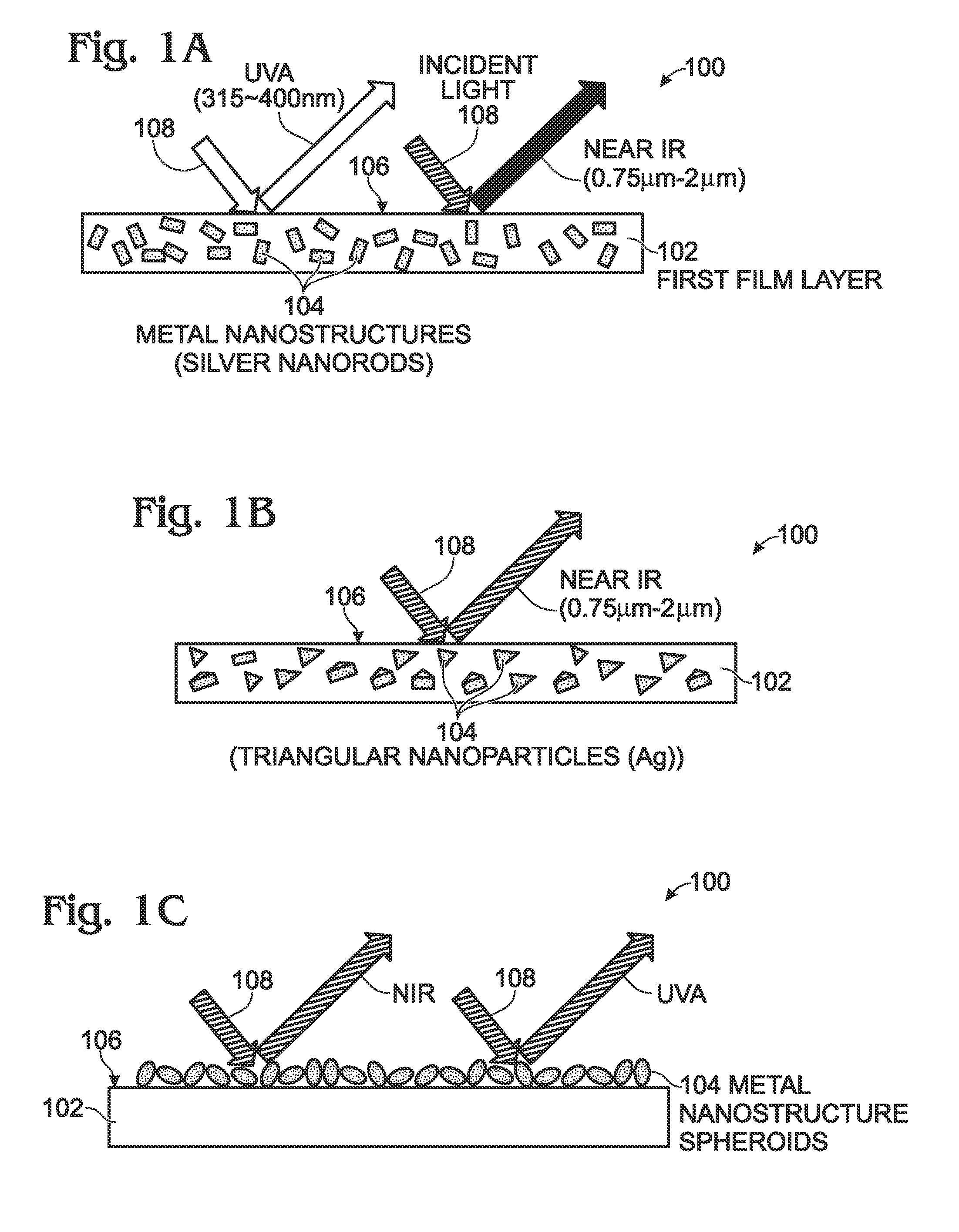
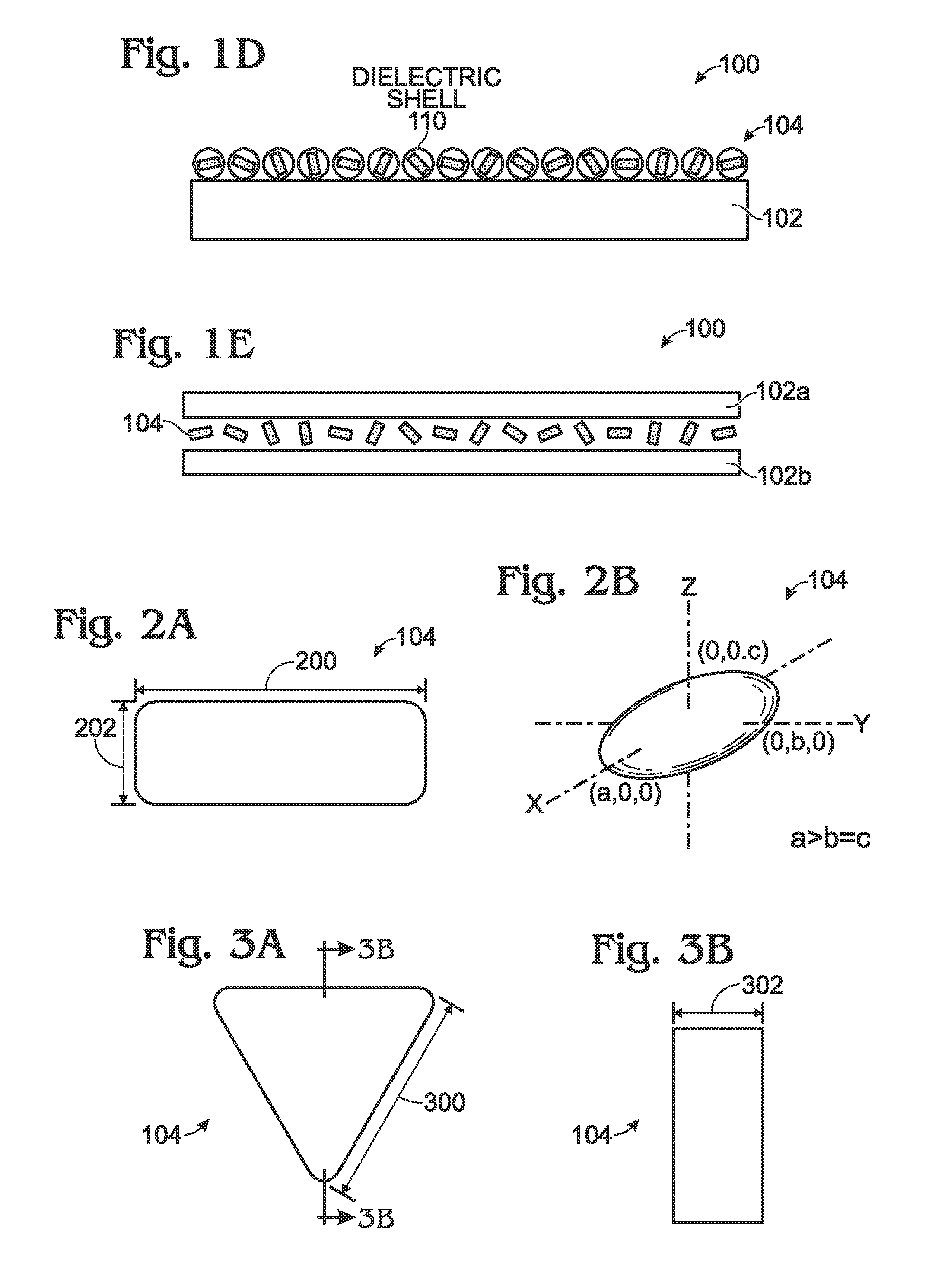
- Incorporating metal nanostructures with plasmon resonances in ultraviolet A and near infrared spectra into a dielectric film, combined with metal oxide nanocrystals that reject solar energy across various wavelength ranges, to create a low-cost, energy-efficient transparent solar film that blocks UV and near IR solar heat while allowing visible light transmission.

Building Integration Standards and Energy Efficiency Regulations
The integration of organic solar windows with nanostructure-enhanced efficiency boosters faces a complex regulatory landscape that varies significantly across global markets. Current building integration standards primarily focus on traditional photovoltaic systems, creating gaps in certification pathways for emerging organic solar window technologies. The International Electrotechnical Commission (IEC) 61215 and IEC 61730 standards, while comprehensive for silicon-based systems, require substantial adaptation to address the unique characteristics of organic photovoltaic materials and their nanostructure modifications.
Energy efficiency regulations in major markets such as the European Union, United States, and Asia-Pacific regions are increasingly incorporating building-integrated photovoltaics (BIPV) into their frameworks. The EU's Energy Performance of Buildings Directive (EPBD) and the U.S. International Energy Conservation Code (IECC) provide foundational requirements, but specific provisions for nanostructure-enhanced organic solar windows remain underdeveloped. These regulations typically mandate minimum energy conversion efficiencies, durability standards, and safety requirements that current organic solar window technologies struggle to meet consistently.
Certification processes for nanostructure-enhanced organic solar windows involve multiple testing protocols addressing optical transparency, electrical performance, structural integrity, and environmental durability. The challenge lies in establishing standardized measurement methodologies for efficiency boosters such as plasmonic nanoparticles, quantum dots, and photonic crystals. Current testing standards inadequately address the spectral selectivity and angle-dependent performance characteristics inherent to these nanostructured systems.
Fire safety regulations present additional complexity, as organic materials and certain nanostructures may exhibit different combustion behaviors compared to traditional glazing materials. Building codes in most jurisdictions require extensive fire testing and certification, which can significantly extend development timelines and increase costs for innovative solar window technologies.
The regulatory approval process typically spans 18-36 months, involving multiple agencies and testing laboratories. Manufacturers must navigate building code compliance, electrical safety certifications, and environmental impact assessments simultaneously. This regulatory burden often necessitates region-specific product modifications, limiting economies of scale and increasing market entry barriers for nanostructure-enhanced organic solar window technologies.
Energy efficiency regulations in major markets such as the European Union, United States, and Asia-Pacific regions are increasingly incorporating building-integrated photovoltaics (BIPV) into their frameworks. The EU's Energy Performance of Buildings Directive (EPBD) and the U.S. International Energy Conservation Code (IECC) provide foundational requirements, but specific provisions for nanostructure-enhanced organic solar windows remain underdeveloped. These regulations typically mandate minimum energy conversion efficiencies, durability standards, and safety requirements that current organic solar window technologies struggle to meet consistently.
Certification processes for nanostructure-enhanced organic solar windows involve multiple testing protocols addressing optical transparency, electrical performance, structural integrity, and environmental durability. The challenge lies in establishing standardized measurement methodologies for efficiency boosters such as plasmonic nanoparticles, quantum dots, and photonic crystals. Current testing standards inadequately address the spectral selectivity and angle-dependent performance characteristics inherent to these nanostructured systems.
Fire safety regulations present additional complexity, as organic materials and certain nanostructures may exhibit different combustion behaviors compared to traditional glazing materials. Building codes in most jurisdictions require extensive fire testing and certification, which can significantly extend development timelines and increase costs for innovative solar window technologies.
The regulatory approval process typically spans 18-36 months, involving multiple agencies and testing laboratories. Manufacturers must navigate building code compliance, electrical safety certifications, and environmental impact assessments simultaneously. This regulatory burden often necessitates region-specific product modifications, limiting economies of scale and increasing market entry barriers for nanostructure-enhanced organic solar window technologies.
Environmental Impact Assessment of Organic Solar Window Materials
The environmental implications of organic solar window materials represent a critical consideration in the sustainable development of building-integrated photovoltaic technologies. Unlike traditional silicon-based solar panels, organic photovoltaic materials offer unique environmental advantages through their low-temperature processing requirements and potential for reduced carbon footprint during manufacturing. The production of organic solar windows typically involves solution-based coating processes that operate at temperatures below 150°C, significantly reducing energy consumption compared to conventional semiconductor fabrication.
Material composition analysis reveals that organic solar windows primarily utilize carbon-based polymers and small molecules, which inherently possess better biodegradability characteristics than inorganic alternatives. The incorporation of nanostructures, while enhancing efficiency, introduces additional environmental considerations regarding nanoparticle release and end-of-life disposal. Silver and gold nanoparticles commonly used for plasmonic enhancement present concerns for aquatic ecosystems, necessitating careful evaluation of their lifecycle impact.
Life cycle assessment studies indicate that organic solar windows demonstrate favorable environmental profiles in terms of energy payback time, typically achieving carbon neutrality within 1-2 years of operation. This compares advantageously to traditional photovoltaic technologies that may require 3-4 years for equivalent environmental compensation. The lightweight nature of organic materials also reduces structural requirements in building applications, contributing to overall material efficiency.
Recycling challenges emerge primarily from the multilayer architecture of organic solar windows, where transparent electrodes, active layers, and encapsulation materials require specialized separation processes. Current recycling methodologies focus on solvent-based recovery of organic semiconductors and mechanical separation of substrate materials. However, the presence of nanostructured components complicates these processes, requiring development of advanced recovery techniques.
Toxicity assessments of organic photovoltaic materials generally indicate lower environmental risk compared to heavy metal-containing alternatives. Most organic semiconductors exhibit minimal acute toxicity, though long-term environmental persistence studies remain limited. The encapsulation materials used to protect organic layers from degradation often present the greatest environmental concern due to their polymer-based composition and resistance to biodegradation.
Manufacturing waste streams from organic solar window production primarily consist of solvent residues and defective substrates, both of which can be effectively managed through established industrial waste treatment protocols. The scalability of roll-to-roll processing techniques further enhances the environmental profile by minimizing material waste and enabling efficient resource utilization throughout the production cycle.
Material composition analysis reveals that organic solar windows primarily utilize carbon-based polymers and small molecules, which inherently possess better biodegradability characteristics than inorganic alternatives. The incorporation of nanostructures, while enhancing efficiency, introduces additional environmental considerations regarding nanoparticle release and end-of-life disposal. Silver and gold nanoparticles commonly used for plasmonic enhancement present concerns for aquatic ecosystems, necessitating careful evaluation of their lifecycle impact.
Life cycle assessment studies indicate that organic solar windows demonstrate favorable environmental profiles in terms of energy payback time, typically achieving carbon neutrality within 1-2 years of operation. This compares advantageously to traditional photovoltaic technologies that may require 3-4 years for equivalent environmental compensation. The lightweight nature of organic materials also reduces structural requirements in building applications, contributing to overall material efficiency.
Recycling challenges emerge primarily from the multilayer architecture of organic solar windows, where transparent electrodes, active layers, and encapsulation materials require specialized separation processes. Current recycling methodologies focus on solvent-based recovery of organic semiconductors and mechanical separation of substrate materials. However, the presence of nanostructured components complicates these processes, requiring development of advanced recovery techniques.
Toxicity assessments of organic photovoltaic materials generally indicate lower environmental risk compared to heavy metal-containing alternatives. Most organic semiconductors exhibit minimal acute toxicity, though long-term environmental persistence studies remain limited. The encapsulation materials used to protect organic layers from degradation often present the greatest environmental concern due to their polymer-based composition and resistance to biodegradation.
Manufacturing waste streams from organic solar window production primarily consist of solvent residues and defective substrates, both of which can be effectively managed through established industrial waste treatment protocols. The scalability of roll-to-roll processing techniques further enhances the environmental profile by minimizing material waste and enabling efficient resource utilization throughout the production cycle.
Unlock deeper insights with PatSnap Eureka Quick Research — get a full tech report to explore trends and direct your research. Try now!
Generate Your Research Report Instantly with AI Agent
Supercharge your innovation with PatSnap Eureka AI Agent Platform!