

Comparing Ideal Transformer vs Gapped Core: Saturation Threshold
JUL 16, 20269 MIN READ
Generate Your Research Report Instantly with AI Agent
Patsnap Eureka helps you evaluate technical feasibility & market potential.
Transformer Core Technology Background and Objectives
Transformer core technology represents a fundamental pillar of electromagnetic energy conversion systems, with applications spanning power distribution, signal processing, and electronic device operation. The evolution of transformer core design has been driven by the persistent challenge of balancing magnetic flux density, energy efficiency, and operational reliability. At the heart of this technological domain lies the critical issue of core saturation, a phenomenon that occurs when the magnetic material can no longer accommodate additional magnetic flux, leading to dramatic increases in magnetizing current and potential system failure.
The comparison between ideal transformers and gapped core configurations specifically addresses saturation threshold management, a technical challenge that has gained prominence with increasing power density requirements in modern applications. Ideal transformers, existing primarily as theoretical constructs, assume infinite permeability and zero core losses, providing a baseline for understanding fundamental electromagnetic relationships. However, real-world implementations must contend with material limitations, particularly the nonlinear behavior of ferromagnetic cores as they approach saturation.
Gapped core designs emerged as a practical solution to extend the operational range before saturation occurs. By introducing deliberate air gaps in the magnetic circuit, engineers can effectively reduce the core's effective permeability, thereby increasing the magnetizing current required to reach saturation. This approach has become particularly relevant in applications involving DC bias currents, such as flyback converters and energy storage inductors, where traditional ungapped cores would saturate prematurely.
The primary objective of investigating saturation thresholds in these contrasting configurations is to establish design principles that optimize magnetic utilization while maintaining operational stability. This research direction aims to quantify the trade-offs between core size, energy storage capability, and saturation margins. Understanding these relationships enables engineers to select appropriate core configurations for specific applications, balancing performance requirements against cost and physical constraints.
Furthermore, this technical inquiry seeks to advance predictive modeling capabilities for saturation behavior under various operating conditions. By comparing theoretical ideal performance against practical gapped core implementations, researchers can develop more accurate design tools and establish safety margins that prevent catastrophic saturation events in critical applications.
The comparison between ideal transformers and gapped core configurations specifically addresses saturation threshold management, a technical challenge that has gained prominence with increasing power density requirements in modern applications. Ideal transformers, existing primarily as theoretical constructs, assume infinite permeability and zero core losses, providing a baseline for understanding fundamental electromagnetic relationships. However, real-world implementations must contend with material limitations, particularly the nonlinear behavior of ferromagnetic cores as they approach saturation.
Gapped core designs emerged as a practical solution to extend the operational range before saturation occurs. By introducing deliberate air gaps in the magnetic circuit, engineers can effectively reduce the core's effective permeability, thereby increasing the magnetizing current required to reach saturation. This approach has become particularly relevant in applications involving DC bias currents, such as flyback converters and energy storage inductors, where traditional ungapped cores would saturate prematurely.
The primary objective of investigating saturation thresholds in these contrasting configurations is to establish design principles that optimize magnetic utilization while maintaining operational stability. This research direction aims to quantify the trade-offs between core size, energy storage capability, and saturation margins. Understanding these relationships enables engineers to select appropriate core configurations for specific applications, balancing performance requirements against cost and physical constraints.
Furthermore, this technical inquiry seeks to advance predictive modeling capabilities for saturation behavior under various operating conditions. By comparing theoretical ideal performance against practical gapped core implementations, researchers can develop more accurate design tools and establish safety margins that prevent catastrophic saturation events in critical applications.
Market Demand for Magnetic Core Solutions
The magnetic core solutions market is experiencing sustained growth driven by the global expansion of power electronics, renewable energy systems, and electric vehicle infrastructure. Transformers and inductors utilizing magnetic cores remain fundamental components across power conversion, energy storage, and signal processing applications. The choice between ideal transformer designs and gapped core configurations directly impacts system efficiency, size, and cost, making saturation threshold management a critical technical consideration for manufacturers and system integrators.
Industrial power supply manufacturers represent a major demand segment, requiring magnetic components that balance high power density with thermal stability. Data center power infrastructure and telecommunications equipment drive demand for compact, high-efficiency transformers where saturation behavior must be precisely controlled to prevent catastrophic failures. The renewable energy sector, particularly solar inverters and wind turbine converters, requires magnetic cores capable of handling variable load conditions without entering saturation regions that compromise conversion efficiency.
Electric vehicle charging systems constitute a rapidly expanding market segment with stringent requirements for magnetic core performance. Both onboard chargers and external charging stations demand transformers that maintain linear operation across wide power ranges while minimizing core losses. The saturation threshold becomes particularly critical in fast-charging applications where current transients can push cores beyond their designed operating points, necessitating either air-gap implementations or advanced core materials.
Consumer electronics and home appliances continue to represent substantial volume markets for magnetic components, though with different performance priorities. Switch-mode power supplies in these applications increasingly favor gapped core designs that provide predictable inductance and controlled saturation characteristics at lower cost points. The trend toward higher switching frequencies in these applications intensifies the focus on core loss mechanisms and saturation-related nonlinearities.
Emerging applications in wireless power transfer, electric aircraft systems, and grid-scale energy storage are creating new demand patterns for specialized magnetic core solutions. These applications often require custom-engineered approaches to saturation management, balancing between ideal transformer behavior for maximum coupling efficiency and gapped configurations for energy storage functionality. The market increasingly values solutions that offer design flexibility and predictable performance across varying operating conditions.
Industrial power supply manufacturers represent a major demand segment, requiring magnetic components that balance high power density with thermal stability. Data center power infrastructure and telecommunications equipment drive demand for compact, high-efficiency transformers where saturation behavior must be precisely controlled to prevent catastrophic failures. The renewable energy sector, particularly solar inverters and wind turbine converters, requires magnetic cores capable of handling variable load conditions without entering saturation regions that compromise conversion efficiency.
Electric vehicle charging systems constitute a rapidly expanding market segment with stringent requirements for magnetic core performance. Both onboard chargers and external charging stations demand transformers that maintain linear operation across wide power ranges while minimizing core losses. The saturation threshold becomes particularly critical in fast-charging applications where current transients can push cores beyond their designed operating points, necessitating either air-gap implementations or advanced core materials.
Consumer electronics and home appliances continue to represent substantial volume markets for magnetic components, though with different performance priorities. Switch-mode power supplies in these applications increasingly favor gapped core designs that provide predictable inductance and controlled saturation characteristics at lower cost points. The trend toward higher switching frequencies in these applications intensifies the focus on core loss mechanisms and saturation-related nonlinearities.
Emerging applications in wireless power transfer, electric aircraft systems, and grid-scale energy storage are creating new demand patterns for specialized magnetic core solutions. These applications often require custom-engineered approaches to saturation management, balancing between ideal transformer behavior for maximum coupling efficiency and gapped configurations for energy storage functionality. The market increasingly values solutions that offer design flexibility and predictable performance across varying operating conditions.
Current Status of Saturation Control Technologies
Saturation control in magnetic cores represents a critical challenge in transformer design, where the balance between ideal transformer behavior and practical gapped core implementations determines system performance and reliability. Current technologies address saturation through multiple complementary approaches, each targeting specific aspects of magnetic flux management and core material optimization.
Air gap insertion remains the most widely adopted technique for saturation mitigation in power transformers and inductors. By introducing a controlled discontinuity in the magnetic path, designers effectively increase the reluctance of the magnetic circuit, thereby raising the saturation threshold. Modern implementations utilize distributed gap architectures, where multiple small gaps replace a single large gap, reducing fringing flux effects and improving electromagnetic interference characteristics. Advanced manufacturing techniques enable gap tolerances within micrometers, ensuring predictable inductance values and consistent saturation behavior across production batches.
Material science advancements have yielded high-saturation flux density cores that fundamentally extend operational margins. Nanocrystalline and amorphous alloys achieve saturation flux densities exceeding 1.5 Tesla, compared to conventional silicon steel's 1.2 Tesla limit. These materials combine high permeability with elevated saturation thresholds, enabling more compact designs without compromising magnetic headroom. However, cost considerations and processing complexity currently limit their deployment to high-performance applications.
Active saturation detection and prevention systems represent an emerging technological frontier. Real-time monitoring circuits measure core flux density through auxiliary windings or Hall effect sensors, triggering protective responses before saturation occurs. Adaptive control algorithms dynamically adjust switching patterns or duty cycles in power electronic applications, maintaining operation within safe magnetic operating areas. These intelligent systems prove particularly valuable in variable load conditions where traditional passive approaches offer limited flexibility.
Hybrid topologies combining multiple saturation control methods are gaining traction in demanding applications. Integrated designs may incorporate optimized air gaps, premium core materials, and active monitoring within a single system architecture. This multi-layered approach provides redundant protection mechanisms while optimizing performance metrics such as efficiency, size, and thermal management. The automotive and renewable energy sectors increasingly adopt these sophisticated solutions to meet stringent reliability requirements under extreme operating conditions.
Air gap insertion remains the most widely adopted technique for saturation mitigation in power transformers and inductors. By introducing a controlled discontinuity in the magnetic path, designers effectively increase the reluctance of the magnetic circuit, thereby raising the saturation threshold. Modern implementations utilize distributed gap architectures, where multiple small gaps replace a single large gap, reducing fringing flux effects and improving electromagnetic interference characteristics. Advanced manufacturing techniques enable gap tolerances within micrometers, ensuring predictable inductance values and consistent saturation behavior across production batches.
Material science advancements have yielded high-saturation flux density cores that fundamentally extend operational margins. Nanocrystalline and amorphous alloys achieve saturation flux densities exceeding 1.5 Tesla, compared to conventional silicon steel's 1.2 Tesla limit. These materials combine high permeability with elevated saturation thresholds, enabling more compact designs without compromising magnetic headroom. However, cost considerations and processing complexity currently limit their deployment to high-performance applications.
Active saturation detection and prevention systems represent an emerging technological frontier. Real-time monitoring circuits measure core flux density through auxiliary windings or Hall effect sensors, triggering protective responses before saturation occurs. Adaptive control algorithms dynamically adjust switching patterns or duty cycles in power electronic applications, maintaining operation within safe magnetic operating areas. These intelligent systems prove particularly valuable in variable load conditions where traditional passive approaches offer limited flexibility.
Hybrid topologies combining multiple saturation control methods are gaining traction in demanding applications. Integrated designs may incorporate optimized air gaps, premium core materials, and active monitoring within a single system architecture. This multi-layered approach provides redundant protection mechanisms while optimizing performance metrics such as efficiency, size, and thermal management. The automotive and renewable energy sectors increasingly adopt these sophisticated solutions to meet stringent reliability requirements under extreme operating conditions.
Mainstream Core Saturation Mitigation Solutions
01 Detection and measurement of transformer saturation threshold
Methods and systems for detecting when a transformer reaches its saturation threshold by monitoring electrical parameters such as current waveforms, voltage levels, and magnetic flux density. These techniques involve analyzing distortions in current signals, measuring harmonic content, or tracking changes in inductance to identify the onset of saturation. Detection circuits and algorithms can provide early warning signals to prevent transformer damage.- Detection and measurement of transformer saturation threshold: Methods and systems for detecting when a transformer reaches its saturation threshold by monitoring various electrical parameters such as current waveforms, voltage levels, and magnetic flux density. These techniques enable real-time identification of saturation conditions to prevent transformer damage and ensure proper operation. Detection methods may include analyzing harmonic content, monitoring differential currents, or measuring changes in inductance values.
- Control methods to prevent transformer saturation: Control strategies and circuit designs that prevent transformers from reaching saturation threshold during operation. These approaches include implementing current limiting techniques, adjusting switching frequencies, controlling duty cycles, and using feedback mechanisms to maintain operation within safe magnetic flux levels. Such methods are particularly important in power converters and switching power supplies.
- Transformer core design for increased saturation threshold: Design improvements to transformer cores that increase the saturation threshold, including selection of core materials with higher saturation flux density, optimized core geometries, and air gap configurations. These design modifications allow transformers to handle higher power levels and operate more efficiently under varying load conditions without entering saturation.
- Compensation circuits for saturation threshold management: Auxiliary circuits and compensation techniques that manage transformer operation near saturation threshold. These include reset circuits, demagnetization circuits, and active clamping methods that reset the magnetic flux in the core between switching cycles. Such circuits prevent cumulative flux buildup that could lead to saturation in applications like flyback converters and forward converters.
- Saturation threshold monitoring in power distribution systems: Systems for monitoring transformer saturation threshold in power distribution networks and grid applications. These implementations provide protection mechanisms, diagnostic capabilities, and predictive maintenance features by continuously assessing transformer operating conditions relative to saturation limits. Monitoring systems may include sensors, data acquisition units, and analysis algorithms for early warning of potential saturation events.
02 Core material selection and design to increase saturation threshold
Optimization of transformer core materials and geometric configurations to increase the saturation threshold. This includes selection of high-permeability magnetic materials, grain-oriented electrical steel, amorphous metals, or nanocrystalline alloys that exhibit higher saturation flux density. Core design considerations such as cross-sectional area, stacking factor, and air gap dimensions can be adjusted to delay saturation onset.Expand Specific Solutions03 Control methods to prevent transformer saturation
Control strategies and circuit topologies designed to prevent transformers from reaching saturation threshold during operation. These include limiting inrush current during energization, controlling DC bias in the magnetic core, implementing soft-start techniques, and using feedback control loops to regulate flux levels. Protection circuits can actively monitor operating conditions and adjust switching patterns or duty cycles to maintain operation below saturation limits.Expand Specific Solutions04 Saturation threshold in power conversion applications
Considerations of transformer saturation threshold in power conversion systems such as switching power supplies, inverters, and DC-DC converters. Design techniques address saturation issues arising from asymmetric switching, volt-second imbalance, and transient conditions. Methods include reset winding circuits, flux balancing techniques, and selection of appropriate switching frequencies to ensure the transformer operates within its linear region without reaching saturation.Expand Specific Solutions05 Modeling and simulation of transformer saturation characteristics
Mathematical modeling and simulation approaches for characterizing transformer saturation behavior and predicting saturation threshold. These methods involve developing nonlinear magnetic models, hysteresis curves, and saturation characteristics that can be used in circuit simulation tools. Models account for the relationship between magnetic field intensity and flux density, enabling accurate prediction of saturation onset under various operating conditions and facilitating optimal transformer design.Expand Specific Solutions
Major Players in Magnetic Components Industry
The transformer saturation threshold comparison between ideal and gapped core designs represents a mature technical domain within power electronics, currently experiencing steady evolution driven by efficiency and miniaturization demands. The market demonstrates substantial scale, particularly in automotive, industrial automation, and renewable energy sectors, with established players like TDK Corp., Mitsubishi Electric, Siemens AG, and Hitachi Energy leading core material innovation. Technology maturity varies across segments: traditional gapped core solutions from VACUUMSCHMELZE and Proterial Ltd. represent well-established approaches, while companies like Mornsun and Socionext advance integrated power management solutions. The competitive landscape shows convergence between material science specialists and system integrators, with emerging applications in electric vehicles and smart grids driving continued research at institutions including University of Tokyo and Helmholtz-Zentrum Berlin, pushing boundaries in magnetic material performance and thermal management capabilities.
TDK Corp.
Technical Solution: TDK develops advanced magnetic core materials specifically designed to address saturation threshold challenges in power transformers. Their ferrite core technology utilizes high-permeability materials with saturation flux density (Bs) exceeding 500mT at room temperature. The gapped core design incorporates precisely controlled air gaps to increase energy storage capacity while managing saturation limits. TDK's approach combines material science with geometric optimization, where the gap length is calculated to balance between maintaining high inductance and preventing core saturation under high current conditions. Their solutions are widely applied in switch-mode power supplies, DC-DC converters, and high-frequency transformer applications where saturation control is critical for efficiency and reliability.
Strengths: Industry-leading ferrite materials with high saturation flux density, precise gap control technology, extensive application experience in power electronics. Weaknesses: Gapped cores introduce fringing flux effects and potential EMI issues, higher cost compared to standard core solutions.
Mitsubishi Electric Corp.
Technical Solution: Mitsubishi Electric develops integrated transformer solutions addressing saturation threshold management through both material selection and circuit topology optimization. Their approach combines amorphous metal cores with intelligent gap design strategies. The saturation threshold is enhanced by utilizing amorphous alloys with saturation flux density around 1.56T, significantly higher than conventional silicon steel. For gapped core configurations, Mitsubishi implements finite element analysis (FEA) to predict saturation behavior under various operating conditions including transient overloads. Their power electronics systems incorporate real-time saturation monitoring circuits that detect approaching saturation conditions through inductance change detection, enabling protective measures before core saturation causes system failure. This integrated hardware-software approach is particularly effective in industrial motor drives and renewable energy inverters.
Strengths: High saturation flux density amorphous materials, integrated monitoring and protection systems, strong system-level integration capabilities. Weaknesses: Amorphous cores are mechanically brittle, monitoring systems add complexity and cost to overall design.
Key Patents on Gapped Core Saturation Control
Magnetic core arrangement, inductive device and installation device
PatentWO2020070309A1
Innovation
- A magnetic core arrangement comprising two cores with different effective permeabilities, where one core has a non-magnetic gap filled with resin and possibly solid spacers, allowing for increased inductance, wider AC current and frequency range, higher DC current withstand, reduced size, and lower mass, while maintaining accuracy.

System for Preventing Transformer Saturation
PatentActiveUS20180191282A1
Innovation
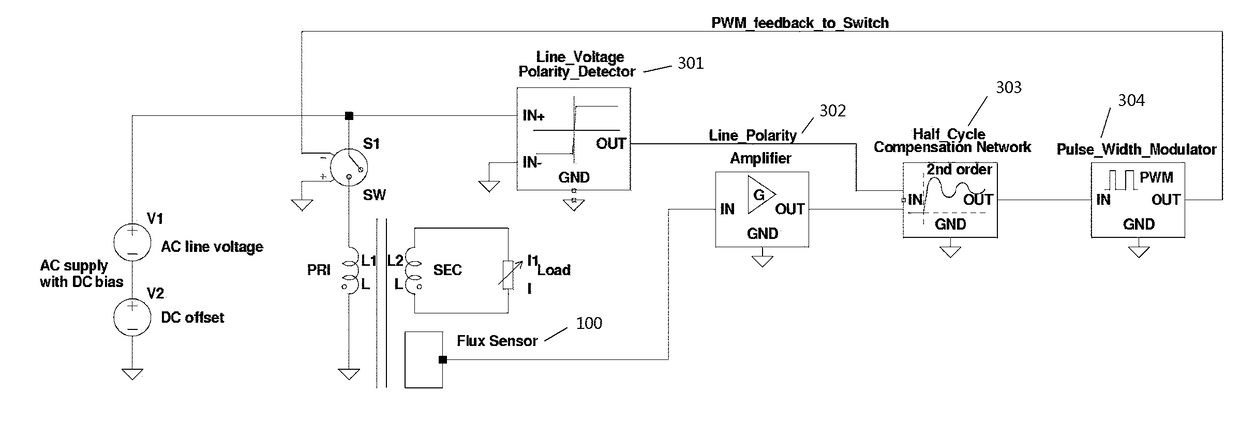
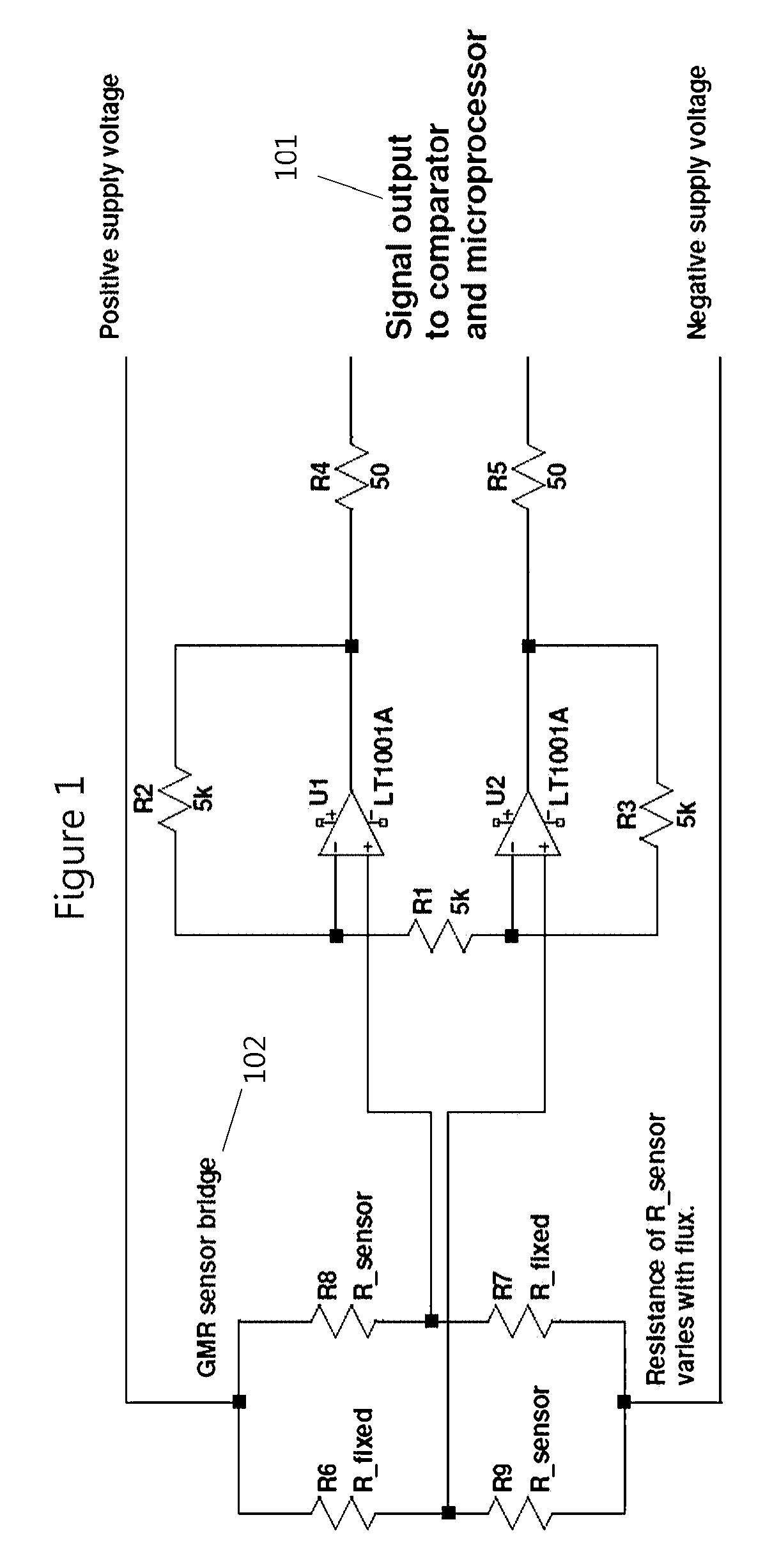
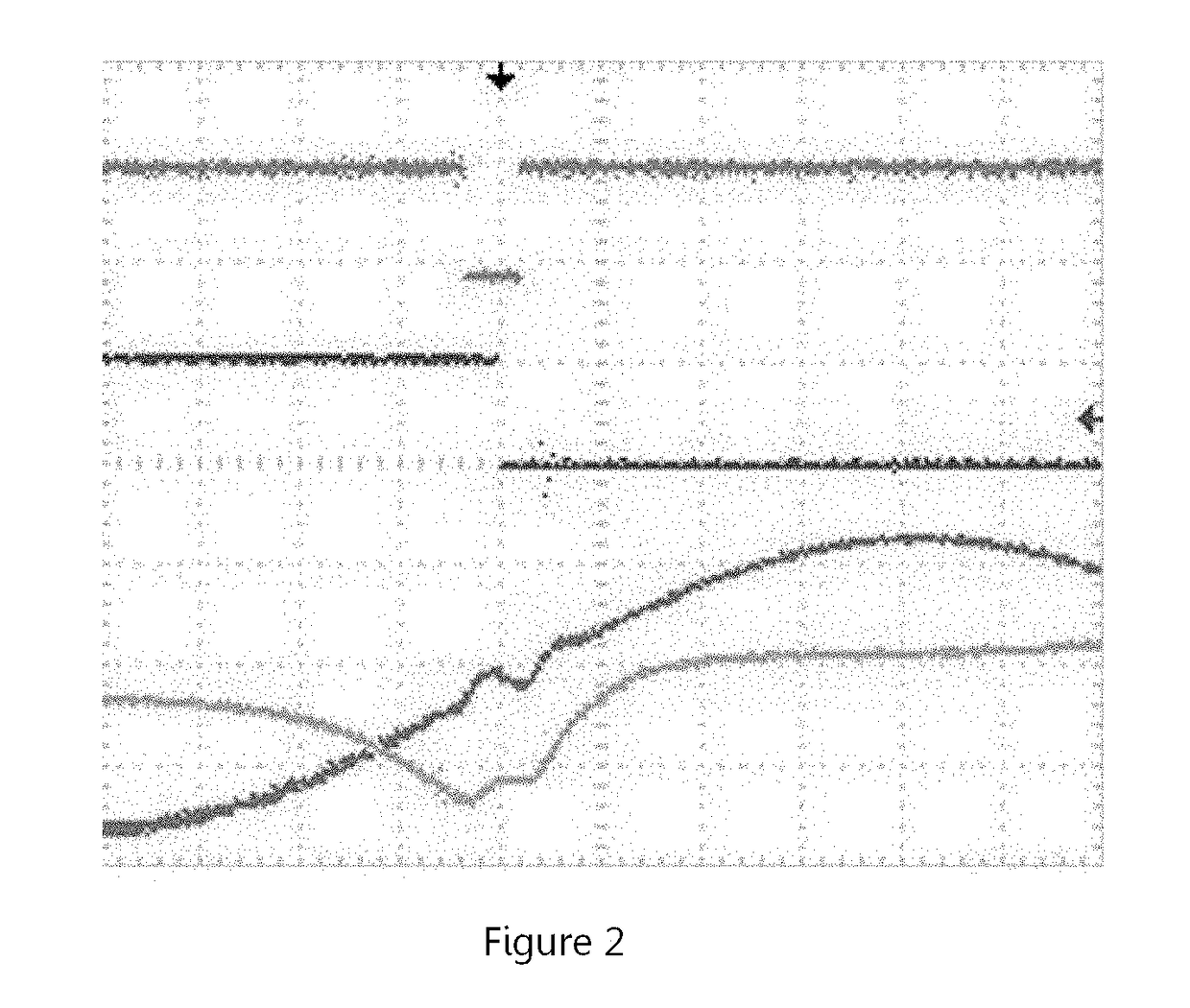
- Employing a Giant Magneto-Resistive (GMR) sensor within the transformer core to directly measure and instantaneously limit magnetic flux density, using a microprocessor to modify the primary winding voltage and implement a hold-off delay to prevent saturation, while also compensating for DC offset and asymmetry.

Energy Efficiency Standards for Magnetic Components
Energy efficiency standards for magnetic components have become increasingly stringent across global markets, driven by environmental concerns and the need to reduce power consumption in electronic systems. Regulatory frameworks such as the European Union's Ecodesign Directive, the U.S. Department of Energy efficiency regulations, and China's GB standards establish mandatory performance benchmarks for transformers and inductors used in power conversion applications. These standards typically specify maximum no-load losses, load losses, and overall efficiency thresholds that magnetic components must meet to qualify for market entry.
The comparison between ideal transformers and gapped core designs directly impacts compliance with these efficiency standards. Ideal transformers, operating without air gaps, generally exhibit lower core losses due to reduced fringing flux and more uniform magnetic field distribution. However, their susceptibility to saturation at lower flux densities can lead to catastrophic efficiency degradation under transient conditions or DC bias scenarios. Gapped core transformers, while introducing additional losses through fringing effects, provide superior saturation margins that enable more reliable operation across varying load conditions, potentially offering better long-term efficiency performance.
International standards such as IEC 60076 and IEEE C57 series define testing methodologies and efficiency classification systems that manufacturers must adhere to when designing magnetic components. These frameworks increasingly emphasize efficiency under partial load conditions and thermal performance, areas where saturation behavior plays a critical role. Components that approach saturation exhibit exponential increases in magnetizing current, dramatically reducing power factor and overall system efficiency.
Emerging efficiency standards are also incorporating lifecycle assessments and material sustainability considerations. The choice between ideal and gapped core designs affects not only operational efficiency but also manufacturing energy consumption and recyclability. Gapped cores typically require more sophisticated manufacturing processes and may utilize rare-earth materials in certain applications, factors that future regulations are likely to address more comprehensively as circular economy principles gain prominence in component design standards.
The comparison between ideal transformers and gapped core designs directly impacts compliance with these efficiency standards. Ideal transformers, operating without air gaps, generally exhibit lower core losses due to reduced fringing flux and more uniform magnetic field distribution. However, their susceptibility to saturation at lower flux densities can lead to catastrophic efficiency degradation under transient conditions or DC bias scenarios. Gapped core transformers, while introducing additional losses through fringing effects, provide superior saturation margins that enable more reliable operation across varying load conditions, potentially offering better long-term efficiency performance.
International standards such as IEC 60076 and IEEE C57 series define testing methodologies and efficiency classification systems that manufacturers must adhere to when designing magnetic components. These frameworks increasingly emphasize efficiency under partial load conditions and thermal performance, areas where saturation behavior plays a critical role. Components that approach saturation exhibit exponential increases in magnetizing current, dramatically reducing power factor and overall system efficiency.
Emerging efficiency standards are also incorporating lifecycle assessments and material sustainability considerations. The choice between ideal and gapped core designs affects not only operational efficiency but also manufacturing energy consumption and recyclability. Gapped cores typically require more sophisticated manufacturing processes and may utilize rare-earth materials in certain applications, factors that future regulations are likely to address more comprehensively as circular economy principles gain prominence in component design standards.
Thermal Management in High-Flux Transformer Design
Thermal management emerges as a critical consideration when comparing ideal transformers with gapped core designs, particularly in high-flux applications where saturation thresholds directly influence heat generation patterns. The introduction of air gaps in magnetic cores fundamentally alters thermal behavior by creating localized regions of flux concentration and fringing effects that generate additional losses beyond conventional core and copper losses. These thermal challenges become especially pronounced in power electronics applications operating at elevated frequencies and flux densities approaching saturation limits.
In gapped core configurations, the air gap itself becomes a significant source of thermal stress due to fringing flux that induces eddy currents in adjacent conductive materials, including windings and structural components. This phenomenon intensifies as the core approaches saturation, where non-linear magnetic behavior causes disproportionate increases in localized heating. The thermal resistance path through air gaps presents additional complexity, as convective and radiative heat transfer mechanisms differ substantially from conductive paths through solid core materials. Effective thermal modeling must account for these multi-modal heat transfer mechanisms and their interaction with magnetic flux distribution patterns.
Advanced cooling strategies for high-flux gapped transformers increasingly employ computational fluid dynamics simulations coupled with electromagnetic finite element analysis to predict hotspot formation and optimize thermal pathways. Material selection plays a crucial role, with high-permeability ferrites and nanocrystalline alloys offering improved thermal conductivity alongside magnetic performance. Innovative approaches include integrating heat pipes within core structures, utilizing liquid cooling channels positioned strategically near gap regions, and implementing thermally conductive potting compounds that enhance heat dissipation while maintaining electrical isolation.
The relationship between saturation threshold management and thermal performance creates design trade-offs requiring careful optimization. Operating closer to saturation limits maximizes power density but demands robust thermal management infrastructure to maintain reliability and prevent thermal runaway conditions. Temperature-dependent permeability variations further complicate this relationship, as elevated temperatures reduce saturation flux density and potentially trigger cascading thermal effects. Comprehensive thermal management strategies must therefore integrate real-time temperature monitoring with adaptive control systems that dynamically adjust operating parameters to maintain safe thermal margins while maximizing transformer utilization efficiency.
In gapped core configurations, the air gap itself becomes a significant source of thermal stress due to fringing flux that induces eddy currents in adjacent conductive materials, including windings and structural components. This phenomenon intensifies as the core approaches saturation, where non-linear magnetic behavior causes disproportionate increases in localized heating. The thermal resistance path through air gaps presents additional complexity, as convective and radiative heat transfer mechanisms differ substantially from conductive paths through solid core materials. Effective thermal modeling must account for these multi-modal heat transfer mechanisms and their interaction with magnetic flux distribution patterns.
Advanced cooling strategies for high-flux gapped transformers increasingly employ computational fluid dynamics simulations coupled with electromagnetic finite element analysis to predict hotspot formation and optimize thermal pathways. Material selection plays a crucial role, with high-permeability ferrites and nanocrystalline alloys offering improved thermal conductivity alongside magnetic performance. Innovative approaches include integrating heat pipes within core structures, utilizing liquid cooling channels positioned strategically near gap regions, and implementing thermally conductive potting compounds that enhance heat dissipation while maintaining electrical isolation.
The relationship between saturation threshold management and thermal performance creates design trade-offs requiring careful optimization. Operating closer to saturation limits maximizes power density but demands robust thermal management infrastructure to maintain reliability and prevent thermal runaway conditions. Temperature-dependent permeability variations further complicate this relationship, as elevated temperatures reduce saturation flux density and potentially trigger cascading thermal effects. Comprehensive thermal management strategies must therefore integrate real-time temperature monitoring with adaptive control systems that dynamically adjust operating parameters to maintain safe thermal margins while maximizing transformer utilization efficiency.
Unlock deeper insights with Patsnap Eureka Quick Research — get a full tech report to explore trends and direct your research. Try now!
Generate Your Research Report Instantly with AI Agent
Supercharge your innovation with Patsnap Eureka AI Agent Platform!