

Comparing Vibration Damping Technologies in Buildings
MAR 16, 20269 MIN READ
Generate Your Research Report Instantly with AI Agent
PatSnap Eureka helps you evaluate technical feasibility & market potential.
Building Vibration Control Background and Objectives
Building vibration control has emerged as a critical engineering discipline driven by the increasing complexity of modern structures and evolving environmental challenges. The historical development of this field traces back to early seismic engineering efforts in earthquake-prone regions during the mid-20th century, where engineers first recognized the need for systematic approaches to mitigate structural vibrations. Over subsequent decades, the scope expanded beyond seismic considerations to encompass wind-induced oscillations, human-induced vibrations, and mechanical equipment disturbances.
The evolution of vibration control technologies has been marked by significant paradigm shifts, transitioning from passive resistance strategies to sophisticated active and semi-active control systems. Early approaches relied primarily on structural stiffening and mass distribution optimization, while contemporary solutions integrate advanced materials, smart sensors, and real-time adaptive mechanisms. This technological progression reflects deeper understanding of structural dynamics and the availability of computational tools for complex system modeling.
Current market drivers for vibration control technologies include urbanization trends leading to taller and more slender structures, increased occupant comfort expectations, and stringent building performance standards. The proliferation of sensitive equipment in modern buildings, from precision manufacturing tools to advanced medical devices, has created additional demand for vibration mitigation solutions. Climate change has intensified extreme weather events, placing greater emphasis on wind-resistant design strategies.
The primary technical objectives in building vibration control encompass multiple performance criteria. Structural safety remains paramount, requiring systems to prevent resonance conditions and limit stress concentrations that could compromise building integrity. Occupant comfort objectives focus on maintaining acceleration levels below human perception thresholds, particularly in residential and office environments where prolonged exposure to vibrations can cause discomfort and reduced productivity.
Serviceability objectives extend to protecting sensitive equipment and maintaining operational continuity in critical facilities such as hospitals, laboratories, and data centers. These environments demand vibration levels significantly below those acceptable for general occupancy, driving the development of specialized control technologies. Additionally, economic objectives seek to optimize the cost-effectiveness of vibration control solutions while minimizing maintenance requirements and energy consumption.
Contemporary research directions emphasize multi-hazard approaches that address simultaneous vibration sources, integration of smart building technologies for predictive control, and development of sustainable materials for passive damping systems. The convergence of artificial intelligence and structural control presents opportunities for adaptive systems that learn from building response patterns and optimize performance in real-time.
The evolution of vibration control technologies has been marked by significant paradigm shifts, transitioning from passive resistance strategies to sophisticated active and semi-active control systems. Early approaches relied primarily on structural stiffening and mass distribution optimization, while contemporary solutions integrate advanced materials, smart sensors, and real-time adaptive mechanisms. This technological progression reflects deeper understanding of structural dynamics and the availability of computational tools for complex system modeling.
Current market drivers for vibration control technologies include urbanization trends leading to taller and more slender structures, increased occupant comfort expectations, and stringent building performance standards. The proliferation of sensitive equipment in modern buildings, from precision manufacturing tools to advanced medical devices, has created additional demand for vibration mitigation solutions. Climate change has intensified extreme weather events, placing greater emphasis on wind-resistant design strategies.
The primary technical objectives in building vibration control encompass multiple performance criteria. Structural safety remains paramount, requiring systems to prevent resonance conditions and limit stress concentrations that could compromise building integrity. Occupant comfort objectives focus on maintaining acceleration levels below human perception thresholds, particularly in residential and office environments where prolonged exposure to vibrations can cause discomfort and reduced productivity.
Serviceability objectives extend to protecting sensitive equipment and maintaining operational continuity in critical facilities such as hospitals, laboratories, and data centers. These environments demand vibration levels significantly below those acceptable for general occupancy, driving the development of specialized control technologies. Additionally, economic objectives seek to optimize the cost-effectiveness of vibration control solutions while minimizing maintenance requirements and energy consumption.
Contemporary research directions emphasize multi-hazard approaches that address simultaneous vibration sources, integration of smart building technologies for predictive control, and development of sustainable materials for passive damping systems. The convergence of artificial intelligence and structural control presents opportunities for adaptive systems that learn from building response patterns and optimize performance in real-time.
Market Demand for Advanced Structural Damping Systems
The global construction industry is experiencing unprecedented growth in demand for advanced structural damping systems, driven by increasing urbanization, stricter seismic building codes, and heightened awareness of structural safety. This demand surge is particularly pronounced in seismically active regions including Japan, California, Chile, and parts of the Mediterranean, where regulatory frameworks mandate enhanced vibration control measures for high-rise buildings and critical infrastructure.
Market drivers extend beyond seismic considerations to encompass wind-induced vibration control in tall buildings, pedestrian-induced oscillations in footbridges, and machinery vibration isolation in industrial facilities. The proliferation of supertall skyscrapers exceeding 300 meters has created substantial demand for sophisticated damping solutions, as traditional structural approaches become insufficient for managing dynamic responses at such heights.
The retrofit market represents a significant growth segment, particularly in developed economies where aging infrastructure requires modernization to meet contemporary safety standards. Existing buildings constructed before modern seismic codes present substantial opportunities for damping system integration, especially in urban centers with high property values where demolition and reconstruction are economically unfeasible.
Technological advancement in smart damping systems incorporating real-time monitoring and adaptive control capabilities is reshaping market expectations. Building owners increasingly seek integrated solutions that provide both structural protection and operational data, driving demand for systems with embedded sensors and connectivity features.
The commercial real estate sector demonstrates strong appetite for damping technologies that enhance occupant comfort while reducing insurance premiums and liability exposure. Data centers, hospitals, and other mission-critical facilities represent high-value market segments where vibration control directly impacts operational continuity and equipment performance.
Emerging markets in Southeast Asia, India, and Latin America are experiencing rapid demand growth as construction standards evolve and economic development accelerates. These regions present opportunities for cost-effective damping solutions tailored to local construction practices and economic constraints, while still meeting international safety requirements for multinational corporate facilities and infrastructure projects.
Market drivers extend beyond seismic considerations to encompass wind-induced vibration control in tall buildings, pedestrian-induced oscillations in footbridges, and machinery vibration isolation in industrial facilities. The proliferation of supertall skyscrapers exceeding 300 meters has created substantial demand for sophisticated damping solutions, as traditional structural approaches become insufficient for managing dynamic responses at such heights.
The retrofit market represents a significant growth segment, particularly in developed economies where aging infrastructure requires modernization to meet contemporary safety standards. Existing buildings constructed before modern seismic codes present substantial opportunities for damping system integration, especially in urban centers with high property values where demolition and reconstruction are economically unfeasible.
Technological advancement in smart damping systems incorporating real-time monitoring and adaptive control capabilities is reshaping market expectations. Building owners increasingly seek integrated solutions that provide both structural protection and operational data, driving demand for systems with embedded sensors and connectivity features.
The commercial real estate sector demonstrates strong appetite for damping technologies that enhance occupant comfort while reducing insurance premiums and liability exposure. Data centers, hospitals, and other mission-critical facilities represent high-value market segments where vibration control directly impacts operational continuity and equipment performance.
Emerging markets in Southeast Asia, India, and Latin America are experiencing rapid demand growth as construction standards evolve and economic development accelerates. These regions present opportunities for cost-effective damping solutions tailored to local construction practices and economic constraints, while still meeting international safety requirements for multinational corporate facilities and infrastructure projects.
Current Vibration Damping Technologies and Limitations
Building vibration damping technologies have evolved significantly over the past decades, with multiple approaches now available to address structural dynamic responses. The current landscape encompasses passive, active, and semi-active damping systems, each offering distinct advantages and facing specific limitations in practical applications.
Passive damping systems represent the most widely implemented solutions in contemporary construction. Tuned Mass Dampers (TMDs) utilize precisely calibrated masses, springs, and dampers to counteract structural vibrations at specific frequencies. These systems have proven effective in tall buildings and bridges, with notable installations in structures like Taipei 101 and the John Hancock Tower. However, TMDs are limited by their narrow frequency bandwidth and require accurate tuning to building characteristics, making them less effective against broadband excitations or when structural properties change over time.
Viscous dampers, including fluid viscous dampers and viscoelastic dampers, provide energy dissipation through fluid flow or material deformation. These systems offer reliable performance across various frequency ranges and require minimal maintenance. Nevertheless, their effectiveness can be temperature-dependent, and fluid viscous dampers may experience seal degradation over extended periods, potentially leading to performance deterioration.
Active damping systems employ sensors, controllers, and actuators to generate counteracting forces in real-time. Active Mass Dampers (AMDs) and Active Tuned Mass Dampers (ATMDs) can adapt to varying excitation conditions and provide superior performance compared to passive systems. Despite their theoretical advantages, active systems face significant limitations including high energy consumption, complex control algorithms, and potential system failures that could compromise building safety. The substantial initial investment and ongoing operational costs further restrict their widespread adoption.
Semi-active systems, such as Magnetorheological (MR) dampers and variable stiffness devices, attempt to bridge the gap between passive and active approaches. These systems can modify their properties in response to structural conditions while requiring minimal external power. MR dampers have shown promising results in laboratory testing and some field applications, offering controllable damping characteristics and fail-safe operation modes.
Current limitations across all damping technologies include installation complexity in existing structures, space requirements that may conflict with architectural designs, and the challenge of optimizing performance for multiple vibration sources simultaneously. Additionally, long-term durability concerns, particularly for active and semi-active systems, remain inadequately addressed in real-world applications. The integration of damping systems with modern building management systems also presents ongoing technical challenges, requiring sophisticated monitoring and control capabilities that are not yet standardized across the industry.
Passive damping systems represent the most widely implemented solutions in contemporary construction. Tuned Mass Dampers (TMDs) utilize precisely calibrated masses, springs, and dampers to counteract structural vibrations at specific frequencies. These systems have proven effective in tall buildings and bridges, with notable installations in structures like Taipei 101 and the John Hancock Tower. However, TMDs are limited by their narrow frequency bandwidth and require accurate tuning to building characteristics, making them less effective against broadband excitations or when structural properties change over time.
Viscous dampers, including fluid viscous dampers and viscoelastic dampers, provide energy dissipation through fluid flow or material deformation. These systems offer reliable performance across various frequency ranges and require minimal maintenance. Nevertheless, their effectiveness can be temperature-dependent, and fluid viscous dampers may experience seal degradation over extended periods, potentially leading to performance deterioration.
Active damping systems employ sensors, controllers, and actuators to generate counteracting forces in real-time. Active Mass Dampers (AMDs) and Active Tuned Mass Dampers (ATMDs) can adapt to varying excitation conditions and provide superior performance compared to passive systems. Despite their theoretical advantages, active systems face significant limitations including high energy consumption, complex control algorithms, and potential system failures that could compromise building safety. The substantial initial investment and ongoing operational costs further restrict their widespread adoption.
Semi-active systems, such as Magnetorheological (MR) dampers and variable stiffness devices, attempt to bridge the gap between passive and active approaches. These systems can modify their properties in response to structural conditions while requiring minimal external power. MR dampers have shown promising results in laboratory testing and some field applications, offering controllable damping characteristics and fail-safe operation modes.
Current limitations across all damping technologies include installation complexity in existing structures, space requirements that may conflict with architectural designs, and the challenge of optimizing performance for multiple vibration sources simultaneously. Additionally, long-term durability concerns, particularly for active and semi-active systems, remain inadequately addressed in real-world applications. The integration of damping systems with modern building management systems also presents ongoing technical challenges, requiring sophisticated monitoring and control capabilities that are not yet standardized across the industry.
Existing Vibration Damping Solutions Comparison
01 Passive vibration damping using viscoelastic materials
Passive vibration damping systems utilize viscoelastic materials that dissipate vibrational energy through internal friction and material deformation. These materials are strategically placed in structures to absorb and reduce vibrations without requiring external power sources. The damping effect is achieved through the conversion of mechanical energy into heat within the material's molecular structure. This approach is widely used in various applications due to its simplicity, reliability, and cost-effectiveness.- Passive vibration damping using viscoelastic materials: Passive vibration damping systems utilize viscoelastic materials that dissipate vibrational energy through internal friction and material deformation. These materials are strategically placed in structures to absorb and reduce vibrations without requiring external power sources. The damping effect is achieved through the conversion of mechanical energy into heat within the material's molecular structure. This approach is widely used in various applications due to its simplicity, reliability, and cost-effectiveness.
- Active vibration control systems with sensors and actuators: Active vibration damping technologies employ sensors to detect vibrations and actuators to generate counteracting forces in real-time. These systems use feedback control algorithms to continuously monitor and adjust the damping response based on the detected vibration characteristics. The active approach allows for adaptive damping across different frequency ranges and operating conditions, providing superior performance compared to passive systems in dynamic environments.
- Tuned mass damper systems for structural vibration reduction: Tuned mass damper systems consist of auxiliary masses connected to the primary structure through springs and dampers, designed to oscillate out of phase with the structure's vibrations. By carefully tuning the mass, stiffness, and damping parameters, these systems can effectively absorb energy at specific resonant frequencies. This technology is particularly effective for reducing vibrations in tall buildings, bridges, and other large structures subjected to wind or seismic loads.
- Magnetorheological and electrorheological fluid dampers: Smart fluid dampers utilize magnetorheological or electrorheological fluids whose viscosity can be rapidly controlled by applying magnetic or electric fields. These semi-active damping systems can adjust their damping characteristics in milliseconds, providing variable damping force based on real-time vibration conditions. The technology offers a balance between the simplicity of passive systems and the performance of active systems, with lower power requirements and improved reliability.
- Composite and layered damping structures: Composite damping structures incorporate multiple layers of different materials with varying mechanical properties to achieve enhanced vibration damping performance. These structures typically combine stiff load-bearing layers with viscoelastic damping layers in constrained or unconstrained configurations. The layered approach maximizes energy dissipation through shear deformation between layers while maintaining structural integrity and load-carrying capacity.
02 Active vibration control systems with sensors and actuators
Active vibration damping technologies employ sensors to detect vibrations and actuators to generate counteracting forces in real-time. These systems use feedback control algorithms to continuously monitor and adjust the damping response based on the detected vibration characteristics. The active approach allows for adaptive damping across different frequency ranges and operating conditions, providing superior performance compared to passive systems in dynamic environments.Expand Specific Solutions03 Tuned mass damper systems for structural vibration reduction
Tuned mass damper systems consist of a secondary mass attached to a structure through springs and dampers, calibrated to oscillate at specific frequencies to counteract structural vibrations. These systems work by creating an opposing inertial force that reduces the amplitude of the primary structure's motion. The tuning parameters can be adjusted to target particular resonant frequencies, making them effective for buildings, bridges, and other large structures subject to wind or seismic excitations.Expand Specific Solutions04 Hydraulic and pneumatic damping mechanisms
Hydraulic and pneumatic damping systems use fluid or gas flow through restrictive orifices to dissipate vibrational energy. These mechanisms convert kinetic energy into heat through fluid friction and turbulence. The damping characteristics can be adjusted by modifying orifice sizes, fluid viscosity, or gas pressure. These systems are commonly used in automotive suspensions, industrial machinery, and isolation mounts where robust and adjustable damping performance is required.Expand Specific Solutions05 Composite and layered damping structures
Composite damping structures incorporate multiple layers of different materials with varying mechanical properties to achieve enhanced vibration damping. These structures typically combine stiff load-bearing layers with viscoelastic damping layers to maximize energy dissipation while maintaining structural integrity. The layered configuration allows for optimized damping performance across multiple vibration modes and frequencies. This technology is particularly effective in aerospace, automotive, and precision equipment applications.Expand Specific Solutions
Key Players in Structural Damping Industry
The vibration damping technologies in buildings sector represents a mature yet evolving market driven by increasing seismic safety requirements and advanced construction standards. The industry has progressed from basic isolation systems to sophisticated adaptive damping solutions, with market growth fueled by urbanization and stricter building codes. Technology maturity varies significantly across players, with established Japanese construction giants like Kajima Corp., Shimizu Corp., and Takenaka Corp. leading in practical implementation and field-tested solutions. Specialized manufacturers such as Oiles Corp. and THK CO., LTD. provide advanced mechanical components, while academic institutions including Tongji University, Shandong University, and Technical University of Berlin drive fundamental research and innovation. The competitive landscape shows a clear division between commercial implementers focusing on proven technologies and research entities exploring next-generation adaptive systems, indicating a market transitioning toward smart, responsive damping solutions.
Takenaka Corp.
Technical Solution: Specializes in passive vibration control systems including viscous wall dampers, steel plate shear walls with damping elements, and tuned liquid dampers for building applications. Their approach emphasizes cost-effective solutions that can be easily integrated into conventional building designs without significant structural modifications. Takenaka has developed proprietary friction dampers and buckling-restrained braces that provide reliable energy dissipation under cyclic loading. The company focuses on standardized damping solutions that can be mass-produced and easily installed across various building types and sizes.
Strengths: Cost-effective passive solutions with easy integration into existing building designs and proven reliability. Weaknesses: Limited adaptability to changing conditions, may not be optimal for all building types and loading scenarios.
Shimizu Corp.
Technical Solution: Develops advanced vibration damping technologies including active mass damper systems, hybrid damping mechanisms, and smart material-based solutions for building applications. Their technology focuses on real-time adaptive control systems that can respond to varying environmental conditions and building occupancy patterns. Shimizu has pioneered the use of magnetorheological dampers and shape memory alloy-based damping systems that offer superior performance in controlling both seismic and wind-induced vibrations. The company integrates IoT sensors and AI-driven control algorithms to optimize damping performance continuously.
Strengths: Innovative smart damping technologies with adaptive control capabilities and strong R&D foundation. Weaknesses: Advanced technologies may require sophisticated control systems and higher maintenance requirements.
Core Innovations in Advanced Damping Technologies
Vibration damper
PatentInactiveEP0150373A3
Innovation
- A vibration damper system comprising mass elements connected via elastic, vibration-damping composite materials with at least three rotational and three translational degrees of freedom, arranged in a spatial structure with a large number of mass elements per wavelength, allowing for arbitrary positioning and enhanced damping capabilities by converting vibrational energy into heat within the elastic composite material.

Vibration-damped structure
PatentInactiveUS6840017B1
Innovation
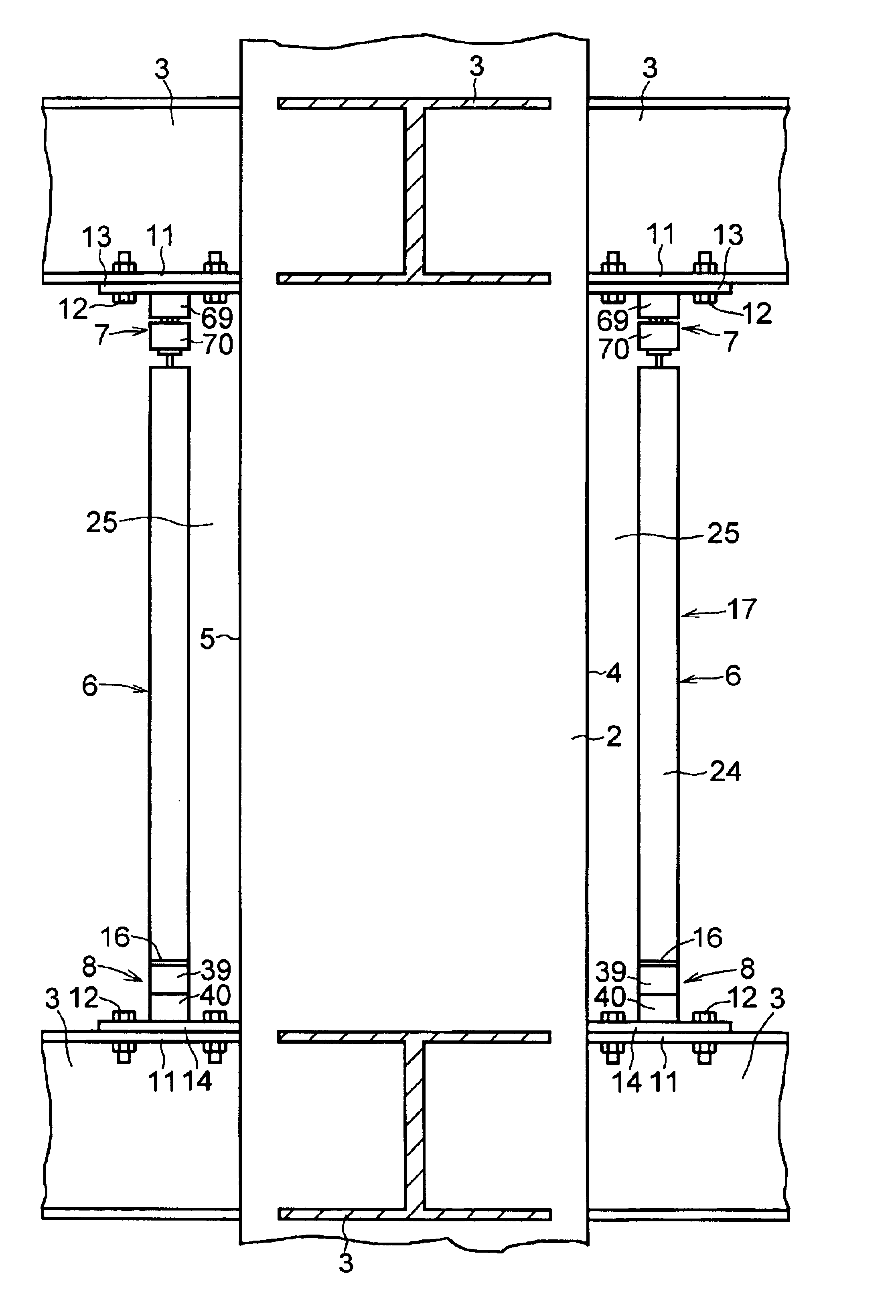
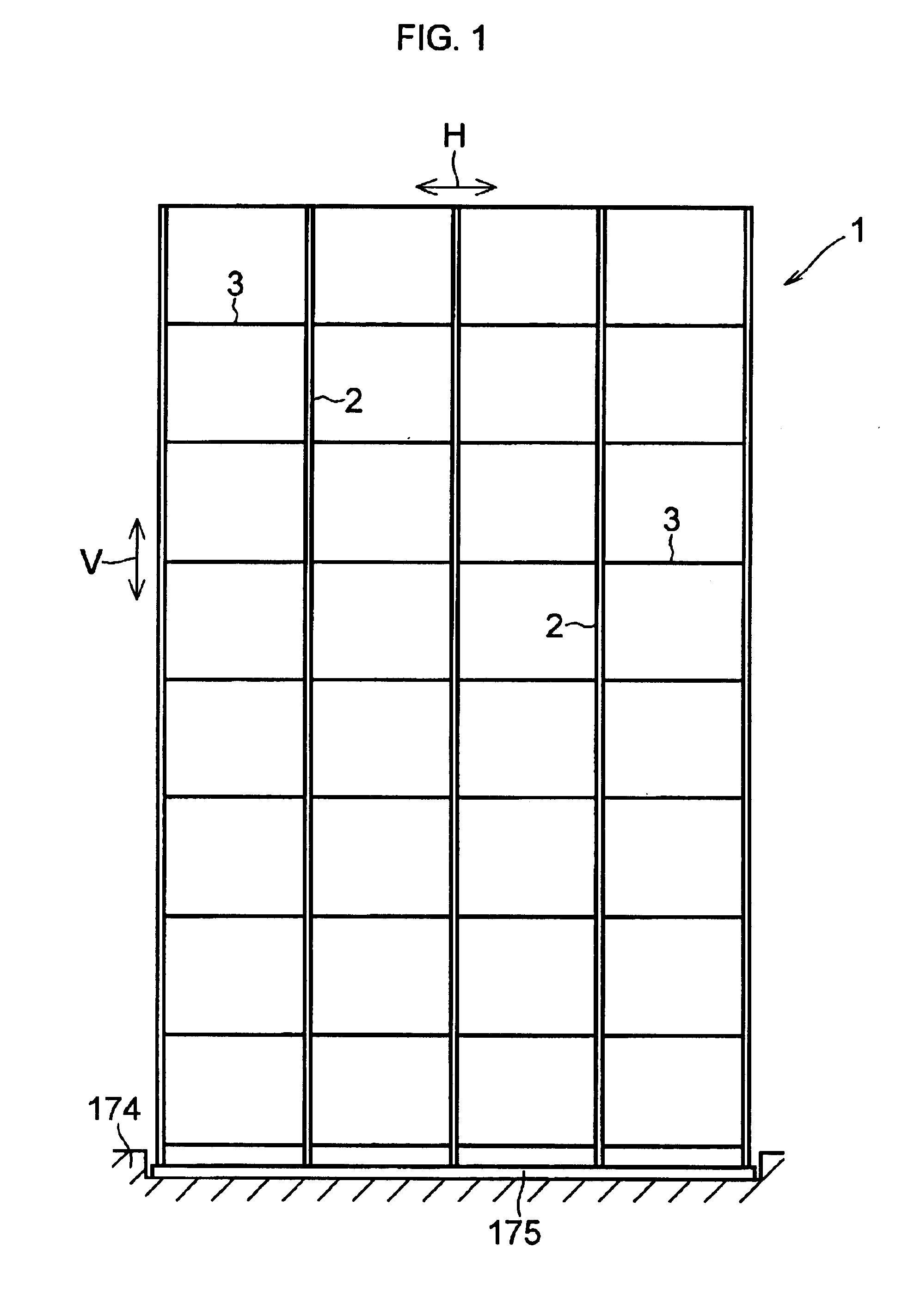
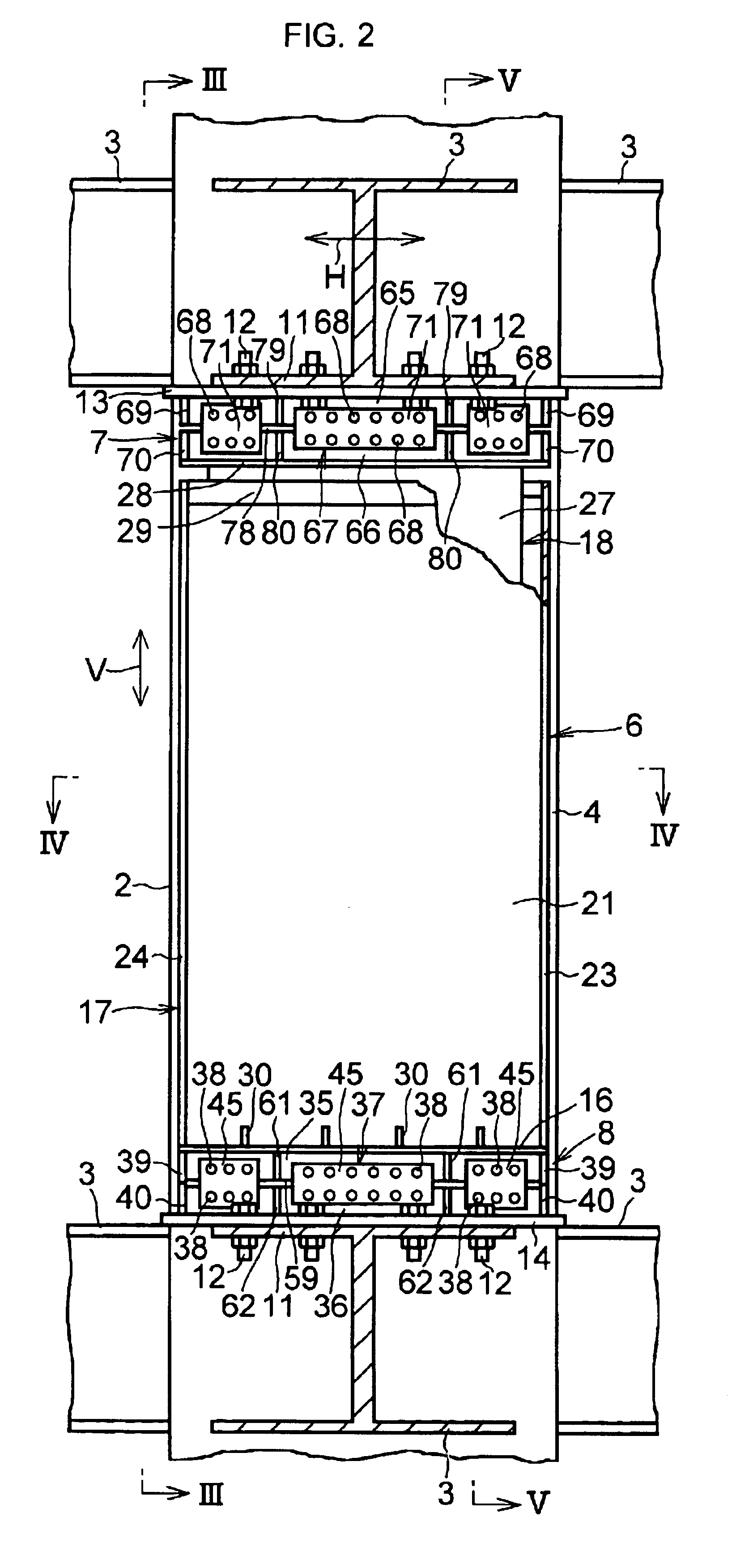
- A vibration-damped structure featuring a column with a vibration damping means comprising a box member and a resistance plate connected via high-strength bolts and gusset plates, allowing for efficient damping without partitioning the interior and minimizing space occupation, using a viscous material to absorb displacement energy, and incorporating reinforcing frames to manage angular moments.

Building Codes and Seismic Safety Regulations
Building codes and seismic safety regulations form the fundamental framework governing the implementation of vibration damping technologies in modern construction. These regulatory standards have evolved significantly over the past several decades, driven by lessons learned from major seismic events and advances in structural engineering understanding. The regulatory landscape varies considerably across different geographical regions, with countries like Japan, New Zealand, and Chile maintaining some of the most stringent requirements due to their high seismic activity.
International Building Code (IBC) provisions in the United States establish baseline requirements for seismic design, mandating specific performance criteria for structures in different seismic zones. These codes require buildings to demonstrate adequate lateral force resistance and specify minimum design parameters for damping systems. The American Society of Civil Engineers (ASCE) 7 standard provides detailed methodologies for incorporating supplemental damping devices into structural analysis, establishing acceptance criteria and testing protocols.
European standards, particularly Eurocode 8, emphasize performance-based design approaches that allow greater flexibility in damping technology selection while maintaining strict safety margins. These regulations require comprehensive dynamic analysis and specify quality assurance procedures for damping device installation and maintenance. The code framework distinguishes between different damping mechanisms, establishing separate criteria for viscous, viscoelastic, and friction-based systems.
Regulatory compliance significantly influences technology adoption patterns, as building owners and developers must balance cost considerations with mandatory safety requirements. Recent code updates have increasingly recognized the benefits of advanced damping technologies, leading to more favorable provisions for innovative solutions such as tuned mass dampers and base isolation systems.
The certification process for new damping technologies involves extensive testing protocols, including cyclic loading tests, environmental durability assessments, and long-term performance validation. Regulatory bodies require manufacturers to demonstrate consistent performance across specified temperature ranges and loading frequencies, ensuring reliability under actual seismic conditions.
Emerging regulatory trends focus on resilience-based design criteria, moving beyond life safety objectives toward maintaining building functionality after seismic events. This shift is driving increased adoption of sophisticated damping technologies that can minimize structural damage and reduce post-earthquake repair costs.
International Building Code (IBC) provisions in the United States establish baseline requirements for seismic design, mandating specific performance criteria for structures in different seismic zones. These codes require buildings to demonstrate adequate lateral force resistance and specify minimum design parameters for damping systems. The American Society of Civil Engineers (ASCE) 7 standard provides detailed methodologies for incorporating supplemental damping devices into structural analysis, establishing acceptance criteria and testing protocols.
European standards, particularly Eurocode 8, emphasize performance-based design approaches that allow greater flexibility in damping technology selection while maintaining strict safety margins. These regulations require comprehensive dynamic analysis and specify quality assurance procedures for damping device installation and maintenance. The code framework distinguishes between different damping mechanisms, establishing separate criteria for viscous, viscoelastic, and friction-based systems.
Regulatory compliance significantly influences technology adoption patterns, as building owners and developers must balance cost considerations with mandatory safety requirements. Recent code updates have increasingly recognized the benefits of advanced damping technologies, leading to more favorable provisions for innovative solutions such as tuned mass dampers and base isolation systems.
The certification process for new damping technologies involves extensive testing protocols, including cyclic loading tests, environmental durability assessments, and long-term performance validation. Regulatory bodies require manufacturers to demonstrate consistent performance across specified temperature ranges and loading frequencies, ensuring reliability under actual seismic conditions.
Emerging regulatory trends focus on resilience-based design criteria, moving beyond life safety objectives toward maintaining building functionality after seismic events. This shift is driving increased adoption of sophisticated damping technologies that can minimize structural damage and reduce post-earthquake repair costs.
Cost-Benefit Analysis of Damping Technologies
The economic evaluation of vibration damping technologies requires comprehensive assessment of both initial capital expenditure and long-term operational benefits. Traditional passive damping systems, including tuned mass dampers and viscous dampers, typically require initial investments ranging from $50,000 to $500,000 depending on building size and complexity. These systems offer relatively low maintenance costs, averaging 2-3% of initial investment annually, with operational lifespans extending 25-30 years.
Active damping systems present significantly higher upfront costs, often 3-5 times greater than passive alternatives, with installations ranging from $200,000 to $2 million. However, these systems provide superior performance in reducing structural vibrations by 60-80% compared to 30-50% for passive systems. The enhanced control capabilities translate to measurable benefits including reduced structural fatigue, extended building lifespan, and improved occupant comfort metrics.
Semi-active damping technologies occupy a middle ground, with initial costs approximately 1.5-2 times higher than passive systems while delivering performance approaching active systems. The adaptive nature of semi-active dampers provides optimal cost-effectiveness for buildings experiencing variable loading conditions, offering 15-20% better performance than passive systems at 40-60% lower costs than fully active solutions.
Quantifiable benefits include reduced insurance premiums, typically 5-15% annually for buildings with certified damping systems, and decreased maintenance costs for structural elements. Energy savings from reduced HVAC system strain due to improved building stability contribute additional operational benefits of $10,000-50,000 annually for large commercial structures.
Return on investment calculations demonstrate payback periods of 8-12 years for passive systems, 12-18 years for semi-active technologies, and 15-25 years for active systems when considering comprehensive lifecycle benefits including structural preservation, occupant productivity improvements, and reduced seismic risk exposure.
Active damping systems present significantly higher upfront costs, often 3-5 times greater than passive alternatives, with installations ranging from $200,000 to $2 million. However, these systems provide superior performance in reducing structural vibrations by 60-80% compared to 30-50% for passive systems. The enhanced control capabilities translate to measurable benefits including reduced structural fatigue, extended building lifespan, and improved occupant comfort metrics.
Semi-active damping technologies occupy a middle ground, with initial costs approximately 1.5-2 times higher than passive systems while delivering performance approaching active systems. The adaptive nature of semi-active dampers provides optimal cost-effectiveness for buildings experiencing variable loading conditions, offering 15-20% better performance than passive systems at 40-60% lower costs than fully active solutions.
Quantifiable benefits include reduced insurance premiums, typically 5-15% annually for buildings with certified damping systems, and decreased maintenance costs for structural elements. Energy savings from reduced HVAC system strain due to improved building stability contribute additional operational benefits of $10,000-50,000 annually for large commercial structures.
Return on investment calculations demonstrate payback periods of 8-12 years for passive systems, 12-18 years for semi-active technologies, and 15-25 years for active systems when considering comprehensive lifecycle benefits including structural preservation, occupant productivity improvements, and reduced seismic risk exposure.
Unlock deeper insights with PatSnap Eureka Quick Research — get a full tech report to explore trends and direct your research. Try now!
Generate Your Research Report Instantly with AI Agent
Supercharge your innovation with PatSnap Eureka AI Agent Platform!