
Compute Express Link vs Thunderbolt 4: Efficiency Metrics
APR 13, 20269 MIN READ
Generate Your Research Report Instantly with AI Agent
Patsnap Eureka helps you evaluate technical feasibility & market potential.
CXL vs TB4 Interface Evolution and Technical Objectives
The evolution of high-speed interconnect technologies has been driven by the exponential growth in data processing demands and the need for efficient communication between computing components. Both Compute Express Link (CXL) and Thunderbolt 4 represent significant milestones in interface development, though they emerged from different technological lineages and serve distinct primary purposes within the computing ecosystem.
CXL technology originated from the need to address memory and accelerator connectivity challenges in data center and high-performance computing environments. Developed through industry collaboration led by Intel and supported by major technology companies, CXL builds upon the PCIe foundation to enable cache-coherent connectivity between processors and various types of accelerators, memory expanders, and smart NICs. The technology aims to eliminate traditional bottlenecks in heterogeneous computing architectures.
Thunderbolt 4, representing the latest iteration of Intel's Thunderbolt technology family, evolved from the original Light Peak project and subsequent Thunderbolt generations. This interface technology focuses on providing universal connectivity for consumer and professional computing devices, emphasizing versatility and user experience. Thunderbolt 4 maintains backward compatibility while introducing enhanced security features and stricter certification requirements.
The technical objectives of CXL center around achieving low-latency, high-bandwidth communication with cache coherency support. Key goals include enabling dynamic resource pooling, supporting heterogeneous computing workloads, and providing scalable memory expansion capabilities. CXL targets three primary use cases: CXL.io for device discovery and enumeration, CXL.cache for device-initiated caching, and CXL.mem for host-initiated memory access.
Thunderbolt 4's objectives emphasize universal connectivity, security enhancement, and user experience optimization. The technology aims to deliver consistent 40 Gbps performance, support for multiple 4K displays, enhanced DMA protection, and wake-from-sleep capabilities. Thunderbolt 4 also mandates support for USB4 specification compliance, ensuring broader ecosystem compatibility.
Both technologies represent responses to evolving computational demands, with CXL addressing enterprise and data center requirements for efficient accelerator integration, while Thunderbolt 4 focuses on consumer and professional market needs for versatile, secure, and high-performance external connectivity solutions.
CXL technology originated from the need to address memory and accelerator connectivity challenges in data center and high-performance computing environments. Developed through industry collaboration led by Intel and supported by major technology companies, CXL builds upon the PCIe foundation to enable cache-coherent connectivity between processors and various types of accelerators, memory expanders, and smart NICs. The technology aims to eliminate traditional bottlenecks in heterogeneous computing architectures.
Thunderbolt 4, representing the latest iteration of Intel's Thunderbolt technology family, evolved from the original Light Peak project and subsequent Thunderbolt generations. This interface technology focuses on providing universal connectivity for consumer and professional computing devices, emphasizing versatility and user experience. Thunderbolt 4 maintains backward compatibility while introducing enhanced security features and stricter certification requirements.
The technical objectives of CXL center around achieving low-latency, high-bandwidth communication with cache coherency support. Key goals include enabling dynamic resource pooling, supporting heterogeneous computing workloads, and providing scalable memory expansion capabilities. CXL targets three primary use cases: CXL.io for device discovery and enumeration, CXL.cache for device-initiated caching, and CXL.mem for host-initiated memory access.
Thunderbolt 4's objectives emphasize universal connectivity, security enhancement, and user experience optimization. The technology aims to deliver consistent 40 Gbps performance, support for multiple 4K displays, enhanced DMA protection, and wake-from-sleep capabilities. Thunderbolt 4 also mandates support for USB4 specification compliance, ensuring broader ecosystem compatibility.
Both technologies represent responses to evolving computational demands, with CXL addressing enterprise and data center requirements for efficient accelerator integration, while Thunderbolt 4 focuses on consumer and professional market needs for versatile, secure, and high-performance external connectivity solutions.
Market Demand for High-Speed Computing Interconnects
The global market for high-speed computing interconnects is experiencing unprecedented growth driven by the exponential increase in data processing requirements across multiple industries. Enterprise data centers, cloud computing providers, and high-performance computing facilities are demanding interconnect solutions that can handle massive data throughput while maintaining low latency and energy efficiency. This surge in demand stems from the proliferation of artificial intelligence workloads, machine learning applications, and real-time analytics that require rapid data movement between processors, memory, and storage systems.
Data center modernization initiatives are particularly driving the adoption of advanced interconnect technologies. Organizations are transitioning from traditional PCIe-based architectures to more sophisticated solutions that can support emerging workloads such as GPU-accelerated computing, distributed training of large language models, and real-time inference applications. The need for seamless connectivity between CPUs, GPUs, accelerators, and memory pools has created a substantial market opportunity for both CXL and Thunderbolt 4 technologies.
The consumer electronics segment represents another significant growth driver, with professional content creators, gamers, and power users requiring high-bandwidth connections for external storage, displays, and peripheral devices. The increasing adoption of 4K and 8K video content, virtual reality applications, and high-resolution gaming has intensified the demand for interconnects capable of delivering consistent performance without bottlenecks.
Cloud service providers are investing heavily in infrastructure upgrades to support next-generation applications, creating substantial demand for interconnect solutions that can scale efficiently across distributed computing environments. The shift toward disaggregated computing architectures, where compute, memory, and storage resources can be dynamically allocated, requires interconnects that support flexible resource sharing and rapid reconfiguration.
Manufacturing and automotive industries are also contributing to market growth through their adoption of edge computing solutions that require reliable, high-speed interconnects for real-time processing applications. The integration of AI capabilities into industrial automation systems and autonomous vehicle platforms necessitates interconnect technologies that can handle both high-bandwidth data streams and deterministic communication requirements.
Market analysts project continued expansion in this sector as organizations increasingly recognize the critical role of interconnect performance in overall system efficiency and competitiveness.
Data center modernization initiatives are particularly driving the adoption of advanced interconnect technologies. Organizations are transitioning from traditional PCIe-based architectures to more sophisticated solutions that can support emerging workloads such as GPU-accelerated computing, distributed training of large language models, and real-time inference applications. The need for seamless connectivity between CPUs, GPUs, accelerators, and memory pools has created a substantial market opportunity for both CXL and Thunderbolt 4 technologies.
The consumer electronics segment represents another significant growth driver, with professional content creators, gamers, and power users requiring high-bandwidth connections for external storage, displays, and peripheral devices. The increasing adoption of 4K and 8K video content, virtual reality applications, and high-resolution gaming has intensified the demand for interconnects capable of delivering consistent performance without bottlenecks.
Cloud service providers are investing heavily in infrastructure upgrades to support next-generation applications, creating substantial demand for interconnect solutions that can scale efficiently across distributed computing environments. The shift toward disaggregated computing architectures, where compute, memory, and storage resources can be dynamically allocated, requires interconnects that support flexible resource sharing and rapid reconfiguration.
Manufacturing and automotive industries are also contributing to market growth through their adoption of edge computing solutions that require reliable, high-speed interconnects for real-time processing applications. The integration of AI capabilities into industrial automation systems and autonomous vehicle platforms necessitates interconnect technologies that can handle both high-bandwidth data streams and deterministic communication requirements.
Market analysts project continued expansion in this sector as organizations increasingly recognize the critical role of interconnect performance in overall system efficiency and competitiveness.
Current Performance Gaps in CXL and TB4 Technologies
CXL and Thunderbolt 4 technologies exhibit distinct performance characteristics that create significant gaps in their respective application domains. CXL's primary limitation lies in its current bandwidth constraints, with CXL 2.0 supporting up to 32 GT/s per direction, which translates to approximately 64 GB/s bidirectional throughput. However, real-world implementations often achieve only 70-80% of theoretical bandwidth due to protocol overhead and cache coherency management complexities.
Thunderbolt 4 faces different challenges, operating at 40 Gbps bidirectional bandwidth with substantial protocol overhead that reduces effective data transfer rates to approximately 22-25 Gbps for storage applications. The daisy-chaining capability, while advantageous for connectivity, introduces cumulative latency penalties that can reach 200-300 microseconds in multi-device configurations.
Latency represents another critical performance gap. CXL demonstrates superior memory access latency characteristics, typically achieving 100-150 nanoseconds for cache-coherent memory operations. Conversely, Thunderbolt 4's packet-based architecture introduces inherent latency overhead of 2-5 microseconds for initial connection establishment, making it less suitable for real-time memory-intensive applications.
Power efficiency disparities further highlight performance gaps between these technologies. CXL implementations consume approximately 3-5 watts per port under active operation, with additional power requirements for cache coherency maintenance. Thunderbolt 4 controllers typically consume 8-12 watts per port, with power delivery capabilities up to 100 watts that can strain system thermal management.
Protocol efficiency varies significantly between the technologies. CXL's cache-coherent protocol enables direct CPU memory access with minimal software intervention, achieving near-native memory performance. Thunderbolt 4 requires extensive software stack processing, including PCIe tunneling and display protocol handling, which introduces computational overhead and reduces overall system efficiency.
Scalability limitations present additional performance challenges. CXL currently supports limited device connectivity per root port, typically 2-4 devices depending on implementation. Thunderbolt 4 supports up to six devices per chain but experiences bandwidth degradation and increased latency with each additional device, particularly impacting high-throughput applications requiring consistent performance across multiple connected devices.
Thunderbolt 4 faces different challenges, operating at 40 Gbps bidirectional bandwidth with substantial protocol overhead that reduces effective data transfer rates to approximately 22-25 Gbps for storage applications. The daisy-chaining capability, while advantageous for connectivity, introduces cumulative latency penalties that can reach 200-300 microseconds in multi-device configurations.
Latency represents another critical performance gap. CXL demonstrates superior memory access latency characteristics, typically achieving 100-150 nanoseconds for cache-coherent memory operations. Conversely, Thunderbolt 4's packet-based architecture introduces inherent latency overhead of 2-5 microseconds for initial connection establishment, making it less suitable for real-time memory-intensive applications.
Power efficiency disparities further highlight performance gaps between these technologies. CXL implementations consume approximately 3-5 watts per port under active operation, with additional power requirements for cache coherency maintenance. Thunderbolt 4 controllers typically consume 8-12 watts per port, with power delivery capabilities up to 100 watts that can strain system thermal management.
Protocol efficiency varies significantly between the technologies. CXL's cache-coherent protocol enables direct CPU memory access with minimal software intervention, achieving near-native memory performance. Thunderbolt 4 requires extensive software stack processing, including PCIe tunneling and display protocol handling, which introduces computational overhead and reduces overall system efficiency.
Scalability limitations present additional performance challenges. CXL currently supports limited device connectivity per root port, typically 2-4 devices depending on implementation. Thunderbolt 4 supports up to six devices per chain but experiences bandwidth degradation and increased latency with each additional device, particularly impacting high-throughput applications requiring consistent performance across multiple connected devices.
Existing CXL and TB4 Implementation Solutions
01 CXL and Thunderbolt protocol integration and compatibility
Technologies for integrating Compute Express Link (CXL) protocol with Thunderbolt 4 interfaces to enable efficient data transfer between devices. This includes methods for protocol conversion, compatibility layers, and unified controller designs that support both CXL and Thunderbolt 4 standards simultaneously, allowing devices to communicate seamlessly across different interconnect technologies.- Protocol conversion and interoperability between CXL and Thunderbolt interfaces: Technologies enabling seamless communication and data transfer between Compute Express Link and Thunderbolt 4 protocols through protocol conversion mechanisms. These solutions allow devices using different interface standards to interoperate efficiently, supporting protocol translation, signal conversion, and unified controller architectures that can handle both CXL and Thunderbolt communications simultaneously.
- Power management and efficiency optimization for high-speed interconnects: Advanced power management techniques specifically designed for high-bandwidth interconnect technologies to optimize energy consumption while maintaining performance. These approaches include dynamic power state transitions, selective lane activation, adaptive voltage scaling, and intelligent power gating mechanisms that reduce overall system power consumption during various operational modes and workload conditions.
- Bandwidth allocation and traffic management for multi-protocol systems: Methods for efficiently managing data traffic and allocating bandwidth resources in systems supporting multiple high-speed interconnect protocols. These techniques involve intelligent arbitration schemes, quality-of-service mechanisms, priority-based scheduling, and dynamic bandwidth partitioning to ensure optimal utilization of available communication channels and prevent bottlenecks in mixed-protocol environments.
- Physical layer optimization and signal integrity enhancement: Physical layer improvements focused on maintaining signal integrity and maximizing data transfer rates across high-speed interconnects. These innovations include advanced equalization techniques, impedance matching solutions, crosstalk reduction methods, and enhanced error correction mechanisms that ensure reliable high-bandwidth communication while minimizing signal degradation and electromagnetic interference.
- Multi-device connectivity and topology management: Architectures and methods for managing complex device topologies involving multiple endpoints connected through high-speed interconnect technologies. These solutions address device enumeration, hot-plug support, dynamic topology reconfiguration, and efficient routing mechanisms that enable scalable system designs with multiple devices sharing interconnect resources while maintaining optimal performance and minimal latency.
02 Power management and efficiency optimization
Techniques for optimizing power consumption and thermal management in systems utilizing CXL and Thunderbolt 4 connections. This includes dynamic power state transitions, intelligent power allocation between multiple devices, and methods for reducing power overhead during data transmission while maintaining high performance levels across the interconnect fabric.Expand Specific Solutions03 Bandwidth allocation and traffic management
Methods for efficiently managing bandwidth and data traffic across CXL and Thunderbolt 4 interfaces. This includes quality of service mechanisms, priority-based routing, dynamic bandwidth allocation schemes, and techniques for minimizing latency while maximizing throughput in multi-device configurations with heterogeneous workloads.Expand Specific Solutions04 Memory coherency and cache management
Solutions for maintaining memory coherency and efficient cache management in systems using CXL and Thunderbolt 4 connections. This encompasses cache coherence protocols, memory pooling techniques, and methods for synchronizing data across multiple devices while minimizing overhead and ensuring data consistency in distributed memory architectures.Expand Specific Solutions05 Error detection and reliability enhancement
Mechanisms for improving reliability and error handling in CXL and Thunderbolt 4 implementations. This includes error detection and correction schemes, fault tolerance methods, link training and equalization techniques, and recovery procedures that ensure robust operation and data integrity across high-speed interconnects under various operating conditions.Expand Specific Solutions
Major Players in CXL and Thunderbolt Ecosystems
The Compute Express Link (CXL) versus Thunderbolt 4 efficiency comparison represents an emerging competitive landscape in high-speed interconnect technologies. The industry is in a transitional phase, with the market expanding rapidly as data-intensive applications drive demand for faster, more efficient connectivity solutions. Market size is projected to grow significantly as enterprises adopt AI, machine learning, and high-performance computing workloads. Technology maturity varies between the standards, with Intel Corp. leading development of both technologies while companies like Huawei Technologies, Taiwan Semiconductor Manufacturing, and ZTE Corp. contribute to implementation and manufacturing. Academic institutions including Xidian University and McGill University advance research in interconnect efficiency metrics. The competitive dynamics show Intel maintaining technological leadership while Asian manufacturers like TSMC and Winbond Electronics focus on production capabilities, creating a multi-layered ecosystem spanning chip design, manufacturing, and system integration across global markets.
Intel Corp.
Technical Solution: Intel developed both CXL and co-developed Thunderbolt 4 technologies, providing comprehensive solutions for high-speed interconnects. CXL (Compute Express Link) delivers cache-coherent connectivity between CPUs and accelerators with latency as low as 50ns and bandwidth up to 64GB/s per direction in CXL 2.0. Thunderbolt 4 offers 40Gbps bidirectional bandwidth with universal USB-C connectivity, supporting up to two 4K displays and daisy-chaining up to six devices. Intel's CXL implementation focuses on memory expansion and accelerator attachment in data centers, while Thunderbolt 4 targets consumer and professional workstation applications with enhanced security features and guaranteed 32Gbps PCIe performance.
Strengths: Industry leadership in both technologies, extensive ecosystem support, proven scalability. Weaknesses: Higher power consumption in mobile applications, complex implementation requirements.
ZTE Corp.
Technical Solution: ZTE has developed telecommunications-focused implementations of high-speed interconnects, particularly for 5G infrastructure and edge computing applications. Their CXL solutions target network function virtualization (NFV) and software-defined networking (SDN) environments, enabling efficient memory sharing between network processors and accelerators. ZTE's approach achieves memory access latencies under 200ns while supporting bandwidth scaling up to 32GB/s per link. For external connectivity, they implement Thunderbolt 4-compatible interfaces in their enterprise networking equipment, supporting high-speed data transfer for network management and monitoring applications. Their solutions emphasize reliability and fault tolerance in carrier-grade environments, with redundant interconnect paths and error correction capabilities.
Strengths: Strong telecommunications focus, carrier-grade reliability, good integration with 5G infrastructure. Weaknesses: Limited consumer market presence, narrow application focus compared to general-purpose solutions.
Core Patents in High-Speed Interface Efficiency
Dynamically influencing bandwidth
PatentPendingIN202244048306A
Innovation
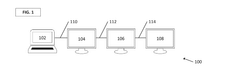
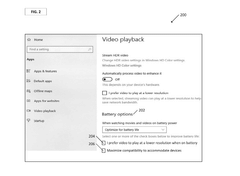
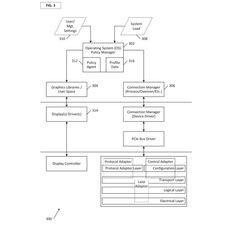
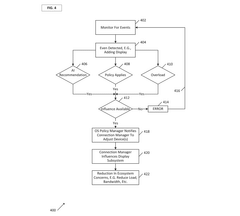
- The implementation of an OS policy manager that dynamically influences device settings, such as reducing display resolution from 4K to 2K, by communicating with the Connection Manager and display drivers, to accommodate additional devices on the bus, using user preferences and system load management to optimize device operation modes and ensure successful enumeration.
Bandwidth-based memory scheduling method and device, equipment and medium
PatentPendingCN118093181A
Innovation
- Obtain memory environment variables through the dynamic memory allocator, use performance counters and memory latency detection tools to monitor the bandwidth occupancy of local memory, determine whether the preset conditions are met based on the memory type and bandwidth occupancy, and allocate memory to ensure the reliability of DDR and CXL memory. Reasonable allocation.


Industry Standards and Protocol Compatibility
Compute Express Link (CXL) and Thunderbolt 4 operate within distinct standardization frameworks that significantly impact their protocol compatibility and industry adoption. CXL is governed by the CXL Consortium, which includes major industry players such as Intel, AMD, ARM, and numerous memory and storage vendors. The standard builds upon the established PCIe infrastructure, leveraging PCIe 5.0 and 6.0 physical layers while introducing specialized protocols for memory and coherency management. This approach ensures backward compatibility with existing PCIe ecosystems while extending functionality for high-performance computing applications.
Thunderbolt 4, developed primarily by Intel, represents the latest iteration of the Thunderbolt standard and maintains compatibility with USB4 specifications. The protocol incorporates USB-C physical connectors and supports multiple data transmission standards including USB 3.2, DisplayPort 2.0, and PCIe 3.0 tunneling. This multi-protocol approach enables Thunderbolt 4 to serve as a universal connectivity solution for consumer and professional devices, though it requires specific controller chips and certification processes that can limit widespread adoption.
Protocol compatibility between these technologies reveals fundamental architectural differences. CXL operates as a cache-coherent interconnect protocol specifically designed for processor-to-device and device-to-memory communications in data center environments. Its three sub-protocols - CXL.io, CXL.cache, and CXL.mem - enable seamless integration with CPU memory hierarchies, supporting applications requiring low-latency access to shared memory pools. This specialization makes CXL particularly suitable for AI accelerators, smart NICs, and computational storage devices.
Thunderbolt 4's protocol stack emphasizes versatility and user accessibility, supporting daisy-chaining of up to six devices and providing consistent 40 Gbps bidirectional bandwidth. The standard mandates support for dual 4K displays, PCIe data transfer rates of 32 Gbps, and wake-from-sleep functionality. However, its reliance on proprietary controller technology and higher implementation costs compared to standard USB solutions can create barriers for mass market adoption.
Industry standardization efforts reveal different strategic approaches. CXL benefits from broad industry consortium support, enabling rapid specification development and ensuring interoperability across diverse hardware platforms. The open nature of CXL specifications facilitates innovation from multiple vendors, potentially accelerating ecosystem development. Conversely, Thunderbolt 4's tighter control by Intel ensures consistent performance and security standards but may limit the pace of third-party innovation and cost reduction initiatives.
Thunderbolt 4, developed primarily by Intel, represents the latest iteration of the Thunderbolt standard and maintains compatibility with USB4 specifications. The protocol incorporates USB-C physical connectors and supports multiple data transmission standards including USB 3.2, DisplayPort 2.0, and PCIe 3.0 tunneling. This multi-protocol approach enables Thunderbolt 4 to serve as a universal connectivity solution for consumer and professional devices, though it requires specific controller chips and certification processes that can limit widespread adoption.
Protocol compatibility between these technologies reveals fundamental architectural differences. CXL operates as a cache-coherent interconnect protocol specifically designed for processor-to-device and device-to-memory communications in data center environments. Its three sub-protocols - CXL.io, CXL.cache, and CXL.mem - enable seamless integration with CPU memory hierarchies, supporting applications requiring low-latency access to shared memory pools. This specialization makes CXL particularly suitable for AI accelerators, smart NICs, and computational storage devices.
Thunderbolt 4's protocol stack emphasizes versatility and user accessibility, supporting daisy-chaining of up to six devices and providing consistent 40 Gbps bidirectional bandwidth. The standard mandates support for dual 4K displays, PCIe data transfer rates of 32 Gbps, and wake-from-sleep functionality. However, its reliance on proprietary controller technology and higher implementation costs compared to standard USB solutions can create barriers for mass market adoption.
Industry standardization efforts reveal different strategic approaches. CXL benefits from broad industry consortium support, enabling rapid specification development and ensuring interoperability across diverse hardware platforms. The open nature of CXL specifications facilitates innovation from multiple vendors, potentially accelerating ecosystem development. Conversely, Thunderbolt 4's tighter control by Intel ensures consistent performance and security standards but may limit the pace of third-party innovation and cost reduction initiatives.
Power Efficiency Benchmarking Methodologies
Power efficiency benchmarking for Compute Express Link (CXL) and Thunderbolt 4 requires standardized methodologies to ensure accurate and comparable measurements across different system configurations. The fundamental approach involves establishing controlled testing environments where power consumption can be measured at multiple points within the interconnect ecosystem, including idle states, active data transfer phases, and peak performance scenarios.
The baseline measurement framework encompasses both static and dynamic power consumption patterns. Static measurements capture power draw during idle states when the interface maintains link establishment but handles minimal data traffic. Dynamic measurements focus on power consumption during various workload intensities, ranging from light intermittent transfers to sustained high-bandwidth operations. These measurements must account for protocol overhead, signal integrity maintenance, and error correction mechanisms inherent to each technology.
Workload characterization represents a critical component of benchmarking methodology. Synthetic benchmarks should simulate real-world usage patterns including sequential and random data access, mixed read-write operations, and varying payload sizes. For CXL evaluation, memory-centric workloads that leverage cache coherency protocols provide meaningful insights into power efficiency during typical server and data center operations. Thunderbolt 4 benchmarking requires diverse peripheral simulation including storage devices, displays, and network adapters to reflect consumer and professional use cases.
Environmental control and measurement precision significantly impact benchmark validity. Temperature regulation ensures consistent thermal conditions that affect both performance and power consumption. Voltage regulation and power delivery monitoring at component level enables granular analysis of efficiency variations across different operational states. Measurement equipment must provide sufficient resolution to capture transient power spikes and subtle efficiency differences between protocols.
Normalization techniques enable fair comparison between technologies operating at different performance scales. Power per gigabit transferred, energy per transaction, and performance-per-watt metrics provide standardized comparison frameworks. These normalized measurements account for inherent performance differences while highlighting efficiency characteristics relevant to specific deployment scenarios and application requirements.
The baseline measurement framework encompasses both static and dynamic power consumption patterns. Static measurements capture power draw during idle states when the interface maintains link establishment but handles minimal data traffic. Dynamic measurements focus on power consumption during various workload intensities, ranging from light intermittent transfers to sustained high-bandwidth operations. These measurements must account for protocol overhead, signal integrity maintenance, and error correction mechanisms inherent to each technology.
Workload characterization represents a critical component of benchmarking methodology. Synthetic benchmarks should simulate real-world usage patterns including sequential and random data access, mixed read-write operations, and varying payload sizes. For CXL evaluation, memory-centric workloads that leverage cache coherency protocols provide meaningful insights into power efficiency during typical server and data center operations. Thunderbolt 4 benchmarking requires diverse peripheral simulation including storage devices, displays, and network adapters to reflect consumer and professional use cases.
Environmental control and measurement precision significantly impact benchmark validity. Temperature regulation ensures consistent thermal conditions that affect both performance and power consumption. Voltage regulation and power delivery monitoring at component level enables granular analysis of efficiency variations across different operational states. Measurement equipment must provide sufficient resolution to capture transient power spikes and subtle efficiency differences between protocols.
Normalization techniques enable fair comparison between technologies operating at different performance scales. Power per gigabit transferred, energy per transaction, and performance-per-watt metrics provide standardized comparison frameworks. These normalized measurements account for inherent performance differences while highlighting efficiency characteristics relevant to specific deployment scenarios and application requirements.
Unlock deeper insights with Patsnap Eureka Quick Research — get a full tech report to explore trends and direct your research. Try now!
Generate Your Research Report Instantly with AI Agent
Supercharge your innovation with Patsnap Eureka AI Agent Platform!