

Considerations for Lens Thickness Variability in Pseudophakia Projects
JAN 29, 20269 MIN READ
Generate Your Research Report Instantly with AI Agent
PatSnap Eureka helps you evaluate technical feasibility & market potential.
Pseudophakic Lens Thickness Background and Objectives
Pseudophakic lens thickness represents a critical parameter in modern cataract surgery and intraocular lens (IOL) design, directly influencing postoperative visual outcomes, refractive accuracy, and patient satisfaction. The evolution of cataract surgery from couching techniques to contemporary phacoemulsification has been accompanied by remarkable advancements in IOL technology. However, the variability in lens thickness across different IOL designs and powers remains a significant consideration that impacts surgical planning, biometric calculations, and effective lens position prediction.
The historical development of IOLs began with Harold Ridley's pioneering work in 1949, introducing the concept of artificial lens implantation. Early IOL designs featured uniform thickness profiles with limited consideration for optical performance variations across different powers. As the field progressed through the 1980s and 1990s, manufacturers began recognizing that lens thickness variability significantly affects the effective lens position, anterior chamber depth, and ultimately refractive outcomes. This recognition catalyzed systematic investigations into optimizing thickness profiles for different lens powers and designs.
Contemporary IOL manufacturing encompasses diverse design philosophies, including monofocal, multifocal, toric, and extended depth of focus lenses, each presenting unique thickness characteristics. The central and edge thickness variations across the power range of a given IOL model can span several millimeters, creating challenges for accurate biometric predictions. Modern biometry formulas, such as Barrett Universal II, Hill-RBF, and Kane formulas, attempt to incorporate lens thickness data to improve effective lens position predictions, yet significant room for refinement remains.
The primary objective of addressing lens thickness variability in pseudophakia projects centers on enhancing refractive predictability and optimizing visual outcomes. Specific goals include developing standardized methodologies for measuring and reporting IOL thickness across manufacturers, establishing correlations between thickness parameters and postoperative lens positioning, and creating refined calculation algorithms that account for thickness-related variables. Additionally, understanding thickness variability enables better surgical planning for complex cases, including eyes with extreme axial lengths, previous refractive surgery, or unusual anatomical configurations.
The historical development of IOLs began with Harold Ridley's pioneering work in 1949, introducing the concept of artificial lens implantation. Early IOL designs featured uniform thickness profiles with limited consideration for optical performance variations across different powers. As the field progressed through the 1980s and 1990s, manufacturers began recognizing that lens thickness variability significantly affects the effective lens position, anterior chamber depth, and ultimately refractive outcomes. This recognition catalyzed systematic investigations into optimizing thickness profiles for different lens powers and designs.
Contemporary IOL manufacturing encompasses diverse design philosophies, including monofocal, multifocal, toric, and extended depth of focus lenses, each presenting unique thickness characteristics. The central and edge thickness variations across the power range of a given IOL model can span several millimeters, creating challenges for accurate biometric predictions. Modern biometry formulas, such as Barrett Universal II, Hill-RBF, and Kane formulas, attempt to incorporate lens thickness data to improve effective lens position predictions, yet significant room for refinement remains.
The primary objective of addressing lens thickness variability in pseudophakia projects centers on enhancing refractive predictability and optimizing visual outcomes. Specific goals include developing standardized methodologies for measuring and reporting IOL thickness across manufacturers, establishing correlations between thickness parameters and postoperative lens positioning, and creating refined calculation algorithms that account for thickness-related variables. Additionally, understanding thickness variability enables better surgical planning for complex cases, including eyes with extreme axial lengths, previous refractive surgery, or unusual anatomical configurations.
Market Demand for Precise IOL Design
The global market for intraocular lenses has experienced substantial growth driven by the aging population and increasing prevalence of cataracts worldwide. As life expectancy rises, the number of cataract surgeries performed annually continues to expand, creating sustained demand for advanced IOL solutions. This demographic shift has positioned precise IOL design as a critical factor in achieving optimal postoperative visual outcomes and patient satisfaction.
Patient expectations have evolved significantly beyond basic vision restoration. Modern cataract surgery patients increasingly demand spectacle independence and premium visual quality across multiple distances. This shift has intensified the need for IOLs that can accurately compensate for individual anatomical variations, including lens thickness variability. Surgeons and patients alike recognize that even minor deviations in lens positioning or optical performance can substantially impact refractive outcomes and quality of life.
The premium IOL segment has demonstrated particularly robust growth, reflecting patient willingness to invest in superior visual outcomes. Multifocal, extended depth of focus, and toric IOLs require exceptional precision in design and calculation to deliver their intended benefits. Lens thickness variability directly affects effective lens position prediction, making accurate modeling essential for these advanced lens designs. Manufacturers that can reliably account for such variability gain competitive advantage in this high-value market segment.
Healthcare systems worldwide are increasingly focused on reducing enhancement procedures and improving first-time surgical success rates. Refractive surprises following cataract surgery represent both clinical disappointments and economic burdens. Precise IOL design that incorporates lens thickness considerations helps minimize postoperative refractive errors, reducing the need for secondary interventions such as laser vision correction or IOL exchange. This alignment with value-based care models strengthens market demand for sophisticated calculation methodologies.
Emerging markets present additional growth opportunities as access to advanced cataract surgery expands globally. However, these markets often feature greater anatomical diversity in patient populations, making standardized IOL calculation approaches less reliable. Solutions that accommodate lens thickness variability and other biometric parameters enable more consistent outcomes across diverse patient demographics, supporting market penetration in these regions.
Patient expectations have evolved significantly beyond basic vision restoration. Modern cataract surgery patients increasingly demand spectacle independence and premium visual quality across multiple distances. This shift has intensified the need for IOLs that can accurately compensate for individual anatomical variations, including lens thickness variability. Surgeons and patients alike recognize that even minor deviations in lens positioning or optical performance can substantially impact refractive outcomes and quality of life.
The premium IOL segment has demonstrated particularly robust growth, reflecting patient willingness to invest in superior visual outcomes. Multifocal, extended depth of focus, and toric IOLs require exceptional precision in design and calculation to deliver their intended benefits. Lens thickness variability directly affects effective lens position prediction, making accurate modeling essential for these advanced lens designs. Manufacturers that can reliably account for such variability gain competitive advantage in this high-value market segment.
Healthcare systems worldwide are increasingly focused on reducing enhancement procedures and improving first-time surgical success rates. Refractive surprises following cataract surgery represent both clinical disappointments and economic burdens. Precise IOL design that incorporates lens thickness considerations helps minimize postoperative refractive errors, reducing the need for secondary interventions such as laser vision correction or IOL exchange. This alignment with value-based care models strengthens market demand for sophisticated calculation methodologies.
Emerging markets present additional growth opportunities as access to advanced cataract surgery expands globally. However, these markets often feature greater anatomical diversity in patient populations, making standardized IOL calculation approaches less reliable. Solutions that accommodate lens thickness variability and other biometric parameters enable more consistent outcomes across diverse patient demographics, supporting market penetration in these regions.
Current Challenges in Lens Thickness Control
Intraocular lens (IOL) thickness variability represents a critical manufacturing and clinical challenge in pseudophakic procedures, directly impacting surgical outcomes and patient visual quality. The control of lens thickness during production involves multiple interdependent factors that create significant technical obstacles for manufacturers and surgeons alike.
Manufacturing precision remains the primary challenge, as IOL production requires maintaining thickness tolerances within micrometers across different optical zones. Variations in material polymerization, molding temperatures, and curing processes can introduce inconsistencies that affect the final lens profile. These deviations become particularly problematic in premium IOLs, where multifocal or extended depth-of-focus designs demand extremely precise thickness gradients to achieve intended optical performance.
Material behavior introduces additional complexity, as different IOL materials exhibit varying degrees of hydration, compression, and dimensional stability. Hydrophilic acrylic lenses may swell upon hydration, while hydrophobic materials demonstrate different refractive index changes with temperature fluctuations. These material-specific characteristics make standardized thickness control protocols difficult to establish across different lens platforms.
Quality assurance methodologies face limitations in detecting subtle thickness variations that nonetheless impact clinical performance. Traditional measurement techniques may lack the resolution needed to identify micron-level deviations in complex lens geometries, particularly in aspheric or toric designs where thickness profiles are intentionally non-uniform. The challenge intensifies when attempting to measure folded or rolled lenses in their delivery state.
Surgical handling and implantation procedures further complicate thickness control considerations. Injector systems can induce temporary or permanent deformations, while intraocular positioning may cause asymmetric compression depending on capsular bag dimensions. The interaction between lens thickness, haptic design, and capsular forces creates unpredictable effective lens positions that deviate from theoretical calculations.
Regulatory frameworks struggle to keep pace with advancing IOL technologies, often lacking specific guidelines for acceptable thickness variability ranges in newer lens designs. This regulatory ambiguity creates uncertainty for manufacturers regarding quality specifications and complicates the validation of new production methods or materials intended to improve thickness consistency.
Manufacturing precision remains the primary challenge, as IOL production requires maintaining thickness tolerances within micrometers across different optical zones. Variations in material polymerization, molding temperatures, and curing processes can introduce inconsistencies that affect the final lens profile. These deviations become particularly problematic in premium IOLs, where multifocal or extended depth-of-focus designs demand extremely precise thickness gradients to achieve intended optical performance.
Material behavior introduces additional complexity, as different IOL materials exhibit varying degrees of hydration, compression, and dimensional stability. Hydrophilic acrylic lenses may swell upon hydration, while hydrophobic materials demonstrate different refractive index changes with temperature fluctuations. These material-specific characteristics make standardized thickness control protocols difficult to establish across different lens platforms.
Quality assurance methodologies face limitations in detecting subtle thickness variations that nonetheless impact clinical performance. Traditional measurement techniques may lack the resolution needed to identify micron-level deviations in complex lens geometries, particularly in aspheric or toric designs where thickness profiles are intentionally non-uniform. The challenge intensifies when attempting to measure folded or rolled lenses in their delivery state.
Surgical handling and implantation procedures further complicate thickness control considerations. Injector systems can induce temporary or permanent deformations, while intraocular positioning may cause asymmetric compression depending on capsular bag dimensions. The interaction between lens thickness, haptic design, and capsular forces creates unpredictable effective lens positions that deviate from theoretical calculations.
Regulatory frameworks struggle to keep pace with advancing IOL technologies, often lacking specific guidelines for acceptable thickness variability ranges in newer lens designs. This regulatory ambiguity creates uncertainty for manufacturers regarding quality specifications and complicates the validation of new production methods or materials intended to improve thickness consistency.
Current Solutions for Thickness Variability Management
01 Variable thickness intraocular lens designs for improved optical performance
Intraocular lenses can be designed with variable thickness profiles to optimize optical characteristics such as spherical aberration correction, chromatic aberration reduction, and improved depth of focus. The thickness variation across the lens surface allows for better control of light refraction and can enhance visual quality across different viewing distances. These designs often incorporate aspheric surfaces where the thickness gradually changes from the center to the periphery to achieve desired optical properties.- Thin lens designs for improved optical performance: Intraocular lenses can be designed with reduced central thickness to minimize optical aberrations and improve visual outcomes. Thin lens configurations allow for better light transmission and reduced spherical aberration while maintaining structural integrity. Advanced materials and manufacturing techniques enable the production of ultra-thin optics that can be folded for smaller incision sizes during implantation.
- Variable thickness profiles for accommodating lenses: Accommodating intraocular lenses utilize variable thickness profiles across different zones to enable dynamic focusing capabilities. The thickness distribution is optimized to allow flexing or movement of the lens in response to ciliary muscle action. Strategic thickness variations in the optic and haptic regions facilitate the lens's ability to change optical power for near and distance vision.
- Edge thickness optimization for stability and biocompatibility: The peripheral edge thickness of intraocular lenses is carefully controlled to ensure proper positioning within the capsular bag and minimize complications. Optimized edge profiles reduce the risk of posterior capsule opacification and provide better uveal biocompatibility. Specific edge thickness ranges are designed to balance mechanical stability with minimal tissue interaction and inflammation.
- Thickness considerations for multifocal and extended depth of focus designs: Multifocal and extended depth of focus intraocular lenses incorporate specific thickness patterns to create multiple focal points or extended focal ranges. The thickness profile is engineered to produce diffractive or refractive zones that enable vision at various distances. Precise control of thickness transitions between zones is critical for achieving desired optical performance and minimizing visual disturbances.
- Material-dependent thickness requirements for foldable lenses: The minimum and maximum thickness specifications for intraocular lenses vary based on the material properties, including flexibility, refractive index, and mechanical strength. Foldable lens materials allow for thinner designs that can be inserted through smaller incisions while maintaining optical quality. The relationship between material characteristics and thickness determines the lens's ability to be folded, its recovery properties, and long-term stability within the eye.
02 Thin lens designs for minimally invasive implantation
Development of ultra-thin intraocular lenses enables smaller incision sizes during cataract surgery, reducing surgical trauma and recovery time. These thin lens designs utilize advanced materials and manufacturing techniques to maintain optical quality while minimizing overall lens thickness. The reduced thickness also allows for easier insertion through narrow delivery systems and improved foldability for injection-based implantation methods.Expand Specific Solutions03 Edge thickness optimization for lens stability and biocompatibility
The edge thickness of intraocular lenses is carefully controlled to ensure proper positioning within the capsular bag, prevent posterior capsule opacification, and minimize inflammatory responses. Optimized edge designs with specific thickness parameters help reduce cell migration and maintain long-term lens stability. The edge geometry and thickness also affect the interaction between the lens and surrounding ocular tissues, influencing patient comfort and clinical outcomes.Expand Specific Solutions04 Central thickness considerations for accommodating and multifocal lenses
Accommodating and multifocal intraocular lenses require precise central thickness specifications to achieve their intended functionality. The central thickness affects the lens power, flexibility, and ability to change shape or position in response to ciliary muscle movement. For multifocal designs, the central thickness is coordinated with diffractive or refractive zone patterns to provide multiple focal points while maintaining appropriate overall lens dimensions for safe implantation.Expand Specific Solutions05 Thickness-to-diameter ratio optimization for different lens powers
The relationship between lens thickness and diameter must be optimized based on the required optical power to ensure structural integrity and optical performance. Higher power lenses typically require greater central thickness to achieve the necessary refractive properties, while maintaining appropriate edge thickness for handling and positioning. Manufacturing constraints and material properties influence the acceptable thickness-to-diameter ratios, with specific ranges established for different lens power categories to balance optical quality, mechanical stability, and surgical ease of use.Expand Specific Solutions
Key Players in IOL Industry
The pseudophakia lens thickness variability landscape represents a mature yet evolving sector within ophthalmology, driven by aging demographics and advancing surgical techniques. The market demonstrates substantial growth potential as cataract surgery volumes increase globally, with established players like EssilorLuxottica SA, Carl Zeiss Meditec AG, and Johnson & Johnson Vision Care dominating through extensive R&D capabilities and comprehensive product portfolios. Technology maturity varies significantly across the competitive field: industry leaders such as Carl Zeiss Vision International GmbH and Rayner Intraocular Lenses Ltd. offer refined conventional solutions, while innovators like ELENZA Inc. and Adlens Ltd. pursue breakthrough electronic and adaptive lens technologies. Academic institutions including University of Washington and University of Rochester contribute fundamental research, while semiconductor manufacturers like Taiwan Semiconductor Manufacturing and Samsung Electronics enable next-generation smart lens integration, indicating convergence between traditional ophthalmic devices and advanced electronics for enhanced visual outcomes.
EssilorLuxottica SA
Technical Solution: EssilorLuxottica has developed comprehensive solutions for managing lens thickness variability in both spectacle and contact lens applications for pseudophakic patients. Their approach utilizes advanced surfacing technologies that maintain thickness tolerances within ±0.05mm across the optical zone. For pseudophakic corrections, they employ variable thickness profiles optimized through computational modeling to account for the altered optical system of the pseudophakic eye. The company's digital lens design platform incorporates thickness as a key parameter in optimizing optical performance, particularly for progressive and multifocal designs. Manufacturing processes include real-time thickness monitoring using non-contact optical measurement systems. Their quality assurance protocols involve statistical process control to identify and correct systematic thickness variations. Research initiatives focus on understanding how lens thickness variability interacts with IOL optical properties to affect overall visual quality.
Strengths: Extensive manufacturing expertise and global quality control infrastructure ensure consistent thickness management across high-volume production. Weaknesses: Primary focus on external optics rather than intraocular applications limits direct IOL thickness optimization capabilities.
Johnson & Johnson Vision Care, Inc.
Technical Solution: Johnson & Johnson Vision has developed sophisticated approaches to lens thickness management in their IOL product lines, particularly for their Tecnis platform. Their technology addresses thickness variability through advanced molding processes that achieve thickness uniformity within ±8 micrometers in critical optical zones. The company employs computational optical design that optimizes aspheric profiles to maintain consistent optical performance despite manufacturing thickness variations. Their approach includes thickness-dependent wavefront optimization, where the aspheric design compensates for aberrations introduced by thickness deviations. Quality control systems utilize automated optical inspection with thickness mapping across multiple meridians. J&J Vision's IOL calculation algorithms incorporate lens thickness as a parameter affecting effective lens position, improving refractive predictability. Research programs investigate how thickness variability affects diffractive optic performance in multifocal IOLs, leading to design refinements that enhance tolerance to thickness variations.
Strengths: Robust clinical validation of thickness-optimized designs with extensive real-world performance data demonstrating consistent outcomes. Weaknesses: Proprietary calculation formulas may limit integration with third-party biometry platforms and surgical planning systems.
Core Patents in Lens Thickness Optimization
Systems and methods of using absorptive imaging metrology to measure the thickness of ophthalmic lenses
PatentActiveUS11449982B2
Innovation
- An absorptive imaging system using digital imaging devices with pixel elements arranged in an X-Y grid, which converts image pixel intensity data into thickness measurements through mathematical formulations and calibration, allowing for iterative improvements in lens manufacturing.


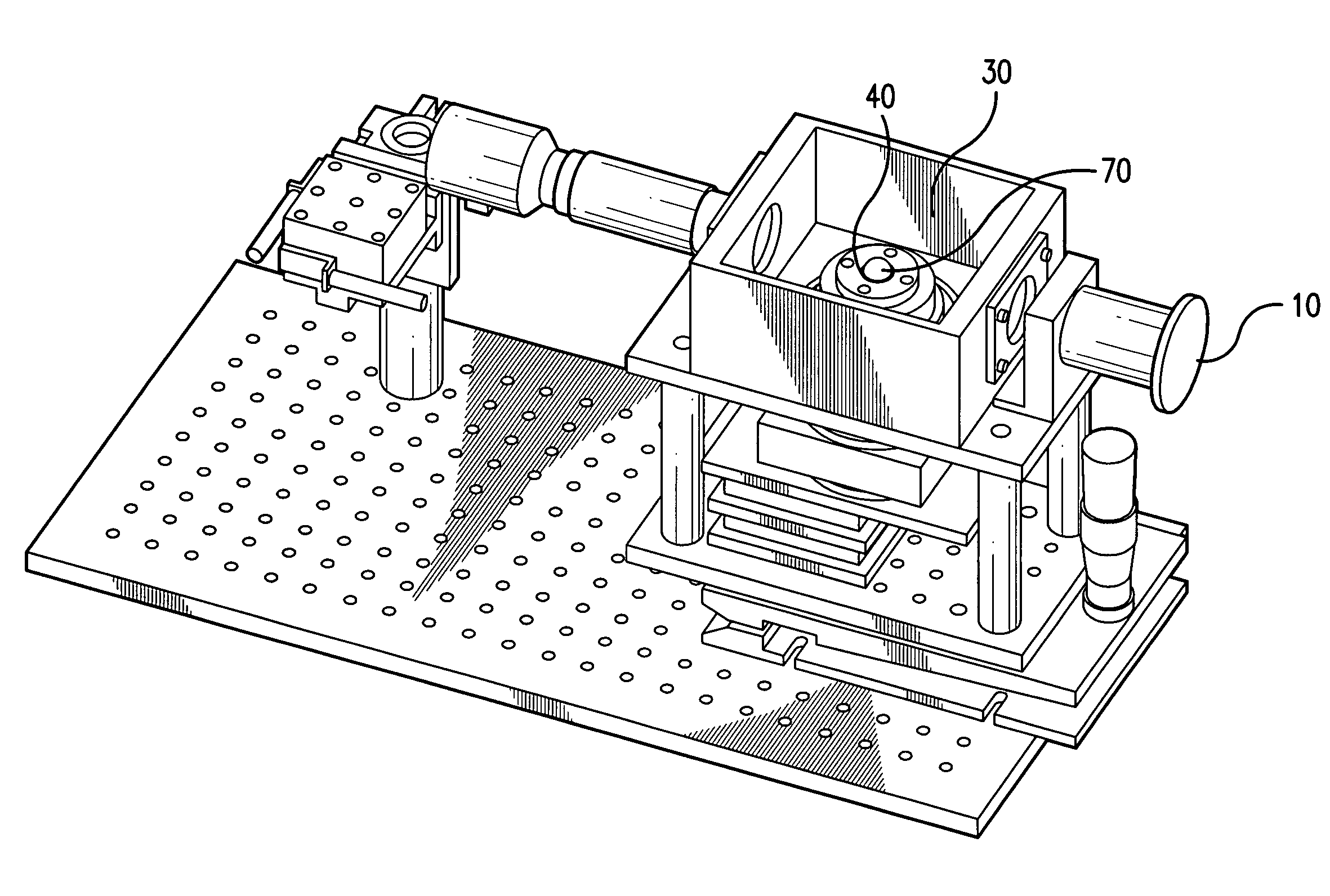
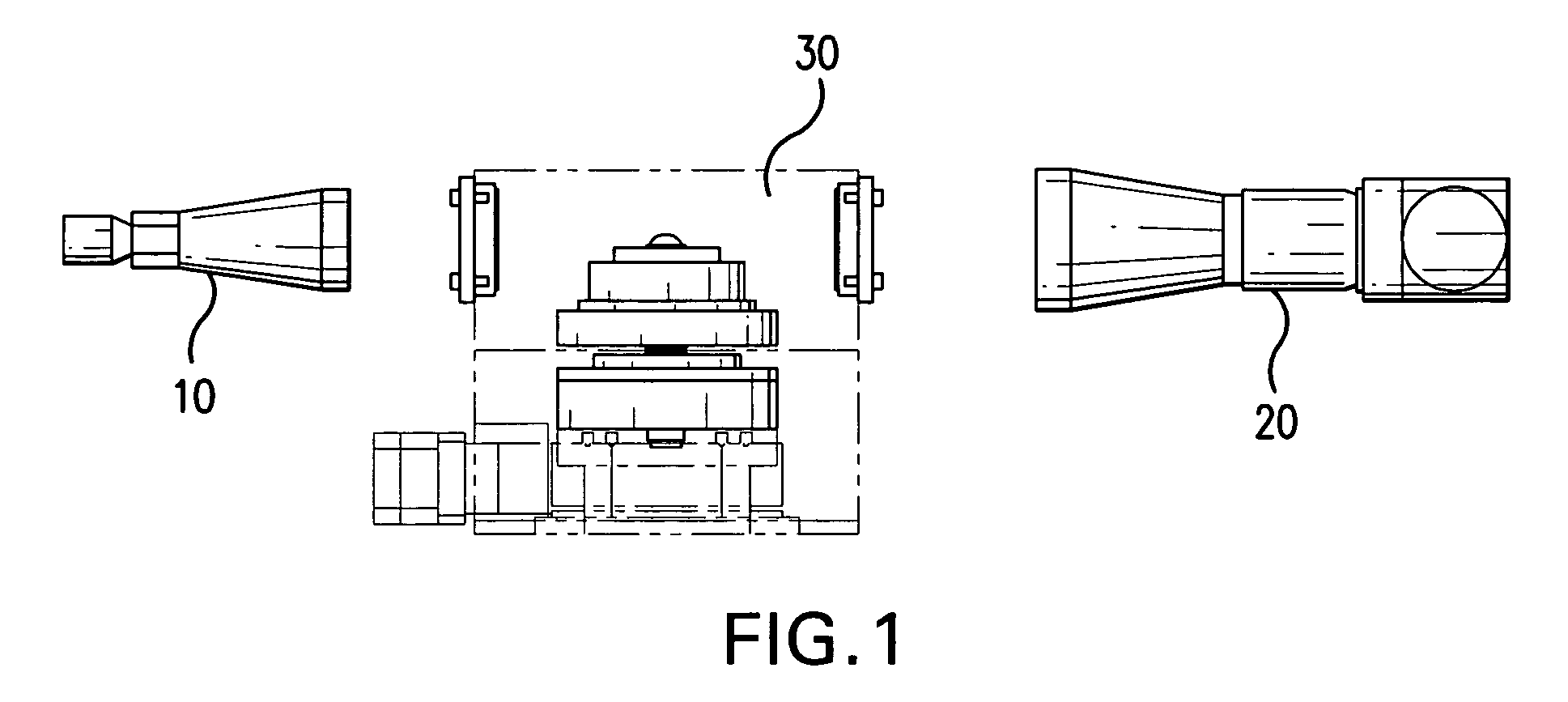
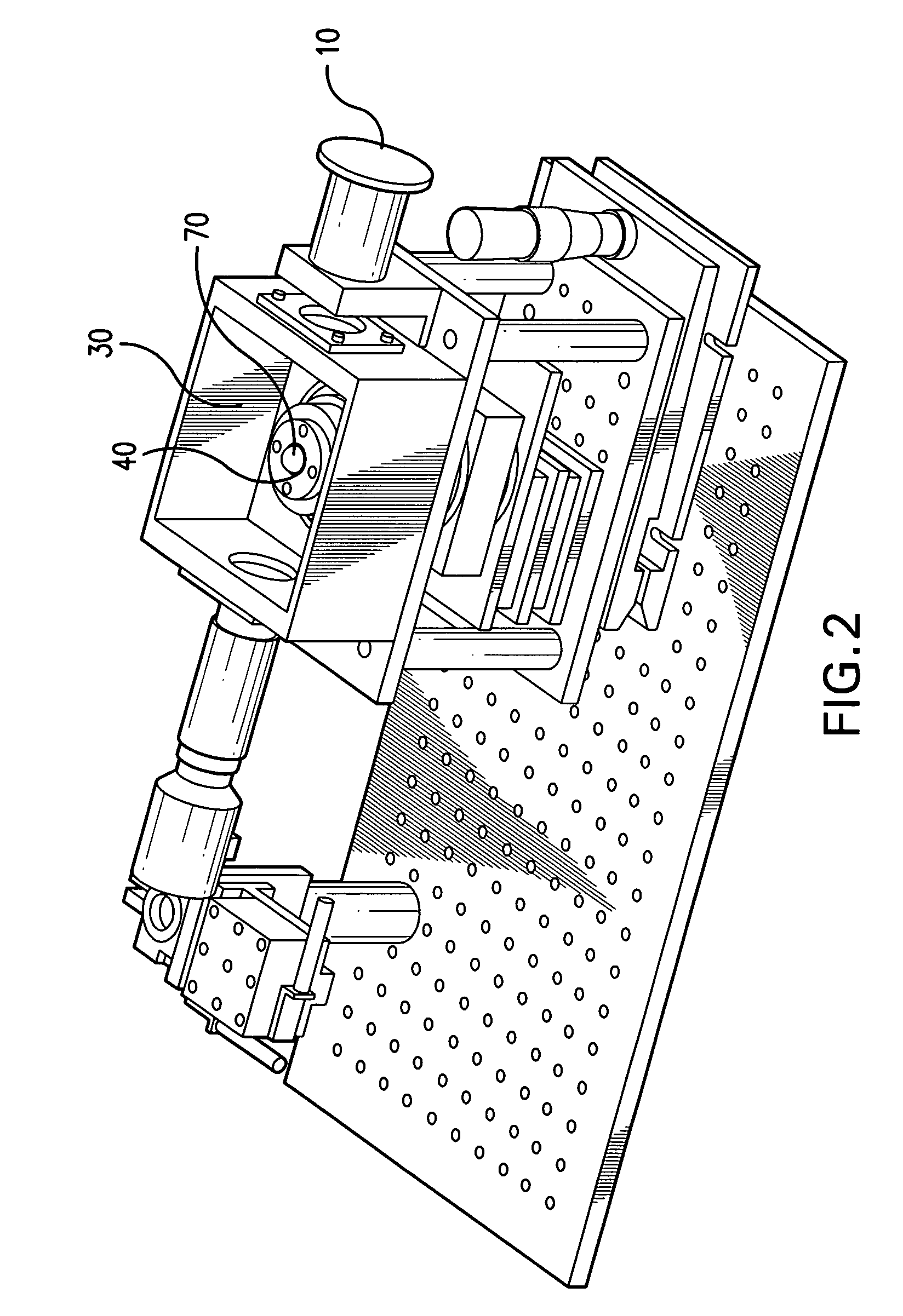
Apparatus and method for detecting lens thickness
PatentActiveUS7433027B2
Innovation
- A non-contact, non-destructive apparatus and method using an illumination source, imaging system, and a measurement chamber with a rotating fixture and vacuum seal, allowing for precise image subtraction and data analysis to calculate lens thickness and base curve without damaging the lens.

Regulatory Standards for IOL Quality
Intraocular lens (IOL) manufacturing and clinical application are subject to stringent regulatory frameworks established by international and national authorities to ensure patient safety and product efficacy. The International Organization for Standardization (ISO) provides foundational standards, particularly ISO 11979 series, which specifically addresses ophthalmic implants including IOLs. This standard encompasses requirements for optical and mechanical properties, biocompatibility testing, and labeling specifications. Lens thickness variability, as a critical dimensional parameter, falls under the scope of ISO 11979-2, which defines tolerances for optical and physical characteristics that directly impact refractive outcomes in pseudophakic patients.
Regulatory bodies such as the U.S. Food and Drug Administration (FDA) and the European Medicines Agency (EMA) mandate comprehensive premarket evaluation processes. The FDA requires IOL manufacturers to demonstrate compliance through rigorous testing protocols that assess dimensional accuracy, including center thickness measurements and edge profile consistency. Acceptable thickness variation ranges are typically specified in product master files, with deviations beyond established tolerances requiring additional validation studies to demonstrate maintained optical performance and structural integrity.
The European Medical Device Regulation (MDR 2017/745) imposes additional requirements for technical documentation, demanding detailed manufacturing process controls and statistical process capability analyses. For lens thickness parameters, manufacturers must establish control limits based on process capability indices (Cpk values) that demonstrate consistent production within specified tolerances. Quality management systems compliant with ISO 13485 are mandatory, requiring continuous monitoring of thickness variability through in-process inspections and final product verification.
National regulatory authorities in major markets including Japan's Pharmaceuticals and Medical Devices Agency (PMDA) and China's National Medical Products Administration (NMPA) have adopted harmonized standards while maintaining specific regional requirements. These agencies require validation data demonstrating that thickness variations remain within ranges that do not compromise optical power accuracy, typically maintaining tolerances of ±0.05mm for standard IOL designs. Post-market surveillance requirements further mandate reporting of any thickness-related complications or performance deviations, ensuring ongoing quality assurance throughout the product lifecycle.
Regulatory bodies such as the U.S. Food and Drug Administration (FDA) and the European Medicines Agency (EMA) mandate comprehensive premarket evaluation processes. The FDA requires IOL manufacturers to demonstrate compliance through rigorous testing protocols that assess dimensional accuracy, including center thickness measurements and edge profile consistency. Acceptable thickness variation ranges are typically specified in product master files, with deviations beyond established tolerances requiring additional validation studies to demonstrate maintained optical performance and structural integrity.
The European Medical Device Regulation (MDR 2017/745) imposes additional requirements for technical documentation, demanding detailed manufacturing process controls and statistical process capability analyses. For lens thickness parameters, manufacturers must establish control limits based on process capability indices (Cpk values) that demonstrate consistent production within specified tolerances. Quality management systems compliant with ISO 13485 are mandatory, requiring continuous monitoring of thickness variability through in-process inspections and final product verification.
National regulatory authorities in major markets including Japan's Pharmaceuticals and Medical Devices Agency (PMDA) and China's National Medical Products Administration (NMPA) have adopted harmonized standards while maintaining specific regional requirements. These agencies require validation data demonstrating that thickness variations remain within ranges that do not compromise optical power accuracy, typically maintaining tolerances of ±0.05mm for standard IOL designs. Post-market surveillance requirements further mandate reporting of any thickness-related complications or performance deviations, ensuring ongoing quality assurance throughout the product lifecycle.
Optical Performance Impact Assessment
Lens thickness variability in intraocular lenses represents a critical manufacturing parameter that directly influences the optical performance of pseudophakic eyes. Even minor deviations from nominal thickness specifications can introduce measurable changes in refractive outcomes, image quality, and visual function. The assessment of these impacts requires systematic evaluation across multiple optical performance metrics to establish acceptable tolerance ranges for clinical applications.
The primary optical consequence of thickness variation manifests in spherical equivalent power shifts. A thickness deviation of 50 micrometers in a typical acrylic IOL can induce refractive errors ranging from 0.25 to 0.50 diopters, depending on lens design and material refractive index. This relationship becomes particularly significant in premium IOL designs where target refraction accuracy within 0.25 diopters is clinically expected. The power variation follows predictable patterns based on lens geometry and can be modeled using paraxial optical equations adjusted for finite thickness effects.
Chromatic aberration characteristics demonstrate sensitivity to thickness uniformity across the optical zone. Non-uniform thickness distribution creates localized variations in optical path length, leading to wavelength-dependent focal shifts that exceed those predicted by material dispersion alone. Spectral imaging analysis reveals that thickness gradients as small as 20 micrometers across a 6mm optical zone can produce measurable increases in longitudinal chromatic aberration, potentially degrading contrast sensitivity under polychromatic illumination conditions.
Higher-order aberrations, particularly spherical aberration, exhibit complex dependencies on thickness variability patterns. Asymmetric thickness profiles introduce coma and trefoil aberrations that compromise optical quality even when average thickness remains within specification. Wavefront analysis demonstrates that radially symmetric thickness variations primarily affect spherical aberration magnitude, while asymmetric patterns generate additional aberration modes that cannot be corrected through simple power adjustments. The cumulative impact on modulation transfer function becomes clinically relevant when thickness deviations exceed established thresholds.
Edge thickness variations present distinct optical considerations, particularly regarding internal reflections and stray light generation. Thickness inconsistencies at the lens periphery can create unintended optical interfaces that scatter incident light, reducing contrast and potentially causing photic phenomena. Ray tracing simulations indicate that edge geometry tolerances must be maintained within tighter specifications than central optical zone thickness to minimize these degradation mechanisms in real-world viewing conditions.
The primary optical consequence of thickness variation manifests in spherical equivalent power shifts. A thickness deviation of 50 micrometers in a typical acrylic IOL can induce refractive errors ranging from 0.25 to 0.50 diopters, depending on lens design and material refractive index. This relationship becomes particularly significant in premium IOL designs where target refraction accuracy within 0.25 diopters is clinically expected. The power variation follows predictable patterns based on lens geometry and can be modeled using paraxial optical equations adjusted for finite thickness effects.
Chromatic aberration characteristics demonstrate sensitivity to thickness uniformity across the optical zone. Non-uniform thickness distribution creates localized variations in optical path length, leading to wavelength-dependent focal shifts that exceed those predicted by material dispersion alone. Spectral imaging analysis reveals that thickness gradients as small as 20 micrometers across a 6mm optical zone can produce measurable increases in longitudinal chromatic aberration, potentially degrading contrast sensitivity under polychromatic illumination conditions.
Higher-order aberrations, particularly spherical aberration, exhibit complex dependencies on thickness variability patterns. Asymmetric thickness profiles introduce coma and trefoil aberrations that compromise optical quality even when average thickness remains within specification. Wavefront analysis demonstrates that radially symmetric thickness variations primarily affect spherical aberration magnitude, while asymmetric patterns generate additional aberration modes that cannot be corrected through simple power adjustments. The cumulative impact on modulation transfer function becomes clinically relevant when thickness deviations exceed established thresholds.
Edge thickness variations present distinct optical considerations, particularly regarding internal reflections and stray light generation. Thickness inconsistencies at the lens periphery can create unintended optical interfaces that scatter incident light, reducing contrast and potentially causing photic phenomena. Ray tracing simulations indicate that edge geometry tolerances must be maintained within tighter specifications than central optical zone thickness to minimize these degradation mechanisms in real-world viewing conditions.
Unlock deeper insights with PatSnap Eureka Quick Research — get a full tech report to explore trends and direct your research. Try now!
Generate Your Research Report Instantly with AI Agent
Supercharge your innovation with PatSnap Eureka AI Agent Platform!