Control Newtonian Fluid Viscosity using Temperature Variation
JAN 29, 20269 MIN READ
Generate Your Research Report Instantly with AI Agent
Patsnap Eureka helps you evaluate technical feasibility & market potential.
Temperature-Viscosity Control Background and Objectives
Newtonian fluids, characterized by a linear relationship between shear stress and shear rate, exhibit viscosity that remains constant under varying shear conditions but changes significantly with temperature variations. This temperature-dependent viscosity behavior has been recognized since the early studies of fluid mechanics, with foundational work by Newton himself establishing the basic principles. The ability to control fluid viscosity through temperature manipulation has evolved from a fundamental physical phenomenon into a critical engineering tool across multiple industries, including automotive lubrication, polymer processing, food manufacturing, and pharmaceutical production.
The historical development of temperature-viscosity control can be traced through several key phases. Initial empirical observations in the 19th century led to the formulation of mathematical models such as the Arrhenius equation and Andrade's equation, which quantified the exponential relationship between temperature and viscosity. Throughout the 20th century, advances in thermodynamics and molecular theory deepened understanding of the underlying mechanisms, revealing how thermal energy affects intermolecular forces and molecular mobility within fluids.
The primary objective of contemporary temperature-viscosity control research is to achieve precise, predictable, and efficient manipulation of fluid flow properties for specific industrial applications. This encompasses developing advanced heating and cooling systems that enable rapid temperature adjustments, creating predictive models that accurately forecast viscosity changes across wide temperature ranges, and designing control algorithms that maintain optimal viscosity levels in dynamic processing environments.
Current technological goals focus on several critical areas. First, improving energy efficiency in temperature control systems to reduce operational costs and environmental impact. Second, enhancing response times to enable real-time viscosity adjustment in high-speed manufacturing processes. Third, expanding the applicable temperature range while maintaining fluid stability and preventing degradation. Fourth, integrating smart sensors and automated control systems that can autonomously adjust temperature based on real-time viscosity measurements and process requirements.
These objectives address fundamental challenges in modern manufacturing and processing industries, where precise viscosity control directly impacts product quality, production efficiency, and operational safety.
The historical development of temperature-viscosity control can be traced through several key phases. Initial empirical observations in the 19th century led to the formulation of mathematical models such as the Arrhenius equation and Andrade's equation, which quantified the exponential relationship between temperature and viscosity. Throughout the 20th century, advances in thermodynamics and molecular theory deepened understanding of the underlying mechanisms, revealing how thermal energy affects intermolecular forces and molecular mobility within fluids.
The primary objective of contemporary temperature-viscosity control research is to achieve precise, predictable, and efficient manipulation of fluid flow properties for specific industrial applications. This encompasses developing advanced heating and cooling systems that enable rapid temperature adjustments, creating predictive models that accurately forecast viscosity changes across wide temperature ranges, and designing control algorithms that maintain optimal viscosity levels in dynamic processing environments.
Current technological goals focus on several critical areas. First, improving energy efficiency in temperature control systems to reduce operational costs and environmental impact. Second, enhancing response times to enable real-time viscosity adjustment in high-speed manufacturing processes. Third, expanding the applicable temperature range while maintaining fluid stability and preventing degradation. Fourth, integrating smart sensors and automated control systems that can autonomously adjust temperature based on real-time viscosity measurements and process requirements.
These objectives address fundamental challenges in modern manufacturing and processing industries, where precise viscosity control directly impacts product quality, production efficiency, and operational safety.
Market Demand for Thermal Viscosity Management Systems
The market demand for thermal viscosity management systems is experiencing robust growth across multiple industrial sectors, driven by the increasing need for precision control in fluid-based manufacturing and processing operations. Industries such as polymer processing, food and beverage production, pharmaceutical manufacturing, and chemical engineering are actively seeking advanced solutions to optimize their production efficiency and product quality through precise viscosity control mechanisms.
In the polymer and plastics industry, thermal viscosity management has become critical for injection molding, extrusion, and coating applications where maintaining optimal flow characteristics directly impacts product consistency and manufacturing throughput. The automotive and aerospace sectors are particularly demanding sophisticated thermal control systems for lubricants and hydraulic fluids, where performance under varying temperature conditions is essential for operational reliability and safety compliance.
The pharmaceutical and biotechnology sectors represent a rapidly expanding market segment, where precise viscosity control during drug formulation, sterile filling operations, and bioreactor processes is mandatory for regulatory compliance and product efficacy. Temperature-dependent viscosity management enables manufacturers to achieve reproducible results while minimizing batch-to-batch variations, which is crucial for meeting stringent quality standards.
Food processing industries are increasingly adopting thermal viscosity management systems for applications ranging from chocolate tempering and sauce production to dairy processing and beverage manufacturing. Consumer demand for consistent product texture and quality has pushed manufacturers to invest in automated systems that can dynamically adjust processing temperatures to maintain desired viscosity profiles throughout production cycles.
The energy sector, particularly in oil and gas operations, presents substantial demand for thermal viscosity control in enhanced oil recovery, pipeline transportation, and refining processes. As conventional resources become more challenging to extract, the need for sophisticated fluid management systems that can adapt to varying reservoir conditions and transportation requirements continues to intensify.
Emerging applications in additive manufacturing, particularly in material jetting and binder jetting technologies, are creating new market opportunities for compact and responsive thermal viscosity management solutions. The growing adoption of smart manufacturing principles and Industry 4.0 initiatives is further accelerating demand for integrated systems that combine real-time viscosity monitoring with automated temperature control capabilities.
In the polymer and plastics industry, thermal viscosity management has become critical for injection molding, extrusion, and coating applications where maintaining optimal flow characteristics directly impacts product consistency and manufacturing throughput. The automotive and aerospace sectors are particularly demanding sophisticated thermal control systems for lubricants and hydraulic fluids, where performance under varying temperature conditions is essential for operational reliability and safety compliance.
The pharmaceutical and biotechnology sectors represent a rapidly expanding market segment, where precise viscosity control during drug formulation, sterile filling operations, and bioreactor processes is mandatory for regulatory compliance and product efficacy. Temperature-dependent viscosity management enables manufacturers to achieve reproducible results while minimizing batch-to-batch variations, which is crucial for meeting stringent quality standards.
Food processing industries are increasingly adopting thermal viscosity management systems for applications ranging from chocolate tempering and sauce production to dairy processing and beverage manufacturing. Consumer demand for consistent product texture and quality has pushed manufacturers to invest in automated systems that can dynamically adjust processing temperatures to maintain desired viscosity profiles throughout production cycles.
The energy sector, particularly in oil and gas operations, presents substantial demand for thermal viscosity control in enhanced oil recovery, pipeline transportation, and refining processes. As conventional resources become more challenging to extract, the need for sophisticated fluid management systems that can adapt to varying reservoir conditions and transportation requirements continues to intensify.
Emerging applications in additive manufacturing, particularly in material jetting and binder jetting technologies, are creating new market opportunities for compact and responsive thermal viscosity management solutions. The growing adoption of smart manufacturing principles and Industry 4.0 initiatives is further accelerating demand for integrated systems that combine real-time viscosity monitoring with automated temperature control capabilities.
Current Status and Challenges in Newtonian Fluid Viscosity Control
The control of Newtonian fluid viscosity through temperature variation represents a well-established principle in fluid mechanics, yet its practical implementation continues to face significant technical and operational challenges. Globally, this technology has been applied across diverse industries including petroleum refining, chemical processing, food manufacturing, and automotive lubrication systems. The fundamental relationship between temperature and viscosity in Newtonian fluids follows predictable mathematical models, primarily described by the Arrhenius equation and its variants. However, translating theoretical understanding into precise, reliable control systems remains complex.
Current technological implementations vary considerably in sophistication and effectiveness. Advanced industrial facilities employ automated temperature control systems integrated with real-time viscosity monitoring, utilizing sensors and feedback loops to maintain optimal fluid properties. Conversely, many conventional operations still rely on manual temperature adjustments or simple heating systems with limited precision. This disparity reflects both economic constraints and the technical complexity of achieving uniform temperature distribution in large-scale fluid systems.
Several critical challenges impede optimal viscosity control through temperature manipulation. First, achieving uniform temperature distribution throughout fluid volumes presents substantial difficulties, particularly in large tanks or continuous flow systems where thermal gradients create viscosity variations. Second, the energy consumption required for heating or cooling operations significantly impacts operational costs and environmental sustainability. Third, temperature-induced viscosity changes can trigger secondary effects such as thermal degradation of fluid components, accelerated oxidation, or unwanted chemical reactions that compromise fluid quality.
The precision and response time of temperature-based viscosity control systems constitute another major constraint. Many industrial processes require rapid viscosity adjustments that thermal systems cannot deliver due to inherent thermal inertia. Additionally, maintaining stable temperatures in environments with fluctuating ambient conditions demands sophisticated insulation and climate control infrastructure. The challenge intensifies when dealing with fluids exhibiting high temperature sensitivity, where minor thermal variations produce disproportionate viscosity changes.
Geographically, technological advancement in this field concentrates in industrialized regions with mature chemical and petroleum sectors, particularly North America, Western Europe, and East Asia. These regions demonstrate higher adoption rates of automated viscosity control systems and invest substantially in research addressing energy efficiency and precision enhancement. Emerging markets increasingly recognize the importance of viscosity control but often face barriers related to capital investment and technical expertise availability.
Current technological implementations vary considerably in sophistication and effectiveness. Advanced industrial facilities employ automated temperature control systems integrated with real-time viscosity monitoring, utilizing sensors and feedback loops to maintain optimal fluid properties. Conversely, many conventional operations still rely on manual temperature adjustments or simple heating systems with limited precision. This disparity reflects both economic constraints and the technical complexity of achieving uniform temperature distribution in large-scale fluid systems.
Several critical challenges impede optimal viscosity control through temperature manipulation. First, achieving uniform temperature distribution throughout fluid volumes presents substantial difficulties, particularly in large tanks or continuous flow systems where thermal gradients create viscosity variations. Second, the energy consumption required for heating or cooling operations significantly impacts operational costs and environmental sustainability. Third, temperature-induced viscosity changes can trigger secondary effects such as thermal degradation of fluid components, accelerated oxidation, or unwanted chemical reactions that compromise fluid quality.
The precision and response time of temperature-based viscosity control systems constitute another major constraint. Many industrial processes require rapid viscosity adjustments that thermal systems cannot deliver due to inherent thermal inertia. Additionally, maintaining stable temperatures in environments with fluctuating ambient conditions demands sophisticated insulation and climate control infrastructure. The challenge intensifies when dealing with fluids exhibiting high temperature sensitivity, where minor thermal variations produce disproportionate viscosity changes.
Geographically, technological advancement in this field concentrates in industrialized regions with mature chemical and petroleum sectors, particularly North America, Western Europe, and East Asia. These regions demonstrate higher adoption rates of automated viscosity control systems and invest substantially in research addressing energy efficiency and precision enhancement. Emerging markets increasingly recognize the importance of viscosity control but often face barriers related to capital investment and technical expertise availability.
Existing Temperature-Viscosity Control Solutions
01 Viscosity measurement methods and apparatus for Newtonian fluids
Various methods and apparatus have been developed for measuring the viscosity of Newtonian fluids. These include rotational viscometers, capillary viscometers, and falling ball viscometers. The measurement techniques typically involve determining the resistance to flow under controlled conditions, such as shear rate and temperature. Advanced systems may incorporate automated controls and digital readouts for precise viscosity determination.- Viscosity measurement methods and apparatus for Newtonian fluids: Various methods and apparatus have been developed for measuring the viscosity of Newtonian fluids. These include rotational viscometers, capillary viscometers, and falling ball viscometers. The measurement techniques are designed to accurately determine the viscosity coefficient by analyzing the flow behavior under controlled conditions. Advanced systems may incorporate automated data collection and real-time monitoring capabilities to ensure precise viscosity measurements across different temperature and pressure conditions.
- Temperature control systems for viscosity measurement: Temperature significantly affects the viscosity of Newtonian fluids, making temperature control crucial for accurate measurements. Systems have been developed that incorporate heating and cooling mechanisms to maintain constant temperature during viscosity testing. These systems often include temperature sensors, feedback control loops, and thermal insulation to minimize external temperature fluctuations. The integration of precise temperature control ensures reproducible and reliable viscosity data across various testing conditions.
- Computational methods for viscosity determination: Computational approaches have been developed to calculate and predict the viscosity of Newtonian fluids based on molecular properties and fluid dynamics principles. These methods utilize mathematical models and algorithms to process experimental data and derive viscosity values. Advanced computational techniques may incorporate machine learning algorithms and numerical simulations to enhance accuracy. Such methods are particularly useful for quality control applications and process optimization in industrial settings.
- Inline viscosity monitoring systems: Inline viscosity monitoring systems enable continuous real-time measurement of Newtonian fluid viscosity during production or processing operations. These systems are integrated directly into fluid flow lines and provide immediate feedback without requiring sample extraction. The technology typically employs sensors that can withstand harsh industrial environments while maintaining measurement accuracy. Such systems are valuable for process control, quality assurance, and detecting variations in fluid properties during manufacturing operations.
- Viscosity modification and control in fluid formulations: Technologies have been developed for modifying and controlling the viscosity of Newtonian fluids through formulation adjustments and additive incorporation. These approaches involve the selection and combination of base fluids and additives to achieve desired viscosity characteristics. Methods include the use of viscosity modifiers, temperature-responsive components, and blending techniques. The control of viscosity is essential for optimizing fluid performance in various applications including lubrication, coating, and chemical processing.
02 Temperature control systems for viscosity measurement
Temperature significantly affects the viscosity of Newtonian fluids, making temperature control critical for accurate measurements. Systems have been developed that incorporate heating and cooling mechanisms to maintain constant temperature during viscosity testing. These systems often include temperature sensors, feedback control loops, and insulated measurement chambers to ensure stable thermal conditions throughout the measurement process.Expand Specific Solutions03 Computational methods for viscosity determination
Computational approaches have been developed to calculate and predict Newtonian fluid viscosity based on various parameters. These methods may involve mathematical models, algorithms, and software systems that process measurement data to determine viscosity values. Some systems integrate real-time data processing capabilities to provide immediate viscosity readings and may include correction factors for environmental conditions.Expand Specific Solutions04 Viscosity modifiers and additives for Newtonian fluids
Various additives and modifiers can be incorporated into Newtonian fluids to adjust their viscosity properties. These formulations may include polymers, surfactants, or other chemical compounds that alter the flow characteristics while maintaining Newtonian behavior. The selection and concentration of these additives are carefully controlled to achieve desired viscosity ranges for specific applications.Expand Specific Solutions05 Industrial applications and process control using viscosity monitoring
Viscosity monitoring of Newtonian fluids is essential in various industrial processes including manufacturing, chemical processing, and quality control. Systems have been developed for continuous or inline viscosity measurement to ensure product consistency and process optimization. These applications may involve automated feedback systems that adjust process parameters based on real-time viscosity data to maintain desired fluid properties.Expand Specific Solutions
Major Players in Thermal Fluid Control Industry
The technology of controlling Newtonian fluid viscosity through temperature variation operates within a mature industrial landscape, spanning multiple sectors including automotive, energy, chemicals, and manufacturing. The market demonstrates substantial scale, driven by applications in lubricants, hydraulic systems, process optimization, and thermal management solutions. Major players like ExxonMobil Technology & Engineering, Saudi Arabian Oil Co., and Halliburton Energy Services dominate the energy sector applications, while DAIKIN INDUSTRIES and 3M Innovative Properties lead in specialized chemical formulations. Automotive applications are advanced by Continental Teves, ZF Friedrichshafen, Komatsu, and Volvo Construction Equipment. The Lubrizol Corp. and OMNOVA Solutions focus on performance additives and polymer solutions. Academic institutions including Shanghai Jiao Tong University and Xi'an Jiaotong University contribute fundamental research. The technology has reached commercial maturity with established measurement capabilities from Micro Motion and Fluke Corp., indicating a competitive landscape characterized by incremental innovation and application-specific optimization rather than disruptive breakthroughs.
ExxonMobil Technology & Engineering Co.
Technical Solution: ExxonMobil has developed advanced viscosity control technologies for lubricants and hydraulic fluids through temperature management systems. Their approach utilizes viscosity index improvers and synthetic base oils that maintain optimal viscosity across wide temperature ranges (-40°C to 150°C). The technology incorporates real-time temperature monitoring with adaptive heating/cooling systems to maintain fluid viscosity within target specifications. Their formulations include polymer additives that modify viscosity-temperature relationships, enabling consistent performance in extreme operating conditions. The system integrates predictive algorithms that adjust heating elements based on ambient conditions and operational loads, ensuring optimal fluid flow characteristics for industrial applications including oil extraction, refining processes, and heavy machinery operations.
Strengths: Extensive experience in petroleum chemistry and fluid dynamics; proven track record in extreme environment applications; robust temperature compensation algorithms. Weaknesses: Solutions primarily focused on petroleum-based fluids; high implementation costs for industrial-scale systems; limited applicability to non-hydrocarbon fluids.
DAIKIN INDUSTRIES Ltd.
Technical Solution: Daikin has developed fluoropolymer-based heat transfer fluids and temperature control systems that maintain stable viscosity characteristics across broad temperature ranges. Their technology utilizes perfluoropolyether (PFPE) fluids which exhibit minimal viscosity-temperature dependence compared to conventional oils, with viscosity index values exceeding 400. The company's approach combines inherently stable base fluids with precision temperature control systems featuring rapid thermal response capabilities. Their solutions incorporate advanced heat exchangers with temperature regulation accuracy of ±0.5°C, enabling consistent fluid viscosity in semiconductor manufacturing, precision coating applications, and chemical processing. The technology includes closed-loop thermal management systems with predictive control algorithms that anticipate process thermal loads and adjust heating/cooling proactively to prevent viscosity fluctuations that could impact product quality or process efficiency.
Strengths: Fluoropolymer fluids offer exceptional thermal stability and minimal viscosity variation; high-precision temperature control capabilities; excellent chemical resistance. Weaknesses: Significantly higher fluid costs compared to conventional options; specialized handling requirements; limited availability for large-volume applications.
Core Patents in Thermal Viscosity Modulation
System and method for controlling viscosity of a fluid and a working vehicle containing such a system
PatentInactiveUS20060021340A1
Innovation
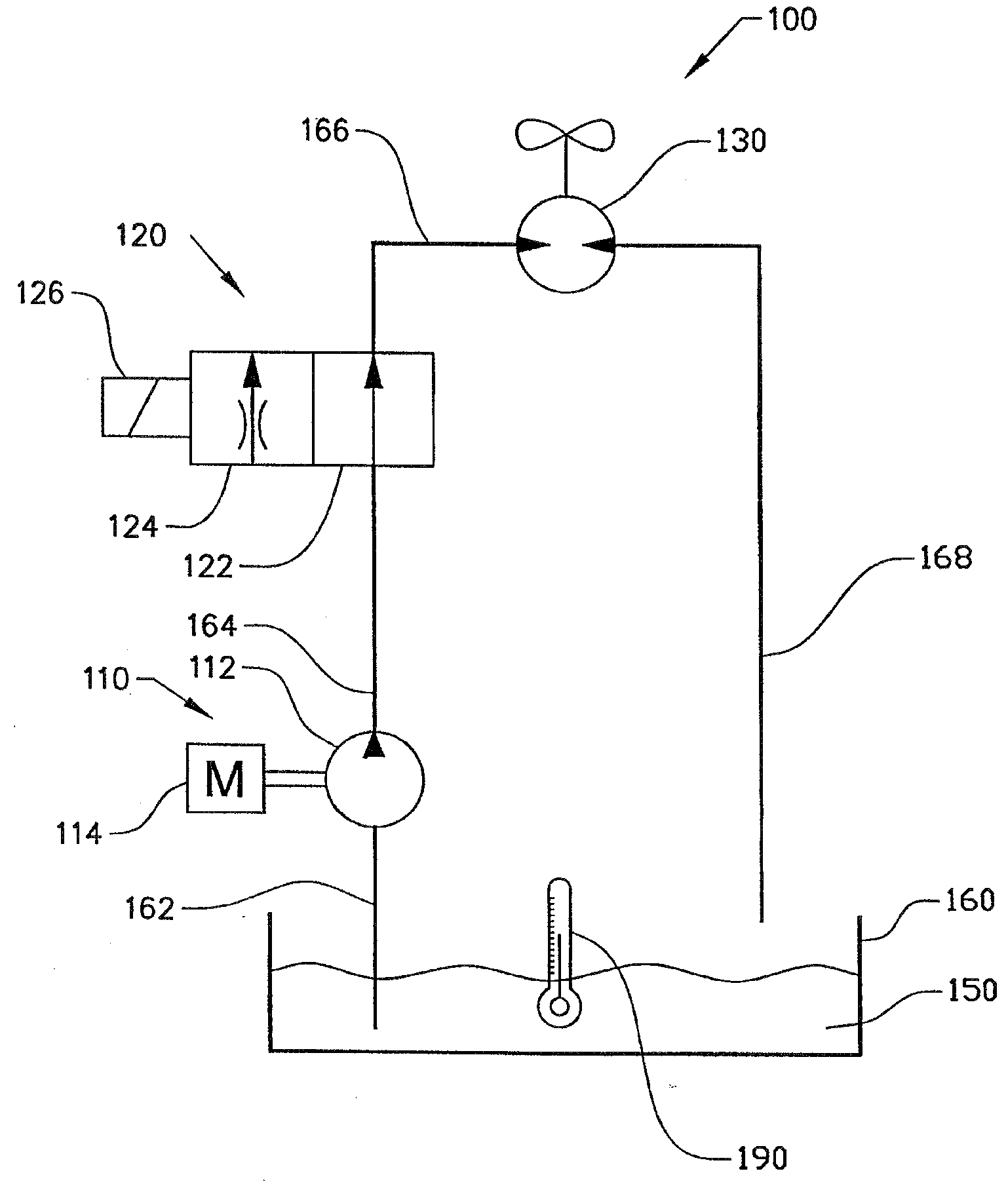
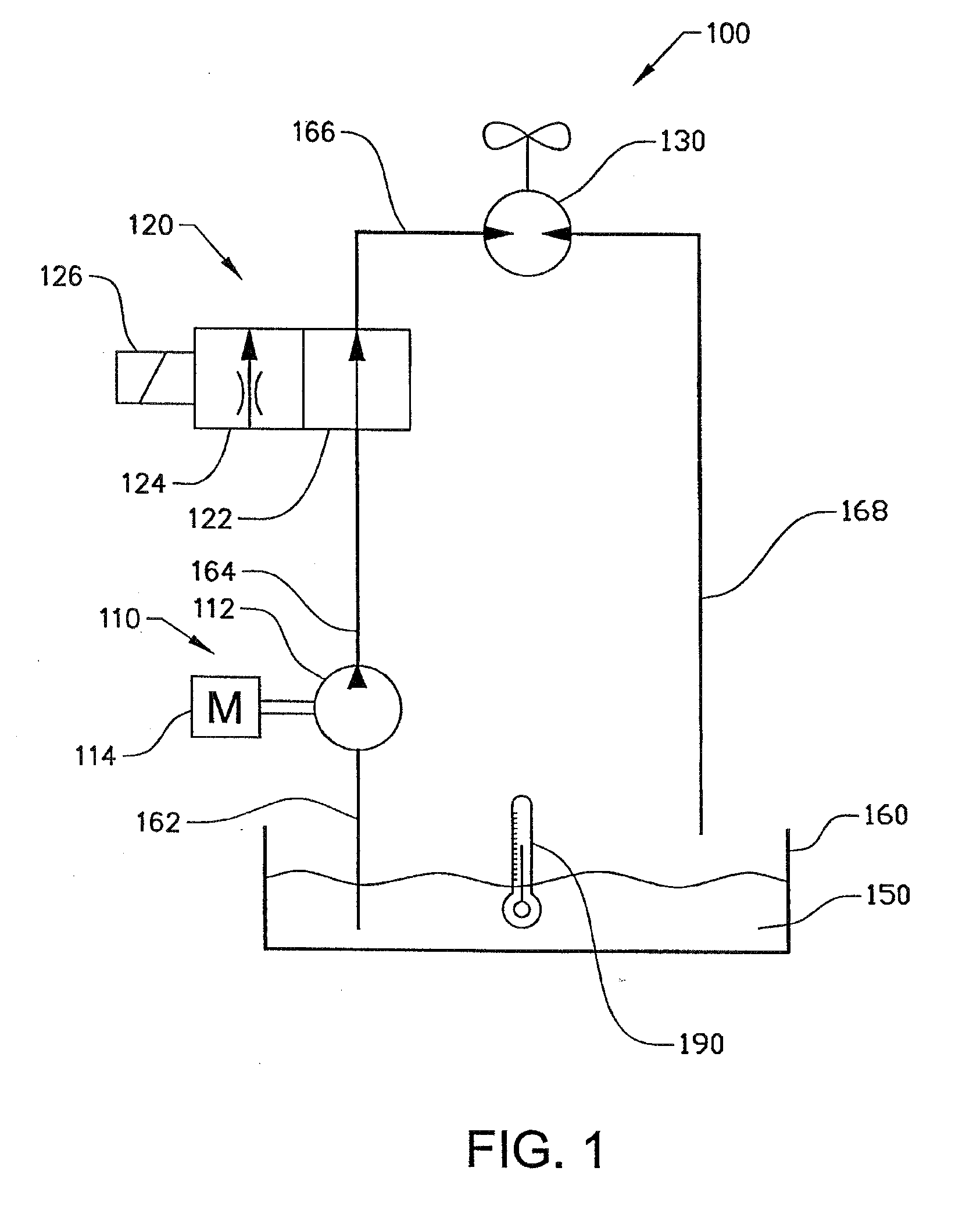
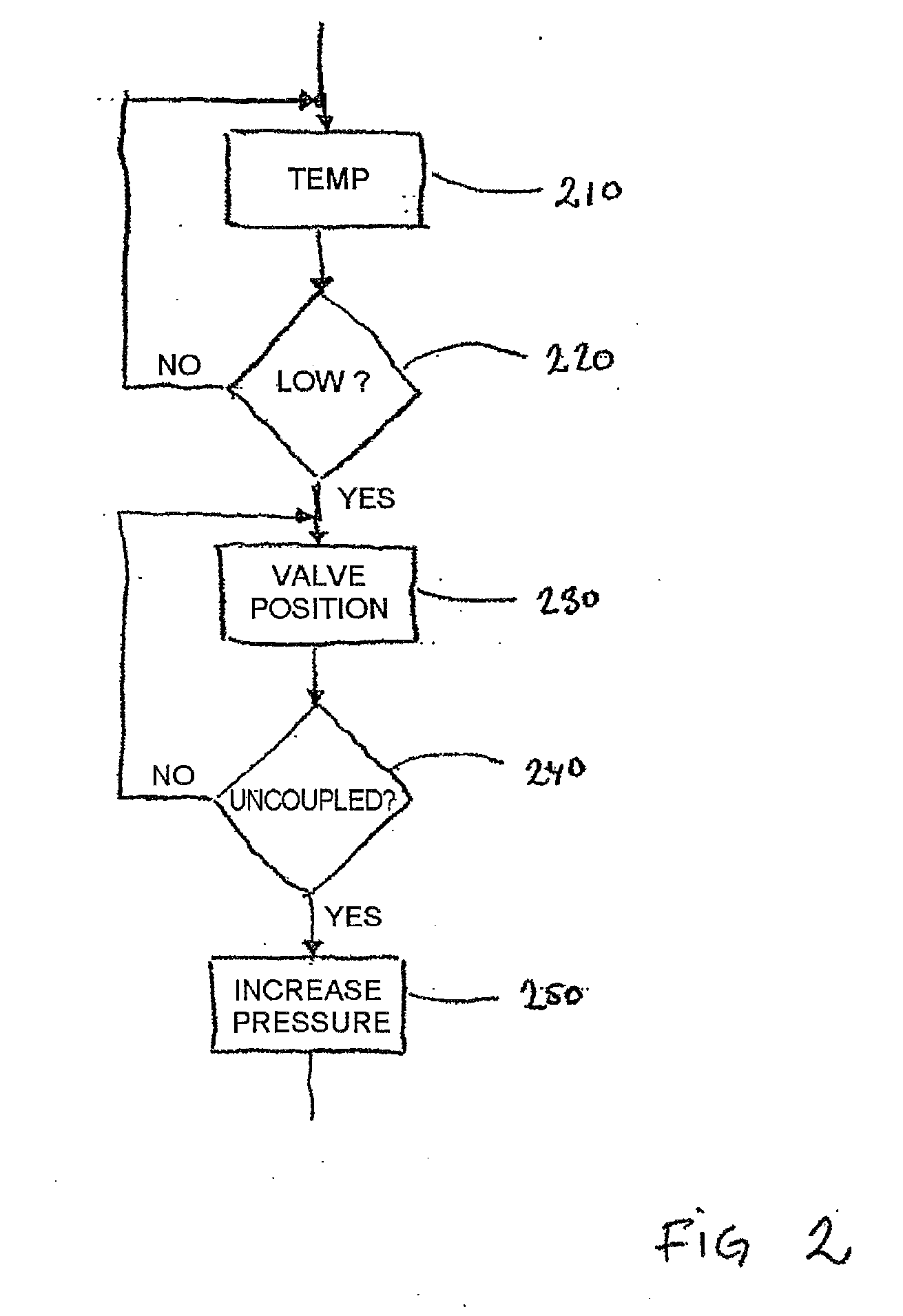
- A method and system that utilize existing throttles with cavity-preventing openings to increase the hydraulic fluid's temperature by creating a controlled pressure drop, using a pump to generate a power drain and heat the fluid when necessary, thereby regulating viscosity.

Temperature-Controlled Variable Fluidic Resistance Device
PatentInactiveUS20080302423A1
Innovation
- A thermally controlled variable fluidic restrictor with no moving parts, utilizing a thermo-electric heater-cooler to rapidly change the viscosity of fluids, allowing for precise control of fluid flow through rapid thermal changes, employing Peltier elements or resistive heaters for efficient temperature control.


Energy Efficiency in Thermal Viscosity Systems
Energy efficiency represents a critical consideration in thermal viscosity control systems, particularly as industrial operations face mounting pressure to reduce operational costs and environmental impact. The manipulation of Newtonian fluid viscosity through temperature variation inherently involves significant energy consumption for heating and cooling processes, making efficiency optimization essential for practical implementation and long-term sustainability.
The primary energy demands in thermal viscosity systems stem from three sources: initial heating or cooling to achieve target viscosity levels, maintaining temperature stability during operation, and compensating for thermal losses to the surrounding environment. Traditional systems often exhibit energy conversion efficiencies below 60%, with substantial losses occurring through inadequate insulation, inefficient heat exchangers, and suboptimal control strategies that result in temperature overshooting and excessive cycling.
Advanced heat recovery mechanisms have emerged as fundamental approaches to improving system efficiency. Regenerative heat exchangers can capture waste thermal energy from process streams and redirect it to preheat incoming fluids, potentially reducing primary energy consumption by 30-45%. Plate heat exchangers with enhanced surface geometries demonstrate superior performance in viscosity control applications, offering compact designs with thermal effectiveness exceeding 85% while minimizing pressure drops that would otherwise require additional pumping energy.
Insulation technology plays an equally vital role in energy conservation. Modern aerogel-based insulation materials and vacuum-insulated panels can reduce heat loss rates by up to 70% compared to conventional insulation, though cost considerations must be balanced against energy savings over the system lifecycle. Strategic placement of insulation at critical thermal zones, particularly around temperature-sensitive control points, yields disproportionate efficiency gains.
Smart control algorithms incorporating predictive temperature management significantly enhance energy performance. Model predictive control systems that anticipate viscosity requirements based on process schedules can minimize unnecessary heating-cooling cycles and optimize energy input timing to exploit favorable ambient conditions or off-peak electricity rates. Integration with real-time viscosity monitoring enables precise temperature adjustments, avoiding the energy waste associated with maintaining excessive thermal margins.
The selection of heating and cooling technologies fundamentally impacts overall efficiency. Induction heating systems offer rapid response times with conversion efficiencies approaching 90%, while thermoelectric devices provide precise local temperature control without moving parts, though at lower absolute efficiency levels. For cooling applications, absorption chillers utilizing waste heat present opportunities to reduce electrical consumption in facilities with available thermal energy sources.
The primary energy demands in thermal viscosity systems stem from three sources: initial heating or cooling to achieve target viscosity levels, maintaining temperature stability during operation, and compensating for thermal losses to the surrounding environment. Traditional systems often exhibit energy conversion efficiencies below 60%, with substantial losses occurring through inadequate insulation, inefficient heat exchangers, and suboptimal control strategies that result in temperature overshooting and excessive cycling.
Advanced heat recovery mechanisms have emerged as fundamental approaches to improving system efficiency. Regenerative heat exchangers can capture waste thermal energy from process streams and redirect it to preheat incoming fluids, potentially reducing primary energy consumption by 30-45%. Plate heat exchangers with enhanced surface geometries demonstrate superior performance in viscosity control applications, offering compact designs with thermal effectiveness exceeding 85% while minimizing pressure drops that would otherwise require additional pumping energy.
Insulation technology plays an equally vital role in energy conservation. Modern aerogel-based insulation materials and vacuum-insulated panels can reduce heat loss rates by up to 70% compared to conventional insulation, though cost considerations must be balanced against energy savings over the system lifecycle. Strategic placement of insulation at critical thermal zones, particularly around temperature-sensitive control points, yields disproportionate efficiency gains.
Smart control algorithms incorporating predictive temperature management significantly enhance energy performance. Model predictive control systems that anticipate viscosity requirements based on process schedules can minimize unnecessary heating-cooling cycles and optimize energy input timing to exploit favorable ambient conditions or off-peak electricity rates. Integration with real-time viscosity monitoring enables precise temperature adjustments, avoiding the energy waste associated with maintaining excessive thermal margins.
The selection of heating and cooling technologies fundamentally impacts overall efficiency. Induction heating systems offer rapid response times with conversion efficiencies approaching 90%, while thermoelectric devices provide precise local temperature control without moving parts, though at lower absolute efficiency levels. For cooling applications, absorption chillers utilizing waste heat present opportunities to reduce electrical consumption in facilities with available thermal energy sources.
Process Integration and Automation Strategies
The effective control of Newtonian fluid viscosity through temperature variation requires sophisticated process integration and automation strategies to ensure consistent performance, energy efficiency, and operational reliability. Modern industrial applications demand seamless coordination between thermal management systems, fluid handling equipment, and real-time monitoring infrastructure to maintain precise viscosity control across varying operational conditions.
Integration of temperature control systems with existing production lines necessitates careful consideration of thermal response characteristics and process dynamics. Advanced automation architectures typically employ distributed control systems that coordinate heating and cooling units with flow control mechanisms, ensuring rapid adjustment to viscosity requirements. The implementation of closed-loop feedback systems enables continuous monitoring of fluid temperature and viscosity parameters, automatically adjusting thermal inputs to compensate for environmental fluctuations or process disturbances.
Critical to successful automation is the deployment of intelligent sensor networks that provide real-time data on fluid properties, temperature distribution, and flow characteristics. These sensors interface with programmable logic controllers and supervisory control systems, enabling predictive adjustments based on historical patterns and machine learning algorithms. Data integration platforms consolidate information from multiple sources, facilitating comprehensive process optimization and early detection of anomalies that could compromise viscosity control accuracy.
Energy management represents a significant consideration in automation strategy development. Smart thermal cycling protocols minimize energy consumption while maintaining required viscosity ranges, utilizing waste heat recovery systems and optimized heating sequences. Automated scheduling algorithms coordinate temperature adjustments with production demands, reducing unnecessary thermal cycling and extending equipment lifespan.
The scalability of automation solutions must accommodate varying production volumes and fluid types without extensive reconfiguration. Modular control architectures allow flexible integration of additional thermal zones or processing units, while standardized communication protocols ensure compatibility across diverse equipment manufacturers. This adaptability proves essential for facilities handling multiple fluid formulations or experiencing seasonal production variations, enabling rapid changeover between different viscosity control regimes with minimal manual intervention.
Integration of temperature control systems with existing production lines necessitates careful consideration of thermal response characteristics and process dynamics. Advanced automation architectures typically employ distributed control systems that coordinate heating and cooling units with flow control mechanisms, ensuring rapid adjustment to viscosity requirements. The implementation of closed-loop feedback systems enables continuous monitoring of fluid temperature and viscosity parameters, automatically adjusting thermal inputs to compensate for environmental fluctuations or process disturbances.
Critical to successful automation is the deployment of intelligent sensor networks that provide real-time data on fluid properties, temperature distribution, and flow characteristics. These sensors interface with programmable logic controllers and supervisory control systems, enabling predictive adjustments based on historical patterns and machine learning algorithms. Data integration platforms consolidate information from multiple sources, facilitating comprehensive process optimization and early detection of anomalies that could compromise viscosity control accuracy.
Energy management represents a significant consideration in automation strategy development. Smart thermal cycling protocols minimize energy consumption while maintaining required viscosity ranges, utilizing waste heat recovery systems and optimized heating sequences. Automated scheduling algorithms coordinate temperature adjustments with production demands, reducing unnecessary thermal cycling and extending equipment lifespan.
The scalability of automation solutions must accommodate varying production volumes and fluid types without extensive reconfiguration. Modular control architectures allow flexible integration of additional thermal zones or processing units, while standardized communication protocols ensure compatibility across diverse equipment manufacturers. This adaptability proves essential for facilities handling multiple fluid formulations or experiencing seasonal production variations, enabling rapid changeover between different viscosity control regimes with minimal manual intervention.
Unlock deeper insights with Patsnap Eureka Quick Research — get a full tech report to explore trends and direct your research. Try now!
Generate Your Research Report Instantly with AI Agent
Supercharge your innovation with Patsnap Eureka AI Agent Platform!