

Controlled Atmosphere Electrolyte Filling for Higher Element Precision
MAY 26, 20269 MIN READ
Generate Your Research Report Instantly with AI Agent
PatSnap Eureka helps you evaluate technical feasibility & market potential.
Controlled Atmosphere Electrolyte Background and Objectives
The evolution of battery manufacturing has consistently pursued higher energy density, improved safety, and enhanced performance reliability. Traditional electrolyte filling processes in battery production often occur under ambient atmospheric conditions, exposing the electrolyte and electrode materials to moisture, oxygen, and other atmospheric contaminants. These environmental factors can significantly compromise the electrochemical properties of the final battery product, leading to reduced capacity, shortened cycle life, and potential safety hazards.
Controlled atmosphere electrolyte filling represents a paradigmatic shift in battery manufacturing methodology, addressing the fundamental challenge of maintaining pristine electrochemical environments during the critical filling stage. This technology involves conducting the electrolyte injection process within carefully regulated atmospheric conditions, typically featuring reduced oxygen levels, controlled humidity, and the presence of inert gases such as nitrogen or argon.
The historical development of this technology stems from the semiconductor industry's cleanroom methodologies, adapted specifically for electrochemical applications. Early implementations focused primarily on lithium-ion battery production, where moisture sensitivity posed significant challenges to product quality and consistency. As battery chemistries evolved and precision requirements intensified, the need for more sophisticated atmospheric control became increasingly apparent.
The primary objective of controlled atmosphere electrolyte filling centers on achieving superior element precision throughout the battery manufacturing process. This encompasses maintaining precise stoichiometric ratios of electrolyte components, preventing unwanted side reactions that could alter the intended chemical composition, and ensuring uniform distribution of active materials within the cell structure.
Enhanced element precision directly translates to improved battery performance metrics, including increased energy density, extended cycle life, and more predictable discharge characteristics. Additionally, this technology aims to reduce manufacturing variability, enabling more consistent product quality across large-scale production runs.
The strategic importance of this technology extends beyond immediate manufacturing benefits, positioning companies to meet increasingly stringent performance requirements in electric vehicle applications, grid-scale energy storage systems, and portable electronics markets where reliability and longevity are paramount considerations.
Controlled atmosphere electrolyte filling represents a paradigmatic shift in battery manufacturing methodology, addressing the fundamental challenge of maintaining pristine electrochemical environments during the critical filling stage. This technology involves conducting the electrolyte injection process within carefully regulated atmospheric conditions, typically featuring reduced oxygen levels, controlled humidity, and the presence of inert gases such as nitrogen or argon.
The historical development of this technology stems from the semiconductor industry's cleanroom methodologies, adapted specifically for electrochemical applications. Early implementations focused primarily on lithium-ion battery production, where moisture sensitivity posed significant challenges to product quality and consistency. As battery chemistries evolved and precision requirements intensified, the need for more sophisticated atmospheric control became increasingly apparent.
The primary objective of controlled atmosphere electrolyte filling centers on achieving superior element precision throughout the battery manufacturing process. This encompasses maintaining precise stoichiometric ratios of electrolyte components, preventing unwanted side reactions that could alter the intended chemical composition, and ensuring uniform distribution of active materials within the cell structure.
Enhanced element precision directly translates to improved battery performance metrics, including increased energy density, extended cycle life, and more predictable discharge characteristics. Additionally, this technology aims to reduce manufacturing variability, enabling more consistent product quality across large-scale production runs.
The strategic importance of this technology extends beyond immediate manufacturing benefits, positioning companies to meet increasingly stringent performance requirements in electric vehicle applications, grid-scale energy storage systems, and portable electronics markets where reliability and longevity are paramount considerations.
Market Demand for High-Precision Battery Manufacturing
The global battery manufacturing industry is experiencing unprecedented demand for precision and quality control, driven by the rapid expansion of electric vehicles, energy storage systems, and portable electronics. As battery technologies advance toward higher energy densities and longer lifespans, manufacturers face increasing pressure to eliminate defects and inconsistencies that can compromise performance and safety. The electrolyte filling process represents a critical manufacturing stage where precision directly impacts cell performance, capacity retention, and overall reliability.
Electric vehicle manufacturers are particularly demanding regarding battery quality specifications, as even minor variations in electrolyte distribution can lead to capacity fade, thermal runaway risks, and reduced vehicle range. The automotive sector's shift toward solid-state and next-generation lithium-ion batteries requires unprecedented levels of manufacturing precision, creating substantial market pressure for advanced filling technologies that can operate under controlled atmospheric conditions.
Consumer electronics manufacturers are simultaneously driving demand for higher precision battery manufacturing as devices become more compact and power-hungry. Smartphones, laptops, and wearable devices require batteries with consistent performance characteristics and minimal variation between cells. The trend toward fast-charging capabilities further amplifies the need for precise electrolyte distribution, as uneven filling can create hotspots and accelerate degradation during rapid charge cycles.
Energy storage system applications present additional precision requirements, particularly for grid-scale installations where thousands of cells must perform uniformly over decades of operation. Utility companies and renewable energy developers increasingly specify stringent quality standards that can only be achieved through controlled atmosphere manufacturing processes that eliminate moisture, oxygen, and other contaminants during electrolyte filling.
The semiconductor industry's adoption of battery-powered equipment and the emergence of Internet of Things devices are creating new market segments that demand ultra-precise manufacturing capabilities. These applications often require custom battery configurations with tight tolerance specifications that traditional filling methods cannot reliably achieve.
Regulatory frameworks worldwide are tightening safety and performance standards for battery manufacturing, particularly following high-profile incidents involving battery failures. These evolving regulations are compelling manufacturers to invest in advanced process control technologies, including controlled atmosphere electrolyte filling systems that can demonstrate consistent quality and traceability throughout the production process.
Electric vehicle manufacturers are particularly demanding regarding battery quality specifications, as even minor variations in electrolyte distribution can lead to capacity fade, thermal runaway risks, and reduced vehicle range. The automotive sector's shift toward solid-state and next-generation lithium-ion batteries requires unprecedented levels of manufacturing precision, creating substantial market pressure for advanced filling technologies that can operate under controlled atmospheric conditions.
Consumer electronics manufacturers are simultaneously driving demand for higher precision battery manufacturing as devices become more compact and power-hungry. Smartphones, laptops, and wearable devices require batteries with consistent performance characteristics and minimal variation between cells. The trend toward fast-charging capabilities further amplifies the need for precise electrolyte distribution, as uneven filling can create hotspots and accelerate degradation during rapid charge cycles.
Energy storage system applications present additional precision requirements, particularly for grid-scale installations where thousands of cells must perform uniformly over decades of operation. Utility companies and renewable energy developers increasingly specify stringent quality standards that can only be achieved through controlled atmosphere manufacturing processes that eliminate moisture, oxygen, and other contaminants during electrolyte filling.
The semiconductor industry's adoption of battery-powered equipment and the emergence of Internet of Things devices are creating new market segments that demand ultra-precise manufacturing capabilities. These applications often require custom battery configurations with tight tolerance specifications that traditional filling methods cannot reliably achieve.
Regulatory frameworks worldwide are tightening safety and performance standards for battery manufacturing, particularly following high-profile incidents involving battery failures. These evolving regulations are compelling manufacturers to invest in advanced process control technologies, including controlled atmosphere electrolyte filling systems that can demonstrate consistent quality and traceability throughout the production process.
Current State of Electrolyte Filling Technology Challenges
Current electrolyte filling technology faces significant precision and contamination challenges that directly impact battery performance and manufacturing yield. Traditional filling methods rely on atmospheric conditions, exposing the electrolyte to moisture, oxygen, and other contaminants that can degrade electrochemical properties and reduce cell lifespan. The lack of environmental control during filling processes results in inconsistent electrolyte composition and compromised battery quality.
Moisture contamination represents one of the most critical challenges in conventional filling systems. Water vapor readily dissolves into organic electrolytes, leading to hydrolysis reactions that generate hydrofluoric acid and other corrosive byproducts. These reactions not only degrade the electrolyte but also attack electrode materials and separator components, causing capacity fade and safety concerns. Current industry standards struggle to maintain moisture levels below 20 ppm during filling operations.
Oxygen exposure during filling creates additional complications through oxidation reactions with electrolyte solvents and lithium salts. These reactions form unwanted compounds that increase electrolyte viscosity, reduce ionic conductivity, and contribute to gas generation within sealed cells. The oxidation products can also interfere with solid electrolyte interphase formation, affecting long-term battery cycling performance.
Precision control in electrolyte volume dispensing remains technically challenging with existing equipment. Conventional filling systems exhibit volume variations of 2-5%, leading to inconsistent cell capacity and performance variations across production batches. The viscosity changes caused by contamination further complicate accurate volume control, as pump calibrations become unreliable when electrolyte properties fluctuate.
Temperature management during filling operations presents another significant hurdle. Electrolyte viscosity is highly temperature-dependent, affecting both filling speed and accuracy. Current systems lack integrated temperature control, resulting in seasonal variations and production inconsistencies. The thermal expansion of electrolytes also impacts final volume measurements and cell balancing.
Cross-contamination between different electrolyte formulations poses challenges for manufacturers producing multiple battery chemistries. Existing filling equipment requires extensive cleaning procedures between product changes, increasing downtime and operational costs. Residual contamination can alter electrochemical properties and compromise product specifications.
The integration of quality control systems with filling operations remains limited in current technology. Real-time monitoring of electrolyte purity, moisture content, and fill accuracy is not standard practice, leading to detection of quality issues only after cell assembly and testing. This delayed feedback mechanism results in higher scrap rates and reduced manufacturing efficiency.
Moisture contamination represents one of the most critical challenges in conventional filling systems. Water vapor readily dissolves into organic electrolytes, leading to hydrolysis reactions that generate hydrofluoric acid and other corrosive byproducts. These reactions not only degrade the electrolyte but also attack electrode materials and separator components, causing capacity fade and safety concerns. Current industry standards struggle to maintain moisture levels below 20 ppm during filling operations.
Oxygen exposure during filling creates additional complications through oxidation reactions with electrolyte solvents and lithium salts. These reactions form unwanted compounds that increase electrolyte viscosity, reduce ionic conductivity, and contribute to gas generation within sealed cells. The oxidation products can also interfere with solid electrolyte interphase formation, affecting long-term battery cycling performance.
Precision control in electrolyte volume dispensing remains technically challenging with existing equipment. Conventional filling systems exhibit volume variations of 2-5%, leading to inconsistent cell capacity and performance variations across production batches. The viscosity changes caused by contamination further complicate accurate volume control, as pump calibrations become unreliable when electrolyte properties fluctuate.
Temperature management during filling operations presents another significant hurdle. Electrolyte viscosity is highly temperature-dependent, affecting both filling speed and accuracy. Current systems lack integrated temperature control, resulting in seasonal variations and production inconsistencies. The thermal expansion of electrolytes also impacts final volume measurements and cell balancing.
Cross-contamination between different electrolyte formulations poses challenges for manufacturers producing multiple battery chemistries. Existing filling equipment requires extensive cleaning procedures between product changes, increasing downtime and operational costs. Residual contamination can alter electrochemical properties and compromise product specifications.
The integration of quality control systems with filling operations remains limited in current technology. Real-time monitoring of electrolyte purity, moisture content, and fill accuracy is not standard practice, leading to detection of quality issues only after cell assembly and testing. This delayed feedback mechanism results in higher scrap rates and reduced manufacturing efficiency.
Existing Electrolyte Filling Solutions and Techniques
01 Controlled atmosphere systems for electrolyte filling
Systems and methods for maintaining controlled atmospheric conditions during electrolyte filling processes to prevent contamination and oxidation. These systems typically involve inert gas environments, vacuum chambers, or sealed filling chambers that exclude moisture and oxygen during the filling operation to ensure electrolyte purity and improve filling precision.- Controlled atmosphere systems for electrolyte filling: Systems and methods for maintaining controlled atmospheric conditions during electrolyte filling processes to prevent contamination and oxidation. These systems typically involve inert gas environments, vacuum chambers, or specialized enclosures that maintain specific atmospheric compositions during the filling operation to ensure optimal electrolyte quality and performance.
- Precision filling mechanisms and apparatus: Mechanical systems and apparatus designed for precise volumetric control during electrolyte filling operations. These mechanisms include precision pumps, metering devices, flow control systems, and automated dispensing equipment that ensure accurate and repeatable filling volumes while minimizing waste and maintaining consistency across multiple filling cycles.
- Electrolyte composition and formulation control: Methods and techniques for controlling the chemical composition and properties of electrolytes during the filling process. This includes monitoring and adjusting electrolyte concentration, pH levels, conductivity, and other chemical parameters to ensure optimal performance characteristics and compatibility with the target application.
- Automated filling systems with feedback control: Advanced automated systems that incorporate sensors, feedback mechanisms, and control algorithms to monitor and adjust filling parameters in real-time. These systems provide continuous monitoring of filling progress, automatic error correction, and quality assurance measures to maintain consistent filling precision throughout the operation.
- Contamination prevention and quality assurance: Techniques and systems designed to prevent contamination during electrolyte filling operations and ensure product quality. This includes sterile filling environments, filtration systems, contamination detection methods, and quality control measures that maintain the purity and integrity of the electrolyte throughout the filling process.
02 Precision filling mechanisms and dispensing systems
Advanced dispensing mechanisms designed to achieve precise volumetric control during electrolyte filling operations. These systems incorporate metering devices, flow control valves, and automated dispensing equipment to ensure accurate electrolyte volumes and minimize waste while maintaining consistent filling rates across multiple units.Expand Specific Solutions03 Electrolyte handling and storage elements
Specialized components and containers designed for proper electrolyte storage and handling prior to filling operations. These elements include temperature-controlled storage systems, anti-contamination features, and materials compatibility considerations to maintain electrolyte quality and prevent degradation during storage and transfer processes.Expand Specific Solutions04 Monitoring and control systems for filling precision
Electronic monitoring and feedback control systems that ensure precise electrolyte filling through real-time measurement and adjustment capabilities. These systems incorporate sensors, automated controls, and quality assurance mechanisms to maintain consistent filling parameters and detect deviations from specified tolerances.Expand Specific Solutions05 Sealing and containment technologies
Advanced sealing mechanisms and containment solutions designed to maintain controlled atmosphere conditions and prevent electrolyte leakage during and after filling operations. These technologies include specialized gaskets, hermetic sealing systems, and pressure management components that ensure long-term integrity of filled electrolyte systems.Expand Specific Solutions
Key Players in Battery Manufacturing Equipment Industry
The controlled atmosphere electrolyte filling technology represents an emerging segment within the advanced battery manufacturing industry, currently in its early-to-mid development stage with significant growth potential driven by increasing demand for high-precision lithium-ion batteries. The market demonstrates moderate scale but rapid expansion, particularly in electric vehicle and energy storage applications. Technology maturity varies considerably across players, with established companies like Ningde Amperex Technology Ltd. and Robert Bosch GmbH leveraging their manufacturing expertise, while specialized firms such as Industrie-Partner GmbH focus specifically on electrolyte filling machinery solutions. Research institutions including South China University of Technology and University of Tokyo contribute fundamental research, though commercial implementation remains concentrated among a limited number of advanced manufacturers. The competitive landscape shows fragmentation between battery producers, equipment manufacturers, and technology developers, indicating an industry still consolidating around optimal technical approaches for achieving higher element precision in controlled atmosphere environments.
Ningde Amperex Technology Ltd.
Technical Solution: CATL has developed advanced controlled atmosphere electrolyte filling systems for lithium-ion battery manufacturing, utilizing nitrogen-purged environments to maintain oxygen and moisture levels below 10ppm during electrolyte injection. Their proprietary vacuum filling technology combined with precise atmospheric control ensures uniform electrolyte distribution and prevents contamination that could affect battery performance. The company employs multi-stage filling processes with real-time monitoring of atmospheric composition, temperature control within ±2°C, and automated dispensing systems that achieve filling accuracy of ±0.5%. This technology is particularly crucial for their high-energy density battery cells used in electric vehicles, where electrolyte purity directly impacts cycle life and safety performance.
Strengths: Industry-leading scale and experience in battery manufacturing, comprehensive quality control systems. Weaknesses: High capital investment requirements, complex process control needs.
Tokyo Electron Ltd.
Technical Solution: Tokyo Electron has developed sophisticated controlled atmosphere systems for semiconductor and advanced materials processing, including electrolyte handling applications. Their technology features ultra-high purity gas delivery systems with contamination levels below 1ppb, advanced chamber design with laminar flow control, and integrated monitoring systems for real-time atmospheric composition analysis. The company's solutions include automated handling systems that minimize human intervention, reducing contamination risks while maintaining precise environmental control. Their equipment incorporates advanced sensors for continuous monitoring of oxygen, moisture, and other contaminants, with automated feedback control systems that maintain optimal conditions throughout the filling process.
Strengths: Advanced automation and precision control capabilities, extensive experience in clean room technologies. Weaknesses: Primarily focused on semiconductor applications, may require adaptation for battery-specific requirements.
Core Patents in Controlled Atmosphere Filling Technology
Machine for filling envelopes or bags also in controlled atmosphere
PatentActiveCA2680150C
Innovation
- A machine with a polygonal wheel structure, equipped with adjustable and spring-activated prehensile equipment that can open and close to accommodate various dimensions, and a bell to maintain a controlled atmosphere, allowing for simple and versatile filling and sealing of envelopes or bags.


Controlled Atmosphere
PatentInactiveUS20080050481A1
Innovation
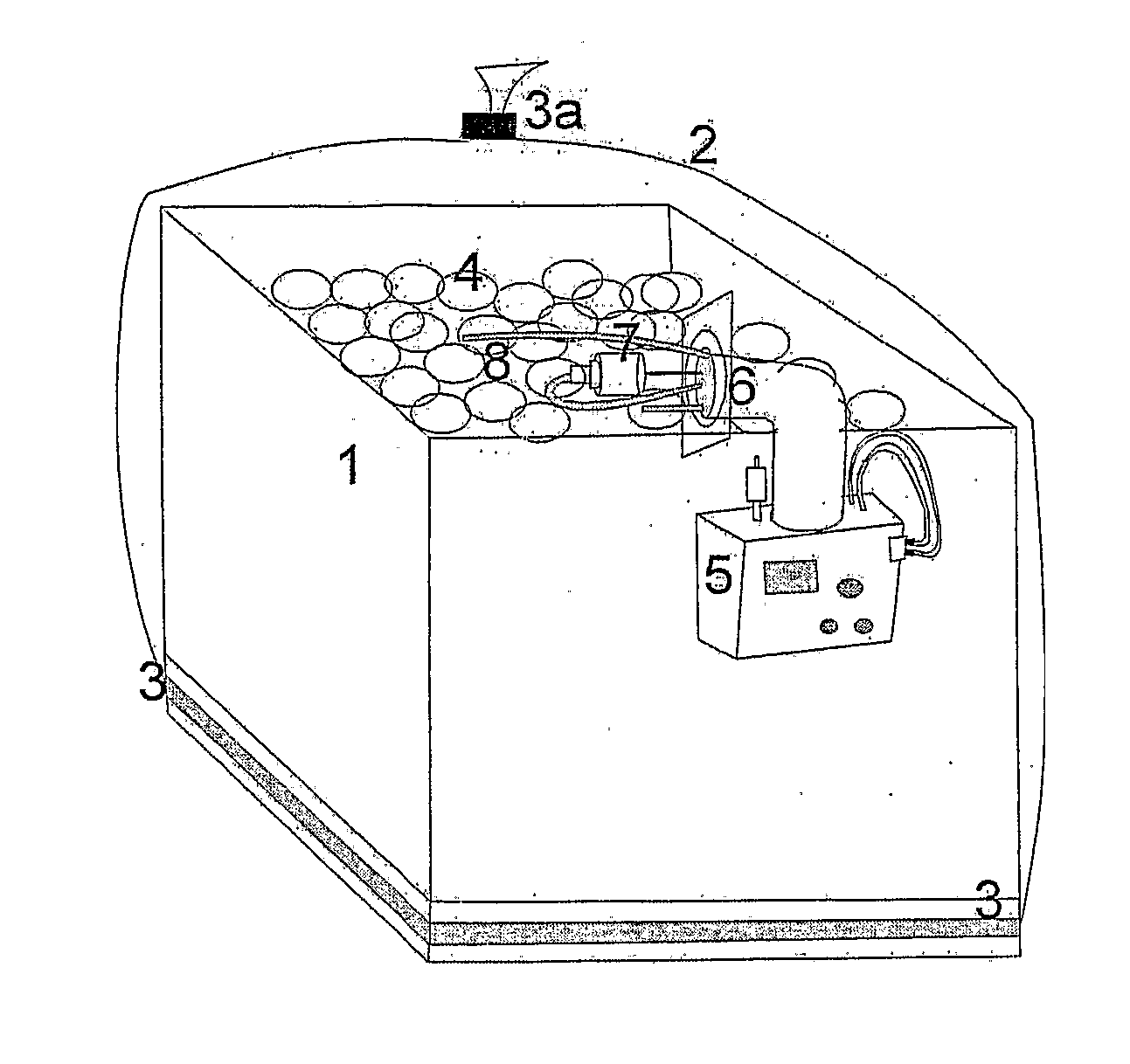
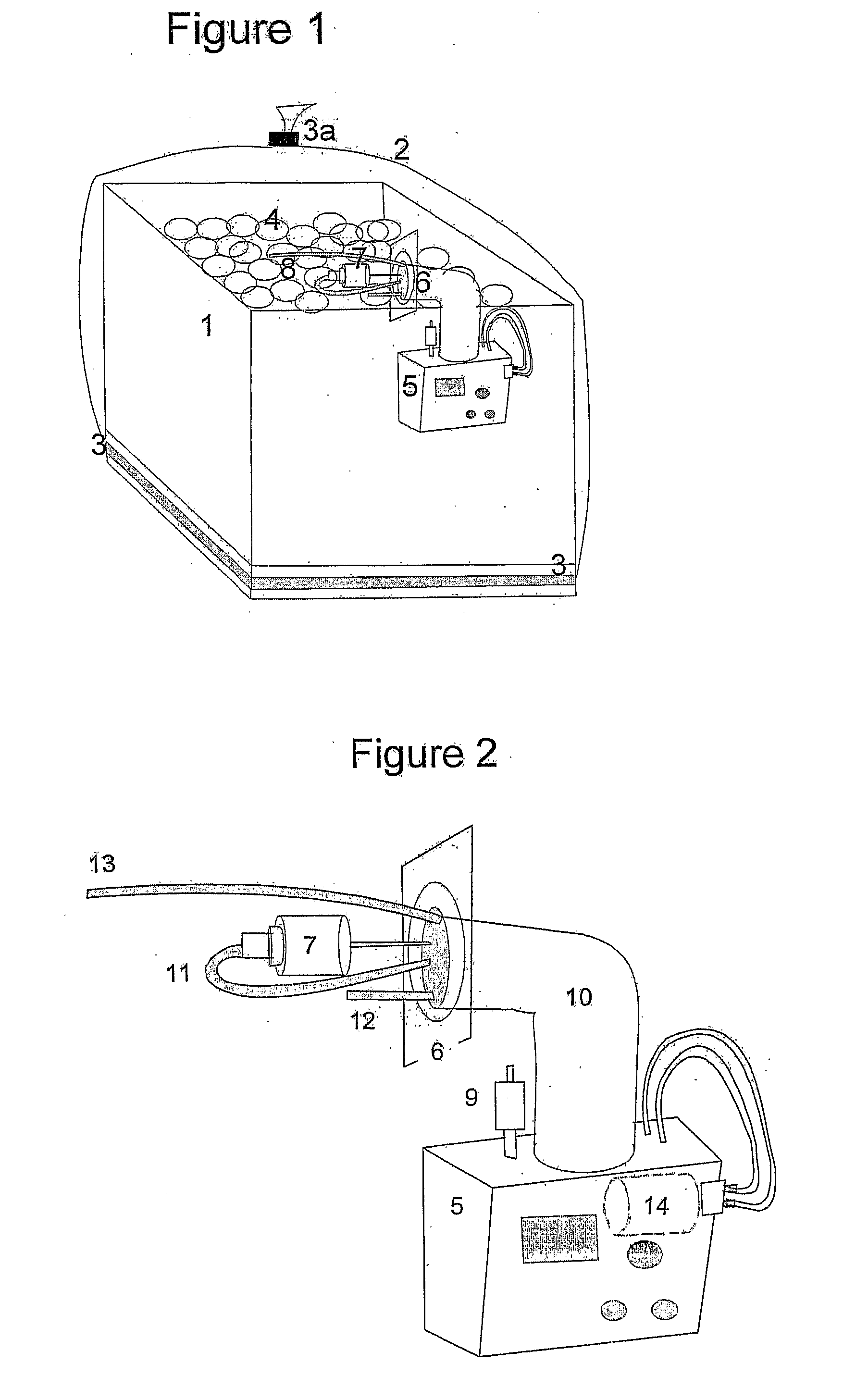
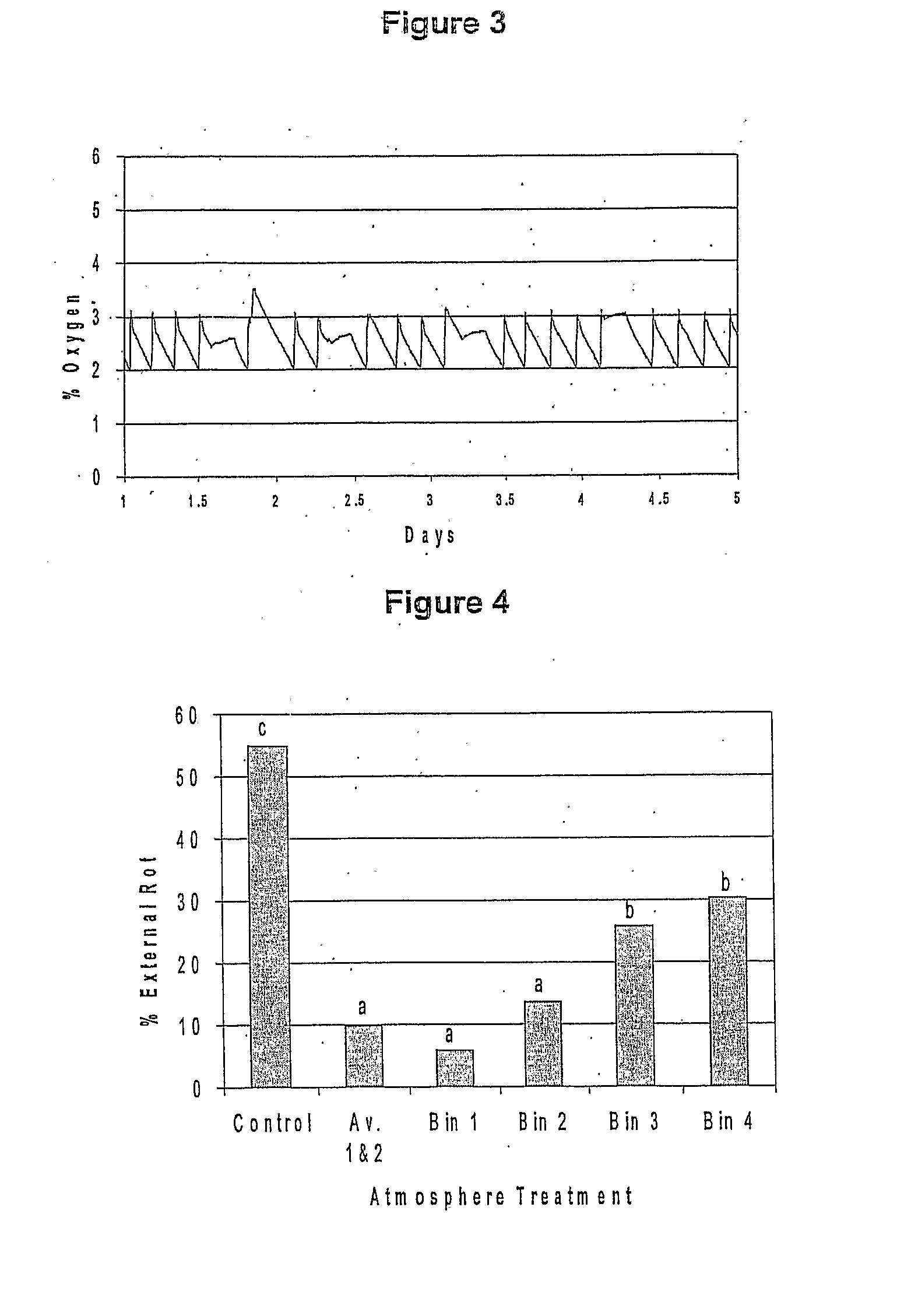
- A method and system that monitor oxygen levels in a sealed, impermeable container and deliver oxygen when levels approach anaerobic thresholds, maintaining a high carbon dioxide content between 14-30% and low oxygen levels to prevent anaerobic conditions, thereby extending storage life without the need for precise temperature control or expensive equipment.

Environmental Safety Standards for Electrolyte Handling
Environmental safety standards for electrolyte handling in controlled atmosphere filling systems represent a critical framework governing the safe manipulation of potentially hazardous chemical substances during battery manufacturing processes. These standards encompass comprehensive protocols designed to protect personnel, equipment, and the surrounding environment from exposure to toxic, corrosive, or reactive electrolyte materials commonly used in advanced battery technologies.
The regulatory landscape for electrolyte handling is primarily governed by international standards including ISO 14001 environmental management systems, OSHA hazardous material handling protocols, and specific battery industry guidelines such as IEC 62133 and UN 38.3 transportation regulations. These frameworks establish mandatory requirements for containment systems, ventilation protocols, and emergency response procedures specifically tailored to electrolyte chemistry characteristics.
Personal protective equipment standards mandate the use of chemical-resistant gloves, face shields, and respiratory protection systems rated for specific electrolyte vapor concentrations. Facility design requirements include specialized ventilation systems capable of maintaining negative pressure environments, emergency eyewash stations positioned within immediate reach of handling areas, and automated gas detection systems programmed to trigger containment protocols upon detecting hazardous vapor concentrations.
Waste management protocols require segregated collection systems for different electrolyte chemistries, preventing cross-contamination that could generate hazardous reactions. Disposal procedures must comply with local environmental regulations while ensuring complete neutralization of reactive components before final disposal or recycling processes.
Training certification programs mandate comprehensive education covering chemical compatibility matrices, emergency response procedures, and proper handling techniques for various electrolyte formulations. Regular competency assessments ensure personnel maintain current knowledge of evolving safety protocols and emerging hazard identification methods.
Documentation requirements include detailed material safety data sheets, incident reporting systems, and regular environmental impact assessments to monitor long-term effects of electrolyte handling operations on surrounding ecosystems and groundwater systems.
The regulatory landscape for electrolyte handling is primarily governed by international standards including ISO 14001 environmental management systems, OSHA hazardous material handling protocols, and specific battery industry guidelines such as IEC 62133 and UN 38.3 transportation regulations. These frameworks establish mandatory requirements for containment systems, ventilation protocols, and emergency response procedures specifically tailored to electrolyte chemistry characteristics.
Personal protective equipment standards mandate the use of chemical-resistant gloves, face shields, and respiratory protection systems rated for specific electrolyte vapor concentrations. Facility design requirements include specialized ventilation systems capable of maintaining negative pressure environments, emergency eyewash stations positioned within immediate reach of handling areas, and automated gas detection systems programmed to trigger containment protocols upon detecting hazardous vapor concentrations.
Waste management protocols require segregated collection systems for different electrolyte chemistries, preventing cross-contamination that could generate hazardous reactions. Disposal procedures must comply with local environmental regulations while ensuring complete neutralization of reactive components before final disposal or recycling processes.
Training certification programs mandate comprehensive education covering chemical compatibility matrices, emergency response procedures, and proper handling techniques for various electrolyte formulations. Regular competency assessments ensure personnel maintain current knowledge of evolving safety protocols and emerging hazard identification methods.
Documentation requirements include detailed material safety data sheets, incident reporting systems, and regular environmental impact assessments to monitor long-term effects of electrolyte handling operations on surrounding ecosystems and groundwater systems.
Quality Control Systems for Element Precision Validation
Quality control systems for element precision validation in controlled atmosphere electrolyte filling represent a critical technological framework that ensures consistent and accurate battery manufacturing processes. These systems integrate multiple validation methodologies to monitor and verify the precise composition and distribution of electrolyte elements during the filling process under controlled atmospheric conditions.
Real-time spectroscopic analysis forms the cornerstone of modern element precision validation systems. Advanced techniques such as laser-induced breakdown spectroscopy (LIBS) and X-ray fluorescence (XRF) enable continuous monitoring of elemental composition during the filling process. These non-destructive analytical methods provide immediate feedback on lithium salt concentrations, solvent ratios, and additive distributions, allowing for instantaneous process adjustments when deviations are detected.
Automated sampling and testing protocols have revolutionized the validation process by eliminating human error and ensuring consistent measurement conditions. Robotic sampling systems extract representative electrolyte samples at predetermined intervals, subjecting them to comprehensive analytical testing including ion chromatography, gas chromatography-mass spectrometry, and inductively coupled plasma analysis. These automated systems maintain sample integrity by preserving the controlled atmosphere conditions throughout the testing sequence.
Statistical process control algorithms integrate validation data from multiple sources to establish dynamic control limits and trend analysis capabilities. Machine learning models analyze historical validation data to predict potential quality deviations before they occur, enabling proactive process adjustments. These predictive systems consider environmental factors, equipment performance parameters, and raw material variations to optimize element precision outcomes.
Traceability and documentation systems ensure comprehensive record-keeping of all validation activities, creating detailed audit trails that link specific electrolyte batches to their corresponding quality metrics. Digital twin technologies simulate the entire validation process, allowing for virtual testing of new validation protocols and optimization of existing systems without disrupting production operations.
Real-time spectroscopic analysis forms the cornerstone of modern element precision validation systems. Advanced techniques such as laser-induced breakdown spectroscopy (LIBS) and X-ray fluorescence (XRF) enable continuous monitoring of elemental composition during the filling process. These non-destructive analytical methods provide immediate feedback on lithium salt concentrations, solvent ratios, and additive distributions, allowing for instantaneous process adjustments when deviations are detected.
Automated sampling and testing protocols have revolutionized the validation process by eliminating human error and ensuring consistent measurement conditions. Robotic sampling systems extract representative electrolyte samples at predetermined intervals, subjecting them to comprehensive analytical testing including ion chromatography, gas chromatography-mass spectrometry, and inductively coupled plasma analysis. These automated systems maintain sample integrity by preserving the controlled atmosphere conditions throughout the testing sequence.
Statistical process control algorithms integrate validation data from multiple sources to establish dynamic control limits and trend analysis capabilities. Machine learning models analyze historical validation data to predict potential quality deviations before they occur, enabling proactive process adjustments. These predictive systems consider environmental factors, equipment performance parameters, and raw material variations to optimize element precision outcomes.
Traceability and documentation systems ensure comprehensive record-keeping of all validation activities, creating detailed audit trails that link specific electrolyte batches to their corresponding quality metrics. Digital twin technologies simulate the entire validation process, allowing for virtual testing of new validation protocols and optimization of existing systems without disrupting production operations.
Unlock deeper insights with PatSnap Eureka Quick Research — get a full tech report to explore trends and direct your research. Try now!
Generate Your Research Report Instantly with AI Agent
Supercharge your innovation with PatSnap Eureka AI Agent Platform!