

Copper Tungsten Alloy vs Selenium: Benefit and Application Analysis
APR 8, 20269 MIN READ
Generate Your Research Report Instantly with AI Agent
PatSnap Eureka helps you evaluate technical feasibility & market potential.
Copper Tungsten Alloy Development Background and Objectives
Copper tungsten alloys emerged in the early 20th century as a response to the growing demand for materials that could withstand extreme electrical and thermal conditions. The development was initially driven by the electrical industry's need for contact materials that could handle high current loads without degradation. Early research focused on combining copper's excellent electrical conductivity with tungsten's superior thermal stability and wear resistance.
The evolution of copper tungsten alloy technology has been closely tied to advances in powder metallurgy techniques. Traditional melting and casting methods proved inadequate due to the significant difference in melting points between copper (1085°C) and tungsten (3422°C). This challenge led to the development of specialized powder metallurgy processes, including liquid phase sintering and infiltration techniques, which became the foundation for modern production methods.
Historical milestones in copper tungsten development include the introduction of mechanical alloying in the 1960s, which improved particle distribution and bonding. The 1980s saw significant advances in controlled atmosphere processing, enabling better control over composition and microstructure. More recently, additive manufacturing techniques have opened new possibilities for creating complex geometries and tailored compositions.
The primary technical objectives driving copper tungsten alloy development center on optimizing the balance between electrical conductivity and thermal management properties. Current research aims to achieve electrical conductivities exceeding 45% IACS while maintaining thermal conductivity above 200 W/mK. These targets are essential for applications in high-power electronics and electrical switching equipment.
Another critical objective involves enhancing mechanical properties, particularly wear resistance and thermal shock resistance. Modern development efforts focus on achieving hardness values between 150-250 HB while maintaining adequate ductility for manufacturing processes. The goal is to extend service life in demanding applications such as electrical discharge machining electrodes and plasma-facing components.
Microstructural control represents a key development objective, with researchers working to achieve uniform tungsten particle distribution within the copper matrix. Advanced characterization techniques now enable precise control over particle size distribution, typically targeting tungsten particles in the 1-10 μm range for optimal performance balance.
Environmental and sustainability considerations have become increasingly important objectives in recent development efforts. This includes reducing processing temperatures, minimizing waste generation, and developing recycling methods for end-of-life components. These objectives align with broader industry trends toward sustainable manufacturing practices while maintaining performance standards.
The evolution of copper tungsten alloy technology has been closely tied to advances in powder metallurgy techniques. Traditional melting and casting methods proved inadequate due to the significant difference in melting points between copper (1085°C) and tungsten (3422°C). This challenge led to the development of specialized powder metallurgy processes, including liquid phase sintering and infiltration techniques, which became the foundation for modern production methods.
Historical milestones in copper tungsten development include the introduction of mechanical alloying in the 1960s, which improved particle distribution and bonding. The 1980s saw significant advances in controlled atmosphere processing, enabling better control over composition and microstructure. More recently, additive manufacturing techniques have opened new possibilities for creating complex geometries and tailored compositions.
The primary technical objectives driving copper tungsten alloy development center on optimizing the balance between electrical conductivity and thermal management properties. Current research aims to achieve electrical conductivities exceeding 45% IACS while maintaining thermal conductivity above 200 W/mK. These targets are essential for applications in high-power electronics and electrical switching equipment.
Another critical objective involves enhancing mechanical properties, particularly wear resistance and thermal shock resistance. Modern development efforts focus on achieving hardness values between 150-250 HB while maintaining adequate ductility for manufacturing processes. The goal is to extend service life in demanding applications such as electrical discharge machining electrodes and plasma-facing components.
Microstructural control represents a key development objective, with researchers working to achieve uniform tungsten particle distribution within the copper matrix. Advanced characterization techniques now enable precise control over particle size distribution, typically targeting tungsten particles in the 1-10 μm range for optimal performance balance.
Environmental and sustainability considerations have become increasingly important objectives in recent development efforts. This includes reducing processing temperatures, minimizing waste generation, and developing recycling methods for end-of-life components. These objectives align with broader industry trends toward sustainable manufacturing practices while maintaining performance standards.
Market Demand Analysis for Copper Tungsten vs Selenium Applications
The global market for copper tungsten alloys demonstrates robust demand across multiple high-performance applications, driven primarily by the electronics, aerospace, and energy sectors. The electronics industry represents the largest consumption segment, where copper tungsten serves as critical components in electrical contacts, heat sinks, and semiconductor packaging due to its exceptional thermal conductivity and electrical properties. The increasing miniaturization of electronic devices and the growing demand for high-power electronics continue to fuel market expansion in this sector.
Aerospace and defense applications constitute another significant demand driver for copper tungsten alloys. The material's superior performance under extreme conditions makes it indispensable for rocket nozzles, electrical contacts in aircraft systems, and military applications requiring high reliability. The expanding commercial space industry and increasing defense spending globally contribute to sustained demand growth in this segment.
In contrast, selenium market demand follows distinctly different patterns, primarily concentrated in the glass manufacturing, electronics, and photovoltaic industries. The glass sector represents the largest application area, where selenium functions as a decolorizing agent and provides specific optical properties. The photovoltaic industry has emerged as a growing demand source, utilizing selenium in thin-film solar cells and photocopying applications.
The electronics industry creates demand for both materials but in different capacities. While copper tungsten serves structural and thermal management roles, selenium finds application in rectifiers, photocells, and xerographic processes. The semiconductor industry's evolution toward higher power densities and improved thermal management increasingly favors copper tungsten alloys over alternative materials.
Market dynamics reveal contrasting growth trajectories between these materials. Copper tungsten alloy demand exhibits steady growth driven by technological advancement in electronics and expanding aerospace activities. The material's irreplaceable properties in specific applications create relatively inelastic demand patterns, supporting stable pricing and market development.
Selenium demand faces more volatile market conditions, influenced by environmental regulations and substitution pressures in traditional applications. However, emerging applications in renewable energy and advanced electronics provide new growth opportunities. The photovoltaic sector's expansion, particularly in thin-film technologies, represents a significant potential demand source for selenium-based materials.
Regional demand patterns differ substantially between the two materials. Copper tungsten alloy consumption concentrates in technologically advanced regions with strong aerospace and electronics manufacturing bases. Selenium demand distribution reflects both traditional glass manufacturing centers and emerging renewable energy markets, creating a more geographically dispersed consumption pattern.
Aerospace and defense applications constitute another significant demand driver for copper tungsten alloys. The material's superior performance under extreme conditions makes it indispensable for rocket nozzles, electrical contacts in aircraft systems, and military applications requiring high reliability. The expanding commercial space industry and increasing defense spending globally contribute to sustained demand growth in this segment.
In contrast, selenium market demand follows distinctly different patterns, primarily concentrated in the glass manufacturing, electronics, and photovoltaic industries. The glass sector represents the largest application area, where selenium functions as a decolorizing agent and provides specific optical properties. The photovoltaic industry has emerged as a growing demand source, utilizing selenium in thin-film solar cells and photocopying applications.
The electronics industry creates demand for both materials but in different capacities. While copper tungsten serves structural and thermal management roles, selenium finds application in rectifiers, photocells, and xerographic processes. The semiconductor industry's evolution toward higher power densities and improved thermal management increasingly favors copper tungsten alloys over alternative materials.
Market dynamics reveal contrasting growth trajectories between these materials. Copper tungsten alloy demand exhibits steady growth driven by technological advancement in electronics and expanding aerospace activities. The material's irreplaceable properties in specific applications create relatively inelastic demand patterns, supporting stable pricing and market development.
Selenium demand faces more volatile market conditions, influenced by environmental regulations and substitution pressures in traditional applications. However, emerging applications in renewable energy and advanced electronics provide new growth opportunities. The photovoltaic sector's expansion, particularly in thin-film technologies, represents a significant potential demand source for selenium-based materials.
Regional demand patterns differ substantially between the two materials. Copper tungsten alloy consumption concentrates in technologically advanced regions with strong aerospace and electronics manufacturing bases. Selenium demand distribution reflects both traditional glass manufacturing centers and emerging renewable energy markets, creating a more geographically dispersed consumption pattern.
Current Status and Challenges in Copper Tungsten Alloy Technology
Copper tungsten alloys currently represent a mature technology with established manufacturing processes and widespread industrial adoption. The primary production methods include powder metallurgy, infiltration techniques, and mechanical alloying, with powder metallurgy being the most commercially viable approach. Current alloy compositions typically range from 10% to 90% tungsten content, with the most common variants being Cu-W10, Cu-W20, and Cu-W25 for electrical applications, and higher tungsten content alloys for thermal management applications.
The global copper tungsten alloy market is geographically concentrated, with China dominating production capacity, accounting for approximately 60% of worldwide output. European manufacturers, particularly in Germany and Austria, focus on high-precision applications and specialized grades. North American production centers primarily serve aerospace and defense sectors, while Japanese manufacturers excel in miniaturized electronic component applications.
Manufacturing consistency remains a significant technical challenge, particularly in achieving uniform tungsten particle distribution throughout the copper matrix. Current production methods often result in tungsten clustering, leading to inconsistent thermal and electrical properties across different regions of the same component. This heterogeneity becomes more pronounced in larger components and higher tungsten content alloys.
Cost optimization presents another major constraint, as tungsten's high material cost and energy-intensive processing requirements significantly impact overall production economics. The sintering process requires temperatures exceeding 1400°C, demanding substantial energy input and specialized furnace equipment. Additionally, machining difficulties arise due to tungsten's hardness, requiring diamond tooling and specialized techniques that increase manufacturing costs.
Interface bonding between copper and tungsten phases continues to challenge researchers and manufacturers. The limited mutual solubility between these metals results in weak interfacial bonding, potentially leading to delamination under thermal cycling conditions. Current solutions involve surface treatments and intermediate barrier layers, but these approaches add complexity and cost to the manufacturing process.
Recycling and sustainability concerns are emerging as critical challenges. While copper is readily recyclable, the separation and recovery of tungsten from end-of-life components remain technically and economically challenging. Current recycling rates for copper tungsten alloys are significantly lower than pure copper, creating supply chain sustainability issues as tungsten resources become increasingly constrained globally.
The global copper tungsten alloy market is geographically concentrated, with China dominating production capacity, accounting for approximately 60% of worldwide output. European manufacturers, particularly in Germany and Austria, focus on high-precision applications and specialized grades. North American production centers primarily serve aerospace and defense sectors, while Japanese manufacturers excel in miniaturized electronic component applications.
Manufacturing consistency remains a significant technical challenge, particularly in achieving uniform tungsten particle distribution throughout the copper matrix. Current production methods often result in tungsten clustering, leading to inconsistent thermal and electrical properties across different regions of the same component. This heterogeneity becomes more pronounced in larger components and higher tungsten content alloys.
Cost optimization presents another major constraint, as tungsten's high material cost and energy-intensive processing requirements significantly impact overall production economics. The sintering process requires temperatures exceeding 1400°C, demanding substantial energy input and specialized furnace equipment. Additionally, machining difficulties arise due to tungsten's hardness, requiring diamond tooling and specialized techniques that increase manufacturing costs.
Interface bonding between copper and tungsten phases continues to challenge researchers and manufacturers. The limited mutual solubility between these metals results in weak interfacial bonding, potentially leading to delamination under thermal cycling conditions. Current solutions involve surface treatments and intermediate barrier layers, but these approaches add complexity and cost to the manufacturing process.
Recycling and sustainability concerns are emerging as critical challenges. While copper is readily recyclable, the separation and recovery of tungsten from end-of-life components remain technically and economically challenging. Current recycling rates for copper tungsten alloys are significantly lower than pure copper, creating supply chain sustainability issues as tungsten resources become increasingly constrained globally.
Current Technical Solutions for Copper Tungsten Processing
01 Copper-tungsten alloy composition and preparation methods
Patents describe various compositions of copper-tungsten alloys with specific ratios and additional elements to optimize properties. Manufacturing methods include powder metallurgy, infiltration processes, and sintering techniques to achieve desired density and performance characteristics. The alloys are designed to balance electrical conductivity, thermal properties, and mechanical strength.- Copper-tungsten alloy composition and preparation methods: Patents describe various compositions of copper-tungsten alloys with specific ratios and the manufacturing processes involved. These alloys are prepared through powder metallurgy techniques, sintering processes, and infiltration methods to achieve desired properties such as high electrical conductivity, thermal conductivity, and mechanical strength. The preparation methods focus on optimizing particle size distribution, mixing procedures, and heat treatment parameters to produce high-performance copper-tungsten materials.
- Applications of copper-tungsten alloys in electrical contacts and electrodes: Copper-tungsten alloys are widely used in electrical contact materials, electrode applications, and switching devices due to their excellent arc resistance, wear resistance, and thermal stability. These materials are particularly suitable for high-voltage circuit breakers, welding electrodes, and electrical discharge machining electrodes. The alloys provide superior performance in applications requiring both high electrical conductivity and resistance to electrical erosion.
- Selenium addition and doping in alloy systems: Selenium is incorporated into various alloy systems as a doping element or additive to modify material properties. The addition of selenium can improve machinability, adjust electrical properties, and enhance specific functional characteristics of alloys. Patents describe methods for incorporating selenium into metal matrices and the resulting effects on microstructure and performance characteristics of the final products.
- Comparative properties and performance characteristics: Technical comparisons focus on the distinct properties of copper-tungsten alloys versus selenium-containing materials. Copper-tungsten alloys exhibit high melting points, excellent thermal and electrical conductivity, and superior mechanical strength, making them suitable for high-temperature applications. Selenium-based materials offer different characteristics including semiconductor properties, photoconductivity, and specific chemical reactivity. The selection between these materials depends on the specific application requirements and operating conditions.
- Processing techniques and quality control methods: Advanced processing techniques are employed for both copper-tungsten alloys and selenium-containing materials. These include powder preparation, consolidation methods, surface treatment processes, and quality inspection procedures. Patents describe specific parameters for controlling grain size, density, porosity, and compositional uniformity. Quality control methods involve testing electrical properties, mechanical strength, microstructural analysis, and performance validation under operating conditions.
02 Selenium addition to copper-tungsten alloys for enhanced properties
Incorporation of selenium into copper-tungsten alloy systems to improve specific characteristics such as machinability, electrical properties, or resistance to arc erosion. The selenium content is carefully controlled to achieve optimal performance without compromising the base alloy properties. Various processing techniques are employed to ensure uniform distribution of selenium within the alloy matrix.Expand Specific Solutions03 Applications of copper-tungsten alloys in electrical contact materials
Copper-tungsten alloys are utilized as electrical contact materials in switches, circuit breakers, and other electrical devices due to their excellent arc resistance and conductivity. The alloys demonstrate superior performance in high-voltage and high-current applications. Surface treatment and coating technologies are applied to further enhance contact performance and service life.Expand Specific Solutions04 Heat treatment and processing techniques for copper-tungsten alloys
Various heat treatment processes including annealing, aging, and controlled cooling are employed to optimize the microstructure and properties of copper-tungsten alloys. Processing parameters such as temperature, time, and atmosphere are carefully controlled to achieve desired hardness, conductivity, and dimensional stability. Advanced manufacturing techniques including hot pressing and spark plasma sintering are utilized for improved densification.Expand Specific Solutions05 Comparative performance and material selection criteria
Technical evaluation frameworks for comparing copper-tungsten alloys with other materials including selenium-containing compositions based on electrical, thermal, and mechanical properties. Selection criteria consider factors such as cost-effectiveness, manufacturing feasibility, and application-specific requirements. Performance testing methods and standards are established to assess material suitability for different industrial applications.Expand Specific Solutions
Major Players in Copper Tungsten and Selenium Industries
The copper tungsten alloy versus selenium technology landscape represents a mature specialty materials market with distinct application domains and established competitive dynamics. The industry has reached a stable development stage, with copper tungsten alloys primarily serving high-performance electrical and thermal management applications, while selenium finds use in electronics, photovoltaics, and specialized chemical processes. Market participants include established materials giants like Plansee SE and Wieland-Werke AG specializing in refractory metals and copper alloys, semiconductor leaders such as Intel Corp. and Siemens AG driving demand for advanced materials, and research institutions like Xi'an Jiaotong University and Korea Institute of Machinery & Materials advancing material science innovations. Technology maturity varies significantly between segments, with copper tungsten alloys representing well-established metallurgical processes, while selenium applications continue evolving in emerging technologies like advanced semiconductors and energy storage systems.
Mitsubishi Shindoh Co., Ltd.
Technical Solution: Mitsubishi Shindoh specializes in copper-based alloys and advanced materials for electronic applications. Their copper tungsten alloy solutions focus on electrical contact materials and heat dissipation components for power electronics. The company develops materials with controlled thermal expansion coefficients matching semiconductor substrates, typically achieving thermal conductivity values of 180-250 W/mK depending on tungsten content. Their products serve automotive electronics, power modules, and high-frequency applications where both electrical performance and thermal management are critical. The manufacturing approach emphasizes precision control of particle size distribution and sintering parameters.
Strengths: Strong expertise in copper metallurgy, established supply chains, focus on electronic applications. Weaknesses: Limited research in selenium alternatives, primarily focused on traditional copper tungsten compositions.
Wieland-Werke AG
Technical Solution: Wieland-Werke AG is a major European copper and copper alloy manufacturer with capabilities in advanced composite materials including copper tungsten systems. Their approach to copper tungsten alloys emphasizes applications in electrical engineering and thermal management, producing materials with tailored properties for specific industrial needs. The company's technology platform includes advanced melting and forming processes that enable precise control of microstructure and properties. Their copper tungsten products typically achieve electrical conductivity values of 45-65% IACS while maintaining dimensional stability at elevated temperatures, making them suitable for electrical contacts and heat spreaders in power electronics applications.
Strengths: Large-scale manufacturing capabilities, established market presence, comprehensive quality control systems. Weaknesses: Conservative approach to new material development, limited focus on selenium-based alternatives.
Key Innovations in Copper Tungsten Alloy Composition
Copper base alloy suitable for use as material for sliding member
PatentInactiveUS20040136860A1
Innovation
- A copper base alloy with a matrix composed of alpha-single phase, containing 15-25% Zn, 4.2-10% Bi, 2-7% Mn, and 1-3% Si, with a eutectic structure of alpha-phase and Mn-Si compound and Bi particles, replacing lead and enhancing anti-seizure properties without environmental contamination.


Copper-tungsten alloys and process for producing the same
PatentWO1996022401A1
Innovation
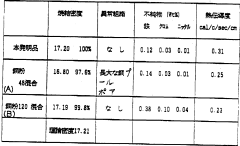
- The introduction of phosphorus to enhance wettability and deoxidize copper powder, combined with the use of cobalt, nickel, or iron to promote sintering, and the reduction of copper oxide powder in a controlled atmosphere to produce a homogeneous and high-density copper-tungsten alloy with uniform copper dispersion.


Environmental Impact Assessment of Copper Tungsten vs Selenium
The environmental implications of copper tungsten alloys versus selenium present distinct challenges and considerations across their respective lifecycles. Copper tungsten alloys, primarily composed of copper and tungsten metals, demonstrate relatively favorable environmental profiles during production and application phases. The manufacturing process involves powder metallurgy techniques that generate minimal toxic emissions compared to traditional smelting operations. However, tungsten extraction requires significant energy input and can result in habitat disruption at mining sites.
Selenium, while naturally occurring in trace amounts, poses more complex environmental concerns. Industrial selenium production often involves recovery from copper refinery residues or flue dusts, creating potential for heavy metal contamination in surrounding ecosystems. The element's bioaccumulation properties present particular risks to aquatic environments, where selenium concentrations can magnify through food chains, affecting fish populations and waterfowl reproduction rates.
Waste management strategies differ significantly between these materials. Copper tungsten alloys maintain structural integrity throughout their service life and can be effectively recycled through established metallurgical processes. The high value of tungsten content incentivizes recovery efforts, reducing landfill burden and resource depletion. Recycling efficiency rates for copper tungsten components typically exceed 85 percent in industrial applications.
Selenium waste management requires specialized handling protocols due to its toxicity thresholds. Improper disposal can lead to soil contamination and groundwater pollution, necessitating expensive remediation efforts. However, selenium's essential role in biological systems enables controlled application in agricultural supplements, providing beneficial reuse pathways when properly managed.
Carbon footprint analysis reveals copper tungsten alloys generate higher initial emissions during production but demonstrate superior longevity in service applications. Selenium processing typically produces lower immediate carbon outputs but requires more frequent replacement cycles in certain applications, potentially increasing cumulative environmental impact over extended operational periods.
Regulatory frameworks increasingly favor materials with established recycling infrastructure and lower bioaccumulation potential, positioning copper tungsten alloys advantageously for future environmental compliance requirements.
Selenium, while naturally occurring in trace amounts, poses more complex environmental concerns. Industrial selenium production often involves recovery from copper refinery residues or flue dusts, creating potential for heavy metal contamination in surrounding ecosystems. The element's bioaccumulation properties present particular risks to aquatic environments, where selenium concentrations can magnify through food chains, affecting fish populations and waterfowl reproduction rates.
Waste management strategies differ significantly between these materials. Copper tungsten alloys maintain structural integrity throughout their service life and can be effectively recycled through established metallurgical processes. The high value of tungsten content incentivizes recovery efforts, reducing landfill burden and resource depletion. Recycling efficiency rates for copper tungsten components typically exceed 85 percent in industrial applications.
Selenium waste management requires specialized handling protocols due to its toxicity thresholds. Improper disposal can lead to soil contamination and groundwater pollution, necessitating expensive remediation efforts. However, selenium's essential role in biological systems enables controlled application in agricultural supplements, providing beneficial reuse pathways when properly managed.
Carbon footprint analysis reveals copper tungsten alloys generate higher initial emissions during production but demonstrate superior longevity in service applications. Selenium processing typically produces lower immediate carbon outputs but requires more frequent replacement cycles in certain applications, potentially increasing cumulative environmental impact over extended operational periods.
Regulatory frameworks increasingly favor materials with established recycling infrastructure and lower bioaccumulation potential, positioning copper tungsten alloys advantageously for future environmental compliance requirements.
Cost-Benefit Analysis Framework for Material Selection
The cost-benefit analysis framework for material selection between copper tungsten alloy and selenium requires a comprehensive evaluation methodology that encompasses both quantitative and qualitative factors. This framework establishes systematic criteria for decision-making processes in industrial applications where material performance directly impacts operational efficiency and economic outcomes.
Initial cost assessment forms the foundation of this framework, incorporating raw material procurement expenses, processing costs, and manufacturing complexity. Copper tungsten alloy typically presents higher upfront costs due to tungsten's premium pricing and specialized powder metallurgy processing requirements. Selenium, while generally more affordable in raw material costs, may require additional safety handling protocols and specialized equipment, potentially offsetting initial savings.
Operational cost evaluation extends beyond initial investment to encompass maintenance requirements, replacement frequency, and performance degradation over time. Copper tungsten alloy demonstrates superior durability in high-temperature applications, potentially reducing long-term replacement costs despite higher initial investment. The framework must account for application-specific wear rates, thermal cycling effects, and environmental degradation factors.
Performance-to-cost ratio analysis represents a critical component, weighing material capabilities against economic investment. This includes thermal conductivity efficiency, electrical performance characteristics, mechanical strength, and reliability metrics. Copper tungsten alloy excels in applications requiring simultaneous thermal management and electrical conductivity, while selenium offers advantages in specific electronic and photovoltaic applications.
Risk assessment integration addresses supply chain stability, price volatility, and availability concerns. Tungsten's limited global supply sources introduce potential cost fluctuations and procurement risks. Selenium markets, while more distributed, face volatility due to industrial demand variations and environmental regulations affecting production.
The framework incorporates lifecycle cost modeling, projecting total ownership expenses across expected service life. This includes disposal costs, recycling value recovery, and environmental compliance expenses. Copper tungsten alloy offers superior recyclability, potentially providing end-of-life value recovery that offsets initial investment premiums.
Application-specific weighting factors customize the framework for different industrial contexts, recognizing that optimal material selection varies significantly across aerospace, electronics, automotive, and energy sectors based on performance priorities and cost sensitivities.
Initial cost assessment forms the foundation of this framework, incorporating raw material procurement expenses, processing costs, and manufacturing complexity. Copper tungsten alloy typically presents higher upfront costs due to tungsten's premium pricing and specialized powder metallurgy processing requirements. Selenium, while generally more affordable in raw material costs, may require additional safety handling protocols and specialized equipment, potentially offsetting initial savings.
Operational cost evaluation extends beyond initial investment to encompass maintenance requirements, replacement frequency, and performance degradation over time. Copper tungsten alloy demonstrates superior durability in high-temperature applications, potentially reducing long-term replacement costs despite higher initial investment. The framework must account for application-specific wear rates, thermal cycling effects, and environmental degradation factors.
Performance-to-cost ratio analysis represents a critical component, weighing material capabilities against economic investment. This includes thermal conductivity efficiency, electrical performance characteristics, mechanical strength, and reliability metrics. Copper tungsten alloy excels in applications requiring simultaneous thermal management and electrical conductivity, while selenium offers advantages in specific electronic and photovoltaic applications.
Risk assessment integration addresses supply chain stability, price volatility, and availability concerns. Tungsten's limited global supply sources introduce potential cost fluctuations and procurement risks. Selenium markets, while more distributed, face volatility due to industrial demand variations and environmental regulations affecting production.
The framework incorporates lifecycle cost modeling, projecting total ownership expenses across expected service life. This includes disposal costs, recycling value recovery, and environmental compliance expenses. Copper tungsten alloy offers superior recyclability, potentially providing end-of-life value recovery that offsets initial investment premiums.
Application-specific weighting factors customize the framework for different industrial contexts, recognizing that optimal material selection varies significantly across aerospace, electronics, automotive, and energy sectors based on performance priorities and cost sensitivities.
Unlock deeper insights with PatSnap Eureka Quick Research — get a full tech report to explore trends and direct your research. Try now!
Generate Your Research Report Instantly with AI Agent
Supercharge your innovation with PatSnap Eureka AI Agent Platform!