

Developing Robust Ammonia Storage Solutions for Industry
MAR 6, 20269 MIN READ
Generate Your Research Report Instantly with AI Agent
Patsnap Eureka helps you evaluate technical feasibility & market potential.
Ammonia Storage Technology Background and Industrial Goals
Ammonia has emerged as a critical industrial chemical with applications spanning fertilizer production, refrigeration systems, and increasingly as a carbon-free energy carrier. The global ammonia market, valued at approximately $70 billion annually, continues to expand driven by agricultural demands and emerging energy transition requirements. Industrial ammonia storage represents a fundamental challenge due to the compound's unique physical and chemical properties, including its corrosive nature, high vapor pressure, and potential safety hazards.
The evolution of ammonia storage technology traces back to the early 20th century when Fritz Haber's synthesis process revolutionized nitrogen fixation. Initial storage solutions relied on basic pressure vessels and rudimentary safety systems. The 1960s marked a significant advancement with the introduction of spherical storage tanks and improved metallurgy, enabling larger-scale industrial operations. The 1980s brought computerized monitoring systems and enhanced safety protocols following several industrial incidents that highlighted storage vulnerabilities.
Modern ammonia storage faces unprecedented challenges as industrial applications diversify beyond traditional uses. The push toward ammonia as a hydrogen carrier and marine fuel has intensified requirements for storage density, safety, and operational flexibility. Current storage methods struggle with material compatibility issues, as ammonia's corrosive properties can cause stress corrosion cracking in conventional steel systems. Temperature management remains problematic, particularly in varying climatic conditions where thermal cycling can compromise structural integrity.
Contemporary industrial goals center on developing storage solutions that achieve higher volumetric efficiency while maintaining stringent safety standards. The target specifications include storage systems capable of handling pressures up to 20 bar with minimal leakage rates below 0.1% annually. Enhanced material compatibility requirements demand storage solutions that can withstand ammonia exposure for 25-30 years without significant degradation. Additionally, the integration of smart monitoring systems for real-time leak detection and predictive maintenance has become essential for modern industrial operations.
The convergence of environmental regulations and economic pressures has established clear technological objectives for next-generation ammonia storage. These include reducing storage costs by 30% while improving safety margins through advanced materials and monitoring technologies. The industry seeks modular storage designs that can accommodate varying capacity requirements from 100 to 10,000 metric tons, enabling scalable deployment across different industrial contexts.
The evolution of ammonia storage technology traces back to the early 20th century when Fritz Haber's synthesis process revolutionized nitrogen fixation. Initial storage solutions relied on basic pressure vessels and rudimentary safety systems. The 1960s marked a significant advancement with the introduction of spherical storage tanks and improved metallurgy, enabling larger-scale industrial operations. The 1980s brought computerized monitoring systems and enhanced safety protocols following several industrial incidents that highlighted storage vulnerabilities.
Modern ammonia storage faces unprecedented challenges as industrial applications diversify beyond traditional uses. The push toward ammonia as a hydrogen carrier and marine fuel has intensified requirements for storage density, safety, and operational flexibility. Current storage methods struggle with material compatibility issues, as ammonia's corrosive properties can cause stress corrosion cracking in conventional steel systems. Temperature management remains problematic, particularly in varying climatic conditions where thermal cycling can compromise structural integrity.
Contemporary industrial goals center on developing storage solutions that achieve higher volumetric efficiency while maintaining stringent safety standards. The target specifications include storage systems capable of handling pressures up to 20 bar with minimal leakage rates below 0.1% annually. Enhanced material compatibility requirements demand storage solutions that can withstand ammonia exposure for 25-30 years without significant degradation. Additionally, the integration of smart monitoring systems for real-time leak detection and predictive maintenance has become essential for modern industrial operations.
The convergence of environmental regulations and economic pressures has established clear technological objectives for next-generation ammonia storage. These include reducing storage costs by 30% while improving safety margins through advanced materials and monitoring technologies. The industry seeks modular storage designs that can accommodate varying capacity requirements from 100 to 10,000 metric tons, enabling scalable deployment across different industrial contexts.
Market Demand Analysis for Industrial Ammonia Storage Systems
The global industrial ammonia storage market is experiencing unprecedented growth driven by multiple converging factors across various industrial sectors. The fertilizer industry remains the largest consumer of ammonia storage solutions, accounting for the majority of global demand as agricultural production intensifies to meet growing food security requirements. Chemical manufacturing facilities require sophisticated storage systems for ammonia as a key feedstock in producing plastics, explosives, and synthetic materials.
The emerging hydrogen economy presents a transformative opportunity for ammonia storage systems. As industries seek carbon-neutral energy solutions, ammonia's role as a hydrogen carrier has gained significant traction, particularly in maritime shipping and power generation sectors. This application requires specialized storage infrastructure capable of handling both traditional industrial processes and new energy applications.
Refrigeration and cooling applications continue to drive steady demand, especially in food processing, cold storage facilities, and industrial cooling systems. The phase-out of synthetic refrigerants under environmental regulations has renewed interest in ammonia-based cooling solutions, creating additional market opportunities for robust storage systems.
Geographic demand patterns reveal strong growth in Asia-Pacific regions, driven by rapid industrialization and agricultural expansion. North American and European markets focus increasingly on upgrading existing infrastructure to meet stricter safety and environmental standards. Developing economies show growing appetite for ammonia storage solutions as their chemical and agricultural industries mature.
Safety regulations and environmental compliance requirements are reshaping market demand characteristics. Industries now prioritize storage solutions that minimize leak risks, reduce environmental impact, and comply with evolving regulatory frameworks. This shift drives demand for advanced monitoring systems, improved containment technologies, and automated safety features.
The market increasingly values integrated storage solutions that combine traditional storage with advanced monitoring, predictive maintenance capabilities, and digital connectivity. Industries seek systems that optimize operational efficiency while maintaining the highest safety standards, creating opportunities for innovative storage technologies that address both current needs and future scalability requirements.
The emerging hydrogen economy presents a transformative opportunity for ammonia storage systems. As industries seek carbon-neutral energy solutions, ammonia's role as a hydrogen carrier has gained significant traction, particularly in maritime shipping and power generation sectors. This application requires specialized storage infrastructure capable of handling both traditional industrial processes and new energy applications.
Refrigeration and cooling applications continue to drive steady demand, especially in food processing, cold storage facilities, and industrial cooling systems. The phase-out of synthetic refrigerants under environmental regulations has renewed interest in ammonia-based cooling solutions, creating additional market opportunities for robust storage systems.
Geographic demand patterns reveal strong growth in Asia-Pacific regions, driven by rapid industrialization and agricultural expansion. North American and European markets focus increasingly on upgrading existing infrastructure to meet stricter safety and environmental standards. Developing economies show growing appetite for ammonia storage solutions as their chemical and agricultural industries mature.
Safety regulations and environmental compliance requirements are reshaping market demand characteristics. Industries now prioritize storage solutions that minimize leak risks, reduce environmental impact, and comply with evolving regulatory frameworks. This shift drives demand for advanced monitoring systems, improved containment technologies, and automated safety features.
The market increasingly values integrated storage solutions that combine traditional storage with advanced monitoring, predictive maintenance capabilities, and digital connectivity. Industries seek systems that optimize operational efficiency while maintaining the highest safety standards, creating opportunities for innovative storage technologies that address both current needs and future scalability requirements.
Current Ammonia Storage Challenges and Technical Limitations
Industrial ammonia storage faces significant technical challenges that stem from the compound's inherent physical and chemical properties. Ammonia's high vapor pressure requires storage at either extremely low temperatures (-33°C at atmospheric pressure) or under substantial pressure (8.5 bar at room temperature), creating complex engineering requirements for containment systems. The corrosive nature of ammonia poses additional complications, as it can cause stress corrosion cracking in certain metals and degrade elastomeric sealing materials over extended periods.
Current storage infrastructure predominantly relies on pressurized vessels and refrigerated tanks, both of which present distinct limitations. Pressurized storage systems require robust steel construction with specialized coatings, leading to high capital costs and ongoing maintenance challenges. The thick-walled pressure vessels needed for safe containment significantly increase material requirements and installation complexity, particularly for large-scale industrial applications.
Refrigerated storage systems, while operating at lower pressures, demand continuous energy input to maintain cryogenic conditions. These systems are vulnerable to power outages and require sophisticated insulation technologies to minimize heat ingress. The energy penalty associated with maintaining low temperatures can represent 3-5% of the stored ammonia's energy content annually, creating substantial operational costs for long-term storage applications.
Material compatibility remains a critical constraint across all storage approaches. Ammonia's tendency to cause hydrogen embrittlement in high-strength steels limits material selection options, while its reactivity with copper and zinc-containing alloys restricts the use of common industrial components. Sealing systems face particular challenges, as traditional elastomers can swell or degrade when exposed to ammonia vapors, leading to potential leak pathways.
Safety considerations impose additional technical limitations on storage system design. Ammonia's toxicity requires sophisticated leak detection systems and emergency response capabilities, while its flammability range necessitates careful attention to vapor management and ignition source control. These safety requirements often conflict with cost optimization efforts, creating tension between economic viability and risk mitigation.
Scalability challenges emerge when transitioning from laboratory-scale storage solutions to industrial-scale implementations. Heat transfer limitations in large vessels complicate temperature management, while structural integrity requirements become increasingly demanding as storage volumes expand. The integration of storage systems with existing industrial infrastructure often requires extensive modifications to accommodate ammonia's unique handling requirements.
Current storage infrastructure predominantly relies on pressurized vessels and refrigerated tanks, both of which present distinct limitations. Pressurized storage systems require robust steel construction with specialized coatings, leading to high capital costs and ongoing maintenance challenges. The thick-walled pressure vessels needed for safe containment significantly increase material requirements and installation complexity, particularly for large-scale industrial applications.
Refrigerated storage systems, while operating at lower pressures, demand continuous energy input to maintain cryogenic conditions. These systems are vulnerable to power outages and require sophisticated insulation technologies to minimize heat ingress. The energy penalty associated with maintaining low temperatures can represent 3-5% of the stored ammonia's energy content annually, creating substantial operational costs for long-term storage applications.
Material compatibility remains a critical constraint across all storage approaches. Ammonia's tendency to cause hydrogen embrittlement in high-strength steels limits material selection options, while its reactivity with copper and zinc-containing alloys restricts the use of common industrial components. Sealing systems face particular challenges, as traditional elastomers can swell or degrade when exposed to ammonia vapors, leading to potential leak pathways.
Safety considerations impose additional technical limitations on storage system design. Ammonia's toxicity requires sophisticated leak detection systems and emergency response capabilities, while its flammability range necessitates careful attention to vapor management and ignition source control. These safety requirements often conflict with cost optimization efforts, creating tension between economic viability and risk mitigation.
Scalability challenges emerge when transitioning from laboratory-scale storage solutions to industrial-scale implementations. Heat transfer limitations in large vessels complicate temperature management, while structural integrity requirements become increasingly demanding as storage volumes expand. The integration of storage systems with existing industrial infrastructure often requires extensive modifications to accommodate ammonia's unique handling requirements.
Existing Robust Ammonia Storage Solutions and Methods
01 Advanced tank design and materials for ammonia storage
Robust ammonia storage solutions utilize specialized tank designs and materials that can withstand the corrosive nature of ammonia and maintain structural integrity under various operating conditions. These designs incorporate features such as reinforced walls, pressure-resistant construction, and corrosion-resistant coatings or linings. Advanced materials including specialized alloys and composite materials are employed to enhance durability and prevent degradation over extended periods of use.- Advanced tank design and materials for ammonia storage: Robust ammonia storage solutions utilize specialized tank designs and materials that can withstand the corrosive nature of ammonia and maintain structural integrity under various operating conditions. These designs incorporate features such as reinforced walls, specialized coatings, and materials resistant to ammonia corrosion. The tanks are engineered to handle pressure variations and temperature fluctuations while preventing leaks and ensuring long-term durability. Advanced sealing mechanisms and safety features are integrated to enhance the overall robustness of the storage system.
- Pressure and temperature control systems: Maintaining optimal pressure and temperature conditions is critical for robust ammonia storage. These systems employ sophisticated monitoring and control mechanisms that automatically adjust storage conditions to prevent excessive pressure buildup or temperature variations. The technology includes pressure relief valves, temperature sensors, and automated control systems that respond to changing conditions. These control systems enhance safety and prevent structural damage to storage vessels while maintaining ammonia in its optimal state for storage and subsequent use.
- Containment and leak prevention technologies: Robust ammonia storage incorporates multiple layers of containment and leak prevention mechanisms to ensure safety and environmental protection. These technologies include double-wall containment systems, leak detection sensors, and emergency containment protocols. The systems are designed to detect even minor leaks early and trigger appropriate responses. Secondary containment structures and barriers provide additional protection in case of primary containment failure, ensuring that ammonia releases are minimized or prevented entirely.
- Modular and scalable storage configurations: Modern ammonia storage solutions employ modular designs that allow for flexible capacity adjustment and enhanced system robustness. These configurations enable distributed storage across multiple smaller units rather than single large tanks, reducing risk and improving operational flexibility. The modular approach facilitates easier maintenance, replacement, and expansion of storage capacity as needed. This design philosophy also improves overall system reliability by preventing single points of failure and allowing continued operation even if individual modules require servicing.
- Safety monitoring and emergency response systems: Comprehensive safety monitoring and emergency response capabilities are essential components of robust ammonia storage solutions. These systems integrate real-time monitoring of multiple parameters including pressure, temperature, ammonia concentration, and structural integrity. Advanced sensor networks and data analytics enable predictive maintenance and early warning of potential issues. Emergency response protocols are automated to quickly isolate problems, activate containment measures, and alert personnel. The integration of these monitoring and response systems significantly enhances the overall robustness and safety of ammonia storage facilities.
02 Pressure and temperature control systems
Maintaining optimal pressure and temperature conditions is critical for safe and efficient ammonia storage. Robust storage solutions incorporate sophisticated control systems that monitor and regulate internal conditions, preventing excessive pressure buildup or temperature fluctuations that could compromise storage integrity. These systems include safety valves, pressure relief mechanisms, and thermal management components that ensure stable storage conditions across varying environmental conditions.Expand Specific Solutions03 Leak detection and containment systems
Robust ammonia storage incorporates multiple layers of leak detection and containment to prevent environmental release and ensure safety. These systems include sensors for early detection of ammonia leaks, secondary containment structures, and emergency response mechanisms. Advanced monitoring technologies continuously assess storage integrity and provide alerts when anomalies are detected, enabling rapid response to potential failures.Expand Specific Solutions04 Absorption and stabilization methods
Enhanced storage robustness can be achieved through absorption and stabilization techniques that reduce the volatility and reactivity of stored ammonia. These methods involve the use of absorbent materials, chemical stabilizers, or physical processes that bind ammonia in a more stable form, reducing pressure requirements and improving safety margins. Such approaches can include solid-state storage media or liquid absorption systems that facilitate safer handling and transportation.Expand Specific Solutions05 Modular and scalable storage configurations
Robust ammonia storage solutions increasingly employ modular and scalable designs that allow for flexible capacity adjustment and improved redundancy. These configurations enable distributed storage systems that reduce risk by limiting the quantity stored in any single location, while also facilitating maintenance and replacement of individual components without disrupting overall storage capacity. Modular approaches also support easier integration with various industrial processes and transportation systems.Expand Specific Solutions
Major Players in Ammonia Storage and Infrastructure Industry
The ammonia storage solutions industry is experiencing significant growth driven by increasing demand for clean energy applications and industrial decarbonization initiatives. The market demonstrates substantial scale potential, particularly in sectors like shipping, power generation, and chemical processing. Technology maturity varies considerably across different storage approaches, with established players like Yara International and DuPont leveraging decades of chemical expertise, while automotive companies such as China FAW and Cummins are advancing ammonia applications for transportation. Specialized firms like Amminex focus on emission reduction technologies, and major shipbuilders including Samsung Heavy Industries and Hanwha Ocean are developing ammonia-fueled vessels. Research institutions like Technical University of Denmark and Beijing University of Chemical Technology are contributing fundamental innovations, indicating the technology is transitioning from research phase toward commercial deployment across multiple industrial applications.
Amminex Emissions Technology A/S
Technical Solution: Amminex has developed innovative solid ammonia storage technology using metal ammine complexes, particularly strontium chloride ammines, which can store and release ammonia at controlled temperatures and pressures. Their technology enables safe, high-density ammonia storage without the need for high-pressure vessels or cryogenic conditions. The system operates through reversible chemical absorption, allowing ammonia to be stored as a solid and released on demand by applying heat. This approach significantly reduces safety risks associated with traditional ammonia storage methods while maintaining high storage density and enabling precise control over ammonia release rates for various industrial applications.
Advantages: Eliminates high-pressure storage requirements, enhanced safety profile, precise release control, high storage density. Disadvantages: Requires thermal energy input for ammonia release, limited operational temperature range, potential material degradation over multiple cycles.
DuPont de Nemours, Inc.
Technical Solution: DuPont has developed advanced materials and coating solutions for ammonia storage applications, including specialized polymers, gaskets, and protective coatings that resist ammonia corrosion and permeation. Their technology portfolio includes high-performance elastomers, fluoropolymer linings, and composite materials designed for long-term exposure to ammonia environments. The company has created innovative sealing solutions and barrier materials that maintain integrity under varying temperature and pressure conditions typical in ammonia storage systems. Their materials technology enables extended service life, reduced maintenance requirements, and enhanced safety for both pressurized and refrigerated ammonia storage applications across industrial sectors.
Advantages: Advanced materials expertise, proven chemical resistance, comprehensive product portfolio, global supply chain capabilities. Disadvantages: Higher material costs compared to conventional options, specialized installation requirements, limited direct storage system integration experience.
Core Innovations in Advanced Ammonia Containment Systems
Method and device for safe storage and use of volatile ammonia storage materials
PatentInactiveUS8088201B2
Innovation
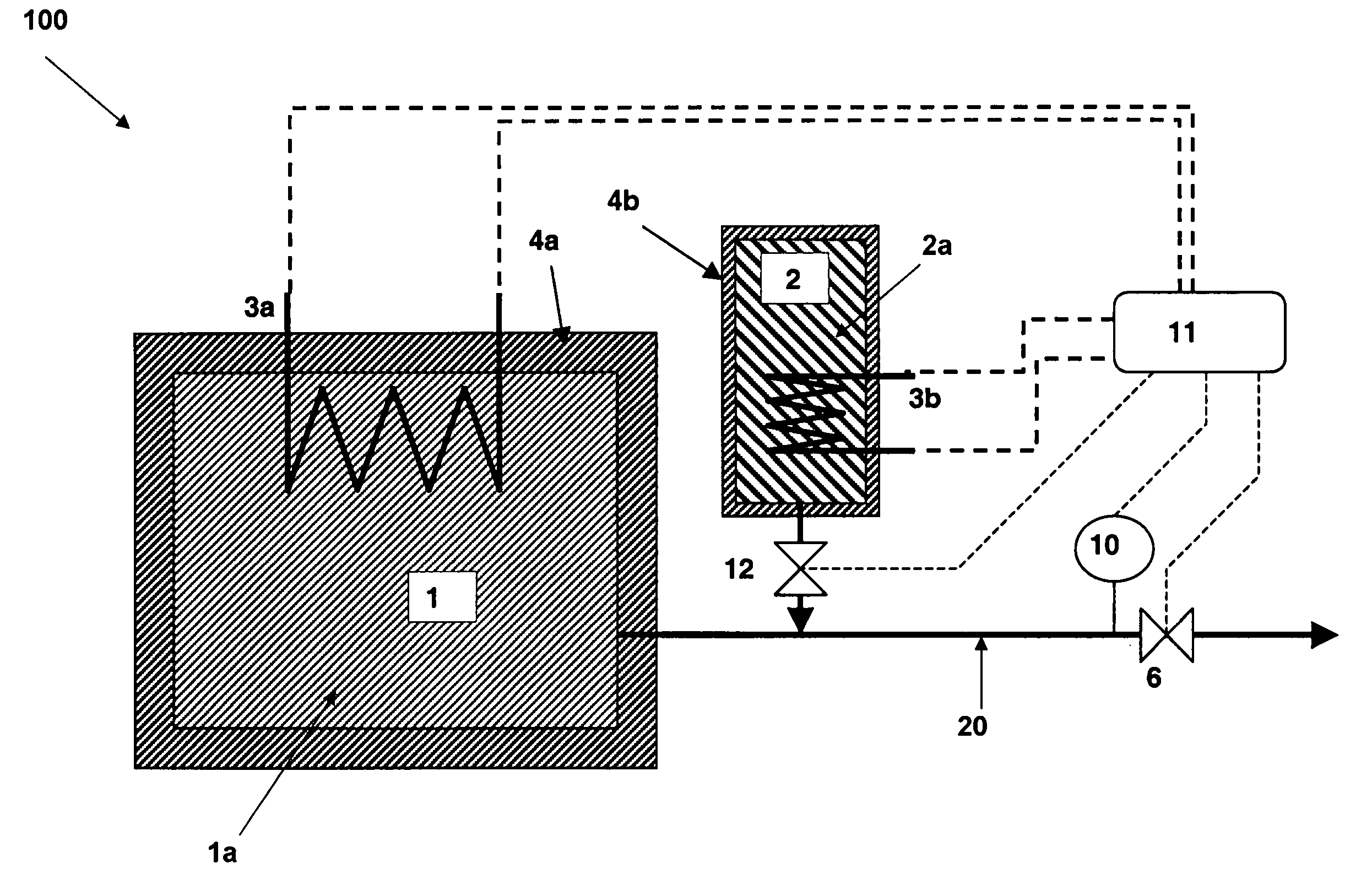
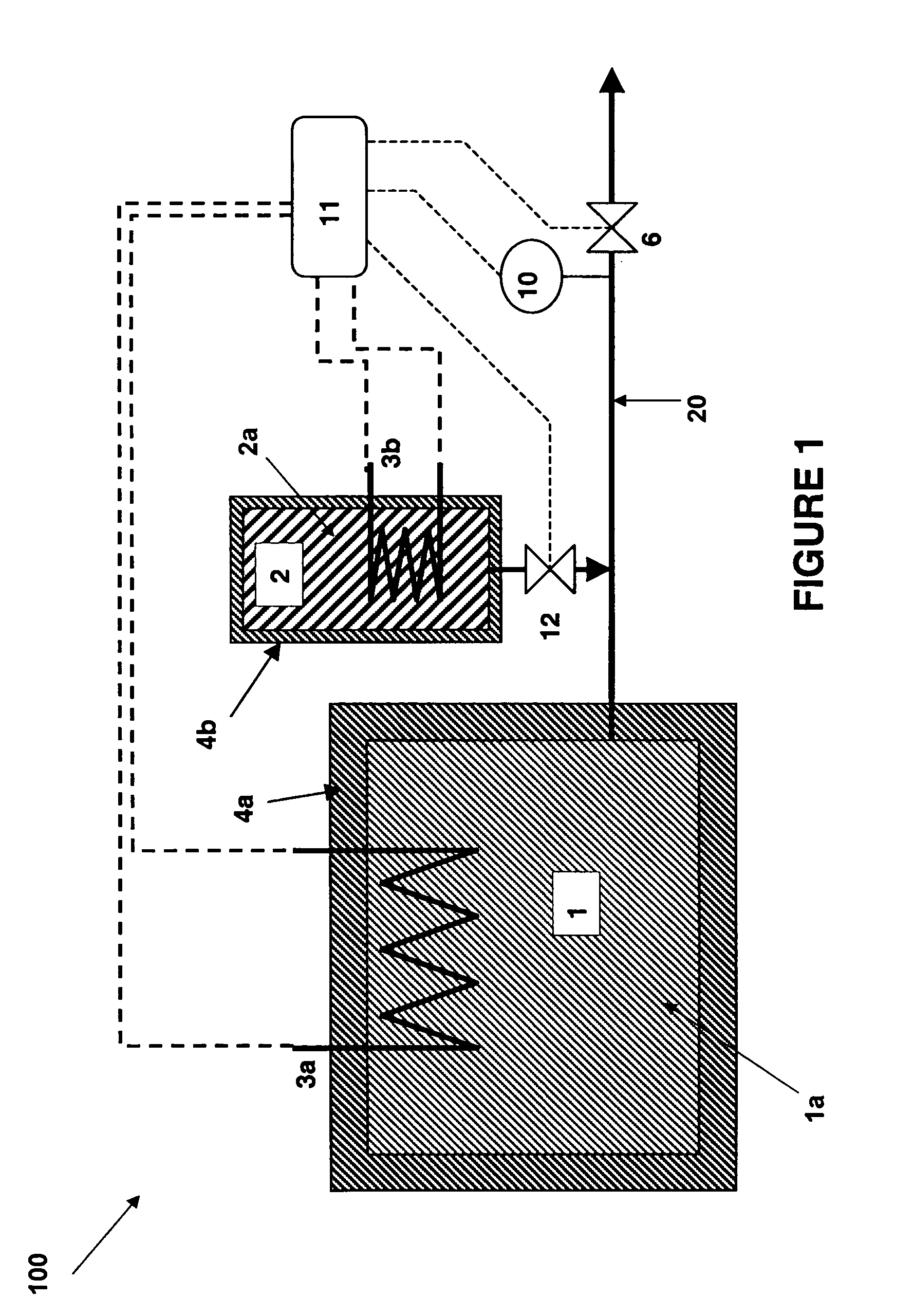
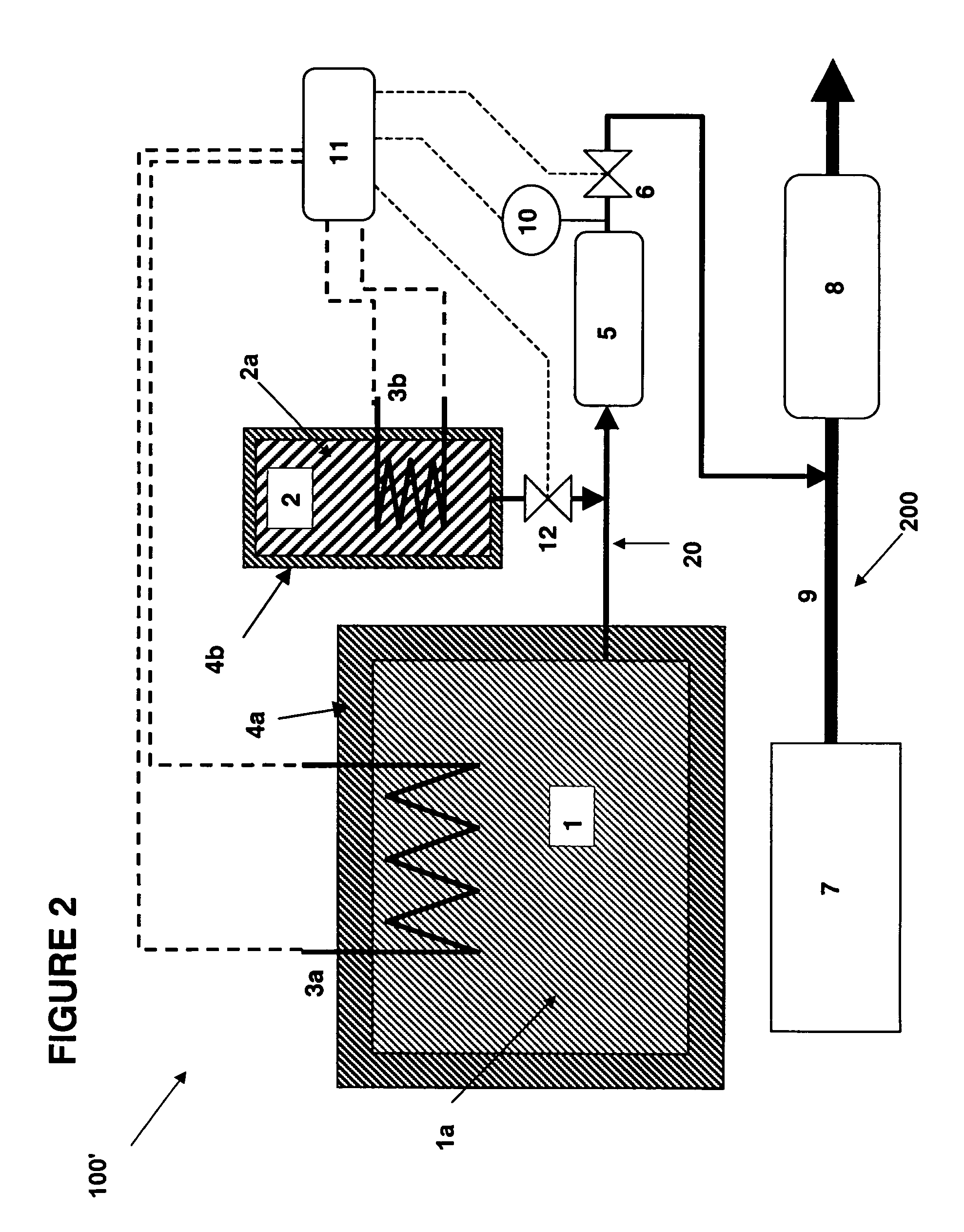
- A method and apparatus that utilize two ammonia storage materials with different vapor pressures, where a material with a lower vapor pressure is brought into fluid communication with a material of higher vapor pressure when the pressure exceeds a threshold, allowing the lower-pressure material to absorb excess ammonia and reduce system pressure, thereby enhancing safety and preventing leaks.

Additives for Highly Compacted Ammonia Storage Materials
PatentInactiveUS20110218095A1
Innovation
- Incorporating thermally conductive additives such as metals, carbon fibers, and graphite with high thermal conductivity and mechanical properties to enhance the compacted ammonia storage material's thermal conductivity and mechanical stability, facilitating smoother compaction and maintaining structural integrity during ammonia release.


Safety Regulations and Standards for Ammonia Storage
The regulatory landscape for ammonia storage is governed by a comprehensive framework of international, national, and regional standards designed to mitigate the inherent risks associated with this hazardous chemical. The International Maritime Organization (IMO) provides foundational guidelines through the International Gas Carrier Code, while the American Society of Mechanical Engineers (ASME) establishes critical pressure vessel standards that directly impact storage tank design and construction requirements.
In the United States, the Occupational Safety and Health Administration (OSHA) Process Safety Management (PSM) standard 29 CFR 1910.119 mandates rigorous safety protocols for facilities storing ammonia quantities exceeding 10,000 pounds. This regulation requires comprehensive hazard analyses, detailed operating procedures, and systematic employee training programs. The Environmental Protection Agency (EPA) Risk Management Program under 40 CFR Part 68 establishes additional requirements for accident prevention and emergency response planning.
European Union regulations, particularly the Seveso III Directive (2012/18/EU), impose stringent controls on major accident hazards involving dangerous substances. The directive establishes lower and upper-tier thresholds for ammonia storage facilities, with corresponding safety management system requirements. Member states have implemented complementary national regulations, such as Germany's Major Accidents Ordinance and the UK's Control of Major Accident Hazards Regulations.
The American National Standards Institute (ANSI) and International Organization for Standardization (ISO) provide technical specifications for storage system components. ANSI/IIAR standards specifically address ammonia refrigeration systems, while ISO 23251 covers the design and testing of pressure relief devices. These standards establish minimum requirements for materials selection, welding procedures, and inspection protocols.
Regional fire codes, including NFPA 58 for liquefied petroleum gases and local building codes, impose additional constraints on storage facility siting, construction materials, and emergency access provisions. Compliance with these multifaceted regulatory requirements necessitates integrated design approaches that balance operational efficiency with comprehensive risk mitigation strategies.
In the United States, the Occupational Safety and Health Administration (OSHA) Process Safety Management (PSM) standard 29 CFR 1910.119 mandates rigorous safety protocols for facilities storing ammonia quantities exceeding 10,000 pounds. This regulation requires comprehensive hazard analyses, detailed operating procedures, and systematic employee training programs. The Environmental Protection Agency (EPA) Risk Management Program under 40 CFR Part 68 establishes additional requirements for accident prevention and emergency response planning.
European Union regulations, particularly the Seveso III Directive (2012/18/EU), impose stringent controls on major accident hazards involving dangerous substances. The directive establishes lower and upper-tier thresholds for ammonia storage facilities, with corresponding safety management system requirements. Member states have implemented complementary national regulations, such as Germany's Major Accidents Ordinance and the UK's Control of Major Accident Hazards Regulations.
The American National Standards Institute (ANSI) and International Organization for Standardization (ISO) provide technical specifications for storage system components. ANSI/IIAR standards specifically address ammonia refrigeration systems, while ISO 23251 covers the design and testing of pressure relief devices. These standards establish minimum requirements for materials selection, welding procedures, and inspection protocols.
Regional fire codes, including NFPA 58 for liquefied petroleum gases and local building codes, impose additional constraints on storage facility siting, construction materials, and emergency access provisions. Compliance with these multifaceted regulatory requirements necessitates integrated design approaches that balance operational efficiency with comprehensive risk mitigation strategies.
Environmental Impact Assessment of Ammonia Storage Systems
The environmental implications of ammonia storage systems present multifaceted challenges that require comprehensive assessment across various impact categories. Ammonia's inherent toxicity and potential for atmospheric release necessitate rigorous evaluation of air quality impacts, particularly concerning nitrogen compound emissions that contribute to eutrophication and secondary particulate matter formation.
Atmospheric emissions from ammonia storage facilities primarily occur through fugitive releases during normal operations, maintenance activities, and potential accidental scenarios. These emissions can significantly affect local air quality, with ammonia concentrations potentially exceeding ambient air quality standards in surrounding areas. The formation of ammonium sulfate and ammonium nitrate aerosols from atmospheric ammonia contributes to fine particulate matter pollution, impacting regional air quality and human health.
Water resource contamination represents another critical environmental concern, as ammonia releases can severely impact aquatic ecosystems through direct toxicity and oxygen depletion mechanisms. Groundwater contamination risks are particularly pronounced in areas with inadequate containment systems, where ammonia can persist and migrate through soil matrices, affecting drinking water sources and subsurface ecosystems.
Soil environmental impacts encompass both direct chemical effects and broader ecosystem disruptions. Ammonia exposure can alter soil pH levels, affecting microbial communities and nutrient cycling processes. High concentrations can inhibit plant growth and disrupt nitrogen fixation processes, leading to long-term soil fertility changes and vegetation community shifts in affected areas.
Climate change considerations involve both direct and indirect greenhouse gas implications. While ammonia itself is not a direct greenhouse gas, its atmospheric reactions contribute to nitrous oxide formation, a potent greenhouse gas. Additionally, the energy-intensive nature of ammonia production and storage infrastructure contributes to overall carbon footprint considerations.
Biodiversity impacts extend beyond immediate toxicity effects to encompass habitat modification and ecosystem service disruption. Ammonia deposition can alter plant community composition, favoring nitrogen-tolerant species while reducing overall biodiversity. Aquatic ecosystems face particular vulnerability through eutrophication processes that can trigger algal blooms and subsequent oxygen depletion events.
Risk assessment methodologies for ammonia storage systems must incorporate probabilistic modeling approaches that account for varying release scenarios, meteorological conditions, and receptor sensitivities. Environmental monitoring protocols should encompass continuous air quality monitoring, periodic soil and water sampling, and ecological health assessments to ensure comprehensive impact evaluation and mitigation strategy effectiveness.
Atmospheric emissions from ammonia storage facilities primarily occur through fugitive releases during normal operations, maintenance activities, and potential accidental scenarios. These emissions can significantly affect local air quality, with ammonia concentrations potentially exceeding ambient air quality standards in surrounding areas. The formation of ammonium sulfate and ammonium nitrate aerosols from atmospheric ammonia contributes to fine particulate matter pollution, impacting regional air quality and human health.
Water resource contamination represents another critical environmental concern, as ammonia releases can severely impact aquatic ecosystems through direct toxicity and oxygen depletion mechanisms. Groundwater contamination risks are particularly pronounced in areas with inadequate containment systems, where ammonia can persist and migrate through soil matrices, affecting drinking water sources and subsurface ecosystems.
Soil environmental impacts encompass both direct chemical effects and broader ecosystem disruptions. Ammonia exposure can alter soil pH levels, affecting microbial communities and nutrient cycling processes. High concentrations can inhibit plant growth and disrupt nitrogen fixation processes, leading to long-term soil fertility changes and vegetation community shifts in affected areas.
Climate change considerations involve both direct and indirect greenhouse gas implications. While ammonia itself is not a direct greenhouse gas, its atmospheric reactions contribute to nitrous oxide formation, a potent greenhouse gas. Additionally, the energy-intensive nature of ammonia production and storage infrastructure contributes to overall carbon footprint considerations.
Biodiversity impacts extend beyond immediate toxicity effects to encompass habitat modification and ecosystem service disruption. Ammonia deposition can alter plant community composition, favoring nitrogen-tolerant species while reducing overall biodiversity. Aquatic ecosystems face particular vulnerability through eutrophication processes that can trigger algal blooms and subsequent oxygen depletion events.
Risk assessment methodologies for ammonia storage systems must incorporate probabilistic modeling approaches that account for varying release scenarios, meteorological conditions, and receptor sensitivities. Environmental monitoring protocols should encompass continuous air quality monitoring, periodic soil and water sampling, and ecological health assessments to ensure comprehensive impact evaluation and mitigation strategy effectiveness.
Unlock deeper insights with Patsnap Eureka Quick Research — get a full tech report to explore trends and direct your research. Try now!
Generate Your Research Report Instantly with AI Agent
Supercharge your innovation with Patsnap Eureka AI Agent Platform!