

Direct Air Capture Sorbents Vs Solid Amine Materials: Cost Efficiency Analysis
MAY 20, 20269 MIN READ
Generate Your Research Report Instantly with AI Agent
PatSnap Eureka helps you evaluate technical feasibility & market potential.
DAC Sorbent Technology Background and Objectives
Direct Air Capture (DAC) technology has emerged as a critical component in global carbon dioxide removal strategies, representing one of the most promising approaches to address atmospheric CO2 concentrations. The technology operates by extracting CO2 directly from ambient air through chemical processes, offering a scalable solution for negative emissions that can complement traditional mitigation efforts.
The evolution of DAC technology traces back to early atmospheric CO2 concentration research in the 1950s, with significant acceleration occurring in the 2000s as climate change concerns intensified. Initial developments focused on adapting existing industrial gas separation technologies, particularly those used in submarine and spacecraft air purification systems. The transition from laboratory-scale demonstrations to commercial viability has been marked by substantial improvements in energy efficiency and material performance.
Current DAC systems primarily utilize two distinct technological approaches: liquid solvent systems and solid sorbent materials. Liquid systems typically employ aqueous hydroxide solutions, while solid sorbent technologies leverage various materials including metal-organic frameworks, supported amines, and structured adsorbents. The choice between these approaches significantly impacts operational costs, energy requirements, and overall system efficiency.
The primary objective of contemporary DAC sorbent research centers on achieving cost-effective CO2 capture at scale, with industry targets aiming for capture costs below $100 per ton of CO2 by 2030. This ambitious goal necessitates breakthrough improvements in sorbent materials, particularly in areas of CO2 selectivity, thermal stability, and regeneration efficiency. Enhanced durability and reduced degradation rates represent critical performance metrics that directly influence long-term operational economics.
Solid amine materials have gained particular attention due to their favorable thermodynamic properties and potential for lower energy regeneration requirements compared to traditional liquid systems. These materials offer advantages in terms of reduced parasitic energy consumption and simplified process integration, making them attractive candidates for large-scale deployment. The development trajectory focuses on optimizing amine loading, support material selection, and thermal management to maximize cost efficiency while maintaining operational reliability across diverse environmental conditions.
The evolution of DAC technology traces back to early atmospheric CO2 concentration research in the 1950s, with significant acceleration occurring in the 2000s as climate change concerns intensified. Initial developments focused on adapting existing industrial gas separation technologies, particularly those used in submarine and spacecraft air purification systems. The transition from laboratory-scale demonstrations to commercial viability has been marked by substantial improvements in energy efficiency and material performance.
Current DAC systems primarily utilize two distinct technological approaches: liquid solvent systems and solid sorbent materials. Liquid systems typically employ aqueous hydroxide solutions, while solid sorbent technologies leverage various materials including metal-organic frameworks, supported amines, and structured adsorbents. The choice between these approaches significantly impacts operational costs, energy requirements, and overall system efficiency.
The primary objective of contemporary DAC sorbent research centers on achieving cost-effective CO2 capture at scale, with industry targets aiming for capture costs below $100 per ton of CO2 by 2030. This ambitious goal necessitates breakthrough improvements in sorbent materials, particularly in areas of CO2 selectivity, thermal stability, and regeneration efficiency. Enhanced durability and reduced degradation rates represent critical performance metrics that directly influence long-term operational economics.
Solid amine materials have gained particular attention due to their favorable thermodynamic properties and potential for lower energy regeneration requirements compared to traditional liquid systems. These materials offer advantages in terms of reduced parasitic energy consumption and simplified process integration, making them attractive candidates for large-scale deployment. The development trajectory focuses on optimizing amine loading, support material selection, and thermal management to maximize cost efficiency while maintaining operational reliability across diverse environmental conditions.
Market Demand for Carbon Capture Solutions
The global carbon capture market is experiencing unprecedented growth driven by escalating climate commitments and regulatory pressures. Governments worldwide have implemented increasingly stringent carbon reduction targets, with many nations committing to net-zero emissions by mid-century. This regulatory landscape creates substantial demand for direct air capture technologies, positioning both traditional sorbents and solid amine materials as critical components in the emerging carbon management ecosystem.
Industrial sectors represent the largest demand segment for carbon capture solutions, particularly in hard-to-abate industries such as cement, steel, and petrochemicals. These sectors face mounting pressure to reduce emissions while maintaining operational efficiency, creating a substantial market opportunity for cost-effective capture technologies. The power generation sector also demonstrates significant demand, especially for retrofitting existing fossil fuel plants and supporting renewable energy integration through carbon-negative technologies.
The aviation and shipping industries are emerging as high-value market segments for direct air capture solutions. These sectors require carbon-neutral or carbon-negative fuels to achieve decarbonization goals, driving demand for captured carbon dioxide as a feedstock for synthetic fuel production. This application creates premium pricing opportunities for efficient capture technologies that can deliver high-purity carbon dioxide streams.
Corporate sustainability initiatives are generating substantial market demand beyond regulatory requirements. Major corporations across various industries are investing in carbon removal technologies to achieve voluntary net-zero commitments and enhance their environmental credentials. This corporate demand often prioritizes proven, scalable technologies with clear cost trajectories, influencing the competitive dynamics between different sorbent materials.
Geographic demand patterns reveal significant regional variations in market development. North America and Europe lead in early-stage deployment driven by supportive policy frameworks and carbon pricing mechanisms. Asia-Pacific markets show rapidly growing interest, particularly in countries with aggressive industrial decarbonization targets and substantial manufacturing bases requiring emission reduction solutions.
The market demonstrates strong preference for technologies offering clear pathways to cost reduction through scale and technological advancement. End users increasingly evaluate capture solutions based on total cost of ownership rather than initial capital expenditure, creating opportunities for materials that demonstrate superior long-term performance characteristics and operational efficiency.
Industrial sectors represent the largest demand segment for carbon capture solutions, particularly in hard-to-abate industries such as cement, steel, and petrochemicals. These sectors face mounting pressure to reduce emissions while maintaining operational efficiency, creating a substantial market opportunity for cost-effective capture technologies. The power generation sector also demonstrates significant demand, especially for retrofitting existing fossil fuel plants and supporting renewable energy integration through carbon-negative technologies.
The aviation and shipping industries are emerging as high-value market segments for direct air capture solutions. These sectors require carbon-neutral or carbon-negative fuels to achieve decarbonization goals, driving demand for captured carbon dioxide as a feedstock for synthetic fuel production. This application creates premium pricing opportunities for efficient capture technologies that can deliver high-purity carbon dioxide streams.
Corporate sustainability initiatives are generating substantial market demand beyond regulatory requirements. Major corporations across various industries are investing in carbon removal technologies to achieve voluntary net-zero commitments and enhance their environmental credentials. This corporate demand often prioritizes proven, scalable technologies with clear cost trajectories, influencing the competitive dynamics between different sorbent materials.
Geographic demand patterns reveal significant regional variations in market development. North America and Europe lead in early-stage deployment driven by supportive policy frameworks and carbon pricing mechanisms. Asia-Pacific markets show rapidly growing interest, particularly in countries with aggressive industrial decarbonization targets and substantial manufacturing bases requiring emission reduction solutions.
The market demonstrates strong preference for technologies offering clear pathways to cost reduction through scale and technological advancement. End users increasingly evaluate capture solutions based on total cost of ownership rather than initial capital expenditure, creating opportunities for materials that demonstrate superior long-term performance characteristics and operational efficiency.
Current State of DAC Sorbents vs Solid Amine Materials
Direct air capture technology currently employs two primary sorbent categories: traditional solid amine materials and emerging advanced sorbent formulations. Solid amine materials, particularly those based on polyethylenimine (PEI) and tetraethylenepentamine (TEPA), represent the most commercially mature approach. These materials are typically supported on porous substrates such as silica, alumina, or metal-organic frameworks, achieving CO2 capture capacities ranging from 2-6 mmol/g under ambient conditions.
Advanced DAC sorbents encompass a broader spectrum of materials including metal-organic frameworks (MOFs), structured adsorbents, and novel polymer-based systems. Companies like Climeworks utilize proprietary structured adsorbents that demonstrate enhanced selectivity and reduced energy requirements for regeneration. These materials often incorporate engineered pore structures and optimized surface chemistries to improve CO2 binding kinetics and capacity.
Performance characteristics vary significantly between these material classes. Solid amine materials typically exhibit strong CO2 binding affinity but require substantial thermal energy for regeneration, often necessitating temperatures between 80-120°C. The cyclic stability of these materials remains a critical concern, with capacity degradation observed after 1000-5000 cycles depending on operating conditions and material formulation.
Contemporary DAC sorbents demonstrate improved thermal efficiency through lower regeneration temperatures and enhanced selectivity in humid environments. Some advanced formulations achieve effective CO2 capture at temperatures as low as 60°C during regeneration cycles. However, these materials often face challenges related to manufacturing scalability and long-term durability under real-world operating conditions.
Manufacturing readiness differs substantially between the two categories. Solid amine materials benefit from established synthesis routes and commercial availability of precursor materials, enabling relatively straightforward scale-up processes. The production infrastructure for these materials is well-developed, with multiple suppliers capable of providing industrial quantities.
Advanced DAC sorbents face greater manufacturing complexity, particularly for MOF-based systems and structured adsorbents requiring precise synthesis conditions. The supply chain for specialized precursors remains limited, potentially constraining large-scale deployment. Additionally, quality control and standardization protocols for these emerging materials are still under development.
Current deployment patterns reflect these technological maturity differences. Solid amine systems dominate existing commercial DAC installations, with several facilities operating at pilot and demonstration scales. Advanced sorbent technologies remain primarily in research and early demonstration phases, though some companies are transitioning toward commercial deployment with proprietary formulations that bridge traditional and advanced approaches.
Advanced DAC sorbents encompass a broader spectrum of materials including metal-organic frameworks (MOFs), structured adsorbents, and novel polymer-based systems. Companies like Climeworks utilize proprietary structured adsorbents that demonstrate enhanced selectivity and reduced energy requirements for regeneration. These materials often incorporate engineered pore structures and optimized surface chemistries to improve CO2 binding kinetics and capacity.
Performance characteristics vary significantly between these material classes. Solid amine materials typically exhibit strong CO2 binding affinity but require substantial thermal energy for regeneration, often necessitating temperatures between 80-120°C. The cyclic stability of these materials remains a critical concern, with capacity degradation observed after 1000-5000 cycles depending on operating conditions and material formulation.
Contemporary DAC sorbents demonstrate improved thermal efficiency through lower regeneration temperatures and enhanced selectivity in humid environments. Some advanced formulations achieve effective CO2 capture at temperatures as low as 60°C during regeneration cycles. However, these materials often face challenges related to manufacturing scalability and long-term durability under real-world operating conditions.
Manufacturing readiness differs substantially between the two categories. Solid amine materials benefit from established synthesis routes and commercial availability of precursor materials, enabling relatively straightforward scale-up processes. The production infrastructure for these materials is well-developed, with multiple suppliers capable of providing industrial quantities.
Advanced DAC sorbents face greater manufacturing complexity, particularly for MOF-based systems and structured adsorbents requiring precise synthesis conditions. The supply chain for specialized precursors remains limited, potentially constraining large-scale deployment. Additionally, quality control and standardization protocols for these emerging materials are still under development.
Current deployment patterns reflect these technological maturity differences. Solid amine systems dominate existing commercial DAC installations, with several facilities operating at pilot and demonstration scales. Advanced sorbent technologies remain primarily in research and early demonstration phases, though some companies are transitioning toward commercial deployment with proprietary formulations that bridge traditional and advanced approaches.
Existing DAC Sorbent and Solid Amine Solutions
01 Novel solid amine sorbent materials for enhanced CO2 capture
Development of advanced solid amine materials with improved CO2 adsorption capacity and selectivity. These materials feature optimized porous structures and amine functionalization to maximize carbon dioxide capture efficiency while maintaining structural stability during repeated adsorption-desorption cycles.- Novel solid amine sorbent materials for enhanced CO2 capture: Development of advanced solid amine-based sorbent materials with improved CO2 adsorption capacity and selectivity. These materials utilize various amine functionalization techniques and support structures to optimize performance while maintaining cost-effectiveness. The focus is on creating materials with high surface area, thermal stability, and regeneration efficiency for direct air capture applications.
- Cost-effective manufacturing processes for DAC sorbents: Manufacturing methodologies designed to reduce production costs of direct air capture sorbents through scalable synthesis routes and optimized processing conditions. These approaches focus on minimizing raw material costs, energy consumption during production, and simplifying fabrication steps while maintaining sorbent performance characteristics.
- Regeneration and cycling efficiency optimization: Technologies focused on improving the regeneration cycles of solid amine materials to enhance their operational lifespan and reduce replacement costs. These innovations address thermal swing adsorption processes, energy recovery systems, and methods to prevent sorbent degradation during repeated CO2 capture and release cycles.
- Structured sorbent configurations for industrial scale applications: Design and engineering of structured sorbent systems that optimize mass transfer, minimize pressure drop, and reduce operational costs in large-scale direct air capture facilities. These configurations include monolithic structures, packed bed designs, and modular systems that facilitate efficient gas-solid contact while reducing energy requirements.
- Economic assessment and process integration strategies: Comprehensive approaches to evaluate and improve the economic viability of direct air capture systems through process optimization, heat integration, and system-level efficiency improvements. These strategies encompass lifecycle cost analysis, energy management, and integration with renewable energy sources to achieve competitive capture costs.
02 Cost-effective synthesis methods for amine-based sorbents
Manufacturing processes and synthesis techniques designed to reduce production costs of amine-functionalized materials. These methods focus on scalable preparation routes, use of readily available precursors, and energy-efficient processing conditions to make direct air capture technology more economically viable.Expand Specific Solutions03 Regeneration and cycling efficiency optimization
Technologies for improving the regeneration process of solid amine sorbents to reduce energy consumption and extend material lifespan. These approaches include temperature swing adsorption optimization, pressure swing processes, and novel desorption methods that minimize degradation and maintain high capture performance over multiple cycles.Expand Specific Solutions04 Composite and hybrid sorbent architectures
Development of composite materials combining solid amines with support matrices or other functional components to enhance both performance and cost-effectiveness. These hybrid systems aim to optimize the balance between CO2 capture capacity, mechanical stability, and material costs through strategic material combinations.Expand Specific Solutions05 Process integration and system-level cost reduction
System design approaches and process integration strategies that reduce overall operational costs of direct air capture systems. These include heat integration, process intensification, modular designs, and optimization of operating parameters to achieve economic feasibility at commercial scale.Expand Specific Solutions
Key Players in DAC and Sorbent Material Industry
The direct air capture (DAC) sorbents market is experiencing rapid evolution as the industry transitions from early-stage research to commercial deployment. The market demonstrates significant growth potential, driven by increasing carbon removal commitments and regulatory support, with established players like Climeworks AG leading commercial operations through their Orca and Mammoth facilities. Technology maturity varies considerably across the competitive landscape, with Climeworks and Global Thermostat achieving operational scale, while Carboncapture Inc. focuses on modular array systems. Industrial giants including Siemens Energy, ExxonMobil Technology & Engineering, and Robert Bosch bring substantial R&D capabilities and manufacturing expertise to solid amine material development. Academic institutions such as Columbia University, EPFL, and various Chinese universities contribute fundamental research advancing sorbent efficiency and cost reduction. The cost efficiency analysis between traditional sorbents and solid amine materials remains a critical differentiator, with companies pursuing diverse technological approaches to achieve economic viability at scale.
Climeworks AG
Technical Solution: Climeworks employs solid amine-based sorbent technology in their direct air capture systems, utilizing structured adsorbent materials that can capture CO2 at ambient conditions. Their technology operates through temperature-vacuum swing adsorption cycles, where CO2 is captured at ambient temperature and released when heated to 80-100°C. The company has developed proprietary solid amine sorbents with high CO2 selectivity and capacity, achieving capture rates of approximately 4,000 tons CO2 per year per facility. Their modular DAC units are designed for scalability and can be powered by renewable energy sources. The sorbent materials demonstrate excellent cycling stability and can operate for thousands of cycles without significant degradation.
Strengths: Proven commercial deployment, high CO2 selectivity, excellent cycling stability, renewable energy integration capability. Weaknesses: High energy requirements for regeneration, relatively high capital costs, limited scale compared to industrial emissions.
ExxonMobil Technology & Engineering Co.
Technical Solution: ExxonMobil is developing advanced solid amine sorbent materials for direct air capture with focus on cost reduction through process intensification and material optimization. Their research emphasizes developing next-generation amine-functionalized materials with improved CO2 capacity, selectivity, and thermal stability. The company's approach includes investigating novel support materials and amine loading techniques to enhance sorbent performance while reducing material costs. Their technology targets achieving lower regeneration energy requirements through optimized heat integration and process design. ExxonMobil's extensive experience in gas separation and chemical processing provides advantages in scaling up DAC technology for industrial applications.
Strengths: Extensive chemical processing expertise, strong R&D capabilities, industrial scale experience, financial resources for development. Weaknesses: Technology in early development stage, limited commercial deployment, potential public perception challenges.
Core Innovations in Cost-Effective Sorbent Materials
High capacity immobilized amine sorbents
PatentInactiveUS7288136B1
Innovation
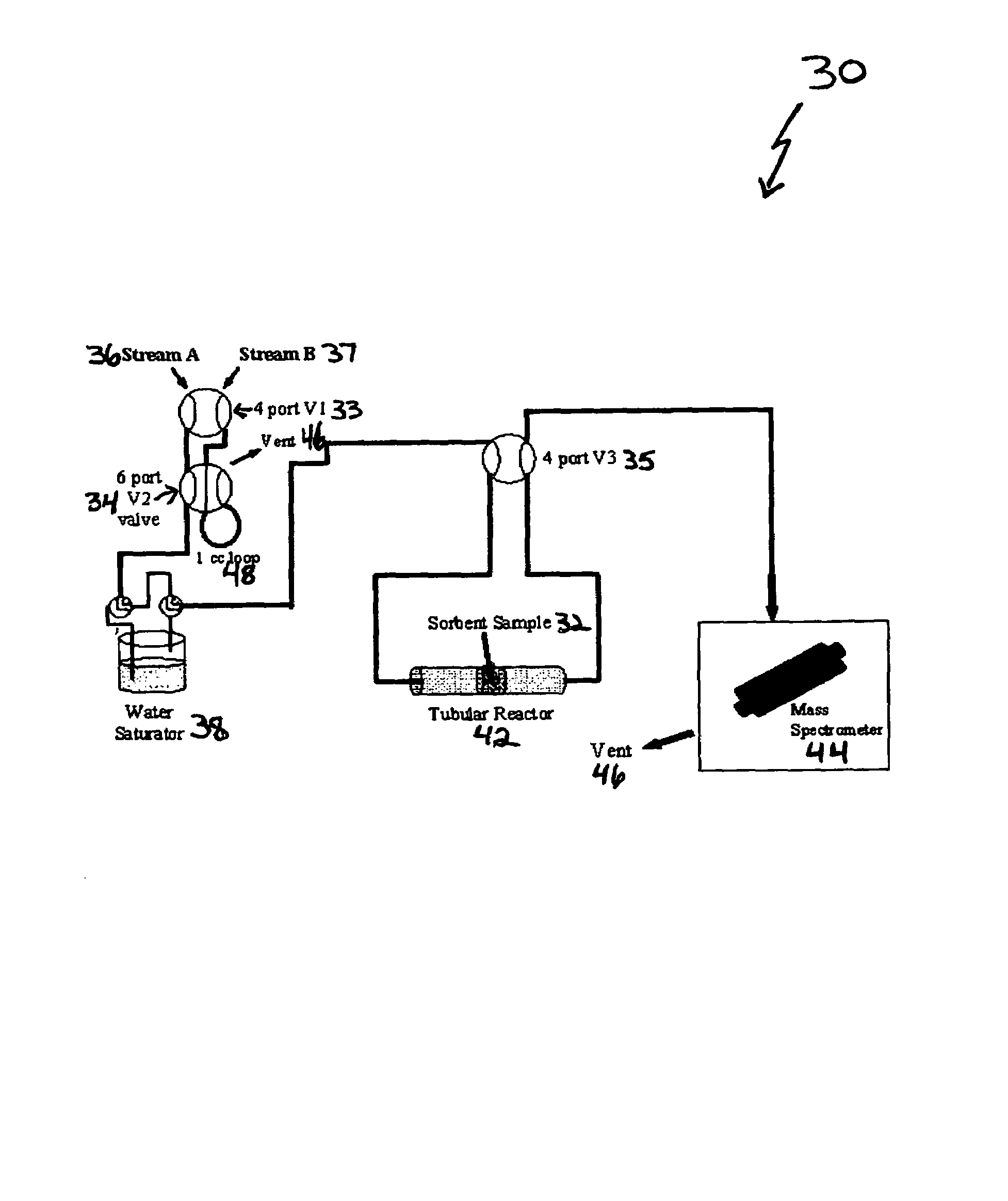
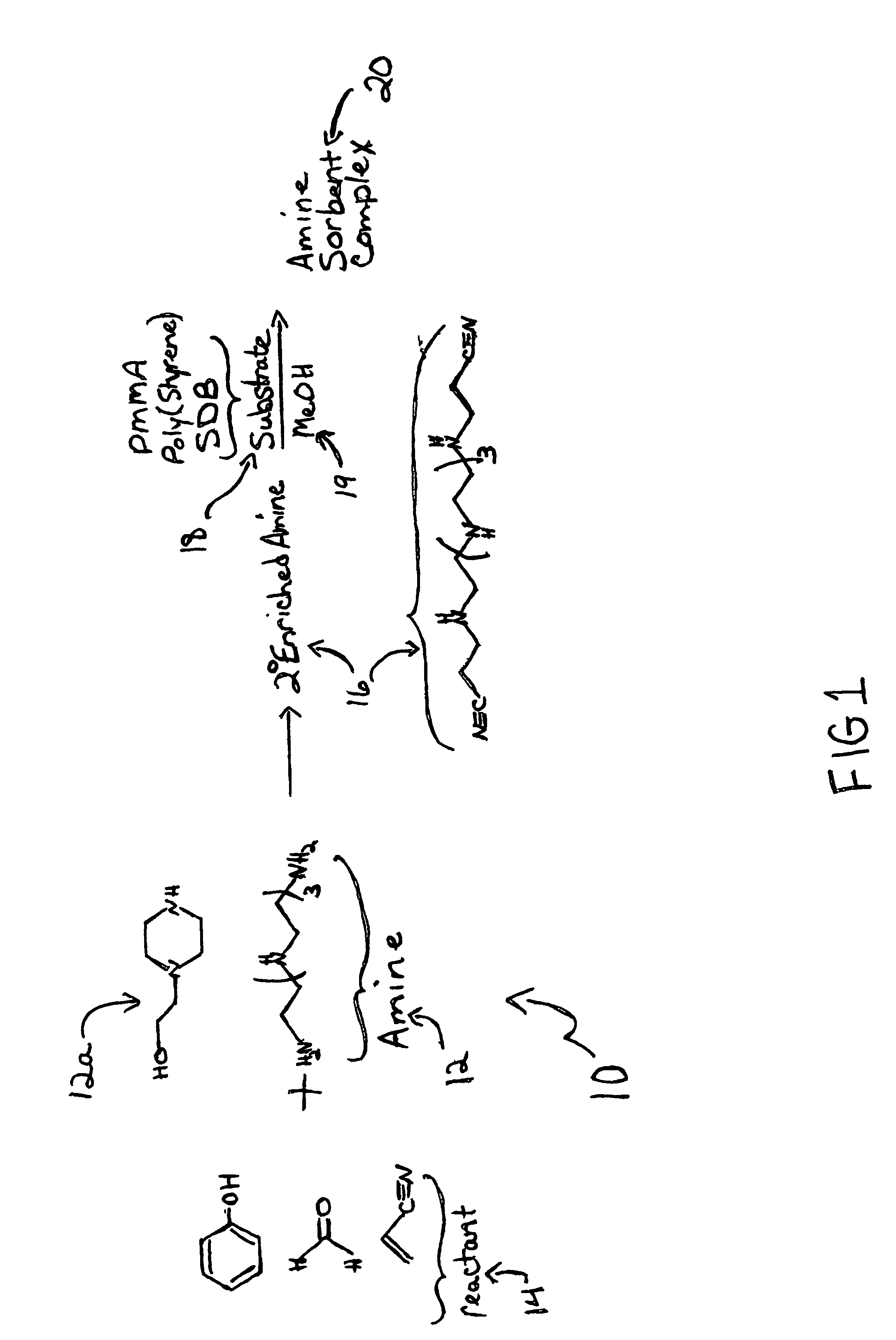
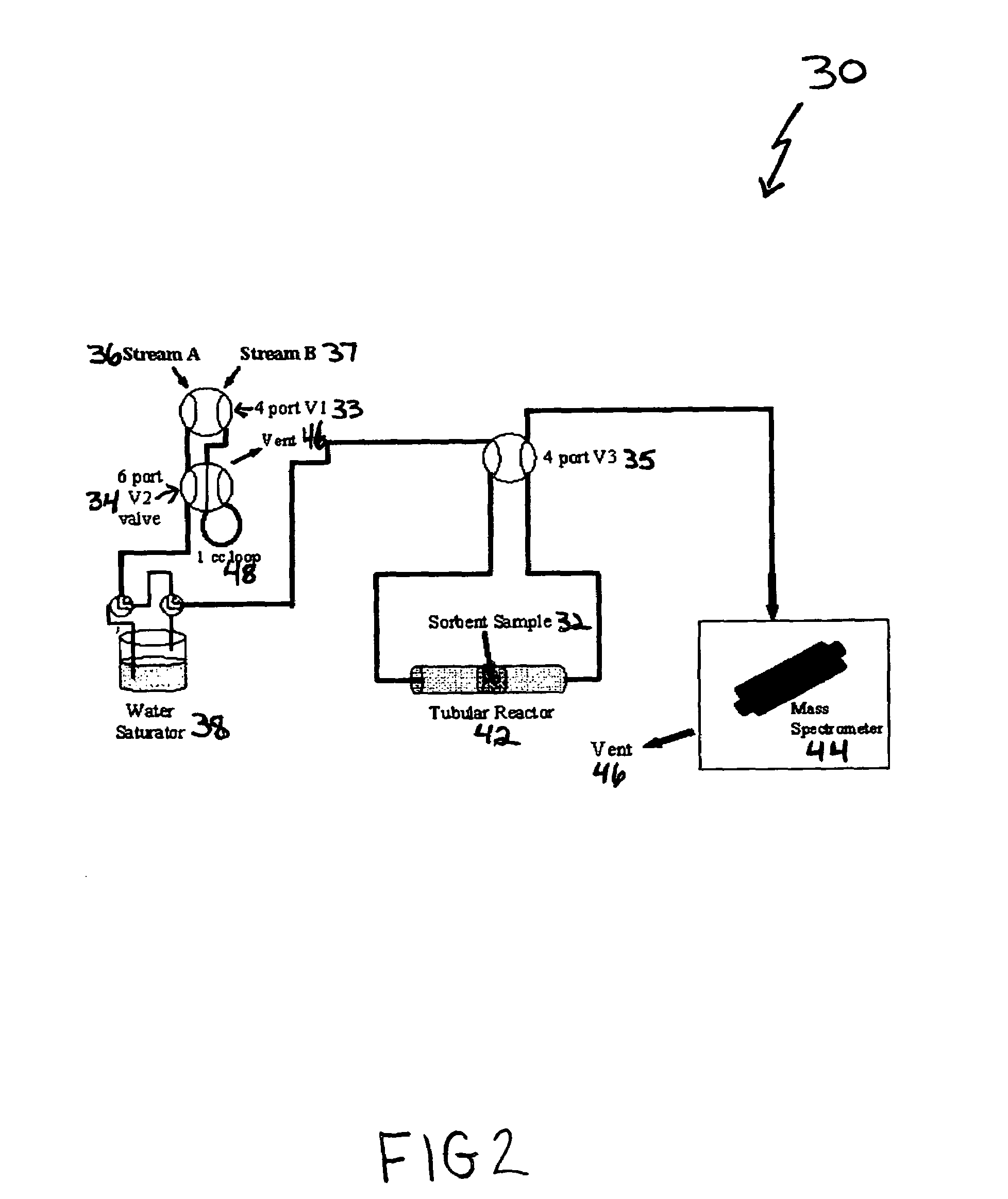
- A method involving Michael reactions to increase secondary amine groups in sorbents, which are then immobilized in a porous substrate, allowing for efficient CO2 capture and regeneration over a range of temperatures with reduced water usage.

Amine enriched solid sorbents for carbon dioxide capture
PatentInactiveUS6547854B1
Innovation
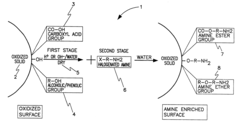
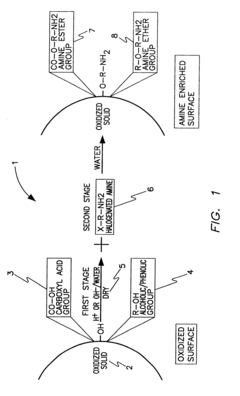
- A two-step chemical treatment process incorporating amine functionalities onto oxidized solid substrates using metal hydroxides and substituted amine salts, eliminating the need for organic solvents and polymeric materials, and enabling CO2 capture through both physical and chemical adsorption over a range of temperatures.

Climate Policy Impact on DAC Technology Development
Climate policy frameworks have emerged as the primary catalyst driving direct air capture technology advancement, fundamentally reshaping the competitive landscape between traditional sorbents and solid amine materials. The Paris Agreement's net-zero commitments have created unprecedented regulatory pressure, with over 70 countries establishing carbon neutrality targets that directly influence DAC technology selection criteria and cost optimization strategies.
Carbon pricing mechanisms represent the most significant policy driver affecting DAC sorbent economics. The European Union's Emissions Trading System expansion and emerging carbon border adjustments have established price floors that make solid amine materials increasingly competitive despite higher initial capital costs. Current carbon prices ranging from $50-100 per ton CO2 have shifted the economic calculus, favoring materials with superior durability and energy efficiency over lower-cost alternatives with shorter operational lifespans.
Government funding initiatives have strategically targeted specific sorbent technologies, creating market distortions that influence material selection. The U.S. Department of Energy's $3.5 billion DAC hub program explicitly prioritizes solid amine-based systems due to their scalability potential, while similar programs in Canada and the UK have established performance benchmarks that favor advanced materials over conventional sorbents. These funding mechanisms have accelerated research into hybrid approaches that combine cost-effective traditional materials with high-performance solid amines.
Regulatory standards for carbon removal verification have introduced stringent requirements that impact material choice economics. The emerging ISO 14034 standards for environmental management systems and voluntary carbon market protocols demand precise measurement and long-term stability, characteristics where solid amine materials demonstrate superior performance despite higher costs. These requirements have effectively created a two-tier market where premium applications justify advanced materials while cost-sensitive deployments continue utilizing traditional sorbents.
Tax incentive structures, particularly the U.S. 45Q tax credit expansion to $180 per ton for DAC, have fundamentally altered the investment landscape. These policies have reduced the effective cost differential between sorbent technologies, enabling broader adoption of solid amine materials in commercial applications. Similar incentive programs in Norway, Iceland, and Switzerland have created regional preferences that influence global technology development priorities and manufacturing scale economics.
Carbon pricing mechanisms represent the most significant policy driver affecting DAC sorbent economics. The European Union's Emissions Trading System expansion and emerging carbon border adjustments have established price floors that make solid amine materials increasingly competitive despite higher initial capital costs. Current carbon prices ranging from $50-100 per ton CO2 have shifted the economic calculus, favoring materials with superior durability and energy efficiency over lower-cost alternatives with shorter operational lifespans.
Government funding initiatives have strategically targeted specific sorbent technologies, creating market distortions that influence material selection. The U.S. Department of Energy's $3.5 billion DAC hub program explicitly prioritizes solid amine-based systems due to their scalability potential, while similar programs in Canada and the UK have established performance benchmarks that favor advanced materials over conventional sorbents. These funding mechanisms have accelerated research into hybrid approaches that combine cost-effective traditional materials with high-performance solid amines.
Regulatory standards for carbon removal verification have introduced stringent requirements that impact material choice economics. The emerging ISO 14034 standards for environmental management systems and voluntary carbon market protocols demand precise measurement and long-term stability, characteristics where solid amine materials demonstrate superior performance despite higher costs. These requirements have effectively created a two-tier market where premium applications justify advanced materials while cost-sensitive deployments continue utilizing traditional sorbents.
Tax incentive structures, particularly the U.S. 45Q tax credit expansion to $180 per ton for DAC, have fundamentally altered the investment landscape. These policies have reduced the effective cost differential between sorbent technologies, enabling broader adoption of solid amine materials in commercial applications. Similar incentive programs in Norway, Iceland, and Switzerland have created regional preferences that influence global technology development priorities and manufacturing scale economics.
Life Cycle Assessment of DAC Sorbent Materials
Life cycle assessment of DAC sorbent materials represents a critical evaluation framework for understanding the comprehensive environmental impacts of direct air capture technologies throughout their entire operational lifespan. This assessment methodology encompasses the evaluation of resource extraction, manufacturing processes, operational energy requirements, maintenance cycles, and end-of-life disposal or recycling scenarios for both traditional sorbent materials and solid amine-based alternatives.
The manufacturing phase of DAC sorbents reveals significant environmental considerations, particularly in the production of solid amine materials which require specialized chemical synthesis processes. These processes typically involve energy-intensive reactions and the use of organic solvents, contributing to higher carbon footprints during the initial production stage. Traditional sorbent materials, while often requiring less complex manufacturing processes, may demand higher volumes of raw materials, leading to increased mining and processing impacts.
Operational phase assessments demonstrate that solid amine materials generally exhibit superior performance characteristics, requiring lower regeneration temperatures and reduced energy consumption per ton of CO2 captured. This operational efficiency translates to decreased lifetime environmental impacts, particularly in regions where electricity generation relies heavily on fossil fuels. The reduced thermal cycling requirements also contribute to extended material lifespans, further improving the overall environmental profile.
End-of-life considerations present distinct challenges for both material categories. Solid amine materials, due to their organic composition, may offer better biodegradability or recycling potential compared to certain inorganic sorbents. However, the presence of specialized chemical functionalities may require dedicated disposal or treatment processes to prevent environmental contamination.
Transportation and infrastructure requirements also factor significantly into the life cycle assessment. The higher efficiency of solid amine materials often translates to reduced material volumes needed for equivalent CO2 capture capacity, resulting in lower transportation emissions and reduced infrastructure footprint. This advantage becomes particularly pronounced in large-scale deployment scenarios where material logistics represent substantial environmental and economic considerations.
Water usage throughout the life cycle presents another critical assessment parameter, with different sorbent materials exhibiting varying requirements for cooling, cleaning, and processing operations. The cumulative water footprint analysis often reveals trade-offs between material performance and resource consumption that must be carefully evaluated within regional environmental contexts.
The manufacturing phase of DAC sorbents reveals significant environmental considerations, particularly in the production of solid amine materials which require specialized chemical synthesis processes. These processes typically involve energy-intensive reactions and the use of organic solvents, contributing to higher carbon footprints during the initial production stage. Traditional sorbent materials, while often requiring less complex manufacturing processes, may demand higher volumes of raw materials, leading to increased mining and processing impacts.
Operational phase assessments demonstrate that solid amine materials generally exhibit superior performance characteristics, requiring lower regeneration temperatures and reduced energy consumption per ton of CO2 captured. This operational efficiency translates to decreased lifetime environmental impacts, particularly in regions where electricity generation relies heavily on fossil fuels. The reduced thermal cycling requirements also contribute to extended material lifespans, further improving the overall environmental profile.
End-of-life considerations present distinct challenges for both material categories. Solid amine materials, due to their organic composition, may offer better biodegradability or recycling potential compared to certain inorganic sorbents. However, the presence of specialized chemical functionalities may require dedicated disposal or treatment processes to prevent environmental contamination.
Transportation and infrastructure requirements also factor significantly into the life cycle assessment. The higher efficiency of solid amine materials often translates to reduced material volumes needed for equivalent CO2 capture capacity, resulting in lower transportation emissions and reduced infrastructure footprint. This advantage becomes particularly pronounced in large-scale deployment scenarios where material logistics represent substantial environmental and economic considerations.
Water usage throughout the life cycle presents another critical assessment parameter, with different sorbent materials exhibiting varying requirements for cooling, cleaning, and processing operations. The cumulative water footprint analysis often reveals trade-offs between material performance and resource consumption that must be carefully evaluated within regional environmental contexts.
Unlock deeper insights with PatSnap Eureka Quick Research — get a full tech report to explore trends and direct your research. Try now!
Generate Your Research Report Instantly with AI Agent
Supercharge your innovation with PatSnap Eureka AI Agent Platform!