

Direct Injection Emissions: Understanding PM and NOx Control
MAR 12, 20269 MIN READ
Generate Your Research Report Instantly with AI Agent
PatSnap Eureka helps you evaluate technical feasibility & market potential.
Direct Injection Engine Emissions Background and Control Targets
Direct injection (DI) engines have emerged as a dominant technology in modern automotive powertrains, driven by the imperative to achieve superior fuel efficiency and reduced carbon dioxide emissions. This technology enables precise fuel delivery directly into the combustion chamber, allowing for optimized air-fuel mixing and enhanced thermal efficiency compared to traditional port fuel injection systems. The widespread adoption of gasoline direct injection (GDI) and diesel direct injection systems has fundamentally transformed the automotive landscape over the past two decades.
However, the implementation of direct injection technology has introduced significant challenges in emissions control, particularly regarding particulate matter (PM) and nitrogen oxides (NOx) formation. The high-pressure fuel injection process and stratified combustion characteristics inherent to DI engines create conditions that promote the formation of these pollutants, necessitating advanced control strategies and aftertreatment systems.
The evolution of emissions regulations has established increasingly stringent limits for both PM and NOx emissions from direct injection engines. The European Union's Euro 6 standards, implemented since 2014, mandate particulate number (PN) limits of 6.0 × 10^11 particles per kilometer for gasoline engines, alongside NOx limits of 60 mg/km for gasoline and 80 mg/km for diesel engines. Similarly, the United States Environmental Protection Agency has implemented Tier 3 standards, requiring significant reductions in fleet-average NOx emissions.
The primary technical objectives for direct injection emissions control encompass multiple dimensions. For particulate matter control, the focus centers on minimizing soot formation during combustion through optimized injection strategies, enhanced air-fuel mixing, and advanced combustion chamber designs. Simultaneously, effective particulate filtration systems must capture and regenerate accumulated particles without compromising engine performance or fuel economy.
NOx control strategies target both formation prevention and post-combustion treatment. In-cylinder approaches include exhaust gas recirculation (EGR) optimization, advanced injection timing control, and lean-burn combustion techniques. Post-combustion solutions involve selective catalytic reduction (SCR) systems, lean NOx traps (LNT), and advanced three-way catalysts for stoichiometric operation.
The integration of these control technologies must achieve emissions compliance while maintaining the fundamental advantages of direct injection systems, including improved fuel economy, enhanced power density, and reduced CO2 emissions, thereby supporting global climate change mitigation efforts.
However, the implementation of direct injection technology has introduced significant challenges in emissions control, particularly regarding particulate matter (PM) and nitrogen oxides (NOx) formation. The high-pressure fuel injection process and stratified combustion characteristics inherent to DI engines create conditions that promote the formation of these pollutants, necessitating advanced control strategies and aftertreatment systems.
The evolution of emissions regulations has established increasingly stringent limits for both PM and NOx emissions from direct injection engines. The European Union's Euro 6 standards, implemented since 2014, mandate particulate number (PN) limits of 6.0 × 10^11 particles per kilometer for gasoline engines, alongside NOx limits of 60 mg/km for gasoline and 80 mg/km for diesel engines. Similarly, the United States Environmental Protection Agency has implemented Tier 3 standards, requiring significant reductions in fleet-average NOx emissions.
The primary technical objectives for direct injection emissions control encompass multiple dimensions. For particulate matter control, the focus centers on minimizing soot formation during combustion through optimized injection strategies, enhanced air-fuel mixing, and advanced combustion chamber designs. Simultaneously, effective particulate filtration systems must capture and regenerate accumulated particles without compromising engine performance or fuel economy.
NOx control strategies target both formation prevention and post-combustion treatment. In-cylinder approaches include exhaust gas recirculation (EGR) optimization, advanced injection timing control, and lean-burn combustion techniques. Post-combustion solutions involve selective catalytic reduction (SCR) systems, lean NOx traps (LNT), and advanced three-way catalysts for stoichiometric operation.
The integration of these control technologies must achieve emissions compliance while maintaining the fundamental advantages of direct injection systems, including improved fuel economy, enhanced power density, and reduced CO2 emissions, thereby supporting global climate change mitigation efforts.
Market Demand for Advanced DI Emission Control Systems
The global automotive industry faces unprecedented pressure to reduce emissions from direct injection (DI) engines, driven by increasingly stringent regulatory frameworks and growing environmental consciousness among consumers. Regulatory bodies worldwide have implemented progressively tighter emission standards, with Euro 7 regulations in Europe and similar initiatives in North America and Asia mandating significant reductions in both particulate matter and nitrogen oxides emissions. These regulatory pressures create a substantial and expanding market for advanced emission control technologies specifically designed for DI engines.
The passenger vehicle segment represents the largest market opportunity for advanced DI emission control systems, as automakers seek to maintain the fuel efficiency benefits of direct injection while meeting strict emission requirements. Light-duty commercial vehicles constitute another significant market segment, particularly as fleet operators increasingly prioritize environmental compliance and operational cost reduction. The heavy-duty vehicle market, while smaller in unit volume, presents substantial value opportunities due to the higher complexity and cost of emission control systems required for larger engines.
Market demand is particularly strong in developed regions where emission regulations are most stringent and enforcement mechanisms are well-established. European markets demonstrate robust demand for integrated emission control solutions that address both PM and NOx simultaneously, reflecting the region's comprehensive approach to air quality management. North American markets show growing interest in cost-effective solutions that can be retrofitted to existing vehicle platforms, driven by the need to extend the lifecycle of current engine designs while meeting evolving standards.
The aftermarket segment presents additional growth opportunities, as existing vehicle fleets require upgrading to meet new emission standards or to address performance degradation in aging emission control systems. This segment is particularly relevant in regions with mandatory periodic emission testing and in commercial applications where regulatory compliance is critical for operational licensing.
Emerging markets represent a significant future opportunity as these regions begin implementing more stringent emission standards and as local automotive industries mature. The demand in these markets is characterized by a preference for cost-effective solutions that can be manufactured locally or adapted to regional fuel quality variations.
The market is also driven by corporate sustainability initiatives, as fleet operators and logistics companies seek to reduce their environmental footprint. This trend creates demand for advanced emission control systems that can demonstrate measurable improvements in air quality impact, supporting corporate environmental reporting and sustainability goals.
The passenger vehicle segment represents the largest market opportunity for advanced DI emission control systems, as automakers seek to maintain the fuel efficiency benefits of direct injection while meeting strict emission requirements. Light-duty commercial vehicles constitute another significant market segment, particularly as fleet operators increasingly prioritize environmental compliance and operational cost reduction. The heavy-duty vehicle market, while smaller in unit volume, presents substantial value opportunities due to the higher complexity and cost of emission control systems required for larger engines.
Market demand is particularly strong in developed regions where emission regulations are most stringent and enforcement mechanisms are well-established. European markets demonstrate robust demand for integrated emission control solutions that address both PM and NOx simultaneously, reflecting the region's comprehensive approach to air quality management. North American markets show growing interest in cost-effective solutions that can be retrofitted to existing vehicle platforms, driven by the need to extend the lifecycle of current engine designs while meeting evolving standards.
The aftermarket segment presents additional growth opportunities, as existing vehicle fleets require upgrading to meet new emission standards or to address performance degradation in aging emission control systems. This segment is particularly relevant in regions with mandatory periodic emission testing and in commercial applications where regulatory compliance is critical for operational licensing.
Emerging markets represent a significant future opportunity as these regions begin implementing more stringent emission standards and as local automotive industries mature. The demand in these markets is characterized by a preference for cost-effective solutions that can be manufactured locally or adapted to regional fuel quality variations.
The market is also driven by corporate sustainability initiatives, as fleet operators and logistics companies seek to reduce their environmental footprint. This trend creates demand for advanced emission control systems that can demonstrate measurable improvements in air quality impact, supporting corporate environmental reporting and sustainability goals.
Current PM and NOx Control Challenges in DI Engines
Direct injection (DI) engines face significant challenges in simultaneously controlling particulate matter (PM) and nitrogen oxides (NOx) emissions, creating a complex optimization problem that has become increasingly critical with stringent emission regulations worldwide. The fundamental challenge stems from the inherent trade-off between these two pollutants, where strategies to reduce one often lead to increases in the other.
PM formation in DI engines primarily occurs due to fuel-rich zones created during the injection process, particularly during cold starts and transient operating conditions. The direct injection of fuel into the combustion chamber can result in incomplete fuel-air mixing, leading to localized rich regions where soot precursors form. Modern DI engines typically produce 10-100 times more PM than port fuel injection engines, with particle sizes predominantly in the ultrafine range below 100 nanometers, which poses additional health concerns.
NOx formation presents an equally challenging problem, as it increases exponentially with combustion temperature and oxygen availability. The high compression ratios and lean-burn strategies often employed in DI engines to improve fuel efficiency create ideal conditions for NOx formation. Peak combustion temperatures exceeding 2000K combined with excess oxygen create a thermodynamically favorable environment for thermal NOx production through the Zeldovich mechanism.
The PM-NOx trade-off manifests most clearly in combustion timing and fuel injection strategies. Advancing injection timing generally reduces PM by improving fuel-air mixing but increases NOx due to higher peak temperatures. Conversely, retarding injection timing reduces NOx formation but often results in increased PM emissions due to poorer mixing and lower combustion temperatures that favor soot formation.
Current aftertreatment systems add another layer of complexity to emission control strategies. Diesel particulate filters (DPF) effectively capture PM but require periodic regeneration at high temperatures, which can increase fuel consumption and NOx emissions. Selective catalytic reduction (SCR) systems efficiently reduce NOx but require precise control of ammonia injection and optimal operating temperatures, while also being sensitive to sulfur poisoning.
The challenge is further complicated by real-world driving conditions that differ significantly from laboratory test cycles. Transient operations, cold starts, and varying load conditions create dynamic emission patterns that are difficult to control consistently. Urban driving cycles with frequent acceleration and deceleration events particularly challenge emission control systems, as they operate outside optimal temperature windows for aftertreatment efficiency.
Emerging regulations focusing on real driving emissions (RDE) and particle number limits have intensified these challenges, requiring robust control strategies that maintain low emissions across diverse operating conditions while preserving fuel economy and engine performance.
PM formation in DI engines primarily occurs due to fuel-rich zones created during the injection process, particularly during cold starts and transient operating conditions. The direct injection of fuel into the combustion chamber can result in incomplete fuel-air mixing, leading to localized rich regions where soot precursors form. Modern DI engines typically produce 10-100 times more PM than port fuel injection engines, with particle sizes predominantly in the ultrafine range below 100 nanometers, which poses additional health concerns.
NOx formation presents an equally challenging problem, as it increases exponentially with combustion temperature and oxygen availability. The high compression ratios and lean-burn strategies often employed in DI engines to improve fuel efficiency create ideal conditions for NOx formation. Peak combustion temperatures exceeding 2000K combined with excess oxygen create a thermodynamically favorable environment for thermal NOx production through the Zeldovich mechanism.
The PM-NOx trade-off manifests most clearly in combustion timing and fuel injection strategies. Advancing injection timing generally reduces PM by improving fuel-air mixing but increases NOx due to higher peak temperatures. Conversely, retarding injection timing reduces NOx formation but often results in increased PM emissions due to poorer mixing and lower combustion temperatures that favor soot formation.
Current aftertreatment systems add another layer of complexity to emission control strategies. Diesel particulate filters (DPF) effectively capture PM but require periodic regeneration at high temperatures, which can increase fuel consumption and NOx emissions. Selective catalytic reduction (SCR) systems efficiently reduce NOx but require precise control of ammonia injection and optimal operating temperatures, while also being sensitive to sulfur poisoning.
The challenge is further complicated by real-world driving conditions that differ significantly from laboratory test cycles. Transient operations, cold starts, and varying load conditions create dynamic emission patterns that are difficult to control consistently. Urban driving cycles with frequent acceleration and deceleration events particularly challenge emission control systems, as they operate outside optimal temperature windows for aftertreatment efficiency.
Emerging regulations focusing on real driving emissions (RDE) and particle number limits have intensified these challenges, requiring robust control strategies that maintain low emissions across diverse operating conditions while preserving fuel economy and engine performance.
Existing PM and NOx Reduction Solutions for DI Engines
01 Fuel injection timing and pressure optimization
Optimizing fuel injection timing and pressure in direct injection engines can significantly reduce particulate matter (PM) and nitrogen oxide (NOx) emissions. Advanced injection strategies, including multiple injection events and precise control of injection parameters, help achieve more complete combustion and lower emission levels. These techniques balance the trade-off between PM and NOx formation by controlling combustion temperature and fuel-air mixing.- Fuel injection timing and pressure optimization: Optimizing fuel injection timing and pressure in direct injection engines can significantly reduce particulate matter (PM) and nitrogen oxide (NOx) emissions. Advanced injection strategies, including multiple injection events and precise control of injection parameters, help achieve more complete combustion and lower emission levels. These techniques balance the trade-off between PM and NOx formation by controlling combustion temperature and fuel-air mixing.
- Exhaust gas recirculation (EGR) systems: Exhaust gas recirculation systems are employed to reduce NOx emissions by recirculating a portion of exhaust gases back into the combustion chamber. This lowers combustion temperatures and reduces NOx formation. Advanced EGR systems with coolers and precise control mechanisms can effectively manage both PM and NOx emissions while maintaining engine performance and fuel efficiency.
- Fuel composition and additives: Specialized fuel compositions and additives can be formulated to reduce emissions from direct injection engines. These include detergents, combustion improvers, and cetane enhancers that promote cleaner combustion and reduce the formation of particulate matter and nitrogen oxides. The fuel formulations are designed to improve atomization and combustion efficiency.
- After-treatment systems and catalytic converters: After-treatment systems including diesel particulate filters (DPF) and selective catalytic reduction (SCR) systems are utilized to reduce emissions after combustion. These systems capture particulate matter and convert nitrogen oxides into harmless nitrogen and water through catalytic reactions. Advanced catalyst formulations and regeneration strategies enhance the effectiveness of these systems.
- Combustion chamber design and air management: Optimized combustion chamber geometry and air management systems improve fuel-air mixing and combustion efficiency in direct injection engines. Enhanced swirl and tumble flow patterns, along with optimized piston bowl designs, promote better fuel distribution and more complete combustion. These design features help reduce both particulate matter and nitrogen oxide emissions while maintaining engine performance.
02 Exhaust gas recirculation (EGR) systems
Exhaust gas recirculation systems are employed to reduce NOx emissions by recirculating a portion of exhaust gases back into the combustion chamber. This lowers combustion temperatures and reduces NOx formation. Advanced EGR systems with coolers and precise control mechanisms can effectively manage both PM and NOx emissions while maintaining engine performance and fuel efficiency.Expand Specific Solutions03 After-treatment systems and catalytic converters
After-treatment systems including diesel particulate filters (DPF) and selective catalytic reduction (SCR) systems are utilized to reduce emissions after combustion. These systems capture particulate matter and convert NOx into harmless nitrogen and water through chemical reactions. The integration of multiple after-treatment technologies provides comprehensive emission control for direct injection engines.Expand Specific Solutions04 Fuel composition and additives
Modifying fuel composition and incorporating specific additives can reduce both PM and NOx emissions from direct injection engines. Fuel formulations with improved combustion characteristics, cetane improvers, and emission-reducing additives help achieve cleaner combustion. These fuel-based solutions work in conjunction with engine technologies to meet stringent emission standards.Expand Specific Solutions05 Combustion chamber design and air management
Optimized combustion chamber geometry and advanced air management systems improve fuel-air mixing and combustion efficiency, thereby reducing emissions. Features such as enhanced swirl and tumble flow patterns, optimized piston bowl designs, and variable valve timing contribute to lower PM and NOx formation. These design improvements enable better control over the combustion process and emission characteristics.Expand Specific Solutions
Key Players in DI Engine and Emission Control Industry
The direct injection emissions control market is experiencing rapid evolution as the automotive industry transitions toward stricter environmental regulations and electrification. Currently in a mature growth phase, the market demonstrates significant scale with established players like Toyota Motor Corp., GM Global Technology Operations LLC, and Nissan Motor Co. leading technological advancement. The competitive landscape spans traditional automakers, specialized suppliers including DENSO Corp., BorgWarner Inc., and Johnson Matthey Plc, alongside industrial equipment manufacturers such as Caterpillar Inc. and Komatsu Ltd. Technology maturity varies considerably across segments, with companies like Hitachi Automotive Systems Ltd. and Astemo Ltd. pushing advanced particulate matter filtration systems, while firms such as Westport Fuel Systems Canada Inc. focus on alternative fuel integration. The market shows strong consolidation trends as manufacturers balance performance optimization with increasingly stringent NOx and PM emission standards globally.
GM Global Technology Operations LLC
Technical Solution: General Motors has developed advanced direct injection technologies including their Ecotec engines with centrally-mounted injectors and high-pressure fuel systems operating up to 200 bar. Their approach emphasizes combustion chamber design optimization with specific piston bowl geometries to promote proper fuel-air mixing and reduce particulate formation. GM integrates direct injection with variable valve timing and cylinder deactivation technologies to manage emissions across different operating conditions. The company's strategy includes sophisticated engine control algorithms that adjust injection parameters in real-time to balance performance, fuel economy, and emissions compliance requirements.
Strengths: Extensive real-world validation across diverse vehicle platforms, cost-effective manufacturing processes, strong integration with transmission systems. Weaknesses: Moderate injection pressures compared to premium competitors, carbon deposit management challenges in some applications.
Toyota Motor Corp.
Technical Solution: Toyota has developed advanced direct injection systems with multi-hole injectors and high-pressure fuel delivery systems reaching up to 350 bar. Their D-4 and D-4S technologies combine direct and port injection to optimize combustion efficiency while reducing particulate matter formation. The company employs sophisticated injection timing strategies and fuel spray pattern optimization to minimize wall wetting and improve fuel-air mixing. Toyota's approach includes integration with variable valve timing systems and exhaust gas recirculation to further control NOx emissions while maintaining fuel economy benefits.
Strengths: Proven reliability in mass production vehicles, excellent fuel economy improvements, robust integration with hybrid powertrains. Weaknesses: Higher system complexity increases manufacturing costs, requires premium fuel for optimal performance in some applications.
Core Innovations in DI Emission Control Patents
System and method for reducing compression ignition engine emissions
PatentInactiveUS7212908B2
Innovation
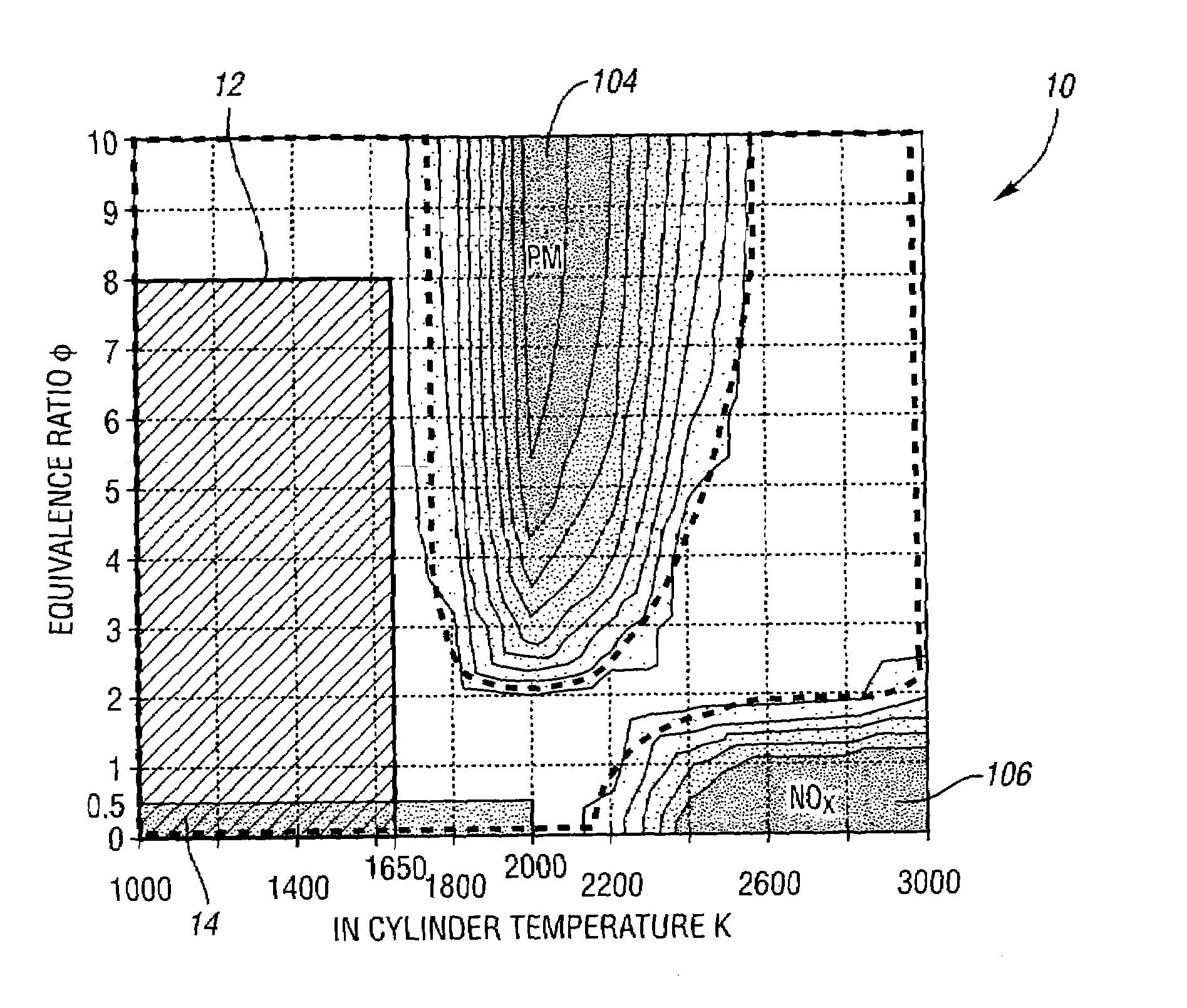
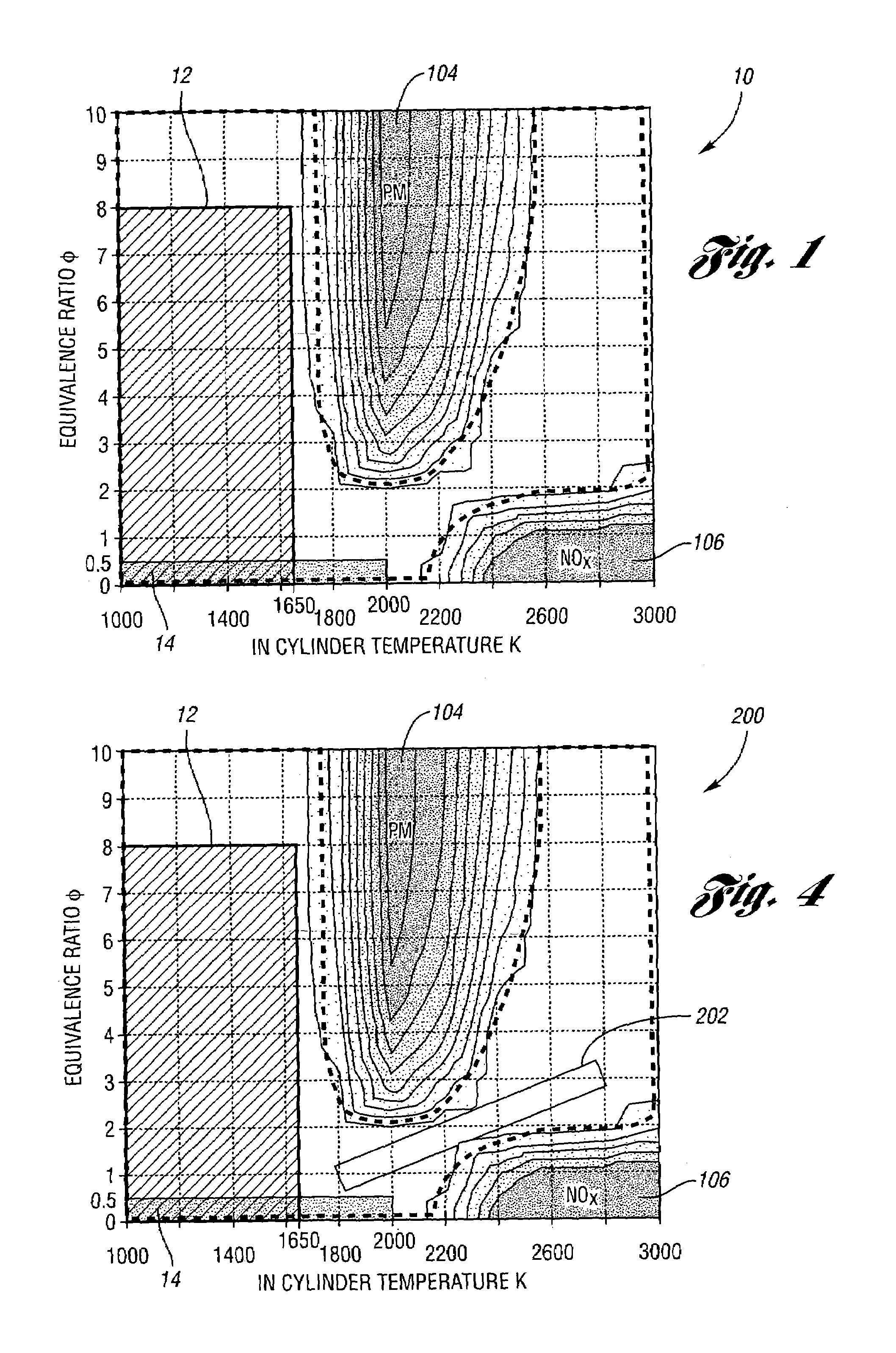
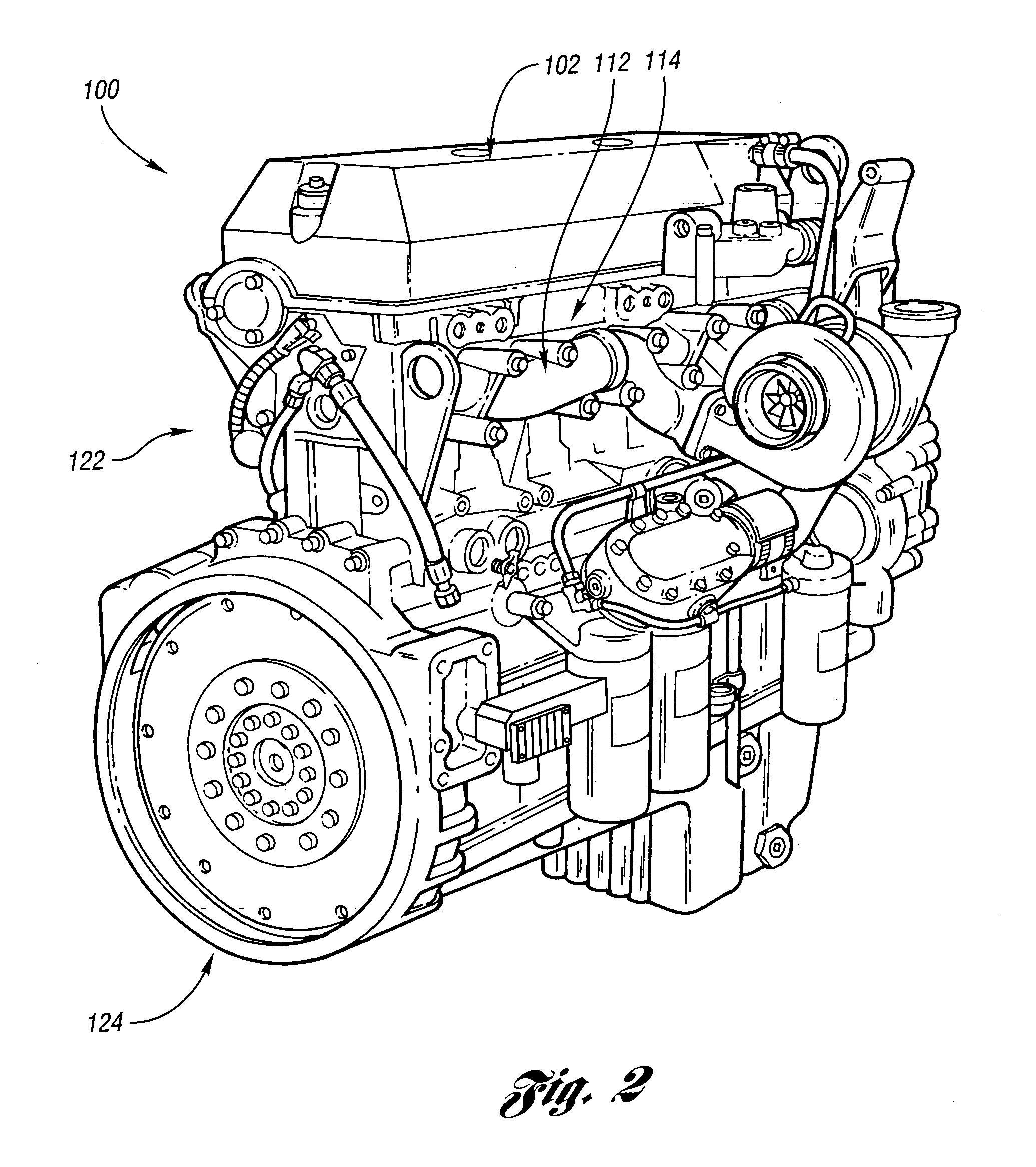
- A system and method that monitors engine conditions to maintain an in-cylinder equivalence ratio and temperature outside regions supportive of NOx and PM formation, using an EGR valve, fuel injector, and engine control module to adjust parameters such as EGR flow rate and fuel injection timing, thereby controlling the in-cylinder distribution to reduce emissions.

System and methods for improved emission control of internal combustion engines using pulsed fuel flow
PatentInactiveEP1620635B1
Innovation
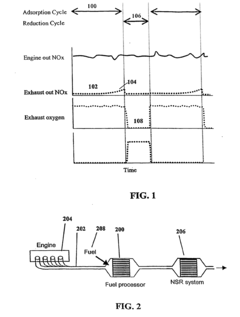
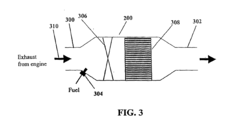
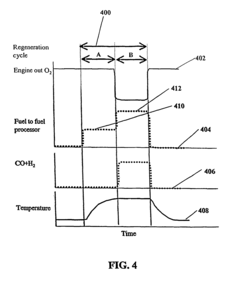
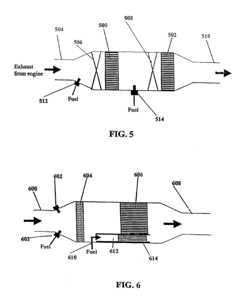
- A fuel processor system that injects fuel into the exhaust stream to generate a reducing gas mixture of CO and H2, capable of regenerating the NSR catalyst and desulfating it, allowing continuous lean-burn engine operation and improving NOx conversion efficiency.
Environmental Regulations for DI Engine Emissions
Environmental regulations governing direct injection (DI) engine emissions have evolved significantly over the past two decades, driven by mounting concerns over air quality and public health impacts. The regulatory landscape is characterized by increasingly stringent limits on particulate matter (PM) and nitrogen oxides (NOx) emissions, with different regional approaches reflecting varying environmental priorities and technological capabilities.
The European Union has established some of the world's most comprehensive emission standards through the Euro series regulations. Euro 6d-TEMP and Euro 6d standards, implemented since 2017 and 2020 respectively, impose strict limits on both PM and NOx emissions from gasoline direct injection engines. These regulations mandate PM limits of 4.5 mg/km for gasoline engines and introduce Real Driving Emissions (RDE) testing procedures that evaluate vehicle performance under actual driving conditions rather than laboratory cycles alone.
In the United States, the Environmental Protection Agency (EPA) has implemented Tier 3 standards, which became fully effective in 2025. These regulations establish a fleet-average NOx standard of 30 mg/mile and introduce particulate matter standards for gasoline vehicles for the first time, setting limits at 3 mg/mile. The California Air Resources Board (CARB) has adopted even more stringent Low Emission Vehicle III (LEV III) standards, often serving as a precursor to federal regulations.
China's regulatory framework has rapidly converged with international standards through the China 6 emission standards, implemented in phases from 2020 to 2023. These regulations closely mirror Euro 6 requirements while incorporating specific provisions for the Chinese market, including enhanced durability requirements and cold-start emission limits that address unique operating conditions in various climate zones.
Japan's regulatory approach emphasizes long-term environmental goals through its Post New Long-term Regulations, which establish comprehensive emission limits while promoting advanced emission control technologies. The Japanese framework uniquely integrates fuel economy standards with emission regulations, creating synergistic requirements that drive technological innovation.
Recent regulatory trends indicate a shift toward more comprehensive testing methodologies, including portable emissions measurement systems (PEMS) for real-world validation and extended durability requirements. Regulatory bodies are also beginning to address ultrafine particle emissions and greenhouse gas integration, signaling future directions for DI engine emission control requirements.
The European Union has established some of the world's most comprehensive emission standards through the Euro series regulations. Euro 6d-TEMP and Euro 6d standards, implemented since 2017 and 2020 respectively, impose strict limits on both PM and NOx emissions from gasoline direct injection engines. These regulations mandate PM limits of 4.5 mg/km for gasoline engines and introduce Real Driving Emissions (RDE) testing procedures that evaluate vehicle performance under actual driving conditions rather than laboratory cycles alone.
In the United States, the Environmental Protection Agency (EPA) has implemented Tier 3 standards, which became fully effective in 2025. These regulations establish a fleet-average NOx standard of 30 mg/mile and introduce particulate matter standards for gasoline vehicles for the first time, setting limits at 3 mg/mile. The California Air Resources Board (CARB) has adopted even more stringent Low Emission Vehicle III (LEV III) standards, often serving as a precursor to federal regulations.
China's regulatory framework has rapidly converged with international standards through the China 6 emission standards, implemented in phases from 2020 to 2023. These regulations closely mirror Euro 6 requirements while incorporating specific provisions for the Chinese market, including enhanced durability requirements and cold-start emission limits that address unique operating conditions in various climate zones.
Japan's regulatory approach emphasizes long-term environmental goals through its Post New Long-term Regulations, which establish comprehensive emission limits while promoting advanced emission control technologies. The Japanese framework uniquely integrates fuel economy standards with emission regulations, creating synergistic requirements that drive technological innovation.
Recent regulatory trends indicate a shift toward more comprehensive testing methodologies, including portable emissions measurement systems (PEMS) for real-world validation and extended durability requirements. Regulatory bodies are also beginning to address ultrafine particle emissions and greenhouse gas integration, signaling future directions for DI engine emission control requirements.
Cost-Benefit Analysis of DI Emission Control Technologies
The economic evaluation of direct injection emission control technologies requires comprehensive assessment of implementation costs against environmental and regulatory benefits. Initial capital expenditures for advanced emission control systems typically range from $500 to $2,000 per vehicle, depending on the specific technology combination employed. These costs encompass selective catalytic reduction systems, diesel particulate filters, and advanced fuel injection equipment modifications.
Operational cost considerations include increased fuel consumption due to regeneration cycles, estimated at 2-4% fuel penalty for comprehensive emission control systems. Maintenance expenses add approximately $200-400 annually per vehicle, primarily driven by filter cleaning, catalyst replacement, and system diagnostics. However, these costs must be weighed against avoided regulatory penalties and compliance benefits.
The benefit side demonstrates substantial value creation through reduced health-related costs. Studies indicate that every ton of PM2.5 reduction generates $140,000-380,000 in avoided health costs, while NOx reduction provides $4,000-13,000 per ton in societal benefits. Fleet operators report additional advantages including improved brand reputation, access to low-emission zones, and potential tax incentives.
Long-term economic analysis reveals favorable return profiles for most emission control investments. Payback periods typically range from 3-7 years when considering fuel efficiency improvements, regulatory compliance benefits, and avoided penalties. Large fleet operators achieve economies of scale, reducing per-unit costs by 15-25% compared to individual vehicle implementations.
Technology-specific cost-benefit ratios vary significantly. Exhaust gas recirculation systems offer the most favorable initial cost structure but limited emission reduction potential. Advanced aftertreatment systems require higher upfront investment but deliver superior long-term value through comprehensive emission control and regulatory future-proofing capabilities.
Operational cost considerations include increased fuel consumption due to regeneration cycles, estimated at 2-4% fuel penalty for comprehensive emission control systems. Maintenance expenses add approximately $200-400 annually per vehicle, primarily driven by filter cleaning, catalyst replacement, and system diagnostics. However, these costs must be weighed against avoided regulatory penalties and compliance benefits.
The benefit side demonstrates substantial value creation through reduced health-related costs. Studies indicate that every ton of PM2.5 reduction generates $140,000-380,000 in avoided health costs, while NOx reduction provides $4,000-13,000 per ton in societal benefits. Fleet operators report additional advantages including improved brand reputation, access to low-emission zones, and potential tax incentives.
Long-term economic analysis reveals favorable return profiles for most emission control investments. Payback periods typically range from 3-7 years when considering fuel efficiency improvements, regulatory compliance benefits, and avoided penalties. Large fleet operators achieve economies of scale, reducing per-unit costs by 15-25% compared to individual vehicle implementations.
Technology-specific cost-benefit ratios vary significantly. Exhaust gas recirculation systems offer the most favorable initial cost structure but limited emission reduction potential. Advanced aftertreatment systems require higher upfront investment but deliver superior long-term value through comprehensive emission control and regulatory future-proofing capabilities.
Unlock deeper insights with PatSnap Eureka Quick Research — get a full tech report to explore trends and direct your research. Try now!
Generate Your Research Report Instantly with AI Agent
Supercharge your innovation with PatSnap Eureka AI Agent Platform!