
Dynamic Mechanical Analysis for Panel-Level Packaging: Performance Insights
APR 9, 20269 MIN READ
Generate Your Research Report Instantly with AI Agent
Patsnap Eureka helps you evaluate technical feasibility & market potential.
DMA Panel-Level Packaging Background and Objectives
Panel-level packaging has emerged as a transformative approach in semiconductor assembly, representing a paradigm shift from traditional wafer-level and chip-level packaging methodologies. This technology enables the simultaneous processing of multiple devices on larger substrates, typically measuring 100mm x 100mm or greater, offering significant advantages in manufacturing efficiency and cost reduction. The evolution from single-chip packaging to panel-level processing addresses the growing demands of miniaturization, increased functionality, and enhanced performance in modern electronic devices.
The fundamental principle of panel-level packaging lies in its ability to leverage economies of scale while maintaining precision and reliability. By processing multiple units simultaneously on a single panel, manufacturers can achieve higher throughput, reduced handling costs, and improved yield consistency. This approach has gained particular traction in applications requiring high-density interconnects, such as mobile processors, IoT devices, and automotive electronics, where space constraints and performance requirements are increasingly stringent.
Dynamic Mechanical Analysis represents a critical characterization technique in this context, providing essential insights into the mechanical behavior of packaging materials and structures under varying temperature and frequency conditions. The integration of DMA into panel-level packaging development addresses the fundamental need to understand how these larger-scale assemblies respond to thermal cycling, mechanical stress, and operational environments throughout their service life.
The primary objectives of implementing DMA in panel-level packaging research encompass several key areas. First, the characterization of viscoelastic properties of packaging materials, including underfill compounds, molding materials, and substrate compositions, enables engineers to predict long-term reliability and performance under real-world conditions. Second, the evaluation of interfacial adhesion and delamination risks between different material layers becomes crucial as panel sizes increase and thermal expansion mismatches become more pronounced.
Temperature-dependent mechanical property assessment forms another critical objective, as panel-level packages experience significant thermal gradients during processing and operation. Understanding how materials behave across the glass transition temperature range and identifying optimal processing windows directly impacts manufacturing yield and product reliability. Additionally, DMA facilitates the optimization of cure profiles for thermosetting materials, ensuring complete crosslinking while minimizing residual stress development.
The strategic implementation of DMA in panel-level packaging development ultimately aims to establish comprehensive material property databases, validate finite element modeling predictions, and develop robust design guidelines that ensure mechanical integrity across diverse operating conditions and extended service lifetimes.
The fundamental principle of panel-level packaging lies in its ability to leverage economies of scale while maintaining precision and reliability. By processing multiple units simultaneously on a single panel, manufacturers can achieve higher throughput, reduced handling costs, and improved yield consistency. This approach has gained particular traction in applications requiring high-density interconnects, such as mobile processors, IoT devices, and automotive electronics, where space constraints and performance requirements are increasingly stringent.
Dynamic Mechanical Analysis represents a critical characterization technique in this context, providing essential insights into the mechanical behavior of packaging materials and structures under varying temperature and frequency conditions. The integration of DMA into panel-level packaging development addresses the fundamental need to understand how these larger-scale assemblies respond to thermal cycling, mechanical stress, and operational environments throughout their service life.
The primary objectives of implementing DMA in panel-level packaging research encompass several key areas. First, the characterization of viscoelastic properties of packaging materials, including underfill compounds, molding materials, and substrate compositions, enables engineers to predict long-term reliability and performance under real-world conditions. Second, the evaluation of interfacial adhesion and delamination risks between different material layers becomes crucial as panel sizes increase and thermal expansion mismatches become more pronounced.
Temperature-dependent mechanical property assessment forms another critical objective, as panel-level packages experience significant thermal gradients during processing and operation. Understanding how materials behave across the glass transition temperature range and identifying optimal processing windows directly impacts manufacturing yield and product reliability. Additionally, DMA facilitates the optimization of cure profiles for thermosetting materials, ensuring complete crosslinking while minimizing residual stress development.
The strategic implementation of DMA in panel-level packaging development ultimately aims to establish comprehensive material property databases, validate finite element modeling predictions, and develop robust design guidelines that ensure mechanical integrity across diverse operating conditions and extended service lifetimes.
Market Demand for Advanced Panel-Level Packaging Solutions
The semiconductor packaging industry is experiencing unprecedented growth driven by the proliferation of advanced electronic devices and the continuous miniaturization of components. Panel-level packaging has emerged as a critical technology to address the limitations of traditional wafer-level and single-chip packaging approaches, offering superior cost efficiency and enhanced performance for high-volume applications.
Market demand for advanced panel-level packaging solutions is primarily fueled by the explosive growth in mobile computing, Internet of Things devices, and automotive electronics. These applications require packaging solutions that can deliver exceptional electrical performance while maintaining mechanical reliability under diverse operating conditions. The automotive sector, in particular, demands packaging technologies that can withstand extreme temperature variations, vibrations, and mechanical stress, making dynamic mechanical analysis an essential evaluation criterion.
Consumer electronics manufacturers are increasingly adopting panel-level packaging to achieve thinner form factors and improved thermal management in smartphones, tablets, and wearable devices. The technology enables the integration of multiple components within a single package, reducing overall system size while enhancing functionality. This trend has created substantial demand for packaging solutions that can be thoroughly characterized through dynamic mechanical analysis to ensure long-term reliability.
The telecommunications infrastructure sector represents another significant market driver, with the deployment of 5G networks requiring high-frequency components packaged with exceptional precision. Panel-level packaging offers the scalability and performance characteristics necessary for these applications, but requires comprehensive mechanical analysis to validate performance under operational stresses.
Data center and cloud computing applications are driving demand for advanced packaging solutions that can handle increased power densities while maintaining thermal and mechanical stability. The ability to perform detailed dynamic mechanical analysis provides manufacturers with critical insights into package behavior under varying load conditions, enabling optimization of design parameters for specific applications.
Emerging applications in artificial intelligence, machine learning accelerators, and edge computing devices are creating new market opportunities for panel-level packaging technologies. These applications often require custom packaging solutions with specific mechanical properties, making dynamic mechanical analysis an indispensable tool for product development and qualification processes.
Market demand for advanced panel-level packaging solutions is primarily fueled by the explosive growth in mobile computing, Internet of Things devices, and automotive electronics. These applications require packaging solutions that can deliver exceptional electrical performance while maintaining mechanical reliability under diverse operating conditions. The automotive sector, in particular, demands packaging technologies that can withstand extreme temperature variations, vibrations, and mechanical stress, making dynamic mechanical analysis an essential evaluation criterion.
Consumer electronics manufacturers are increasingly adopting panel-level packaging to achieve thinner form factors and improved thermal management in smartphones, tablets, and wearable devices. The technology enables the integration of multiple components within a single package, reducing overall system size while enhancing functionality. This trend has created substantial demand for packaging solutions that can be thoroughly characterized through dynamic mechanical analysis to ensure long-term reliability.
The telecommunications infrastructure sector represents another significant market driver, with the deployment of 5G networks requiring high-frequency components packaged with exceptional precision. Panel-level packaging offers the scalability and performance characteristics necessary for these applications, but requires comprehensive mechanical analysis to validate performance under operational stresses.
Data center and cloud computing applications are driving demand for advanced packaging solutions that can handle increased power densities while maintaining thermal and mechanical stability. The ability to perform detailed dynamic mechanical analysis provides manufacturers with critical insights into package behavior under varying load conditions, enabling optimization of design parameters for specific applications.
Emerging applications in artificial intelligence, machine learning accelerators, and edge computing devices are creating new market opportunities for panel-level packaging technologies. These applications often require custom packaging solutions with specific mechanical properties, making dynamic mechanical analysis an indispensable tool for product development and qualification processes.
Current DMA Testing Challenges in Panel-Level Applications
Panel-level packaging applications face significant challenges in dynamic mechanical analysis testing due to the inherent complexity of large-format substrates and multi-component assemblies. Traditional DMA equipment, originally designed for smaller specimens, struggles to accommodate the dimensional requirements of panel-level packages, which can exceed 300mm x 300mm in size. This size limitation forces manufacturers to rely on coupon-level testing, potentially missing critical interactions that occur at the full panel scale.
Temperature uniformity across large panel surfaces presents another substantial challenge during DMA testing. Conventional heating systems often create thermal gradients that can exceed ±2°C across the panel area, leading to non-uniform material responses and compromised data reliability. These temperature variations become particularly problematic when analyzing materials with sharp glass transition temperatures or when precise modulus measurements are required for warpage prediction models.
The mechanical clamping and loading systems in standard DMA instruments are inadequate for panel-level applications. Achieving uniform stress distribution across large substrates while maintaining proper boundary conditions proves extremely difficult. Edge effects and stress concentrations near clamping points can dominate the mechanical response, masking the true bulk material behavior that engineers need to characterize for accurate thermal-mechanical modeling.
Sample preparation and handling represent additional operational challenges. Panel-level substrates often contain embedded components, multiple material layers, and complex geometries that complicate specimen preparation. The fragile nature of thin panels makes handling during mounting procedures prone to damage, while ensuring representative sampling from different panel regions requires careful consideration of manufacturing variations and spatial heterogeneity.
Data interpretation becomes increasingly complex when dealing with panel-level DMA results. The composite nature of these assemblies, combining organic substrates, copper traces, solder masks, and discrete components, creates multi-modal responses that are difficult to deconvolve using standard analysis techniques. Traditional single-frequency or temperature-sweep protocols may not capture the full spectrum of dynamic behavior relevant to real-world thermal cycling conditions.
Standardization gaps further complicate panel-level DMA testing. Current industry standards primarily address component-level or material-level characterization, leaving manufacturers without established protocols for panel-scale testing. This absence of standardized procedures leads to inconsistent testing methodologies across different organizations and makes comparative analysis of results extremely challenging for supply chain qualification processes.
Temperature uniformity across large panel surfaces presents another substantial challenge during DMA testing. Conventional heating systems often create thermal gradients that can exceed ±2°C across the panel area, leading to non-uniform material responses and compromised data reliability. These temperature variations become particularly problematic when analyzing materials with sharp glass transition temperatures or when precise modulus measurements are required for warpage prediction models.
The mechanical clamping and loading systems in standard DMA instruments are inadequate for panel-level applications. Achieving uniform stress distribution across large substrates while maintaining proper boundary conditions proves extremely difficult. Edge effects and stress concentrations near clamping points can dominate the mechanical response, masking the true bulk material behavior that engineers need to characterize for accurate thermal-mechanical modeling.
Sample preparation and handling represent additional operational challenges. Panel-level substrates often contain embedded components, multiple material layers, and complex geometries that complicate specimen preparation. The fragile nature of thin panels makes handling during mounting procedures prone to damage, while ensuring representative sampling from different panel regions requires careful consideration of manufacturing variations and spatial heterogeneity.
Data interpretation becomes increasingly complex when dealing with panel-level DMA results. The composite nature of these assemblies, combining organic substrates, copper traces, solder masks, and discrete components, creates multi-modal responses that are difficult to deconvolve using standard analysis techniques. Traditional single-frequency or temperature-sweep protocols may not capture the full spectrum of dynamic behavior relevant to real-world thermal cycling conditions.
Standardization gaps further complicate panel-level DMA testing. Current industry standards primarily address component-level or material-level characterization, leaving manufacturers without established protocols for panel-scale testing. This absence of standardized procedures leads to inconsistent testing methodologies across different organizations and makes comparative analysis of results extremely challenging for supply chain qualification processes.
Existing DMA Solutions for Panel-Level Characterization
01 Dynamic mechanical analysis testing methods and apparatus
Various testing methods and apparatus have been developed for conducting dynamic mechanical analysis to measure the viscoelastic properties of materials. These methods involve applying oscillating forces or displacements to samples while measuring their mechanical response across different temperatures and frequencies. Advanced testing equipment and procedures enable precise characterization of material behavior under dynamic loading conditions, providing critical data for material selection and quality control.- Dynamic mechanical analysis for polymer composites and materials: Dynamic mechanical analysis (DMA) is utilized to evaluate the viscoelastic properties of polymer composites and various materials. This technique measures storage modulus, loss modulus, and tan delta as functions of temperature, frequency, or time. DMA provides critical insights into material behavior under dynamic loading conditions, including glass transition temperatures, damping characteristics, and mechanical performance across different temperature ranges. The analysis helps in understanding material stiffness, energy dissipation, and structural integrity.
- DMA testing methods and apparatus for material characterization: Specialized testing methods and apparatus have been developed for conducting dynamic mechanical analysis on various materials. These systems include advanced instrumentation capable of applying controlled oscillatory stress or strain while measuring the resulting material response. The equipment enables precise measurement of mechanical properties under varying conditions such as temperature, frequency, and humidity. Testing protocols are designed to evaluate material performance, durability, and stability for quality control and research purposes.
- Application of DMA in rubber and elastomer performance evaluation: Dynamic mechanical analysis serves as a critical tool for assessing the performance characteristics of rubber and elastomeric materials. The technique evaluates properties such as resilience, hysteresis, and temperature-dependent behavior that are essential for applications in automotive, aerospace, and industrial sectors. DMA testing helps optimize formulations by analyzing the effects of fillers, crosslinking agents, and processing conditions on final material properties. This analysis is particularly valuable for predicting service life and performance under cyclic loading conditions.
- DMA for adhesives, coatings, and thin film materials: Dynamic mechanical analysis techniques have been adapted for characterizing adhesives, coatings, and thin film materials where traditional testing methods may be inadequate. The analysis provides information about curing behavior, interfacial properties, and mechanical stability of these materials. DMA measurements help optimize formulation parameters and processing conditions to achieve desired performance characteristics. The technique is particularly useful for evaluating temperature-dependent properties and long-term stability of bonded structures and protective coatings.
- Advanced DMA applications in biomaterials and functional materials: Dynamic mechanical analysis has expanded into specialized applications including biomaterials, smart materials, and functional composites. The technique evaluates mechanical properties relevant to biomedical applications such as tissue engineering scaffolds, drug delivery systems, and implantable devices. For functional materials, DMA characterizes shape memory behavior, self-healing properties, and stimuli-responsive characteristics. Advanced analysis methods correlate mechanical performance with structural features at multiple length scales, enabling design of materials with tailored properties for specific applications.
02 Polymer and composite material characterization
Dynamic mechanical analysis is extensively used to characterize polymer materials and composites by evaluating their storage modulus, loss modulus, and damping properties. This technique helps determine glass transition temperatures, crystallinity, and molecular mobility of polymeric systems. The analysis provides insights into material performance under various environmental conditions and loading scenarios, enabling optimization of formulations and processing parameters.Expand Specific Solutions03 Temperature-dependent mechanical property evaluation
Temperature sweep testing in dynamic mechanical analysis allows for comprehensive evaluation of how mechanical properties change with temperature. This approach identifies critical transition points and thermal stability ranges of materials. The data obtained helps predict material behavior in real-world applications where temperature variations occur, supporting design decisions and material qualification processes.Expand Specific Solutions04 Frequency-dependent viscoelastic behavior analysis
Frequency sweep measurements in dynamic mechanical analysis reveal how materials respond to different loading rates and cyclic conditions. This analysis is crucial for understanding time-dependent deformation, energy dissipation, and fatigue resistance. The frequency-dependent data enables prediction of long-term performance and helps in selecting materials for applications involving vibration, impact, or cyclic loading.Expand Specific Solutions05 Multi-component system and interface characterization
Dynamic mechanical analysis techniques are applied to evaluate interfacial properties and compatibility in multi-component systems such as blends, laminates, and reinforced materials. The analysis detects phase separation, interfacial adhesion quality, and synergistic effects between components. This information is essential for developing advanced materials with tailored properties and ensuring structural integrity in composite applications.Expand Specific Solutions
Key Players in Panel-Level Packaging and DMA Industry
The dynamic mechanical analysis for panel-level packaging represents a rapidly evolving sector within the advanced electronics manufacturing industry, currently in its growth phase with significant technological advancement opportunities. The market demonstrates substantial expansion potential, driven by increasing demand for miniaturized electronic devices and enhanced packaging reliability. Technology maturity varies considerably across key players, with established semiconductor companies like Intel Corp. and BOE Technology Group leading in advanced packaging solutions, while display manufacturers including Wuhan Tianma Microelectronics and China Star Optoelectronics contribute specialized panel technologies. Research institutions such as Fraunhofer-Gesellschaft and Chang'an University provide foundational research support. Material suppliers like JFE Steel Corp., ROCKWOOL Operations, and specialty packaging companies including Kyoraku Co. Ltd. and various Chinese manufacturers offer complementary technologies. The competitive landscape shows a mix of mature multinational corporations and emerging Asian technology companies, indicating a dynamic market with ongoing consolidation and innovation opportunities in mechanical analysis methodologies for next-generation panel packaging applications.
BOE Technology Group Co., Ltd.
Technical Solution: BOE has developed comprehensive dynamic mechanical analysis solutions for panel-level packaging, focusing on flexible OLED and LCD display technologies. Their approach integrates advanced DMA testing protocols to evaluate viscoelastic properties of packaging materials under varying temperature and frequency conditions. The company employs multi-layer substrate analysis techniques to assess thermal expansion coefficients, storage modulus, and loss tangent values across different operational environments. BOE's methodology includes real-time monitoring of mechanical stress distribution during thermal cycling, enabling optimization of adhesive layer thickness and material selection for enhanced reliability. Their DMA framework supports both rigid and flexible panel configurations, with particular emphasis on minimizing warpage and delamination risks in large-format displays.
Strengths: Leading display technology expertise, comprehensive testing infrastructure, strong R&D capabilities in flexible electronics. Weaknesses: Limited focus on non-display applications, high development costs for specialized equipment.
Wuhan Tianma Microelectronics Co., Ltd.
Technical Solution: Wuhan Tianma has developed specialized dynamic mechanical analysis protocols for OLED and LCD panel-level packaging applications. Their DMA approach focuses on characterizing flexible substrate materials, encapsulation layers, and adhesive systems used in mobile display manufacturing. The company employs temperature-controlled DMA testing from -20°C to 150°C with frequency sweeps to evaluate material behavior under typical device operating conditions. Tianma's methodology includes specialized sample preparation techniques for thin-film materials and multi-layer structures, enabling accurate measurement of individual layer contributions to overall mechanical performance. Their DMA framework supports both research and production quality control, with automated data analysis systems for rapid material screening and qualification. The company has particular expertise in evaluating polyimide substrates and barrier films used in flexible display applications, focusing on maintaining mechanical integrity during bending and folding operations.
Strengths: Specialized display technology focus, efficient production-oriented testing protocols, strong automation capabilities. Weaknesses: Limited scope beyond display applications, dependence on specific material suppliers and technologies.
Core DMA Innovations for Panel-Level Performance Analysis
Method and Apparatus for Direct-Acting Wide Frequency Range Dynamic Mechanical Analysis of Materials
PatentInactiveUS20160018306A1
Innovation
- The apparatus and method involve contacting the sample to a dynamic displacement transducer and a stress transducer, subjecting it to controlled environmental variations, measuring the response, and releasing contact to iteratively obtain measurements across a range of variables, using a computer-controlled actuator to maintain sample shape and minimize distortion.
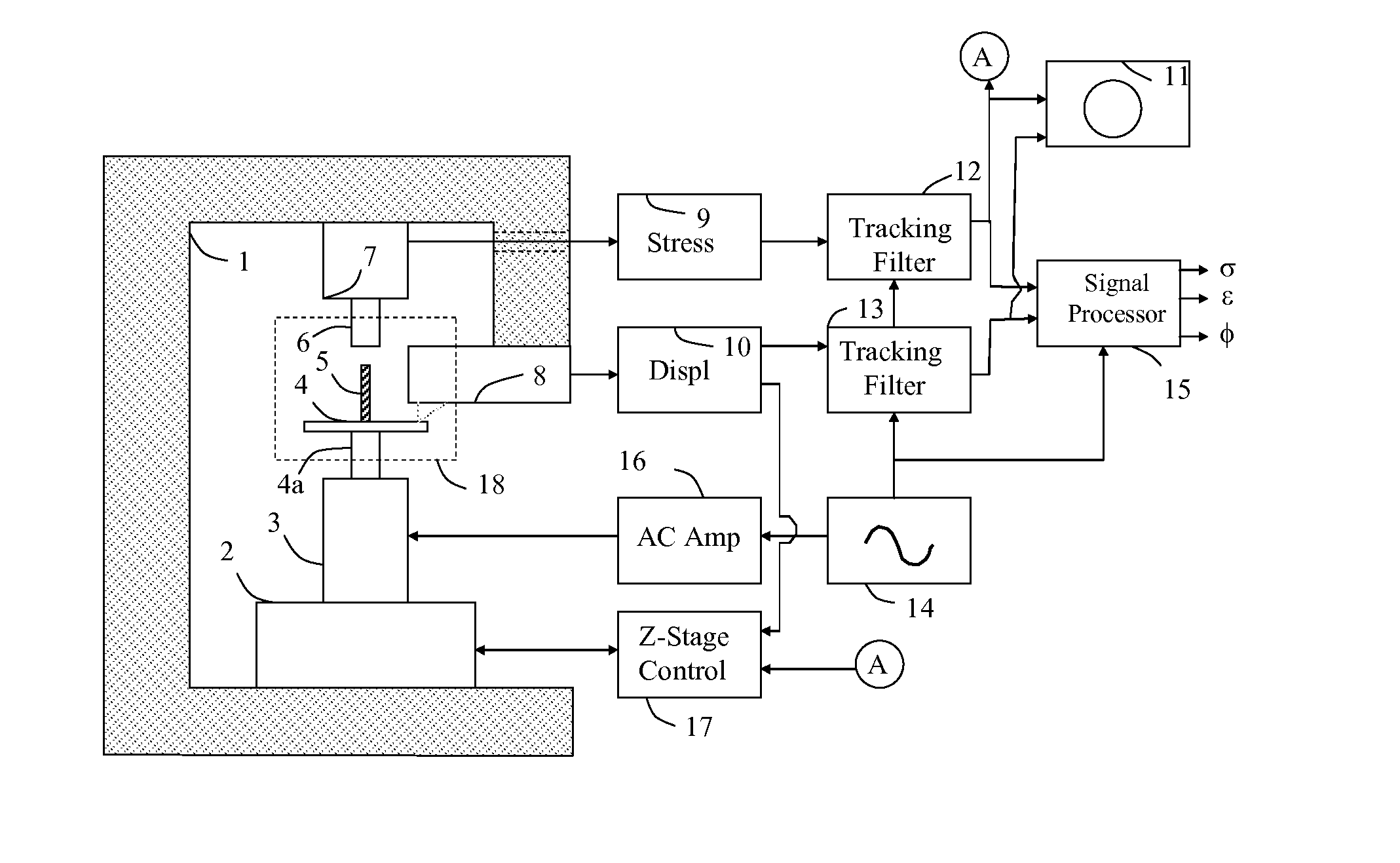
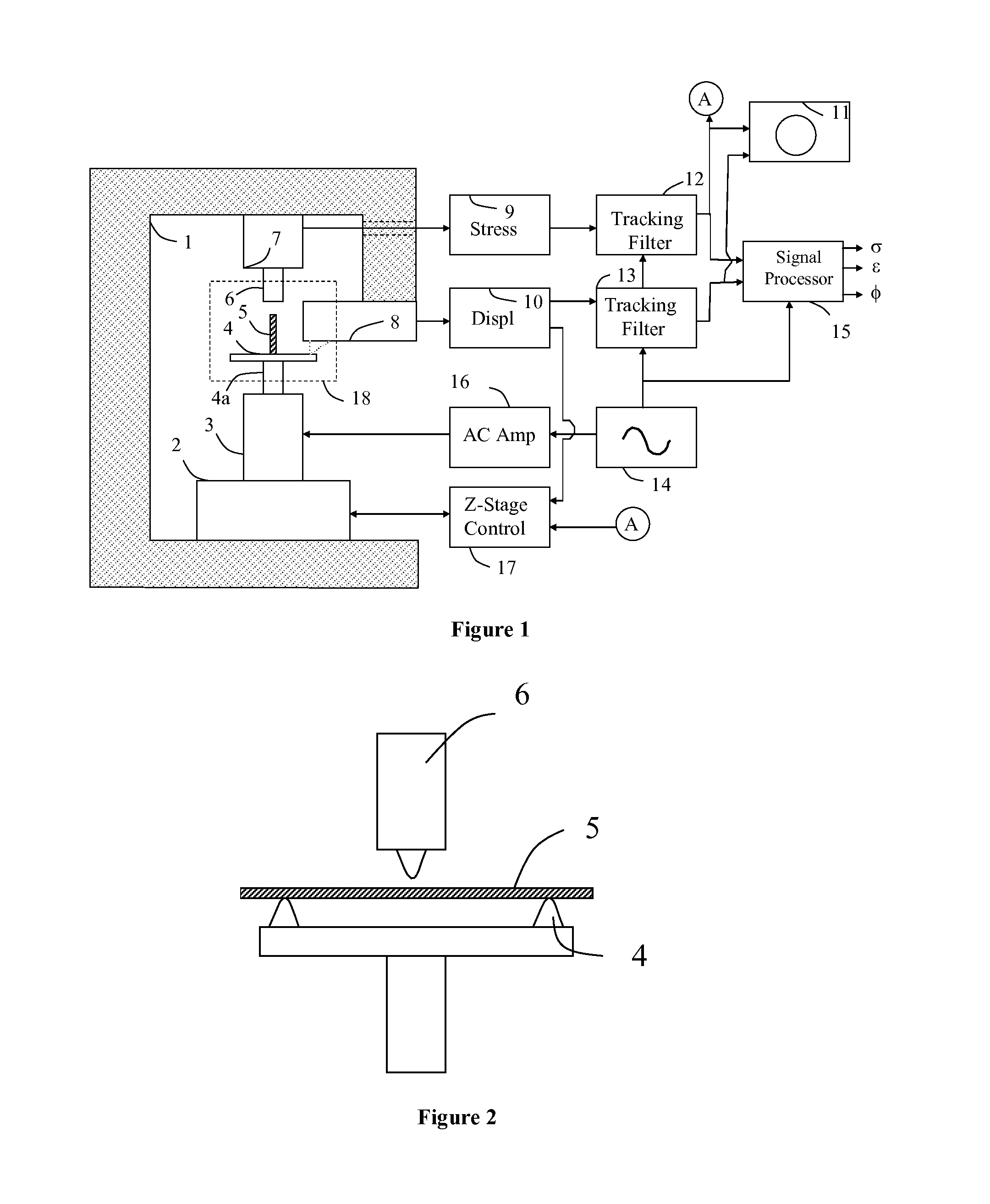
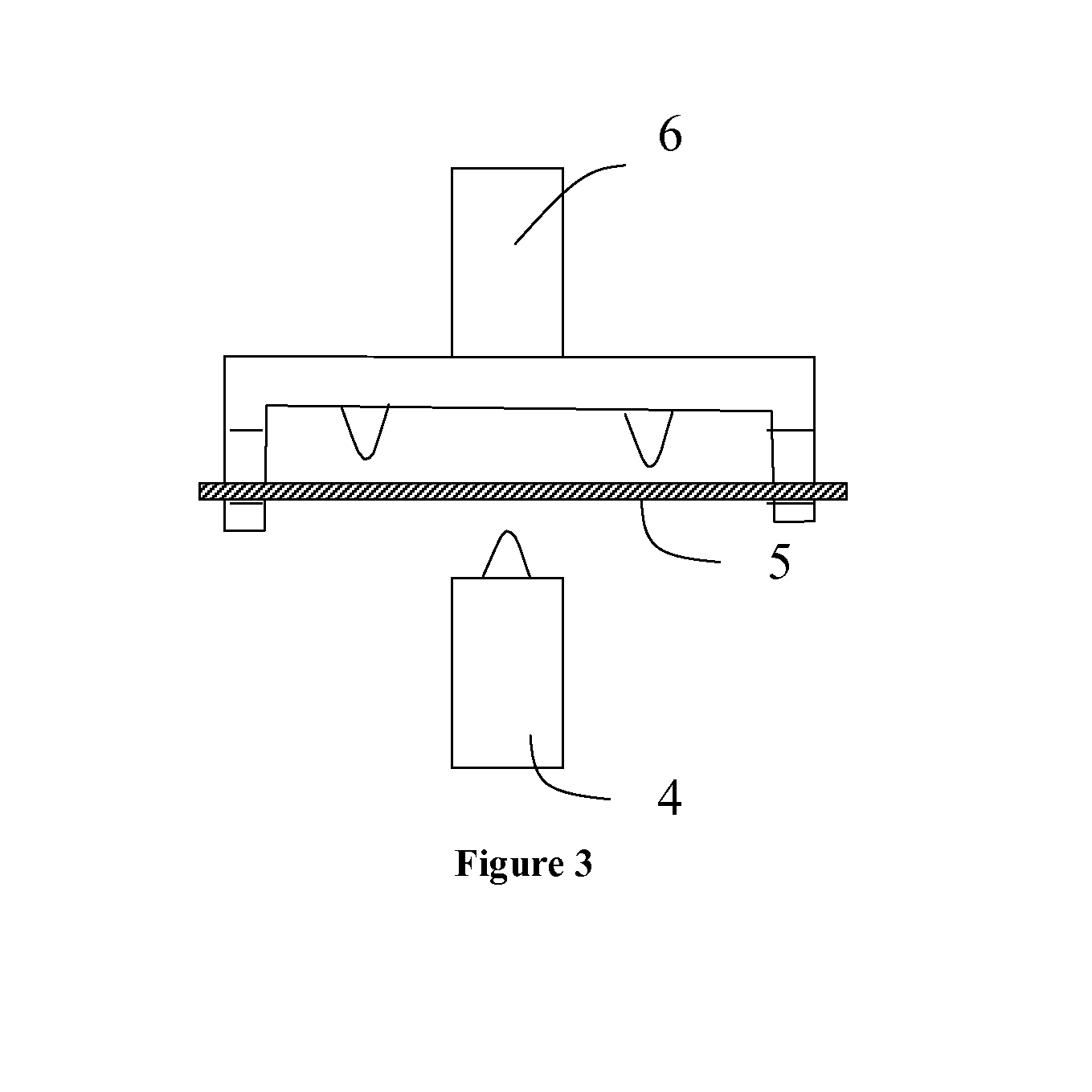

Dynamic mechanical analysis (DMA) measurement system with an adjustable clamp assembly
PatentActiveUS10809170B2
Innovation
- A DMA system comprising a fixture, actuator, force sensor, and adjustable clamp assembly, controlled by a computing unit, capable of applying periodic forces between 100 Hz to 10 kHz and measuring displacement amplitudes of 0.05% to 0.75%, allowing direct measurement of viscoelastic properties without relying on the Williams, Landel, and Ferry equation.


Semiconductor Industry Standards for Panel-Level Testing
The semiconductor industry has established comprehensive standards for panel-level testing to ensure reliability, performance, and quality consistency across manufacturing processes. These standards encompass mechanical, thermal, and electrical testing protocols specifically designed for panel-level packaging applications. The standardization framework addresses the unique challenges posed by larger substrate sizes and increased component density in panel-level manufacturing.
JEDEC Solid State Technology Association leads the development of key standards, including JESD22 series specifications that define environmental stress testing procedures. These standards establish protocols for temperature cycling, thermal shock, and mechanical stress testing applicable to panel-level packages. The JESD22-B111 standard specifically addresses board level drop test methods, while JESD22-B113 covers board level cyclic bend test procedures, both critical for panel-level packaging validation.
IPC standards complement JEDEC specifications by providing guidelines for substrate materials and assembly processes. IPC-2221 establishes generic design standards for printed board design, while IPC-6012 defines qualification and performance specifications for rigid printed boards used in panel-level applications. These standards ensure material compatibility and structural integrity across different manufacturing environments.
ISO 9001 quality management principles are integrated into panel-level testing protocols, establishing traceability requirements and documentation standards. The ISO 14001 environmental management framework influences testing procedures by mandating eco-friendly materials and processes. Additionally, automotive industry standards such as AEC-Q100 and AEC-Q200 extend panel-level testing requirements for automotive semiconductor applications.
Regional standards organizations contribute specialized requirements for local markets. European ECSS standards address space applications, while Chinese national standards GB/T series provide localized testing protocols. Japanese JIS standards influence Asian manufacturing practices, particularly in consumer electronics applications.
The standardization landscape continues evolving to address emerging technologies such as heterogeneous integration and advanced packaging architectures. Industry consortiums like SEMI and IEEE actively develop new standards addressing artificial intelligence chip packaging and 5G communication device requirements. These evolving standards ensure panel-level testing methodologies remain relevant for next-generation semiconductor applications while maintaining backward compatibility with existing manufacturing infrastructure.
JEDEC Solid State Technology Association leads the development of key standards, including JESD22 series specifications that define environmental stress testing procedures. These standards establish protocols for temperature cycling, thermal shock, and mechanical stress testing applicable to panel-level packages. The JESD22-B111 standard specifically addresses board level drop test methods, while JESD22-B113 covers board level cyclic bend test procedures, both critical for panel-level packaging validation.
IPC standards complement JEDEC specifications by providing guidelines for substrate materials and assembly processes. IPC-2221 establishes generic design standards for printed board design, while IPC-6012 defines qualification and performance specifications for rigid printed boards used in panel-level applications. These standards ensure material compatibility and structural integrity across different manufacturing environments.
ISO 9001 quality management principles are integrated into panel-level testing protocols, establishing traceability requirements and documentation standards. The ISO 14001 environmental management framework influences testing procedures by mandating eco-friendly materials and processes. Additionally, automotive industry standards such as AEC-Q100 and AEC-Q200 extend panel-level testing requirements for automotive semiconductor applications.
Regional standards organizations contribute specialized requirements for local markets. European ECSS standards address space applications, while Chinese national standards GB/T series provide localized testing protocols. Japanese JIS standards influence Asian manufacturing practices, particularly in consumer electronics applications.
The standardization landscape continues evolving to address emerging technologies such as heterogeneous integration and advanced packaging architectures. Industry consortiums like SEMI and IEEE actively develop new standards addressing artificial intelligence chip packaging and 5G communication device requirements. These evolving standards ensure panel-level testing methodologies remain relevant for next-generation semiconductor applications while maintaining backward compatibility with existing manufacturing infrastructure.
Thermal Management Considerations in Panel-Level DMA
Thermal management represents a critical consideration in panel-level Dynamic Mechanical Analysis (DMA), as temperature variations significantly influence the mechanical properties and reliability of packaging materials. The thermal environment during DMA testing must be carefully controlled to ensure accurate characterization of viscoelastic behavior across operational temperature ranges. Panel-level packages experience complex thermal gradients due to their larger form factors and distributed heat sources, making thermal management strategies essential for both testing accuracy and real-world performance prediction.
The implementation of effective thermal management in panel-level DMA requires sophisticated temperature control systems capable of maintaining uniform thermal conditions across large substrate areas. Advanced DMA equipment incorporates multi-zone heating elements and precision temperature sensors to minimize thermal gradients that could introduce measurement artifacts. The thermal mass of panel-level samples presents unique challenges, as achieving thermal equilibrium requires extended stabilization periods compared to traditional chip-scale packages.
Temperature-dependent mechanical properties exhibit pronounced variations in panel-level packaging materials, particularly in polymer-based substrates and adhesive layers. Glass transition temperatures, storage modulus, and loss tangent values demonstrate significant sensitivity to thermal cycling conditions encountered during DMA testing. The coefficient of thermal expansion mismatch between different materials within the package stack creates additional mechanical stresses that must be accurately captured through temperature-controlled DMA measurements.
Thermal interface materials and heat dissipation pathways within panel-level packages require specialized DMA testing protocols to evaluate their performance under realistic thermal conditions. The integration of thermal imaging and infrared monitoring during DMA testing provides valuable insights into localized heating effects and thermal distribution patterns. These thermal considerations directly impact the mechanical integrity of solder joints, underfill materials, and substrate warpage characteristics.
Advanced thermal management approaches in panel-level DMA incorporate predictive thermal modeling to optimize testing conditions and correlate laboratory results with field performance. The development of thermally-aware DMA testing methodologies enables more accurate assessment of package reliability under various thermal cycling scenarios, ultimately supporting improved design decisions for next-generation panel-level packaging solutions.
The implementation of effective thermal management in panel-level DMA requires sophisticated temperature control systems capable of maintaining uniform thermal conditions across large substrate areas. Advanced DMA equipment incorporates multi-zone heating elements and precision temperature sensors to minimize thermal gradients that could introduce measurement artifacts. The thermal mass of panel-level samples presents unique challenges, as achieving thermal equilibrium requires extended stabilization periods compared to traditional chip-scale packages.
Temperature-dependent mechanical properties exhibit pronounced variations in panel-level packaging materials, particularly in polymer-based substrates and adhesive layers. Glass transition temperatures, storage modulus, and loss tangent values demonstrate significant sensitivity to thermal cycling conditions encountered during DMA testing. The coefficient of thermal expansion mismatch between different materials within the package stack creates additional mechanical stresses that must be accurately captured through temperature-controlled DMA measurements.
Thermal interface materials and heat dissipation pathways within panel-level packages require specialized DMA testing protocols to evaluate their performance under realistic thermal conditions. The integration of thermal imaging and infrared monitoring during DMA testing provides valuable insights into localized heating effects and thermal distribution patterns. These thermal considerations directly impact the mechanical integrity of solder joints, underfill materials, and substrate warpage characteristics.
Advanced thermal management approaches in panel-level DMA incorporate predictive thermal modeling to optimize testing conditions and correlate laboratory results with field performance. The development of thermally-aware DMA testing methodologies enables more accurate assessment of package reliability under various thermal cycling scenarios, ultimately supporting improved design decisions for next-generation panel-level packaging solutions.
Unlock deeper insights with Patsnap Eureka Quick Research — get a full tech report to explore trends and direct your research. Try now!
Generate Your Research Report Instantly with AI Agent
Supercharge your innovation with Patsnap Eureka AI Agent Platform!