

Enhance Wireless BMS for Robust and Scalable Smart Solutions
APR 11, 20269 MIN READ
Generate Your Research Report Instantly with AI Agent
PatSnap Eureka helps you evaluate technical feasibility & market potential.
Wireless BMS Technology Background and Development Goals
Wireless Battery Management Systems represent a paradigm shift from traditional wired architectures, emerging as a critical enabler for next-generation energy storage applications. The evolution from centralized, cable-intensive BMS designs to distributed wireless networks addresses fundamental limitations in scalability, installation complexity, and maintenance overhead that have constrained conventional battery systems.
The foundational concept of wireless BMS originated from the automotive industry's pursuit of electric vehicle optimization, where reducing wiring harnesses became essential for weight reduction and manufacturing efficiency. Early implementations focused primarily on eliminating physical connections between battery cells and central monitoring units, utilizing short-range wireless protocols to transmit voltage, temperature, and current data.
Contemporary wireless BMS architectures have expanded beyond simple data transmission to encompass comprehensive battery ecosystem management. Modern systems integrate advanced mesh networking capabilities, enabling self-organizing networks that can dynamically adapt to changing battery configurations and environmental conditions. This evolution reflects the growing demand for flexible, modular energy storage solutions across diverse applications.
The development trajectory has been significantly influenced by the convergence of Internet of Things technologies, edge computing capabilities, and advanced battery chemistries. As lithium-ion and emerging solid-state batteries require increasingly sophisticated monitoring and control strategies, wireless BMS platforms have evolved to support real-time analytics, predictive maintenance algorithms, and autonomous optimization protocols.
Current development goals center on achieving enterprise-grade reliability while maintaining the inherent advantages of wireless architectures. Key objectives include establishing deterministic communication protocols that guarantee data integrity under electromagnetic interference conditions, implementing robust security frameworks to protect against cyber threats, and developing standardized interoperability protocols for multi-vendor battery ecosystems.
Scalability represents another critical development focus, with target architectures supporting thousands of individual battery nodes within unified management frameworks. This requires sophisticated network topology optimization, efficient bandwidth utilization strategies, and hierarchical data processing architectures that can handle massive data volumes without compromising real-time response requirements.
The ultimate technological vision encompasses fully autonomous battery ecosystems capable of self-configuration, self-healing, and predictive optimization without human intervention, positioning wireless BMS as the foundational technology for next-generation smart energy infrastructure.
The foundational concept of wireless BMS originated from the automotive industry's pursuit of electric vehicle optimization, where reducing wiring harnesses became essential for weight reduction and manufacturing efficiency. Early implementations focused primarily on eliminating physical connections between battery cells and central monitoring units, utilizing short-range wireless protocols to transmit voltage, temperature, and current data.
Contemporary wireless BMS architectures have expanded beyond simple data transmission to encompass comprehensive battery ecosystem management. Modern systems integrate advanced mesh networking capabilities, enabling self-organizing networks that can dynamically adapt to changing battery configurations and environmental conditions. This evolution reflects the growing demand for flexible, modular energy storage solutions across diverse applications.
The development trajectory has been significantly influenced by the convergence of Internet of Things technologies, edge computing capabilities, and advanced battery chemistries. As lithium-ion and emerging solid-state batteries require increasingly sophisticated monitoring and control strategies, wireless BMS platforms have evolved to support real-time analytics, predictive maintenance algorithms, and autonomous optimization protocols.
Current development goals center on achieving enterprise-grade reliability while maintaining the inherent advantages of wireless architectures. Key objectives include establishing deterministic communication protocols that guarantee data integrity under electromagnetic interference conditions, implementing robust security frameworks to protect against cyber threats, and developing standardized interoperability protocols for multi-vendor battery ecosystems.
Scalability represents another critical development focus, with target architectures supporting thousands of individual battery nodes within unified management frameworks. This requires sophisticated network topology optimization, efficient bandwidth utilization strategies, and hierarchical data processing architectures that can handle massive data volumes without compromising real-time response requirements.
The ultimate technological vision encompasses fully autonomous battery ecosystems capable of self-configuration, self-healing, and predictive optimization without human intervention, positioning wireless BMS as the foundational technology for next-generation smart energy infrastructure.
Market Demand Analysis for Smart Wireless Battery Systems
The global battery management system market is experiencing unprecedented growth driven by the rapid expansion of electric vehicles, renewable energy storage systems, and portable electronic devices. Electric vehicle adoption serves as the primary catalyst, with automotive manufacturers increasingly demanding sophisticated battery monitoring solutions that can ensure safety, optimize performance, and extend battery lifespan. The transition from traditional wired BMS architectures to wireless configurations represents a critical evolution in meeting these escalating requirements.
Smart wireless battery systems are gaining significant traction in grid-scale energy storage applications, where traditional wired solutions face substantial limitations in scalability and maintenance complexity. Utility companies and renewable energy developers are actively seeking wireless BMS solutions that can efficiently manage large battery arrays while reducing installation costs and improving system reliability. The modular nature of wireless systems enables more flexible deployment strategies and simplified expansion capabilities.
Industrial applications present another substantial demand driver, particularly in sectors requiring distributed energy storage solutions such as telecommunications, data centers, and manufacturing facilities. These environments demand robust wireless BMS capabilities that can operate reliably in challenging electromagnetic conditions while providing real-time monitoring and predictive maintenance features. The ability to integrate seamlessly with existing industrial IoT infrastructure has become a critical requirement.
The consumer electronics sector continues to drive innovation in miniaturized wireless BMS solutions, with increasing demand for smart battery management in portable devices, wearables, and home energy systems. Market trends indicate growing consumer awareness of battery health and performance optimization, creating opportunities for advanced wireless monitoring capabilities that provide detailed insights and predictive analytics.
Emerging applications in aerospace, marine, and off-grid installations are creating specialized market segments with unique requirements for wireless BMS solutions. These applications demand exceptional reliability, extended operational ranges, and enhanced security features. The market is also witnessing increased demand for standardized wireless communication protocols and interoperability between different battery chemistries and system architectures.
Regional market dynamics show particularly strong growth in Asia-Pacific regions, driven by electric vehicle manufacturing expansion and renewable energy infrastructure development. North American and European markets demonstrate increasing focus on advanced safety features and regulatory compliance, while emerging markets prioritize cost-effective scalable solutions that can support rapid infrastructure development.
Smart wireless battery systems are gaining significant traction in grid-scale energy storage applications, where traditional wired solutions face substantial limitations in scalability and maintenance complexity. Utility companies and renewable energy developers are actively seeking wireless BMS solutions that can efficiently manage large battery arrays while reducing installation costs and improving system reliability. The modular nature of wireless systems enables more flexible deployment strategies and simplified expansion capabilities.
Industrial applications present another substantial demand driver, particularly in sectors requiring distributed energy storage solutions such as telecommunications, data centers, and manufacturing facilities. These environments demand robust wireless BMS capabilities that can operate reliably in challenging electromagnetic conditions while providing real-time monitoring and predictive maintenance features. The ability to integrate seamlessly with existing industrial IoT infrastructure has become a critical requirement.
The consumer electronics sector continues to drive innovation in miniaturized wireless BMS solutions, with increasing demand for smart battery management in portable devices, wearables, and home energy systems. Market trends indicate growing consumer awareness of battery health and performance optimization, creating opportunities for advanced wireless monitoring capabilities that provide detailed insights and predictive analytics.
Emerging applications in aerospace, marine, and off-grid installations are creating specialized market segments with unique requirements for wireless BMS solutions. These applications demand exceptional reliability, extended operational ranges, and enhanced security features. The market is also witnessing increased demand for standardized wireless communication protocols and interoperability between different battery chemistries and system architectures.
Regional market dynamics show particularly strong growth in Asia-Pacific regions, driven by electric vehicle manufacturing expansion and renewable energy infrastructure development. North American and European markets demonstrate increasing focus on advanced safety features and regulatory compliance, while emerging markets prioritize cost-effective scalable solutions that can support rapid infrastructure development.
Current Wireless BMS Challenges and Technical Limitations
Wireless Battery Management Systems face significant technical limitations that impede their widespread adoption in smart energy applications. Signal interference represents one of the most critical challenges, as wireless communications operate in increasingly congested frequency bands. The 2.4 GHz ISM band, commonly used for wireless BMS implementations, suffers from interference from Wi-Fi networks, Bluetooth devices, and other industrial equipment, leading to packet loss rates that can exceed 10% in dense electromagnetic environments.
Power consumption constraints severely limit the operational capabilities of wireless BMS nodes. Current wireless communication protocols require substantial energy for data transmission, creating a paradox where the system monitoring battery health consumes significant power from the very batteries it manages. Low-power wireless standards like Zigbee and LoRaWAN offer extended battery life but sacrifice data transmission rates and real-time monitoring capabilities essential for critical applications.
Latency issues plague existing wireless BMS architectures, particularly in large-scale deployments. Multi-hop network topologies introduce cumulative delays that can reach several seconds, making real-time fault detection and emergency response inadequate for safety-critical applications. Time-sensitive operations such as cell balancing and thermal management require sub-second response times that current wireless solutions struggle to achieve consistently.
Scalability limitations become apparent when wireless BMS networks expand beyond 50-100 nodes. Network congestion, increased collision probability, and bandwidth limitations result in degraded performance and reduced reliability. Traditional star topology configurations create bottlenecks at central coordinators, while mesh networks suffer from routing complexity and increased power consumption as network size grows.
Security vulnerabilities expose wireless BMS systems to cyber threats that could compromise battery safety and operational integrity. Weak encryption protocols, inadequate authentication mechanisms, and susceptibility to jamming attacks create significant risks for industrial and automotive applications. The wireless nature of communication makes these systems inherently more vulnerable than their wired counterparts to eavesdropping and malicious interference.
Environmental robustness remains a persistent challenge, as wireless signals are susceptible to attenuation from physical obstacles, temperature variations, and humidity changes. Industrial environments with metal structures and electromagnetic noise sources can severely degrade wireless communication reliability, leading to intermittent connectivity and data loss that undermines the system's monitoring effectiveness.
Power consumption constraints severely limit the operational capabilities of wireless BMS nodes. Current wireless communication protocols require substantial energy for data transmission, creating a paradox where the system monitoring battery health consumes significant power from the very batteries it manages. Low-power wireless standards like Zigbee and LoRaWAN offer extended battery life but sacrifice data transmission rates and real-time monitoring capabilities essential for critical applications.
Latency issues plague existing wireless BMS architectures, particularly in large-scale deployments. Multi-hop network topologies introduce cumulative delays that can reach several seconds, making real-time fault detection and emergency response inadequate for safety-critical applications. Time-sensitive operations such as cell balancing and thermal management require sub-second response times that current wireless solutions struggle to achieve consistently.
Scalability limitations become apparent when wireless BMS networks expand beyond 50-100 nodes. Network congestion, increased collision probability, and bandwidth limitations result in degraded performance and reduced reliability. Traditional star topology configurations create bottlenecks at central coordinators, while mesh networks suffer from routing complexity and increased power consumption as network size grows.
Security vulnerabilities expose wireless BMS systems to cyber threats that could compromise battery safety and operational integrity. Weak encryption protocols, inadequate authentication mechanisms, and susceptibility to jamming attacks create significant risks for industrial and automotive applications. The wireless nature of communication makes these systems inherently more vulnerable than their wired counterparts to eavesdropping and malicious interference.
Environmental robustness remains a persistent challenge, as wireless signals are susceptible to attenuation from physical obstacles, temperature variations, and humidity changes. Industrial environments with metal structures and electromagnetic noise sources can severely degrade wireless communication reliability, leading to intermittent connectivity and data loss that undermines the system's monitoring effectiveness.
Current Wireless BMS Technical Solutions and Architectures
01 Wireless communication protocols and network architecture for BMS
Implementation of robust wireless communication protocols specifically designed for battery management systems to ensure reliable data transmission between battery cells and the central management unit. These protocols address interference, packet loss, and latency issues while maintaining system stability. Advanced network architectures enable seamless integration of multiple battery modules with centralized monitoring and control capabilities.- Wireless communication protocols and architectures for BMS: Implementation of robust wireless communication protocols specifically designed for battery management systems to ensure reliable data transmission between battery cells and the central management unit. These protocols address challenges such as interference, packet loss, and latency in wireless environments. Advanced architectures enable seamless integration of multiple battery modules while maintaining system stability and performance.
- Scalable topology and modular design for wireless BMS: Development of scalable topologies that allow flexible expansion of battery management systems by adding or removing battery modules without compromising system integrity. Modular design approaches enable the system to adapt to different battery pack configurations and sizes. The architecture supports dynamic reconfiguration to accommodate varying power requirements and application scenarios.
- Enhanced reliability and fault tolerance mechanisms: Implementation of redundancy and fault detection mechanisms to ensure continuous operation even when individual components fail. Advanced error correction algorithms and backup communication paths maintain system reliability under adverse conditions. Self-diagnostic capabilities enable early detection of potential failures and automatic system recovery procedures.
- Power management and energy efficiency optimization: Techniques for minimizing power consumption in wireless battery management systems through intelligent sleep modes and optimized transmission schedules. Energy harvesting methods and low-power circuit designs extend the operational lifetime of wireless nodes. Dynamic power allocation strategies balance communication requirements with energy conservation needs.
- Security and data integrity in wireless BMS networks: Implementation of encryption protocols and authentication mechanisms to protect sensitive battery data from unauthorized access and tampering. Secure communication channels prevent malicious attacks and ensure data integrity throughout the wireless network. Advanced security frameworks address vulnerabilities specific to wireless battery management applications while maintaining system performance.
02 Scalable modular design for multi-cell battery systems
Modular architecture that allows flexible expansion of battery management systems to accommodate varying numbers of battery cells or modules. The design enables easy addition or removal of battery units without requiring complete system reconfiguration. This approach supports both small-scale and large-scale applications through standardized interfaces and communication protocols that maintain performance regardless of system size.Expand Specific Solutions03 Enhanced signal processing and noise reduction techniques
Advanced signal processing methods to improve the reliability of wireless battery monitoring in electrically noisy environments. These techniques include error correction algorithms, adaptive filtering, and redundant data transmission to ensure accurate battery parameter measurements. The methods enhance system robustness by minimizing the impact of electromagnetic interference and signal degradation in wireless channels.Expand Specific Solutions04 Distributed processing and edge computing for BMS
Implementation of distributed computing architecture where processing tasks are distributed across multiple nodes within the battery management system. This approach reduces the computational burden on central controllers and improves system response time. Edge computing capabilities enable local decision-making and real-time monitoring while maintaining scalability for large battery arrays.Expand Specific Solutions05 Fault tolerance and redundancy mechanisms
Design strategies incorporating redundant communication paths and backup systems to ensure continuous operation even when individual components fail. These mechanisms include automatic failover protocols, self-healing network topologies, and redundant sensor arrays. The fault-tolerant architecture maintains system reliability and prevents single points of failure in wireless battery management applications.Expand Specific Solutions
Major Players in Wireless BMS and Smart Battery Industry
The wireless Battery Management System (BMS) market is experiencing rapid growth driven by increasing electric vehicle adoption and energy storage demands, with the global BMS market projected to reach significant scale by 2030. The industry is in a transitional phase from traditional wired systems to advanced wireless solutions, presenting both opportunities and technical challenges. Technology maturity varies significantly across market players, with established semiconductor leaders like Samsung Electronics, Texas Instruments, and Qualcomm demonstrating advanced wireless communication capabilities and robust system integration expertise. Battery specialists including LG Energy Solution, Samsung SDI, and LG Chem bring deep energy management knowledge, while telecommunications giants such as Huawei, Ericsson, and China Mobile contribute essential wireless infrastructure technologies. Consumer electronics manufacturers like Apple and automotive suppliers including Caterpillar are driving scalability requirements, creating a competitive landscape where success depends on combining wireless communication reliability, battery safety protocols, and scalable manufacturing capabilities across diverse industrial applications.
Samsung Electronics Co., Ltd.
Technical Solution: Samsung has developed advanced wireless BMS solutions leveraging their expertise in semiconductor technology and IoT connectivity. Their approach integrates low-power wireless communication protocols with sophisticated battery monitoring algorithms, enabling real-time data collection from individual battery cells. The system utilizes Samsung's proprietary wireless chipsets that support multiple communication standards including Bluetooth Low Energy, Zigbee, and proprietary mesh networking protocols. Their BMS architecture features distributed sensing nodes that can monitor voltage, current, temperature, and impedance parameters across large battery arrays. The solution incorporates machine learning algorithms for predictive maintenance and fault detection, allowing for proactive battery management and extended system lifespan.
Strengths: Strong semiconductor manufacturing capabilities, comprehensive IoT ecosystem integration, advanced data analytics. Weaknesses: Higher cost compared to traditional wired solutions, potential interference in dense wireless environments.
Texas Instruments Incorporated
Technical Solution: Texas Instruments offers a comprehensive wireless BMS platform built around their SimpleLink wireless microcontroller family and precision analog front-end solutions. Their system combines ultra-low-power wireless connectivity with high-precision battery monitoring capabilities. The architecture features distributed wireless sensor nodes that communicate through Sub-1 GHz protocols for extended range and improved penetration through battery pack enclosures. TI's solution includes integrated security features with hardware-based encryption and authentication protocols. The system supports scalable mesh networking topologies that can accommodate battery systems ranging from small residential storage to large grid-scale installations. Their BMS includes advanced balancing algorithms and thermal management features.
Strengths: Proven analog expertise, low-power wireless solutions, strong ecosystem support and development tools. Weaknesses: Limited to TI's proprietary wireless protocols, requires specialized knowledge for implementation.
Core Technologies for Robust Wireless BMS Enhancement
Fault tolerant wireless battery area network for a smart battery management system
PatentInactiveUS20150028816A1
Innovation
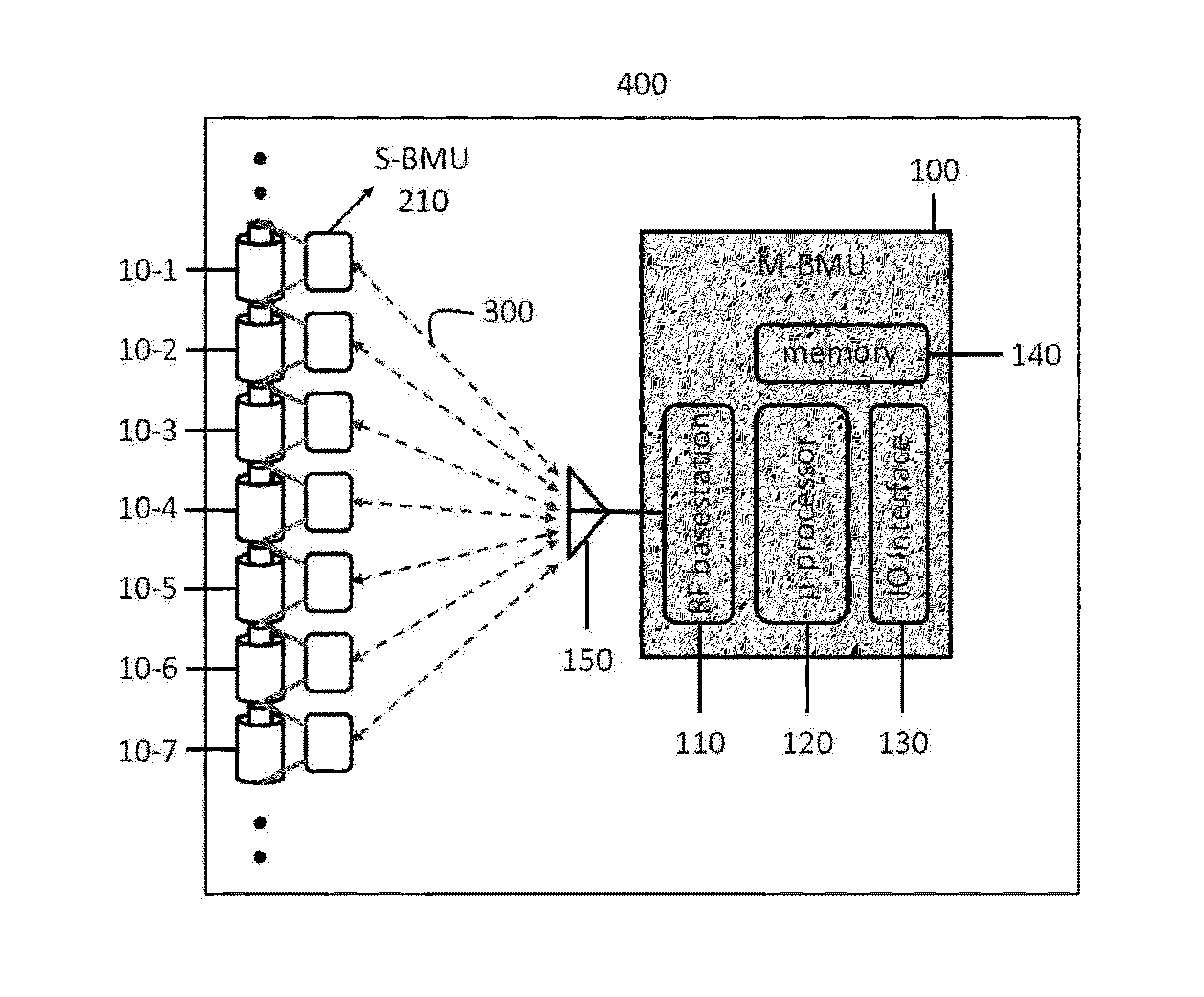
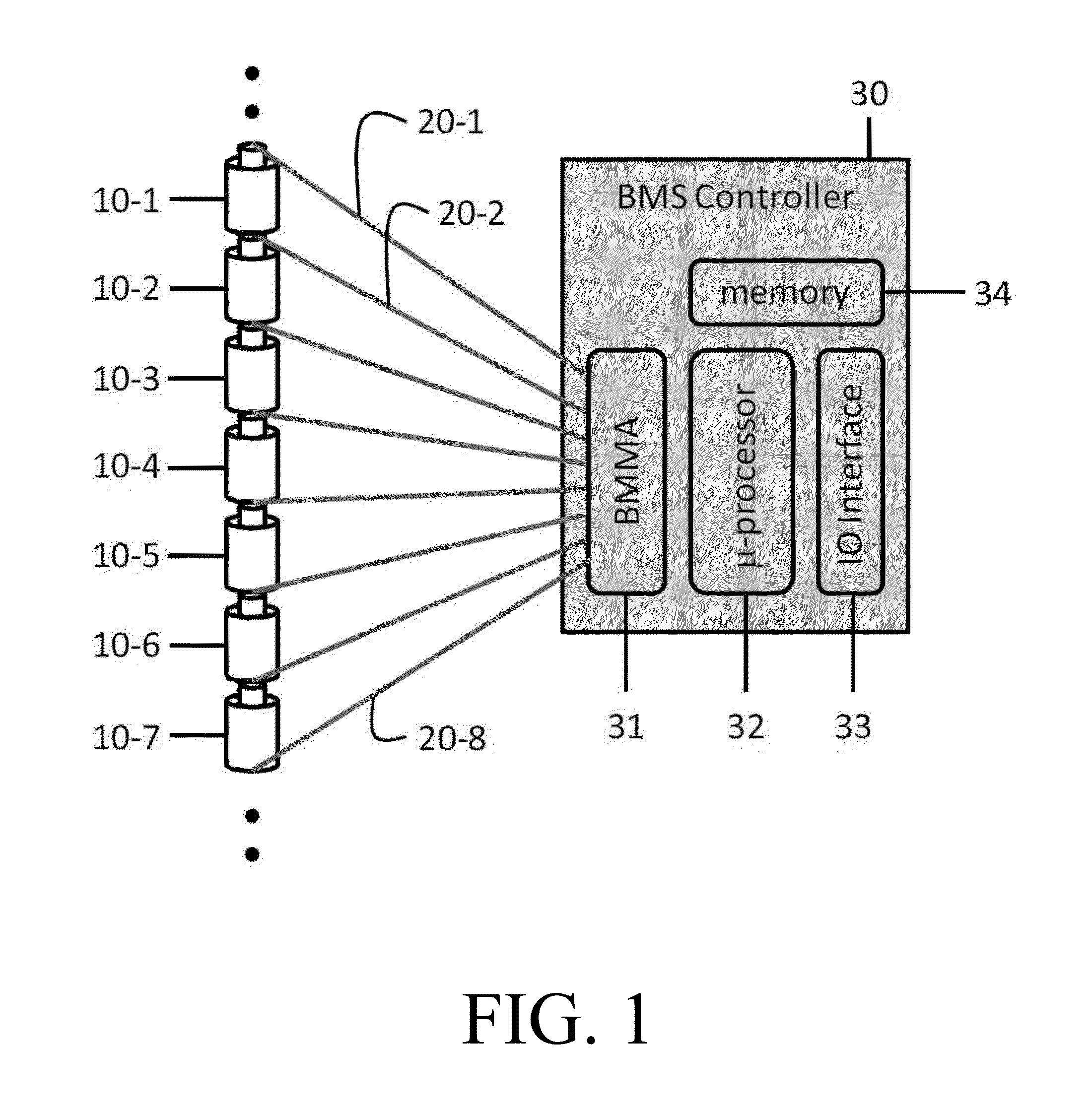
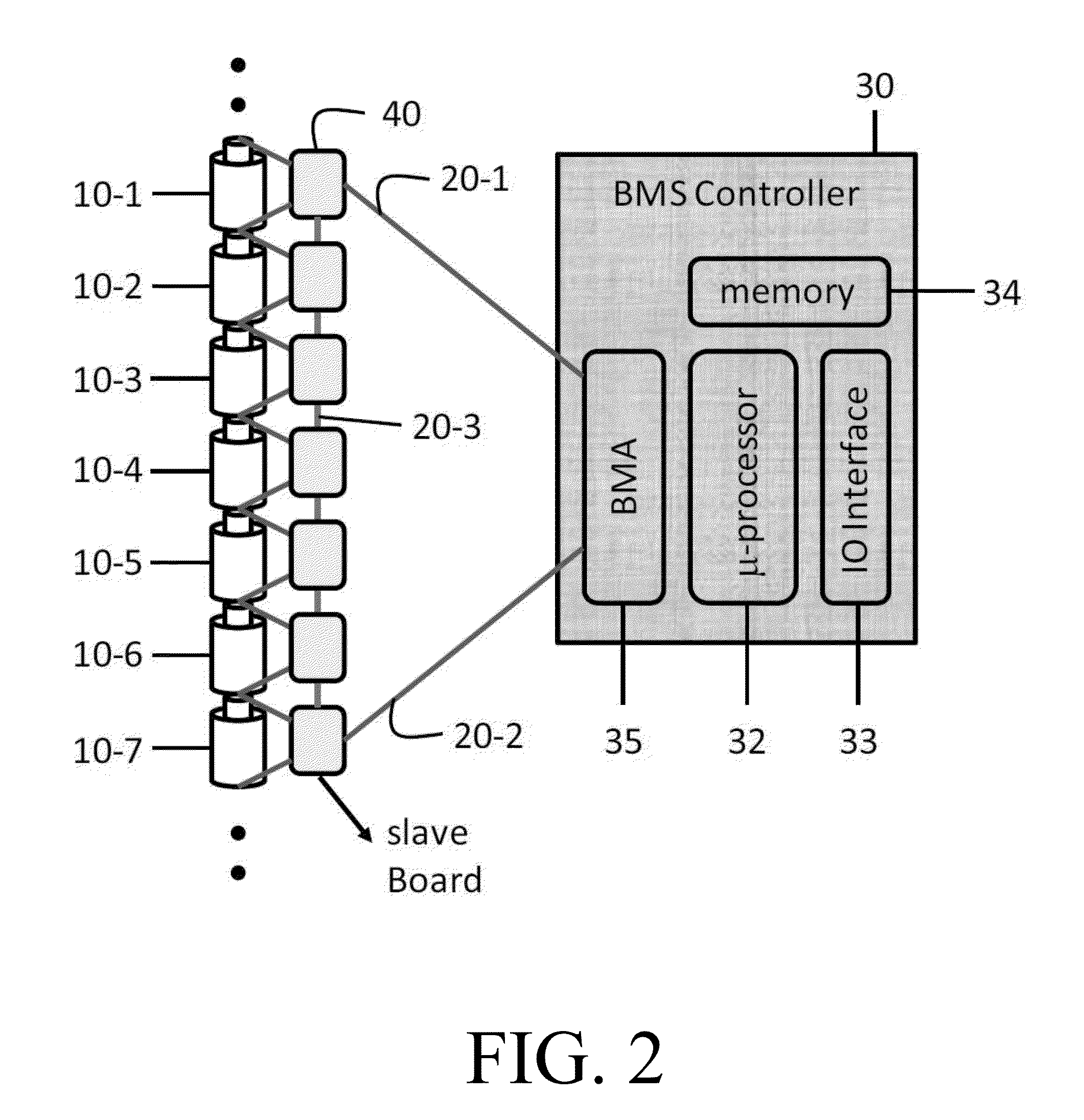
- A self-organizing wireless battery area network (WiBaAN) that uses beamforming technology to establish optimal communication parameters and configure wireless communication conditions, enabling scalable and cost-effective monitoring and control of individual battery cells within a battery pack, regardless of material or shape, and incorporating wireless power up/down features for efficient energy management.

Wireless battery management architecture
PatentPendingCN117525632A
Innovation
- Use the first antenna and the second antenna with different materials, monitor and switch the working status between them in real time through the management and control module, use the register to store the real-time RSSI value to judge the communication quality, and switch the antenna status according to the preset threshold to avoid conflicts. Ensure communication continuity and reliability.


Safety Standards and Regulations for Wireless BMS Systems
The regulatory landscape for wireless Battery Management Systems (BMS) is governed by a complex framework of international, regional, and industry-specific standards that ensure operational safety, electromagnetic compatibility, and cybersecurity. Key foundational standards include IEC 62619 for lithium-ion battery safety requirements, which establishes fundamental safety protocols for battery systems, and IEC 61508 for functional safety of electrical systems, providing risk assessment methodologies crucial for wireless BMS implementations.
Electromagnetic compatibility represents a critical regulatory domain, with FCC Part 15 in the United States and ETSI EN 300 328 in Europe defining permissible radio frequency emissions and interference thresholds. These standards mandate specific power output limitations, frequency band allocations, and coexistence protocols that directly impact wireless BMS communication reliability and range capabilities.
Cybersecurity regulations have emerged as paramount concerns, particularly with the implementation of IEC 62443 industrial cybersecurity standards and NIST Cybersecurity Framework guidelines. These frameworks establish mandatory encryption protocols, authentication mechanisms, and vulnerability management procedures essential for protecting wireless BMS networks from cyber threats and unauthorized access attempts.
Automotive applications face additional stringent requirements under ISO 26262 functional safety standards, which mandate comprehensive hazard analysis and risk assessment procedures. The standard requires wireless BMS systems to achieve specific Automotive Safety Integrity Levels (ASIL) ratings, typically ASIL-C or ASIL-D for critical battery monitoring functions, necessitating redundant communication pathways and fail-safe mechanisms.
Regional variations in regulatory approaches create implementation challenges for global deployments. European Union regulations emphasize data privacy under GDPR requirements, while Chinese GB standards focus on domestic technology integration and security protocols. North American regulations prioritize interoperability standards and grid integration requirements for stationary energy storage applications.
Emerging regulatory trends indicate increasing focus on lifecycle safety management, requiring continuous monitoring capabilities and predictive maintenance protocols. Future regulatory developments are expected to address artificial intelligence integration in BMS systems, establishing guidelines for machine learning algorithms and autonomous decision-making processes within wireless battery management frameworks.
Electromagnetic compatibility represents a critical regulatory domain, with FCC Part 15 in the United States and ETSI EN 300 328 in Europe defining permissible radio frequency emissions and interference thresholds. These standards mandate specific power output limitations, frequency band allocations, and coexistence protocols that directly impact wireless BMS communication reliability and range capabilities.
Cybersecurity regulations have emerged as paramount concerns, particularly with the implementation of IEC 62443 industrial cybersecurity standards and NIST Cybersecurity Framework guidelines. These frameworks establish mandatory encryption protocols, authentication mechanisms, and vulnerability management procedures essential for protecting wireless BMS networks from cyber threats and unauthorized access attempts.
Automotive applications face additional stringent requirements under ISO 26262 functional safety standards, which mandate comprehensive hazard analysis and risk assessment procedures. The standard requires wireless BMS systems to achieve specific Automotive Safety Integrity Levels (ASIL) ratings, typically ASIL-C or ASIL-D for critical battery monitoring functions, necessitating redundant communication pathways and fail-safe mechanisms.
Regional variations in regulatory approaches create implementation challenges for global deployments. European Union regulations emphasize data privacy under GDPR requirements, while Chinese GB standards focus on domestic technology integration and security protocols. North American regulations prioritize interoperability standards and grid integration requirements for stationary energy storage applications.
Emerging regulatory trends indicate increasing focus on lifecycle safety management, requiring continuous monitoring capabilities and predictive maintenance protocols. Future regulatory developments are expected to address artificial intelligence integration in BMS systems, establishing guidelines for machine learning algorithms and autonomous decision-making processes within wireless battery management frameworks.
Cybersecurity Framework for Wireless Battery Networks
The cybersecurity framework for wireless battery networks represents a critical infrastructure component that addresses the unique security challenges inherent in distributed energy storage systems. As wireless Battery Management Systems (BMS) evolve toward greater connectivity and intelligence, they become increasingly vulnerable to cyber threats that could compromise both operational integrity and safety protocols. The framework must establish comprehensive security layers that protect against unauthorized access, data manipulation, and system disruption while maintaining the real-time performance requirements essential for battery operations.
Authentication and access control form the foundational layer of the cybersecurity framework, implementing multi-factor authentication protocols specifically designed for resource-constrained wireless devices. The framework incorporates lightweight cryptographic algorithms that balance security strength with computational efficiency, ensuring that battery nodes can maintain secure communications without excessive power consumption. Certificate-based authentication mechanisms enable secure device enrollment and identity verification across the entire network topology.
Data encryption protocols within the framework utilize advanced encryption standards adapted for wireless battery communications, protecting sensitive operational data including state-of-charge information, thermal readings, and control commands. The implementation of end-to-end encryption ensures that data remains secure throughout transmission paths, while key management systems provide automated rotation and distribution of cryptographic keys across network nodes.
Network segmentation strategies isolate critical battery management functions from external networks, creating secure communication zones that limit potential attack vectors. The framework implements virtual private network overlays and software-defined perimeters that dynamically adjust security boundaries based on operational requirements and threat assessments. Intrusion detection systems continuously monitor network traffic patterns to identify anomalous behaviors indicative of cyber attacks.
Incident response mechanisms provide automated threat mitigation capabilities, including the ability to isolate compromised nodes while maintaining overall system functionality. The framework incorporates machine learning algorithms that adapt to emerging threat patterns and update security protocols in real-time, ensuring robust protection against evolving cybersecurity challenges in wireless battery network environments.
Authentication and access control form the foundational layer of the cybersecurity framework, implementing multi-factor authentication protocols specifically designed for resource-constrained wireless devices. The framework incorporates lightweight cryptographic algorithms that balance security strength with computational efficiency, ensuring that battery nodes can maintain secure communications without excessive power consumption. Certificate-based authentication mechanisms enable secure device enrollment and identity verification across the entire network topology.
Data encryption protocols within the framework utilize advanced encryption standards adapted for wireless battery communications, protecting sensitive operational data including state-of-charge information, thermal readings, and control commands. The implementation of end-to-end encryption ensures that data remains secure throughout transmission paths, while key management systems provide automated rotation and distribution of cryptographic keys across network nodes.
Network segmentation strategies isolate critical battery management functions from external networks, creating secure communication zones that limit potential attack vectors. The framework implements virtual private network overlays and software-defined perimeters that dynamically adjust security boundaries based on operational requirements and threat assessments. Intrusion detection systems continuously monitor network traffic patterns to identify anomalous behaviors indicative of cyber attacks.
Incident response mechanisms provide automated threat mitigation capabilities, including the ability to isolate compromised nodes while maintaining overall system functionality. The framework incorporates machine learning algorithms that adapt to emerging threat patterns and update security protocols in real-time, ensuring robust protection against evolving cybersecurity challenges in wireless battery network environments.
Unlock deeper insights with PatSnap Eureka Quick Research — get a full tech report to explore trends and direct your research. Try now!
Generate Your Research Report Instantly with AI Agent
Supercharge your innovation with PatSnap Eureka AI Agent Platform!