

Enhancing Photonic Tensor Core Durability Under Continuous Laser Load
MAY 11, 20269 MIN READ
Generate Your Research Report Instantly with AI Agent
PatSnap Eureka helps you evaluate technical feasibility & market potential.
Photonic Tensor Core Background and Durability Goals
Photonic tensor cores represent a revolutionary advancement in artificial intelligence computing architectures, leveraging the unique properties of light to perform matrix multiplication operations at unprecedented speeds and energy efficiency. These systems utilize photonic integrated circuits to manipulate optical signals, enabling massively parallel computations that are fundamental to neural network operations. The technology emerged from the convergence of silicon photonics, optical computing research, and the growing demand for specialized AI accelerators capable of handling increasingly complex machine learning workloads.
The evolution of photonic tensor cores stems from decades of research in optical computing, dating back to early experiments in the 1980s with optical neural networks. Recent breakthroughs in silicon photonics manufacturing, wavelength division multiplexing, and integrated optical components have made practical implementations feasible. Major technology companies and research institutions have invested heavily in developing photonic computing platforms, recognizing their potential to overcome the bandwidth and energy limitations of traditional electronic processors.
Current photonic tensor core implementations face significant durability challenges when subjected to continuous high-power laser operations. The primary concern involves thermal management, as sustained laser exposure generates heat that can degrade optical components, alter refractive indices, and compromise computational accuracy. Material degradation becomes particularly problematic in silicon photonic waveguides and modulators, where prolonged exposure to intense optical fields can induce structural changes and performance drift.
The durability goals for next-generation photonic tensor cores encompass several critical objectives. Operational lifetime targets aim for continuous operation exceeding 100,000 hours under full computational load without significant performance degradation. Thermal stability requirements mandate maintaining computational accuracy within 0.1% deviation across temperature variations induced by laser heating. Power handling capabilities must support laser powers up to 10 watts per core while preserving signal integrity and minimizing crosstalk between optical channels.
Reliability specifications also include resistance to photodarkening effects in optical materials, mitigation of nonlinear optical phenomena that can distort computational results, and protection against laser-induced damage in critical components such as photodetectors and modulators. These durability goals directly support the broader objective of establishing photonic tensor cores as viable alternatives to electronic AI accelerators in data center and edge computing applications where continuous operation and computational reliability are paramount.
The evolution of photonic tensor cores stems from decades of research in optical computing, dating back to early experiments in the 1980s with optical neural networks. Recent breakthroughs in silicon photonics manufacturing, wavelength division multiplexing, and integrated optical components have made practical implementations feasible. Major technology companies and research institutions have invested heavily in developing photonic computing platforms, recognizing their potential to overcome the bandwidth and energy limitations of traditional electronic processors.
Current photonic tensor core implementations face significant durability challenges when subjected to continuous high-power laser operations. The primary concern involves thermal management, as sustained laser exposure generates heat that can degrade optical components, alter refractive indices, and compromise computational accuracy. Material degradation becomes particularly problematic in silicon photonic waveguides and modulators, where prolonged exposure to intense optical fields can induce structural changes and performance drift.
The durability goals for next-generation photonic tensor cores encompass several critical objectives. Operational lifetime targets aim for continuous operation exceeding 100,000 hours under full computational load without significant performance degradation. Thermal stability requirements mandate maintaining computational accuracy within 0.1% deviation across temperature variations induced by laser heating. Power handling capabilities must support laser powers up to 10 watts per core while preserving signal integrity and minimizing crosstalk between optical channels.
Reliability specifications also include resistance to photodarkening effects in optical materials, mitigation of nonlinear optical phenomena that can distort computational results, and protection against laser-induced damage in critical components such as photodetectors and modulators. These durability goals directly support the broader objective of establishing photonic tensor cores as viable alternatives to electronic AI accelerators in data center and edge computing applications where continuous operation and computational reliability are paramount.
Market Demand for Robust Photonic Computing Solutions
The global photonic computing market is experiencing unprecedented growth driven by the exponential demand for high-performance computing solutions that can overcome the limitations of traditional electronic processors. Data centers, artificial intelligence applications, and machine learning workloads require computing architectures capable of handling massive parallel processing tasks with superior energy efficiency. Photonic tensor cores represent a revolutionary approach to address these computational challenges by leveraging light-based processing to achieve faster speeds and lower power consumption compared to conventional silicon-based solutions.
Enterprise customers across cloud computing, telecommunications, and scientific research sectors are actively seeking photonic computing solutions that can deliver sustained performance under continuous operational conditions. The reliability and durability of photonic tensor cores have emerged as critical factors influencing adoption decisions, as these systems must operate continuously for extended periods without performance degradation or component failure.
Financial institutions utilizing high-frequency trading algorithms demand computing systems with microsecond-level response times and zero tolerance for downtime. Similarly, autonomous vehicle manufacturers require real-time processing capabilities that can function reliably under varying environmental conditions. These applications create substantial market pressure for photonic computing solutions that maintain consistent performance under continuous laser load operations.
The aerospace and defense industries represent another significant market segment driving demand for robust photonic computing solutions. Military applications require computing systems capable of operating in harsh environments while maintaining operational integrity under continuous high-power laser exposure. Space-based applications further amplify these requirements, as component replacement or maintenance becomes virtually impossible once deployed.
Healthcare and medical imaging sectors are increasingly adopting photonic computing for real-time image processing and diagnostic applications. These systems must operate continuously in clinical environments, processing vast amounts of imaging data without interruption. The durability of photonic tensor cores directly impacts patient care quality and operational efficiency in medical facilities.
Research institutions and universities conducting advanced scientific simulations require computing infrastructure capable of running complex calculations for weeks or months without interruption. Climate modeling, particle physics simulations, and genomic research applications generate sustained computational loads that test the long-term reliability of photonic computing systems.
Market analysis indicates that customers are willing to invest premium pricing for photonic computing solutions that demonstrate superior durability characteristics. The total cost of ownership considerations favor systems with enhanced reliability, as downtime costs often exceed initial hardware investments in mission-critical applications.
Enterprise customers across cloud computing, telecommunications, and scientific research sectors are actively seeking photonic computing solutions that can deliver sustained performance under continuous operational conditions. The reliability and durability of photonic tensor cores have emerged as critical factors influencing adoption decisions, as these systems must operate continuously for extended periods without performance degradation or component failure.
Financial institutions utilizing high-frequency trading algorithms demand computing systems with microsecond-level response times and zero tolerance for downtime. Similarly, autonomous vehicle manufacturers require real-time processing capabilities that can function reliably under varying environmental conditions. These applications create substantial market pressure for photonic computing solutions that maintain consistent performance under continuous laser load operations.
The aerospace and defense industries represent another significant market segment driving demand for robust photonic computing solutions. Military applications require computing systems capable of operating in harsh environments while maintaining operational integrity under continuous high-power laser exposure. Space-based applications further amplify these requirements, as component replacement or maintenance becomes virtually impossible once deployed.
Healthcare and medical imaging sectors are increasingly adopting photonic computing for real-time image processing and diagnostic applications. These systems must operate continuously in clinical environments, processing vast amounts of imaging data without interruption. The durability of photonic tensor cores directly impacts patient care quality and operational efficiency in medical facilities.
Research institutions and universities conducting advanced scientific simulations require computing infrastructure capable of running complex calculations for weeks or months without interruption. Climate modeling, particle physics simulations, and genomic research applications generate sustained computational loads that test the long-term reliability of photonic computing systems.
Market analysis indicates that customers are willing to invest premium pricing for photonic computing solutions that demonstrate superior durability characteristics. The total cost of ownership considerations favor systems with enhanced reliability, as downtime costs often exceed initial hardware investments in mission-critical applications.
Current Durability Challenges in Continuous Laser Operations
Photonic tensor cores operating under continuous laser load face significant durability challenges that fundamentally limit their operational lifespan and computational reliability. The primary concern stems from thermal accumulation effects, where sustained laser exposure generates heat faster than passive cooling mechanisms can dissipate it. This thermal buildup creates localized hot spots within the photonic integrated circuits, leading to material degradation and performance drift over extended operation periods.
Material fatigue represents another critical durability challenge in continuous laser operations. Silicon photonic waveguides and coupling structures experience gradual structural changes when subjected to prolonged high-intensity optical signals. The crystalline lattice structure undergoes micro-deformations that alter the refractive index properties, causing signal attenuation and crosstalk between adjacent optical channels. These changes are particularly pronounced at wavelengths near the material absorption edges.
Optical component degradation poses substantial reliability concerns for continuous operation scenarios. Laser diodes integrated within the tensor core architecture suffer from facet oxidation and mirror degradation when operated at sustained high power levels. The quantum well structures experience carrier-induced heating effects that reduce emission efficiency and shift the operational wavelength over time. Additionally, photodetectors exhibit responsivity degradation due to surface recombination velocity increases caused by continuous photon bombardment.
Thermal cycling stress emerges as a significant failure mechanism during continuous laser operations. The repeated expansion and contraction of different materials within the photonic tensor core create mechanical stress at interfaces between silicon, silicon dioxide, and metal interconnects. These thermal stresses can lead to delamination, crack propagation, and eventual device failure, particularly at wire bond connections and flip-chip solder joints.
Power density limitations further constrain the durability of photonic tensor cores under continuous operation. Current silicon photonic platforms struggle to handle the high optical power densities required for large-scale tensor operations without experiencing nonlinear optical effects such as two-photon absorption and free carrier generation. These effects not only reduce computational accuracy but also contribute to additional heating and accelerated device degradation.
Contamination and surface degradation issues become more pronounced during extended continuous operation. Organic contaminants can accumulate on exposed optical surfaces, leading to increased scattering losses and reduced coupling efficiency. Surface oxidation of exposed silicon structures can alter the optical properties and create additional loss mechanisms that compound over time during continuous laser exposure.
Material fatigue represents another critical durability challenge in continuous laser operations. Silicon photonic waveguides and coupling structures experience gradual structural changes when subjected to prolonged high-intensity optical signals. The crystalline lattice structure undergoes micro-deformations that alter the refractive index properties, causing signal attenuation and crosstalk between adjacent optical channels. These changes are particularly pronounced at wavelengths near the material absorption edges.
Optical component degradation poses substantial reliability concerns for continuous operation scenarios. Laser diodes integrated within the tensor core architecture suffer from facet oxidation and mirror degradation when operated at sustained high power levels. The quantum well structures experience carrier-induced heating effects that reduce emission efficiency and shift the operational wavelength over time. Additionally, photodetectors exhibit responsivity degradation due to surface recombination velocity increases caused by continuous photon bombardment.
Thermal cycling stress emerges as a significant failure mechanism during continuous laser operations. The repeated expansion and contraction of different materials within the photonic tensor core create mechanical stress at interfaces between silicon, silicon dioxide, and metal interconnects. These thermal stresses can lead to delamination, crack propagation, and eventual device failure, particularly at wire bond connections and flip-chip solder joints.
Power density limitations further constrain the durability of photonic tensor cores under continuous operation. Current silicon photonic platforms struggle to handle the high optical power densities required for large-scale tensor operations without experiencing nonlinear optical effects such as two-photon absorption and free carrier generation. These effects not only reduce computational accuracy but also contribute to additional heating and accelerated device degradation.
Contamination and surface degradation issues become more pronounced during extended continuous operation. Organic contaminants can accumulate on exposed optical surfaces, leading to increased scattering losses and reduced coupling efficiency. Surface oxidation of exposed silicon structures can alter the optical properties and create additional loss mechanisms that compound over time during continuous laser exposure.
Existing Solutions for Laser Load Management
01 Thermal management and heat dissipation in photonic tensor cores
Advanced thermal management techniques are employed to maintain optimal operating temperatures in photonic tensor processing units. These methods include specialized cooling systems, heat sink designs, and thermal interface materials that prevent overheating and ensure consistent performance over extended periods. Proper thermal control is critical for maintaining the stability of optical components and preventing degradation of photonic elements.- Thermal management and heat dissipation techniques: Advanced thermal management systems are crucial for maintaining photonic tensor core durability by preventing overheating and thermal degradation. These techniques include specialized cooling mechanisms, heat sink designs, and thermal interface materials that efficiently dissipate heat generated during high-intensity photonic processing operations. Proper thermal control extends component lifespan and maintains performance stability under continuous operation.
- Material composition and substrate optimization: The selection and engineering of materials used in photonic tensor cores significantly impacts their durability and longevity. This includes the development of robust substrate materials, protective coatings, and composite structures that can withstand mechanical stress, environmental factors, and operational wear. Advanced material formulations provide enhanced resistance to degradation while maintaining optical and electrical properties.
- Optical component protection and encapsulation: Protective encapsulation methods and optical component shielding are essential for preserving the integrity of photonic elements within tensor cores. These approaches involve specialized packaging techniques, protective barriers, and environmental sealing that prevent contamination, moisture ingress, and physical damage to sensitive optical components. Such protection mechanisms ensure consistent performance over extended operational periods.
- Structural reinforcement and mechanical stability: Mechanical design improvements focus on enhancing the structural integrity of photonic tensor cores through reinforced housing, vibration dampening, and shock-resistant configurations. These engineering solutions address mechanical stresses that can cause misalignment, component failure, or performance degradation. Robust mechanical designs ensure reliable operation in various environmental conditions and applications.
- Performance monitoring and predictive maintenance: Integrated monitoring systems and diagnostic capabilities enable real-time assessment of photonic tensor core health and performance degradation. These systems incorporate sensors, feedback mechanisms, and predictive algorithms that can detect early signs of component wear or failure. Proactive maintenance strategies based on continuous monitoring help prevent catastrophic failures and optimize operational lifespan.
02 Optical component reliability and degradation prevention
Techniques for enhancing the longevity of optical elements within tensor processing systems focus on preventing photodegradation and maintaining optical clarity. This includes the use of protective coatings, wavelength-specific filters, and materials engineered to resist optical damage from high-intensity light sources. These approaches ensure consistent optical performance throughout the operational lifetime of the device.Expand Specific Solutions03 Structural integrity and mechanical durability
Design methodologies for ensuring mechanical robustness of photonic tensor cores include reinforced housing structures, vibration dampening systems, and shock-resistant mounting configurations. These structural enhancements protect sensitive optical and electronic components from physical damage during operation and handling, contributing to overall system reliability and longevity.Expand Specific Solutions04 Power management and electrical stability
Sophisticated power management systems are implemented to provide stable electrical supply to photonic tensor processing units. These systems include voltage regulation circuits, power filtering mechanisms, and surge protection devices that prevent electrical fluctuations from damaging sensitive components. Consistent power delivery is essential for maintaining accurate tensor computations and preventing component failure.Expand Specific Solutions05 Environmental protection and packaging technologies
Advanced packaging and encapsulation methods protect photonic tensor cores from environmental factors such as humidity, dust, and chemical contaminants. These protective measures include hermetic sealing, moisture barriers, and chemically resistant materials that maintain the integrity of optical and electronic components in various operating environments. Such protection is crucial for ensuring long-term reliability in diverse deployment scenarios.Expand Specific Solutions
Key Players in Photonic Computing and Laser Systems
The photonic tensor core durability enhancement field represents an emerging technology sector in its early development stage, characterized by significant research activity but limited commercial deployment. The market remains nascent with substantial growth potential as optical computing gains traction in AI and high-performance computing applications. Technology maturity varies considerably across stakeholders, with leading Chinese universities like Tsinghua University, Huazhong University of Science & Technology, and Harbin Institute of Technology driving fundamental research breakthroughs. Industrial players including Sumitomo Electric Industries, Corning, and NKT Photonics contribute advanced materials and optical components expertise, while traditional imaging companies like Canon, Ricoh, and Konica Minolta leverage their laser and optical systems knowledge. The competitive landscape shows strong academic-industry collaboration, particularly between Chinese research institutions and international technology corporations, indicating a technology transition phase from laboratory research toward practical implementation in next-generation computing architectures.
NKT Photonics A/S
Technical Solution: NKT Photonics develops advanced fiber laser systems with specialized thermal management solutions for continuous operation. Their photonic crystal fiber technology enables high-power laser delivery with reduced thermal stress on optical components. The company implements active cooling systems and wavelength-stabilized laser sources to maintain consistent performance under continuous laser loads. Their hollow-core photonic crystal fibers minimize nonlinear effects and thermal buildup, extending component lifetime in high-power applications. The integration of distributed temperature sensing allows real-time monitoring of thermal conditions across the photonic tensor core elements.
Strengths: Leading expertise in photonic crystal fiber technology, proven thermal management solutions. Weaknesses: Limited focus on AI-specific tensor core applications, higher cost compared to traditional solutions.
Mitsubishi Electric Corp.
Technical Solution: Mitsubishi Electric applies its power electronics and thermal management expertise to photonic tensor core durability challenges. Their solution integrates advanced heat sink designs with thermoelectric cooling elements specifically optimized for photonic computing applications. The company develops intelligent thermal control systems that monitor junction temperatures across photonic elements and adjust cooling parameters in real-time. Their approach includes development of low-loss optical interconnects that minimize heat generation while maintaining high-speed data transmission. Mitsubishi's power management systems ensure stable laser drive currents to prevent thermal cycling damage in continuous operation scenarios.
Strengths: Extensive experience in power electronics and thermal management, robust industrial-grade solutions. Weaknesses: Limited expertise in advanced photonic materials, focus primarily on system-level rather than component-level innovations.
Core Innovations in Photonic Component Durability
Photonic tensor core devices and systems
PatentWO2025096551A1
Innovation
- The development of photonic tensor core devices that utilize sets of optical modulators for encoding matrix values onto optical signals, combined with dot product engines for combining these signals and generating product photocurrent signals, which are then converted to digital electric signals. This design includes slow-light Mach-Zehnder modulators for enhanced light-matter interaction, reducing size and power consumption while maintaining thermal robustness.

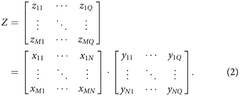
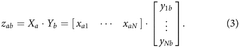

Photonic tensor core matrix vector multiplier
PatentPendingUS20230152667A1
Innovation
- A photonic tensor core processor system that performs optical and electro-optical tensor operations using modular sub-modules with photonic dot product engines, enabling parallel and efficient multiply-accumulate operations through integrated photonics and fiber optics, allowing for matrix-matrix, matrix-vector, and vector-matrix multiplications.


Thermal Management Strategies for Photonic Systems
Thermal management represents a critical challenge in photonic tensor core systems operating under continuous laser loads. The concentrated optical power densities inherent in these systems generate substantial heat accumulation, particularly at waveguide intersections and optical switching nodes where multiple laser beams converge. Without effective thermal control, temperature gradients can induce refractive index variations, leading to phase errors and signal degradation that compromise computational accuracy.
Active cooling strategies have emerged as the primary approach for high-performance photonic tensor cores. Microchannel cooling systems integrated directly into the photonic substrate demonstrate exceptional heat removal capabilities, with cooling channels positioned strategically beneath high-power optical components. These systems typically employ specialized coolants with optimized thermal conductivity and minimal optical interference properties. Advanced implementations incorporate real-time temperature monitoring with feedback-controlled flow rates to maintain uniform thermal conditions across the entire photonic array.
Passive thermal management techniques focus on material engineering and structural optimization to enhance heat dissipation without external power consumption. Silicon carbide and diamond substrates offer superior thermal conductivity compared to traditional silicon platforms, enabling more efficient heat spreading from localized hot spots. Thermal interface materials with engineered nanostructures facilitate improved heat transfer between photonic components and heat sinks, while maintaining optical isolation requirements.
Hybrid thermal management architectures combine active and passive elements to achieve optimal performance under varying operational conditions. These systems integrate thermoelectric coolers for precise temperature control in critical regions, coupled with enhanced heat sink designs featuring optimized fin geometries and surface treatments. Advanced thermal modeling enables predictive control algorithms that anticipate thermal loads based on computational workload patterns, allowing proactive thermal management before temperature excursions occur.
Emerging approaches explore novel cooling methodologies specifically tailored for photonic systems. Liquid immersion cooling using optically transparent dielectric fluids provides direct contact cooling while maintaining optical functionality. Phase-change materials strategically positioned within the photonic package offer thermal buffering capabilities during transient high-power operations, smoothing temperature fluctuations that could otherwise disrupt optical performance.
Active cooling strategies have emerged as the primary approach for high-performance photonic tensor cores. Microchannel cooling systems integrated directly into the photonic substrate demonstrate exceptional heat removal capabilities, with cooling channels positioned strategically beneath high-power optical components. These systems typically employ specialized coolants with optimized thermal conductivity and minimal optical interference properties. Advanced implementations incorporate real-time temperature monitoring with feedback-controlled flow rates to maintain uniform thermal conditions across the entire photonic array.
Passive thermal management techniques focus on material engineering and structural optimization to enhance heat dissipation without external power consumption. Silicon carbide and diamond substrates offer superior thermal conductivity compared to traditional silicon platforms, enabling more efficient heat spreading from localized hot spots. Thermal interface materials with engineered nanostructures facilitate improved heat transfer between photonic components and heat sinks, while maintaining optical isolation requirements.
Hybrid thermal management architectures combine active and passive elements to achieve optimal performance under varying operational conditions. These systems integrate thermoelectric coolers for precise temperature control in critical regions, coupled with enhanced heat sink designs featuring optimized fin geometries and surface treatments. Advanced thermal modeling enables predictive control algorithms that anticipate thermal loads based on computational workload patterns, allowing proactive thermal management before temperature excursions occur.
Emerging approaches explore novel cooling methodologies specifically tailored for photonic systems. Liquid immersion cooling using optically transparent dielectric fluids provides direct contact cooling while maintaining optical functionality. Phase-change materials strategically positioned within the photonic package offer thermal buffering capabilities during transient high-power operations, smoothing temperature fluctuations that could otherwise disrupt optical performance.
Material Science Advances for Photonic Durability
The durability of photonic tensor cores under continuous laser operation fundamentally depends on the material properties of their constituent components. Silicon photonics, while dominant in current implementations, faces inherent limitations when subjected to prolonged high-intensity optical signals. The primary challenge lies in the thermal management and optical damage threshold of silicon-based waveguides and modulators, which can experience performance degradation through free carrier absorption and two-photon absorption effects.
Recent advances in III-V semiconductor materials have demonstrated superior performance characteristics for high-power photonic applications. Indium phosphide and gallium arsenide compounds exhibit higher damage thresholds and improved thermal conductivity compared to silicon platforms. These materials enable photonic tensor cores to operate at elevated optical power levels while maintaining signal integrity and computational accuracy over extended periods.
Novel hybrid material approaches are emerging as promising solutions for enhanced durability. Silicon nitride platforms offer reduced optical losses and improved thermal stability, making them suitable for continuous operation scenarios. The integration of diamond heat spreaders and graphene thermal interface materials has shown significant improvements in heat dissipation capabilities, addressing one of the primary failure mechanisms in photonic computing systems.
Advanced coating technologies represent another critical development area for photonic durability enhancement. Anti-reflective coatings with tailored refractive index profiles minimize optical losses and reduce localized heating effects. Protective barrier layers using atomic layer deposition techniques provide enhanced resistance to environmental factors and optical-induced degradation processes.
The development of self-healing materials and adaptive optical components presents revolutionary possibilities for long-term durability. Smart materials that can automatically adjust their properties in response to thermal or optical stress conditions offer potential solutions for maintaining optimal performance under varying operational loads. These materials incorporate phase-change elements and thermally responsive polymers that can compensate for performance drift and extend operational lifetimes significantly.
Recent advances in III-V semiconductor materials have demonstrated superior performance characteristics for high-power photonic applications. Indium phosphide and gallium arsenide compounds exhibit higher damage thresholds and improved thermal conductivity compared to silicon platforms. These materials enable photonic tensor cores to operate at elevated optical power levels while maintaining signal integrity and computational accuracy over extended periods.
Novel hybrid material approaches are emerging as promising solutions for enhanced durability. Silicon nitride platforms offer reduced optical losses and improved thermal stability, making them suitable for continuous operation scenarios. The integration of diamond heat spreaders and graphene thermal interface materials has shown significant improvements in heat dissipation capabilities, addressing one of the primary failure mechanisms in photonic computing systems.
Advanced coating technologies represent another critical development area for photonic durability enhancement. Anti-reflective coatings with tailored refractive index profiles minimize optical losses and reduce localized heating effects. Protective barrier layers using atomic layer deposition techniques provide enhanced resistance to environmental factors and optical-induced degradation processes.
The development of self-healing materials and adaptive optical components presents revolutionary possibilities for long-term durability. Smart materials that can automatically adjust their properties in response to thermal or optical stress conditions offer potential solutions for maintaining optimal performance under varying operational loads. These materials incorporate phase-change elements and thermally responsive polymers that can compensate for performance drift and extend operational lifetimes significantly.
Unlock deeper insights with PatSnap Eureka Quick Research — get a full tech report to explore trends and direct your research. Try now!
Generate Your Research Report Instantly with AI Agent
Supercharge your innovation with PatSnap Eureka AI Agent Platform!