
Enhancing Polycaprolactone's Flexibility in High-Temperature Applications
MAR 12, 20269 MIN READ
Generate Your Research Report Instantly with AI Agent
Patsnap Eureka helps you evaluate technical feasibility & market potential.
PCL High-Temperature Flexibility Background and Objectives
Polycaprolactone (PCL) represents a significant biodegradable polyester that has garnered substantial attention in various industrial applications due to its unique combination of biocompatibility, processability, and environmental sustainability. This semi-crystalline polymer exhibits excellent mechanical properties at ambient temperatures, making it valuable in medical devices, packaging materials, and additive manufacturing. However, the polymer's performance characteristics undergo dramatic changes when exposed to elevated temperatures, presenting both challenges and opportunities for advanced applications.
The fundamental challenge lies in PCL's inherent thermal behavior, where increased temperatures lead to enhanced molecular mobility and reduced intermolecular forces. This thermal sensitivity results in significant softening and loss of mechanical integrity, particularly affecting the polymer's flexibility characteristics. While PCL maintains reasonable flexibility at room temperature, its behavior becomes unpredictable and often inadequate for applications requiring consistent performance across varying thermal conditions.
Current industrial demands increasingly require materials that can maintain their functional properties across broader temperature ranges. Applications in automotive components, aerospace materials, electronic housings, and medical devices operating in elevated temperature environments necessitate polymers that retain their flexibility without compromising structural integrity. The growing trend toward sustainable materials further amplifies the importance of developing enhanced PCL formulations that can compete with traditional petroleum-based polymers in high-temperature applications.
The primary objective of this technological advancement focuses on developing methodologies to enhance PCL's flexibility retention at elevated temperatures while preserving its inherent biodegradability and processability advantages. This involves understanding the molecular mechanisms governing thermal transitions and identifying modification strategies that can effectively stabilize the polymer matrix under thermal stress.
Secondary objectives include establishing predictable performance parameters for modified PCL systems, developing scalable processing techniques for industrial implementation, and creating standardized testing protocols for high-temperature flexibility assessment. These goals aim to expand PCL's application portfolio into previously inaccessible market segments where thermal stability and flexibility are critical performance requirements.
The ultimate technological target involves achieving consistent flexibility performance across temperature ranges extending from ambient conditions to 80-100°C, representing a significant advancement over current PCL limitations. This enhancement would position modified PCL as a viable alternative to conventional polymers in demanding applications while maintaining its environmental advantages.
The fundamental challenge lies in PCL's inherent thermal behavior, where increased temperatures lead to enhanced molecular mobility and reduced intermolecular forces. This thermal sensitivity results in significant softening and loss of mechanical integrity, particularly affecting the polymer's flexibility characteristics. While PCL maintains reasonable flexibility at room temperature, its behavior becomes unpredictable and often inadequate for applications requiring consistent performance across varying thermal conditions.
Current industrial demands increasingly require materials that can maintain their functional properties across broader temperature ranges. Applications in automotive components, aerospace materials, electronic housings, and medical devices operating in elevated temperature environments necessitate polymers that retain their flexibility without compromising structural integrity. The growing trend toward sustainable materials further amplifies the importance of developing enhanced PCL formulations that can compete with traditional petroleum-based polymers in high-temperature applications.
The primary objective of this technological advancement focuses on developing methodologies to enhance PCL's flexibility retention at elevated temperatures while preserving its inherent biodegradability and processability advantages. This involves understanding the molecular mechanisms governing thermal transitions and identifying modification strategies that can effectively stabilize the polymer matrix under thermal stress.
Secondary objectives include establishing predictable performance parameters for modified PCL systems, developing scalable processing techniques for industrial implementation, and creating standardized testing protocols for high-temperature flexibility assessment. These goals aim to expand PCL's application portfolio into previously inaccessible market segments where thermal stability and flexibility are critical performance requirements.
The ultimate technological target involves achieving consistent flexibility performance across temperature ranges extending from ambient conditions to 80-100°C, representing a significant advancement over current PCL limitations. This enhancement would position modified PCL as a viable alternative to conventional polymers in demanding applications while maintaining its environmental advantages.
Market Demand for Heat-Resistant Flexible PCL Applications
The global demand for heat-resistant flexible polycaprolactone applications is experiencing significant growth across multiple industrial sectors, driven by the increasing need for materials that can maintain flexibility while withstanding elevated temperatures. Traditional PCL's thermal limitations have historically restricted its use in high-temperature environments, creating a substantial market gap for enhanced formulations.
The biomedical sector represents one of the most promising markets for heat-resistant flexible PCL. Medical device manufacturers require materials that can endure sterilization processes, including steam sterilization at elevated temperatures, while maintaining the flexibility necessary for implantable devices, surgical sutures, and drug delivery systems. The growing aging population and increasing prevalence of chronic diseases are driving demand for advanced biocompatible materials that can perform reliably under thermal stress.
Automotive and aerospace industries are emerging as significant demand drivers for enhanced PCL formulations. These sectors require lightweight, flexible materials capable of withstanding engine compartment temperatures and thermal cycling conditions. The shift toward electric vehicles has created additional opportunities, as battery thermal management systems require flexible sealing materials that maintain integrity at elevated operating temperatures.
The packaging industry presents substantial market potential, particularly in food packaging applications where materials must withstand hot-fill processes and thermal sealing operations while maintaining flexibility for consumer convenience. The growing demand for sustainable packaging solutions has intensified interest in biodegradable polymers like PCL that can perform under thermal processing conditions.
Electronics manufacturing represents another key market segment, where flexible PCL materials are needed for cable insulation, flexible circuit substrates, and protective housings that must maintain flexibility while resisting thermal degradation during manufacturing processes and operational use.
Market analysis indicates that current PCL limitations in high-temperature applications have led to substitution with less environmentally friendly alternatives or more expensive specialty polymers. The development of heat-resistant flexible PCL formulations could capture significant market share by offering a biodegradable solution that meets thermal performance requirements while maintaining cost competitiveness.
Regional demand patterns show strong growth potential in Asia-Pacific markets, driven by expanding manufacturing capabilities and increasing environmental regulations favoring biodegradable materials. North American and European markets demonstrate steady demand growth, particularly in high-value applications where performance justifies premium pricing for enhanced PCL formulations.
The biomedical sector represents one of the most promising markets for heat-resistant flexible PCL. Medical device manufacturers require materials that can endure sterilization processes, including steam sterilization at elevated temperatures, while maintaining the flexibility necessary for implantable devices, surgical sutures, and drug delivery systems. The growing aging population and increasing prevalence of chronic diseases are driving demand for advanced biocompatible materials that can perform reliably under thermal stress.
Automotive and aerospace industries are emerging as significant demand drivers for enhanced PCL formulations. These sectors require lightweight, flexible materials capable of withstanding engine compartment temperatures and thermal cycling conditions. The shift toward electric vehicles has created additional opportunities, as battery thermal management systems require flexible sealing materials that maintain integrity at elevated operating temperatures.
The packaging industry presents substantial market potential, particularly in food packaging applications where materials must withstand hot-fill processes and thermal sealing operations while maintaining flexibility for consumer convenience. The growing demand for sustainable packaging solutions has intensified interest in biodegradable polymers like PCL that can perform under thermal processing conditions.
Electronics manufacturing represents another key market segment, where flexible PCL materials are needed for cable insulation, flexible circuit substrates, and protective housings that must maintain flexibility while resisting thermal degradation during manufacturing processes and operational use.
Market analysis indicates that current PCL limitations in high-temperature applications have led to substitution with less environmentally friendly alternatives or more expensive specialty polymers. The development of heat-resistant flexible PCL formulations could capture significant market share by offering a biodegradable solution that meets thermal performance requirements while maintaining cost competitiveness.
Regional demand patterns show strong growth potential in Asia-Pacific markets, driven by expanding manufacturing capabilities and increasing environmental regulations favoring biodegradable materials. North American and European markets demonstrate steady demand growth, particularly in high-value applications where performance justifies premium pricing for enhanced PCL formulations.
Current PCL Thermal Limitations and Processing Challenges
Polycaprolactone exhibits significant thermal limitations that restrict its application in high-temperature environments. The polymer's glass transition temperature ranges from -60°C to -65°C, while its melting point typically falls between 59°C and 64°C. These relatively low thermal thresholds result in substantial softening and loss of mechanical properties when exposed to elevated temperatures, particularly above 50°C where dimensional stability becomes compromised.
The crystalline structure of PCL undergoes rapid degradation at temperatures exceeding 80°C, leading to chain scission and molecular weight reduction. This thermal instability manifests as decreased tensile strength, reduced elastic modulus, and compromised flexibility retention. The polymer's semi-crystalline nature, while beneficial for certain applications, creates heterogeneous thermal behavior that complicates processing optimization for high-temperature scenarios.
Processing challenges emerge prominently during melt processing operations where temperature control becomes critical. The narrow processing window between melting point and thermal degradation onset limits manufacturing flexibility. Conventional extrusion and injection molding processes require precise temperature management to prevent polymer degradation while maintaining adequate flow characteristics. The thermal sensitivity necessitates lower processing temperatures, which can result in incomplete melting and poor material homogeneity.
Oxidative degradation represents another significant challenge during high-temperature processing. PCL's susceptibility to thermal-oxidative breakdown accelerates at elevated temperatures, producing volatile degradation products that compromise material integrity. This degradation pathway becomes particularly problematic in air-exposed processing environments where oxygen availability enhances chain scission reactions.
The polymer's thermal expansion coefficient creates additional processing complications, particularly in applications requiring dimensional precision. Significant volumetric changes during heating and cooling cycles can induce internal stresses, warping, and dimensional instability in finished products. These thermal expansion effects become more pronounced in high-temperature applications where repeated thermal cycling occurs.
Current processing methodologies struggle to address PCL's inherent thermal limitations while maintaining desired flexibility characteristics. Traditional thermal stabilization approaches often compromise the polymer's beneficial properties, creating trade-offs between thermal performance and mechanical flexibility. The challenge lies in developing processing strategies that enhance thermal stability without sacrificing the unique flexibility attributes that make PCL valuable for specific applications.
The crystalline structure of PCL undergoes rapid degradation at temperatures exceeding 80°C, leading to chain scission and molecular weight reduction. This thermal instability manifests as decreased tensile strength, reduced elastic modulus, and compromised flexibility retention. The polymer's semi-crystalline nature, while beneficial for certain applications, creates heterogeneous thermal behavior that complicates processing optimization for high-temperature scenarios.
Processing challenges emerge prominently during melt processing operations where temperature control becomes critical. The narrow processing window between melting point and thermal degradation onset limits manufacturing flexibility. Conventional extrusion and injection molding processes require precise temperature management to prevent polymer degradation while maintaining adequate flow characteristics. The thermal sensitivity necessitates lower processing temperatures, which can result in incomplete melting and poor material homogeneity.
Oxidative degradation represents another significant challenge during high-temperature processing. PCL's susceptibility to thermal-oxidative breakdown accelerates at elevated temperatures, producing volatile degradation products that compromise material integrity. This degradation pathway becomes particularly problematic in air-exposed processing environments where oxygen availability enhances chain scission reactions.
The polymer's thermal expansion coefficient creates additional processing complications, particularly in applications requiring dimensional precision. Significant volumetric changes during heating and cooling cycles can induce internal stresses, warping, and dimensional instability in finished products. These thermal expansion effects become more pronounced in high-temperature applications where repeated thermal cycling occurs.
Current processing methodologies struggle to address PCL's inherent thermal limitations while maintaining desired flexibility characteristics. Traditional thermal stabilization approaches often compromise the polymer's beneficial properties, creating trade-offs between thermal performance and mechanical flexibility. The challenge lies in developing processing strategies that enhance thermal stability without sacrificing the unique flexibility attributes that make PCL valuable for specific applications.
Existing Solutions for PCL Thermal Property Enhancement
01 Blending polycaprolactone with flexible polymers
Polycaprolactone can be blended with other flexible polymers such as polyurethane, polyethylene, or thermoplastic elastomers to enhance its flexibility. These polymer blends combine the biodegradability of polycaprolactone with the superior flexibility and elasticity of the added polymers, resulting in materials with improved mechanical properties and processability for various applications.- Blending polycaprolactone with flexible polymers: Polycaprolactone can be blended with other flexible polymers such as polyurethane, polyethylene, or thermoplastic elastomers to enhance its flexibility. These polymer blends combine the biodegradability of polycaprolactone with the superior flexibility of the added polymers, resulting in materials with improved mechanical properties and processability for various applications.
- Addition of plasticizers to polycaprolactone: Incorporating plasticizers into polycaprolactone formulations can significantly improve flexibility by reducing intermolecular forces and increasing chain mobility. Common plasticizers include phthalates, citrates, and adipates, which are added in controlled amounts to achieve the desired flexibility while maintaining other material properties such as strength and biodegradability.
- Copolymerization of polycaprolactone with flexible monomers: The flexibility of polycaprolactone can be enhanced through copolymerization with flexible monomers or segments. This approach involves chemically incorporating flexible units into the polymer backbone, creating copolymers with tailored flexibility characteristics. The resulting materials exhibit improved elasticity and lower glass transition temperatures compared to pure polycaprolactone.
- Modification of polycaprolactone molecular weight: Adjusting the molecular weight of polycaprolactone is an effective method to control its flexibility. Lower molecular weight polycaprolactone typically exhibits greater flexibility and easier processability, while higher molecular weight variants provide better mechanical strength. By controlling polymerization conditions and chain length, the flexibility can be optimized for specific applications.
- Incorporation of nanofillers for flexibility enhancement: Adding nanofillers such as nanoclays, carbon nanotubes, or nanocellulose to polycaprolactone matrices can improve flexibility while maintaining or enhancing other properties. These nanofillers interact with the polymer chains at the nanoscale, modifying chain mobility and creating materials with balanced flexibility, strength, and functional properties suitable for advanced applications.
02 Copolymerization to modify polycaprolactone structure
The flexibility of polycaprolactone can be improved through copolymerization with other monomers or oligomers. By introducing flexible segments into the polymer chain through copolymerization reactions, the crystallinity can be reduced and the molecular chain mobility can be increased, thereby enhancing the overall flexibility and elongation properties of the resulting copolymer materials.Expand Specific Solutions03 Addition of plasticizers to polycaprolactone
Incorporating plasticizers into polycaprolactone formulations is an effective method to increase flexibility. Plasticizers work by reducing intermolecular forces between polymer chains, increasing free volume, and lowering the glass transition temperature. This results in materials with enhanced flexibility, reduced brittleness, and improved processability for film and coating applications.Expand Specific Solutions04 Nanocomposite reinforcement for flexible polycaprolactone
The incorporation of nanoscale fillers such as nanoparticles, nanofibers, or nanoclays into polycaprolactone matrices can create nanocomposites with balanced flexibility and mechanical strength. These nanofillers can modify the crystalline structure and provide reinforcement while maintaining or even enhancing the flexibility of the base polymer through proper interfacial interactions and dispersion.Expand Specific Solutions05 Cross-linking and chain extension modifications
Controlled cross-linking or chain extension reactions can be employed to modify polycaprolactone networks and adjust flexibility. By carefully controlling the degree of cross-linking or extending polymer chains with flexible segments, the material properties can be tailored to achieve desired flexibility while maintaining structural integrity and other performance characteristics required for specific applications.Expand Specific Solutions
Key Players in PCL and Polymer Modification Industry
The polycaprolactone (PCL) flexibility enhancement market for high-temperature applications represents an emerging sector within the broader biodegradable polymers industry, currently in its growth phase with significant technological advancement opportunities. The market demonstrates moderate scale with increasing demand driven by sustainable material requirements across medical, packaging, and automotive sectors. Technology maturity varies considerably among key players, with established chemical giants like Evonik Operations GmbH, China Petroleum & Chemical Corp., and 3M Innovative Properties Co. leading advanced polymer modification techniques, while specialized companies such as Poly-Med Inc. and Lubrizol Advanced Materials Inc. focus on niche applications. Academic institutions including University of Florida, Tongji University, and University of Minho contribute fundamental research, creating a collaborative ecosystem. The competitive landscape shows fragmentation between large-scale manufacturers leveraging economies of scale and innovative smaller firms developing specialized solutions, indicating technology is transitioning from research-intensive to commercially viable applications.
China Petroleum & Chemical Corp.
Technical Solution: Develops advanced polycaprolactone formulations through chemical modification and copolymerization techniques to enhance thermal stability and flexibility at elevated temperatures. Their approach involves incorporating thermally stable segments and plasticizers that maintain polymer chain mobility while preventing thermal degradation. The company utilizes controlled molecular weight distribution and branching strategies to optimize the balance between flexibility and thermal performance, enabling PCL applications in automotive and industrial sectors where temperatures exceed 60°C.
Strengths: Strong petrochemical expertise and large-scale production capabilities. Weaknesses: Limited focus on specialized high-performance applications compared to dedicated polymer companies.
Evonik Operations GmbH
Technical Solution: Employs specialty additives and compatibilizers to enhance PCL's high-temperature flexibility through molecular-level modifications. Their technology focuses on incorporating heat-resistant plasticizers and stabilizers that prevent polymer chain stiffening at elevated temperatures. Evonik's approach includes developing custom additive packages that maintain PCL's biodegradable properties while significantly improving thermal performance and mechanical flexibility. The solutions target applications in medical devices, automotive components, and industrial films requiring sustained flexibility above standard operating temperatures.
Strengths: Advanced specialty chemicals expertise and innovative additive technologies. Weaknesses: Higher cost solutions may limit adoption in price-sensitive applications.
Core Innovations in PCL Chain Flexibility at Elevated Temps
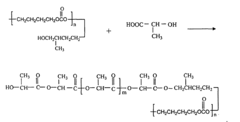
Producing method for polylactic acid-based copolymer
PatentActiveEP2184307A1
Innovation
- A method for preparing poly (lactic acid)-based copolymers by introducing flexible chain segments through copolymerization with polycaprolactone and aliphatic polycarbonate diols, enhancing molecular weight and mechanical properties, and incorporating chain extension processes to improve toughness, elasticity, and biodegradability.

Biocompatible polymer capable of crosslinking, having improved elasticity and elongation, and shape memory properties, and preparation method and use thereof
PatentWO2024172476A1
Innovation
- A biocompatible polymer compound is developed by mixing polylactic acid with a polycaprolactone-polyglycidyl methacrylate copolymer, which improves compatibility and enhances elasticity, elongation, and shape memory properties, using specific copolymer formulations and cross-linking agents like potassium persulfate or UV crosslinking agents.


Environmental Impact Assessment of Modified PCL Materials
The environmental implications of modified polycaprolactone materials designed for enhanced high-temperature flexibility present a complex assessment framework requiring comprehensive evaluation across multiple impact categories. Traditional PCL modifications often involve chemical additives, cross-linking agents, and polymer blending techniques that fundamentally alter the material's environmental profile compared to unmodified PCL.
Life cycle assessment studies indicate that chemical modifications typically increase the carbon footprint during production phases. The incorporation of plasticizers, thermal stabilizers, and flexibility enhancers introduces additional synthetic compounds that may not share PCL's inherent biodegradability characteristics. These modifications can extend degradation timelines from PCL's typical 6-24 months under composting conditions to significantly longer periods, potentially compromising the material's primary environmental advantage.
Biodegradation pathways become increasingly complex with modified PCL formulations. While pure PCL undergoes enzymatic hydrolysis through lipase and esterase activity, chemical modifications can create molecular barriers that inhibit microbial access to degradable ester linkages. Cross-linked structures particularly demonstrate reduced biodegradation rates, with some formulations showing less than 30% degradation after standard composting periods.
Manufacturing environmental impacts escalate with modification complexity. Enhanced flexibility modifications often require elevated processing temperatures, extended reaction times, and additional purification steps, resulting in increased energy consumption and solvent usage. Volatile organic compound emissions during processing can increase by 15-40% compared to standard PCL production, depending on the modification approach employed.
End-of-life scenarios vary significantly based on modification type and application context. While some modified PCL materials maintain compatibility with industrial composting facilities, others require specialized disposal methods. High-temperature applications may introduce thermal degradation products during service life, potentially generating compounds that affect subsequent biodegradation processes or create environmental concerns during disposal.
Emerging bio-based modification strategies show promise for reducing environmental impact while maintaining performance benefits. Natural polymer blending, bio-derived plasticizers, and enzymatic modification techniques demonstrate improved environmental profiles compared to synthetic alternatives, though performance trade-offs often require careful optimization for specific high-temperature applications.
Life cycle assessment studies indicate that chemical modifications typically increase the carbon footprint during production phases. The incorporation of plasticizers, thermal stabilizers, and flexibility enhancers introduces additional synthetic compounds that may not share PCL's inherent biodegradability characteristics. These modifications can extend degradation timelines from PCL's typical 6-24 months under composting conditions to significantly longer periods, potentially compromising the material's primary environmental advantage.
Biodegradation pathways become increasingly complex with modified PCL formulations. While pure PCL undergoes enzymatic hydrolysis through lipase and esterase activity, chemical modifications can create molecular barriers that inhibit microbial access to degradable ester linkages. Cross-linked structures particularly demonstrate reduced biodegradation rates, with some formulations showing less than 30% degradation after standard composting periods.
Manufacturing environmental impacts escalate with modification complexity. Enhanced flexibility modifications often require elevated processing temperatures, extended reaction times, and additional purification steps, resulting in increased energy consumption and solvent usage. Volatile organic compound emissions during processing can increase by 15-40% compared to standard PCL production, depending on the modification approach employed.
End-of-life scenarios vary significantly based on modification type and application context. While some modified PCL materials maintain compatibility with industrial composting facilities, others require specialized disposal methods. High-temperature applications may introduce thermal degradation products during service life, potentially generating compounds that affect subsequent biodegradation processes or create environmental concerns during disposal.
Emerging bio-based modification strategies show promise for reducing environmental impact while maintaining performance benefits. Natural polymer blending, bio-derived plasticizers, and enzymatic modification techniques demonstrate improved environmental profiles compared to synthetic alternatives, though performance trade-offs often require careful optimization for specific high-temperature applications.
Safety Standards for High-Temperature Polymer Applications
The development of comprehensive safety standards for high-temperature polymer applications has become increasingly critical as industries push the boundaries of material performance in extreme environments. Current regulatory frameworks primarily focus on traditional polymer applications, leaving significant gaps in addressing the unique challenges posed by materials like polycaprolactone when subjected to elevated temperatures exceeding 100°C.
International standards organizations, including ASTM International and ISO, have established foundational guidelines for polymer testing and characterization. ASTM D648 provides standardized methods for determining heat deflection temperatures, while ISO 11357 outlines differential scanning calorimetry procedures for thermal analysis. However, these standards inadequately address the specific safety considerations for flexible polymers operating in high-temperature environments where mechanical integrity and chemical stability become paramount concerns.
The aerospace and automotive industries have pioneered sector-specific safety protocols that extend beyond general polymer standards. The Federal Aviation Administration's AC 25.853 addresses flammability requirements for aircraft interior materials, mandating comprehensive testing for heat release rates and smoke generation. Similarly, the automotive sector follows ISO 3795 for horizontal burning characteristics, though these standards require adaptation for next-generation flexible polymer applications.
Emerging safety considerations for high-temperature flexible polymers encompass thermal degradation monitoring, off-gassing assessment, and long-term mechanical property retention. The lack of standardized protocols for evaluating polymer flexibility maintenance at elevated temperatures represents a critical regulatory gap. Current testing methodologies fail to adequately simulate real-world conditions where polymers experience cyclic thermal loading combined with mechanical stress.
Future safety standard development must incorporate advanced characterization techniques including thermogravimetric analysis coupled with mass spectrometry for degradation product identification, dynamic mechanical analysis for temperature-dependent viscoelastic behavior assessment, and accelerated aging protocols that accurately predict long-term performance. The integration of artificial intelligence-driven predictive modeling into safety assessment frameworks will enable more comprehensive risk evaluation and establish performance thresholds that ensure both material functionality and operational safety in demanding high-temperature applications.
International standards organizations, including ASTM International and ISO, have established foundational guidelines for polymer testing and characterization. ASTM D648 provides standardized methods for determining heat deflection temperatures, while ISO 11357 outlines differential scanning calorimetry procedures for thermal analysis. However, these standards inadequately address the specific safety considerations for flexible polymers operating in high-temperature environments where mechanical integrity and chemical stability become paramount concerns.
The aerospace and automotive industries have pioneered sector-specific safety protocols that extend beyond general polymer standards. The Federal Aviation Administration's AC 25.853 addresses flammability requirements for aircraft interior materials, mandating comprehensive testing for heat release rates and smoke generation. Similarly, the automotive sector follows ISO 3795 for horizontal burning characteristics, though these standards require adaptation for next-generation flexible polymer applications.
Emerging safety considerations for high-temperature flexible polymers encompass thermal degradation monitoring, off-gassing assessment, and long-term mechanical property retention. The lack of standardized protocols for evaluating polymer flexibility maintenance at elevated temperatures represents a critical regulatory gap. Current testing methodologies fail to adequately simulate real-world conditions where polymers experience cyclic thermal loading combined with mechanical stress.
Future safety standard development must incorporate advanced characterization techniques including thermogravimetric analysis coupled with mass spectrometry for degradation product identification, dynamic mechanical analysis for temperature-dependent viscoelastic behavior assessment, and accelerated aging protocols that accurately predict long-term performance. The integration of artificial intelligence-driven predictive modeling into safety assessment frameworks will enable more comprehensive risk evaluation and establish performance thresholds that ensure both material functionality and operational safety in demanding high-temperature applications.
Unlock deeper insights with Patsnap Eureka Quick Research — get a full tech report to explore trends and direct your research. Try now!
Generate Your Research Report Instantly with AI Agent
Supercharge your innovation with Patsnap Eureka AI Agent Platform!