

Eutectic Structural Load Sharing: Impact Evaluation
MAR 9, 20269 MIN READ
Generate Your Research Report Instantly with AI Agent
PatSnap Eureka helps you evaluate technical feasibility & market potential.
Eutectic Alloy Development Background and Structural Goals
Eutectic alloys represent a fundamental class of metallic materials characterized by their unique microstructural composition, where two or more phases solidify simultaneously at a specific temperature and composition. The development of eutectic alloys traces back to early metallurgical discoveries in the 19th century, when scientists first observed the distinctive melting behavior and microstructural characteristics of these materials. The eutectic reaction, where a liquid phase transforms into two solid phases upon cooling, creates naturally occurring composite structures with alternating phases that can provide exceptional mechanical properties.
The historical evolution of eutectic alloy development has been driven by the pursuit of materials that combine the beneficial properties of multiple constituent phases. Early applications focused primarily on casting alloys, where the low melting point and excellent fluidity of eutectic compositions provided manufacturing advantages. However, as understanding of microstructure-property relationships advanced, researchers recognized the potential for eutectic alloys to serve as natural composites with superior load-bearing capabilities.
Modern eutectic alloy development has shifted toward exploiting the inherent structural advantages of the eutectic microstructure for load sharing applications. The alternating lamellar or rod-like phases in eutectic structures create pathways for stress distribution that differ fundamentally from conventional single-phase materials. This microstructural architecture enables load transfer between phases with different mechanical properties, potentially leading to enhanced overall structural performance.
Contemporary research objectives in eutectic structural load sharing focus on quantifying and optimizing the impact of phase distribution, interface characteristics, and constituent phase properties on overall mechanical behavior. The primary goal involves developing predictive models that can accurately assess how loads are distributed between eutectic phases under various loading conditions. This understanding is crucial for designing eutectic alloys with tailored mechanical responses for specific structural applications.
The structural goals encompass achieving optimal load sharing efficiency through controlled microstructural parameters such as phase spacing, volume fraction, and interface bonding strength. Advanced characterization techniques and computational modeling approaches are being employed to establish relationships between microstructural features and macroscopic mechanical properties. These efforts aim to enable the rational design of eutectic alloys with predetermined load sharing characteristics, ultimately leading to materials with superior strength-to-weight ratios and enhanced damage tolerance compared to conventional structural materials.
The historical evolution of eutectic alloy development has been driven by the pursuit of materials that combine the beneficial properties of multiple constituent phases. Early applications focused primarily on casting alloys, where the low melting point and excellent fluidity of eutectic compositions provided manufacturing advantages. However, as understanding of microstructure-property relationships advanced, researchers recognized the potential for eutectic alloys to serve as natural composites with superior load-bearing capabilities.
Modern eutectic alloy development has shifted toward exploiting the inherent structural advantages of the eutectic microstructure for load sharing applications. The alternating lamellar or rod-like phases in eutectic structures create pathways for stress distribution that differ fundamentally from conventional single-phase materials. This microstructural architecture enables load transfer between phases with different mechanical properties, potentially leading to enhanced overall structural performance.
Contemporary research objectives in eutectic structural load sharing focus on quantifying and optimizing the impact of phase distribution, interface characteristics, and constituent phase properties on overall mechanical behavior. The primary goal involves developing predictive models that can accurately assess how loads are distributed between eutectic phases under various loading conditions. This understanding is crucial for designing eutectic alloys with tailored mechanical responses for specific structural applications.
The structural goals encompass achieving optimal load sharing efficiency through controlled microstructural parameters such as phase spacing, volume fraction, and interface bonding strength. Advanced characterization techniques and computational modeling approaches are being employed to establish relationships between microstructural features and macroscopic mechanical properties. These efforts aim to enable the rational design of eutectic alloys with predetermined load sharing characteristics, ultimately leading to materials with superior strength-to-weight ratios and enhanced damage tolerance compared to conventional structural materials.
Market Demand for Advanced Eutectic Structural Materials
The aerospace industry represents the most significant market segment driving demand for advanced eutectic structural materials, particularly in applications requiring exceptional strength-to-weight ratios and thermal stability. Commercial aviation manufacturers are increasingly seeking materials that can withstand extreme operational conditions while reducing overall aircraft weight to improve fuel efficiency. Military aerospace applications demand even higher performance standards, with requirements for materials that maintain structural integrity under combat conditions and extended service life.
Automotive sector demand is rapidly expanding as manufacturers transition toward lightweight vehicle designs to meet stringent emission regulations and electric vehicle performance requirements. Advanced eutectic materials offer superior mechanical properties compared to traditional aluminum alloys, enabling significant weight reduction without compromising safety standards. The growing emphasis on vehicle electrification has created additional demand for materials with enhanced thermal management capabilities.
Energy infrastructure applications, particularly in renewable energy systems, represent an emerging high-growth market segment. Wind turbine manufacturers require materials capable of withstanding cyclic loading and environmental exposure over decades of operation. Solar panel mounting systems and concentrated solar power installations demand materials with excellent corrosion resistance and dimensional stability under thermal cycling.
Industrial manufacturing equipment represents a substantial market opportunity, driven by the need for precision machinery components that maintain accuracy under high-stress conditions. Advanced eutectic materials enable the production of lighter, more durable machine tools and manufacturing equipment, contributing to improved productivity and reduced maintenance costs.
The marine industry shows increasing interest in advanced eutectic materials for both commercial shipping and offshore applications. These materials offer superior corrosion resistance in marine environments while providing the structural performance required for large-scale maritime infrastructure. Offshore wind installations and deep-sea exploration equipment represent particularly demanding applications driving material innovation.
Market growth is further supported by increasing regulatory pressure for improved safety standards across multiple industries. Advanced eutectic materials enable compliance with evolving safety requirements while providing economic benefits through extended service life and reduced maintenance requirements. The convergence of performance demands and regulatory compliance creates a compelling value proposition for material adoption across diverse industrial applications.
Automotive sector demand is rapidly expanding as manufacturers transition toward lightweight vehicle designs to meet stringent emission regulations and electric vehicle performance requirements. Advanced eutectic materials offer superior mechanical properties compared to traditional aluminum alloys, enabling significant weight reduction without compromising safety standards. The growing emphasis on vehicle electrification has created additional demand for materials with enhanced thermal management capabilities.
Energy infrastructure applications, particularly in renewable energy systems, represent an emerging high-growth market segment. Wind turbine manufacturers require materials capable of withstanding cyclic loading and environmental exposure over decades of operation. Solar panel mounting systems and concentrated solar power installations demand materials with excellent corrosion resistance and dimensional stability under thermal cycling.
Industrial manufacturing equipment represents a substantial market opportunity, driven by the need for precision machinery components that maintain accuracy under high-stress conditions. Advanced eutectic materials enable the production of lighter, more durable machine tools and manufacturing equipment, contributing to improved productivity and reduced maintenance costs.
The marine industry shows increasing interest in advanced eutectic materials for both commercial shipping and offshore applications. These materials offer superior corrosion resistance in marine environments while providing the structural performance required for large-scale maritime infrastructure. Offshore wind installations and deep-sea exploration equipment represent particularly demanding applications driving material innovation.
Market growth is further supported by increasing regulatory pressure for improved safety standards across multiple industries. Advanced eutectic materials enable compliance with evolving safety requirements while providing economic benefits through extended service life and reduced maintenance requirements. The convergence of performance demands and regulatory compliance creates a compelling value proposition for material adoption across diverse industrial applications.
Current Eutectic Load Sharing Challenges and Limitations
Current eutectic load sharing systems face significant challenges in achieving optimal structural performance due to inherent material property mismatches between constituent phases. The primary limitation stems from the differential thermal expansion coefficients of eutectic components, which create internal stresses during temperature fluctuations. These thermal stresses can lead to premature failure at phase boundaries, compromising the overall load-bearing capacity of the structure.
Interface bonding strength represents another critical constraint in eutectic load sharing applications. The metallurgical bond between different eutectic phases often exhibits lower strength compared to the bulk materials, creating weak points that concentrate stress during loading. This phenomenon is particularly pronounced in high-stress environments where the interface becomes the primary failure initiation site, limiting the system's ability to effectively distribute loads across all phases.
Scale effects pose substantial challenges for eutectic load sharing implementation. While laboratory-scale specimens may demonstrate promising load distribution characteristics, scaling up to industrial applications often reveals unexpected failure modes. The increased volume introduces statistical variations in microstructure, leading to non-uniform load distribution patterns that deviate significantly from theoretical predictions.
Processing-induced defects further complicate eutectic load sharing performance. Solidification rates, cooling gradients, and compositional segregation during manufacturing create microstructural irregularities that disrupt ideal load sharing mechanisms. These defects act as stress concentrators, causing localized overloading of certain phases while underutilizing others, thereby reducing overall structural efficiency.
Dynamic loading conditions present additional limitations for current eutectic systems. The different elastic moduli and damping characteristics of constituent phases result in complex stress wave propagation patterns during impact or cyclic loading. This leads to phase-dependent strain rates and potential desynchronization of load sharing, particularly under high-frequency loading scenarios.
Environmental degradation mechanisms also constrain long-term performance. Differential corrosion rates between eutectic phases can alter the load sharing balance over time, with preferential attack on one phase leading to progressive load redistribution to the remaining components. This evolutionary degradation process makes it challenging to predict long-term structural integrity and establish reliable design margins for critical applications.
Interface bonding strength represents another critical constraint in eutectic load sharing applications. The metallurgical bond between different eutectic phases often exhibits lower strength compared to the bulk materials, creating weak points that concentrate stress during loading. This phenomenon is particularly pronounced in high-stress environments where the interface becomes the primary failure initiation site, limiting the system's ability to effectively distribute loads across all phases.
Scale effects pose substantial challenges for eutectic load sharing implementation. While laboratory-scale specimens may demonstrate promising load distribution characteristics, scaling up to industrial applications often reveals unexpected failure modes. The increased volume introduces statistical variations in microstructure, leading to non-uniform load distribution patterns that deviate significantly from theoretical predictions.
Processing-induced defects further complicate eutectic load sharing performance. Solidification rates, cooling gradients, and compositional segregation during manufacturing create microstructural irregularities that disrupt ideal load sharing mechanisms. These defects act as stress concentrators, causing localized overloading of certain phases while underutilizing others, thereby reducing overall structural efficiency.
Dynamic loading conditions present additional limitations for current eutectic systems. The different elastic moduli and damping characteristics of constituent phases result in complex stress wave propagation patterns during impact or cyclic loading. This leads to phase-dependent strain rates and potential desynchronization of load sharing, particularly under high-frequency loading scenarios.
Environmental degradation mechanisms also constrain long-term performance. Differential corrosion rates between eutectic phases can alter the load sharing balance over time, with preferential attack on one phase leading to progressive load redistribution to the remaining components. This evolutionary degradation process makes it challenging to predict long-term structural integrity and establish reliable design margins for critical applications.
Existing Eutectic Load Distribution Solutions
01 Eutectic bonding for load distribution in semiconductor devices
Eutectic bonding techniques are employed to create strong mechanical and electrical connections in semiconductor packaging. The eutectic structure formed at the interface enables effective load sharing between bonded components by distributing mechanical stresses uniformly across the joint. This approach improves reliability and thermal management in power electronics and integrated circuits by creating a metallurgical bond that can withstand thermal cycling and mechanical loads.- Eutectic bonding for semiconductor packaging and load distribution: Eutectic bonding techniques are employed in semiconductor packaging to create strong mechanical and electrical connections. The eutectic structure formed at the interface between different materials enables effective load sharing by distributing mechanical stresses across the bonded area. This approach improves reliability and thermal management in electronic devices by ensuring uniform stress distribution during thermal cycling and mechanical loading.
- Composite materials with eutectic phases for structural applications: Composite materials incorporating eutectic phases are designed to achieve enhanced load-bearing capabilities. The eutectic microstructure provides a balanced combination of strength and ductility, allowing multiple phases to share applied loads effectively. This results in improved mechanical properties such as tensile strength, fatigue resistance, and impact toughness for structural components in aerospace and automotive applications.
- Eutectic alloy systems for thermal interface materials: Eutectic alloy compositions are utilized as thermal interface materials to facilitate heat dissipation while maintaining mechanical integrity. The eutectic structure enables efficient load transfer between components while providing low thermal resistance. These materials are particularly useful in power electronics and high-performance computing applications where both thermal management and mechanical stability are critical requirements.
- Load sharing mechanisms in eutectic solder joints: Eutectic solder joints exhibit unique load sharing characteristics due to their fine-grained microstructure. The alternating phases in the eutectic structure distribute mechanical and thermal stresses more uniformly compared to single-phase materials. This load sharing mechanism enhances the reliability of solder joints in electronic assemblies by reducing stress concentrations and preventing premature failure under cyclic loading conditions.
- Eutectic microstructures in high-temperature structural materials: High-temperature structural materials with eutectic microstructures demonstrate superior load sharing capabilities under extreme conditions. The interpenetrating network of eutectic phases provides multiple load-bearing paths, enhancing creep resistance and high-temperature strength. These materials are designed for applications in turbine blades, heat exchangers, and other components subjected to elevated temperatures and mechanical stresses.
02 Multi-phase eutectic alloys for structural load bearing
Multi-phase eutectic alloys are designed to achieve superior load sharing characteristics through their unique microstructure. The alternating phases in the eutectic structure provide complementary mechanical properties, where harder phases resist deformation while softer phases accommodate strain. This synergistic effect enables the material to distribute loads more effectively across the structure, resulting in enhanced strength, toughness, and fatigue resistance for structural applications.Expand Specific Solutions03 Eutectic solder joints for mechanical stress distribution
Eutectic solder compositions are utilized to create joints that effectively share mechanical loads in electronic assemblies. The fine-grained eutectic microstructure provides uniform properties throughout the joint, enabling consistent stress distribution during thermal expansion and mechanical loading. This technology is particularly important for flip-chip bonding and ball grid array connections where reliable load transfer between components is critical for long-term reliability.Expand Specific Solutions04 Eutectic composite structures for enhanced load capacity
Eutectic composite materials feature reinforcing phases distributed within a matrix through eutectic solidification, creating structures optimized for load sharing. The reinforcing phases are naturally aligned and uniformly distributed during the eutectic transformation, providing continuous load paths throughout the material. This architecture enables efficient transfer of applied loads between phases, resulting in composites with high specific strength and stiffness suitable for aerospace and automotive applications.Expand Specific Solutions05 Directionally solidified eutectic structures for anisotropic load distribution
Directionally solidified eutectic materials exhibit controlled microstructural alignment that enables tailored load sharing in specific directions. The aligned eutectic phases create preferential load paths along the solidification direction, providing superior strength and creep resistance under directional loading. This technology is applied in turbine blades and other high-temperature structural components where controlled load distribution is essential for performance and durability.Expand Specific Solutions
Key Players in Eutectic Alloy and Structural Materials Industry
The eutectic structural load sharing technology is in its early development stage, representing an emerging field within advanced materials engineering. The market remains nascent with limited commercial applications, primarily concentrated in specialized sectors requiring high-performance structural solutions. Technology maturity varies significantly across different players, with established research institutions like Fraunhofer-Gesellschaft, Shanghai Jiao Tong University, and Northwestern University leading fundamental research efforts, while industrial giants such as Hitachi Ltd. and Vestas Wind Systems A/S explore practical applications in energy and manufacturing sectors. Chinese universities including Southeast University, Zhejiang University, and China University of Mining & Technology contribute substantial academic research, particularly in computational modeling and material characterization. The competitive landscape shows a research-heavy environment with limited commercial deployment, indicating the technology requires further development before widespread market adoption becomes viable.
Hitachi Ltd.
Technical Solution: Hitachi has developed comprehensive eutectic structural load sharing solutions for power generation and industrial machinery applications. Their technology emphasizes the use of advanced eutectic alloy systems in turbine components and heavy machinery structures where load distribution is critical for operational reliability. The company's approach includes sophisticated modeling techniques to predict eutectic phase behavior under various loading conditions and temperature ranges. Hitachi's impact evaluation framework incorporates both computational analysis and extensive laboratory testing to assess the effectiveness of load sharing mechanisms, with particular focus on long-term durability and maintenance requirements in industrial environments.
Strengths: Strong industrial machinery expertise and robust testing methodologies. Weaknesses: Complex implementation requirements and higher initial investment costs compared to conventional approaches.
Services Petroliers Schlumberger SA
Technical Solution: Schlumberger has pioneered eutectic structural load sharing technologies for downhole drilling equipment and completion tools in harsh oil and gas environments. Their approach utilizes specialized eutectic alloy compositions designed to withstand extreme pressures and temperatures while distributing mechanical loads effectively across tool assemblies. The company's technology focuses on creating optimized eutectic microstructures that provide enhanced fatigue resistance and improved load distribution in critical drilling components. Their impact evaluation methodology includes advanced finite element analysis combined with field testing to assess performance under actual operating conditions, ensuring reliable load sharing characteristics in demanding subsurface applications.
Strengths: Proven performance in extreme environments and comprehensive field testing capabilities. Weaknesses: High development costs and specialized application focus may limit broader market penetration.
Core Patents in Eutectic Structural Load Sharing
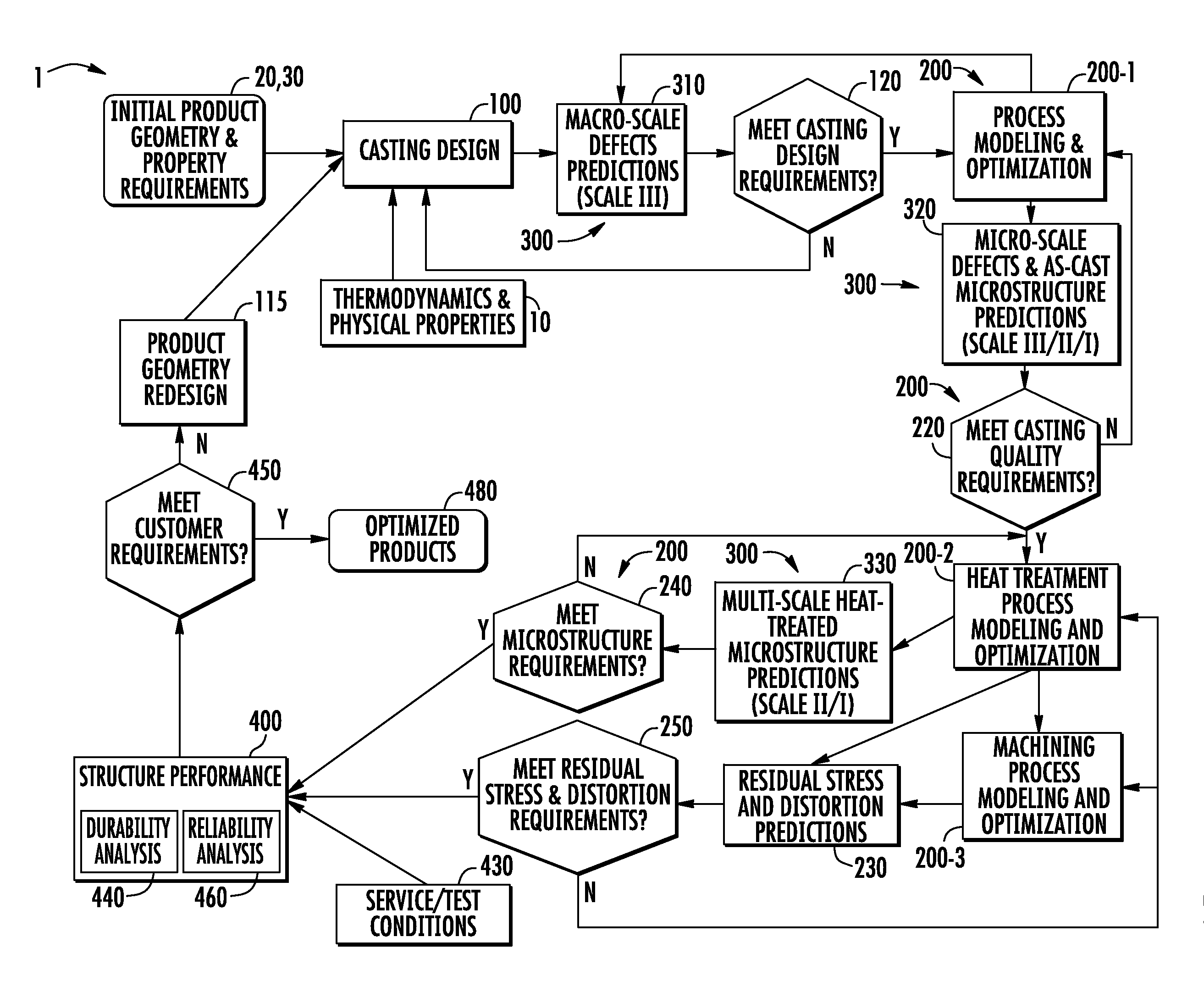
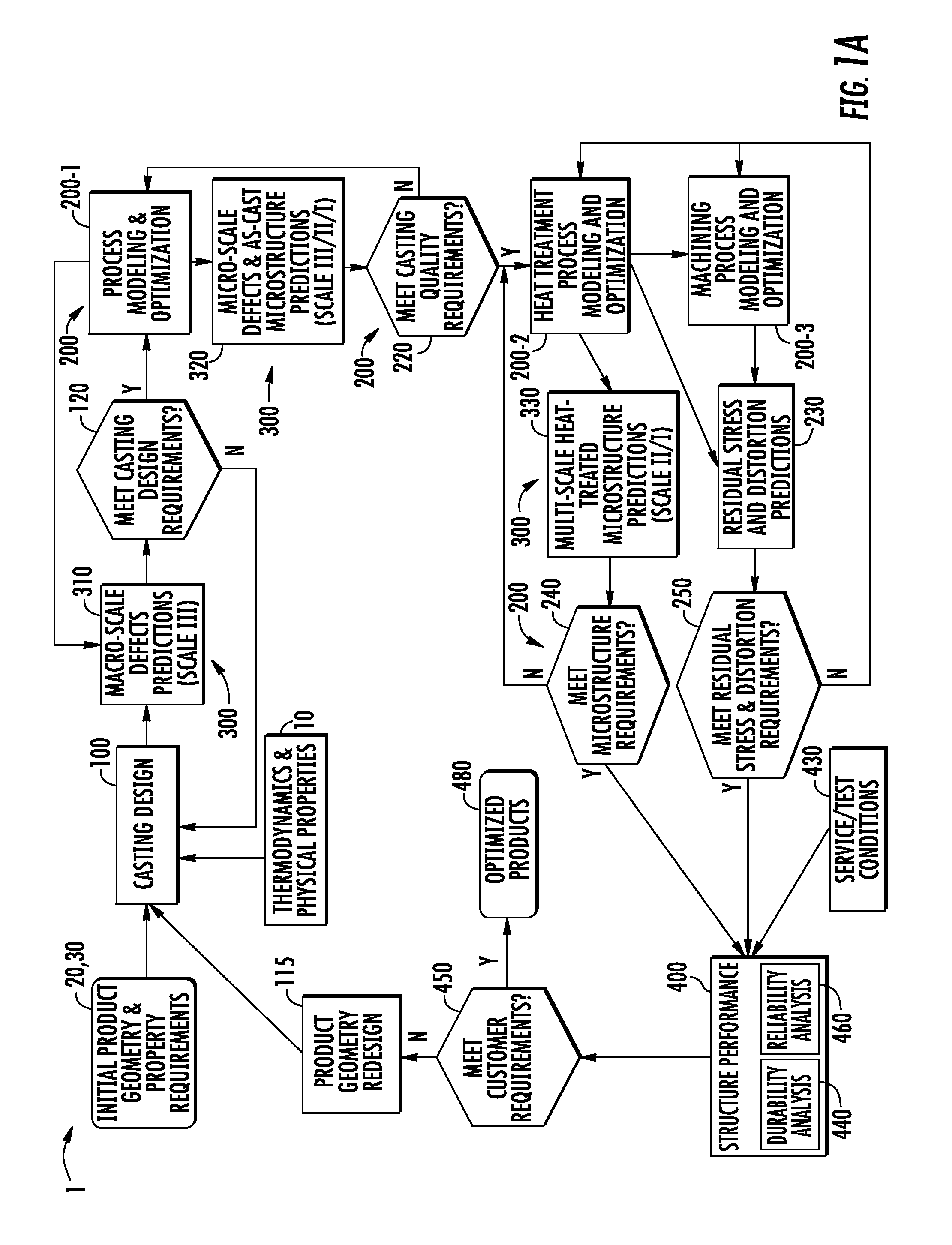
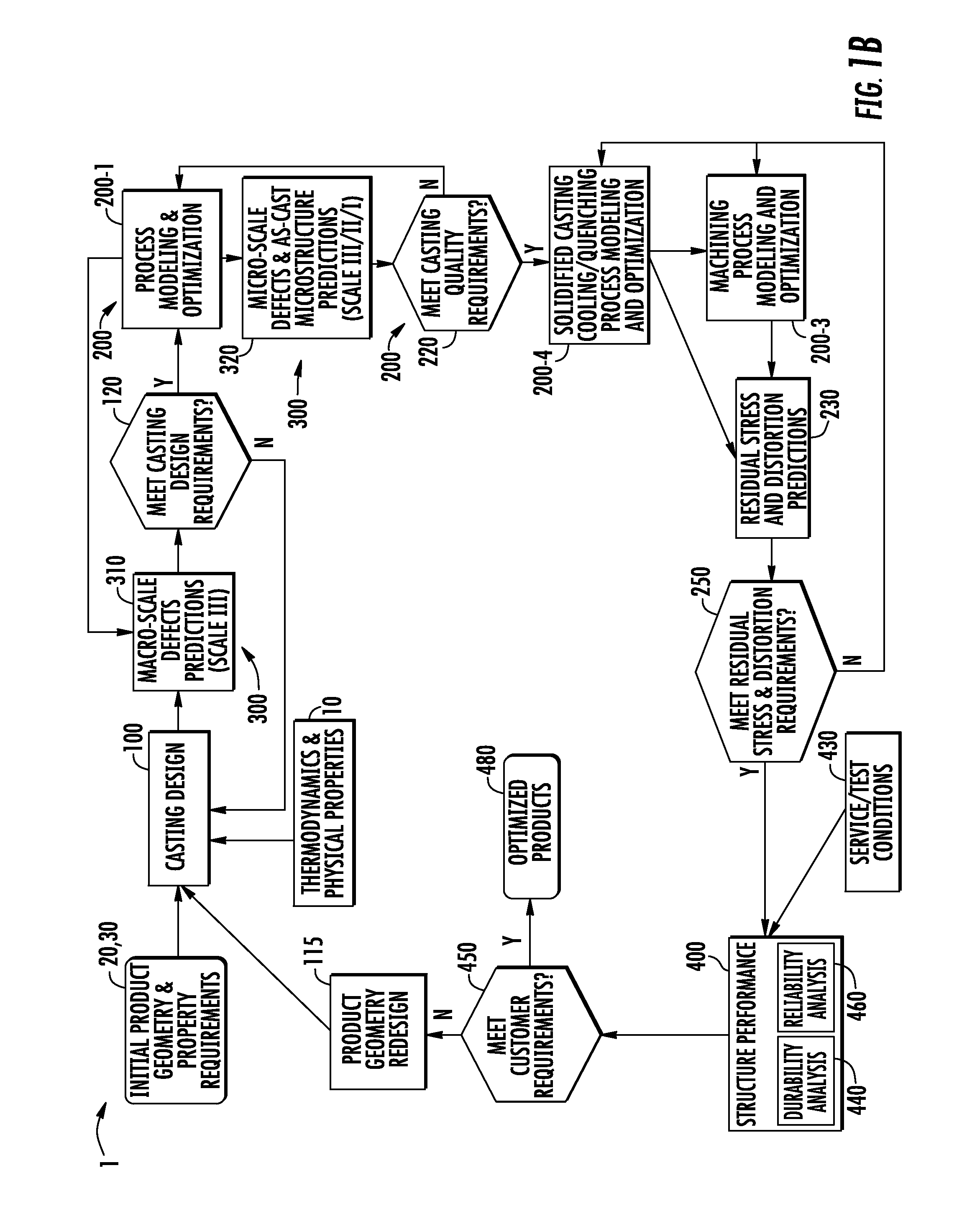
Systems and methods for computationally developing manufacturable and durable cast components
PatentActiveUS20120232685A1
Innovation
- A computational method that integrates various modules, including casting design, process modeling, multiscale defects and microstructure prediction, and structure performance, to simulate the casting process, providing a physically accurate and computationally efficient approach by using a computer system with a casting design module, process modeling and optimization module, and structure performance module, which includes expert systems and thermodynamic models to predict microstructural morphology, defects, and component performance.

Method for predicting structural response of liquid-propellant rocket engine to impact load
PatentActiveEP4257818A1
Innovation
- A method that simplifies the engine complete-machine model to a beam structure with solid gas elbow and housing structures, models structural dynamics, and applies multi-point impact loads derived from high-speed photography data to simulate the engine's structural response, analyzing structural strength and rocking angles under both standard and high-working conditions.


Material Safety Standards for Eutectic Structures
Material safety standards for eutectic structures represent a critical framework governing the design, manufacturing, and deployment of these advanced materials in load-bearing applications. Current international standards primarily derive from established frameworks such as ASTM E8/E8M for tensile testing, ISO 6892 for metallic materials, and ASME Boiler and Pressure Vessel Code Section VIII for structural applications. However, these conventional standards inadequately address the unique characteristics of eutectic structures, particularly their heterogeneous microstructure and complex failure mechanisms.
The existing regulatory landscape lacks specific provisions for eutectic alloy systems, creating significant gaps in safety assessment protocols. Traditional material standards assume homogeneous properties, while eutectic structures exhibit distinct phase-dependent behaviors that require specialized evaluation criteria. This discrepancy necessitates the development of tailored safety standards that account for interphase boundary integrity, differential thermal expansion coefficients, and phase-specific mechanical properties.
Emerging safety standards for eutectic structures focus on multi-scale characterization requirements, encompassing microstructural stability assessments, interfacial bond strength evaluations, and long-term degradation monitoring protocols. These standards emphasize the importance of phase fraction control, with typical specifications requiring eutectic phase distributions within ±5% of design targets to ensure predictable mechanical behavior.
Critical safety parameters include minimum interfacial shear strength thresholds, typically ranging from 150-300 MPa depending on the specific eutectic system, and maximum allowable microstructural coarsening rates under service conditions. Temperature-dependent safety factors are particularly stringent, often requiring 2.5-3.0 times higher margins compared to conventional materials due to the potential for phase transformation-induced property changes.
Quality assurance protocols mandate comprehensive non-destructive testing procedures, including advanced ultrasonic inspection techniques capable of detecting interfacial defects smaller than 50 micrometers. Additionally, accelerated aging tests under combined thermal and mechanical loading conditions are becoming standard requirements to validate long-term structural integrity and establish reliable service life predictions for eutectic structural components.
The existing regulatory landscape lacks specific provisions for eutectic alloy systems, creating significant gaps in safety assessment protocols. Traditional material standards assume homogeneous properties, while eutectic structures exhibit distinct phase-dependent behaviors that require specialized evaluation criteria. This discrepancy necessitates the development of tailored safety standards that account for interphase boundary integrity, differential thermal expansion coefficients, and phase-specific mechanical properties.
Emerging safety standards for eutectic structures focus on multi-scale characterization requirements, encompassing microstructural stability assessments, interfacial bond strength evaluations, and long-term degradation monitoring protocols. These standards emphasize the importance of phase fraction control, with typical specifications requiring eutectic phase distributions within ±5% of design targets to ensure predictable mechanical behavior.
Critical safety parameters include minimum interfacial shear strength thresholds, typically ranging from 150-300 MPa depending on the specific eutectic system, and maximum allowable microstructural coarsening rates under service conditions. Temperature-dependent safety factors are particularly stringent, often requiring 2.5-3.0 times higher margins compared to conventional materials due to the potential for phase transformation-induced property changes.
Quality assurance protocols mandate comprehensive non-destructive testing procedures, including advanced ultrasonic inspection techniques capable of detecting interfacial defects smaller than 50 micrometers. Additionally, accelerated aging tests under combined thermal and mechanical loading conditions are becoming standard requirements to validate long-term structural integrity and establish reliable service life predictions for eutectic structural components.
Impact Assessment Methods for Eutectic Load Performance
The assessment of eutectic load performance requires sophisticated methodological frameworks that can accurately capture the complex interactions between constituent phases during mechanical loading. Traditional evaluation approaches often fall short in addressing the unique characteristics of eutectic structures, where load distribution mechanisms differ significantly from conventional single-phase materials.
Quantitative assessment methodologies have evolved to incorporate multi-scale analysis techniques, ranging from microscopic phase-level evaluations to macroscopic structural performance metrics. Digital image correlation (DIC) has emerged as a primary tool for real-time strain field mapping across eutectic interfaces, enabling precise measurement of load transfer efficiency between phases. This technique provides critical insights into localized stress concentrations and deformation patterns that conventional testing methods cannot capture.
Finite element modeling approaches specifically tailored for eutectic systems have been developed to complement experimental observations. These computational frameworks incorporate phase-specific material properties, interface characteristics, and geometric considerations to predict load sharing behavior under various loading conditions. Advanced modeling techniques utilize representative volume elements (RVE) that accurately represent the microstructural features of eutectic systems.
Mechanical testing protocols have been standardized to evaluate eutectic load performance through controlled loading scenarios. These include tensile, compressive, and cyclic loading tests designed to isolate specific aspects of load sharing mechanisms. High-resolution monitoring systems capture real-time data on stress distribution, strain evolution, and failure initiation points across different phases.
Statistical analysis methods play a crucial role in interpreting the complex datasets generated from eutectic performance evaluations. Probabilistic approaches account for microstructural variability and provide confidence intervals for performance predictions. Machine learning algorithms are increasingly being integrated to identify patterns in load sharing behavior that traditional analytical methods might overlook.
Comparative assessment frameworks enable benchmarking of different eutectic compositions and processing conditions against established performance criteria. These methodologies incorporate weighted scoring systems that consider multiple performance indicators, including load capacity, deformation uniformity, and failure resistance, providing comprehensive evaluation metrics for optimization purposes.
Quantitative assessment methodologies have evolved to incorporate multi-scale analysis techniques, ranging from microscopic phase-level evaluations to macroscopic structural performance metrics. Digital image correlation (DIC) has emerged as a primary tool for real-time strain field mapping across eutectic interfaces, enabling precise measurement of load transfer efficiency between phases. This technique provides critical insights into localized stress concentrations and deformation patterns that conventional testing methods cannot capture.
Finite element modeling approaches specifically tailored for eutectic systems have been developed to complement experimental observations. These computational frameworks incorporate phase-specific material properties, interface characteristics, and geometric considerations to predict load sharing behavior under various loading conditions. Advanced modeling techniques utilize representative volume elements (RVE) that accurately represent the microstructural features of eutectic systems.
Mechanical testing protocols have been standardized to evaluate eutectic load performance through controlled loading scenarios. These include tensile, compressive, and cyclic loading tests designed to isolate specific aspects of load sharing mechanisms. High-resolution monitoring systems capture real-time data on stress distribution, strain evolution, and failure initiation points across different phases.
Statistical analysis methods play a crucial role in interpreting the complex datasets generated from eutectic performance evaluations. Probabilistic approaches account for microstructural variability and provide confidence intervals for performance predictions. Machine learning algorithms are increasingly being integrated to identify patterns in load sharing behavior that traditional analytical methods might overlook.
Comparative assessment frameworks enable benchmarking of different eutectic compositions and processing conditions against established performance criteria. These methodologies incorporate weighted scoring systems that consider multiple performance indicators, including load capacity, deformation uniformity, and failure resistance, providing comprehensive evaluation metrics for optimization purposes.
Unlock deeper insights with PatSnap Eureka Quick Research — get a full tech report to explore trends and direct your research. Try now!
Generate Your Research Report Instantly with AI Agent
Supercharge your innovation with PatSnap Eureka AI Agent Platform!