

Eutectic Systems vs Composite Materials: Strength Comparisons
APR 27, 20269 MIN READ
Generate Your Research Report Instantly with AI Agent
PatSnap Eureka helps you evaluate technical feasibility & market potential.
Eutectic and Composite Materials Background and Objectives
The development of advanced materials has been fundamentally driven by the pursuit of superior mechanical properties, particularly strength-to-weight ratios that enable breakthrough applications across aerospace, automotive, and structural engineering sectors. Two distinct material paradigms have emerged as leading candidates for high-performance applications: eutectic systems and composite materials, each representing fundamentally different approaches to achieving enhanced mechanical properties.
Eutectic systems represent a class of materials formed through controlled solidification processes where two or more components create intimate microstructural arrangements at the atomic level. These materials leverage the natural tendency of certain material combinations to form regular, alternating phases during cooling, resulting in inherently strong interfacial bonding and optimized load distribution mechanisms. The eutectic approach has gained significant attention due to its potential for creating materials with exceptional strength properties while maintaining relatively simple processing requirements.
Composite materials, conversely, achieve superior properties through the strategic combination of distinct constituent materials, typically involving reinforcing elements embedded within a matrix phase. This approach allows for precise control over material properties through careful selection of reinforcement type, orientation, volume fraction, and interfacial characteristics. The composite methodology has demonstrated remarkable success in creating lightweight, high-strength materials tailored for specific loading conditions and environmental requirements.
The historical evolution of both material classes reveals parallel development trajectories, with eutectic systems emerging from metallurgical advances in controlled solidification techniques, while composite materials evolved from the aerospace industry's demand for lightweight, high-performance structures. Recent decades have witnessed accelerated development in both fields, driven by advances in processing technologies, characterization methods, and computational modeling capabilities.
The primary objective of comparing these material systems centers on establishing comprehensive understanding of their respective strength characteristics under various loading conditions, environmental factors, and application-specific requirements. This comparison seeks to identify the fundamental mechanisms governing strength development in each system, evaluate their performance boundaries, and determine optimal application domains for each approach.
Critical technical objectives include quantifying the relationship between microstructural features and macroscopic strength properties, understanding failure mechanisms and their predictability, assessing processing-property relationships, and evaluating long-term performance stability. Additionally, the comparison aims to identify potential hybrid approaches that might combine advantages from both material paradigms while mitigating individual limitations.
The strategic importance of this comparative analysis extends beyond academic interest, as material selection decisions significantly impact product performance, manufacturing costs, and market competitiveness across numerous industries seeking next-generation material solutions.
Eutectic systems represent a class of materials formed through controlled solidification processes where two or more components create intimate microstructural arrangements at the atomic level. These materials leverage the natural tendency of certain material combinations to form regular, alternating phases during cooling, resulting in inherently strong interfacial bonding and optimized load distribution mechanisms. The eutectic approach has gained significant attention due to its potential for creating materials with exceptional strength properties while maintaining relatively simple processing requirements.
Composite materials, conversely, achieve superior properties through the strategic combination of distinct constituent materials, typically involving reinforcing elements embedded within a matrix phase. This approach allows for precise control over material properties through careful selection of reinforcement type, orientation, volume fraction, and interfacial characteristics. The composite methodology has demonstrated remarkable success in creating lightweight, high-strength materials tailored for specific loading conditions and environmental requirements.
The historical evolution of both material classes reveals parallel development trajectories, with eutectic systems emerging from metallurgical advances in controlled solidification techniques, while composite materials evolved from the aerospace industry's demand for lightweight, high-performance structures. Recent decades have witnessed accelerated development in both fields, driven by advances in processing technologies, characterization methods, and computational modeling capabilities.
The primary objective of comparing these material systems centers on establishing comprehensive understanding of their respective strength characteristics under various loading conditions, environmental factors, and application-specific requirements. This comparison seeks to identify the fundamental mechanisms governing strength development in each system, evaluate their performance boundaries, and determine optimal application domains for each approach.
Critical technical objectives include quantifying the relationship between microstructural features and macroscopic strength properties, understanding failure mechanisms and their predictability, assessing processing-property relationships, and evaluating long-term performance stability. Additionally, the comparison aims to identify potential hybrid approaches that might combine advantages from both material paradigms while mitigating individual limitations.
The strategic importance of this comparative analysis extends beyond academic interest, as material selection decisions significantly impact product performance, manufacturing costs, and market competitiveness across numerous industries seeking next-generation material solutions.
Market Demand Analysis for Advanced Structural Materials
The global demand for advanced structural materials continues to expand across multiple high-performance sectors, driven by increasingly stringent requirements for strength-to-weight ratios, durability, and operational efficiency. Aerospace and defense industries represent the largest consumption segments, where both eutectic systems and composite materials compete for critical applications in aircraft components, spacecraft structures, and military equipment. The automotive sector follows closely, particularly with the accelerating transition toward electric vehicles that demand lightweight yet robust materials to optimize battery efficiency and vehicle range.
Industrial manufacturing and construction sectors demonstrate growing appetite for advanced structural materials, especially in applications requiring exceptional load-bearing capabilities under extreme conditions. Energy infrastructure, including wind turbine components, nuclear reactor vessels, and offshore drilling platforms, creates substantial demand for materials that can withstand prolonged stress cycles and harsh environmental conditions. The marine industry increasingly seeks advanced materials for hull construction and propulsion systems where corrosion resistance and structural integrity remain paramount.
Market dynamics reveal distinct preferences between eutectic systems and composite materials based on specific application requirements. Eutectic alloys find strong demand in high-temperature applications where thermal stability and metallurgical bonding provide advantages over fiber-reinforced composites. Conversely, composite materials dominate markets requiring maximum strength-to-weight optimization, particularly in aerospace primary structures and sporting goods manufacturing.
Regional demand patterns show concentrated growth in Asia-Pacific markets, driven by expanding aerospace manufacturing capabilities and infrastructure development projects. North American and European markets maintain steady demand focused on premium applications requiring cutting-edge material performance. The semiconductor and electronics industries create emerging demand for both material categories in specialized applications requiring precise thermal management and mechanical stability.
Supply chain considerations increasingly influence market demand, with manufacturers seeking materials offering reliable sourcing, consistent quality, and scalable production capabilities. Environmental regulations and sustainability requirements drive demand toward materials with favorable lifecycle assessments and recyclability characteristics, creating new evaluation criteria beyond traditional strength comparisons.
Industrial manufacturing and construction sectors demonstrate growing appetite for advanced structural materials, especially in applications requiring exceptional load-bearing capabilities under extreme conditions. Energy infrastructure, including wind turbine components, nuclear reactor vessels, and offshore drilling platforms, creates substantial demand for materials that can withstand prolonged stress cycles and harsh environmental conditions. The marine industry increasingly seeks advanced materials for hull construction and propulsion systems where corrosion resistance and structural integrity remain paramount.
Market dynamics reveal distinct preferences between eutectic systems and composite materials based on specific application requirements. Eutectic alloys find strong demand in high-temperature applications where thermal stability and metallurgical bonding provide advantages over fiber-reinforced composites. Conversely, composite materials dominate markets requiring maximum strength-to-weight optimization, particularly in aerospace primary structures and sporting goods manufacturing.
Regional demand patterns show concentrated growth in Asia-Pacific markets, driven by expanding aerospace manufacturing capabilities and infrastructure development projects. North American and European markets maintain steady demand focused on premium applications requiring cutting-edge material performance. The semiconductor and electronics industries create emerging demand for both material categories in specialized applications requiring precise thermal management and mechanical stability.
Supply chain considerations increasingly influence market demand, with manufacturers seeking materials offering reliable sourcing, consistent quality, and scalable production capabilities. Environmental regulations and sustainability requirements drive demand toward materials with favorable lifecycle assessments and recyclability characteristics, creating new evaluation criteria beyond traditional strength comparisons.
Current Strength Performance Status and Technical Challenges
Eutectic systems currently demonstrate exceptional strength characteristics through their unique microstructural arrangements, where two or more phases form simultaneously during solidification. These systems typically achieve tensile strengths ranging from 200-800 MPa, with some advanced eutectic alloys reaching up to 1200 MPa. The strength derives from the fine lamellar or rod-like structures that form naturally during the eutectic reaction, creating effective load transfer mechanisms between phases. Notable examples include Al-Si eutectics achieving 300-400 MPa tensile strength and Fe-C eutectics reaching 600-700 MPa.
Composite materials exhibit a broader strength performance spectrum, heavily dependent on reinforcement type, volume fraction, and matrix-fiber interface quality. Carbon fiber reinforced polymers (CFRP) demonstrate tensile strengths exceeding 3000 MPa in fiber direction, while metal matrix composites typically range from 400-1500 MPa. However, composite strength performance is highly anisotropic, with significant variations between longitudinal and transverse directions. Glass fiber composites generally achieve 200-800 MPa, while ceramic matrix composites can reach 300-600 MPa under optimal conditions.
The primary technical challenge in eutectic systems lies in controlling the interphase spacing and morphology during solidification. Rapid cooling rates are often required to achieve fine microstructures, but this can introduce residual stresses and processing difficulties. Additionally, eutectic systems face limitations in tailoring properties for specific applications, as the phase composition is thermodynamically fixed. Achieving uniform microstructures in large-scale components remains problematic due to varying cooling rates throughout the material volume.
Composite materials encounter significant challenges in interface optimization and manufacturing consistency. Fiber-matrix debonding represents a critical failure mode, particularly under cyclic loading conditions. Processing-induced defects such as voids, fiber misalignment, and resin-rich areas substantially reduce strength performance. Quality control during manufacturing becomes increasingly complex with component size and geometric complexity. Environmental degradation, including moisture absorption and thermal cycling effects, poses long-term durability concerns.
Both material systems struggle with scalability issues when transitioning from laboratory specimens to industrial applications. Cost-effectiveness remains a significant barrier, particularly for high-performance variants. The lack of standardized testing protocols for comparing strength performance across different loading conditions and environmental exposures complicates material selection processes. Additionally, predictive modeling capabilities for long-term performance under real-world conditions require substantial improvement to enable confident engineering design decisions.
Composite materials exhibit a broader strength performance spectrum, heavily dependent on reinforcement type, volume fraction, and matrix-fiber interface quality. Carbon fiber reinforced polymers (CFRP) demonstrate tensile strengths exceeding 3000 MPa in fiber direction, while metal matrix composites typically range from 400-1500 MPa. However, composite strength performance is highly anisotropic, with significant variations between longitudinal and transverse directions. Glass fiber composites generally achieve 200-800 MPa, while ceramic matrix composites can reach 300-600 MPa under optimal conditions.
The primary technical challenge in eutectic systems lies in controlling the interphase spacing and morphology during solidification. Rapid cooling rates are often required to achieve fine microstructures, but this can introduce residual stresses and processing difficulties. Additionally, eutectic systems face limitations in tailoring properties for specific applications, as the phase composition is thermodynamically fixed. Achieving uniform microstructures in large-scale components remains problematic due to varying cooling rates throughout the material volume.
Composite materials encounter significant challenges in interface optimization and manufacturing consistency. Fiber-matrix debonding represents a critical failure mode, particularly under cyclic loading conditions. Processing-induced defects such as voids, fiber misalignment, and resin-rich areas substantially reduce strength performance. Quality control during manufacturing becomes increasingly complex with component size and geometric complexity. Environmental degradation, including moisture absorption and thermal cycling effects, poses long-term durability concerns.
Both material systems struggle with scalability issues when transitioning from laboratory specimens to industrial applications. Cost-effectiveness remains a significant barrier, particularly for high-performance variants. The lack of standardized testing protocols for comparing strength performance across different loading conditions and environmental exposures complicates material selection processes. Additionally, predictive modeling capabilities for long-term performance under real-world conditions require substantial improvement to enable confident engineering design decisions.
Current Strength Enhancement Solutions and Approaches
01 Eutectic alloy systems for enhanced mechanical properties
Eutectic alloy compositions are designed to achieve optimal mechanical strength through controlled phase formation and microstructural engineering. These systems utilize the unique properties of eutectic solidification to create materials with improved tensile strength, hardness, and durability. The eutectic structure provides a balanced combination of phases that contribute to enhanced overall mechanical performance in various applications.- Eutectic alloy systems for enhanced mechanical properties: Eutectic alloy compositions are designed to achieve optimal microstructures that enhance the mechanical strength and durability of composite materials. These systems utilize the unique solidification characteristics of eutectic compositions to create fine-grained structures with improved load-bearing capabilities and resistance to deformation.
- Metal matrix composites with eutectic reinforcement: Metal matrix composites incorporating eutectic phases as reinforcement elements demonstrate superior strength characteristics. The eutectic microstructure provides uniform distribution of strengthening phases throughout the matrix, resulting in enhanced tensile strength, fatigue resistance, and overall structural integrity of the composite material.
- Processing methods for eutectic composite materials: Advanced processing techniques are employed to manufacture eutectic-based composite materials with optimized strength properties. These methods focus on controlling solidification parameters, thermal treatment processes, and fabrication conditions to achieve desired microstructural characteristics and mechanical performance in the final composite products.
- Ceramic-metal eutectic composites for structural applications: Ceramic-metal eutectic composite systems are developed to combine the high strength of ceramics with the toughness of metals. These materials exhibit exceptional mechanical properties including high temperature strength, wear resistance, and thermal stability, making them suitable for demanding structural applications where conventional materials may fail.
- Nanostructured eutectic systems for strength enhancement: Nanostructured eutectic systems utilize nanoscale phase distributions to achieve remarkable strength improvements in composite materials. The fine-scale eutectic microstructure creates numerous interfaces and grain boundaries that effectively impede dislocation movement, resulting in significant strengthening effects and improved mechanical performance compared to conventional composite materials.
02 Composite material reinforcement strategies
Advanced composite materials incorporate various reinforcement techniques to maximize strength-to-weight ratios and structural integrity. These approaches include fiber reinforcement, particle dispersion, and matrix optimization to achieve superior mechanical properties. The reinforcement strategies focus on load distribution, crack propagation resistance, and interfacial bonding between different phases within the composite structure.Expand Specific Solutions03 Microstructural control in eutectic-composite systems
Precise control of microstructural features in eutectic-composite systems enables optimization of mechanical strength through grain refinement, phase distribution, and interface engineering. These techniques involve controlling solidification parameters, cooling rates, and processing conditions to achieve desired microstructural characteristics that directly influence the final mechanical properties of the material.Expand Specific Solutions04 Processing methods for strength enhancement
Specialized processing techniques are employed to enhance the strength characteristics of eutectic systems and composite materials. These methods include thermal treatment processes, mechanical working, and advanced manufacturing techniques that optimize the material structure and properties. The processing approaches focus on achieving uniform distribution of phases and minimizing defects that could compromise mechanical performance.Expand Specific Solutions05 Multi-phase material design and optimization
Multi-phase material systems are engineered to leverage the synergistic effects of different phases in achieving superior strength properties. This approach involves careful selection and combination of materials with complementary characteristics, optimization of phase fractions, and control of interfacial properties. The design strategy aims to maximize the contribution of each phase while minimizing potential weaknesses in the overall system.Expand Specific Solutions
Major Players in Advanced Materials and Composites Industry
The eutectic systems versus composite materials strength comparison represents an emerging research domain in the early development stage, with significant growth potential driven by aerospace and automotive applications demanding lightweight, high-strength materials. The market remains fragmented across academic institutions and industrial players, with technology maturity varying significantly between sectors. Leading research institutions like MIT, Northeastern University, and Politecnico di Milano are advancing fundamental understanding, while companies such as Boeing, thyssenkrupp AG, and 3M Innovative Properties are translating discoveries into commercial applications. Industrial giants including General Dynamics Land Systems and Honeywell International Technologies are exploring military and aerospace implementations. The competitive landscape shows strong collaboration between universities like Michigan Technological University and East China University of Science & Technology with manufacturers like Murata Manufacturing and NIKE for specialized applications, indicating technology transfer from laboratory to market deployment phases.
Massachusetts Institute of Technology
Technical Solution: MIT has conducted extensive research comparing the mechanical properties of eutectic systems versus composite materials through advanced computational modeling and experimental validation. Their studies demonstrate that eutectic alloys can achieve ultimate tensile strengths comparable to carbon fiber composites (600-800 MPa) while offering superior damage tolerance and repairability. MIT's research includes novel eutectic high-entropy alloys that exhibit exceptional strength retention at elevated temperatures, outperforming traditional polymer matrix composites. The institute has developed predictive models for eutectic microstructure evolution and its correlation with mechanical properties, enabling optimized material design. Their work also encompasses bio-inspired eutectic composites that mimic natural hierarchical structures for enhanced toughness.
Strengths: Cutting-edge research capabilities, advanced modeling tools, interdisciplinary expertise. Weaknesses: Limited commercial manufacturing experience, focus on fundamental research rather than applications, longer development timelines.
The Boeing Co.
Technical Solution: Boeing has developed advanced eutectic aluminum alloys for aerospace applications, particularly focusing on Al-Si eutectic systems that provide enhanced strength-to-weight ratios compared to traditional composite materials. Their research demonstrates that eutectic alloys can achieve tensile strengths of 300-400 MPa while maintaining lower density than steel composites. The company has also pioneered hybrid approaches combining eutectic matrix materials with fiber reinforcements, creating systems that leverage both the inherent strength of eutectic microstructures and the directional properties of composite reinforcement. Boeing's manufacturing processes include controlled solidification techniques to optimize eutectic spacing and morphology for maximum mechanical performance.
Strengths: Extensive aerospace experience, proven manufacturing capabilities, strong R&D infrastructure. Weaknesses: High development costs, limited to aerospace-specific applications, complex manufacturing requirements.
Core Technologies in Eutectic-Composite Strength Engineering
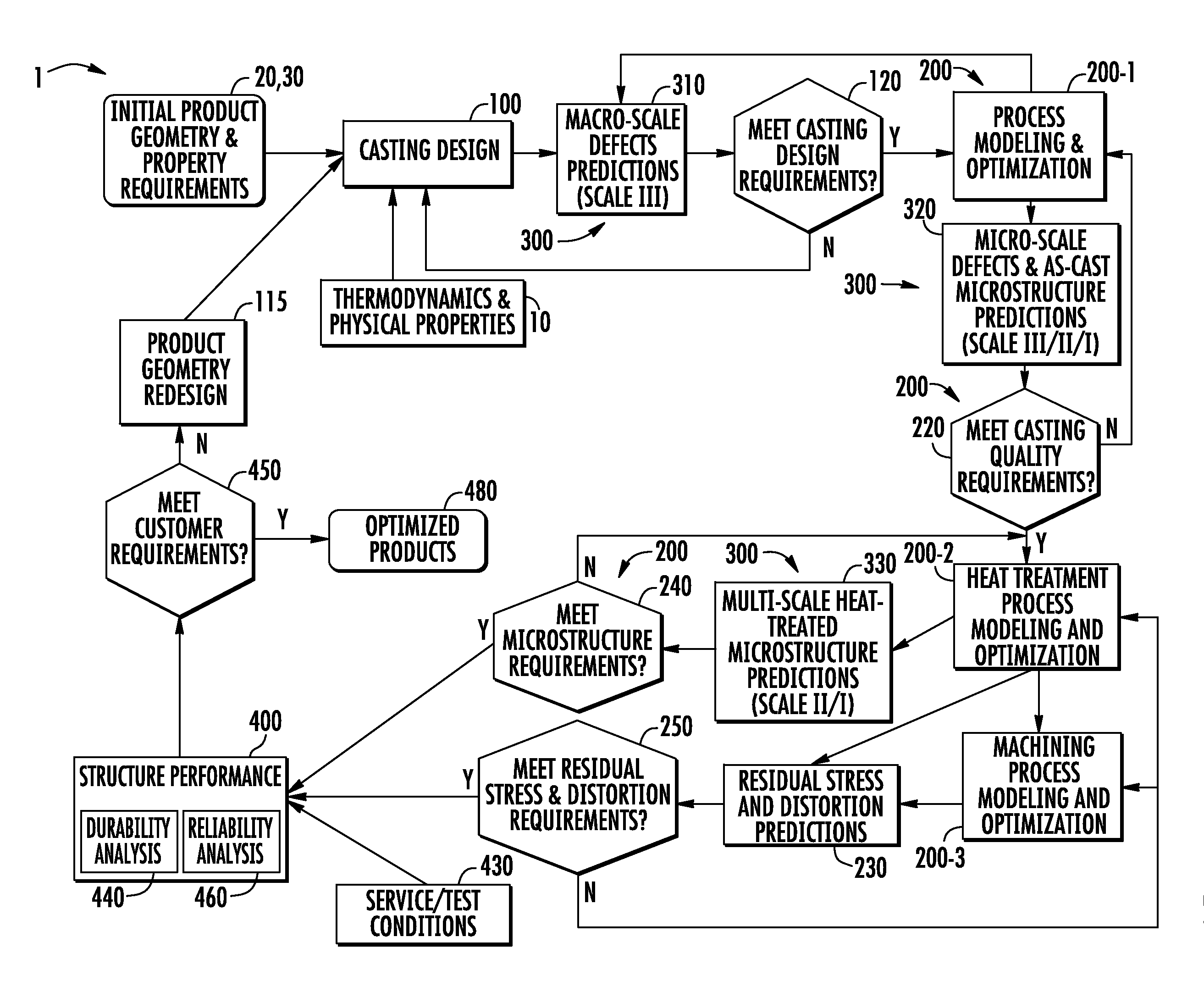
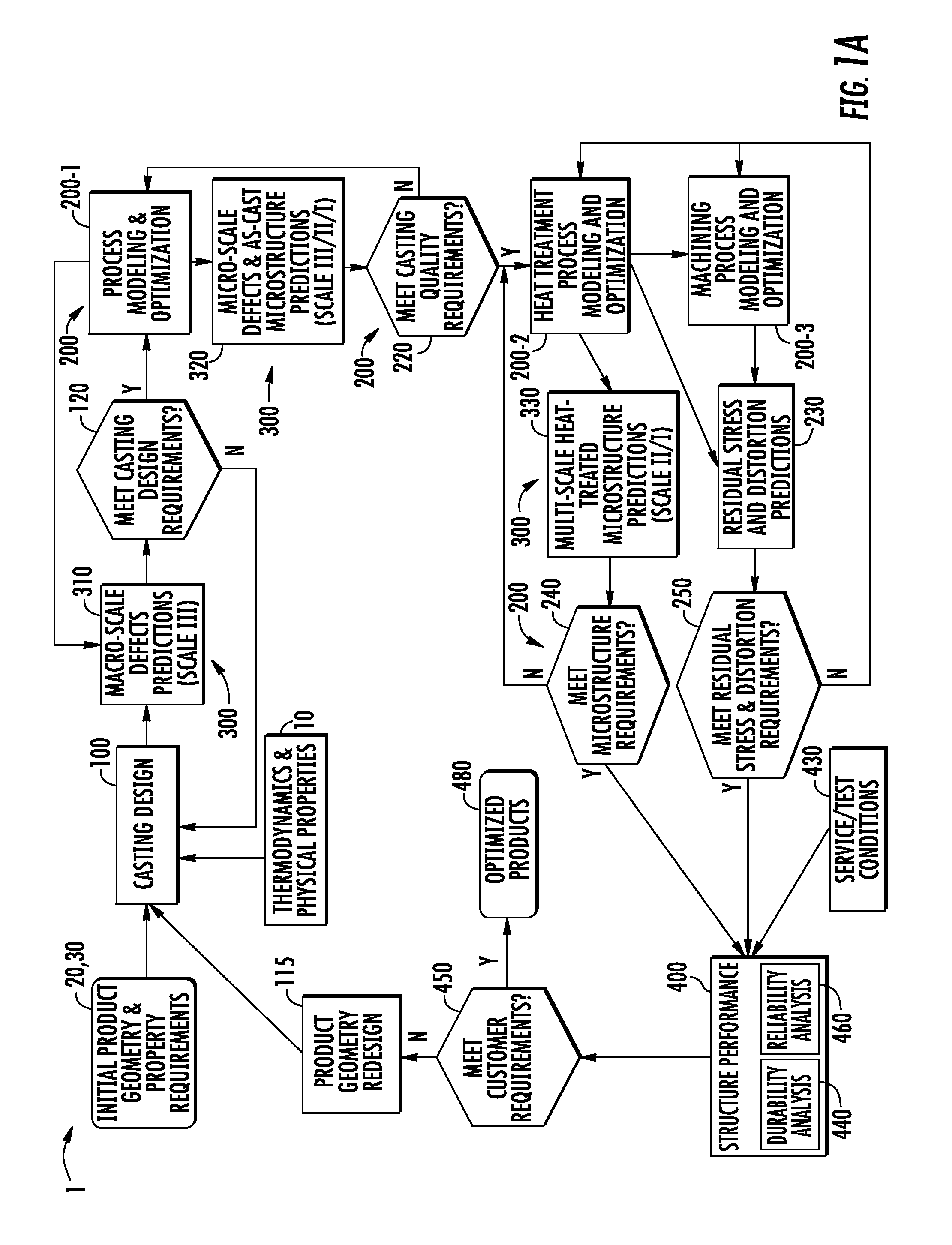
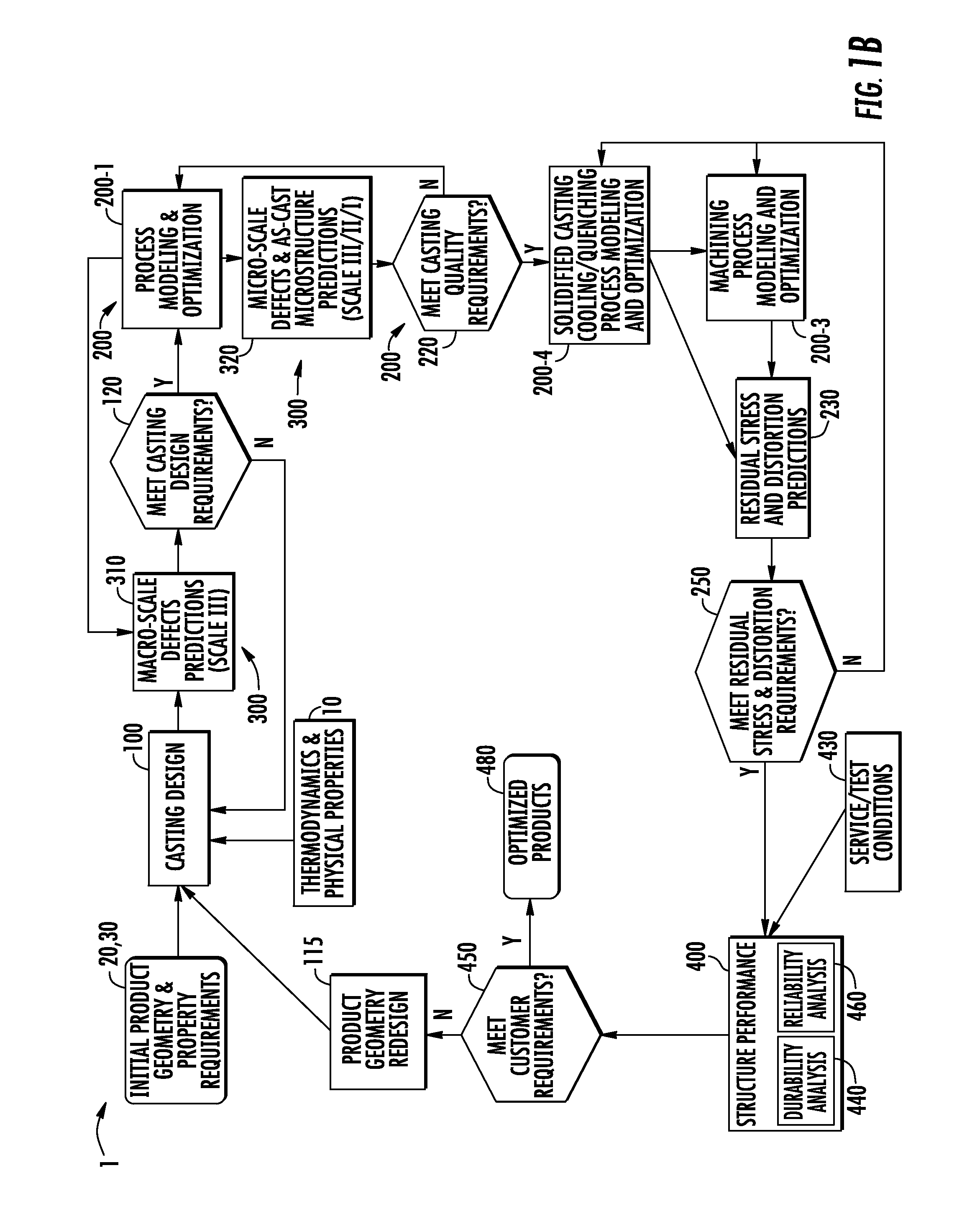
Systems and methods for computationally developing manufacturable and durable cast components
PatentInactiveUS20120232685A1
Innovation
- A computational method that integrates various modules, including casting design, process modeling, multiscale defects and microstructure prediction, and structure performance, to simulate the casting process, providing a physically accurate and computationally efficient approach by using a computer system with a casting design module, process modeling and optimization module, and structure performance module, which includes expert systems and thermodynamic models to predict microstructural morphology, defects, and component performance.

Material Standards and Certification Requirements
The establishment of comprehensive material standards and certification requirements for eutectic systems and composite materials represents a critical framework for ensuring reliable strength performance across diverse applications. Current international standards organizations, including ASTM International, ISO, and ASCE, have developed distinct testing protocols that address the unique characteristics of each material class. These standards encompass mechanical property evaluation, quality assurance procedures, and performance validation methodologies specifically tailored to the structural and compositional differences between eutectic alloys and fiber-reinforced composites.
For eutectic systems, certification requirements primarily focus on microstructural homogeneity, phase distribution uniformity, and thermal stability verification. Standards such as ASTM E8/E8M for tensile testing and ASTM E23 for impact resistance provide standardized methodologies for strength assessment. Additionally, specialized protocols address solidification rate control and cooling curve analysis to ensure consistent eutectic formation. These requirements are particularly stringent for aerospace and automotive applications where material reliability directly impacts safety performance.
Composite material certification involves more complex multi-scale testing approaches due to their heterogeneous nature and anisotropic properties. Standards like ASTM D3039 for tensile properties and ASTM D7264 for flexural testing address fiber-matrix interface characterization and directional strength variations. Certification protocols must account for manufacturing process variables, including fiber volume fraction, resin curing parameters, and void content limitations. Environmental conditioning requirements under ASTM D5229 ensure long-term performance validation under moisture and temperature cycling conditions.
Emerging certification frameworks are addressing hybrid material systems and novel processing techniques. Advanced characterization methods including digital image correlation and acoustic emission monitoring are being integrated into standard testing protocols. Regulatory bodies are developing accelerated aging standards and probabilistic design criteria to accommodate the statistical nature of composite failure mechanisms. These evolving requirements reflect the increasing complexity of modern material systems and the need for comprehensive performance validation across extended service life scenarios.
For eutectic systems, certification requirements primarily focus on microstructural homogeneity, phase distribution uniformity, and thermal stability verification. Standards such as ASTM E8/E8M for tensile testing and ASTM E23 for impact resistance provide standardized methodologies for strength assessment. Additionally, specialized protocols address solidification rate control and cooling curve analysis to ensure consistent eutectic formation. These requirements are particularly stringent for aerospace and automotive applications where material reliability directly impacts safety performance.
Composite material certification involves more complex multi-scale testing approaches due to their heterogeneous nature and anisotropic properties. Standards like ASTM D3039 for tensile properties and ASTM D7264 for flexural testing address fiber-matrix interface characterization and directional strength variations. Certification protocols must account for manufacturing process variables, including fiber volume fraction, resin curing parameters, and void content limitations. Environmental conditioning requirements under ASTM D5229 ensure long-term performance validation under moisture and temperature cycling conditions.
Emerging certification frameworks are addressing hybrid material systems and novel processing techniques. Advanced characterization methods including digital image correlation and acoustic emission monitoring are being integrated into standard testing protocols. Regulatory bodies are developing accelerated aging standards and probabilistic design criteria to accommodate the statistical nature of composite failure mechanisms. These evolving requirements reflect the increasing complexity of modern material systems and the need for comprehensive performance validation across extended service life scenarios.
Sustainability Impact of Advanced Material Production
The production of advanced materials, particularly eutectic systems and composite materials, presents significant environmental challenges that require comprehensive sustainability assessment. Manufacturing processes for both material categories involve energy-intensive procedures, resource extraction, and chemical processing that contribute to carbon emissions and environmental degradation.
Eutectic system production typically requires precise temperature control and specialized furnace operations, leading to substantial energy consumption during melting and solidification processes. The manufacturing of eutectic alloys often involves rare earth elements and specialized metals, whose extraction and refinement generate considerable environmental impact through mining operations, chemical processing, and waste generation. However, eutectic systems generally offer advantages in recyclability due to their metallic nature, allowing for material recovery through conventional metallurgical processes.
Composite material production presents different sustainability challenges, particularly in fiber-reinforced polymer systems. The manufacturing of carbon fiber reinforcement requires high-temperature carbonization processes consuming significant electrical energy, while glass fiber production involves melting silica at temperatures exceeding 1500°C. Matrix materials, especially thermoset polymers, pose end-of-life disposal challenges due to their cross-linked structure preventing traditional recycling methods.
The sustainability impact extends beyond production to encompass the entire material lifecycle. Composite materials often demonstrate superior strength-to-weight ratios, potentially reducing material usage and transportation energy in applications such as aerospace and automotive industries. This efficiency can offset initial production impacts through extended service life and reduced operational energy consumption.
Emerging sustainable production approaches include bio-based composite matrices, recycled fiber reinforcement, and closed-loop manufacturing systems. For eutectic systems, powder metallurgy techniques and additive manufacturing processes offer potential energy savings compared to traditional casting methods. Life cycle assessment methodologies increasingly guide material selection decisions, considering environmental impact from raw material extraction through end-of-life disposal or recycling.
The development of sustainable production technologies remains critical for both material categories, with research focusing on renewable energy integration, waste heat recovery, and circular economy principles to minimize environmental footprint while maintaining performance characteristics essential for advanced engineering applications.
Eutectic system production typically requires precise temperature control and specialized furnace operations, leading to substantial energy consumption during melting and solidification processes. The manufacturing of eutectic alloys often involves rare earth elements and specialized metals, whose extraction and refinement generate considerable environmental impact through mining operations, chemical processing, and waste generation. However, eutectic systems generally offer advantages in recyclability due to their metallic nature, allowing for material recovery through conventional metallurgical processes.
Composite material production presents different sustainability challenges, particularly in fiber-reinforced polymer systems. The manufacturing of carbon fiber reinforcement requires high-temperature carbonization processes consuming significant electrical energy, while glass fiber production involves melting silica at temperatures exceeding 1500°C. Matrix materials, especially thermoset polymers, pose end-of-life disposal challenges due to their cross-linked structure preventing traditional recycling methods.
The sustainability impact extends beyond production to encompass the entire material lifecycle. Composite materials often demonstrate superior strength-to-weight ratios, potentially reducing material usage and transportation energy in applications such as aerospace and automotive industries. This efficiency can offset initial production impacts through extended service life and reduced operational energy consumption.
Emerging sustainable production approaches include bio-based composite matrices, recycled fiber reinforcement, and closed-loop manufacturing systems. For eutectic systems, powder metallurgy techniques and additive manufacturing processes offer potential energy savings compared to traditional casting methods. Life cycle assessment methodologies increasingly guide material selection decisions, considering environmental impact from raw material extraction through end-of-life disposal or recycling.
The development of sustainable production technologies remains critical for both material categories, with research focusing on renewable energy integration, waste heat recovery, and circular economy principles to minimize environmental footprint while maintaining performance characteristics essential for advanced engineering applications.
Unlock deeper insights with PatSnap Eureka Quick Research — get a full tech report to explore trends and direct your research. Try now!
Generate Your Research Report Instantly with AI Agent
Supercharge your innovation with PatSnap Eureka AI Agent Platform!