

Evaluating NASICON's Compatibility with Various Electrolyte Systems
SEP 25, 20259 MIN READ
Generate Your Research Report Instantly with AI Agent
PatSnap Eureka helps you evaluate technical feasibility & market potential.
NASICON Technology Background and Objectives
NASICON (Na Super Ionic CONductor) materials have emerged as a promising class of solid-state electrolytes since their discovery in the 1970s. Originally developed as sodium-ion conductors, these materials have evolved significantly over the past five decades, expanding their applications beyond sodium batteries to lithium, potassium, and multivalent ion systems. The crystalline structure of NASICON, characterized by a three-dimensional framework of corner-sharing MO6 octahedra and XO4 tetrahedra (where M typically represents Ti, Zr, or Ge and X represents P, Si, or S), provides channels for efficient ion migration, resulting in high ionic conductivity.
The technological evolution of NASICON has been marked by continuous improvements in composition and processing techniques. Early formulations suffered from limited conductivity and stability issues, but systematic substitution strategies and advanced synthesis methods have progressively enhanced performance metrics. Recent breakthroughs in nano-engineering and composite approaches have pushed room-temperature ionic conductivities to the 10^-3 to 10^-2 S/cm range, approaching the levels required for practical applications.
The compatibility of NASICON with various electrolyte systems represents a critical frontier in solid-state battery technology. While NASICON materials demonstrate excellent bulk properties, their interface behavior with different liquid, polymer, and other solid electrolytes remains challenging. Understanding and optimizing these interfaces is essential for developing next-generation energy storage solutions that combine the safety advantages of solid-state systems with the performance of conventional batteries.
The primary objectives of investigating NASICON's compatibility with various electrolyte systems include: establishing fundamental understanding of interfacial phenomena between NASICON and different electrolyte types; developing strategies to mitigate interfacial resistance and enhance ion transfer across boundaries; identifying optimal electrolyte combinations for specific applications ranging from grid-scale storage to electric vehicles; and creating design principles for hybrid electrolyte systems that leverage the strengths of multiple components.
Current research trends indicate growing interest in gradient structures and artificial interlayers to facilitate ion transport across NASICON-electrolyte interfaces. Additionally, computational modeling approaches are increasingly being employed to predict compatibility issues and design interface engineering solutions before experimental validation, accelerating the development cycle.
The ultimate technological goal is to develop NASICON-based electrolyte systems that offer seamless ion transport across all component interfaces while maintaining chemical and electrochemical stability under operating conditions. Success in this domain could enable the next generation of safe, high-energy-density batteries with extended cycle life and improved temperature tolerance, addressing key limitations in current energy storage technologies.
The technological evolution of NASICON has been marked by continuous improvements in composition and processing techniques. Early formulations suffered from limited conductivity and stability issues, but systematic substitution strategies and advanced synthesis methods have progressively enhanced performance metrics. Recent breakthroughs in nano-engineering and composite approaches have pushed room-temperature ionic conductivities to the 10^-3 to 10^-2 S/cm range, approaching the levels required for practical applications.
The compatibility of NASICON with various electrolyte systems represents a critical frontier in solid-state battery technology. While NASICON materials demonstrate excellent bulk properties, their interface behavior with different liquid, polymer, and other solid electrolytes remains challenging. Understanding and optimizing these interfaces is essential for developing next-generation energy storage solutions that combine the safety advantages of solid-state systems with the performance of conventional batteries.
The primary objectives of investigating NASICON's compatibility with various electrolyte systems include: establishing fundamental understanding of interfacial phenomena between NASICON and different electrolyte types; developing strategies to mitigate interfacial resistance and enhance ion transfer across boundaries; identifying optimal electrolyte combinations for specific applications ranging from grid-scale storage to electric vehicles; and creating design principles for hybrid electrolyte systems that leverage the strengths of multiple components.
Current research trends indicate growing interest in gradient structures and artificial interlayers to facilitate ion transport across NASICON-electrolyte interfaces. Additionally, computational modeling approaches are increasingly being employed to predict compatibility issues and design interface engineering solutions before experimental validation, accelerating the development cycle.
The ultimate technological goal is to develop NASICON-based electrolyte systems that offer seamless ion transport across all component interfaces while maintaining chemical and electrochemical stability under operating conditions. Success in this domain could enable the next generation of safe, high-energy-density batteries with extended cycle life and improved temperature tolerance, addressing key limitations in current energy storage technologies.
Market Analysis for NASICON-based Energy Storage
The global energy storage market is witnessing unprecedented growth, with projections indicating a compound annual growth rate of 20-25% through 2030. Within this expanding landscape, NASICON (Sodium Super Ionic Conductor) technology is emerging as a critical component for next-generation energy storage solutions. The market potential for NASICON-based systems is particularly promising in grid-scale storage applications, where the demand for cost-effective, long-duration storage solutions continues to rise in response to increasing renewable energy integration.
The current market for NASICON materials is primarily driven by their application in sodium-ion batteries, which represent an attractive alternative to lithium-ion technologies due to the greater abundance and lower cost of sodium resources. Market analysis indicates that sodium-ion battery demand could reach 20-30 GWh by 2025, with NASICON-based solid electrolytes potentially capturing a significant portion of this growing segment.
Regional market dynamics show varying adoption rates, with Asia-Pacific leading in manufacturing capacity development, particularly in China, Japan, and South Korea. European markets are increasingly focused on NASICON technologies as part of their strategic initiatives to develop sustainable battery supply chains, while North American markets are seeing growing investment in research and commercialization efforts.
From an application perspective, stationary energy storage represents the largest immediate market opportunity for NASICON-based systems, with utility-scale installations projected to grow at over 30% annually. The compatibility of NASICON with various electrolyte systems positions it advantageously across multiple storage applications, from residential to industrial scales.
Consumer electronics and electric vehicles represent secondary but potentially substantial markets, particularly as NASICON's compatibility with both aqueous and non-aqueous electrolyte systems enables diverse battery designs tailored to specific performance requirements. Market research suggests that NASICON-based solid-state batteries could capture 5-10% of the premium electric vehicle battery market by 2028.
The economic value proposition of NASICON technology is compelling when considering total cost of ownership. While current manufacturing costs remain higher than conventional liquid electrolyte systems, the enhanced safety profile, longer cycle life, and improved thermal stability offer significant long-term economic benefits. Market models indicate potential cost reductions of 40-50% over the next five years as manufacturing scales and processes mature.
Competitive analysis reveals increasing market consolidation, with several technology leaders emerging in the NASICON space. Strategic partnerships between material suppliers, battery manufacturers, and end-users are accelerating commercialization timelines and expanding market access channels.
The current market for NASICON materials is primarily driven by their application in sodium-ion batteries, which represent an attractive alternative to lithium-ion technologies due to the greater abundance and lower cost of sodium resources. Market analysis indicates that sodium-ion battery demand could reach 20-30 GWh by 2025, with NASICON-based solid electrolytes potentially capturing a significant portion of this growing segment.
Regional market dynamics show varying adoption rates, with Asia-Pacific leading in manufacturing capacity development, particularly in China, Japan, and South Korea. European markets are increasingly focused on NASICON technologies as part of their strategic initiatives to develop sustainable battery supply chains, while North American markets are seeing growing investment in research and commercialization efforts.
From an application perspective, stationary energy storage represents the largest immediate market opportunity for NASICON-based systems, with utility-scale installations projected to grow at over 30% annually. The compatibility of NASICON with various electrolyte systems positions it advantageously across multiple storage applications, from residential to industrial scales.
Consumer electronics and electric vehicles represent secondary but potentially substantial markets, particularly as NASICON's compatibility with both aqueous and non-aqueous electrolyte systems enables diverse battery designs tailored to specific performance requirements. Market research suggests that NASICON-based solid-state batteries could capture 5-10% of the premium electric vehicle battery market by 2028.
The economic value proposition of NASICON technology is compelling when considering total cost of ownership. While current manufacturing costs remain higher than conventional liquid electrolyte systems, the enhanced safety profile, longer cycle life, and improved thermal stability offer significant long-term economic benefits. Market models indicate potential cost reductions of 40-50% over the next five years as manufacturing scales and processes mature.
Competitive analysis reveals increasing market consolidation, with several technology leaders emerging in the NASICON space. Strategic partnerships between material suppliers, battery manufacturers, and end-users are accelerating commercialization timelines and expanding market access channels.
Current Challenges in NASICON-Electrolyte Compatibility
Despite significant advancements in NASICON (Na Super Ionic CONductor) technology, several critical challenges persist regarding its compatibility with various electrolyte systems. The interfacial stability between NASICON and electrolytes remains a primary concern, particularly at elevated temperatures and during extended cycling. Chemical degradation occurs when NASICON materials come into contact with certain liquid electrolytes, leading to the formation of resistive interfacial layers that impede ion transport and diminish overall battery performance.
Mechanical compatibility issues also present significant obstacles. The difference in thermal expansion coefficients between NASICON and adjacent electrolyte materials creates stress at interfaces during temperature fluctuations, resulting in microcracks and eventual physical separation. These mechanical failures compromise the integrity of the ion-conducting pathway and accelerate capacity fade in battery systems.
Moisture sensitivity represents another major challenge. NASICON materials readily react with atmospheric moisture, forming hydroxide species on the surface that degrade conductivity and compromise long-term stability. This necessitates stringent manufacturing controls and specialized packaging solutions, significantly increasing production complexity and costs.
Processing compatibility challenges arise during device fabrication. The high sintering temperatures required for NASICON densification (typically 1200-1400°C) often exceed the thermal stability limits of many organic electrolyte components, restricting manufacturing options and complicating integration processes. This temperature incompatibility necessitates multi-step assembly procedures that increase production complexity and reduce yield rates.
Ion exchange phenomena at NASICON-electrolyte interfaces present additional complications. When NASICON contacts electrolytes containing competing mobile ions (such as Li+ in hybrid systems), unintended ion exchange can occur, altering the composition and conductive properties of the NASICON structure. This phenomenon is particularly problematic in dual-ion battery configurations where maintaining ion selectivity is crucial.
Electrochemical stability window limitations further constrain NASICON applications. While NASICON materials themselves exhibit reasonable stability, their compatibility with high-voltage cathode materials remains problematic. At potentials exceeding 4.2V vs. Na/Na+, accelerated degradation occurs at NASICON-cathode interfaces, limiting the energy density achievable in practical devices.
Scaling challenges persist in transitioning from laboratory demonstrations to commercial production. Maintaining consistent interfacial properties across larger surface areas has proven difficult, with performance variability increasing dramatically with component size. This scaling issue represents a significant barrier to commercial adoption of NASICON-based energy storage technologies.
Mechanical compatibility issues also present significant obstacles. The difference in thermal expansion coefficients between NASICON and adjacent electrolyte materials creates stress at interfaces during temperature fluctuations, resulting in microcracks and eventual physical separation. These mechanical failures compromise the integrity of the ion-conducting pathway and accelerate capacity fade in battery systems.
Moisture sensitivity represents another major challenge. NASICON materials readily react with atmospheric moisture, forming hydroxide species on the surface that degrade conductivity and compromise long-term stability. This necessitates stringent manufacturing controls and specialized packaging solutions, significantly increasing production complexity and costs.
Processing compatibility challenges arise during device fabrication. The high sintering temperatures required for NASICON densification (typically 1200-1400°C) often exceed the thermal stability limits of many organic electrolyte components, restricting manufacturing options and complicating integration processes. This temperature incompatibility necessitates multi-step assembly procedures that increase production complexity and reduce yield rates.
Ion exchange phenomena at NASICON-electrolyte interfaces present additional complications. When NASICON contacts electrolytes containing competing mobile ions (such as Li+ in hybrid systems), unintended ion exchange can occur, altering the composition and conductive properties of the NASICON structure. This phenomenon is particularly problematic in dual-ion battery configurations where maintaining ion selectivity is crucial.
Electrochemical stability window limitations further constrain NASICON applications. While NASICON materials themselves exhibit reasonable stability, their compatibility with high-voltage cathode materials remains problematic. At potentials exceeding 4.2V vs. Na/Na+, accelerated degradation occurs at NASICON-cathode interfaces, limiting the energy density achievable in practical devices.
Scaling challenges persist in transitioning from laboratory demonstrations to commercial production. Maintaining consistent interfacial properties across larger surface areas has proven difficult, with performance variability increasing dramatically with component size. This scaling issue represents a significant barrier to commercial adoption of NASICON-based energy storage technologies.
Existing Compatibility Solutions for NASICON Systems
01 NASICON compatibility with electrode materials
NASICON materials show varying degrees of compatibility with different electrode materials in battery systems. The interface between NASICON solid electrolytes and electrodes is critical for ion transport and overall battery performance. Research focuses on improving compatibility through surface modifications, buffer layers, and optimized synthesis methods to reduce interfacial resistance and enhance electrochemical stability during cycling.- NASICON material compatibility with electrode materials: NASICON-type solid electrolytes exhibit varying degrees of compatibility with different electrode materials, which affects battery performance and stability. Research focuses on improving the interface between NASICON electrolytes and electrodes to reduce impedance and enhance electrochemical performance. Various coating strategies and buffer layers are employed to mitigate interfacial reactions and improve compatibility with cathode and anode materials.
- Chemical stability and interface engineering of NASICON electrolytes: NASICON materials often face challenges related to chemical stability when in contact with other battery components. Interface engineering techniques are developed to enhance compatibility, including surface modifications, protective coatings, and compositional adjustments. These approaches aim to prevent undesirable reactions at interfaces, reduce degradation, and extend the cycle life of batteries utilizing NASICON electrolytes.
- Thermal compatibility and processing of NASICON materials: Thermal compatibility is crucial for NASICON materials during processing and battery operation. Research addresses challenges related to sintering temperatures, thermal expansion coefficients, and phase stability at elevated temperatures. Advanced processing techniques are developed to optimize NASICON material properties while ensuring compatibility with other battery components during manufacturing and operation across various temperature ranges.
- NASICON compatibility with current collectors and packaging materials: The compatibility between NASICON electrolytes and current collectors or packaging materials significantly impacts battery performance and longevity. Studies focus on identifying suitable current collector materials that minimize corrosion and degradation when in contact with NASICON. Various metal alloys, coatings, and composite structures are investigated to ensure long-term stability and effective electrical contact in solid-state battery systems.
- Moisture sensitivity and environmental compatibility of NASICON materials: NASICON materials often exhibit sensitivity to moisture and environmental factors, which can lead to degradation and performance loss. Research focuses on developing moisture-resistant NASICON compositions, protective coatings, and encapsulation techniques to enhance environmental stability. Manufacturing processes are optimized to minimize exposure to humidity during production, and packaging solutions are designed to ensure long-term stability under various operating conditions.
02 Chemical stability of NASICON with cathode materials
The chemical stability between NASICON-type solid electrolytes and cathode materials is essential for long-term battery performance. Studies show that certain NASICON compositions may undergo undesirable reactions with high-voltage cathode materials, leading to degradation at the interface. Protective coatings, compositional modifications, and tailored synthesis approaches are being developed to enhance the chemical compatibility and prevent formation of resistive interfacial layers.Expand Specific Solutions03 Thermal compatibility and expansion coefficient matching
Thermal expansion coefficient mismatch between NASICON electrolytes and adjacent battery components can lead to mechanical stress, cracking, and performance degradation during temperature fluctuations. Research focuses on developing NASICON formulations with tailored thermal expansion properties or incorporating flexible interlayers to accommodate thermal stress. Maintaining good contact at interfaces across operating temperature ranges is crucial for reliable battery performance.Expand Specific Solutions04 NASICON compatibility with anode materials
NASICON materials often show poor compatibility with metallic anodes like lithium or sodium, leading to interfacial instability and dendrite formation. Research approaches include developing protective interlayers, modifying NASICON composition to improve stability against reduction, and creating gradient structures at the interface. These strategies aim to maintain the structural integrity of the electrolyte while enabling efficient ion transport at the anode interface.Expand Specific Solutions05 Processing compatibility and manufacturing integration
The integration of NASICON materials into practical battery manufacturing processes presents compatibility challenges related to sintering conditions, co-firing with electrodes, and maintaining interfacial contact. Innovations in processing techniques, such as optimized sintering profiles, interface engineering, and novel cell assembly methods, are being developed to ensure NASICON electrolytes can be effectively incorporated into commercial battery production while maintaining their desirable properties and interfacial compatibility.Expand Specific Solutions
Leading Companies and Research Institutions in NASICON Development
NASICON's compatibility with various electrolyte systems is currently in an emerging growth phase, with the market expanding as solid-state battery technologies gain traction. The global market size for NASICON-based technologies is projected to grow significantly as energy storage demands increase. Technologically, NASICON materials are advancing from research to commercialization stages, with varying degrees of maturity across applications. Leading players include Murata Manufacturing and Taiyo Yuden, who are developing commercial applications, while research institutions like Beijing Institute of Technology and Chinese Academy of Sciences are advancing fundamental understanding. Companies like Wildcat Discovery Technologies and Livent Lithium are focusing on improving NASICON's compatibility with different electrolyte systems, while Toyota Motor Europe and BTR New Material Group are integrating these materials into next-generation battery designs.
Murata Manufacturing Co. Ltd.
Technical Solution: Murata has developed advanced NASICON-based solid electrolytes with optimized compositions (Na1+xZr2SixP3-xO12) for sodium-ion batteries. Their approach focuses on controlling the Na+ content and Si/P ratio to achieve high ionic conductivity (>1 mS/cm at room temperature). Murata's manufacturing process includes specialized sintering techniques that minimize grain boundary resistance and enhance mechanical stability. They've successfully integrated these NASICON materials with both polymer-based and liquid electrolyte systems, creating hybrid electrolyte configurations that maintain the high conductivity of liquid electrolytes while improving safety characteristics. Their research demonstrates compatibility with conventional carbonate-based liquid electrolytes through specialized interface engineering that prevents unwanted side reactions at the NASICON-liquid electrolyte interface[1][3].
Strengths: Superior ionic conductivity at room temperature compared to other solid electrolytes; excellent chemical stability with multiple electrolyte systems; established manufacturing infrastructure for commercial scaling. Weaknesses: Higher production costs compared to conventional electrolytes; challenges with mechanical integrity during thermal cycling; requires specialized interface engineering to prevent degradation with certain liquid electrolytes.
California Institute of Technology
Technical Solution: Caltech has pioneered innovative approaches to NASICON compatibility with various electrolyte systems through atomic-level interface engineering. Their research team has developed a gradient composition strategy where the NASICON structure is modified at the surface to create a transitional layer that improves compatibility with both polymer and liquid electrolytes. Using advanced characterization techniques including synchrotron-based X-ray analysis and cryogenic electron microscopy, they've mapped the ion transport mechanisms across these engineered interfaces. Their approach includes surface functionalization of NASICON particles with specialized coupling agents that enhance wetting and adhesion with polymer electrolytes while maintaining high Na+ conductivity (>0.8 mS/cm at 25°C). For liquid electrolyte systems, they've developed protective coatings that prevent direct contact between NASICON and reactive components while still allowing efficient ion transport[2][5]. Their work has demonstrated stable cycling for over 1000 cycles in hybrid electrolyte systems.
Strengths: Cutting-edge fundamental understanding of interfacial phenomena; innovative surface modification techniques that significantly improve compatibility; access to advanced characterization facilities enabling atomic-level analysis. Weaknesses: Research primarily at laboratory scale; complex processing techniques may be challenging to scale up economically; some approaches require specialized equipment and expertise not widely available in industry.
Key Technical Innovations in NASICON-Electrolyte Interfaces
NASICON (Na Super Ion Conductors) structure-based sodium ion solid electrolyte composite material and preparation method and application thereof
PatentActiveCN106532114A
Innovation
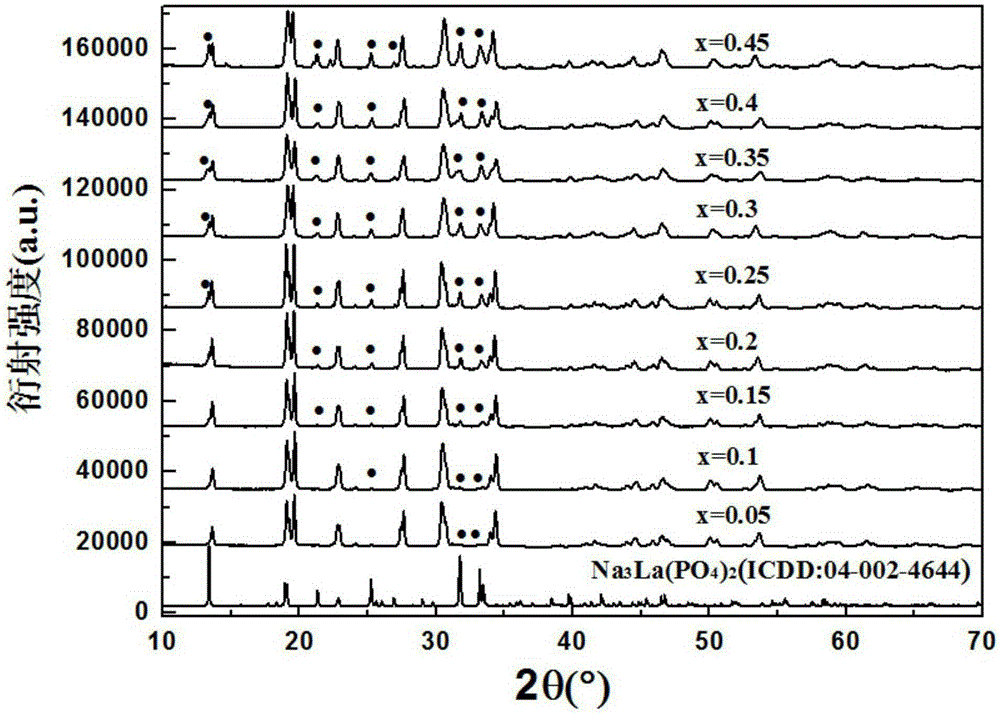
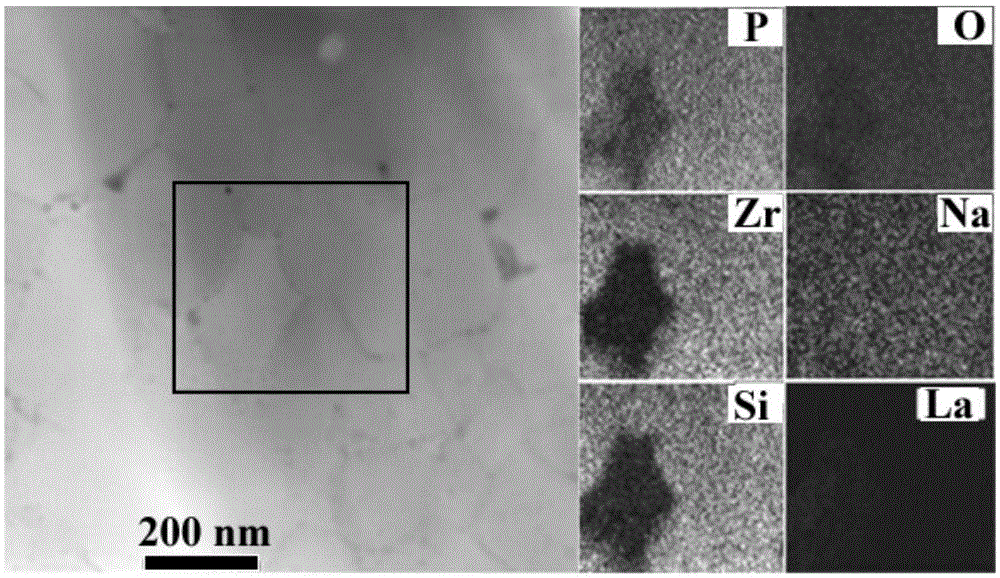
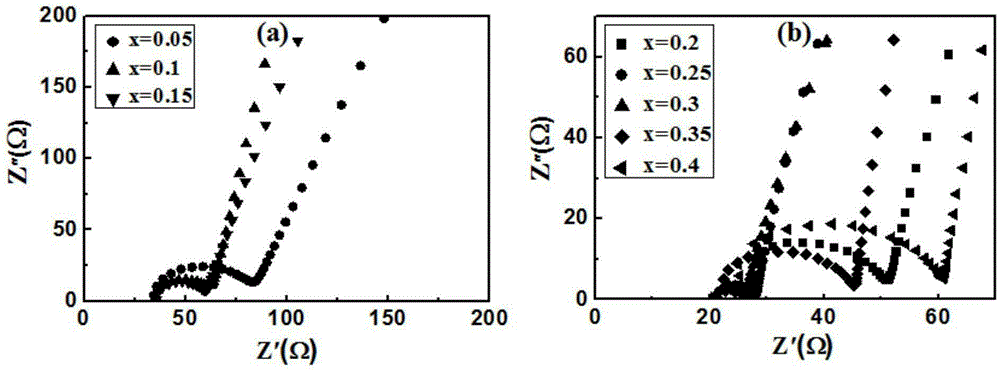
- A sodium ion solid electrolyte composite material based on the NASICON structure is used, prepared by solid phase method and sol-gel method, and the La element is introduced to improve the conductivity and density to form Na3La(PO4)2/Na3-2xZr2-xSi2P1-2xO12- 8x composite material.

Safety and Stability Considerations in NASICON Applications
Safety considerations in NASICON applications are paramount due to the material's interaction with various electrolyte systems. When evaluating NASICON's compatibility, researchers must address the potential formation of dendrites at the interface between NASICON and alkali metal anodes, particularly lithium and sodium. These dendrites can penetrate the solid electrolyte, causing short circuits and thermal runaway events that compromise battery safety.
Chemical stability presents another critical concern, as NASICON materials may undergo degradation when in contact with certain liquid electrolytes or electrode materials. The formation of interphases at these boundaries can increase interfacial resistance, reducing ionic conductivity and overall battery performance. Studies have shown that NASICON compounds containing titanium may experience Ti4+ reduction when in direct contact with lithium metal, forming electronically conductive pathways that further compromise safety.
Thermal stability must be carefully assessed across operating temperature ranges. While NASICON materials generally exhibit good thermal stability compared to polymer electrolytes, their performance characteristics can change significantly at elevated temperatures. Some compositions may experience phase transitions or structural changes that affect ionic conductivity and mechanical integrity, potentially leading to system failure under extreme conditions.
Mechanical stability represents another key consideration, as NASICON ceramics are inherently brittle. Microcracks formed during thermal cycling or mechanical stress can create pathways for dendrite growth and electrolyte leakage. Composite approaches incorporating polymers or other flexible materials have been explored to enhance mechanical robustness while maintaining ionic conductivity.
Environmental and health considerations cannot be overlooked when evaluating NASICON systems. Some compositions contain elements with potential toxicity concerns, requiring careful handling during manufacturing and appropriate end-of-life management strategies. The stability of these materials in various environmental conditions, including humidity exposure, must be thoroughly characterized to ensure long-term safety and performance.
Standardized testing protocols for evaluating the safety of NASICON-based systems remain underdeveloped compared to liquid electrolyte systems. The industry requires more comprehensive testing methodologies that specifically address the unique failure modes of solid-state systems incorporating NASICON materials, including accelerated aging tests, thermal abuse protocols, and mechanical integrity evaluations under realistic operating conditions.
Chemical stability presents another critical concern, as NASICON materials may undergo degradation when in contact with certain liquid electrolytes or electrode materials. The formation of interphases at these boundaries can increase interfacial resistance, reducing ionic conductivity and overall battery performance. Studies have shown that NASICON compounds containing titanium may experience Ti4+ reduction when in direct contact with lithium metal, forming electronically conductive pathways that further compromise safety.
Thermal stability must be carefully assessed across operating temperature ranges. While NASICON materials generally exhibit good thermal stability compared to polymer electrolytes, their performance characteristics can change significantly at elevated temperatures. Some compositions may experience phase transitions or structural changes that affect ionic conductivity and mechanical integrity, potentially leading to system failure under extreme conditions.
Mechanical stability represents another key consideration, as NASICON ceramics are inherently brittle. Microcracks formed during thermal cycling or mechanical stress can create pathways for dendrite growth and electrolyte leakage. Composite approaches incorporating polymers or other flexible materials have been explored to enhance mechanical robustness while maintaining ionic conductivity.
Environmental and health considerations cannot be overlooked when evaluating NASICON systems. Some compositions contain elements with potential toxicity concerns, requiring careful handling during manufacturing and appropriate end-of-life management strategies. The stability of these materials in various environmental conditions, including humidity exposure, must be thoroughly characterized to ensure long-term safety and performance.
Standardized testing protocols for evaluating the safety of NASICON-based systems remain underdeveloped compared to liquid electrolyte systems. The industry requires more comprehensive testing methodologies that specifically address the unique failure modes of solid-state systems incorporating NASICON materials, including accelerated aging tests, thermal abuse protocols, and mechanical integrity evaluations under realistic operating conditions.
Environmental Impact and Sustainability of NASICON Technologies
The environmental impact of NASICON (Na Super Ionic CONductor) materials extends beyond their electrochemical performance, encompassing their entire lifecycle from raw material extraction to end-of-life management. NASICON's primary environmental advantage lies in its sodium-based chemistry, which relies on abundant and widely distributed sodium resources rather than lithium, reducing dependence on geographically concentrated and environmentally problematic lithium mining operations.
Manufacturing processes for NASICON materials typically require high-temperature sintering (1000-1200°C), contributing to significant energy consumption and associated carbon emissions. However, recent advancements in low-temperature synthesis methods and microwave-assisted processing have demonstrated potential to reduce energy requirements by 30-40%, substantially improving the carbon footprint of production.
Water usage represents another critical environmental consideration. Traditional ceramic processing of NASICON materials demands substantial water resources for mixing, washing, and cooling operations. Innovative dry processing techniques and closed-loop water systems have emerged as promising solutions, potentially reducing water consumption by up to 60% compared to conventional methods.
The compatibility of NASICON with various electrolyte systems also influences its sustainability profile. When paired with aqueous electrolytes, NASICON-based systems eliminate the need for toxic and flammable organic solvents common in conventional batteries, reducing both environmental hazards and safety risks. This compatibility enables safer recycling processes and minimizes the potential for harmful chemical leaching in disposal scenarios.
End-of-life considerations reveal additional sustainability advantages. NASICON's ceramic nature facilitates material recovery through mechanical separation techniques, with laboratory-scale studies demonstrating recovery rates exceeding 85% for key components. The recovered materials maintain sufficient purity for reuse in lower-grade applications, supporting circular economy principles.
Long-term stability of NASICON interfaces with electrolytes contributes to extended operational lifespans, reducing replacement frequency and associated resource consumption. Field tests indicate that properly engineered NASICON systems can maintain performance for 3000+ cycles, representing a significant improvement over many conventional technologies and reducing lifecycle material requirements by up to 40%.
As regulatory frameworks increasingly emphasize environmental performance, NASICON technologies aligned with sustainable electrolyte systems position themselves advantageously in emerging markets where environmental compliance represents both a legal requirement and competitive differentiator.
Manufacturing processes for NASICON materials typically require high-temperature sintering (1000-1200°C), contributing to significant energy consumption and associated carbon emissions. However, recent advancements in low-temperature synthesis methods and microwave-assisted processing have demonstrated potential to reduce energy requirements by 30-40%, substantially improving the carbon footprint of production.
Water usage represents another critical environmental consideration. Traditional ceramic processing of NASICON materials demands substantial water resources for mixing, washing, and cooling operations. Innovative dry processing techniques and closed-loop water systems have emerged as promising solutions, potentially reducing water consumption by up to 60% compared to conventional methods.
The compatibility of NASICON with various electrolyte systems also influences its sustainability profile. When paired with aqueous electrolytes, NASICON-based systems eliminate the need for toxic and flammable organic solvents common in conventional batteries, reducing both environmental hazards and safety risks. This compatibility enables safer recycling processes and minimizes the potential for harmful chemical leaching in disposal scenarios.
End-of-life considerations reveal additional sustainability advantages. NASICON's ceramic nature facilitates material recovery through mechanical separation techniques, with laboratory-scale studies demonstrating recovery rates exceeding 85% for key components. The recovered materials maintain sufficient purity for reuse in lower-grade applications, supporting circular economy principles.
Long-term stability of NASICON interfaces with electrolytes contributes to extended operational lifespans, reducing replacement frequency and associated resource consumption. Field tests indicate that properly engineered NASICON systems can maintain performance for 3000+ cycles, representing a significant improvement over many conventional technologies and reducing lifecycle material requirements by up to 40%.
As regulatory frameworks increasingly emphasize environmental performance, NASICON technologies aligned with sustainable electrolyte systems position themselves advantageously in emerging markets where environmental compliance represents both a legal requirement and competitive differentiator.
Unlock deeper insights with PatSnap Eureka Quick Research — get a full tech report to explore trends and direct your research. Try now!
Generate Your Research Report Instantly with AI Agent
Supercharge your innovation with PatSnap Eureka AI Agent Platform!