

Evaluating RISC for Emerging Tech Fields: What's Next?
MAR 26, 20269 MIN READ
Generate Your Research Report Instantly with AI Agent
PatSnap Eureka helps you evaluate technical feasibility & market potential.
RISC Architecture Evolution and Emerging Tech Integration Goals
RISC (Reduced Instruction Set Computer) architecture has undergone significant evolution since its inception in the 1980s, fundamentally transforming from a research concept at UC Berkeley and Stanford into the dominant architecture powering modern computing devices. The original RISC philosophy emphasized simplicity, uniform instruction formats, and efficient pipeline execution, establishing foundational principles that continue to drive architectural innovation today.
The evolution trajectory demonstrates a clear progression from early academic prototypes like RISC-I and MIPS to commercial implementations including SPARC, PowerPC, and ARM processors. Each generation has refined the balance between instruction set simplicity and performance optimization, gradually incorporating advanced features such as superscalar execution, out-of-order processing, and sophisticated branch prediction mechanisms while maintaining core RISC principles.
Contemporary RISC architectures have expanded beyond traditional computing boundaries, with ARM processors dominating mobile devices and RISC-V emerging as an open-source alternative gaining significant industry traction. This diversification reflects the architecture's adaptability to varying performance, power, and cost requirements across different application domains.
The integration goals for emerging technology fields center on addressing fundamental challenges in artificial intelligence, edge computing, quantum-classical hybrid systems, and autonomous vehicles. RISC architectures must evolve to support specialized computational workloads including neural network inference, real-time sensor fusion, and cryptographic operations while maintaining energy efficiency and scalability.
Key evolutionary objectives include developing domain-specific instruction extensions that accelerate machine learning operations, implementing advanced security features for IoT deployments, and creating modular designs that enable rapid customization for specific applications. The open-source RISC-V ecosystem particularly facilitates this customization approach, allowing organizations to develop tailored processor variants optimized for their unique requirements.
Future integration strategies emphasize heterogeneous computing architectures that combine RISC cores with specialized accelerators, enabling efficient processing of diverse workloads within unified system designs. This approach addresses the growing computational complexity of emerging applications while preserving the power efficiency and design simplicity that have made RISC architectures successful across multiple technology generations.
The evolution trajectory demonstrates a clear progression from early academic prototypes like RISC-I and MIPS to commercial implementations including SPARC, PowerPC, and ARM processors. Each generation has refined the balance between instruction set simplicity and performance optimization, gradually incorporating advanced features such as superscalar execution, out-of-order processing, and sophisticated branch prediction mechanisms while maintaining core RISC principles.
Contemporary RISC architectures have expanded beyond traditional computing boundaries, with ARM processors dominating mobile devices and RISC-V emerging as an open-source alternative gaining significant industry traction. This diversification reflects the architecture's adaptability to varying performance, power, and cost requirements across different application domains.
The integration goals for emerging technology fields center on addressing fundamental challenges in artificial intelligence, edge computing, quantum-classical hybrid systems, and autonomous vehicles. RISC architectures must evolve to support specialized computational workloads including neural network inference, real-time sensor fusion, and cryptographic operations while maintaining energy efficiency and scalability.
Key evolutionary objectives include developing domain-specific instruction extensions that accelerate machine learning operations, implementing advanced security features for IoT deployments, and creating modular designs that enable rapid customization for specific applications. The open-source RISC-V ecosystem particularly facilitates this customization approach, allowing organizations to develop tailored processor variants optimized for their unique requirements.
Future integration strategies emphasize heterogeneous computing architectures that combine RISC cores with specialized accelerators, enabling efficient processing of diverse workloads within unified system designs. This approach addresses the growing computational complexity of emerging applications while preserving the power efficiency and design simplicity that have made RISC architectures successful across multiple technology generations.
Market Demand for RISC in Next-Gen Computing Applications
The market demand for RISC-V architecture in next-generation computing applications is experiencing unprecedented growth, driven by the convergence of several technological megatrends. Edge computing represents one of the most significant demand drivers, as organizations seek energy-efficient processors capable of handling AI inference tasks at the network periphery. The open-source nature of RISC-V enables customization for specific edge workloads, making it particularly attractive for IoT device manufacturers and edge infrastructure providers.
Artificial intelligence and machine learning applications constitute another major demand catalyst. The flexibility of RISC-V allows for the integration of specialized instruction sets optimized for neural network operations, tensor computations, and vector processing. This adaptability positions RISC-V as a compelling alternative to traditional architectures in AI accelerator designs, particularly for companies seeking to avoid licensing constraints while maintaining performance optimization capabilities.
The automotive industry represents a rapidly expanding market segment for RISC-V adoption. Advanced driver assistance systems, autonomous vehicle platforms, and in-vehicle infotainment systems require processors that can be tailored for specific safety-critical applications. The deterministic behavior and customizable nature of RISC-V architectures align well with automotive functional safety requirements, driving significant interest from tier-one suppliers and original equipment manufacturers.
Data center and cloud computing environments are increasingly evaluating RISC-V for specialized workloads. The architecture's modularity enables the development of domain-specific processors for tasks such as network packet processing, storage acceleration, and cryptographic operations. Major cloud service providers are exploring RISC-V implementations to reduce dependency on traditional processor vendors while optimizing performance for specific service offerings.
The telecommunications sector, particularly with the rollout of 5G infrastructure, presents substantial opportunities for RISC-V adoption. Base station processors, network function virtualization platforms, and radio access network equipment benefit from the customizable instruction sets that RISC-V provides. The ability to optimize processors for specific signal processing tasks and protocol handling makes RISC-V attractive for telecommunications equipment manufacturers.
Emerging applications in quantum computing interfaces, neuromorphic computing, and advanced robotics are creating niche but high-value market segments for RISC-V implementations. These applications often require specialized processing capabilities that benefit from the architectural flexibility that RISC-V offers, enabling innovation in previously constrained computing domains.
Artificial intelligence and machine learning applications constitute another major demand catalyst. The flexibility of RISC-V allows for the integration of specialized instruction sets optimized for neural network operations, tensor computations, and vector processing. This adaptability positions RISC-V as a compelling alternative to traditional architectures in AI accelerator designs, particularly for companies seeking to avoid licensing constraints while maintaining performance optimization capabilities.
The automotive industry represents a rapidly expanding market segment for RISC-V adoption. Advanced driver assistance systems, autonomous vehicle platforms, and in-vehicle infotainment systems require processors that can be tailored for specific safety-critical applications. The deterministic behavior and customizable nature of RISC-V architectures align well with automotive functional safety requirements, driving significant interest from tier-one suppliers and original equipment manufacturers.
Data center and cloud computing environments are increasingly evaluating RISC-V for specialized workloads. The architecture's modularity enables the development of domain-specific processors for tasks such as network packet processing, storage acceleration, and cryptographic operations. Major cloud service providers are exploring RISC-V implementations to reduce dependency on traditional processor vendors while optimizing performance for specific service offerings.
The telecommunications sector, particularly with the rollout of 5G infrastructure, presents substantial opportunities for RISC-V adoption. Base station processors, network function virtualization platforms, and radio access network equipment benefit from the customizable instruction sets that RISC-V provides. The ability to optimize processors for specific signal processing tasks and protocol handling makes RISC-V attractive for telecommunications equipment manufacturers.
Emerging applications in quantum computing interfaces, neuromorphic computing, and advanced robotics are creating niche but high-value market segments for RISC-V implementations. These applications often require specialized processing capabilities that benefit from the architectural flexibility that RISC-V offers, enabling innovation in previously constrained computing domains.
Current RISC Limitations in Emerging Technology Domains
RISC architectures face significant computational bottlenecks when deployed in emerging technology domains that demand intensive parallel processing capabilities. Traditional RISC designs, optimized for sequential instruction execution, struggle to meet the computational requirements of artificial intelligence workloads, particularly deep learning inference and training operations. The simplified instruction set, while beneficial for power efficiency, lacks specialized instructions for matrix operations, vector processing, and tensor manipulations that are fundamental to modern AI applications.
Memory bandwidth limitations represent another critical constraint affecting RISC performance in data-intensive emerging technologies. Edge computing applications, autonomous vehicles, and IoT devices require rapid access to large datasets, but conventional RISC architectures often exhibit insufficient memory throughput. The load-store architecture, though elegant in design, creates memory access patterns that become inefficient when handling the massive data volumes typical in computer vision, natural language processing, and real-time sensor fusion applications.
Power efficiency challenges emerge when RISC processors attempt to scale performance for emerging technology requirements. While RISC designs traditionally excel in low-power scenarios, the computational demands of emerging fields often force these processors to operate at higher frequencies or require additional cores, significantly increasing power consumption. This limitation is particularly problematic for battery-powered devices in IoT networks, wearable technology, and mobile edge computing platforms where energy constraints are paramount.
The lack of specialized acceleration capabilities in standard RISC architectures creates performance gaps in emerging technology applications. Modern workloads in quantum computing simulation, blockchain processing, and advanced cryptography require specialized computational units that traditional RISC designs cannot efficiently accommodate. The absence of dedicated hardware for floating-point operations, cryptographic functions, and signal processing limits RISC adoption in these rapidly growing technology sectors.
Integration complexity with heterogeneous computing environments poses additional challenges for RISC architectures in emerging technology ecosystems. Many contemporary applications require seamless coordination between CPUs, GPUs, FPGAs, and specialized accelerators. RISC processors often lack the sophisticated interconnect capabilities and hardware abstraction layers necessary for efficient heterogeneous computing, limiting their effectiveness in complex emerging technology implementations that demand tight integration between diverse processing elements.
Memory bandwidth limitations represent another critical constraint affecting RISC performance in data-intensive emerging technologies. Edge computing applications, autonomous vehicles, and IoT devices require rapid access to large datasets, but conventional RISC architectures often exhibit insufficient memory throughput. The load-store architecture, though elegant in design, creates memory access patterns that become inefficient when handling the massive data volumes typical in computer vision, natural language processing, and real-time sensor fusion applications.
Power efficiency challenges emerge when RISC processors attempt to scale performance for emerging technology requirements. While RISC designs traditionally excel in low-power scenarios, the computational demands of emerging fields often force these processors to operate at higher frequencies or require additional cores, significantly increasing power consumption. This limitation is particularly problematic for battery-powered devices in IoT networks, wearable technology, and mobile edge computing platforms where energy constraints are paramount.
The lack of specialized acceleration capabilities in standard RISC architectures creates performance gaps in emerging technology applications. Modern workloads in quantum computing simulation, blockchain processing, and advanced cryptography require specialized computational units that traditional RISC designs cannot efficiently accommodate. The absence of dedicated hardware for floating-point operations, cryptographic functions, and signal processing limits RISC adoption in these rapidly growing technology sectors.
Integration complexity with heterogeneous computing environments poses additional challenges for RISC architectures in emerging technology ecosystems. Many contemporary applications require seamless coordination between CPUs, GPUs, FPGAs, and specialized accelerators. RISC processors often lack the sophisticated interconnect capabilities and hardware abstraction layers necessary for efficient heterogeneous computing, limiting their effectiveness in complex emerging technology implementations that demand tight integration between diverse processing elements.
Contemporary RISC Solutions for Advanced Computing Workloads
01 RISC processor architecture and instruction set design
Reduced Instruction Set Computer (RISC) architecture focuses on simplified instruction sets that execute in a single clock cycle. This approach emphasizes a load-store architecture with a large number of general-purpose registers, uniform instruction formats, and simple addressing modes. The design philosophy prioritizes efficiency through hardware simplicity and compiler optimization, enabling faster execution and lower power consumption compared to complex instruction set computers.- RISC processor architecture and instruction set design: Reduced Instruction Set Computer (RISC) architecture focuses on simplified instruction sets with uniform instruction formats and execution times. This approach enables faster processing through streamlined operations, reduced complexity in hardware design, and improved pipeline efficiency. The architecture emphasizes load-store operations and register-based computations to optimize performance.
- RISC processor pipeline optimization and execution methods: Pipeline optimization techniques for RISC processors involve methods to enhance instruction throughput and minimize pipeline stalls. These include branch prediction mechanisms, instruction prefetching, and parallel execution units. The optimization strategies focus on maintaining high instruction-level parallelism while reducing hazards and improving overall processor efficiency.
- RISC-based system-on-chip and embedded applications: Integration of RISC processors into system-on-chip designs for embedded applications involves combining processing cores with peripheral interfaces and memory controllers. These implementations target power-efficient computing solutions for mobile devices, IoT applications, and specialized computing systems. The designs emphasize scalability and configurability for diverse application requirements.
- RISC processor security and trusted execution environments: Security enhancements for RISC processors include implementation of trusted execution environments, secure boot mechanisms, and hardware-based isolation features. These technologies protect against unauthorized access, ensure code integrity, and provide secure processing capabilities for sensitive operations. The security features are integrated at the architectural level to provide robust protection.
- RISC processor power management and energy efficiency: Power management techniques for RISC processors involve dynamic voltage and frequency scaling, clock gating, and power domain isolation. These methods optimize energy consumption while maintaining performance requirements. The implementations include hardware and software coordination to achieve efficient power utilization across different operating modes and workload conditions.
02 RISC processor pipeline optimization and execution units
Pipeline architecture in RISC processors enables parallel execution of multiple instructions by dividing instruction processing into distinct stages. Advanced implementations include superscalar designs with multiple execution units, out-of-order execution capabilities, and branch prediction mechanisms. These optimizations improve instruction throughput and overall processor performance while maintaining the fundamental RISC design principles of simplicity and efficiency.Expand Specific Solutions03 RISC-based system-on-chip and embedded applications
RISC processors are widely implemented in system-on-chip designs for embedded applications, mobile devices, and IoT systems. These implementations integrate processor cores with peripheral interfaces, memory controllers, and specialized accelerators on a single chip. The energy efficiency and scalability of RISC architecture make it particularly suitable for battery-powered devices and applications requiring real-time processing with constrained power budgets.Expand Specific Solutions04 RISC processor security features and trusted execution
Modern RISC processors incorporate security mechanisms including secure boot, memory protection units, and trusted execution environments. These features enable isolation of sensitive code and data, protection against unauthorized access, and secure cryptographic operations. Hardware-based security extensions provide foundations for building secure systems in applications ranging from financial transactions to confidential computing.Expand Specific Solutions05 RISC processor instruction extensions and specialized operations
RISC architectures support extensibility through custom instruction set extensions for domain-specific operations. These extensions include vector processing capabilities, digital signal processing instructions, and specialized arithmetic operations. The modular approach allows designers to add functionality while preserving the core RISC principles, enabling optimization for specific application domains such as multimedia processing, machine learning, and scientific computing.Expand Specific Solutions
Leading RISC Vendors and Emerging Tech Ecosystem Players
The RISC architecture evaluation for emerging technologies reveals a competitive landscape characterized by rapid technological convergence and diverse market participation. The industry is transitioning from mature CPU applications to emerging domains like AI, IoT, and edge computing, with market expansion driven by demand for energy-efficient, customizable processors. Technology maturity varies significantly across players: established semiconductor leaders like Taiwan Semiconductor Manufacturing and Panasonic Intellectual Property Corporation demonstrate advanced fabrication capabilities, while technology giants such as Alibaba Group and China Mobile Communications Group drive software-hardware integration. Research institutions including Institute of Software Chinese Academy of Sciences and Korea Institute of Science & Technology Information contribute foundational innovations. The ecosystem spans traditional computing companies like EMC IP Holding, cloud infrastructure providers, and specialized firms like Fortinet focusing on security applications. This heterogeneous landscape indicates RISC technology's broad applicability across sectors, with competition intensifying as customization and performance optimization become critical differentiators in emerging technology implementations.
Institute of Software Chinese Academy of Sciences
Technical Solution: The institute has been conducting extensive research on RISC-V architecture adaptations for emerging technologies, particularly focusing on security enhancements, real-time systems, and distributed computing applications. Their research encompasses developing RISC-V-based solutions for quantum computing interfaces, blockchain acceleration, and advanced cryptographic processing. The institute has contributed to RISC-V specification development and has created specialized RISC-V implementations for scientific computing and research applications. Their work includes developing compiler optimizations and runtime systems specifically tailored for RISC-V processors in emerging technology contexts, with emphasis on open-source software stack development.
Strengths: Deep research expertise and strong academic collaboration network. Weaknesses: Limited commercial deployment experience and slower technology transfer to market.
LG Electronics, Inc.
Technical Solution: LG Electronics has integrated RISC-V processors into their smart home appliances and IoT device portfolio, focusing on energy-efficient computing solutions for connected devices. Their RISC-V implementation strategy targets smart TVs, home automation systems, and industrial IoT applications, emphasizing low-power consumption and real-time processing capabilities. The company has developed custom RISC-V-based system-on-chips for their webOS platform and smart device ecosystem, enabling enhanced connectivity and AI processing at the edge. Their approach includes collaboration with RISC-V IP providers to create optimized solutions for consumer electronics and emerging smart technology applications.
Strengths: Extensive consumer electronics market reach and established IoT device ecosystem. Weaknesses: Limited processor design expertise and dependence on third-party RISC-V IP solutions.
Critical RISC Innovations for Edge AI and IoT Applications
RISC-v implemented processor with hardware acceleration supporting user defined instruction set and method thereof
PatentActiveUS20210365266A1
Innovation
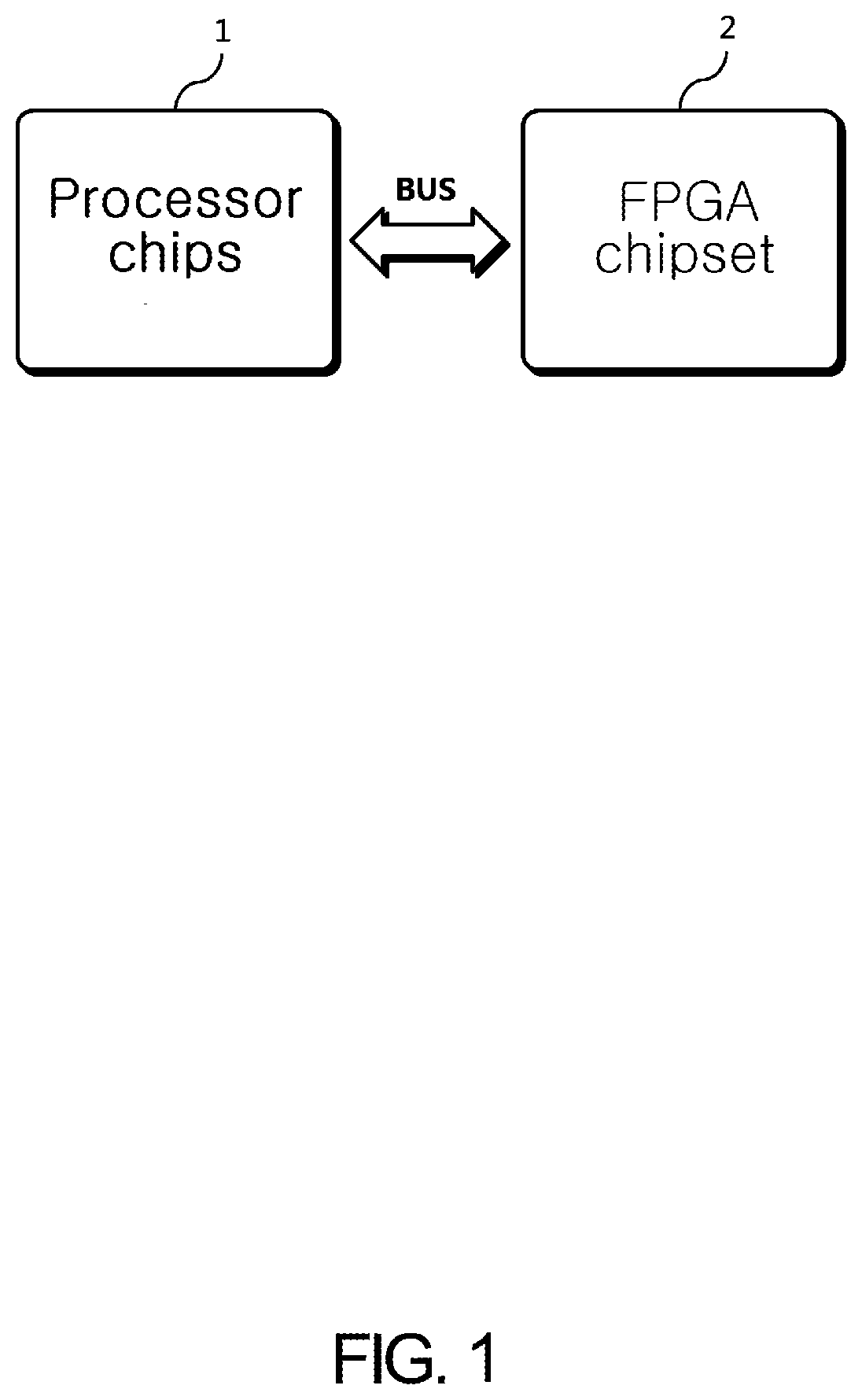
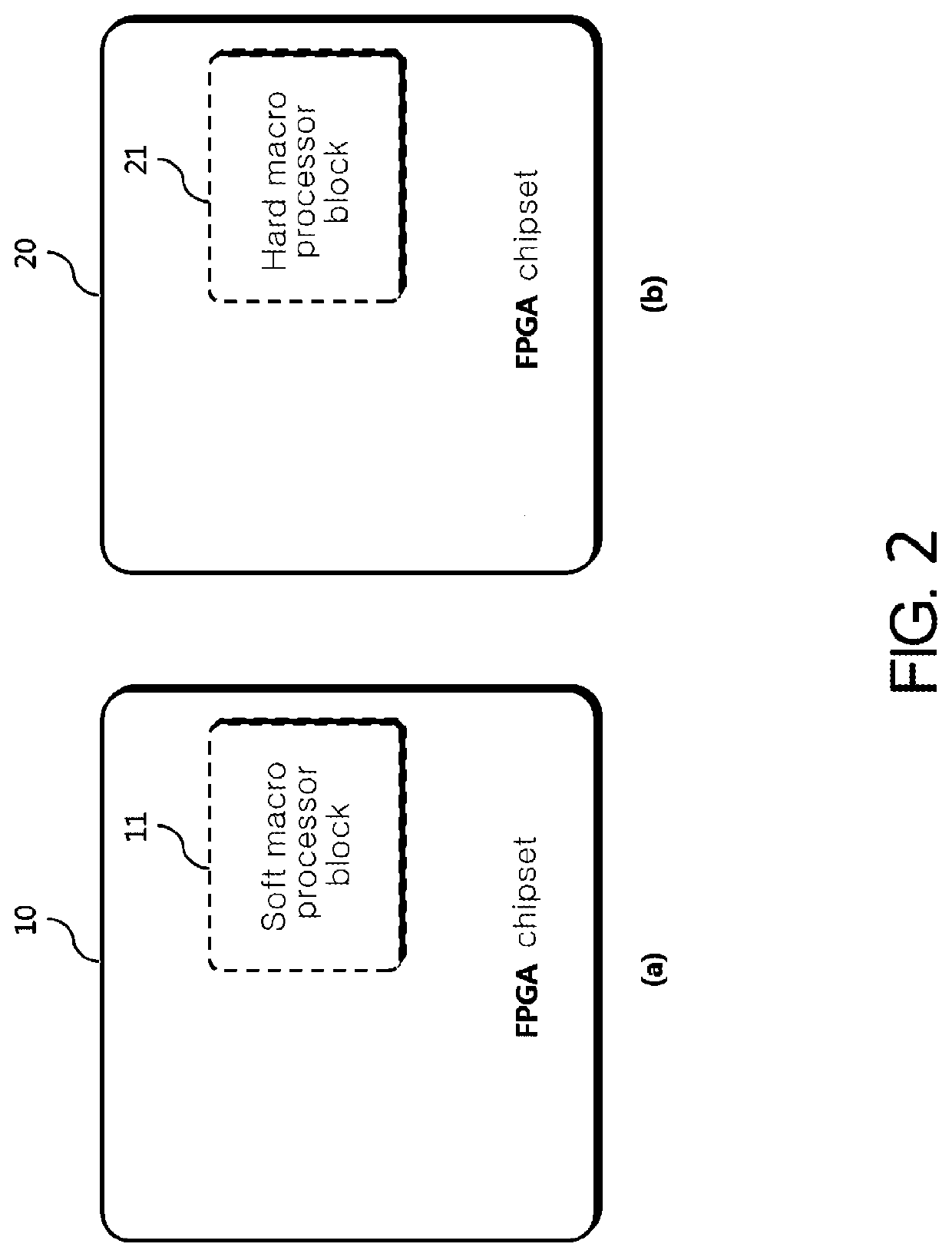
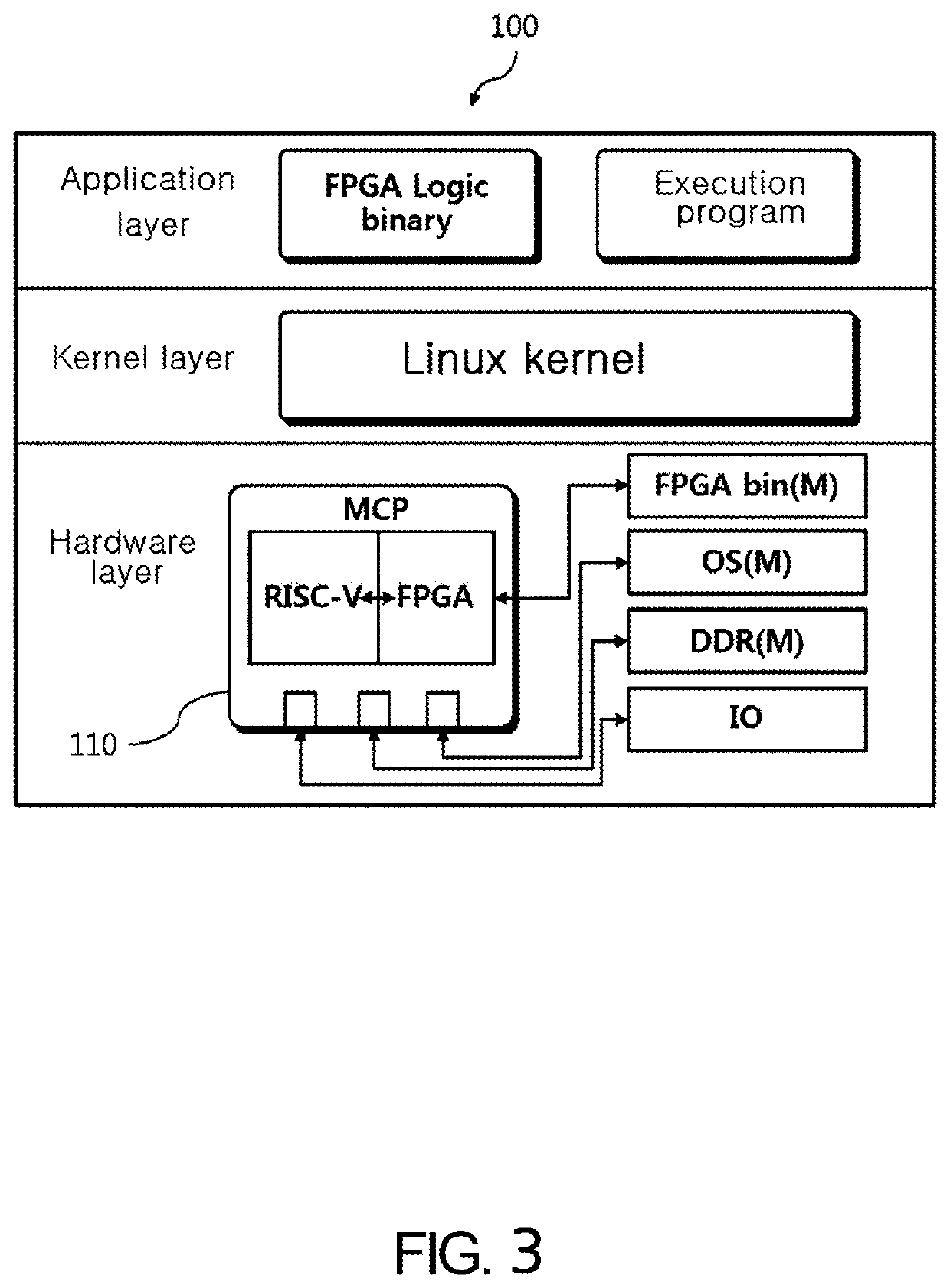
- A hardware high-speed computation device combining RISC-V processors with FPGAs, allowing for user-defined instruction sets to be executed within a single chip, enabling flexible configuration and modification of user-defined instructions without changing the basic ISA, thereby supporting special-purpose computations and external IC control through an interlocking configuration.

Supporting large-word operations in a reduced instruction set computer ( "RISC" ) processor
PatentWO2023061291A1
Innovation
- Introduction of a Special Purpose Execution Unit (SPU) with registers having word widths greater than CPU registers to handle large-word operations in RISC architecture.
- Implementation of state-master bits mechanism to synchronize the state between SPU and CPU, ensuring coherent execution of large-word operations.
- Flexible result storage system that allows storing operation results in either CPU registers or alternative SPU registers based on operational requirements.


Open Source RISC-V Ecosystem and Industry Standards Impact
The open source RISC-V ecosystem has fundamentally transformed the semiconductor industry landscape by establishing a collaborative framework that transcends traditional proprietary boundaries. Unlike closed architectures, RISC-V's open instruction set architecture enables unprecedented innovation velocity across diverse technology domains, from edge computing to artificial intelligence accelerators. This openness has catalyzed the formation of a robust ecosystem comprising hardware vendors, software developers, academic institutions, and system integrators working collectively toward standardized solutions.
The RISC-V International organization serves as the primary steward for architectural specifications and compliance frameworks, ensuring interoperability across implementations while maintaining design flexibility. Key industry standards include the base integer instruction sets, standard extensions for floating-point operations, vector processing, and specialized workload optimizations. These standards provide essential compatibility guarantees while allowing customization for specific application requirements, particularly crucial for emerging technologies requiring domain-specific acceleration.
Major technology corporations including Google, NVIDIA, Intel, and Alibaba have significantly invested in RISC-V development, contributing to both specification evolution and reference implementations. Their participation has accelerated enterprise adoption and validated RISC-V's viability for production deployments. Simultaneously, numerous startups have emerged focusing exclusively on RISC-V-based solutions, creating a dynamic competitive environment that drives continuous innovation.
The ecosystem's impact extends beyond traditional computing paradigms into emerging fields such as quantum computing interfaces, neuromorphic processors, and IoT security modules. Open source toolchains, including GCC and LLVM compiler support, have matured substantially, providing developers with production-ready development environments. This comprehensive software stack reduces barriers to entry and enables rapid prototyping of novel architectures.
Industry standards compliance has become increasingly sophisticated, with formal verification methodologies and compatibility test suites ensuring reliable interoperability. The establishment of profiles for specific market segments, such as embedded systems and high-performance computing, provides clear implementation guidelines while maintaining the architecture's inherent flexibility for future technological evolution.
The RISC-V International organization serves as the primary steward for architectural specifications and compliance frameworks, ensuring interoperability across implementations while maintaining design flexibility. Key industry standards include the base integer instruction sets, standard extensions for floating-point operations, vector processing, and specialized workload optimizations. These standards provide essential compatibility guarantees while allowing customization for specific application requirements, particularly crucial for emerging technologies requiring domain-specific acceleration.
Major technology corporations including Google, NVIDIA, Intel, and Alibaba have significantly invested in RISC-V development, contributing to both specification evolution and reference implementations. Their participation has accelerated enterprise adoption and validated RISC-V's viability for production deployments. Simultaneously, numerous startups have emerged focusing exclusively on RISC-V-based solutions, creating a dynamic competitive environment that drives continuous innovation.
The ecosystem's impact extends beyond traditional computing paradigms into emerging fields such as quantum computing interfaces, neuromorphic processors, and IoT security modules. Open source toolchains, including GCC and LLVM compiler support, have matured substantially, providing developers with production-ready development environments. This comprehensive software stack reduces barriers to entry and enables rapid prototyping of novel architectures.
Industry standards compliance has become increasingly sophisticated, with formal verification methodologies and compatibility test suites ensuring reliable interoperability. The establishment of profiles for specific market segments, such as embedded systems and high-performance computing, provides clear implementation guidelines while maintaining the architecture's inherent flexibility for future technological evolution.
Energy Efficiency and Sustainability in RISC Architecture Design
Energy efficiency has emerged as a critical design consideration for RISC architectures as computing systems face increasing pressure to reduce power consumption while maintaining performance. Modern RISC processors are incorporating sophisticated power management techniques, including dynamic voltage and frequency scaling, clock gating, and power islands that can be selectively activated based on workload requirements. These approaches enable processors to optimize energy consumption across different operational states.
The sustainability aspect of RISC architecture design extends beyond operational efficiency to encompass the entire lifecycle of processor development and deployment. Advanced fabrication processes, such as FinFET and emerging gate-all-around technologies, are being leveraged to reduce leakage currents and improve transistor efficiency. Additionally, RISC designers are exploring novel materials and manufacturing techniques that minimize environmental impact during production while enhancing long-term reliability.
Architectural innovations in RISC designs are focusing on heterogeneous computing approaches that combine high-performance cores with energy-efficient cores, allowing systems to dynamically allocate tasks based on computational requirements and power constraints. This big.LITTLE architecture concept has proven particularly effective in mobile and embedded applications where battery life is paramount.
Emerging RISC implementations are integrating specialized accelerators and co-processors that handle specific computational tasks more efficiently than general-purpose cores. These domain-specific architectures reduce overall system power consumption by offloading energy-intensive operations to optimized hardware blocks, particularly beneficial for AI inference, signal processing, and cryptographic operations.
The development of advanced compiler optimizations and runtime power management frameworks is complementing hardware-level efficiency improvements. These software-hardware co-design approaches enable more intelligent resource allocation and workload scheduling, maximizing performance per watt across diverse application scenarios.
Future RISC architectures are exploring near-threshold voltage operation and approximate computing techniques that trade minor accuracy for significant energy savings in error-tolerant applications. These approaches represent a paradigm shift toward application-aware energy optimization, where system behavior adapts to specific use case requirements while maintaining acceptable performance levels.
The sustainability aspect of RISC architecture design extends beyond operational efficiency to encompass the entire lifecycle of processor development and deployment. Advanced fabrication processes, such as FinFET and emerging gate-all-around technologies, are being leveraged to reduce leakage currents and improve transistor efficiency. Additionally, RISC designers are exploring novel materials and manufacturing techniques that minimize environmental impact during production while enhancing long-term reliability.
Architectural innovations in RISC designs are focusing on heterogeneous computing approaches that combine high-performance cores with energy-efficient cores, allowing systems to dynamically allocate tasks based on computational requirements and power constraints. This big.LITTLE architecture concept has proven particularly effective in mobile and embedded applications where battery life is paramount.
Emerging RISC implementations are integrating specialized accelerators and co-processors that handle specific computational tasks more efficiently than general-purpose cores. These domain-specific architectures reduce overall system power consumption by offloading energy-intensive operations to optimized hardware blocks, particularly beneficial for AI inference, signal processing, and cryptographic operations.
The development of advanced compiler optimizations and runtime power management frameworks is complementing hardware-level efficiency improvements. These software-hardware co-design approaches enable more intelligent resource allocation and workload scheduling, maximizing performance per watt across diverse application scenarios.
Future RISC architectures are exploring near-threshold voltage operation and approximate computing techniques that trade minor accuracy for significant energy savings in error-tolerant applications. These approaches represent a paradigm shift toward application-aware energy optimization, where system behavior adapts to specific use case requirements while maintaining acceptable performance levels.
Unlock deeper insights with PatSnap Eureka Quick Research — get a full tech report to explore trends and direct your research. Try now!
Generate Your Research Report Instantly with AI Agent
Supercharge your innovation with PatSnap Eureka AI Agent Platform!