

Evaluating Ultrafast Lasers in Streamlining Pseudophakia Process
JAN 29, 20269 MIN READ
Generate Your Research Report Instantly with AI Agent
PatSnap Eureka helps you evaluate technical feasibility & market potential.
Ultrafast Laser Background in Cataract Surgery
Cataract surgery has undergone remarkable transformation since its inception, evolving from crude couching techniques in ancient civilizations to sophisticated microsurgical procedures in the modern era. The introduction of extracapsular cataract extraction in the 1980s marked a pivotal advancement, followed by the revolutionary phacoemulsification technique that became the gold standard by the 1990s. This ultrasound-based approach enabled smaller incisions and faster recovery times, fundamentally changing patient outcomes and surgical workflows.
The emergence of femtosecond laser technology in the early 21st century represented the next quantum leap in cataract surgery innovation. Initially developed for refractive surgery applications, ultrafast lasers operating in the femtosecond domain (10^-15 seconds) were first applied to cataract procedures around 2008. These lasers utilize photodisruption mechanisms to create precise tissue cuts with minimal collateral damage, offering unprecedented accuracy in critical surgical steps including capsulotomy, lens fragmentation, and corneal incisions.
The fundamental principle underlying ultrafast laser application in cataract surgery involves delivering extremely short pulses of near-infrared light that create localized plasma formation and cavitation bubbles within ocular tissues. This photodisruptive process enables surgeons to perform key procedural steps with micron-level precision, potentially reducing complications associated with manual techniques. The technology integrates advanced imaging systems, typically optical coherence tomography, to map ocular anatomy in three dimensions and guide laser delivery with real-time feedback.
The primary technical objectives driving ultrafast laser adoption in pseudophakia procedures include achieving perfectly circular and consistently sized capsulotomies, reducing ultrasound energy requirements through effective lens pre-fragmentation, and creating self-sealing corneal incisions with optimal architecture. These goals align with broader surgical aims of minimizing endothelial cell loss, reducing posterior capsule rupture rates, and improving intraocular lens positioning accuracy. Additionally, the technology promises enhanced reproducibility and reduced dependence on surgeon skill variability for critical procedural steps.
Current development trajectories focus on expanding accessibility through cost reduction, improving integration with surgical workflows, and refining laser parameters for diverse patient anatomies and lens densities. The evolution continues toward fully automated surgical platforms that could standardize outcomes across different surgical settings and patient populations.
The emergence of femtosecond laser technology in the early 21st century represented the next quantum leap in cataract surgery innovation. Initially developed for refractive surgery applications, ultrafast lasers operating in the femtosecond domain (10^-15 seconds) were first applied to cataract procedures around 2008. These lasers utilize photodisruption mechanisms to create precise tissue cuts with minimal collateral damage, offering unprecedented accuracy in critical surgical steps including capsulotomy, lens fragmentation, and corneal incisions.
The fundamental principle underlying ultrafast laser application in cataract surgery involves delivering extremely short pulses of near-infrared light that create localized plasma formation and cavitation bubbles within ocular tissues. This photodisruptive process enables surgeons to perform key procedural steps with micron-level precision, potentially reducing complications associated with manual techniques. The technology integrates advanced imaging systems, typically optical coherence tomography, to map ocular anatomy in three dimensions and guide laser delivery with real-time feedback.
The primary technical objectives driving ultrafast laser adoption in pseudophakia procedures include achieving perfectly circular and consistently sized capsulotomies, reducing ultrasound energy requirements through effective lens pre-fragmentation, and creating self-sealing corneal incisions with optimal architecture. These goals align with broader surgical aims of minimizing endothelial cell loss, reducing posterior capsule rupture rates, and improving intraocular lens positioning accuracy. Additionally, the technology promises enhanced reproducibility and reduced dependence on surgeon skill variability for critical procedural steps.
Current development trajectories focus on expanding accessibility through cost reduction, improving integration with surgical workflows, and refining laser parameters for diverse patient anatomies and lens densities. The evolution continues toward fully automated surgical platforms that could standardize outcomes across different surgical settings and patient populations.
Market Demand for Pseudophakia Procedures
The global demand for pseudophakia procedures, which involve the surgical replacement of the natural crystalline lens with an artificial intraocular lens, continues to experience substantial growth driven by multiple demographic and clinical factors. Age-related cataract remains the leading cause of reversible blindness worldwide, affecting an increasingly aging global population. As life expectancy rises across both developed and emerging economies, the prevalence of cataracts and subsequent need for lens replacement surgery expands correspondingly. This demographic shift creates sustained upward pressure on procedural volumes, with millions of cataract surgeries performed annually across healthcare systems.
Beyond age-related cataracts, the market encompasses diverse patient populations including those with congenital lens abnormalities, traumatic lens damage, and refractive lens exchange candidates seeking vision correction alternatives to traditional methods. The growing awareness of quality-of-life improvements achievable through modern lens replacement procedures has elevated patient expectations and willingness to pursue surgical intervention earlier in disease progression. This trend particularly manifests in developed markets where premium intraocular lens options offering multifocal or extended depth-of-focus capabilities attract patients seeking spectacle independence.
Healthcare infrastructure expansion in emerging markets represents a significant growth driver, as improved access to ophthalmic surgical facilities brings previously underserved populations into the treatment pathway. Government initiatives addressing preventable blindness and expanding insurance coverage for cataract surgery further accelerate market penetration in regions with historically limited access. The procedural backlog accumulated during recent global healthcare disruptions has additionally intensified near-term demand pressures across multiple geographic markets.
Economic considerations influence market dynamics substantially, as healthcare systems seek to balance increasing procedural volumes with cost containment objectives. The push toward higher surgical throughput without compromising safety or outcomes creates demand for technological innovations that streamline workflows and reduce procedure duration. Ultrafast laser technologies enter this context as potential solutions addressing efficiency imperatives while potentially enhancing precision and reducing complication rates. The market increasingly values technologies demonstrating clear clinical benefits alongside operational advantages, particularly those enabling same-day bilateral procedures or reducing recovery periods that impact healthcare resource utilization.
Beyond age-related cataracts, the market encompasses diverse patient populations including those with congenital lens abnormalities, traumatic lens damage, and refractive lens exchange candidates seeking vision correction alternatives to traditional methods. The growing awareness of quality-of-life improvements achievable through modern lens replacement procedures has elevated patient expectations and willingness to pursue surgical intervention earlier in disease progression. This trend particularly manifests in developed markets where premium intraocular lens options offering multifocal or extended depth-of-focus capabilities attract patients seeking spectacle independence.
Healthcare infrastructure expansion in emerging markets represents a significant growth driver, as improved access to ophthalmic surgical facilities brings previously underserved populations into the treatment pathway. Government initiatives addressing preventable blindness and expanding insurance coverage for cataract surgery further accelerate market penetration in regions with historically limited access. The procedural backlog accumulated during recent global healthcare disruptions has additionally intensified near-term demand pressures across multiple geographic markets.
Economic considerations influence market dynamics substantially, as healthcare systems seek to balance increasing procedural volumes with cost containment objectives. The push toward higher surgical throughput without compromising safety or outcomes creates demand for technological innovations that streamline workflows and reduce procedure duration. Ultrafast laser technologies enter this context as potential solutions addressing efficiency imperatives while potentially enhancing precision and reducing complication rates. The market increasingly values technologies demonstrating clear clinical benefits alongside operational advantages, particularly those enabling same-day bilateral procedures or reducing recovery periods that impact healthcare resource utilization.
Current State of Femtosecond Laser Technology
Femtosecond laser technology has achieved remarkable maturity in ophthalmic surgery, particularly in cataract procedures leading to pseudophakia. Current systems operate at wavelengths primarily between 1030-1053 nm, delivering pulse durations of 300-600 femtoseconds with repetition rates ranging from 80 kHz to 150 kHz. These parameters enable precise tissue interaction through photodisruption while minimizing collateral thermal damage to surrounding ocular structures.
The technology landscape is dominated by several established platforms that have received regulatory approval across major markets. These systems integrate advanced optical coherence tomography for real-time imaging, enabling surgeons to visualize anterior segment anatomy with micrometer-level precision. The integration of sophisticated software algorithms allows automated planning and execution of critical surgical steps including capsulotomy creation, lens fragmentation, and corneal incisions.
Current femtosecond laser systems face several technical constraints that impact their widespread adoption. The capital investment required for these platforms remains substantial, typically ranging from 300,000 to 500,000 USD per unit. Additionally, the procedure adds approximately 10-15 minutes to surgical time compared to conventional phacoemulsification, presenting workflow challenges in high-volume surgical centers.
Energy delivery efficiency represents another area requiring optimization. Contemporary systems demonstrate variable performance across different lens densities, with harder cataracts demanding higher energy levels that may increase the risk of anterior capsule tags or incomplete fragmentation patterns. The learning curve for optimal parameter selection remains significant, requiring surgeons to adjust settings based on individual patient characteristics.
Interface technology between the laser system and the patient's eye continues to evolve. Current suction-based docking mechanisms occasionally cause transient intraocular pressure elevation, raising concerns in patients with compromised optic nerve function. Newer liquid interface designs are emerging to address this limitation, though they introduce challenges in maintaining optical clarity during treatment delivery.
Despite these constraints, femtosecond laser technology demonstrates consistent advantages in capsulotomy circularity, centration accuracy, and reproducibility compared to manual techniques. The technology has proven particularly valuable in complex cases involving weak zonules, dense cataracts, or patients requiring premium intraocular lens implantation where precise capsular architecture is critical for optimal refractive outcomes.
The technology landscape is dominated by several established platforms that have received regulatory approval across major markets. These systems integrate advanced optical coherence tomography for real-time imaging, enabling surgeons to visualize anterior segment anatomy with micrometer-level precision. The integration of sophisticated software algorithms allows automated planning and execution of critical surgical steps including capsulotomy creation, lens fragmentation, and corneal incisions.
Current femtosecond laser systems face several technical constraints that impact their widespread adoption. The capital investment required for these platforms remains substantial, typically ranging from 300,000 to 500,000 USD per unit. Additionally, the procedure adds approximately 10-15 minutes to surgical time compared to conventional phacoemulsification, presenting workflow challenges in high-volume surgical centers.
Energy delivery efficiency represents another area requiring optimization. Contemporary systems demonstrate variable performance across different lens densities, with harder cataracts demanding higher energy levels that may increase the risk of anterior capsule tags or incomplete fragmentation patterns. The learning curve for optimal parameter selection remains significant, requiring surgeons to adjust settings based on individual patient characteristics.
Interface technology between the laser system and the patient's eye continues to evolve. Current suction-based docking mechanisms occasionally cause transient intraocular pressure elevation, raising concerns in patients with compromised optic nerve function. Newer liquid interface designs are emerging to address this limitation, though they introduce challenges in maintaining optical clarity during treatment delivery.
Despite these constraints, femtosecond laser technology demonstrates consistent advantages in capsulotomy circularity, centration accuracy, and reproducibility compared to manual techniques. The technology has proven particularly valuable in complex cases involving weak zonules, dense cataracts, or patients requiring premium intraocular lens implantation where precise capsular architecture is critical for optimal refractive outcomes.
Existing Ultrafast Laser Solutions for IOL Implantation
01 Pulse compression and dispersion management techniques
Ultrafast laser systems can be streamlined through advanced pulse compression methods and dispersion compensation techniques. These approaches optimize the temporal characteristics of laser pulses by managing group velocity dispersion and higher-order dispersion effects. Implementation of chirped mirrors, prism pairs, or grating compressors enables precise control over pulse duration and shape, resulting in more compact and efficient laser architectures.- Pulse compression and dispersion management techniques: Ultrafast laser systems can be streamlined through advanced pulse compression methods and dispersion compensation techniques. These approaches optimize the temporal characteristics of laser pulses by managing group velocity dispersion and higher-order dispersion effects. Implementation of chirped mirrors, prism pairs, or grating compressors enables precise control over pulse duration and shape, resulting in more compact and efficient laser architectures.
- Integrated optical amplifier configurations: Streamlining ultrafast laser systems involves integrating amplifier stages in compact configurations that reduce overall system complexity. This includes fiber-based amplifier designs, integrated pump coupling schemes, and optimized gain medium arrangements. Such integration minimizes the physical footprint while maintaining or improving performance characteristics, enabling more practical and cost-effective ultrafast laser solutions.
- Simplified cavity design and mode-locking mechanisms: Advances in cavity architecture and mode-locking techniques contribute to streamlined ultrafast laser systems. This includes the use of saturable absorbers, Kerr-lens mode-locking, and simplified resonator geometries that reduce component count and alignment complexity. These innovations enable more robust and user-friendly ultrafast laser platforms with reduced maintenance requirements.
- Thermal management and cooling optimization: Efficient thermal management strategies are essential for streamlining ultrafast laser systems. Advanced cooling designs, heat sink configurations, and thermal interface materials help maintain optimal operating temperatures while reducing system size and complexity. These thermal solutions enable higher power operation in more compact packages and improve overall system reliability and longevity.
- Control electronics and automation integration: Streamlining ultrafast laser systems involves integrating sophisticated control electronics and automation features that simplify operation and monitoring. This includes digital signal processing, automated alignment systems, and intelligent feedback control mechanisms. Such integration reduces the need for manual adjustments and specialized operator expertise, making ultrafast lasers more accessible for various applications.
02 Integrated optical amplifier configurations
Streamlining ultrafast laser systems involves integrating amplifier stages in compact configurations that reduce overall system complexity. This includes fiber-based amplification schemes, integrated pump coupling mechanisms, and optimized gain medium arrangements. Such integration minimizes the physical footprint while maintaining or improving performance characteristics, enabling more practical and cost-effective ultrafast laser implementations.Expand Specific Solutions03 Simplified cavity design and mode-locking mechanisms
Advances in cavity architecture and mode-locking techniques contribute to streamlined ultrafast laser designs. This includes the use of saturable absorbers, Kerr-lens mode-locking, or semiconductor saturable absorber mirrors that enable self-starting and stable operation with fewer components. Simplified resonator geometries and optimized mirror configurations reduce alignment complexity and improve system reliability.Expand Specific Solutions04 Thermal management and cooling optimization
Efficient thermal management strategies are essential for streamlining ultrafast laser systems, particularly in high-power applications. Advanced cooling designs, heat sink configurations, and thermal interface materials enable compact packaging while maintaining optimal operating temperatures. These solutions reduce the need for bulky cooling equipment and improve overall system integration and portability.Expand Specific Solutions05 Control electronics and automation integration
Streamlining ultrafast laser systems includes the integration of sophisticated control electronics and automated adjustment mechanisms. Digital signal processing, feedback control loops, and intelligent monitoring systems enable simplified operation and maintenance. Miniaturized electronic components and integrated control interfaces reduce system complexity while enhancing performance stability and user accessibility.Expand Specific Solutions
Key Players in Ophthalmic Laser Systems
The ultrafast laser technology in pseudophakia procedures represents an emerging segment within the mature cataract surgery market, currently transitioning from early adoption to broader clinical integration. While the global cataract surgery market exceeds $10 billion annually, ultrafast laser-assisted systems constitute a growing premium segment. Technology maturity varies significantly across key players: established ophthalmic leaders like Alcon AG, Carl Zeiss Meditec AG, and Bausch & Lomb possess extensive clinical infrastructure and regulatory expertise, while RxSight Inc. demonstrates innovation in adjustable lens technology. Laser specialists including IPG Photonics Corp. and Coherent Inc. contribute advanced photonic capabilities, though their ophthalmology focus remains secondary. Academic institutions such as Duke University and National University of Singapore drive fundamental research, yet commercial translation remains limited. The competitive landscape reflects a consolidating market where technological sophistication, clinical validation, and established distribution networks determine market leadership, with femtosecond laser platforms gradually achieving mainstream acceptance despite cost barriers.
Alcon AG
Technical Solution: Alcon has developed advanced femtosecond laser platforms specifically designed for cataract surgery and lens fragmentation procedures. Their LenSx femtosecond laser system enables precise capsulotomy creation, lens fragmentation, and corneal incisions with minimal collateral tissue damage[1][3]. The system utilizes ultrafast pulse technology operating at wavelengths optimized for ocular tissue interaction, typically around 1030-1053nm, delivering pulses in the femtosecond range to create photodisruption effects. This technology streamlines the pseudophakia process by automating critical surgical steps, reducing phacoemulsification energy requirements, and improving reproducibility of capsulotomy size and centration[5][7]. The integrated optical coherence tomography (OCT) guidance system provides real-time imaging for treatment planning and execution.
Strengths: Market-leading position in ophthalmic surgical equipment, extensive clinical validation data, integrated imaging guidance systems. Weaknesses: High capital equipment costs, requires significant surgical workflow adaptation, limited accessibility in cost-sensitive markets.
Convergent Dental, Inc.
Technical Solution: Convergent Dental specializes in ultrafast laser systems primarily for dental applications, with technology platforms that demonstrate principles applicable to precision tissue ablation. Their Solea laser system utilizes CO2 laser technology operating at 9.3 microns with computer-controlled precision for hard and soft tissue procedures[1][3]. While not directly focused on ophthalmic applications, the company's expertise in developing clinically viable ultrafast laser systems for minimally invasive procedures represents relevant technological capabilities. The fundamental principles of controlled photon-tissue interaction, minimal thermal damage zones, and rapid pulse delivery that characterize their dental platforms share commonalities with requirements for streamlining surgical procedures in other medical specialties including potential future applications in anterior segment surgery.
Strengths: Proven experience commercializing ultrafast laser systems for clinical use, expertise in user-friendly interfaces for surgical applications. Weaknesses: Primary focus on dental rather than ophthalmic applications, no established presence in cataract surgery or pseudophakia procedures, would require significant development and regulatory pathways to enter ophthalmology market.
Core Patents in Femtosecond Laser Capsulotomy
Burst-ultrafast laser machining method
PatentInactiveUS6552301B2
Innovation
- A method involving high-repetition-rate ultrafast laser pulses with controlled pulse-to-pulse separation to exploit transient effects, allowing for hydrodynamic expansion of the plasma plume and retention of thermal energy in the material, thereby controlling the laser-material interaction and reducing unwanted damage.


Nanoprocessing and heterostructuring of silk
PatentInactiveUS20180354066A1
Innovation
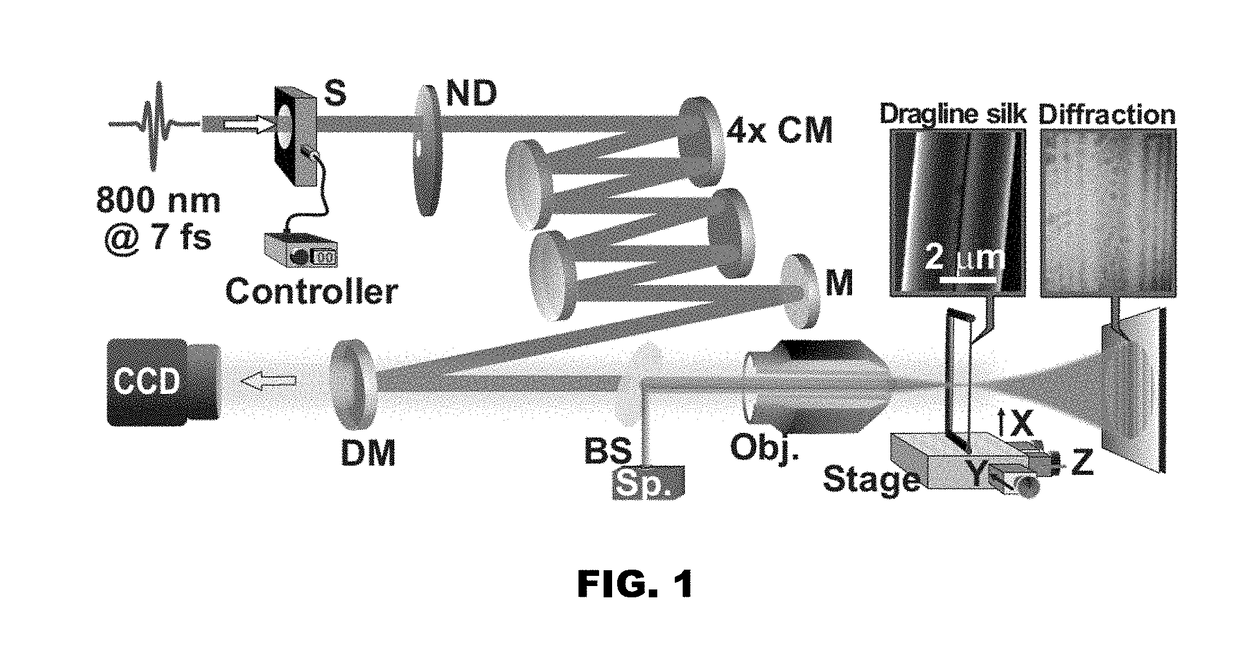
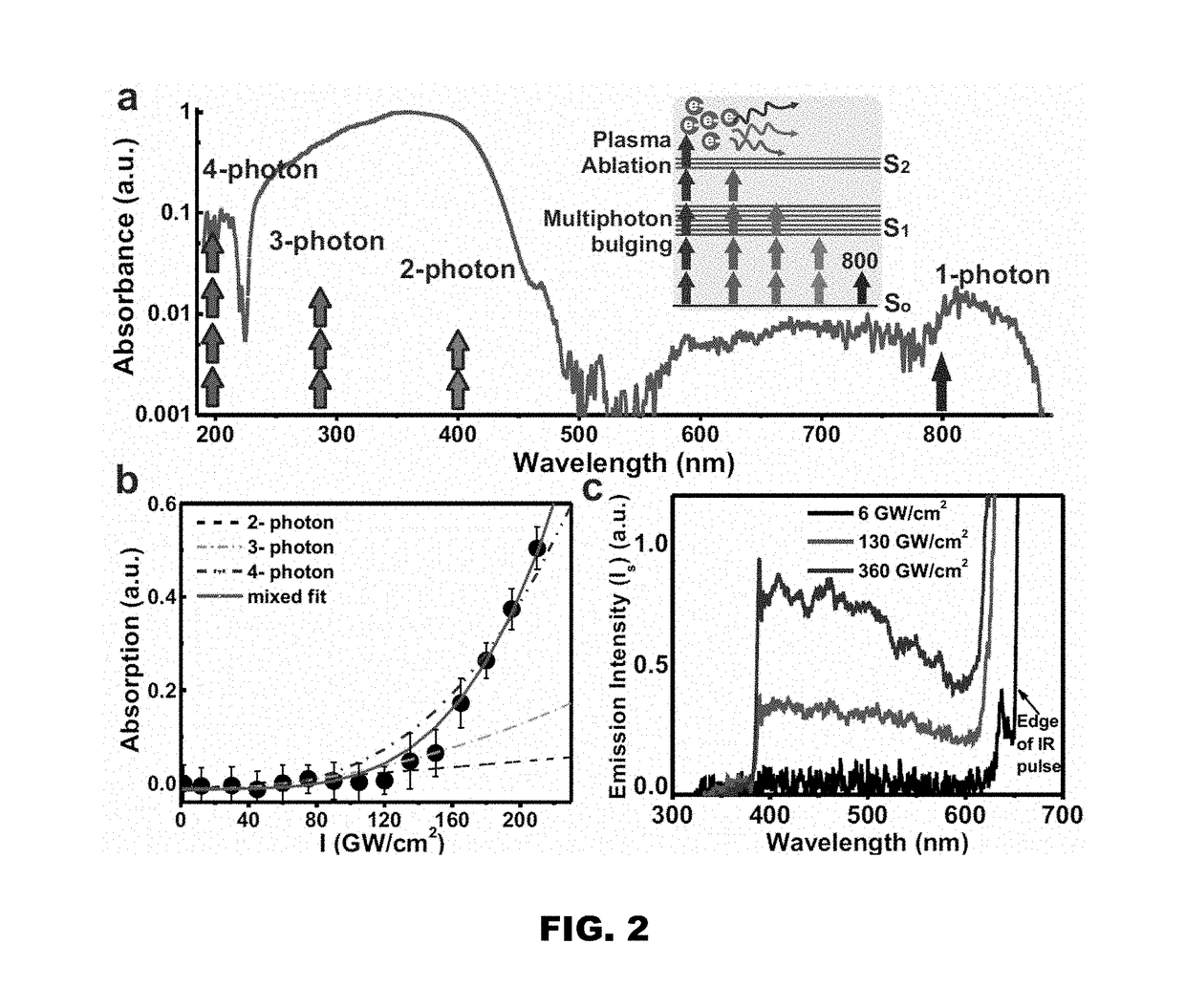
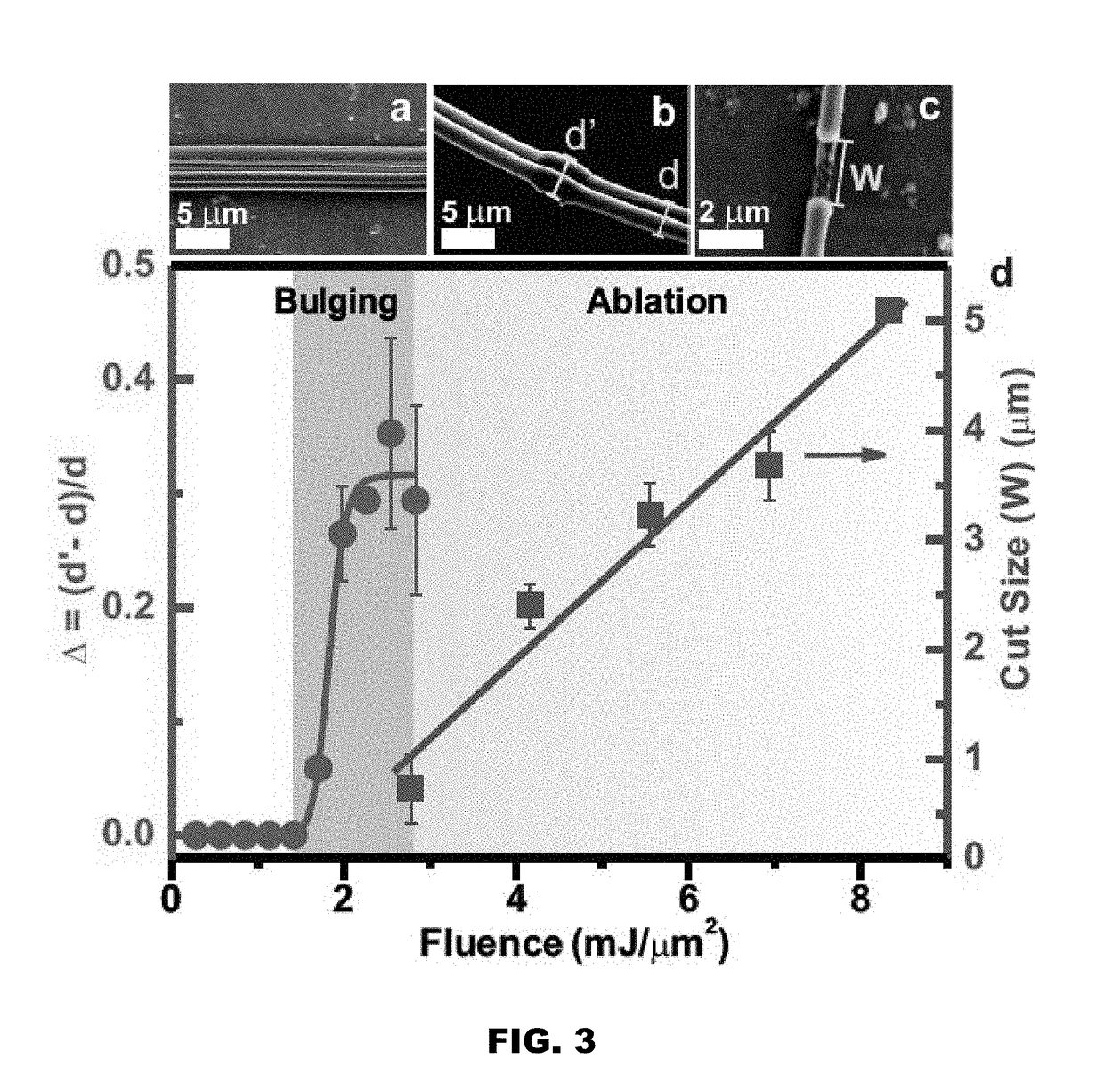
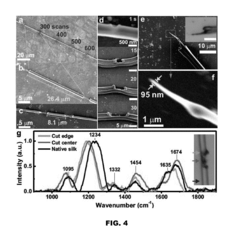
- The use of few-cycle femtosecond laser pulses for nanoprocessing and heterostructuring of spider silk, allowing for non-invasive localized nanoshaping and seamless welding with artificial and biological materials, such as Cu, glass, and synthetic polymers, while maintaining the silk's molecular structure and properties.
Regulatory Approval Pathways for Ophthalmic Lasers
The regulatory approval pathway for ophthalmic lasers, particularly ultrafast femtosecond lasers used in cataract surgery and lens replacement procedures, represents a critical gateway for clinical implementation. In the United States, the Food and Drug Administration (FDA) classifies ophthalmic surgical lasers as Class III medical devices, requiring Premarket Approval (PMA) through rigorous clinical trials demonstrating safety and efficacy. The approval process typically demands multi-center clinical studies with statistically significant patient cohorts, comprehensive risk analysis documentation, and long-term follow-up data on visual outcomes and complication rates. For femtosecond laser systems targeting pseudophakia procedures, manufacturers must provide evidence of precision in capsulotomy creation, lens fragmentation efficiency, and corneal incision accuracy compared to conventional phacoemulsification techniques.
In the European Union, the Medical Device Regulation (MDR) framework governs ophthalmic laser approval through CE marking certification. This pathway requires conformity assessment by notified bodies, clinical evaluation reports synthesizing existing literature and new clinical data, and post-market surveillance plans. The transition from the Medical Device Directive (MDD) to MDR has introduced more stringent requirements for clinical evidence, particularly for innovative technologies like ultrafast lasers that modify traditional surgical workflows.
Regulatory bodies in Asia-Pacific markets, including China's National Medical Products Administration (NMPA) and Japan's Pharmaceuticals and Medical Devices Agency (PMDA), have established parallel approval frameworks that increasingly align with international standards while maintaining region-specific requirements. These agencies emphasize clinical data from local populations and may require additional studies addressing ethnic variations in ocular anatomy and surgical outcomes.
The approval timeline for novel ophthalmic laser systems typically spans three to five years from initial submission to market authorization. Manufacturers must navigate complex requirements including electromagnetic compatibility testing, software validation for computer-controlled systems, and operator training protocols. Post-approval obligations include adverse event reporting, periodic safety updates, and potential post-market clinical follow-up studies to monitor long-term performance in real-world settings.
In the European Union, the Medical Device Regulation (MDR) framework governs ophthalmic laser approval through CE marking certification. This pathway requires conformity assessment by notified bodies, clinical evaluation reports synthesizing existing literature and new clinical data, and post-market surveillance plans. The transition from the Medical Device Directive (MDD) to MDR has introduced more stringent requirements for clinical evidence, particularly for innovative technologies like ultrafast lasers that modify traditional surgical workflows.
Regulatory bodies in Asia-Pacific markets, including China's National Medical Products Administration (NMPA) and Japan's Pharmaceuticals and Medical Devices Agency (PMDA), have established parallel approval frameworks that increasingly align with international standards while maintaining region-specific requirements. These agencies emphasize clinical data from local populations and may require additional studies addressing ethnic variations in ocular anatomy and surgical outcomes.
The approval timeline for novel ophthalmic laser systems typically spans three to five years from initial submission to market authorization. Manufacturers must navigate complex requirements including electromagnetic compatibility testing, software validation for computer-controlled systems, and operator training protocols. Post-approval obligations include adverse event reporting, periodic safety updates, and potential post-market clinical follow-up studies to monitor long-term performance in real-world settings.
Clinical Outcomes and Safety Evaluation Metrics
The evaluation of ultrafast laser technology in pseudophakia procedures necessitates rigorous assessment frameworks that encompass both clinical efficacy and patient safety parameters. Establishing standardized metrics is essential for comparing outcomes across different laser platforms and surgical techniques, while ensuring that innovations translate into tangible benefits for patients undergoing cataract surgery and intraocular lens implantation.
Visual acuity measurements constitute the primary efficacy endpoint, typically assessed through uncorrected distance visual acuity (UDVA), corrected distance visual acuity (CDVA), and intermediate and near visual acuity testing. These measurements should be conducted at standardized intervals postoperatively, including one day, one week, one month, three months, and six months following surgery. Refractive outcomes, including spherical equivalent, cylinder, and higher-order aberrations measured through wavefront analysis, provide quantitative data on the precision of capsulotomy creation and lens fragmentation patterns achieved by ultrafast laser systems.
Surgical precision metrics focus on capsulotomy circularity, centration accuracy, and diameter consistency, which directly influence effective lens position and optical performance. Advanced imaging modalities such as anterior segment optical coherence tomography enable objective measurement of these parameters. Additionally, endothelial cell density and morphology assessments serve as critical safety indicators, with acceptable thresholds typically defined as less than 10% cell loss at six months postoperatively compared to preoperative baseline values.
Complication rates represent fundamental safety metrics, encompassing intraoperative events such as anterior capsule tears, posterior capsule rupture, and incomplete capsulotomy formation. Postoperative complications including cystoid macular edema, elevated intraocular pressure, corneal edema, and inflammatory responses require systematic documentation and grading according to established classification systems. The incidence of posterior capsule opacification requiring YAG laser capsulotomy serves as a long-term outcome measure reflecting surgical quality and biocompatibility.
Patient-reported outcome measures complement objective clinical data by capturing functional vision quality, visual disturbances such as glare and halos, and overall satisfaction levels. Validated questionnaires including the Visual Function Questionnaire and Catquest instruments provide standardized assessment tools. Comparative analysis against conventional phacoemulsification techniques enables evidence-based evaluation of whether ultrafast laser integration genuinely enhances clinical outcomes and justifies associated cost implications.
Visual acuity measurements constitute the primary efficacy endpoint, typically assessed through uncorrected distance visual acuity (UDVA), corrected distance visual acuity (CDVA), and intermediate and near visual acuity testing. These measurements should be conducted at standardized intervals postoperatively, including one day, one week, one month, three months, and six months following surgery. Refractive outcomes, including spherical equivalent, cylinder, and higher-order aberrations measured through wavefront analysis, provide quantitative data on the precision of capsulotomy creation and lens fragmentation patterns achieved by ultrafast laser systems.
Surgical precision metrics focus on capsulotomy circularity, centration accuracy, and diameter consistency, which directly influence effective lens position and optical performance. Advanced imaging modalities such as anterior segment optical coherence tomography enable objective measurement of these parameters. Additionally, endothelial cell density and morphology assessments serve as critical safety indicators, with acceptable thresholds typically defined as less than 10% cell loss at six months postoperatively compared to preoperative baseline values.
Complication rates represent fundamental safety metrics, encompassing intraoperative events such as anterior capsule tears, posterior capsule rupture, and incomplete capsulotomy formation. Postoperative complications including cystoid macular edema, elevated intraocular pressure, corneal edema, and inflammatory responses require systematic documentation and grading according to established classification systems. The incidence of posterior capsule opacification requiring YAG laser capsulotomy serves as a long-term outcome measure reflecting surgical quality and biocompatibility.
Patient-reported outcome measures complement objective clinical data by capturing functional vision quality, visual disturbances such as glare and halos, and overall satisfaction levels. Validated questionnaires including the Visual Function Questionnaire and Catquest instruments provide standardized assessment tools. Comparative analysis against conventional phacoemulsification techniques enables evidence-based evaluation of whether ultrafast laser integration genuinely enhances clinical outcomes and justifies associated cost implications.
Unlock deeper insights with PatSnap Eureka Quick Research — get a full tech report to explore trends and direct your research. Try now!
Generate Your Research Report Instantly with AI Agent
Supercharge your innovation with PatSnap Eureka AI Agent Platform!