

Exploring Adaptive Materials for Scramjet Thermal Protection
AUG 13, 20259 MIN READ
Generate Your Research Report Instantly with AI Agent
PatSnap Eureka helps you evaluate technical feasibility & market potential.
Scramjet TPS Evolution
The evolution of Thermal Protection Systems (TPS) for scramjets has been a critical area of research and development in hypersonic flight technology. This progression can be traced through several key stages, each marked by significant technological advancements and innovative solutions to the extreme thermal challenges faced by scramjet engines.
In the early stages of scramjet development, during the 1960s and 1970s, TPS designs were primarily focused on passive cooling methods. These included the use of high-temperature alloys and ceramic materials that could withstand the intense heat generated during hypersonic flight. However, these early systems were often heavy and had limited durability, restricting the operational capabilities of scramjet-powered vehicles.
The 1980s and 1990s saw a shift towards more advanced passive cooling techniques. Researchers began exploring the use of ablative materials, which sacrificially erode to dissipate heat. This period also witnessed the introduction of advanced ceramic matrix composites (CMCs) and carbon-carbon composites, offering improved heat resistance and reduced weight compared to their predecessors.
As scramjet technology progressed into the 2000s, active cooling systems gained prominence. These systems utilized coolants, often cryogenic fuels, to absorb and dissipate heat from critical engine components. This era also saw the development of transpiration cooling techniques, where a coolant is forced through porous materials to create a protective barrier against the hot gas flow.
The 2010s marked a significant leap in TPS technology with the emergence of adaptive and smart materials. These materials can change their properties in response to environmental conditions, offering dynamic thermal management capabilities. Shape memory alloys and phase-change materials began to be incorporated into TPS designs, allowing for more efficient and responsive thermal protection.
Recent years have seen an increased focus on integrated thermal management systems that combine multiple cooling techniques. These hybrid systems leverage the strengths of various methods to provide comprehensive thermal protection across different flight regimes and engine components. Additionally, advancements in computational modeling and simulation have greatly enhanced the design and optimization of TPS, allowing for more accurate prediction of thermal loads and material behavior.
Looking towards the future, the evolution of scramjet TPS is likely to continue with the development of novel materials and cooling strategies. Emerging technologies such as nanostructured materials, advanced coatings, and bio-inspired designs hold promise for further improving the efficiency and effectiveness of thermal protection systems for scramjet engines.
In the early stages of scramjet development, during the 1960s and 1970s, TPS designs were primarily focused on passive cooling methods. These included the use of high-temperature alloys and ceramic materials that could withstand the intense heat generated during hypersonic flight. However, these early systems were often heavy and had limited durability, restricting the operational capabilities of scramjet-powered vehicles.
The 1980s and 1990s saw a shift towards more advanced passive cooling techniques. Researchers began exploring the use of ablative materials, which sacrificially erode to dissipate heat. This period also witnessed the introduction of advanced ceramic matrix composites (CMCs) and carbon-carbon composites, offering improved heat resistance and reduced weight compared to their predecessors.
As scramjet technology progressed into the 2000s, active cooling systems gained prominence. These systems utilized coolants, often cryogenic fuels, to absorb and dissipate heat from critical engine components. This era also saw the development of transpiration cooling techniques, where a coolant is forced through porous materials to create a protective barrier against the hot gas flow.
The 2010s marked a significant leap in TPS technology with the emergence of adaptive and smart materials. These materials can change their properties in response to environmental conditions, offering dynamic thermal management capabilities. Shape memory alloys and phase-change materials began to be incorporated into TPS designs, allowing for more efficient and responsive thermal protection.
Recent years have seen an increased focus on integrated thermal management systems that combine multiple cooling techniques. These hybrid systems leverage the strengths of various methods to provide comprehensive thermal protection across different flight regimes and engine components. Additionally, advancements in computational modeling and simulation have greatly enhanced the design and optimization of TPS, allowing for more accurate prediction of thermal loads and material behavior.
Looking towards the future, the evolution of scramjet TPS is likely to continue with the development of novel materials and cooling strategies. Emerging technologies such as nanostructured materials, advanced coatings, and bio-inspired designs hold promise for further improving the efficiency and effectiveness of thermal protection systems for scramjet engines.
Hypersonic Market Demand
The hypersonic market, particularly in relation to scramjet technology and thermal protection systems, is experiencing rapid growth and increasing demand. This surge is driven by both military and commercial interests, as hypersonic capabilities offer significant strategic advantages and potential for revolutionary transportation solutions.
In the defense sector, major powers are investing heavily in hypersonic weapons and defense systems. The United States, China, and Russia are at the forefront of this race, allocating substantial budgets to develop and deploy hypersonic missiles and aircraft. These technologies promise to revolutionize warfare by providing unprecedented speed, maneuverability, and the ability to penetrate existing missile defense systems.
The commercial aerospace industry is also showing growing interest in hypersonic technologies. Companies like Boeing, Lockheed Martin, and SpaceX are exploring hypersonic passenger aircraft concepts that could dramatically reduce intercontinental travel times. This potential for rapid global transportation is attracting significant investment and driving demand for advanced materials and thermal protection systems.
The market for scramjet engines, a key component of hypersonic vehicles, is expected to expand significantly in the coming years. These engines offer superior performance at hypersonic speeds compared to traditional rocket engines, making them crucial for both military and civilian applications. As a result, there is a growing demand for materials that can withstand the extreme temperatures and stresses associated with scramjet operation.
Thermal protection systems (TPS) for hypersonic vehicles represent another area of high market demand. The extreme heat generated during hypersonic flight poses significant challenges, necessitating the development of advanced, adaptive materials capable of withstanding temperatures exceeding 2000°C. This has led to increased research and development efforts in materials science, focusing on ceramics, carbon-carbon composites, and other high-temperature materials.
The global market for hypersonic technologies, including scramjets and thermal protection systems, is projected to grow substantially over the next decade. This growth is fueled by increasing defense budgets, advancements in materials science, and the potential for commercial applications. As countries and companies race to develop and deploy hypersonic capabilities, the demand for innovative solutions in thermal protection and propulsion systems is expected to intensify.
In the defense sector, major powers are investing heavily in hypersonic weapons and defense systems. The United States, China, and Russia are at the forefront of this race, allocating substantial budgets to develop and deploy hypersonic missiles and aircraft. These technologies promise to revolutionize warfare by providing unprecedented speed, maneuverability, and the ability to penetrate existing missile defense systems.
The commercial aerospace industry is also showing growing interest in hypersonic technologies. Companies like Boeing, Lockheed Martin, and SpaceX are exploring hypersonic passenger aircraft concepts that could dramatically reduce intercontinental travel times. This potential for rapid global transportation is attracting significant investment and driving demand for advanced materials and thermal protection systems.
The market for scramjet engines, a key component of hypersonic vehicles, is expected to expand significantly in the coming years. These engines offer superior performance at hypersonic speeds compared to traditional rocket engines, making them crucial for both military and civilian applications. As a result, there is a growing demand for materials that can withstand the extreme temperatures and stresses associated with scramjet operation.
Thermal protection systems (TPS) for hypersonic vehicles represent another area of high market demand. The extreme heat generated during hypersonic flight poses significant challenges, necessitating the development of advanced, adaptive materials capable of withstanding temperatures exceeding 2000°C. This has led to increased research and development efforts in materials science, focusing on ceramics, carbon-carbon composites, and other high-temperature materials.
The global market for hypersonic technologies, including scramjets and thermal protection systems, is projected to grow substantially over the next decade. This growth is fueled by increasing defense budgets, advancements in materials science, and the potential for commercial applications. As countries and companies race to develop and deploy hypersonic capabilities, the demand for innovative solutions in thermal protection and propulsion systems is expected to intensify.
Adaptive TPS Challenges
The development of adaptive materials for scramjet thermal protection systems (TPS) faces several significant challenges that require innovative solutions. One of the primary obstacles is the extreme temperature range experienced during hypersonic flight, which can exceed 2000°C in some regions while remaining relatively cool in others. This wide temperature gradient demands materials that can adapt their thermal properties in real-time to maintain optimal performance across varying conditions.
Another major challenge lies in the material's ability to withstand severe thermal shock and rapid temperature fluctuations. Scramjet engines experience sudden temperature spikes during ignition and combustion, which can cause thermal stress and potential failure in conventional TPS materials. Developing adaptive materials that can quickly respond to these abrupt changes without compromising structural integrity is crucial.
The harsh oxidizing environment encountered during hypersonic flight presents an additional hurdle. Adaptive TPS materials must not only withstand high temperatures but also resist oxidation and erosion caused by the high-speed airflow and combustion products. This requires a delicate balance between thermal protection and material durability, often necessitating complex multi-layer designs or advanced composite structures.
Weight considerations pose another significant challenge in adaptive TPS development. Scramjet vehicles require lightweight materials to maintain their performance and efficiency, yet the adaptive mechanisms and sensors necessary for real-time property adjustments can add considerable mass. Engineers must find innovative ways to integrate adaptive capabilities without substantially increasing the overall weight of the TPS.
The need for reliable and accurate sensing mechanisms within the TPS presents a further technical hurdle. To function effectively, adaptive materials require precise temperature and pressure measurements across the vehicle's surface. Developing sensors that can operate accurately and consistently in extreme hypersonic environments, while being seamlessly integrated into the TPS structure, remains a significant challenge.
Manufacturing and scalability issues also complicate the development of adaptive TPS materials. Many promising adaptive materials are currently limited to laboratory-scale production, and scaling up these processes for full-size scramjet applications presents numerous engineering and economic challenges. Ensuring consistent performance and reliability across larger surface areas is critical for the practical implementation of adaptive TPS technologies.
Another major challenge lies in the material's ability to withstand severe thermal shock and rapid temperature fluctuations. Scramjet engines experience sudden temperature spikes during ignition and combustion, which can cause thermal stress and potential failure in conventional TPS materials. Developing adaptive materials that can quickly respond to these abrupt changes without compromising structural integrity is crucial.
The harsh oxidizing environment encountered during hypersonic flight presents an additional hurdle. Adaptive TPS materials must not only withstand high temperatures but also resist oxidation and erosion caused by the high-speed airflow and combustion products. This requires a delicate balance between thermal protection and material durability, often necessitating complex multi-layer designs or advanced composite structures.
Weight considerations pose another significant challenge in adaptive TPS development. Scramjet vehicles require lightweight materials to maintain their performance and efficiency, yet the adaptive mechanisms and sensors necessary for real-time property adjustments can add considerable mass. Engineers must find innovative ways to integrate adaptive capabilities without substantially increasing the overall weight of the TPS.
The need for reliable and accurate sensing mechanisms within the TPS presents a further technical hurdle. To function effectively, adaptive materials require precise temperature and pressure measurements across the vehicle's surface. Developing sensors that can operate accurately and consistently in extreme hypersonic environments, while being seamlessly integrated into the TPS structure, remains a significant challenge.
Manufacturing and scalability issues also complicate the development of adaptive TPS materials. Many promising adaptive materials are currently limited to laboratory-scale production, and scaling up these processes for full-size scramjet applications presents numerous engineering and economic challenges. Ensuring consistent performance and reliability across larger surface areas is critical for the practical implementation of adaptive TPS technologies.
Current Adaptive TPS
01 Phase change materials for thermal protection
Adaptive materials incorporating phase change materials (PCMs) are used for thermal protection. These materials can absorb or release heat during phase transitions, providing effective temperature regulation and thermal insulation. PCMs can be integrated into various structures and fabrics to enhance their thermal protective properties.- Phase change materials for thermal protection: Adaptive materials incorporating phase change materials (PCMs) are used for thermal protection. These materials can absorb or release heat during phase transitions, providing effective temperature regulation and thermal insulation. PCMs can be integrated into various structures and fabrics to enhance their thermal protective properties.
- Smart textiles with thermal adaptive properties: Advanced textiles with integrated thermal adaptive properties are developed for thermal protection. These smart textiles can respond to environmental changes, adjusting their insulation properties to maintain optimal thermal comfort. They may incorporate conductive materials, shape memory polymers, or other responsive elements to achieve adaptive thermal regulation.
- Adaptive insulation systems: Innovative insulation systems that can adapt to varying thermal conditions are designed for improved thermal protection. These systems may utilize adjustable air gaps, variable thermal conductivity materials, or dynamic insulation layers to optimize heat transfer based on environmental factors and user needs.
- Thermally responsive coatings: Adaptive coatings that respond to temperature changes are developed for thermal protection applications. These coatings may change their optical properties, surface characteristics, or chemical composition in response to heat, providing enhanced thermal management and protection for various surfaces and structures.
- Shape memory alloys for thermal protection: Shape memory alloys (SMAs) are utilized in adaptive thermal protection systems. These materials can change their shape or properties in response to temperature variations, allowing for dynamic adjustment of thermal insulation or heat dissipation characteristics in various applications.
02 Smart textiles with thermal adaptive properties
Advanced textiles are developed with thermal adaptive properties, incorporating materials that can respond to temperature changes. These smart textiles can adjust their thermal insulation properties based on environmental conditions, providing enhanced comfort and protection for the wearer.Expand Specific Solutions03 Nanocomposite materials for thermal protection
Nanocomposite materials are engineered to provide superior thermal protection. These materials combine nanoscale particles or structures with a base material to enhance thermal insulation, fire resistance, and overall protective properties. The nanocomposites can be tailored for specific thermal protection requirements.Expand Specific Solutions04 Adaptive thermal barrier coatings
Advanced thermal barrier coatings are developed with adaptive properties to provide enhanced thermal protection. These coatings can adjust their thermal conductivity or reflectivity in response to temperature changes, offering improved insulation and heat management for various applications.Expand Specific Solutions05 Shape memory alloys for thermal protection systems
Shape memory alloys are utilized in thermal protection systems to create adaptive structures. These materials can change their shape or properties in response to temperature variations, allowing for dynamic thermal management and protection in extreme environments.Expand Specific Solutions
Key Scramjet TPS Players
The exploration of adaptive materials for scramjet thermal protection is in a nascent stage, with significant potential for growth. The market size is expanding as hypersonic technologies gain traction in aerospace and defense sectors. Technologically, the field is still evolving, with companies like The Boeing Co. and Northrop Grumman Systems Corp. leading research efforts. Academic institutions such as North Carolina State University and Imperial College London are contributing to fundamental research. Specialized materials companies like NGK Insulators, Ltd. and SABIC Global Technologies BV are developing advanced ceramics and polymers. The competitive landscape is diverse, involving aerospace giants, research institutions, and materials science specialists, indicating a collaborative approach to solving complex thermal protection challenges in scramjet applications.
The Boeing Co.
Technical Solution: Boeing has developed advanced thermal protection systems for scramjet engines, utilizing ceramic matrix composites (CMCs) and high-temperature alloys. Their approach involves a multi-layer design, combining ablative materials with refractory ceramics to withstand extreme temperatures up to 2000°C [1]. The company has also implemented active cooling techniques, integrating fuel circulation channels within the engine structure to manage heat loads effectively [3]. Boeing's thermal protection system incorporates shape-memory alloys that adapt to thermal expansion, maintaining structural integrity during high-speed flight [5].
Strengths: Extensive aerospace experience, advanced materials expertise, and integrated cooling systems. Weaknesses: High development costs and complexity in manufacturing large-scale components.
Institute of Aerospace Special Materials and Technology
Technical Solution: The Institute has developed a novel approach to scramjet thermal protection using functionally graded ceramic-metal (cermet) composites. Their system combines the high-temperature resistance of ceramics with the ductility and thermal conductivity of metals, creating a gradient structure that optimizes heat dissipation and structural integrity [13]. The Institute has also pioneered the use of rare earth-doped thermal barrier coatings that enhance radiation heat transfer at extreme temperatures [15]. Additionally, they have implemented advanced surface texturing techniques to create microstructures that improve boundary layer control and reduce aerodynamic heating [17].
Strengths: Innovative material combinations and surface engineering techniques. Weaknesses: Limited large-scale testing and potential material availability issues for rare earth components.
Innovative TPS Materials
Carbon/carbon combustor external insulation
PatentInactiveUSH140H1
Innovation
- A thermal insulation system for carbon/carbon combustion chambers that eliminates the high-temperature zirconia layer and uses 'MIN-K 2000' insulation, allowing it to thermally degrade during a planned one-time use, thereby reducing the thickness and weight of the insulation while maintaining effective thermal protection.


Apparatus for supersonic combustion in a restricted length
PatentInactiveUS5253474A
Innovation
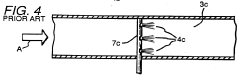
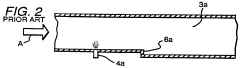
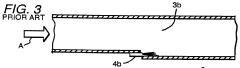
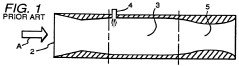
- A supersonic combustor design featuring a backward-facing step with a forward-facing ramp and axial or normal fuel injection, where the ramp converges into the combustion cavity to ensure fuel penetration and mixing, and optionally spanwise channels to enhance shear mixing, allowing for rapid combustion within a distance of one foot or less.
Environmental Impact
The development and implementation of adaptive materials for scramjet thermal protection systems have significant environmental implications that warrant careful consideration. These materials, designed to withstand extreme temperatures and harsh conditions, often involve complex manufacturing processes and specialized components that can impact the environment throughout their lifecycle.
During the production phase, the creation of adaptive materials may require energy-intensive processes and the use of rare or potentially hazardous elements. This could lead to increased carbon emissions and the depletion of finite resources. Additionally, the manufacturing of these materials might generate waste products that require proper disposal or recycling to minimize environmental contamination.
In the operational phase, the use of adaptive materials in scramjet thermal protection systems can have both positive and negative environmental effects. On the positive side, these materials can enhance the efficiency and performance of scramjets, potentially reducing fuel consumption and emissions during flight. This improvement in fuel efficiency could contribute to a decrease in the overall environmental footprint of hypersonic travel.
However, the high-temperature operations of scramjets, even with advanced thermal protection, may still result in the release of pollutants and particulate matter into the upper atmosphere. The long-term effects of these emissions on atmospheric composition and climate patterns are not yet fully understood and require ongoing research and monitoring.
The end-of-life disposal of adaptive materials used in scramjet thermal protection systems presents another environmental challenge. These materials may not be easily recyclable due to their complex composition and the extreme conditions they have endured. Proper disposal methods must be developed to prevent the release of potentially harmful substances into the environment.
On a broader scale, the advancement of scramjet technology, enabled by adaptive materials for thermal protection, could lead to changes in global transportation patterns. While this might result in more efficient long-distance travel, it could also increase the frequency of hypersonic flights, potentially leading to greater overall emissions and environmental impact.
To mitigate these environmental concerns, research into adaptive materials for scramjet thermal protection should include a focus on sustainable production methods, the use of environmentally friendly components, and the development of effective recycling and disposal techniques. Additionally, comprehensive life cycle assessments should be conducted to fully understand and minimize the environmental impact of these materials from production to disposal.
During the production phase, the creation of adaptive materials may require energy-intensive processes and the use of rare or potentially hazardous elements. This could lead to increased carbon emissions and the depletion of finite resources. Additionally, the manufacturing of these materials might generate waste products that require proper disposal or recycling to minimize environmental contamination.
In the operational phase, the use of adaptive materials in scramjet thermal protection systems can have both positive and negative environmental effects. On the positive side, these materials can enhance the efficiency and performance of scramjets, potentially reducing fuel consumption and emissions during flight. This improvement in fuel efficiency could contribute to a decrease in the overall environmental footprint of hypersonic travel.
However, the high-temperature operations of scramjets, even with advanced thermal protection, may still result in the release of pollutants and particulate matter into the upper atmosphere. The long-term effects of these emissions on atmospheric composition and climate patterns are not yet fully understood and require ongoing research and monitoring.
The end-of-life disposal of adaptive materials used in scramjet thermal protection systems presents another environmental challenge. These materials may not be easily recyclable due to their complex composition and the extreme conditions they have endured. Proper disposal methods must be developed to prevent the release of potentially harmful substances into the environment.
On a broader scale, the advancement of scramjet technology, enabled by adaptive materials for thermal protection, could lead to changes in global transportation patterns. While this might result in more efficient long-distance travel, it could also increase the frequency of hypersonic flights, potentially leading to greater overall emissions and environmental impact.
To mitigate these environmental concerns, research into adaptive materials for scramjet thermal protection should include a focus on sustainable production methods, the use of environmentally friendly components, and the development of effective recycling and disposal techniques. Additionally, comprehensive life cycle assessments should be conducted to fully understand and minimize the environmental impact of these materials from production to disposal.
Scramjet Safety Standards
Scramjet safety standards play a crucial role in ensuring the reliability and performance of hypersonic vehicles. These standards encompass a wide range of considerations, including thermal protection systems, structural integrity, and operational parameters. For adaptive materials used in scramjet thermal protection, safety standards must address the unique challenges posed by extreme temperatures and dynamic flight conditions.
One key aspect of scramjet safety standards is the establishment of temperature thresholds for various components. Adaptive materials must demonstrate the ability to withstand and effectively manage heat loads within specified limits. These standards typically define maximum allowable temperatures for critical areas such as leading edges, combustion chambers, and nozzles. Additionally, they may specify temperature gradients and thermal cycling requirements to ensure material durability and performance over multiple flight cycles.
Structural integrity standards for adaptive materials in scramjet thermal protection systems focus on maintaining mechanical properties under extreme conditions. These standards often include requirements for tensile strength, fatigue resistance, and creep behavior at elevated temperatures. The ability of adaptive materials to maintain their protective functions while withstanding aerodynamic loads and thermal stresses is a critical safety consideration.
Safety standards also address the chemical stability and compatibility of adaptive materials in the scramjet environment. This includes resistance to oxidation, erosion, and potential interactions with fuel or combustion products. Standards may specify acceptable degradation rates and set limits on material loss or surface roughness changes during operation.
Reliability and repeatability are essential aspects of scramjet safety standards for adaptive materials. These standards often require extensive testing and validation procedures to ensure consistent performance across a range of operating conditions. This may include accelerated aging tests, simulated flight cycles, and full-scale engine tests to verify the long-term effectiveness of thermal protection systems.
Manufacturing and quality control standards are integral to ensuring the safety and performance of adaptive materials in scramjet applications. These standards typically define acceptable tolerances, inspection procedures, and non-destructive testing methods to detect defects or inconsistencies in material properties. Traceability requirements may also be included to facilitate the identification and resolution of potential issues throughout the production and operational lifecycle.
Operational safety standards for scramjets incorporating adaptive materials often include guidelines for pre-flight inspections, in-flight monitoring, and post-flight assessments. These standards may specify sensor requirements for temperature and structural health monitoring, as well as define acceptable operational envelopes based on material capabilities and flight conditions.
One key aspect of scramjet safety standards is the establishment of temperature thresholds for various components. Adaptive materials must demonstrate the ability to withstand and effectively manage heat loads within specified limits. These standards typically define maximum allowable temperatures for critical areas such as leading edges, combustion chambers, and nozzles. Additionally, they may specify temperature gradients and thermal cycling requirements to ensure material durability and performance over multiple flight cycles.
Structural integrity standards for adaptive materials in scramjet thermal protection systems focus on maintaining mechanical properties under extreme conditions. These standards often include requirements for tensile strength, fatigue resistance, and creep behavior at elevated temperatures. The ability of adaptive materials to maintain their protective functions while withstanding aerodynamic loads and thermal stresses is a critical safety consideration.
Safety standards also address the chemical stability and compatibility of adaptive materials in the scramjet environment. This includes resistance to oxidation, erosion, and potential interactions with fuel or combustion products. Standards may specify acceptable degradation rates and set limits on material loss or surface roughness changes during operation.
Reliability and repeatability are essential aspects of scramjet safety standards for adaptive materials. These standards often require extensive testing and validation procedures to ensure consistent performance across a range of operating conditions. This may include accelerated aging tests, simulated flight cycles, and full-scale engine tests to verify the long-term effectiveness of thermal protection systems.
Manufacturing and quality control standards are integral to ensuring the safety and performance of adaptive materials in scramjet applications. These standards typically define acceptable tolerances, inspection procedures, and non-destructive testing methods to detect defects or inconsistencies in material properties. Traceability requirements may also be included to facilitate the identification and resolution of potential issues throughout the production and operational lifecycle.
Operational safety standards for scramjets incorporating adaptive materials often include guidelines for pre-flight inspections, in-flight monitoring, and post-flight assessments. These standards may specify sensor requirements for temperature and structural health monitoring, as well as define acceptable operational envelopes based on material capabilities and flight conditions.
Unlock deeper insights with PatSnap Eureka Quick Research — get a full tech report to explore trends and direct your research. Try now!
Generate Your Research Report Instantly with AI Agent
Supercharge your innovation with PatSnap Eureka AI Agent Platform!