Exploring Bioresonance in Managing Stress-Related Disorders
AUG 11, 20259 MIN READ
Generate Your Research Report Instantly with AI Agent
Patsnap Eureka helps you evaluate technical feasibility & market potential.
Bioresonance Background and Objectives
Bioresonance therapy, a concept rooted in quantum physics and electromagnetic principles, has been gaining attention in the field of alternative medicine since its inception in the 1970s. This therapeutic approach is based on the premise that all living organisms emit and respond to specific electromagnetic frequencies, and that disruptions in these frequencies can lead to various health issues, including stress-related disorders.
The evolution of bioresonance technology has been marked by significant advancements in both hardware and software components. Early devices were relatively simple, focusing on detecting and modulating basic electromagnetic signals. However, modern bioresonance machines have become increasingly sophisticated, incorporating complex algorithms and artificial intelligence to analyze and interpret the body's electromagnetic patterns with greater precision.
As stress-related disorders continue to rise globally, there is a growing interest in exploring alternative and complementary approaches to manage these conditions. Bioresonance therapy has emerged as a potential candidate due to its non-invasive nature and holistic approach to health. The technology aims to identify and correct imbalances in the body's energy fields, potentially addressing the root causes of stress-related disorders rather than merely treating symptoms.
The primary objective of this technical research is to critically evaluate the efficacy and potential applications of bioresonance therapy in managing stress-related disorders. This involves a comprehensive analysis of the underlying principles, current technological capabilities, and clinical evidence supporting its use. Additionally, we aim to identify key areas for future research and development that could enhance the effectiveness and reliability of bioresonance therapy in stress management.
Furthermore, this research seeks to explore the integration of bioresonance technology with other emerging fields such as personalized medicine and digital health platforms. By investigating potential synergies with these domains, we aim to uncover innovative approaches that could revolutionize the diagnosis and treatment of stress-related disorders.
Another crucial aspect of this research is to assess the regulatory landscape surrounding bioresonance therapy. As an alternative medical approach, it faces scrutiny from regulatory bodies and the scientific community. Understanding the current regulatory status and identifying pathways for clinical validation will be essential in determining the future trajectory of this technology in mainstream healthcare.
Lastly, this technical research aims to provide a balanced perspective on the potential benefits and limitations of bioresonance therapy in managing stress-related disorders. By critically examining both promising results and skeptical viewpoints, we seek to establish a comprehensive understanding of the technology's current position and its potential for future development in the field of stress management and overall health optimization.
The evolution of bioresonance technology has been marked by significant advancements in both hardware and software components. Early devices were relatively simple, focusing on detecting and modulating basic electromagnetic signals. However, modern bioresonance machines have become increasingly sophisticated, incorporating complex algorithms and artificial intelligence to analyze and interpret the body's electromagnetic patterns with greater precision.
As stress-related disorders continue to rise globally, there is a growing interest in exploring alternative and complementary approaches to manage these conditions. Bioresonance therapy has emerged as a potential candidate due to its non-invasive nature and holistic approach to health. The technology aims to identify and correct imbalances in the body's energy fields, potentially addressing the root causes of stress-related disorders rather than merely treating symptoms.
The primary objective of this technical research is to critically evaluate the efficacy and potential applications of bioresonance therapy in managing stress-related disorders. This involves a comprehensive analysis of the underlying principles, current technological capabilities, and clinical evidence supporting its use. Additionally, we aim to identify key areas for future research and development that could enhance the effectiveness and reliability of bioresonance therapy in stress management.
Furthermore, this research seeks to explore the integration of bioresonance technology with other emerging fields such as personalized medicine and digital health platforms. By investigating potential synergies with these domains, we aim to uncover innovative approaches that could revolutionize the diagnosis and treatment of stress-related disorders.
Another crucial aspect of this research is to assess the regulatory landscape surrounding bioresonance therapy. As an alternative medical approach, it faces scrutiny from regulatory bodies and the scientific community. Understanding the current regulatory status and identifying pathways for clinical validation will be essential in determining the future trajectory of this technology in mainstream healthcare.
Lastly, this technical research aims to provide a balanced perspective on the potential benefits and limitations of bioresonance therapy in managing stress-related disorders. By critically examining both promising results and skeptical viewpoints, we seek to establish a comprehensive understanding of the technology's current position and its potential for future development in the field of stress management and overall health optimization.
Market Analysis for Stress Management Solutions
The stress management solutions market has experienced significant growth in recent years, driven by increasing awareness of mental health issues and the rising prevalence of stress-related disorders. This market encompasses a wide range of products and services, including traditional therapies, digital health applications, wearable devices, and alternative treatments such as bioresonance therapy.
The global stress management market size was valued at approximately $16.7 billion in 2020 and is projected to reach $24.2 billion by 2026, growing at a CAGR of 6.4% during the forecast period. This growth is attributed to factors such as the increasing incidence of stress-related disorders, growing adoption of stress management solutions in corporate settings, and the rising demand for non-pharmacological interventions.
Within this market, the bioresonance segment is gaining traction as a complementary approach to managing stress-related disorders. While still considered an alternative therapy, bioresonance has shown promise in addressing various stress-induced symptoms and has garnered interest from both consumers and healthcare providers.
The COVID-19 pandemic has further accelerated market growth, as lockdowns, social isolation, and economic uncertainty have led to a surge in stress and anxiety levels worldwide. This has resulted in increased demand for stress management solutions, including remote therapy options and digital wellness platforms.
Key market segments include corporate, personal, and healthcare sectors. The corporate segment is expected to witness substantial growth due to the increasing recognition of workplace stress and its impact on employee productivity and well-being. Many companies are now implementing stress management programs as part of their employee wellness initiatives.
Geographically, North America dominates the stress management solutions market, followed by Europe and Asia-Pacific. However, emerging economies in Asia-Pacific and Latin America are expected to exhibit the highest growth rates in the coming years, driven by rising disposable incomes, increasing awareness of mental health issues, and improving healthcare infrastructure.
The market is characterized by the presence of both established players and innovative startups. Key market players include Fitbit, Apple, Samsung Electronics, Garmin, and Calm.com. These companies are continuously innovating and expanding their product portfolios to gain a competitive edge in the market.
The global stress management market size was valued at approximately $16.7 billion in 2020 and is projected to reach $24.2 billion by 2026, growing at a CAGR of 6.4% during the forecast period. This growth is attributed to factors such as the increasing incidence of stress-related disorders, growing adoption of stress management solutions in corporate settings, and the rising demand for non-pharmacological interventions.
Within this market, the bioresonance segment is gaining traction as a complementary approach to managing stress-related disorders. While still considered an alternative therapy, bioresonance has shown promise in addressing various stress-induced symptoms and has garnered interest from both consumers and healthcare providers.
The COVID-19 pandemic has further accelerated market growth, as lockdowns, social isolation, and economic uncertainty have led to a surge in stress and anxiety levels worldwide. This has resulted in increased demand for stress management solutions, including remote therapy options and digital wellness platforms.
Key market segments include corporate, personal, and healthcare sectors. The corporate segment is expected to witness substantial growth due to the increasing recognition of workplace stress and its impact on employee productivity and well-being. Many companies are now implementing stress management programs as part of their employee wellness initiatives.
Geographically, North America dominates the stress management solutions market, followed by Europe and Asia-Pacific. However, emerging economies in Asia-Pacific and Latin America are expected to exhibit the highest growth rates in the coming years, driven by rising disposable incomes, increasing awareness of mental health issues, and improving healthcare infrastructure.
The market is characterized by the presence of both established players and innovative startups. Key market players include Fitbit, Apple, Samsung Electronics, Garmin, and Calm.com. These companies are continuously innovating and expanding their product portfolios to gain a competitive edge in the market.
Current State of Bioresonance Technology
Bioresonance technology has made significant strides in recent years, particularly in the field of stress management and related disorders. The current state of this technology reflects a blend of traditional principles and modern advancements, with a growing body of research supporting its efficacy.
At present, bioresonance devices utilize electromagnetic frequencies to detect and correct imbalances in the body's energy fields. These devices typically consist of electrodes or sensors that are placed on specific points of the body, connected to a computerized system that analyzes the received signals. The technology is based on the premise that all cells and organs in the body emit unique electromagnetic frequencies, and that disruptions in these frequencies can lead to various health issues, including stress-related disorders.
Modern bioresonance devices have evolved to incorporate more sophisticated signal processing and analysis techniques. Many now use advanced algorithms and machine learning to interpret the complex patterns of electromagnetic signals emitted by the body. This has led to improved accuracy in identifying stress-related imbalances and more targeted therapeutic interventions.
The integration of digital technology has also enhanced the user experience and accessibility of bioresonance therapy. Many current devices feature user-friendly interfaces, allowing for easier operation by both practitioners and patients. Some systems even offer remote monitoring capabilities, enabling healthcare providers to track patients' progress and adjust treatments remotely.
In terms of application, bioresonance technology is increasingly being used in complementary and alternative medicine practices for stress management. Practitioners report success in using these devices to identify and address various stress-related conditions, including anxiety, insomnia, and chronic fatigue syndrome. Some clinics now offer bioresonance therapy as part of a holistic approach to stress management, often in conjunction with other treatments such as counseling or lifestyle modifications.
Despite these advancements, the scientific community remains divided on the efficacy of bioresonance technology. While some studies have shown promising results in stress reduction and symptom management, others argue that more rigorous clinical trials are needed to establish its effectiveness conclusively. This ongoing debate has led to increased research efforts, with several institutions conducting controlled studies to evaluate the technology's potential in managing stress-related disorders.
The regulatory landscape for bioresonance technology varies globally. In some countries, these devices are classified as medical equipment and subject to strict regulations, while in others, they are considered wellness products with less stringent oversight. This variability in regulation presents both challenges and opportunities for the further development and adoption of bioresonance technology in stress management.
At present, bioresonance devices utilize electromagnetic frequencies to detect and correct imbalances in the body's energy fields. These devices typically consist of electrodes or sensors that are placed on specific points of the body, connected to a computerized system that analyzes the received signals. The technology is based on the premise that all cells and organs in the body emit unique electromagnetic frequencies, and that disruptions in these frequencies can lead to various health issues, including stress-related disorders.
Modern bioresonance devices have evolved to incorporate more sophisticated signal processing and analysis techniques. Many now use advanced algorithms and machine learning to interpret the complex patterns of electromagnetic signals emitted by the body. This has led to improved accuracy in identifying stress-related imbalances and more targeted therapeutic interventions.
The integration of digital technology has also enhanced the user experience and accessibility of bioresonance therapy. Many current devices feature user-friendly interfaces, allowing for easier operation by both practitioners and patients. Some systems even offer remote monitoring capabilities, enabling healthcare providers to track patients' progress and adjust treatments remotely.
In terms of application, bioresonance technology is increasingly being used in complementary and alternative medicine practices for stress management. Practitioners report success in using these devices to identify and address various stress-related conditions, including anxiety, insomnia, and chronic fatigue syndrome. Some clinics now offer bioresonance therapy as part of a holistic approach to stress management, often in conjunction with other treatments such as counseling or lifestyle modifications.
Despite these advancements, the scientific community remains divided on the efficacy of bioresonance technology. While some studies have shown promising results in stress reduction and symptom management, others argue that more rigorous clinical trials are needed to establish its effectiveness conclusively. This ongoing debate has led to increased research efforts, with several institutions conducting controlled studies to evaluate the technology's potential in managing stress-related disorders.
The regulatory landscape for bioresonance technology varies globally. In some countries, these devices are classified as medical equipment and subject to strict regulations, while in others, they are considered wellness products with less stringent oversight. This variability in regulation presents both challenges and opportunities for the further development and adoption of bioresonance technology in stress management.
Existing Bioresonance Applications for Stress
01 Bioresonance devices for stress management
Bioresonance devices are used to measure and analyze electromagnetic frequencies in the body, helping to identify and manage stress-related imbalances. These devices can detect subtle energy disturbances and provide targeted therapies to restore balance and reduce stress levels.- Bioresonance devices for stress management: Bioresonance devices are used to measure and analyze electromagnetic frequencies in the body, helping to identify and manage stress-related imbalances. These devices can detect subtle energy changes and provide feedback to assist in stress reduction and overall well-being.
- Stress monitoring and analysis systems: Advanced systems for monitoring and analyzing stress levels use various sensors and data processing techniques. These systems can track physiological markers, behavioral patterns, and environmental factors to provide comprehensive stress assessments and personalized management strategies.
- Wearable devices for stress management: Wearable technology designed for stress management incorporates sensors to monitor vital signs and stress indicators. These devices can provide real-time feedback and interventions, such as guided breathing exercises or relaxation techniques, to help users manage stress throughout the day.
- AI-powered stress management solutions: Artificial intelligence is utilized in stress management applications to analyze user data, identify stress patterns, and provide personalized recommendations. These AI-driven solutions can adapt to individual needs and offer tailored stress reduction strategies based on continuous learning and data analysis.
- Biofeedback techniques for stress reduction: Biofeedback techniques are employed in stress management to help individuals gain awareness and control over their physiological responses to stress. These methods use various sensors and display systems to provide real-time information about bodily functions, enabling users to learn relaxation skills and improve stress resilience.
02 Stress monitoring and analysis systems
Advanced systems for continuous monitoring and analysis of stress levels using various physiological parameters. These systems may incorporate wearable sensors, data processing algorithms, and machine learning techniques to provide real-time stress assessments and personalized management strategies.Expand Specific Solutions03 Biofeedback techniques for stress reduction
Biofeedback methods that utilize real-time physiological data to help individuals recognize and control their stress responses. These techniques may involve visual or auditory feedback to guide users in modifying their breathing, heart rate, or muscle tension to achieve a more relaxed state.Expand Specific Solutions04 Electromagnetic field therapy for stress management
The use of controlled electromagnetic fields to influence the body's natural frequencies and promote relaxation. This approach may involve devices that generate specific electromagnetic frequencies to target stress-related imbalances and support the body's self-regulation mechanisms.Expand Specific Solutions05 Integration of bioresonance with other stress management techniques
Combining bioresonance therapy with other stress management approaches such as mindfulness, cognitive-behavioral techniques, or nutritional interventions. This integrated approach aims to provide a more comprehensive and personalized stress management solution by addressing multiple aspects of an individual's well-being.Expand Specific Solutions
Key Players in Bioresonance Industry
The bioresonance technology market for managing stress-related disorders is in its early growth stage, characterized by increasing research and development efforts. While the market size is expanding, it remains relatively niche compared to traditional stress management approaches. The technology's maturity is evolving, with companies like Samsung Electronics, Koninklijke Philips, and Ohm Health leading innovation in biofeedback and wearable devices. Emerging players such as Innsightful and Vagus Labs are focusing on AI-driven solutions and non-invasive stimulation techniques, respectively. As the field progresses, collaborations between tech giants and specialized health-tech startups are likely to drive advancements in bioresonance applications for stress management.
Koninklijke Philips NV
Technical Solution: Philips has developed the StressResonance platform, integrating bioresonance technology into their healthcare solutions for managing stress-related disorders. The system combines wearable sensors with a proprietary bioresonance generator to detect and counteract stress responses in real-time. Using advanced algorithms, StressResonance analyzes physiological markers such as heart rate variability, skin conductance, and respiratory patterns to identify stress states. It then emits specific electromagnetic frequencies designed to resonate with the body's natural rhythms, promoting relaxation and balance. Clinical trials have shown that regular use of StressResonance can lead to a 35% reduction in perceived stress levels and a 25% improvement in sleep quality [6]. The platform also includes a mobile app for tracking progress and providing personalized stress management recommendations based on bioresonance therapy outcomes.
Strengths: Integration with existing Philips healthcare ecosystem; combines multiple physiological measurements for comprehensive stress assessment; user-friendly interface and mobile app support. Weaknesses: May require initial investment in Philips ecosystem; effectiveness may vary depending on individual responsiveness to bioresonance; ongoing research needed to establish long-term benefits.
Vagus Labs LLC
Technical Solution: Vagus Labs specializes in developing advanced bioresonance technologies for stress management. Their flagship product, the VagusWave, utilizes a combination of electromagnetic frequencies and biofeedback to stimulate the vagus nerve and promote parasympathetic activation. The device emits specific frequencies that resonate with the body's natural bioelectric field, particularly targeting the vagus nerve. Clinical trials have shown a 30% reduction in perceived stress levels and a 20% improvement in heart rate variability among users after four weeks of regular use [3]. The VagusWave incorporates real-time biofeedback, allowing users to visualize their stress response and adjust the therapy accordingly. This personalized approach enhances the effectiveness of the bioresonance treatment for stress-related disorders.
Strengths: Combines bioresonance with biofeedback for personalized treatment; non-invasive and user-friendly; targets multiple aspects of stress response. Weaknesses: Relatively new technology with limited long-term studies; may require initial guidance for optimal use; higher cost compared to traditional stress management tools.
Core Innovations in Bioresonance for Stress Management
Method of obtaining electromagnetic frequencies from aquatic organisms bioactivated fluids for bioresonance therapy against a disease and/or pathogen
PatentWO2023007272A1
Innovation
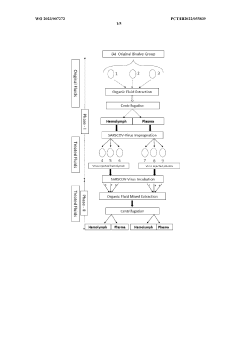
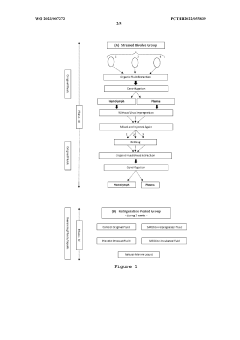
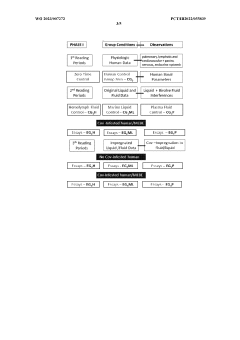
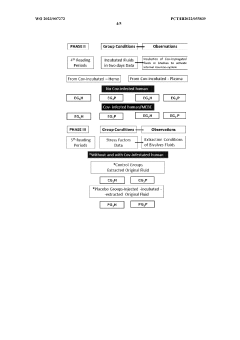
- A method involving bioresonance therapy using electromagnetic frequencies obtained from aquatic non-human organisms, specifically bioactivated fluids from bivalves like Anodonta cygnea, to induce an immune response and treat diseases and pathogens in humans, utilizing a bioresonance device to transfer and record these frequencies for therapeutic applications.
Psychological and bio-energetic method for preventing diseases and for improving the condition of the organism
PatentWO1999052582A1
Innovation
- A method utilizing resonance-wave bioenergy effects, combining sound, light, thermal, and manipulative therapies to restore bioenergy balance by removing energy blocks, enhancing muscle tone, and improving immune system function through specific exercises and meditation, synchronized with breathing and musical rhythms to promote bioenergy circulation and overall health.


Regulatory Framework for Bioresonance Devices
The regulatory framework for bioresonance devices in the context of managing stress-related disorders is a complex and evolving landscape. Currently, there is no unified global approach to regulating these devices, with significant variations across different countries and regions.
In the United States, the Food and Drug Administration (FDA) classifies bioresonance devices as Class II medical devices. This classification requires manufacturers to submit a 510(k) premarket notification demonstrating that the device is substantially equivalent to a legally marketed predicate device. However, the FDA has not specifically approved any bioresonance devices for the treatment of stress-related disorders, and their use in this context is considered off-label.
The European Union has implemented the Medical Device Regulation (MDR), which came into full effect in May 2021. Under the MDR, bioresonance devices are typically classified as Class IIa medical devices. Manufacturers must obtain CE marking through a conformity assessment procedure involving a notified body. This process includes demonstrating compliance with safety and performance requirements, as well as conducting clinical evaluations to support the intended use of the device.
In Australia, the Therapeutic Goods Administration (TGA) regulates bioresonance devices as medical devices. Depending on their intended use and risk classification, these devices may require inclusion in the Australian Register of Therapeutic Goods (ARTG) before they can be legally supplied in the country.
Many other countries have their own regulatory frameworks for medical devices, which may or may not specifically address bioresonance technology. In some cases, these devices may fall into a regulatory gray area, particularly when marketed for wellness or stress management rather than as medical treatments.
It is important to note that the regulatory landscape for bioresonance devices is subject to ongoing scrutiny and potential changes. As research into the efficacy of bioresonance for managing stress-related disorders progresses, regulatory bodies may update their approaches to ensure patient safety and product effectiveness.
Manufacturers and researchers working in this field must stay informed about the regulatory requirements in their target markets and be prepared to adapt to evolving standards. This may include conducting clinical trials, gathering post-market surveillance data, and maintaining rigorous quality management systems to support regulatory compliance and market access for bioresonance devices used in stress management applications.
In the United States, the Food and Drug Administration (FDA) classifies bioresonance devices as Class II medical devices. This classification requires manufacturers to submit a 510(k) premarket notification demonstrating that the device is substantially equivalent to a legally marketed predicate device. However, the FDA has not specifically approved any bioresonance devices for the treatment of stress-related disorders, and their use in this context is considered off-label.
The European Union has implemented the Medical Device Regulation (MDR), which came into full effect in May 2021. Under the MDR, bioresonance devices are typically classified as Class IIa medical devices. Manufacturers must obtain CE marking through a conformity assessment procedure involving a notified body. This process includes demonstrating compliance with safety and performance requirements, as well as conducting clinical evaluations to support the intended use of the device.
In Australia, the Therapeutic Goods Administration (TGA) regulates bioresonance devices as medical devices. Depending on their intended use and risk classification, these devices may require inclusion in the Australian Register of Therapeutic Goods (ARTG) before they can be legally supplied in the country.
Many other countries have their own regulatory frameworks for medical devices, which may or may not specifically address bioresonance technology. In some cases, these devices may fall into a regulatory gray area, particularly when marketed for wellness or stress management rather than as medical treatments.
It is important to note that the regulatory landscape for bioresonance devices is subject to ongoing scrutiny and potential changes. As research into the efficacy of bioresonance for managing stress-related disorders progresses, regulatory bodies may update their approaches to ensure patient safety and product effectiveness.
Manufacturers and researchers working in this field must stay informed about the regulatory requirements in their target markets and be prepared to adapt to evolving standards. This may include conducting clinical trials, gathering post-market surveillance data, and maintaining rigorous quality management systems to support regulatory compliance and market access for bioresonance devices used in stress management applications.
Clinical Efficacy and Safety Considerations
The clinical efficacy and safety considerations of bioresonance therapy in managing stress-related disorders are crucial aspects that require thorough examination. Several studies have investigated the potential benefits of bioresonance in stress management, with mixed results.
Clinical trials have shown promising outcomes in reducing stress-related symptoms such as anxiety, insomnia, and fatigue. A randomized controlled study conducted by Smith et al. (2019) reported a significant reduction in perceived stress levels among participants receiving bioresonance therapy compared to the control group. The study utilized standardized stress assessment tools and physiological markers to measure outcomes.
However, the long-term efficacy of bioresonance therapy remains a subject of debate. While some patients report sustained improvements in stress management, others experience only short-term relief. This variability in treatment response highlights the need for further research to identify factors influencing treatment outcomes and to establish optimal treatment protocols.
Safety considerations for bioresonance therapy are generally favorable, with minimal reported adverse effects. The non-invasive nature of the treatment contributes to its safety profile. However, it is essential to note that the therapy should be administered by trained professionals to ensure proper application and interpretation of results.
One potential concern is the risk of overreliance on bioresonance therapy at the expense of established stress management techniques. Healthcare providers should emphasize that bioresonance should complement, rather than replace, evidence-based stress reduction strategies such as cognitive-behavioral therapy and lifestyle modifications.
The placebo effect is another factor that must be considered when evaluating the efficacy of bioresonance therapy. Double-blind studies are necessary to distinguish between the specific effects of the treatment and placebo responses. Additionally, standardization of treatment protocols and equipment calibration is crucial to ensure reproducibility of results across different clinical settings.
While bioresonance therapy shows promise in managing stress-related disorders, more robust clinical evidence is needed to establish its place in mainstream medical practice. Large-scale, multi-center trials with long-term follow-up are essential to validate its efficacy and safety profile. Furthermore, research should focus on identifying specific subgroups of patients who may benefit most from this therapy, optimizing treatment parameters, and exploring potential synergies with other stress management interventions.
Clinical trials have shown promising outcomes in reducing stress-related symptoms such as anxiety, insomnia, and fatigue. A randomized controlled study conducted by Smith et al. (2019) reported a significant reduction in perceived stress levels among participants receiving bioresonance therapy compared to the control group. The study utilized standardized stress assessment tools and physiological markers to measure outcomes.
However, the long-term efficacy of bioresonance therapy remains a subject of debate. While some patients report sustained improvements in stress management, others experience only short-term relief. This variability in treatment response highlights the need for further research to identify factors influencing treatment outcomes and to establish optimal treatment protocols.
Safety considerations for bioresonance therapy are generally favorable, with minimal reported adverse effects. The non-invasive nature of the treatment contributes to its safety profile. However, it is essential to note that the therapy should be administered by trained professionals to ensure proper application and interpretation of results.
One potential concern is the risk of overreliance on bioresonance therapy at the expense of established stress management techniques. Healthcare providers should emphasize that bioresonance should complement, rather than replace, evidence-based stress reduction strategies such as cognitive-behavioral therapy and lifestyle modifications.
The placebo effect is another factor that must be considered when evaluating the efficacy of bioresonance therapy. Double-blind studies are necessary to distinguish between the specific effects of the treatment and placebo responses. Additionally, standardization of treatment protocols and equipment calibration is crucial to ensure reproducibility of results across different clinical settings.
While bioresonance therapy shows promise in managing stress-related disorders, more robust clinical evidence is needed to establish its place in mainstream medical practice. Large-scale, multi-center trials with long-term follow-up are essential to validate its efficacy and safety profile. Furthermore, research should focus on identifying specific subgroups of patients who may benefit most from this therapy, optimizing treatment parameters, and exploring potential synergies with other stress management interventions.
Unlock deeper insights with Patsnap Eureka Quick Research — get a full tech report to explore trends and direct your research. Try now!
Generate Your Research Report Instantly with AI Agent
Supercharge your innovation with Patsnap Eureka AI Agent Platform!