Exploring Standards for Solar Fuel Generation in Electronics
SEP 28, 20259 MIN READ
Generate Your Research Report Instantly with AI Agent
Patsnap Eureka helps you evaluate technical feasibility & market potential.
Solar Fuel Technology Background and Objectives
Solar fuel technology represents a revolutionary approach to energy conversion and storage, combining principles of photovoltaics with electrochemical processes to convert solar energy directly into chemical fuels. The concept dates back to the 1970s when researchers first demonstrated photocatalytic water splitting, but significant advancements have only emerged in the past two decades with the development of more efficient catalysts and electrode materials.
The evolution of solar fuel technology has been marked by several key milestones, including the development of semiconductor-based photoelectrochemical cells, the discovery of efficient water oxidation catalysts, and the integration of these components into functional devices. Recent breakthroughs in nanomaterials and interface engineering have further accelerated progress in this field, enabling higher conversion efficiencies and improved stability.
Current technological trends point toward the development of integrated systems that combine light harvesting, charge separation, and catalytic functions in a single device. There is also growing interest in artificial photosynthesis systems that mimic natural processes to convert carbon dioxide into valuable hydrocarbon fuels, addressing both energy storage and carbon capture challenges simultaneously.
The primary objective of solar fuel technology is to achieve efficient, scalable, and cost-effective conversion of solar energy into storable chemical fuels. Specific technical goals include reaching solar-to-fuel conversion efficiencies exceeding 10%, developing systems with operational lifetimes of over 10,000 hours, and reducing production costs to levels competitive with conventional fossil fuels.
Another critical objective is the standardization of testing protocols and performance metrics for solar fuel generation systems. Unlike photovoltaic technologies, which have well-established testing standards, solar fuel technologies currently lack unified benchmarking frameworks, making it difficult to compare different approaches and track progress in the field.
In the electronics sector, solar fuel technology aims to develop integrated devices that can be manufactured using existing semiconductor fabrication techniques, potentially enabling dual-function systems that generate both electricity and chemical fuels. This integration presents unique challenges in terms of materials compatibility, interface engineering, and system design.
The long-term vision for solar fuel technology is to create artificial systems that can efficiently convert abundant resources like water and carbon dioxide into energy-dense fuels using only sunlight as the energy input, thereby providing a sustainable alternative to fossil fuels and contributing to global decarbonization efforts.
The evolution of solar fuel technology has been marked by several key milestones, including the development of semiconductor-based photoelectrochemical cells, the discovery of efficient water oxidation catalysts, and the integration of these components into functional devices. Recent breakthroughs in nanomaterials and interface engineering have further accelerated progress in this field, enabling higher conversion efficiencies and improved stability.
Current technological trends point toward the development of integrated systems that combine light harvesting, charge separation, and catalytic functions in a single device. There is also growing interest in artificial photosynthesis systems that mimic natural processes to convert carbon dioxide into valuable hydrocarbon fuels, addressing both energy storage and carbon capture challenges simultaneously.
The primary objective of solar fuel technology is to achieve efficient, scalable, and cost-effective conversion of solar energy into storable chemical fuels. Specific technical goals include reaching solar-to-fuel conversion efficiencies exceeding 10%, developing systems with operational lifetimes of over 10,000 hours, and reducing production costs to levels competitive with conventional fossil fuels.
Another critical objective is the standardization of testing protocols and performance metrics for solar fuel generation systems. Unlike photovoltaic technologies, which have well-established testing standards, solar fuel technologies currently lack unified benchmarking frameworks, making it difficult to compare different approaches and track progress in the field.
In the electronics sector, solar fuel technology aims to develop integrated devices that can be manufactured using existing semiconductor fabrication techniques, potentially enabling dual-function systems that generate both electricity and chemical fuels. This integration presents unique challenges in terms of materials compatibility, interface engineering, and system design.
The long-term vision for solar fuel technology is to create artificial systems that can efficiently convert abundant resources like water and carbon dioxide into energy-dense fuels using only sunlight as the energy input, thereby providing a sustainable alternative to fossil fuels and contributing to global decarbonization efforts.
Market Analysis for Solar Fuel Integration in Electronics
The solar fuel market within the electronics sector is experiencing significant growth, driven by increasing demand for sustainable energy solutions and the integration of renewable technologies into electronic devices. Current market assessments indicate that solar fuel technologies are gaining traction across multiple electronic applications, from consumer electronics to industrial systems, as companies seek to reduce carbon footprints and enhance energy efficiency.
The global market for solar fuel integration in electronics is segmented by application types, including portable electronics, grid-connected systems, and standalone power solutions. Consumer electronics represents the fastest-growing segment, with manufacturers increasingly incorporating solar fuel cells into devices like smartphones, tablets, and wearables to extend battery life and provide alternative charging methods.
Regional market distribution shows notable differences, with North America and Europe leading in research and development investments, while Asia-Pacific dominates in manufacturing capacity and implementation. Japan and South Korea have established themselves as innovation hubs for solar fuel integration in consumer electronics, while China leads in production scale and cost efficiency.
Market drivers for solar fuel integration include regulatory pressures for reduced emissions, consumer demand for sustainable products, and corporate sustainability initiatives. The electronics industry's push toward energy independence and resilience against grid failures has further accelerated adoption in commercial and industrial applications.
Barriers to market expansion include high initial implementation costs, technical limitations in energy conversion efficiency, and integration challenges with existing electronic architectures. The price premium for solar fuel-enabled electronics remains a significant obstacle for mass-market adoption, though this gap is narrowing as technologies mature and economies of scale improve.
Growth projections suggest the market for solar fuel integration in electronics will continue to expand as technological advancements reduce costs and improve performance. Strategic partnerships between electronics manufacturers and renewable energy companies are creating new market opportunities and accelerating commercialization timelines.
Consumer acceptance studies indicate growing willingness to pay premium prices for electronics with integrated solar fuel capabilities, particularly among environmentally conscious demographics and in regions with high electricity costs or unreliable grid infrastructure. This trend is expected to strengthen as awareness of environmental impacts increases and as solar fuel technologies become more visibly integrated into mainstream electronic products.
The global market for solar fuel integration in electronics is segmented by application types, including portable electronics, grid-connected systems, and standalone power solutions. Consumer electronics represents the fastest-growing segment, with manufacturers increasingly incorporating solar fuel cells into devices like smartphones, tablets, and wearables to extend battery life and provide alternative charging methods.
Regional market distribution shows notable differences, with North America and Europe leading in research and development investments, while Asia-Pacific dominates in manufacturing capacity and implementation. Japan and South Korea have established themselves as innovation hubs for solar fuel integration in consumer electronics, while China leads in production scale and cost efficiency.
Market drivers for solar fuel integration include regulatory pressures for reduced emissions, consumer demand for sustainable products, and corporate sustainability initiatives. The electronics industry's push toward energy independence and resilience against grid failures has further accelerated adoption in commercial and industrial applications.
Barriers to market expansion include high initial implementation costs, technical limitations in energy conversion efficiency, and integration challenges with existing electronic architectures. The price premium for solar fuel-enabled electronics remains a significant obstacle for mass-market adoption, though this gap is narrowing as technologies mature and economies of scale improve.
Growth projections suggest the market for solar fuel integration in electronics will continue to expand as technological advancements reduce costs and improve performance. Strategic partnerships between electronics manufacturers and renewable energy companies are creating new market opportunities and accelerating commercialization timelines.
Consumer acceptance studies indicate growing willingness to pay premium prices for electronics with integrated solar fuel capabilities, particularly among environmentally conscious demographics and in regions with high electricity costs or unreliable grid infrastructure. This trend is expected to strengthen as awareness of environmental impacts increases and as solar fuel technologies become more visibly integrated into mainstream electronic products.
Current Standards and Technical Challenges
The current landscape of solar fuel generation in electronics is characterized by a fragmented standardization framework. While significant progress has been made in photovoltaic standards through organizations like the International Electrotechnical Commission (IEC) and American Society for Testing and Materials (ASTM), specific standards for solar fuel generation systems remain underdeveloped. This creates substantial challenges for industry-wide adoption, performance comparison, and quality assurance.
Existing standards primarily focus on individual components rather than integrated solar fuel generation systems. For instance, IEC 62788 addresses photovoltaic materials, while ISO 9806 covers solar thermal collectors. However, these standards fail to address the unique requirements of photoelectrochemical cells and catalytic systems used in solar fuel production, particularly for hydrogen generation through water splitting or carbon-based fuels through CO2 reduction.
Technical measurement protocols represent another significant challenge. Current methods for determining solar-to-fuel efficiency lack standardization, making cross-comparison between different research groups and technologies problematic. The scientific community has proposed several methodologies, but no consensus exists on parameters such as standard testing conditions, reference solar spectra for indoor testing, or durability assessment protocols.
Material stability standards present a critical gap in the current framework. Solar fuel generation systems operate in harsh environments, often involving corrosive electrolytes and significant temperature fluctuations. The absence of accelerated aging tests specifically designed for these systems hampers long-term reliability predictions and lifetime assessments, which are crucial for commercial viability.
Safety standards for hydrogen and other solar fuels production systems remain inadequate. While general hydrogen safety standards exist (ISO/TC 197), they do not fully address the specific risks associated with distributed solar hydrogen production. This regulatory uncertainty creates barriers to deployment, particularly in residential and commercial settings.
Interoperability standards between solar fuel generation systems and existing energy infrastructure are virtually non-existent. This creates significant integration challenges, particularly for grid-connected systems or those designed to work alongside conventional renewable energy technologies. The lack of standardized interfaces and communication protocols limits system flexibility and increases installation costs.
Addressing these standardization gaps requires coordinated efforts between research institutions, industry stakeholders, and regulatory bodies. Several international initiatives, including the International Energy Agency's Hydrogen Technology Collaboration Program and the European Commission's Fuel Cells and Hydrogen Joint Undertaking, are working to develop comprehensive standards frameworks, but significant work remains to establish a cohesive global approach to solar fuel generation standards.
Existing standards primarily focus on individual components rather than integrated solar fuel generation systems. For instance, IEC 62788 addresses photovoltaic materials, while ISO 9806 covers solar thermal collectors. However, these standards fail to address the unique requirements of photoelectrochemical cells and catalytic systems used in solar fuel production, particularly for hydrogen generation through water splitting or carbon-based fuels through CO2 reduction.
Technical measurement protocols represent another significant challenge. Current methods for determining solar-to-fuel efficiency lack standardization, making cross-comparison between different research groups and technologies problematic. The scientific community has proposed several methodologies, but no consensus exists on parameters such as standard testing conditions, reference solar spectra for indoor testing, or durability assessment protocols.
Material stability standards present a critical gap in the current framework. Solar fuel generation systems operate in harsh environments, often involving corrosive electrolytes and significant temperature fluctuations. The absence of accelerated aging tests specifically designed for these systems hampers long-term reliability predictions and lifetime assessments, which are crucial for commercial viability.
Safety standards for hydrogen and other solar fuels production systems remain inadequate. While general hydrogen safety standards exist (ISO/TC 197), they do not fully address the specific risks associated with distributed solar hydrogen production. This regulatory uncertainty creates barriers to deployment, particularly in residential and commercial settings.
Interoperability standards between solar fuel generation systems and existing energy infrastructure are virtually non-existent. This creates significant integration challenges, particularly for grid-connected systems or those designed to work alongside conventional renewable energy technologies. The lack of standardized interfaces and communication protocols limits system flexibility and increases installation costs.
Addressing these standardization gaps requires coordinated efforts between research institutions, industry stakeholders, and regulatory bodies. Several international initiatives, including the International Energy Agency's Hydrogen Technology Collaboration Program and the European Commission's Fuel Cells and Hydrogen Joint Undertaking, are working to develop comprehensive standards frameworks, but significant work remains to establish a cohesive global approach to solar fuel generation standards.
Existing Standardization Approaches for Solar Fuel Systems
01 Photocatalytic systems for solar fuel generation
Photocatalytic systems utilize sunlight to drive chemical reactions that produce solar fuels. These systems typically employ semiconductor materials that can absorb photons and generate electron-hole pairs, which then facilitate the conversion of substances like water or carbon dioxide into fuels such as hydrogen or hydrocarbons. The efficiency of these systems depends on factors like light absorption range, charge separation efficiency, and catalyst stability under operating conditions.- Photocatalytic systems for solar fuel generation: Photocatalytic systems utilize sunlight to drive chemical reactions that produce solar fuels. These systems typically incorporate semiconductor materials that can absorb light and generate electron-hole pairs, which then facilitate the conversion of water or carbon dioxide into fuels such as hydrogen or hydrocarbons. The efficiency of these systems depends on factors like light absorption range, charge separation efficiency, and catalyst stability. Standards for these systems focus on performance metrics, durability testing, and safety requirements.
- Photoelectrochemical cell standards and configurations: Photoelectrochemical (PEC) cells represent a key technology for solar fuel generation, combining photovoltaic and electrochemical processes. Standards in this area address cell design, electrode materials, electrolyte compositions, and measurement protocols. These standards ensure consistent performance evaluation across different research groups and manufacturers, facilitating the development of more efficient and durable PEC systems for sustainable fuel production.
- Efficiency measurement and certification standards: Standardized methods for measuring and certifying the efficiency of solar fuel generation systems are essential for comparing different technologies and tracking progress in the field. These standards define testing conditions, measurement protocols, and reporting requirements to ensure consistent and reliable performance data. Key parameters include solar-to-fuel conversion efficiency, quantum yield, stability under operating conditions, and product purity. Certification standards help validate claims and facilitate commercialization of promising technologies.
- Materials and catalyst standards for solar fuel systems: Standards for materials and catalysts used in solar fuel generation systems address composition, purity, stability, and performance requirements. These standards ensure that materials meet specific criteria for durability under solar irradiation, resistance to corrosion in various electrolytes, and catalytic activity for target reactions. Guidelines for characterization techniques and benchmarking protocols help researchers and manufacturers develop and select appropriate materials for efficient and cost-effective solar fuel production.
- Integration standards for solar fuel systems with existing infrastructure: Standards for integrating solar fuel generation systems with existing energy infrastructure address compatibility, safety, and performance requirements. These standards cover aspects such as fuel quality specifications, storage requirements, grid connection protocols, and system control interfaces. They ensure that solar fuels can be seamlessly incorporated into current energy systems, facilitating the transition to renewable energy sources while maintaining reliability and safety across the energy supply chain.
02 Standardized testing protocols for solar fuel devices
Standardized testing protocols are essential for evaluating and comparing the performance of different solar fuel generation technologies. These standards define specific measurement conditions, metrics, and reporting formats to ensure consistency across research and development efforts. Key parameters measured include solar-to-fuel efficiency, durability, stability under various conditions, and production rates, allowing for objective assessment of technological advancements in the field.Expand Specific Solutions03 Integration of solar fuel systems with existing energy infrastructure
Standards for integrating solar fuel generation systems with existing energy infrastructure address compatibility issues, safety requirements, and operational parameters. These standards ensure that solar fuel production can be effectively connected to power grids, storage systems, or distribution networks. They cover aspects such as fuel quality specifications, connection protocols, control systems, and monitoring requirements to facilitate seamless integration into current energy ecosystems.Expand Specific Solutions04 Materials and component certification for solar fuel generators
Certification standards for materials and components used in solar fuel generators ensure reliability, safety, and performance. These standards specify requirements for photoelectrodes, catalysts, membranes, and structural materials regarding their composition, purity, durability, and environmental impact. Certified materials must demonstrate resistance to degradation under operating conditions, compatibility with other system components, and compliance with environmental and safety regulations.Expand Specific Solutions05 Environmental and safety standards for solar fuel production
Environmental and safety standards for solar fuel production address the ecological impact and hazard mitigation aspects of these technologies. These standards regulate emissions, waste management, resource utilization, and safety protocols throughout the lifecycle of solar fuel systems. They establish thresholds for acceptable environmental footprints, requirements for sustainable manufacturing practices, and guidelines for safe operation, maintenance, and decommissioning of solar fuel generation facilities.Expand Specific Solutions
Key Industry Players and Competitive Landscape
The solar fuel generation standards in electronics market is currently in an early growth phase, characterized by increasing R&D investments but limited commercial deployment. The global market size is projected to expand significantly as renewable energy integration accelerates, with estimates suggesting a compound annual growth rate of 15-20% over the next decade. From a technological maturity perspective, the landscape shows varying degrees of advancement: established electronics giants like Samsung, LG Electronics, and Panasonic are leveraging their manufacturing expertise to develop integrated solar fuel solutions, while specialized players such as SolAero Technologies and Dongjin Semichem focus on material innovations. Research institutions including Technion Research Foundation and Industrial Technology Research Institute are driving fundamental breakthroughs, while automotive companies like Honda and Boeing are exploring applications for transportation sectors.
Technion Research & Development Foundation Ltd.
Technical Solution: Technion has pioneered photoelectrochemical (PEC) cell technology for solar fuel generation that combines semiconductor photoelectrodes with specialized catalysts. Their system utilizes a tandem cell architecture with silicon-based bottom cells and metal oxide (primarily iron oxide and titanium dioxide) top cells to harvest a broader spectrum of solar radiation. The foundation has developed proprietary surface modification techniques that significantly reduce charge recombination at semiconductor interfaces, improving quantum efficiency by approximately 40% compared to conventional designs. Their integrated system incorporates a membrane separator that allows for simultaneous hydrogen and oxygen evolution while preventing gas crossover, addressing a critical safety concern in solar fuel generation. Technion's approach also includes novel ionic liquid electrolytes that enhance stability and conductivity under varying temperature conditions.
Strengths: Exceptional research depth in fundamental photoelectrochemistry; innovative surface modification techniques that significantly improve efficiency; strong integration of materials science and electrochemical engineering. Weaknesses: Technology remains primarily at laboratory scale; challenges in scaling production to commercial levels; higher costs compared to conventional energy technologies.
SolAero Technologies Corp.
Technical Solution: SolAero Technologies has developed advanced triple-junction solar cells specifically designed for solar fuel generation applications. Their technology utilizes III-V semiconductor materials (gallium arsenide, gallium indium phosphide) in a multi-layered structure to achieve photovoltaic conversion efficiencies exceeding 30% under standard conditions. The company has pioneered a proprietary Inverted Metamorphic Multi-junction (IMM) solar cell architecture that reduces weight while maintaining high efficiency. This technology incorporates specialized coatings that enhance light absorption across a broader spectrum range and improve durability in harsh environments. SolAero's solar cells are integrated with catalytic systems that directly convert solar energy into chemical fuels like hydrogen through water-splitting processes, establishing a comprehensive solar-to-fuel conversion platform.
Strengths: Industry-leading efficiency rates (30%+) in solar energy conversion; lightweight design suitable for various applications; exceptional durability in extreme environments. Weaknesses: Higher manufacturing costs compared to silicon-based alternatives; complex production process requiring specialized facilities; limited scalability for mass consumer markets.
Critical Patents and Technical Literature Review
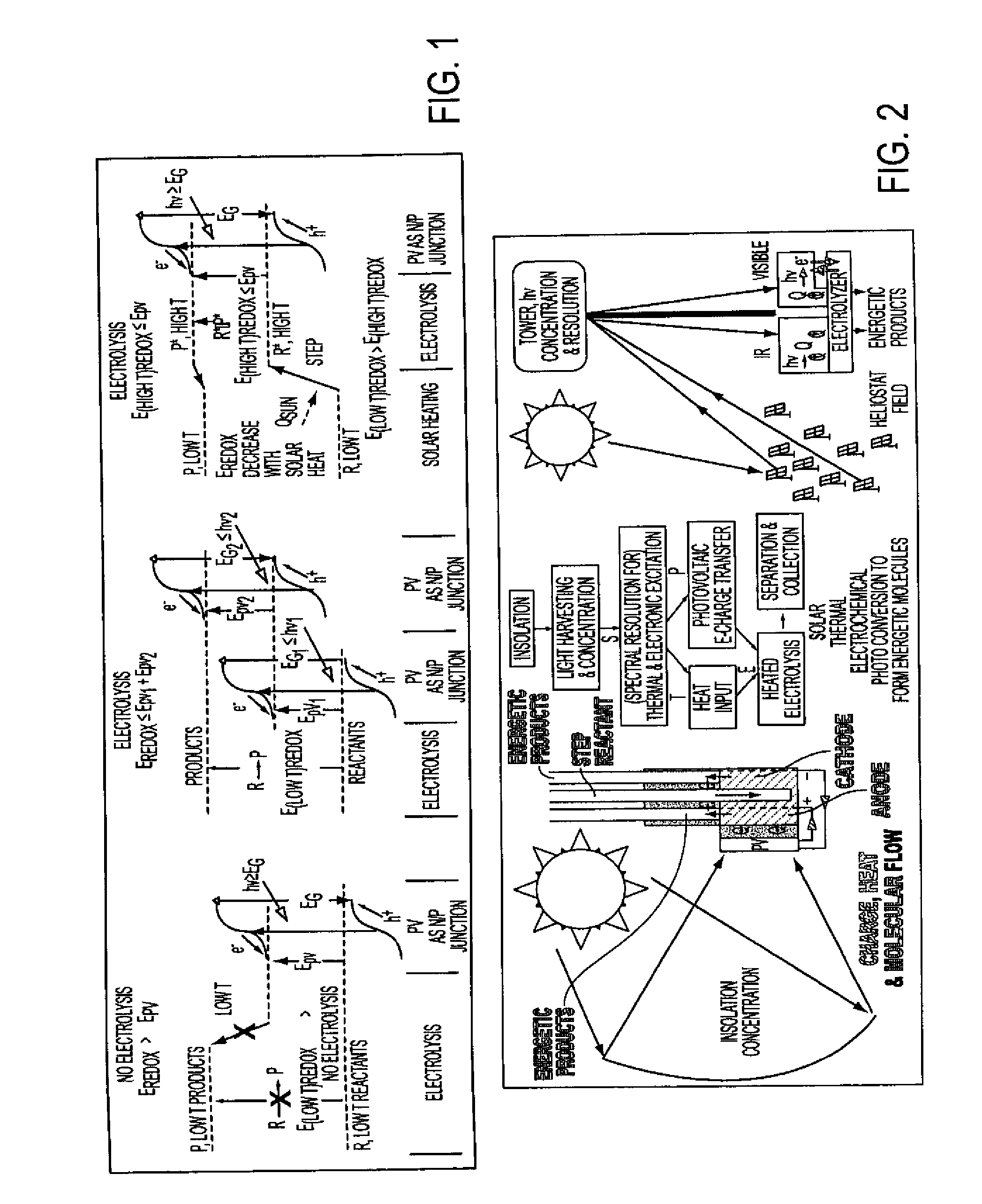
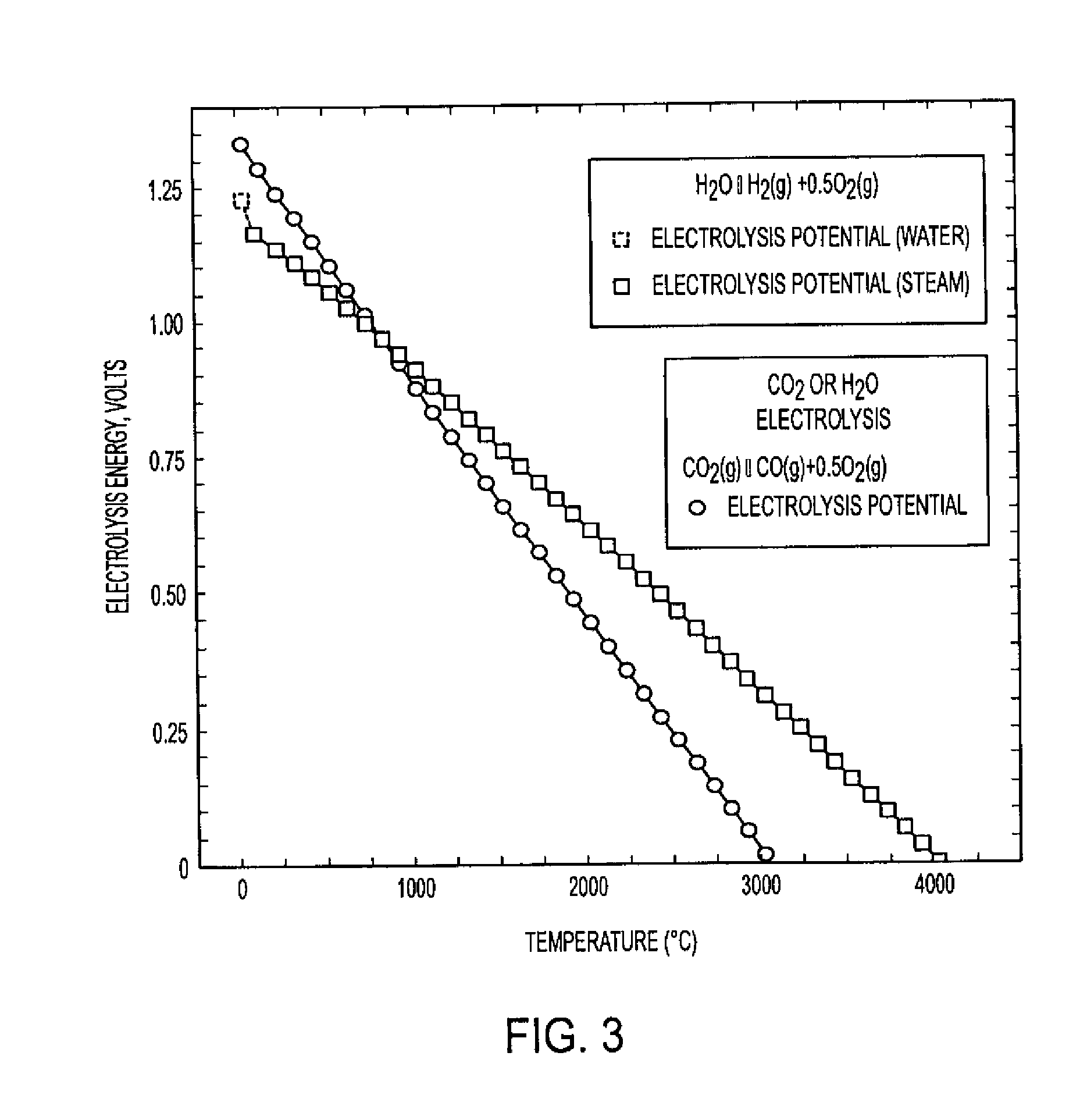
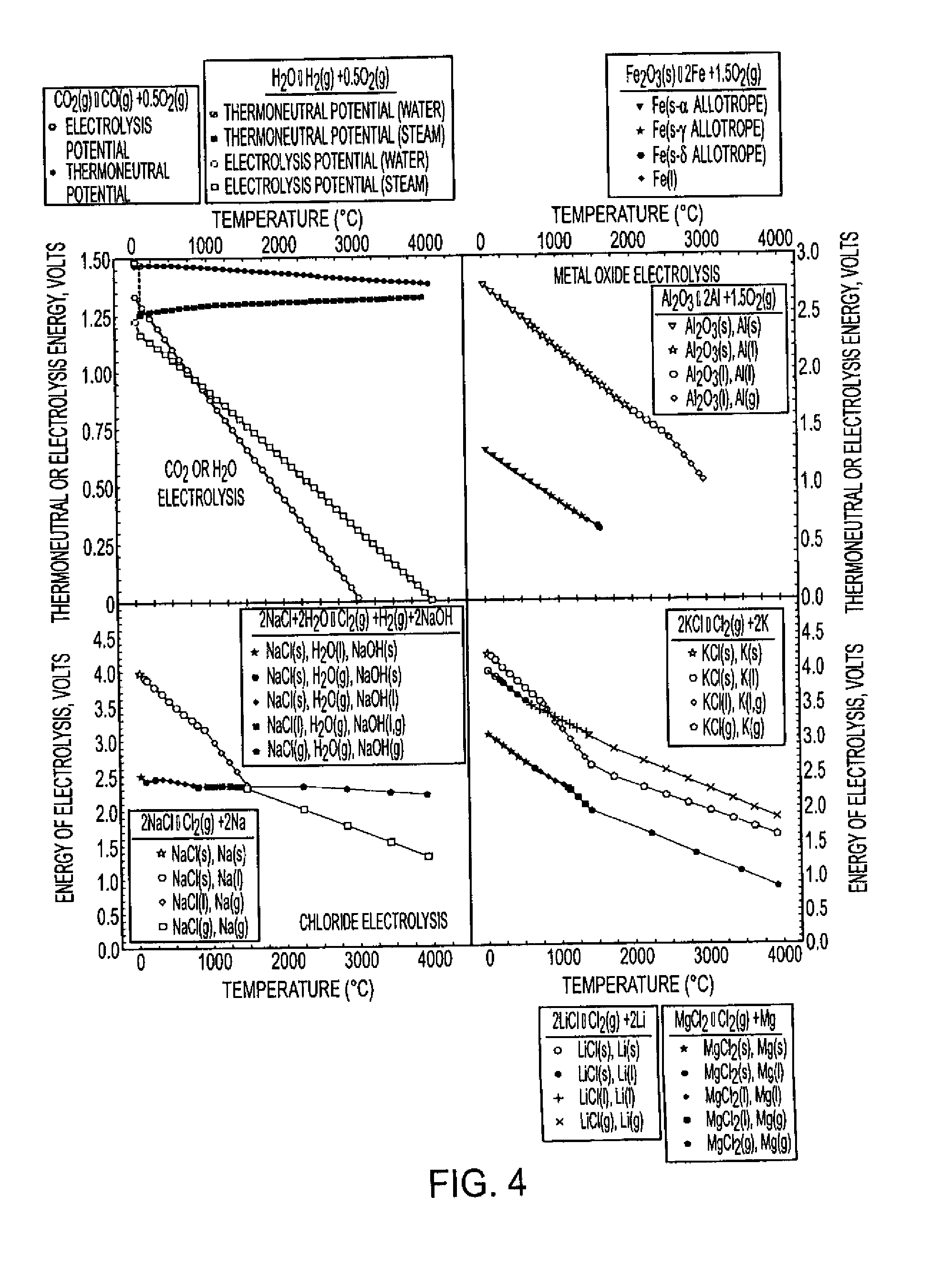
Process for electrosynthesis of energetic molecules
PatentActiveUS20130001072A1
Innovation
- The Solar Thermal Electrochemical Photo (STEP) process combines solar thermal energy with photovoltaic electricity to lower the electrochemical potential for electrolysis, allowing for the efficient generation of energetic molecules like carbon monoxide and hydrogen, using a heat exchanger and electrolysis chamber to capture and utilize thermal energy from solar photovoltaic components, thereby reducing the energy required for electrolysis.

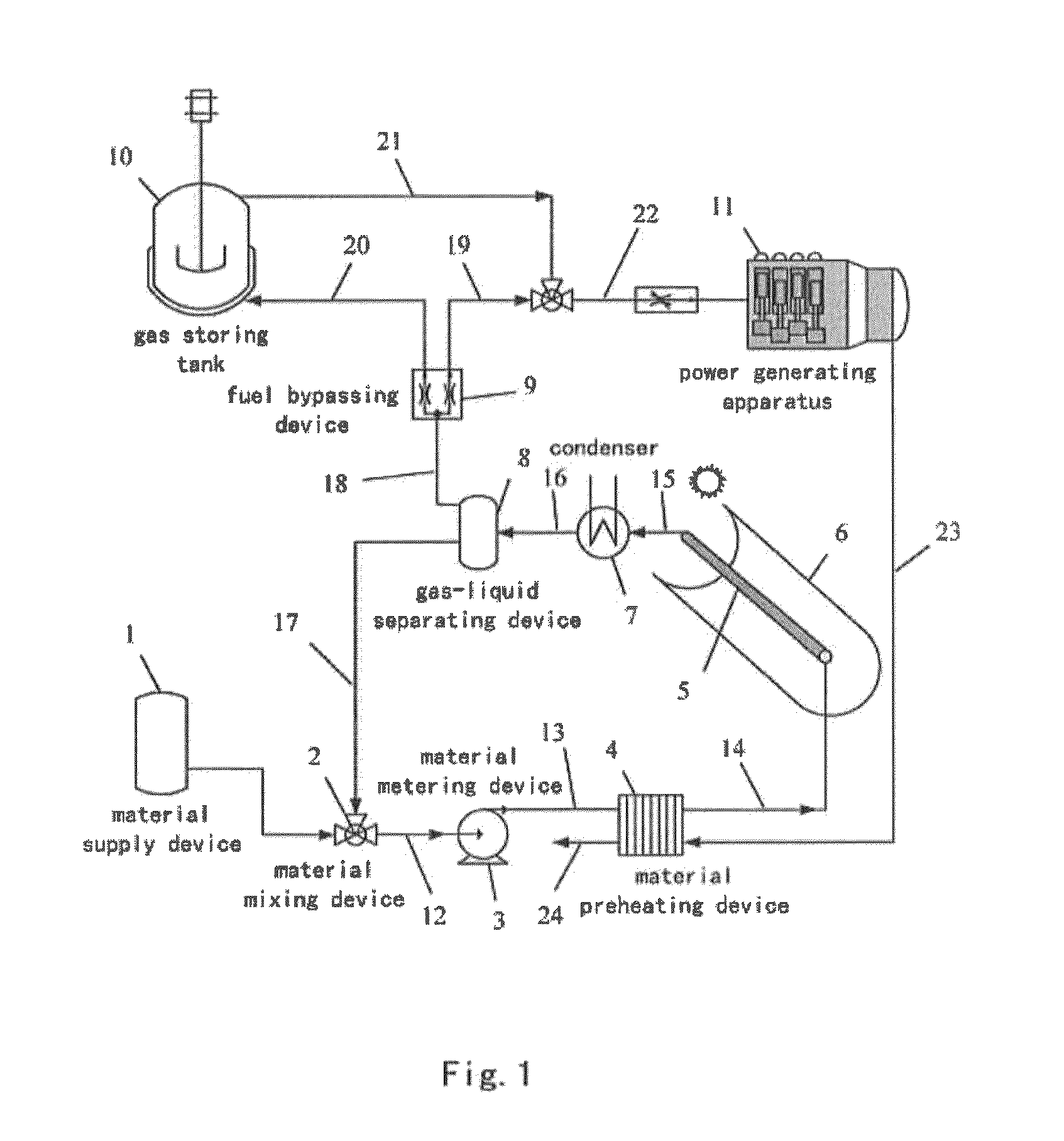
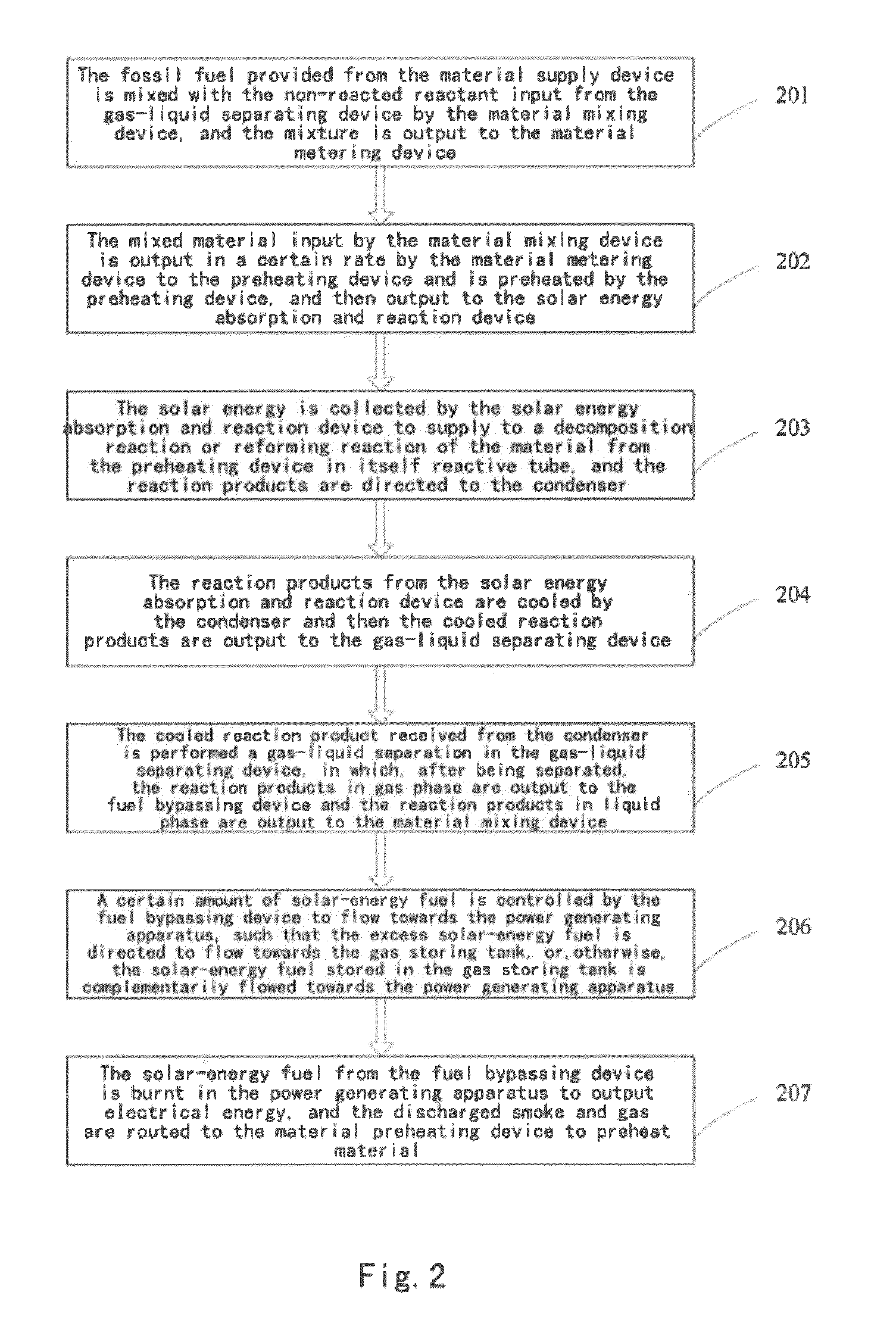
Power generating system and method by combining medium-and-low temperature solar energy with fossil fuel thermochemistry
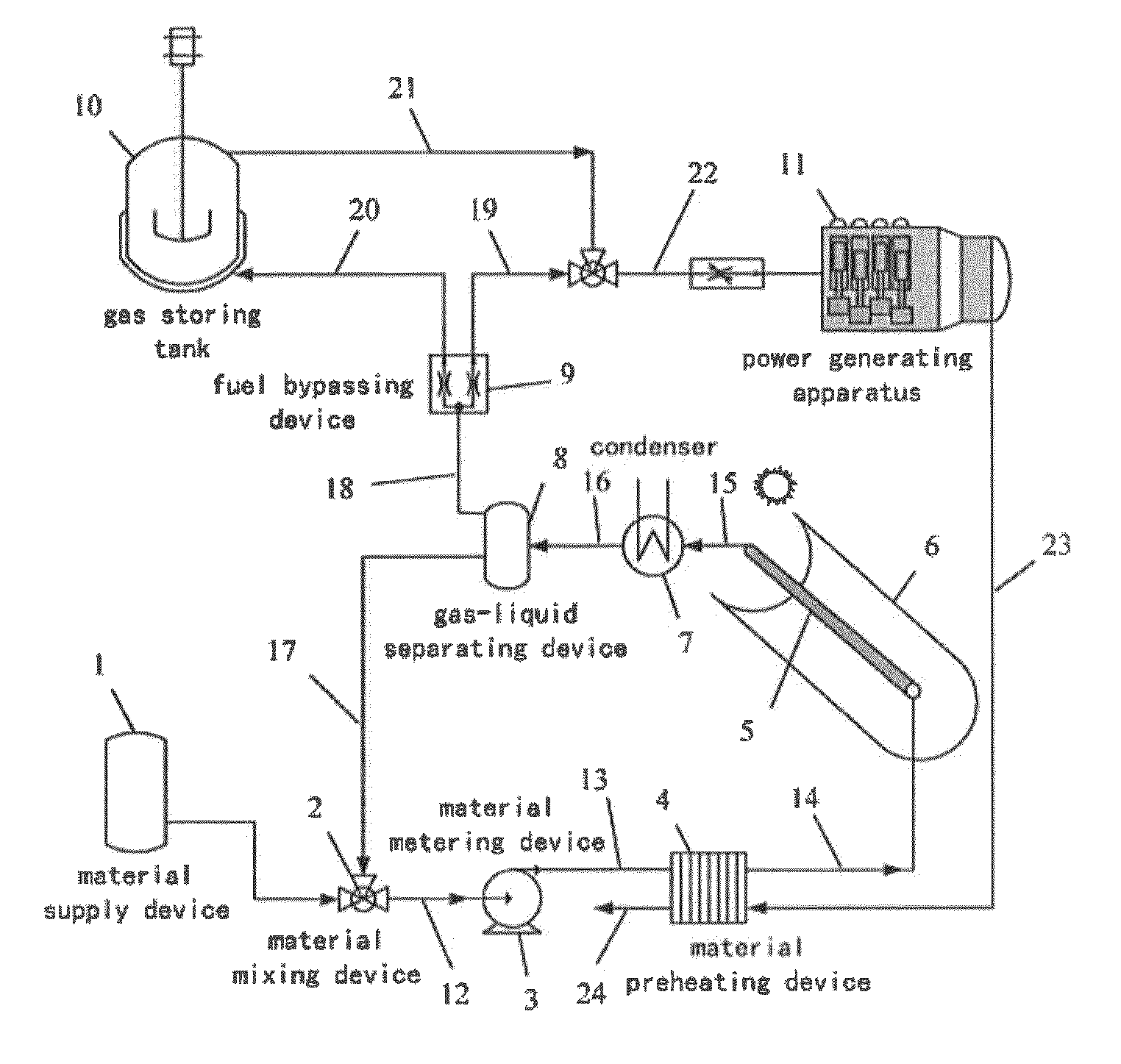
PatentActiveUS9316124B2
Innovation
- A power generating system combining medium-and-low temperature solar energy with fossil fuel using a thermochemical process, which includes a material supply device, mixing, preheating, and solar energy absorption and reaction devices to convert solar energy into chemical energy, stored as hydrogen-rich fuel, and a fuel bypassing system for efficient energy storage and usage.

Environmental Impact and Sustainability Assessment
The environmental impact of solar fuel generation technologies extends far beyond their operational phase, encompassing the entire lifecycle from raw material extraction to end-of-life disposal. Current solar fuel systems, while promising renewable energy alternatives, still face significant sustainability challenges that require comprehensive assessment and standardization.
Manufacturing processes for solar fuel components often involve energy-intensive procedures and rare earth elements that create substantial ecological footprints. Particularly concerning is the extraction of catalytic materials such as platinum, iridium, and ruthenium, which can lead to habitat destruction, water pollution, and soil degradation in mining regions. Standardized lifecycle assessment protocols specific to solar fuel technologies are urgently needed to quantify these impacts accurately.
Water consumption represents another critical environmental consideration, especially for photoelectrochemical systems that require pure water inputs. In regions facing water scarcity, the deployment of water-intensive solar fuel generation could exacerbate existing resource pressures. Future standards must address water efficiency metrics and establish minimum requirements for water recycling within these systems.
Carbon footprint analysis reveals that while solar fuel technologies offer significant greenhouse gas reductions during operation, their manufacturing phase can generate considerable emissions. Current estimates suggest a carbon payback period of 1-3 years for most systems, though this varies widely based on production methods and geographical location. Standardization efforts should prioritize establishing consistent carbon accounting methodologies specific to solar fuel technologies.
Land use implications also warrant careful consideration, particularly for large-scale deployment scenarios. Solar fuel farms could compete with agricultural land or natural habitats if not strategically planned. Emerging standards should incorporate land efficiency metrics (kWh/m²) and biodiversity impact assessments to guide responsible implementation.
Waste management presents perhaps the most overlooked sustainability challenge. The complex material composition of solar fuel generators—including semiconductor materials, catalysts, and electronic components—creates end-of-life recycling difficulties. Developing standards for design-for-disassembly and establishing minimum recyclability thresholds would significantly enhance the technology's sustainability profile.
Encouragingly, recent research indicates that solar fuel systems designed with sustainability principles from inception can achieve environmental performance far superior to conventional alternatives. Integrated assessment frameworks that consider multiple impact categories simultaneously will be essential for guiding the technology toward its full potential as a truly sustainable energy solution.
Manufacturing processes for solar fuel components often involve energy-intensive procedures and rare earth elements that create substantial ecological footprints. Particularly concerning is the extraction of catalytic materials such as platinum, iridium, and ruthenium, which can lead to habitat destruction, water pollution, and soil degradation in mining regions. Standardized lifecycle assessment protocols specific to solar fuel technologies are urgently needed to quantify these impacts accurately.
Water consumption represents another critical environmental consideration, especially for photoelectrochemical systems that require pure water inputs. In regions facing water scarcity, the deployment of water-intensive solar fuel generation could exacerbate existing resource pressures. Future standards must address water efficiency metrics and establish minimum requirements for water recycling within these systems.
Carbon footprint analysis reveals that while solar fuel technologies offer significant greenhouse gas reductions during operation, their manufacturing phase can generate considerable emissions. Current estimates suggest a carbon payback period of 1-3 years for most systems, though this varies widely based on production methods and geographical location. Standardization efforts should prioritize establishing consistent carbon accounting methodologies specific to solar fuel technologies.
Land use implications also warrant careful consideration, particularly for large-scale deployment scenarios. Solar fuel farms could compete with agricultural land or natural habitats if not strategically planned. Emerging standards should incorporate land efficiency metrics (kWh/m²) and biodiversity impact assessments to guide responsible implementation.
Waste management presents perhaps the most overlooked sustainability challenge. The complex material composition of solar fuel generators—including semiconductor materials, catalysts, and electronic components—creates end-of-life recycling difficulties. Developing standards for design-for-disassembly and establishing minimum recyclability thresholds would significantly enhance the technology's sustainability profile.
Encouragingly, recent research indicates that solar fuel systems designed with sustainability principles from inception can achieve environmental performance far superior to conventional alternatives. Integrated assessment frameworks that consider multiple impact categories simultaneously will be essential for guiding the technology toward its full potential as a truly sustainable energy solution.
Regulatory Framework and Certification Requirements
The regulatory landscape for solar fuel generation technologies is rapidly evolving as governments worldwide recognize the potential of these innovations to address climate change and energy security concerns. Currently, the International Electrotechnical Commission (IEC) and the International Organization for Standardization (ISO) are developing specialized standards for solar fuel generation systems, focusing on safety protocols, performance metrics, and interoperability requirements. These standards aim to establish a common framework that ensures consistent quality and reliability across different manufacturers and geographical regions.
In the United States, the Department of Energy (DOE) has implemented the Solar Fuels Innovation Act, which outlines certification requirements for solar-to-fuel conversion efficiency, durability standards, and safety protocols. Similarly, the European Union has established the Renewable Energy Directive II (RED II), which includes specific provisions for solar fuel technologies, mandating minimum sustainability criteria and greenhouse gas emission reduction thresholds for market eligibility.
Certification processes typically involve rigorous testing of solar fuel generation systems under standardized conditions. Key parameters evaluated include conversion efficiency (minimum 10-15% depending on technology type), operational stability (minimum 5,000 hours without significant degradation), and safety compliance (particularly regarding hydrogen storage and handling). Third-party certification bodies such as TÜV Rheinland and UL (Underwriters Laboratories) have developed specialized testing protocols for these emerging technologies.
Manufacturers must navigate a complex web of regional variations in regulatory requirements. For instance, Japan's High Pressure Gas Safety Act imposes additional safety requirements for systems producing hydrogen, while Australia's Clean Energy Regulator has established specific carbon credit mechanisms for solar fuel technologies that meet certain efficiency thresholds. These regional differences create compliance challenges for global market entry but also drive innovation toward higher performance standards.
Environmental impact assessments are increasingly becoming mandatory components of the certification process. Life cycle analysis (LCA) requirements evaluate the total environmental footprint of solar fuel systems, from raw material extraction through manufacturing, operation, and end-of-life disposal. The emerging ISO 14067 standard for carbon footprinting is being adapted specifically for solar fuel technologies to ensure comprehensive environmental impact evaluation.
Looking forward, regulatory frameworks are expected to evolve toward performance-based standards rather than prescriptive requirements, allowing for greater technological innovation while maintaining safety and reliability. International harmonization efforts, led by the International Partnership for Hydrogen and Fuel Cells in the Economy (IPHE), aim to reduce regulatory fragmentation and facilitate global market development for solar fuel technologies in electronic applications.
In the United States, the Department of Energy (DOE) has implemented the Solar Fuels Innovation Act, which outlines certification requirements for solar-to-fuel conversion efficiency, durability standards, and safety protocols. Similarly, the European Union has established the Renewable Energy Directive II (RED II), which includes specific provisions for solar fuel technologies, mandating minimum sustainability criteria and greenhouse gas emission reduction thresholds for market eligibility.
Certification processes typically involve rigorous testing of solar fuel generation systems under standardized conditions. Key parameters evaluated include conversion efficiency (minimum 10-15% depending on technology type), operational stability (minimum 5,000 hours without significant degradation), and safety compliance (particularly regarding hydrogen storage and handling). Third-party certification bodies such as TÜV Rheinland and UL (Underwriters Laboratories) have developed specialized testing protocols for these emerging technologies.
Manufacturers must navigate a complex web of regional variations in regulatory requirements. For instance, Japan's High Pressure Gas Safety Act imposes additional safety requirements for systems producing hydrogen, while Australia's Clean Energy Regulator has established specific carbon credit mechanisms for solar fuel technologies that meet certain efficiency thresholds. These regional differences create compliance challenges for global market entry but also drive innovation toward higher performance standards.
Environmental impact assessments are increasingly becoming mandatory components of the certification process. Life cycle analysis (LCA) requirements evaluate the total environmental footprint of solar fuel systems, from raw material extraction through manufacturing, operation, and end-of-life disposal. The emerging ISO 14067 standard for carbon footprinting is being adapted specifically for solar fuel technologies to ensure comprehensive environmental impact evaluation.
Looking forward, regulatory frameworks are expected to evolve toward performance-based standards rather than prescriptive requirements, allowing for greater technological innovation while maintaining safety and reliability. International harmonization efforts, led by the International Partnership for Hydrogen and Fuel Cells in the Economy (IPHE), aim to reduce regulatory fragmentation and facilitate global market development for solar fuel technologies in electronic applications.
Unlock deeper insights with Patsnap Eureka Quick Research — get a full tech report to explore trends and direct your research. Try now!
Generate Your Research Report Instantly with AI Agent
Supercharge your innovation with Patsnap Eureka AI Agent Platform!