

Flywheel Energy Storage for Data Center Backup
MAR 12, 20269 MIN READ
Generate Your Research Report Instantly with AI Agent
Patsnap Eureka helps you evaluate technical feasibility & market potential.
Flywheel Energy Storage Background and Objectives
Flywheel energy storage technology has emerged as a critical solution for addressing the growing power reliability challenges faced by modern data centers. As digital infrastructure becomes increasingly vital to global operations, the demand for uninterrupted power supply has intensified significantly. Traditional backup power systems, primarily relying on diesel generators and lead-acid batteries, face limitations in response time, maintenance requirements, and environmental impact.
The evolution of flywheel energy storage systems began in the 1970s with mechanical applications, progressing through decades of technological refinement. Early implementations focused on industrial machinery stabilization, but the technology has since evolved to address sophisticated power quality and backup requirements. The integration of advanced magnetic bearings, high-strength composite materials, and power electronics has transformed flywheels into viable alternatives for critical infrastructure protection.
Data centers present unique challenges that align well with flywheel capabilities. These facilities require instantaneous power delivery during utility outages, seamless transitions between power sources, and systems capable of handling frequent cycling without degradation. The increasing density of computing equipment and the proliferation of cloud services have amplified these requirements, creating substantial market opportunities for advanced energy storage solutions.
Current flywheel systems demonstrate remarkable technical advantages including sub-second response times, minimal maintenance requirements, and operational lifespans exceeding 20 years. Unlike chemical batteries, flywheels maintain consistent performance across wide temperature ranges and do not suffer from capacity degradation over time. These characteristics make them particularly suitable for mission-critical applications where reliability cannot be compromised.
The primary objective of implementing flywheel energy storage in data center environments centers on achieving superior power quality and reliability compared to conventional backup systems. This includes providing instantaneous power during utility disturbances, bridging power gaps until secondary backup systems activate, and maintaining consistent voltage and frequency regulation. Additionally, the technology aims to reduce total cost of ownership through decreased maintenance requirements and extended operational lifespans.
Environmental sustainability represents another crucial objective, as flywheels offer clean energy storage without toxic materials or emissions. This aligns with corporate sustainability initiatives and regulatory requirements increasingly important to data center operators. The technology's ability to support grid stabilization and renewable energy integration further enhances its strategic value in modern power infrastructure planning.
The evolution of flywheel energy storage systems began in the 1970s with mechanical applications, progressing through decades of technological refinement. Early implementations focused on industrial machinery stabilization, but the technology has since evolved to address sophisticated power quality and backup requirements. The integration of advanced magnetic bearings, high-strength composite materials, and power electronics has transformed flywheels into viable alternatives for critical infrastructure protection.
Data centers present unique challenges that align well with flywheel capabilities. These facilities require instantaneous power delivery during utility outages, seamless transitions between power sources, and systems capable of handling frequent cycling without degradation. The increasing density of computing equipment and the proliferation of cloud services have amplified these requirements, creating substantial market opportunities for advanced energy storage solutions.
Current flywheel systems demonstrate remarkable technical advantages including sub-second response times, minimal maintenance requirements, and operational lifespans exceeding 20 years. Unlike chemical batteries, flywheels maintain consistent performance across wide temperature ranges and do not suffer from capacity degradation over time. These characteristics make them particularly suitable for mission-critical applications where reliability cannot be compromised.
The primary objective of implementing flywheel energy storage in data center environments centers on achieving superior power quality and reliability compared to conventional backup systems. This includes providing instantaneous power during utility disturbances, bridging power gaps until secondary backup systems activate, and maintaining consistent voltage and frequency regulation. Additionally, the technology aims to reduce total cost of ownership through decreased maintenance requirements and extended operational lifespans.
Environmental sustainability represents another crucial objective, as flywheels offer clean energy storage without toxic materials or emissions. This aligns with corporate sustainability initiatives and regulatory requirements increasingly important to data center operators. The technology's ability to support grid stabilization and renewable energy integration further enhances its strategic value in modern power infrastructure planning.
Data Center Backup Power Market Analysis
The data center backup power market represents a critical infrastructure segment driven by the exponential growth of digital services and cloud computing demands. Traditional backup power solutions have dominated this space for decades, primarily consisting of uninterruptible power supply systems and diesel generators. However, the increasing emphasis on sustainability, operational efficiency, and total cost of ownership has created significant opportunities for alternative technologies.
Market dynamics reveal a strong preference for solutions that can provide instantaneous power delivery with minimal maintenance requirements. Current backup power systems face challenges including environmental concerns, space constraints, and operational complexity. The growing adoption of edge computing and distributed data centers has further intensified the need for compact, reliable backup power solutions that can operate effectively in diverse environments.
The competitive landscape shows established players focusing on incremental improvements to existing technologies while emerging companies explore innovative approaches. Market demand patterns indicate a shift toward solutions offering higher power density, reduced environmental impact, and lower lifecycle costs. This transition creates substantial opportunities for flywheel energy storage systems, which can address many limitations of conventional backup power technologies.
Regulatory pressures regarding emissions and environmental sustainability are reshaping procurement decisions across the industry. Data center operators increasingly prioritize solutions that align with corporate sustainability goals while maintaining operational reliability. The market demonstrates growing acceptance of alternative backup power technologies, particularly those offering superior performance characteristics and environmental benefits.
Geographic variations in market adoption reflect different regulatory environments and infrastructure maturity levels. Developed markets show higher receptivity to advanced backup power solutions, while emerging markets often prioritize cost-effectiveness. The overall market trajectory suggests continued growth driven by digital transformation initiatives and increasing reliance on continuous data availability across all sectors.
Market dynamics reveal a strong preference for solutions that can provide instantaneous power delivery with minimal maintenance requirements. Current backup power systems face challenges including environmental concerns, space constraints, and operational complexity. The growing adoption of edge computing and distributed data centers has further intensified the need for compact, reliable backup power solutions that can operate effectively in diverse environments.
The competitive landscape shows established players focusing on incremental improvements to existing technologies while emerging companies explore innovative approaches. Market demand patterns indicate a shift toward solutions offering higher power density, reduced environmental impact, and lower lifecycle costs. This transition creates substantial opportunities for flywheel energy storage systems, which can address many limitations of conventional backup power technologies.
Regulatory pressures regarding emissions and environmental sustainability are reshaping procurement decisions across the industry. Data center operators increasingly prioritize solutions that align with corporate sustainability goals while maintaining operational reliability. The market demonstrates growing acceptance of alternative backup power technologies, particularly those offering superior performance characteristics and environmental benefits.
Geographic variations in market adoption reflect different regulatory environments and infrastructure maturity levels. Developed markets show higher receptivity to advanced backup power solutions, while emerging markets often prioritize cost-effectiveness. The overall market trajectory suggests continued growth driven by digital transformation initiatives and increasing reliance on continuous data availability across all sectors.
Flywheel Technology Status and Technical Challenges
Flywheel energy storage technology has achieved significant maturity in recent years, with commercial systems now capable of delivering power outputs ranging from 100kW to several megawatts. Modern flywheel systems typically operate at rotational speeds between 20,000 to 50,000 RPM, utilizing advanced composite materials such as carbon fiber reinforced polymers for rotor construction. These materials enable higher energy densities while maintaining structural integrity under extreme centrifugal forces.
Current flywheel systems demonstrate impressive performance metrics, including round-trip efficiencies exceeding 90% and response times under one second for full power delivery. Leading manufacturers have successfully deployed systems with energy capacities ranging from 25kWh to 100kWh per unit, making them suitable for data center applications requiring short-duration backup power. The technology has proven particularly effective in bridging the gap between utility power loss and diesel generator startup.
Despite technological advances, several critical challenges continue to limit widespread adoption in data center environments. Energy density remains a primary constraint, with flywheel systems typically providing 5-10 Wh/kg compared to 150-250 Wh/kg for lithium-ion batteries. This limitation necessitates larger installation footprints and higher infrastructure costs for equivalent energy storage capacity.
Bearing system reliability presents another significant technical hurdle. While magnetic bearings eliminate mechanical wear and enable maintenance-free operation for extended periods, they require sophisticated control systems and backup mechanical bearings for emergency situations. The complexity of these systems increases both initial costs and potential failure modes, particularly concerning for mission-critical data center applications.
Vacuum containment systems essential for minimizing air resistance losses pose additional engineering challenges. Maintaining ultra-high vacuum levels over operational lifespans of 20+ years requires robust sealing technologies and periodic maintenance interventions. Any vacuum degradation significantly impacts system efficiency and performance.
Temperature management represents another technical obstacle, as flywheel systems generate substantial heat during charge-discharge cycles. Effective thermal management systems are crucial for maintaining optimal performance and preventing material degradation, particularly in the confined spaces typical of data center installations.
Cost competitiveness remains a fundamental challenge, with current flywheel systems exhibiting higher capital costs per kWh compared to alternative energy storage technologies. The specialized materials, precision manufacturing requirements, and complex control systems contribute to elevated initial investment requirements that many data center operators find prohibitive.
Current flywheel systems demonstrate impressive performance metrics, including round-trip efficiencies exceeding 90% and response times under one second for full power delivery. Leading manufacturers have successfully deployed systems with energy capacities ranging from 25kWh to 100kWh per unit, making them suitable for data center applications requiring short-duration backup power. The technology has proven particularly effective in bridging the gap between utility power loss and diesel generator startup.
Despite technological advances, several critical challenges continue to limit widespread adoption in data center environments. Energy density remains a primary constraint, with flywheel systems typically providing 5-10 Wh/kg compared to 150-250 Wh/kg for lithium-ion batteries. This limitation necessitates larger installation footprints and higher infrastructure costs for equivalent energy storage capacity.
Bearing system reliability presents another significant technical hurdle. While magnetic bearings eliminate mechanical wear and enable maintenance-free operation for extended periods, they require sophisticated control systems and backup mechanical bearings for emergency situations. The complexity of these systems increases both initial costs and potential failure modes, particularly concerning for mission-critical data center applications.
Vacuum containment systems essential for minimizing air resistance losses pose additional engineering challenges. Maintaining ultra-high vacuum levels over operational lifespans of 20+ years requires robust sealing technologies and periodic maintenance interventions. Any vacuum degradation significantly impacts system efficiency and performance.
Temperature management represents another technical obstacle, as flywheel systems generate substantial heat during charge-discharge cycles. Effective thermal management systems are crucial for maintaining optimal performance and preventing material degradation, particularly in the confined spaces typical of data center installations.
Cost competitiveness remains a fundamental challenge, with current flywheel systems exhibiting higher capital costs per kWh compared to alternative energy storage technologies. The specialized materials, precision manufacturing requirements, and complex control systems contribute to elevated initial investment requirements that many data center operators find prohibitive.
Current Flywheel Backup Power Solutions
01 Flywheel rotor design and construction
Advanced flywheel rotor designs focus on optimizing the structural configuration and material selection to maximize energy storage capacity while maintaining mechanical integrity. Key considerations include the use of composite materials, fiber-reinforced structures, and optimized geometric shapes to achieve high rotational speeds and energy density. The rotor design must balance strength, weight, and rotational dynamics to ensure efficient energy storage and retrieval.- Flywheel rotor design and construction: Flywheel energy storage systems utilize specially designed rotors to store kinetic energy. The rotor design focuses on optimizing materials, geometry, and structural integrity to maximize energy density and rotational speed. Advanced composite materials and innovative rotor configurations are employed to enhance energy storage capacity while maintaining mechanical stability. The rotor construction includes considerations for stress distribution, weight reduction, and durability under high-speed rotation conditions.
- Magnetic bearing systems for flywheel support: Magnetic bearing technology is utilized to support and suspend the rotating flywheel with minimal friction losses. These systems employ electromagnetic forces to maintain the rotor position without physical contact, significantly reducing energy dissipation during operation. The magnetic bearing configurations include active control systems that adjust bearing forces in real-time to compensate for disturbances and maintain stable rotation. This technology enables higher rotational speeds and improved energy efficiency compared to conventional mechanical bearings.
- Motor-generator integration and power conversion: Integrated motor-generator units enable bidirectional energy conversion in flywheel systems, allowing both charging and discharging operations. The power conversion systems incorporate advanced control algorithms to manage energy flow efficiently between the flywheel and electrical grid or load. These systems feature high-efficiency power electronics that minimize conversion losses during acceleration and deceleration phases. The integration design optimizes electromagnetic coupling and thermal management to ensure reliable operation across varying power levels.
- Vacuum containment and housing systems: Flywheel energy storage systems employ vacuum containment chambers to minimize air resistance and windage losses during high-speed rotation. The housing design provides structural protection while maintaining low-pressure environments that reduce aerodynamic drag. Safety features are incorporated into the containment system to manage potential rotor failure scenarios and contain debris. The vacuum system design balances the need for minimal pressure with practical considerations for sealing, maintenance access, and long-term reliability.
- Control systems and energy management: Advanced control systems manage the operation of flywheel energy storage, including charge-discharge cycles, speed regulation, and grid synchronization. These systems implement sophisticated algorithms for optimizing energy storage efficiency, power quality, and response time to load demands. The control architecture integrates monitoring capabilities for operational parameters such as rotational speed, temperature, and bearing status. Energy management strategies enable the flywheel system to provide various grid services including frequency regulation, peak shaving, and backup power support.
02 Magnetic bearing systems for flywheel support
Magnetic bearing technology is employed to support the flywheel rotor without physical contact, eliminating friction losses and enabling high-speed rotation in vacuum environments. These systems utilize electromagnetic forces to maintain stable levitation and positioning of the rotating mass. Advanced control algorithms ensure precise positioning and stability during operation, significantly improving energy efficiency and system longevity.Expand Specific Solutions03 Motor-generator integration for energy conversion
Integrated motor-generator systems enable bidirectional energy conversion in flywheel energy storage applications. These systems function as motors during charging to accelerate the flywheel and as generators during discharging to extract stored kinetic energy. Advanced power electronics and control strategies optimize the efficiency of energy conversion processes, enabling rapid response times and high power density for grid stabilization and backup power applications.Expand Specific Solutions04 Vacuum containment and housing systems
Vacuum containment systems are essential for minimizing aerodynamic drag losses in high-speed flywheel energy storage systems. These housings maintain low-pressure environments around the rotating flywheel, significantly reducing windage losses and improving overall system efficiency. Safety features are incorporated to contain the flywheel in case of mechanical failure, including reinforced enclosures and energy absorption mechanisms.Expand Specific Solutions05 Control systems and grid integration
Advanced control systems manage the operation of flywheel energy storage systems, including charge and discharge cycles, power conditioning, and grid synchronization. These systems incorporate sophisticated algorithms for state-of-charge monitoring, power flow management, and frequency regulation. Integration with renewable energy sources and grid infrastructure enables applications in power quality improvement, load leveling, and emergency backup power supply.Expand Specific Solutions
Major Flywheel and Data Center Infrastructure Players
The flywheel energy storage market for data center backup applications is experiencing rapid growth driven by increasing demand for reliable, sustainable power solutions. The industry is transitioning from early adoption to commercial maturity, with market expansion fueled by data centers' need for instantaneous backup power and grid stability services. Technology maturity varies significantly across market participants, with established players like Torus Inc. and Amber Kinetics leading commercial deployment of advanced flywheel systems, while Beijing Honghui International Energy Technology and Huachi Kinetic Energy represent emerging capabilities in magnetic levitation flywheel technologies. Traditional power companies including Korea Electric Power Corp., State Grid Corp. of China, and various regional utilities are increasingly integrating flywheel solutions into their infrastructure portfolios. Research institutions such as North China Electric Power University and Université Laval continue advancing fundamental technologies, while aerospace companies like AECC Harbin Dongan Engine leverage their precision engineering expertise for flywheel development, creating a diverse ecosystem spanning from R&D to commercial deployment.
Honeywell International Technologies Ltd.
Technical Solution: Honeywell offers flywheel-based uninterruptible power supply (UPS) systems specifically engineered for data center applications. Their flywheel technology uses steel rotors with magnetic levitation bearings operating in partial vacuum environments to minimize friction losses. The system provides 15-60 seconds of backup power, designed to bridge the gap until diesel generators come online. Honeywell's flywheel UPS systems deliver power ratings from 225kVA to 1800kVA with modular scalability. The technology features 98% round-trip efficiency and can handle over 20 million charge-discharge cycles. Their systems integrate with building management systems for comprehensive monitoring and predictive maintenance capabilities.
Advantages: High efficiency, extremely high cycle life, low maintenance requirements, compact footprint. Disadvantages: Short discharge duration requires generator backup, higher upfront costs than traditional battery UPS.
Amber Kinetics, Inc.
Technical Solution: Amber Kinetics specializes in long-duration flywheel energy storage systems specifically designed for grid-scale applications including data center backup power. Their flywheel technology utilizes steel rotors spinning at high speeds in vacuum chambers with magnetic bearings to store kinetic energy. The system can provide 4-8 hours of continuous power discharge, making it ideal for extended data center backup requirements. Their modular design allows for scalable deployment from 20kW to multi-MW installations. The flywheels operate at room temperature without requiring thermal management systems, and can cycle over 175,000 times with minimal degradation. The technology provides instantaneous response time and can seamlessly transition from grid power to backup power without interruption.
Advantages: Long discharge duration suitable for extended outages, high cycle life, no thermal management required, instant response. Disadvantages: Higher initial capital costs compared to traditional UPS systems, requires specialized maintenance expertise.
Key Flywheel Patents and Technical Innovations
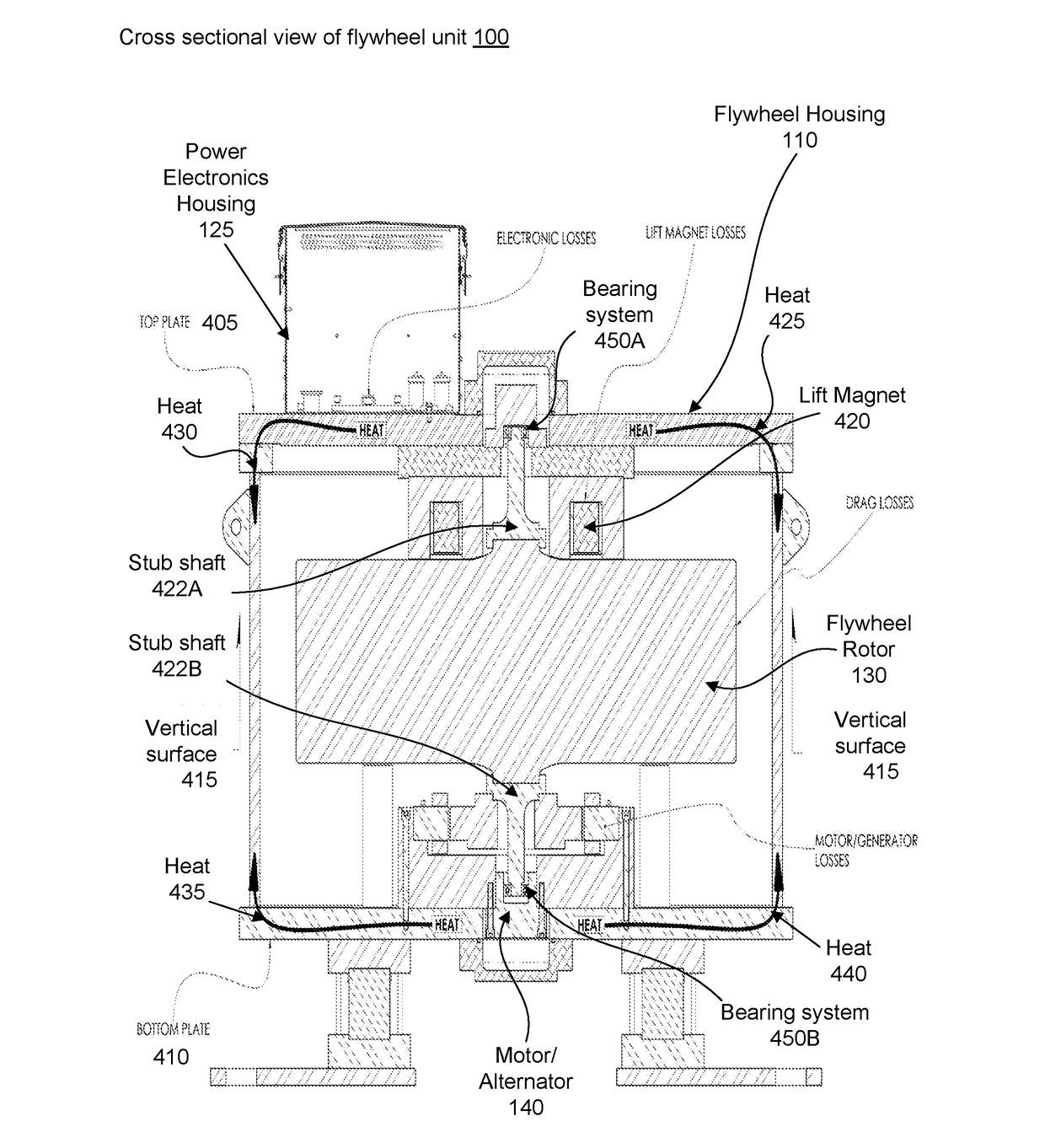
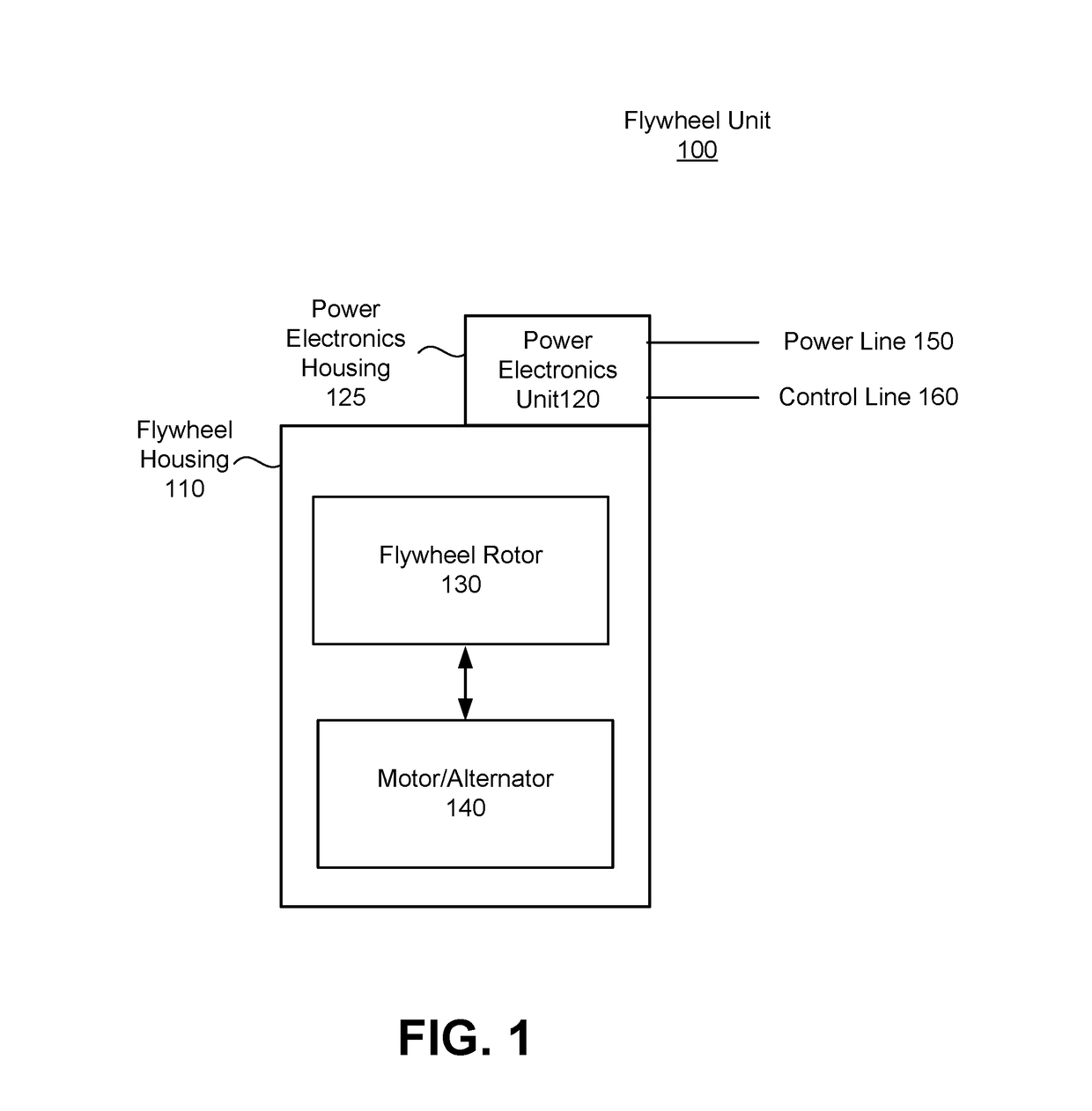
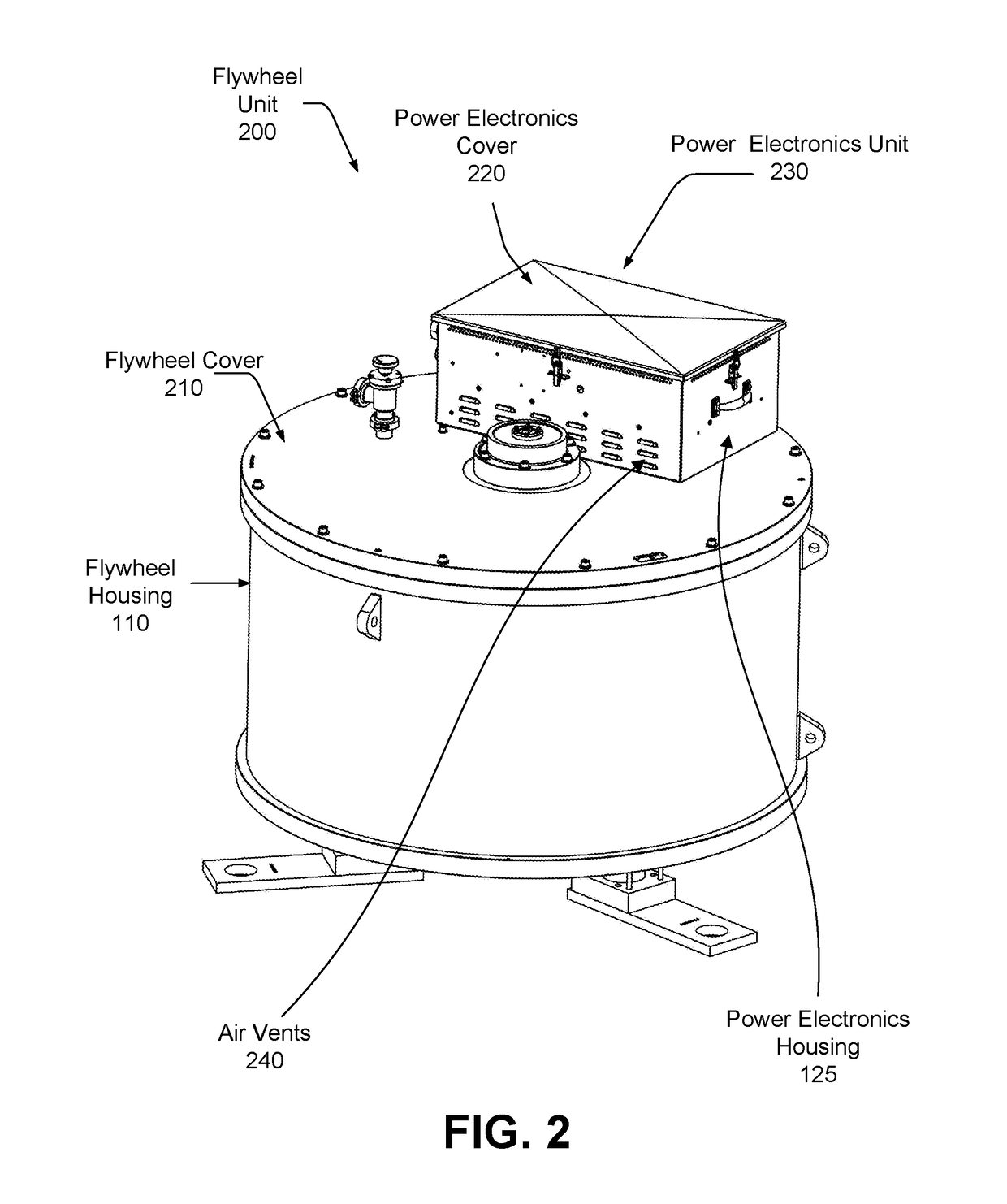
Power Electronics Housing And Packaging For Flywheel Energy Storage Systems
PatentActiveUS20180034344A1
Innovation
- A flywheel energy storage system design that integrates power electronics directly onto the flywheel housing, utilizing passive convection cooling and optimizing resonance frequencies to minimize vibrations, allowing for efficient heat dissipation through a large thermal surface area without additional cooling systems.

Uninterruptible power supply using a high speed cylinder flywheel
PatentWO2002003523A8
Innovation
- A solid steel alloy flywheel with a cylindrical design, supported by passive radial magnetic bearings, operating at high speeds to achieve increased energy density and longevity, with a manufacturing process ensuring quality assurance and reduced aerodynamic drag.


Grid Integration Standards for Flywheel Systems
Grid integration standards for flywheel energy storage systems in data center applications represent a critical framework ensuring seamless interconnection with utility networks while maintaining operational reliability. The IEEE 1547 standard series provides the foundational requirements for distributed energy resources, including flywheel systems, establishing voltage and frequency operating ranges, power quality specifications, and islanding protection protocols. These standards mandate that flywheel systems operate within voltage ranges of 88% to 110% of nominal voltage and frequency ranges of 59.3 to 60.5 Hz for normal operation.
Power quality compliance represents a fundamental aspect of grid integration standards, requiring flywheel systems to maintain total harmonic distortion levels below 5% for current and 8% for voltage. The IEEE 519 standard specifically addresses harmonic limits and power factor requirements, mandating that flywheel systems maintain power factors between 0.95 leading and 0.95 lagging during normal operation. Advanced power conditioning systems within flywheel installations must incorporate active filtering capabilities to ensure compliance with these stringent requirements.
Interconnection protection standards, particularly IEEE 1547.1, establish comprehensive testing procedures and safety requirements for grid-connected flywheel systems. These protocols include anti-islanding protection mechanisms that detect grid outages within two seconds and disconnect the flywheel system to prevent unsafe operating conditions. Ground fault protection, overcurrent protection, and voltage monitoring systems must meet UL 1741 certification requirements for inverter-based distributed generation systems.
Communication and control standards play an increasingly important role in modern grid integration frameworks. The IEEE 2030 series establishes interoperability guidelines for smart grid communications, requiring flywheel systems to support standardized protocols such as DNP3, Modbus, or IEC 61850 for real-time monitoring and control. These communication standards enable grid operators to monitor flywheel system status, dispatch energy storage resources, and coordinate with other distributed energy resources for optimal grid stability.
Emerging grid codes, particularly those addressing fast-frequency response services, are creating new opportunities for flywheel systems in data center applications. Recent updates to FERC Order 841 and regional grid codes now recognize the unique capabilities of flywheel systems to provide sub-second frequency regulation services, establishing performance standards that leverage the rapid response characteristics inherent in flywheel technology for enhanced grid stability support.
Power quality compliance represents a fundamental aspect of grid integration standards, requiring flywheel systems to maintain total harmonic distortion levels below 5% for current and 8% for voltage. The IEEE 519 standard specifically addresses harmonic limits and power factor requirements, mandating that flywheel systems maintain power factors between 0.95 leading and 0.95 lagging during normal operation. Advanced power conditioning systems within flywheel installations must incorporate active filtering capabilities to ensure compliance with these stringent requirements.
Interconnection protection standards, particularly IEEE 1547.1, establish comprehensive testing procedures and safety requirements for grid-connected flywheel systems. These protocols include anti-islanding protection mechanisms that detect grid outages within two seconds and disconnect the flywheel system to prevent unsafe operating conditions. Ground fault protection, overcurrent protection, and voltage monitoring systems must meet UL 1741 certification requirements for inverter-based distributed generation systems.
Communication and control standards play an increasingly important role in modern grid integration frameworks. The IEEE 2030 series establishes interoperability guidelines for smart grid communications, requiring flywheel systems to support standardized protocols such as DNP3, Modbus, or IEC 61850 for real-time monitoring and control. These communication standards enable grid operators to monitor flywheel system status, dispatch energy storage resources, and coordinate with other distributed energy resources for optimal grid stability.
Emerging grid codes, particularly those addressing fast-frequency response services, are creating new opportunities for flywheel systems in data center applications. Recent updates to FERC Order 841 and regional grid codes now recognize the unique capabilities of flywheel systems to provide sub-second frequency regulation services, establishing performance standards that leverage the rapid response characteristics inherent in flywheel technology for enhanced grid stability support.
Environmental Impact of Flywheel vs Battery Storage
The environmental implications of flywheel energy storage systems versus traditional battery storage for data center backup applications present significant differences across multiple sustainability metrics. Flywheel systems demonstrate superior environmental performance through their extended operational lifespan, typically exceeding 20 years with minimal degradation, compared to lithium-ion batteries that require replacement every 5-10 years depending on usage patterns and environmental conditions.
Manufacturing environmental impact analysis reveals contrasting profiles between these technologies. Flywheel systems primarily utilize steel, carbon fiber, and magnetic bearings, materials that can be recycled at end-of-life with established industrial processes. The production carbon footprint remains relatively low due to conventional manufacturing techniques and material sourcing. Battery systems, particularly lithium-ion configurations, require extensive mining operations for lithium, cobalt, and rare earth elements, generating substantial environmental disruption and carbon emissions during extraction and processing phases.
Operational environmental benefits favor flywheel technology through elimination of chemical degradation processes. Unlike batteries that experience capacity fade and thermal management challenges requiring additional cooling infrastructure, flywheels maintain consistent performance without generating heat during energy storage cycles. This characteristic reduces overall data center cooling requirements and associated energy consumption.
End-of-life environmental considerations highlight flywheel advantages in waste management and resource recovery. Steel and carbon fiber components can be processed through existing recycling infrastructure, minimizing landfill impact and enabling material reuse. Battery disposal presents complex challenges due to toxic chemical content and specialized recycling requirements, often resulting in incomplete material recovery and potential environmental contamination risks.
Carbon footprint analysis over complete system lifecycles demonstrates flywheel superiority when accounting for manufacturing, operational efficiency, and disposal phases. The extended service life reduces replacement frequency, minimizing cumulative manufacturing emissions. Additionally, higher round-trip efficiency in flywheel systems translates to reduced grid energy consumption during charge-discharge cycles, contributing to lower operational carbon emissions for data center backup applications.
Manufacturing environmental impact analysis reveals contrasting profiles between these technologies. Flywheel systems primarily utilize steel, carbon fiber, and magnetic bearings, materials that can be recycled at end-of-life with established industrial processes. The production carbon footprint remains relatively low due to conventional manufacturing techniques and material sourcing. Battery systems, particularly lithium-ion configurations, require extensive mining operations for lithium, cobalt, and rare earth elements, generating substantial environmental disruption and carbon emissions during extraction and processing phases.
Operational environmental benefits favor flywheel technology through elimination of chemical degradation processes. Unlike batteries that experience capacity fade and thermal management challenges requiring additional cooling infrastructure, flywheels maintain consistent performance without generating heat during energy storage cycles. This characteristic reduces overall data center cooling requirements and associated energy consumption.
End-of-life environmental considerations highlight flywheel advantages in waste management and resource recovery. Steel and carbon fiber components can be processed through existing recycling infrastructure, minimizing landfill impact and enabling material reuse. Battery disposal presents complex challenges due to toxic chemical content and specialized recycling requirements, often resulting in incomplete material recovery and potential environmental contamination risks.
Carbon footprint analysis over complete system lifecycles demonstrates flywheel superiority when accounting for manufacturing, operational efficiency, and disposal phases. The extended service life reduces replacement frequency, minimizing cumulative manufacturing emissions. Additionally, higher round-trip efficiency in flywheel systems translates to reduced grid energy consumption during charge-discharge cycles, contributing to lower operational carbon emissions for data center backup applications.
Unlock deeper insights with Patsnap Eureka Quick Research — get a full tech report to explore trends and direct your research. Try now!
Generate Your Research Report Instantly with AI Agent
Supercharge your innovation with Patsnap Eureka AI Agent Platform!