

Formation Cycling Efficiency for New Semi-Solid Electrolyte Designs
MAY 26, 20269 MIN READ
Generate Your Research Report Instantly with AI Agent
PatSnap Eureka helps you evaluate technical feasibility & market potential.
Semi-Solid Electrolyte Formation Cycling Background and Objectives
Semi-solid electrolytes represent a paradigm shift in battery technology, emerging from the convergence of traditional liquid electrolytes and solid-state systems. This hybrid approach addresses critical limitations inherent in conventional lithium-ion batteries, particularly safety concerns related to thermal runaway and electrolyte leakage. The evolution of semi-solid electrolytes traces back to early 2010s research initiatives focused on developing safer, more stable energy storage solutions for electric vehicles and grid-scale applications.
The fundamental principle underlying semi-solid electrolyte technology involves suspending active materials in a flowable medium that maintains ionic conductivity while providing enhanced mechanical stability. This approach enables continuous operation at room temperature while mitigating dendrite formation, a persistent challenge in solid-state batteries. Historical development has progressed through multiple phases, beginning with basic polymer-gel formulations and advancing toward sophisticated composite systems incorporating ceramic particles and ionic liquids.
Formation cycling efficiency has emerged as a critical performance metric determining the commercial viability of semi-solid electrolyte designs. During initial charge-discharge cycles, the electrolyte undergoes structural reorganization and interface stabilization processes that directly impact long-term battery performance. Traditional formation protocols developed for liquid electrolytes prove inadequate for semi-solid systems due to distinct mass transport phenomena and interfacial dynamics.
The primary objective of advancing formation cycling efficiency centers on optimizing the initial electrochemical conditioning process to establish stable electrode-electrolyte interfaces while minimizing irreversible capacity loss. This involves developing tailored cycling protocols that account for the unique rheological properties and ionic transport mechanisms characteristic of semi-solid electrolytes. Enhanced formation efficiency directly translates to improved manufacturing economics and superior battery performance metrics.
Contemporary research efforts focus on understanding the correlation between electrolyte composition, cycling parameters, and resulting interface quality. Key technical goals include reducing formation time from conventional 24-48 hour protocols to sub-10 hour processes while maintaining or improving capacity retention and cycle life. Additionally, achieving uniform current distribution throughout the semi-solid medium during formation represents a fundamental challenge requiring innovative electrode design and process optimization strategies.
The fundamental principle underlying semi-solid electrolyte technology involves suspending active materials in a flowable medium that maintains ionic conductivity while providing enhanced mechanical stability. This approach enables continuous operation at room temperature while mitigating dendrite formation, a persistent challenge in solid-state batteries. Historical development has progressed through multiple phases, beginning with basic polymer-gel formulations and advancing toward sophisticated composite systems incorporating ceramic particles and ionic liquids.
Formation cycling efficiency has emerged as a critical performance metric determining the commercial viability of semi-solid electrolyte designs. During initial charge-discharge cycles, the electrolyte undergoes structural reorganization and interface stabilization processes that directly impact long-term battery performance. Traditional formation protocols developed for liquid electrolytes prove inadequate for semi-solid systems due to distinct mass transport phenomena and interfacial dynamics.
The primary objective of advancing formation cycling efficiency centers on optimizing the initial electrochemical conditioning process to establish stable electrode-electrolyte interfaces while minimizing irreversible capacity loss. This involves developing tailored cycling protocols that account for the unique rheological properties and ionic transport mechanisms characteristic of semi-solid electrolytes. Enhanced formation efficiency directly translates to improved manufacturing economics and superior battery performance metrics.
Contemporary research efforts focus on understanding the correlation between electrolyte composition, cycling parameters, and resulting interface quality. Key technical goals include reducing formation time from conventional 24-48 hour protocols to sub-10 hour processes while maintaining or improving capacity retention and cycle life. Additionally, achieving uniform current distribution throughout the semi-solid medium during formation represents a fundamental challenge requiring innovative electrode design and process optimization strategies.
Market Demand for Advanced Semi-Solid Battery Technologies
The global energy storage market is experiencing unprecedented growth driven by the urgent need for sustainable energy solutions and grid stabilization technologies. Semi-solid battery technologies represent a critical advancement in addressing the limitations of conventional lithium-ion batteries, particularly in large-scale energy storage applications where safety, longevity, and cost-effectiveness are paramount concerns.
Current market dynamics reveal substantial demand for energy storage systems that can bridge the gap between traditional liquid electrolyte batteries and solid-state technologies. Semi-solid electrolyte designs offer compelling advantages including enhanced thermal stability, reduced fire risk, and improved cycle life compared to conventional systems. These characteristics make them particularly attractive for utility-scale energy storage, electric vehicle applications, and residential energy systems.
The formation cycling efficiency challenge in semi-solid electrolyte designs directly addresses market pain points related to manufacturing costs and battery performance optimization. Inefficient formation processes result in increased production time, higher energy consumption during manufacturing, and reduced initial capacity utilization. Market stakeholders are actively seeking solutions that can minimize formation time while maximizing the electrochemical performance of semi-solid battery systems.
Industrial demand is particularly strong from renewable energy integration projects, where grid-scale storage systems require batteries with superior safety profiles and extended operational lifespans. The automotive sector also demonstrates growing interest in semi-solid technologies as manufacturers seek alternatives that offer better thermal management and crash safety compared to traditional lithium-ion systems.
Emerging applications in aerospace, marine, and stationary backup power systems are creating additional market segments for advanced semi-solid battery technologies. These specialized applications often require custom electrolyte formulations and optimized formation protocols to meet specific performance criteria, driving demand for innovative formation cycling methodologies.
The market trajectory indicates accelerating adoption of semi-solid battery technologies across multiple sectors, with formation cycling efficiency serving as a key differentiator for commercial viability. Companies that can demonstrate superior formation processes with reduced energy consumption and improved capacity retention are positioned to capture significant market share in this rapidly expanding technology segment.
Current market dynamics reveal substantial demand for energy storage systems that can bridge the gap between traditional liquid electrolyte batteries and solid-state technologies. Semi-solid electrolyte designs offer compelling advantages including enhanced thermal stability, reduced fire risk, and improved cycle life compared to conventional systems. These characteristics make them particularly attractive for utility-scale energy storage, electric vehicle applications, and residential energy systems.
The formation cycling efficiency challenge in semi-solid electrolyte designs directly addresses market pain points related to manufacturing costs and battery performance optimization. Inefficient formation processes result in increased production time, higher energy consumption during manufacturing, and reduced initial capacity utilization. Market stakeholders are actively seeking solutions that can minimize formation time while maximizing the electrochemical performance of semi-solid battery systems.
Industrial demand is particularly strong from renewable energy integration projects, where grid-scale storage systems require batteries with superior safety profiles and extended operational lifespans. The automotive sector also demonstrates growing interest in semi-solid technologies as manufacturers seek alternatives that offer better thermal management and crash safety compared to traditional lithium-ion systems.
Emerging applications in aerospace, marine, and stationary backup power systems are creating additional market segments for advanced semi-solid battery technologies. These specialized applications often require custom electrolyte formulations and optimized formation protocols to meet specific performance criteria, driving demand for innovative formation cycling methodologies.
The market trajectory indicates accelerating adoption of semi-solid battery technologies across multiple sectors, with formation cycling efficiency serving as a key differentiator for commercial viability. Companies that can demonstrate superior formation processes with reduced energy consumption and improved capacity retention are positioned to capture significant market share in this rapidly expanding technology segment.
Current Challenges in Semi-Solid Electrolyte Formation Efficiency
Semi-solid electrolyte formation cycling faces significant efficiency challenges that impede widespread commercial adoption. The primary obstacle stems from the complex three-phase interface dynamics between solid active materials, liquid electrolyte components, and conductive additives. During initial formation cycles, these interfaces undergo substantial structural reorganization, leading to unpredictable electrochemical behavior and reduced energy efficiency compared to conventional liquid electrolyte systems.
Ionic conductivity limitations represent another critical challenge in semi-solid electrolyte designs. The heterogeneous nature of these systems creates tortuous ion transport pathways, resulting in higher internal resistance and slower charge transfer kinetics. This conductivity bottleneck becomes particularly pronounced during formation cycling, where the establishment of stable solid electrolyte interphase layers requires optimal ionic mobility throughout the electrode structure.
Mechanical stability issues during formation cycling pose substantial technical hurdles. Semi-solid electrolytes experience volume changes and mechanical stress during charge-discharge processes, leading to particle disconnection and active material isolation. These mechanical failures result in capacity fade and reduced formation efficiency, as portions of the electrode become electrochemically inactive due to loss of electrical or ionic connectivity.
Temperature sensitivity significantly impacts formation cycling performance in semi-solid electrolyte systems. The viscosity and ionic conductivity of these materials exhibit strong temperature dependence, creating operational constraints that limit formation protocol optimization. Elevated temperatures may improve ionic transport but can also accelerate side reactions and electrolyte degradation, while lower temperatures enhance stability at the cost of reduced formation efficiency.
Manufacturing scalability presents additional challenges for achieving consistent formation cycling efficiency. The rheological properties of semi-solid electrolytes require specialized processing techniques and equipment, making it difficult to maintain uniform electrode architecture and composition across large-scale production. Variations in particle distribution, electrolyte loading, and interface quality directly impact formation cycling reproducibility and overall system performance.
Electrochemical side reactions during formation cycling create efficiency losses specific to semi-solid electrolyte architectures. The increased interfacial area and chemical complexity of these systems promote unwanted reactions that consume active lithium and reduce coulombic efficiency. Understanding and mitigating these parasitic processes remains a fundamental challenge for optimizing formation protocols and achieving commercially viable performance metrics.
Ionic conductivity limitations represent another critical challenge in semi-solid electrolyte designs. The heterogeneous nature of these systems creates tortuous ion transport pathways, resulting in higher internal resistance and slower charge transfer kinetics. This conductivity bottleneck becomes particularly pronounced during formation cycling, where the establishment of stable solid electrolyte interphase layers requires optimal ionic mobility throughout the electrode structure.
Mechanical stability issues during formation cycling pose substantial technical hurdles. Semi-solid electrolytes experience volume changes and mechanical stress during charge-discharge processes, leading to particle disconnection and active material isolation. These mechanical failures result in capacity fade and reduced formation efficiency, as portions of the electrode become electrochemically inactive due to loss of electrical or ionic connectivity.
Temperature sensitivity significantly impacts formation cycling performance in semi-solid electrolyte systems. The viscosity and ionic conductivity of these materials exhibit strong temperature dependence, creating operational constraints that limit formation protocol optimization. Elevated temperatures may improve ionic transport but can also accelerate side reactions and electrolyte degradation, while lower temperatures enhance stability at the cost of reduced formation efficiency.
Manufacturing scalability presents additional challenges for achieving consistent formation cycling efficiency. The rheological properties of semi-solid electrolytes require specialized processing techniques and equipment, making it difficult to maintain uniform electrode architecture and composition across large-scale production. Variations in particle distribution, electrolyte loading, and interface quality directly impact formation cycling reproducibility and overall system performance.
Electrochemical side reactions during formation cycling create efficiency losses specific to semi-solid electrolyte architectures. The increased interfacial area and chemical complexity of these systems promote unwanted reactions that consume active lithium and reduce coulombic efficiency. Understanding and mitigating these parasitic processes remains a fundamental challenge for optimizing formation protocols and achieving commercially viable performance metrics.
Current Formation Cycling Solutions for Semi-Solid Systems
01 Solid electrolyte interface formation and optimization
Formation of stable solid electrolyte interfaces in semi-solid electrolyte systems is crucial for improving cycling efficiency. The interface properties between the electrolyte and electrode materials significantly affect ion transport and electrochemical stability. Optimization of interface chemistry through proper material selection and processing conditions can enhance the formation of protective layers that maintain structural integrity during charge-discharge cycles.- Solid electrolyte interface formation and optimization: Formation of stable solid electrolyte interfaces in semi-solid electrolytes is crucial for improving cycling efficiency. The interface properties can be optimized through specific material compositions and processing conditions to reduce impedance and enhance ion transport. Proper interface engineering helps minimize side reactions and improves the overall electrochemical performance during charge-discharge cycles.
- Electrolyte composition and additive optimization: The composition of semi-solid electrolytes can be tailored with specific additives and components to enhance cycling efficiency. Various organic and inorganic materials can be incorporated to improve ionic conductivity, reduce degradation, and maintain structural integrity during repeated cycling. The optimization of electrolyte formulations is essential for achieving long-term stability and high performance.
- Polymer matrix and gel electrolyte systems: Polymer-based matrices and gel electrolyte systems provide mechanical stability while maintaining ionic conductivity in semi-solid electrolytes. These systems can accommodate volume changes during cycling and provide better contact between electrodes and electrolyte. The polymer framework helps maintain structural integrity and prevents electrolyte leakage while ensuring efficient ion transport.
- Nanoparticle incorporation and composite structures: Integration of nanoparticles and composite structures in semi-solid electrolytes can significantly improve cycling efficiency by enhancing mechanical properties and ionic conductivity. These materials can provide additional pathways for ion transport and help maintain electrolyte stability during extended cycling. The composite approach allows for fine-tuning of both mechanical and electrochemical properties.
- Temperature stability and thermal management: Temperature stability of semi-solid electrolytes is critical for maintaining cycling efficiency across different operating conditions. Thermal management strategies and temperature-resistant formulations help prevent degradation and maintain performance consistency. Proper thermal design ensures that the electrolyte maintains its properties and cycling efficiency even under varying temperature conditions.
02 Electrolyte composition and additive engineering
The composition of semi-solid electrolytes, including polymer matrices, ionic conductors, and functional additives, plays a critical role in cycling performance. Strategic incorporation of specific additives can improve ionic conductivity, mechanical stability, and electrochemical window. The balance between different components affects the overall efficiency and longevity of the electrochemical system during repeated cycling operations.Expand Specific Solutions03 Mechanical stability and structural integrity
Maintaining mechanical properties of semi-solid electrolytes during cycling is essential for preventing degradation and ensuring consistent performance. The viscoelastic behavior and structural stability under mechanical stress from volume changes during cycling directly impact the formation efficiency. Proper rheological properties and mechanical reinforcement strategies help preserve electrolyte integrity throughout multiple cycles.Expand Specific Solutions04 Ion transport mechanisms and conductivity enhancement
Efficient ion transport pathways in semi-solid electrolytes are fundamental for achieving high cycling efficiency. The mobility of charge carriers through the semi-solid matrix affects the rate capability and energy efficiency of the system. Enhancement of ionic conductivity through microstructural design and optimization of transport channels contributes to improved formation processes and reduced resistance losses.Expand Specific Solutions05 Electrochemical stability and degradation prevention
Long-term electrochemical stability of semi-solid electrolytes is critical for maintaining cycling efficiency over extended periods. Prevention of side reactions, electrolyte decomposition, and active material dissolution helps preserve the electrochemical performance. Strategies to enhance stability include optimization of operating voltage windows, temperature control, and incorporation of stabilizing agents that prevent degradation mechanisms.Expand Specific Solutions
Key Players in Semi-Solid Battery and Electrolyte Industry
The formation cycling efficiency for new semi-solid electrolyte designs represents an emerging technology in the early commercialization stage of battery development. The market shows significant growth potential driven by increasing demand for advanced energy storage solutions across automotive and grid applications. Current technology maturity varies considerably among key players, with 24M Technologies leading semi-solid electrode innovation through their proprietary binder-free technology, while established manufacturers like TDK Corp., Murata Manufacturing, and Nissan Motor bring substantial manufacturing capabilities and market presence. Research institutions including Shanghai Jiao Tong University, Deakin University, and CEA contribute fundamental research advances, while companies like Faradion explore alternative chemistries such as sodium-ion technology. The competitive landscape features a mix of specialized battery technology companies, traditional electronics manufacturers, and automotive OEMs, indicating broad industry interest but relatively fragmented technical approaches to optimizing formation cycling processes.
24M Technologies, Inc.
Technical Solution: 24M Technologies has developed a revolutionary semi-solid lithium-ion battery technology that utilizes a thick electrode design with active material suspended in electrolyte, creating a flowable semi-solid state. Their SemiSolid manufacturing process eliminates traditional binding and conductive additives, allowing for higher energy density and simplified production. The company's approach focuses on optimizing formation cycling protocols specifically for semi-solid electrodes, which require different voltage profiles and current densities compared to conventional batteries. Their formation process typically involves controlled initial charging cycles at reduced C-rates to establish proper lithium intercalation pathways within the semi-solid matrix, achieving formation efficiencies of over 85% while maintaining structural integrity of the electrode architecture.
Advantages: Higher energy density, simplified manufacturing process, reduced material costs. Disadvantages: Limited commercial scale production experience, potential viscosity control challenges during formation cycling.
Kyocera Corp.
Technical Solution: Kyocera has developed ceramic-based semi-solid electrolyte systems incorporating their advanced ceramic materials expertise. Their approach utilizes ceramic nanoparticles dispersed in liquid electrolyte to create a semi-solid matrix that enhances ionic conductivity while providing mechanical stability. The formation cycling process for Kyocera's design involves temperature-controlled protocols that optimize the ceramic-electrolyte interface formation. Their proprietary cycling algorithms adjust current density based on real-time impedance measurements, ensuring optimal lithium-ion transport through the ceramic-enhanced semi-solid medium. The company reports formation efficiencies exceeding 90% through their multi-stage formation process that gradually increases charging rates while monitoring electrolyte viscosity and ionic conductivity parameters throughout the initial cycles.
Advantages: Excellent thermal stability, high ionic conductivity, proven ceramic materials expertise. Disadvantages: Higher material costs due to ceramic components, complex manufacturing requirements for ceramic integration.
Core Patents in Semi-Solid Electrolyte Formation Optimization
Battery formation protocols
PatentWO2024000043A1
Innovation
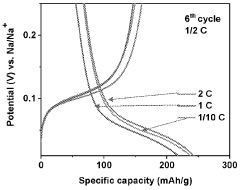
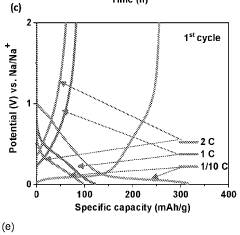
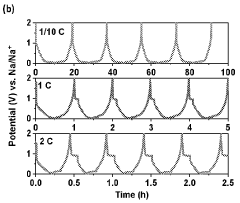
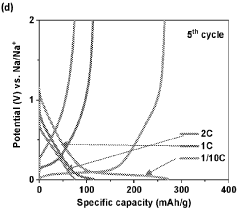
- A super-concentrated sodium salt containing ionic liquid electrolyte with a sodium salt concentration of 75% or greater is used to form a SEI on hard carbon anodes through high current density polarisation cycles, resulting in a thinner, more conductive SEI with reduced interfacial resistance.
Fast formation cycling for rechargeable batteries
PatentActiveUS20190198856A1
Innovation
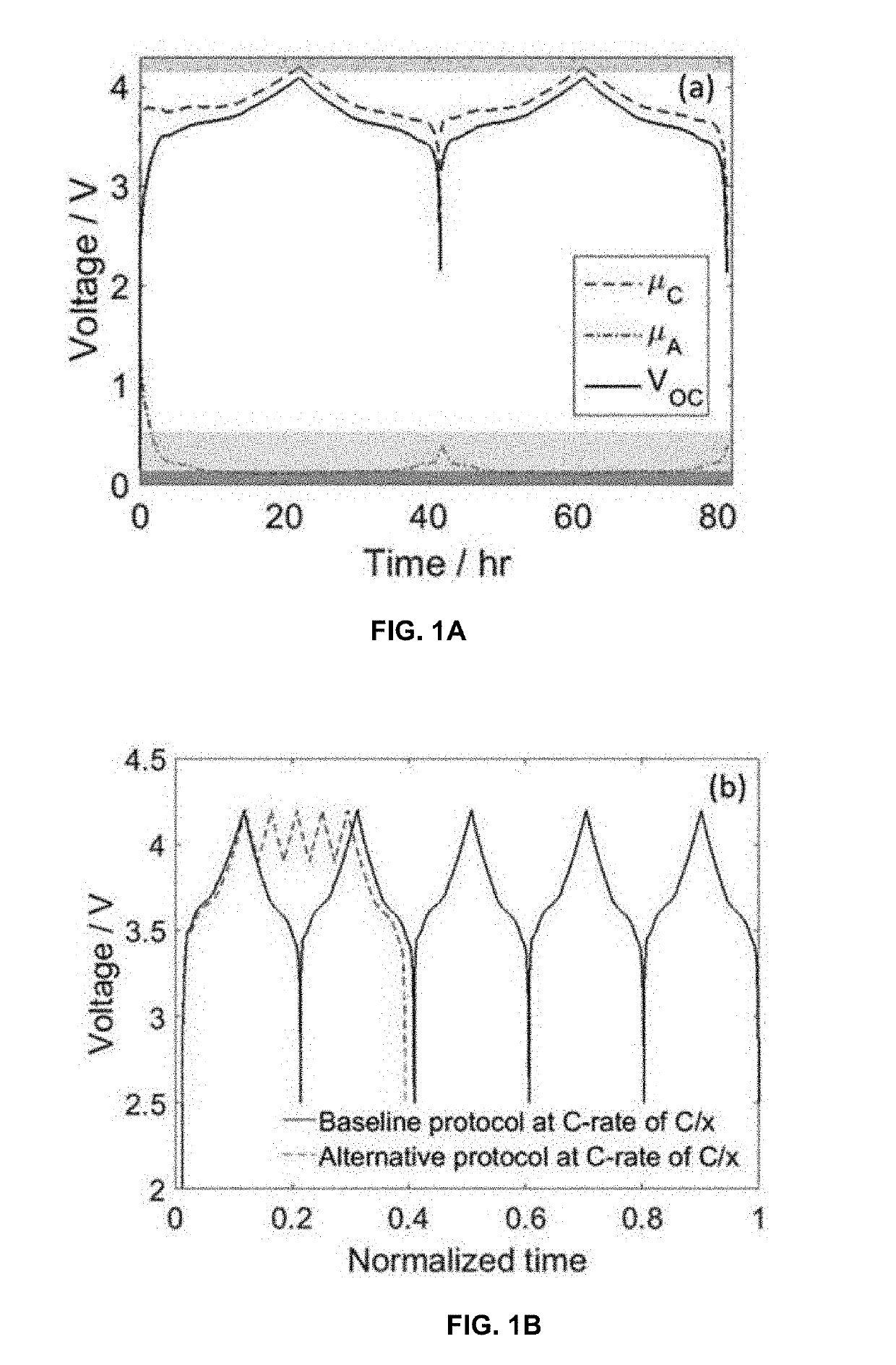
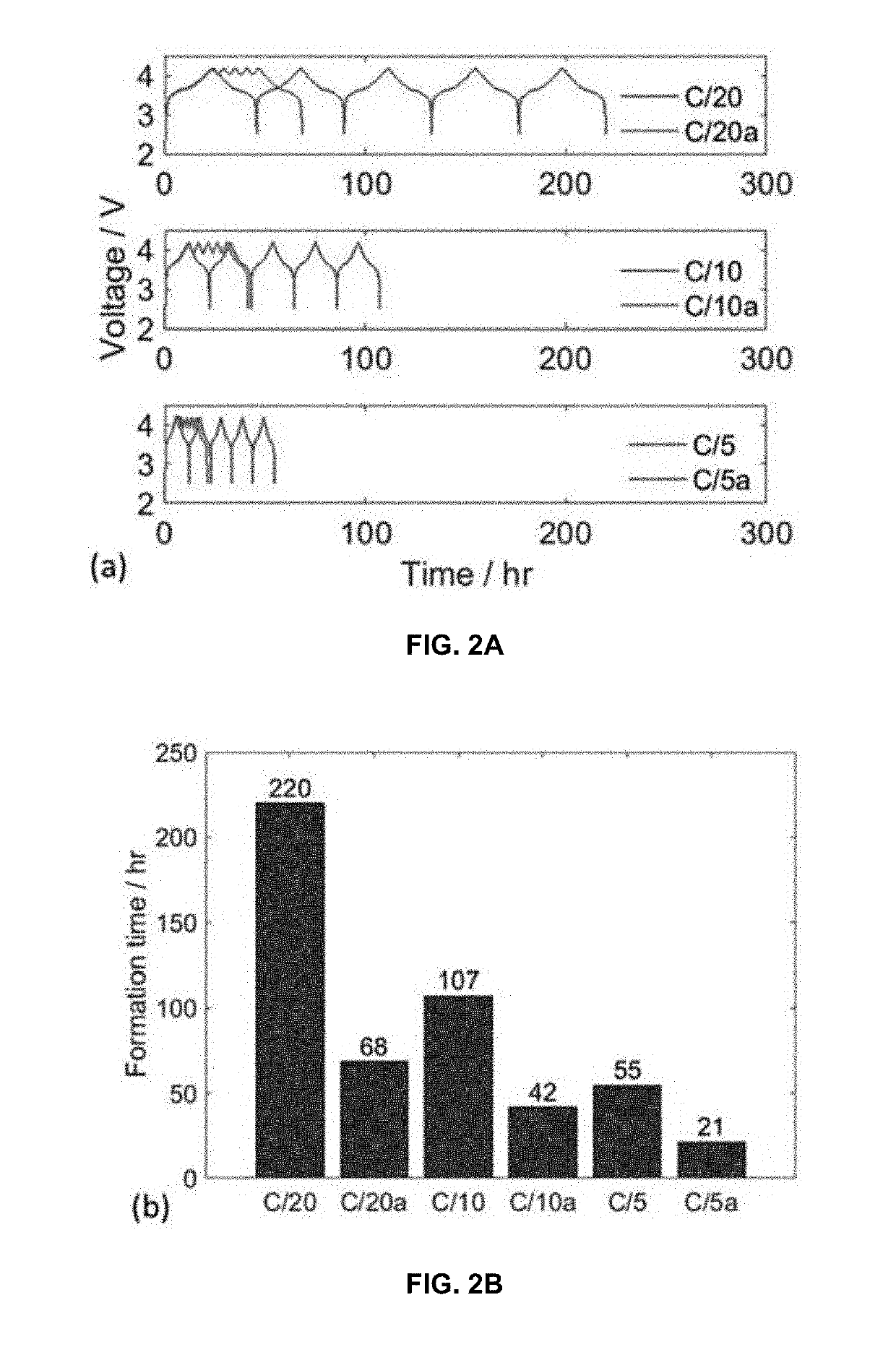
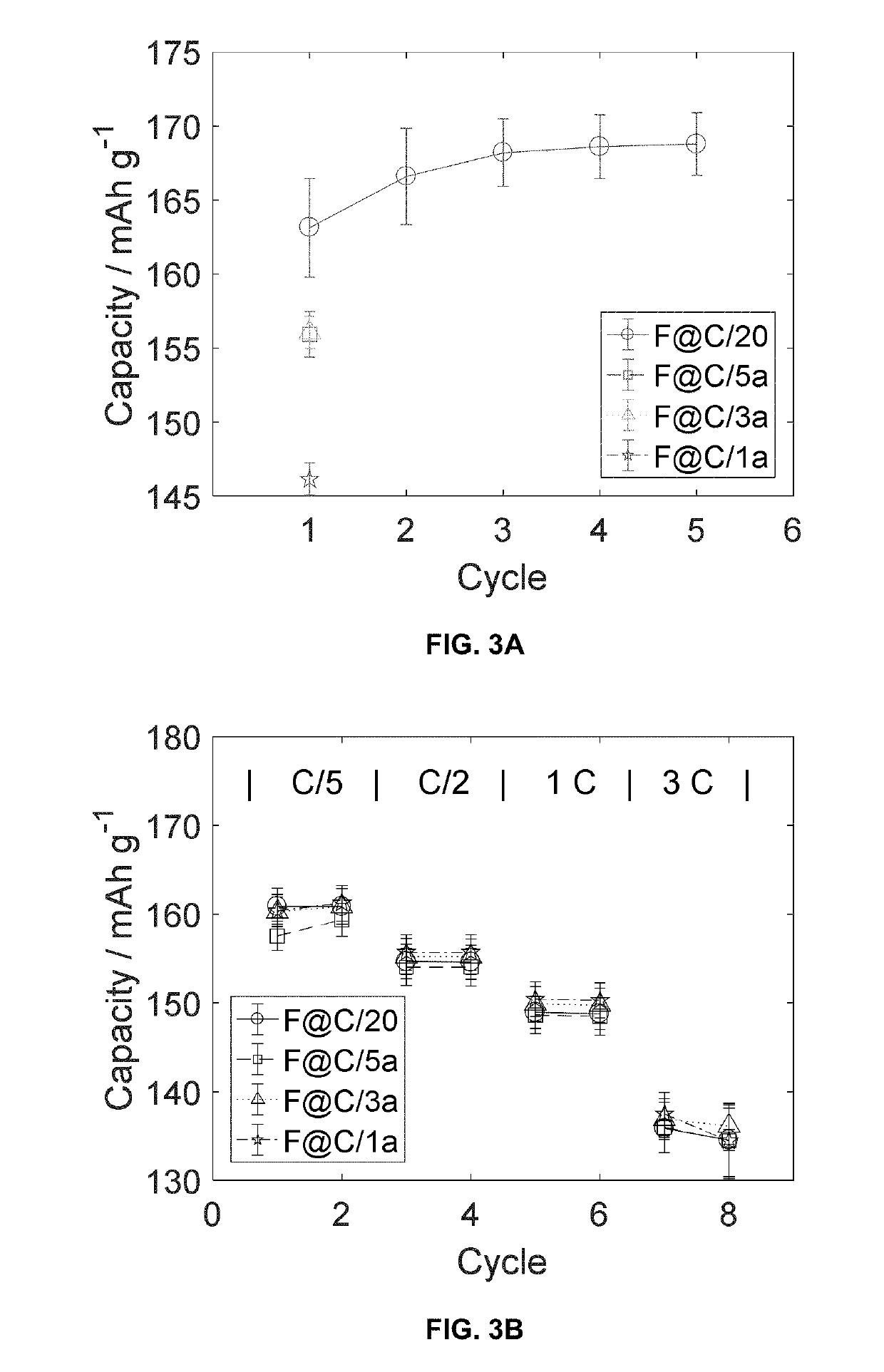
- A method involving specific charge and discharge cycles at controlled C-rates to rapidly form a stable SEI, reducing the formation time from days to hours while maintaining or improving capacity retention, suitable for various lithium battery chemistries including LiNixMnyCo1-x-yO2/Graphite and LiFePO4.

Safety Standards for Semi-Solid Battery Formation Processes
The establishment of comprehensive safety standards for semi-solid battery formation processes represents a critical regulatory framework essential for the commercial viability of advanced electrolyte designs. Current safety protocols primarily address conventional liquid electrolyte systems, creating significant gaps in regulatory coverage for semi-solid formulations that exhibit unique rheological and electrochemical behaviors during formation cycling.
International standards organizations, including IEC and UL, are actively developing specialized testing protocols for semi-solid battery systems. These emerging standards focus on thermal runaway prevention, gas evolution monitoring, and mechanical integrity assessment during formation processes. The unique viscosity characteristics of semi-solid electrolytes require modified safety testing procedures that account for non-Newtonian fluid behavior and potential phase separation under electrical stress.
Formation process safety standards must address specific risks associated with semi-solid electrolyte systems, including electrolyte migration, separator compatibility, and pressure buildup during initial cycling. Critical safety parameters include maximum formation current densities, temperature limits, and voltage thresholds that prevent irreversible electrolyte degradation or cell rupture.
Regulatory bodies are establishing mandatory safety testing sequences that include accelerated aging protocols, abuse testing under formation conditions, and failure mode analysis specific to semi-solid systems. These standards require comprehensive documentation of electrolyte composition, formation cycling parameters, and safety system integration throughout the manufacturing process.
The development of automated safety monitoring systems has become integral to compliance frameworks, incorporating real-time pressure sensing, thermal imaging, and gas chromatography analysis during formation cycling. These monitoring requirements ensure immediate detection of anomalous behavior and automatic process termination to prevent safety incidents.
Manufacturing facilities must implement specialized containment systems and emergency response protocols tailored to semi-solid electrolyte characteristics. Safety standards mandate proper ventilation systems, fire suppression technologies compatible with semi-solid materials, and personnel training programs addressing unique hazards associated with these advanced battery chemistries during formation processes.
International standards organizations, including IEC and UL, are actively developing specialized testing protocols for semi-solid battery systems. These emerging standards focus on thermal runaway prevention, gas evolution monitoring, and mechanical integrity assessment during formation processes. The unique viscosity characteristics of semi-solid electrolytes require modified safety testing procedures that account for non-Newtonian fluid behavior and potential phase separation under electrical stress.
Formation process safety standards must address specific risks associated with semi-solid electrolyte systems, including electrolyte migration, separator compatibility, and pressure buildup during initial cycling. Critical safety parameters include maximum formation current densities, temperature limits, and voltage thresholds that prevent irreversible electrolyte degradation or cell rupture.
Regulatory bodies are establishing mandatory safety testing sequences that include accelerated aging protocols, abuse testing under formation conditions, and failure mode analysis specific to semi-solid systems. These standards require comprehensive documentation of electrolyte composition, formation cycling parameters, and safety system integration throughout the manufacturing process.
The development of automated safety monitoring systems has become integral to compliance frameworks, incorporating real-time pressure sensing, thermal imaging, and gas chromatography analysis during formation cycling. These monitoring requirements ensure immediate detection of anomalous behavior and automatic process termination to prevent safety incidents.
Manufacturing facilities must implement specialized containment systems and emergency response protocols tailored to semi-solid electrolyte characteristics. Safety standards mandate proper ventilation systems, fire suppression technologies compatible with semi-solid materials, and personnel training programs addressing unique hazards associated with these advanced battery chemistries during formation processes.
Manufacturing Scalability of Semi-Solid Formation Technologies
The manufacturing scalability of semi-solid formation technologies represents a critical bottleneck in the commercial deployment of advanced battery systems utilizing semi-solid electrolytes. Current laboratory-scale formation processes demonstrate promising cycling efficiency improvements, yet translating these achievements to industrial-scale production presents multifaceted challenges that require systematic engineering solutions.
Process standardization emerges as the primary scalability concern, where the precise control of formation parameters becomes exponentially more complex at larger scales. The heterogeneous nature of semi-solid electrolytes demands uniform mixing, temperature control, and electrochemical conditioning across significantly larger electrode areas. Traditional formation equipment designed for liquid electrolyte systems requires substantial modifications to accommodate the unique rheological properties and processing requirements of semi-solid materials.
Equipment adaptation represents another significant hurdle, as conventional formation chambers and cycling systems lack the specialized handling capabilities required for semi-solid electrolyte processing. The viscous nature of these materials necessitates modified pumping systems, enhanced mixing mechanisms, and redesigned cell assembly processes. Current pilot-scale implementations indicate that throughput rates are substantially lower compared to conventional liquid electrolyte formation, primarily due to extended processing times required for proper electrolyte distribution and initial cycling protocols.
Quality control mechanisms must be fundamentally reimagined for semi-solid formation technologies. The non-uniform distribution characteristics inherent in semi-solid systems create challenges in maintaining consistent formation efficiency across large production batches. Advanced monitoring systems capable of real-time assessment of electrolyte homogeneity and formation progress are essential but currently underdeveloped for industrial applications.
Cost considerations significantly impact scalability prospects, as specialized equipment requirements and extended processing times translate to higher capital expenditure and operational costs. The economic viability of scaled semi-solid formation processes depends heavily on achieving breakthrough improvements in processing speed and equipment efficiency. Current projections suggest that manufacturing costs could be 40-60% higher than conventional formation processes, necessitating substantial efficiency gains to justify commercial implementation.
Infrastructure requirements for scaled semi-solid formation facilities extend beyond traditional battery manufacturing capabilities, demanding enhanced environmental controls, specialized material handling systems, and modified safety protocols to accommodate the unique characteristics of semi-solid electrolyte systems during formation cycling processes.
Process standardization emerges as the primary scalability concern, where the precise control of formation parameters becomes exponentially more complex at larger scales. The heterogeneous nature of semi-solid electrolytes demands uniform mixing, temperature control, and electrochemical conditioning across significantly larger electrode areas. Traditional formation equipment designed for liquid electrolyte systems requires substantial modifications to accommodate the unique rheological properties and processing requirements of semi-solid materials.
Equipment adaptation represents another significant hurdle, as conventional formation chambers and cycling systems lack the specialized handling capabilities required for semi-solid electrolyte processing. The viscous nature of these materials necessitates modified pumping systems, enhanced mixing mechanisms, and redesigned cell assembly processes. Current pilot-scale implementations indicate that throughput rates are substantially lower compared to conventional liquid electrolyte formation, primarily due to extended processing times required for proper electrolyte distribution and initial cycling protocols.
Quality control mechanisms must be fundamentally reimagined for semi-solid formation technologies. The non-uniform distribution characteristics inherent in semi-solid systems create challenges in maintaining consistent formation efficiency across large production batches. Advanced monitoring systems capable of real-time assessment of electrolyte homogeneity and formation progress are essential but currently underdeveloped for industrial applications.
Cost considerations significantly impact scalability prospects, as specialized equipment requirements and extended processing times translate to higher capital expenditure and operational costs. The economic viability of scaled semi-solid formation processes depends heavily on achieving breakthrough improvements in processing speed and equipment efficiency. Current projections suggest that manufacturing costs could be 40-60% higher than conventional formation processes, necessitating substantial efficiency gains to justify commercial implementation.
Infrastructure requirements for scaled semi-solid formation facilities extend beyond traditional battery manufacturing capabilities, demanding enhanced environmental controls, specialized material handling systems, and modified safety protocols to accommodate the unique characteristics of semi-solid electrolyte systems during formation cycling processes.
Unlock deeper insights with PatSnap Eureka Quick Research — get a full tech report to explore trends and direct your research. Try now!
Generate Your Research Report Instantly with AI Agent
Supercharge your innovation with PatSnap Eureka AI Agent Platform!