

Frequency Shift Keying vs Gaussian Frequency Shift Keying: Bandwidth Use
MAR 19, 20269 MIN READ
Generate Your Research Report Instantly with AI Agent
PatSnap Eureka helps you evaluate technical feasibility & market potential.
FSK vs GFSK Bandwidth Optimization Background and Goals
Digital communication systems have undergone significant evolution since the early days of radio transmission, with frequency modulation techniques playing a crucial role in achieving reliable data transmission across various applications. The development of Frequency Shift Keying (FSK) marked a fundamental milestone in digital modulation, providing a robust method for encoding binary data through discrete frequency shifts. This technique emerged as a practical solution for early digital communication needs, offering simplicity in implementation and reasonable performance characteristics.
The introduction of Gaussian Frequency Shift Keying (GFSK) represented a significant advancement in addressing the spectral efficiency limitations inherent in traditional FSK systems. GFSK incorporates Gaussian filtering to smooth the frequency transitions, resulting in more controlled spectral characteristics and reduced out-of-band emissions. This enhancement became particularly relevant as communication systems evolved toward higher data rates and more stringent spectrum management requirements.
Modern wireless communication environments face unprecedented challenges in spectrum utilization, driven by the exponential growth of connected devices and increasing demand for higher data throughput. The proliferation of Internet of Things (IoT) applications, mobile communications, and emerging technologies such as 5G networks has intensified the need for spectrally efficient modulation schemes. Regulatory bodies worldwide have implemented stricter emission standards, necessitating more sophisticated approaches to bandwidth optimization.
The primary objective of this technical investigation centers on comprehensive analysis of bandwidth utilization characteristics between FSK and GFSK modulation schemes. This research aims to quantify the spectral efficiency improvements achievable through Gaussian filtering implementation, while evaluating the associated trade-offs in system complexity and performance metrics. Understanding these fundamental differences is essential for informed decision-making in communication system design.
Secondary objectives include establishing clear guidelines for modulation scheme selection based on specific application requirements, regulatory constraints, and performance targets. The investigation seeks to identify optimal parameter configurations for both FSK and GFSK systems, considering factors such as data rate requirements, adjacent channel interference limitations, and implementation complexity. These insights will support strategic technology adoption decisions and inform future research directions in spectrally efficient communication systems.
The introduction of Gaussian Frequency Shift Keying (GFSK) represented a significant advancement in addressing the spectral efficiency limitations inherent in traditional FSK systems. GFSK incorporates Gaussian filtering to smooth the frequency transitions, resulting in more controlled spectral characteristics and reduced out-of-band emissions. This enhancement became particularly relevant as communication systems evolved toward higher data rates and more stringent spectrum management requirements.
Modern wireless communication environments face unprecedented challenges in spectrum utilization, driven by the exponential growth of connected devices and increasing demand for higher data throughput. The proliferation of Internet of Things (IoT) applications, mobile communications, and emerging technologies such as 5G networks has intensified the need for spectrally efficient modulation schemes. Regulatory bodies worldwide have implemented stricter emission standards, necessitating more sophisticated approaches to bandwidth optimization.
The primary objective of this technical investigation centers on comprehensive analysis of bandwidth utilization characteristics between FSK and GFSK modulation schemes. This research aims to quantify the spectral efficiency improvements achievable through Gaussian filtering implementation, while evaluating the associated trade-offs in system complexity and performance metrics. Understanding these fundamental differences is essential for informed decision-making in communication system design.
Secondary objectives include establishing clear guidelines for modulation scheme selection based on specific application requirements, regulatory constraints, and performance targets. The investigation seeks to identify optimal parameter configurations for both FSK and GFSK systems, considering factors such as data rate requirements, adjacent channel interference limitations, and implementation complexity. These insights will support strategic technology adoption decisions and inform future research directions in spectrally efficient communication systems.
Market Demand for Efficient Digital Modulation Schemes
The telecommunications industry faces unprecedented pressure to optimize spectrum utilization as wireless communication demands continue to surge across multiple sectors. Mobile network operators, satellite communication providers, and IoT device manufacturers are actively seeking digital modulation schemes that can deliver higher data throughput while minimizing bandwidth consumption. This demand stems from the finite nature of available radio frequency spectrum and increasingly stringent regulatory requirements for efficient spectrum usage.
Enterprise applications driving modulation efficiency requirements span diverse domains including 5G networks, satellite communications, industrial automation, and emerging technologies such as autonomous vehicles and smart city infrastructure. These applications require robust communication links that can operate reliably in challenging environments while maintaining spectral efficiency. The growing deployment of massive IoT networks particularly emphasizes the need for modulation schemes that can support numerous low-power devices within limited frequency allocations.
Current market dynamics reveal a significant shift toward bandwidth-efficient modulation techniques as traditional approaches struggle to meet modern capacity requirements. Network equipment manufacturers are investing heavily in advanced signal processing capabilities to implement sophisticated modulation schemes that can adapt to varying channel conditions. The transition from legacy systems to next-generation networks has created substantial opportunities for modulation technologies that offer superior bandwidth utilization characteristics.
Regulatory frameworks worldwide are increasingly emphasizing spectral efficiency metrics in licensing decisions, creating additional market pressure for improved modulation schemes. Government agencies and international standards bodies are establishing more stringent requirements for out-of-band emissions and adjacent channel interference, directly impacting the commercial viability of different modulation approaches. These regulatory trends are accelerating adoption of spectrally contained modulation formats.
The competitive landscape shows growing differentiation based on modulation efficiency capabilities, with companies leveraging advanced digital signal processing to achieve superior bandwidth performance. Market leaders are developing proprietary implementations that optimize the trade-offs between spectral efficiency, power consumption, and implementation complexity. This technological competition is driving continuous innovation in modulation scheme design and implementation methodologies.
Emerging applications in space communications, underwater networks, and millimeter-wave systems present additional market opportunities for efficient modulation technologies. These specialized domains often operate under severe bandwidth constraints, creating premium value propositions for modulation schemes that can maximize information transfer within limited spectral allocations while maintaining acceptable error performance characteristics.
Enterprise applications driving modulation efficiency requirements span diverse domains including 5G networks, satellite communications, industrial automation, and emerging technologies such as autonomous vehicles and smart city infrastructure. These applications require robust communication links that can operate reliably in challenging environments while maintaining spectral efficiency. The growing deployment of massive IoT networks particularly emphasizes the need for modulation schemes that can support numerous low-power devices within limited frequency allocations.
Current market dynamics reveal a significant shift toward bandwidth-efficient modulation techniques as traditional approaches struggle to meet modern capacity requirements. Network equipment manufacturers are investing heavily in advanced signal processing capabilities to implement sophisticated modulation schemes that can adapt to varying channel conditions. The transition from legacy systems to next-generation networks has created substantial opportunities for modulation technologies that offer superior bandwidth utilization characteristics.
Regulatory frameworks worldwide are increasingly emphasizing spectral efficiency metrics in licensing decisions, creating additional market pressure for improved modulation schemes. Government agencies and international standards bodies are establishing more stringent requirements for out-of-band emissions and adjacent channel interference, directly impacting the commercial viability of different modulation approaches. These regulatory trends are accelerating adoption of spectrally contained modulation formats.
The competitive landscape shows growing differentiation based on modulation efficiency capabilities, with companies leveraging advanced digital signal processing to achieve superior bandwidth performance. Market leaders are developing proprietary implementations that optimize the trade-offs between spectral efficiency, power consumption, and implementation complexity. This technological competition is driving continuous innovation in modulation scheme design and implementation methodologies.
Emerging applications in space communications, underwater networks, and millimeter-wave systems present additional market opportunities for efficient modulation technologies. These specialized domains often operate under severe bandwidth constraints, creating premium value propositions for modulation schemes that can maximize information transfer within limited spectral allocations while maintaining acceptable error performance characteristics.
Current FSK and GFSK Implementation Challenges
FSK implementation faces significant challenges in achieving optimal spectral efficiency while maintaining acceptable error rates. Traditional FSK systems struggle with abrupt frequency transitions that generate substantial spectral sidelobes, leading to adjacent channel interference and inefficient bandwidth utilization. The rectangular pulse shaping inherent in basic FSK creates discontinuities in the transmitted signal, resulting in a sinc-shaped power spectral density with slow roll-off characteristics that extend far beyond the intended channel bandwidth.
GFSK addresses some FSK limitations through Gaussian pre-filtering, but introduces its own implementation complexities. The Gaussian filter's bandwidth-time product parameter requires careful optimization to balance spectral containment against intersymbol interference. Narrow filter bandwidths improve spectral efficiency but increase ISI, while wider bandwidths reduce ISI at the cost of spectral spreading. This trade-off becomes particularly challenging in high-data-rate applications where timing margins are critical.
Hardware implementation challenges persist across both modulation schemes. FSK systems require precise frequency synthesis and switching capabilities, with phase continuity maintenance being crucial for spectral performance. Frequency synthesizers must achieve rapid settling times while maintaining low phase noise, particularly challenging in battery-powered devices where power consumption constraints limit synthesizer complexity.
GFSK implementations face additional digital signal processing requirements for Gaussian filtering, demanding higher computational resources and introducing latency. The filter implementation must maintain consistent group delay characteristics across the operating bandwidth to prevent signal distortion. Real-time processing constraints in embedded systems often force compromises between filter accuracy and computational efficiency.
Receiver design complexity increases significantly for both modulation types when operating in multipath environments. GFSK's controlled ISI characteristics, while beneficial for spectral efficiency, complicate equalization algorithms and require more sophisticated detection schemes compared to traditional FSK. The Gaussian pulse shaping creates memory in the transmitted signal, necessitating sequence detection methods rather than simple symbol-by-symbol decisions.
Temperature and process variations in analog components create additional implementation challenges. Frequency accuracy requirements become more stringent as channel spacing decreases, demanding compensation mechanisms for oscillator drift and component aging. GFSK systems additionally require stable filter characteristics across environmental conditions, with Gaussian filter parameter variations directly impacting both spectral performance and bit error rates.
Power amplifier linearity requirements differ significantly between FSK and GFSK implementations. While FSK's constant envelope nature allows efficient non-linear amplification, GFSK's amplitude variations, though minimal, require more linear amplification to preserve spectral characteristics. This distinction becomes critical in portable applications where power efficiency directly impacts battery life and thermal management.
GFSK addresses some FSK limitations through Gaussian pre-filtering, but introduces its own implementation complexities. The Gaussian filter's bandwidth-time product parameter requires careful optimization to balance spectral containment against intersymbol interference. Narrow filter bandwidths improve spectral efficiency but increase ISI, while wider bandwidths reduce ISI at the cost of spectral spreading. This trade-off becomes particularly challenging in high-data-rate applications where timing margins are critical.
Hardware implementation challenges persist across both modulation schemes. FSK systems require precise frequency synthesis and switching capabilities, with phase continuity maintenance being crucial for spectral performance. Frequency synthesizers must achieve rapid settling times while maintaining low phase noise, particularly challenging in battery-powered devices where power consumption constraints limit synthesizer complexity.
GFSK implementations face additional digital signal processing requirements for Gaussian filtering, demanding higher computational resources and introducing latency. The filter implementation must maintain consistent group delay characteristics across the operating bandwidth to prevent signal distortion. Real-time processing constraints in embedded systems often force compromises between filter accuracy and computational efficiency.
Receiver design complexity increases significantly for both modulation types when operating in multipath environments. GFSK's controlled ISI characteristics, while beneficial for spectral efficiency, complicate equalization algorithms and require more sophisticated detection schemes compared to traditional FSK. The Gaussian pulse shaping creates memory in the transmitted signal, necessitating sequence detection methods rather than simple symbol-by-symbol decisions.
Temperature and process variations in analog components create additional implementation challenges. Frequency accuracy requirements become more stringent as channel spacing decreases, demanding compensation mechanisms for oscillator drift and component aging. GFSK systems additionally require stable filter characteristics across environmental conditions, with Gaussian filter parameter variations directly impacting both spectral performance and bit error rates.
Power amplifier linearity requirements differ significantly between FSK and GFSK implementations. While FSK's constant envelope nature allows efficient non-linear amplification, GFSK's amplitude variations, though minimal, require more linear amplification to preserve spectral characteristics. This distinction becomes critical in portable applications where power efficiency directly impacts battery life and thermal management.
Existing FSK and GFSK Bandwidth Solutions
01 Gaussian filtering for bandwidth optimization in FSK modulation
Gaussian Frequency Shift Keying (GFSK) employs Gaussian filtering to smooth the phase transitions in frequency shift keying signals, which significantly reduces spectral sidelobes and minimizes bandwidth occupancy. This filtering technique shapes the modulating signal before frequency modulation, resulting in a more compact spectrum compared to conventional FSK. The Gaussian filter's bandwidth-time product parameter can be adjusted to balance between spectral efficiency and inter-symbol interference, making it particularly suitable for bandwidth-constrained communication systems.- Gaussian filtering for bandwidth optimization in FSK modulation: Gaussian Frequency Shift Keying (GFSK) employs Gaussian filtering to smooth the phase transitions in frequency shift keying signals, which significantly reduces spectral sidelobes and minimizes bandwidth occupancy. The Gaussian filter pre-modulation processing helps achieve better spectral efficiency compared to conventional FSK by limiting the signal bandwidth while maintaining acceptable bit error rate performance. This technique is particularly effective in wireless communication systems where spectrum conservation is critical.
- Modulation index control for bandwidth efficiency: The modulation index in FSK and GFSK systems directly affects the bandwidth utilization and spectral characteristics of the transmitted signal. By carefully selecting and controlling the modulation index, the frequency deviation can be optimized to achieve a balance between bandwidth efficiency and demodulation performance. Lower modulation indices result in narrower bandwidth occupation but may require more sophisticated detection methods, while higher indices provide better noise immunity at the cost of increased bandwidth.
- Multi-level FSK schemes for spectral efficiency: Multi-level frequency shift keying techniques extend beyond binary FSK by utilizing multiple frequency tones to represent more bits per symbol, thereby improving spectral efficiency and bandwidth utilization. These advanced modulation schemes allow for higher data rates within the same bandwidth allocation by encoding multiple bits into each transmitted symbol. The implementation requires careful frequency spacing and detection algorithms to maintain signal integrity while maximizing throughput.
- Adaptive bandwidth allocation in FSK systems: Adaptive techniques for FSK and GFSK systems dynamically adjust transmission parameters based on channel conditions and bandwidth availability to optimize spectrum usage. These methods include variable data rate transmission, dynamic frequency allocation, and adaptive filtering that respond to interference and signal quality metrics. Such approaches enable efficient bandwidth sharing in congested spectrum environments and improve overall system capacity.
- Demodulation and detection techniques for bandwidth-limited FSK: Specialized demodulation and detection methods are employed to recover FSK and GFSK signals in bandwidth-constrained environments while maintaining acceptable performance. These techniques include coherent and non-coherent detection algorithms, matched filtering, and advanced signal processing methods that compensate for bandwidth limitations and inter-symbol interference. Efficient detection schemes enable reliable communication even when strict bandwidth restrictions are imposed by regulatory or system requirements.
02 Multi-level FSK modulation schemes for spectral efficiency
Advanced frequency shift keying implementations utilize multi-level modulation schemes where multiple bits are encoded per symbol by using more than two frequency states. This approach increases data throughput within the same bandwidth allocation compared to binary FSK. The technique involves careful selection of frequency spacing and symbol rates to optimize spectral efficiency while maintaining acceptable bit error rates. Multi-level FSK schemes can be combined with Gaussian filtering to further enhance bandwidth utilization in crowded spectrum environments.Expand Specific Solutions03 Adaptive bandwidth control in FSK systems
Dynamic bandwidth management techniques allow FSK and GFSK systems to adjust their spectral occupancy based on channel conditions and regulatory requirements. These adaptive methods involve real-time modification of modulation parameters such as frequency deviation, symbol rate, and filter characteristics. The systems can detect available spectrum, interference levels, and signal quality to optimize bandwidth usage while maintaining communication reliability. This flexibility enables efficient spectrum sharing and compliance with varying bandwidth regulations across different frequency bands.Expand Specific Solutions04 Frequency deviation optimization for bandwidth-power trade-offs
The selection of frequency deviation in FSK modulation directly impacts both bandwidth occupancy and power efficiency. Smaller frequency deviations result in narrower bandwidth requirements but may reduce noise immunity and require higher signal-to-noise ratios. Optimization techniques balance these trade-offs by analyzing the modulation index and its effect on spectral characteristics. Advanced implementations employ variable deviation schemes that adapt to channel conditions, allowing systems to minimize bandwidth when spectrum is constrained while maximizing robustness when bandwidth is available.Expand Specific Solutions05 Demodulation techniques for bandwidth-efficient FSK reception
Efficient demodulation methods for FSK and GFSK signals employ techniques such as coherent detection, discriminator-based detection, and digital signal processing algorithms that optimize bandwidth utilization during reception. These methods include matched filtering, phase-locked loop implementations, and digital frequency discrimination that can extract information from bandwidth-limited signals while minimizing adjacent channel interference. Advanced receivers incorporate adaptive equalization and interference cancellation to maintain performance in spectrally crowded environments, enabling closer channel spacing and improved overall bandwidth efficiency.Expand Specific Solutions
Key Players in Digital Modulation and RF Industry
The frequency shift keying (FSK) versus Gaussian frequency shift keying (GFSK) bandwidth optimization field represents a mature telecommunications technology sector experiencing steady growth driven by IoT and 5G deployment demands. The market demonstrates significant scale with established players like Intel Corp., QUALCOMM Inc., and Ericsson leading advanced modulation implementations, while Nokia Technologies and NXP USA drive specialized RF solutions. Technology maturity varies across segments, with companies like Siemens AG and ABB Ltd. focusing on industrial automation applications, Google LLC and Huawei advancing consumer device integration, and specialized firms like Nsing Technologies and Vango Technologies developing niche semiconductor solutions. The competitive landscape shows consolidation around bandwidth-efficient GFSK implementations for modern wireless standards.
Intel Corp.
Technical Solution: Intel's approach focuses on software-defined radio implementations of both FSK and GFSK modulation schemes through their FPGA and processor platforms. Their solutions leverage advanced digital signal processing techniques to implement variable bandwidth GFSK with real-time BT parameter adjustment, achieving bandwidth efficiency improvements of 30-40% over traditional FSK in dense spectrum environments. Intel's platforms support concurrent multi-standard operation, enabling dynamic switching between FSK and GFSK based on channel conditions and interference levels. Their implementations include sophisticated channel estimation and equalization algorithms that maintain signal integrity while optimizing spectral occupancy. The company's solutions are particularly optimized for 5G infrastructure and IoT gateway applications where spectrum efficiency is critical.
Strengths: Flexible software-defined implementations, strong processing power for complex algorithms, excellent integration with existing infrastructure. Weaknesses: Higher power consumption compared to dedicated hardware solutions, requires significant computational resources for real-time processing.
Telefonaktiebolaget LM Ericsson
Technical Solution: Ericsson has developed comprehensive FSK and GFSK solutions for cellular infrastructure and IoT connectivity, with particular emphasis on NB-IoT and LTE-M applications. Their GFSK implementations achieve spectral efficiency gains of 20-35% compared to conventional FSK through optimized Gaussian filtering and advanced modulation techniques. The company's solutions incorporate adaptive bandwidth allocation algorithms that dynamically adjust between FSK and GFSK based on network congestion and interference patterns. Ericsson's transceivers feature integrated power amplifier linearization and spectral shaping capabilities, reducing adjacent channel leakage ratio (ACLR) by up to 25 dB. Their implementations support carrier aggregation and advanced MIMO techniques, enabling efficient spectrum utilization in dense deployment scenarios while maintaining backward compatibility with legacy FSK systems.
Strengths: Extensive network infrastructure expertise, proven scalability in large deployments, strong standardization influence. Weaknesses: Solutions primarily focused on infrastructure rather than end-device applications, higher cost for small-scale implementations.
Core Patents in Gaussian Filtering for FSK
Gaussian FSK modulation with more than two modulation states
PatentInactiveUS7653144B2
Innovation
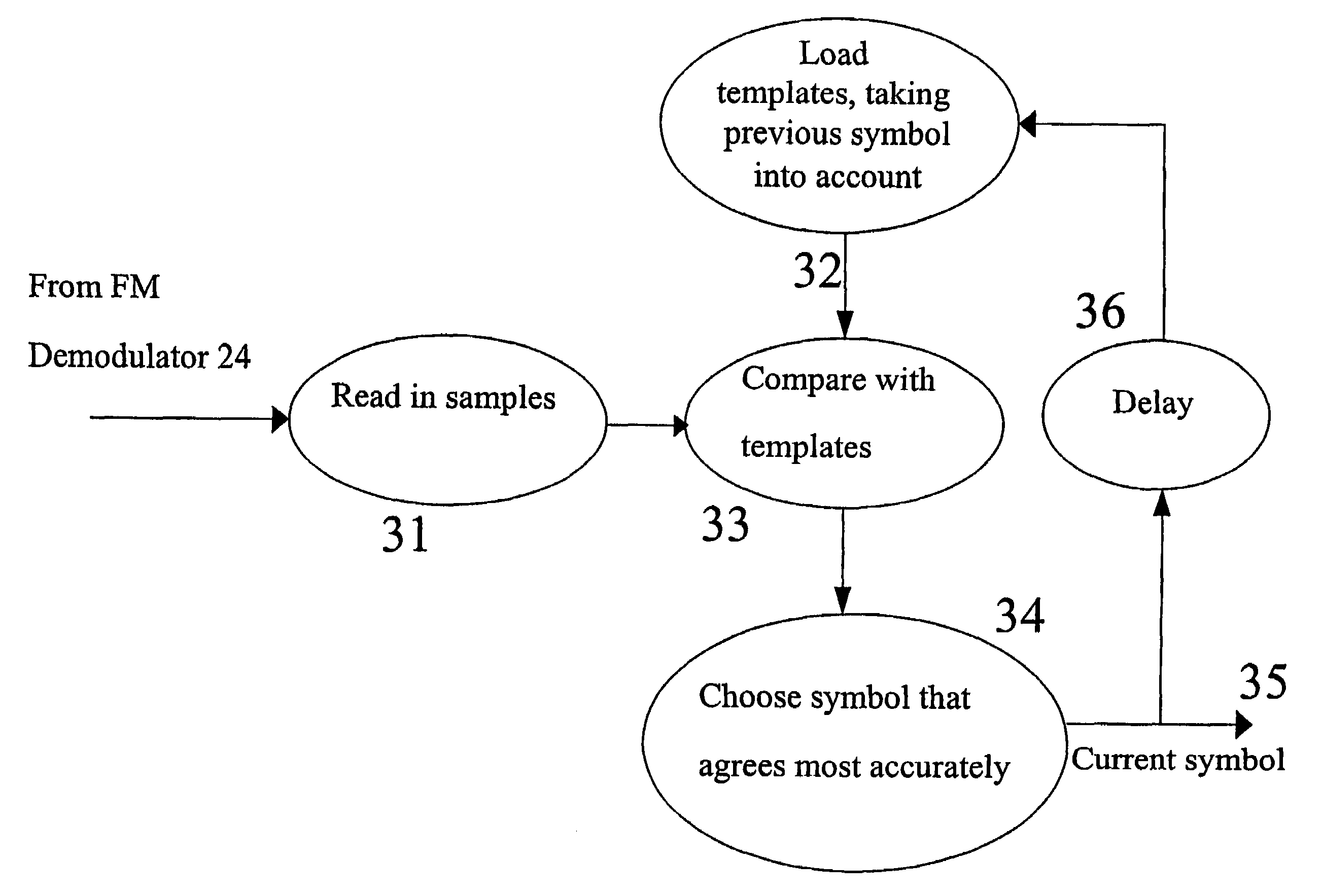
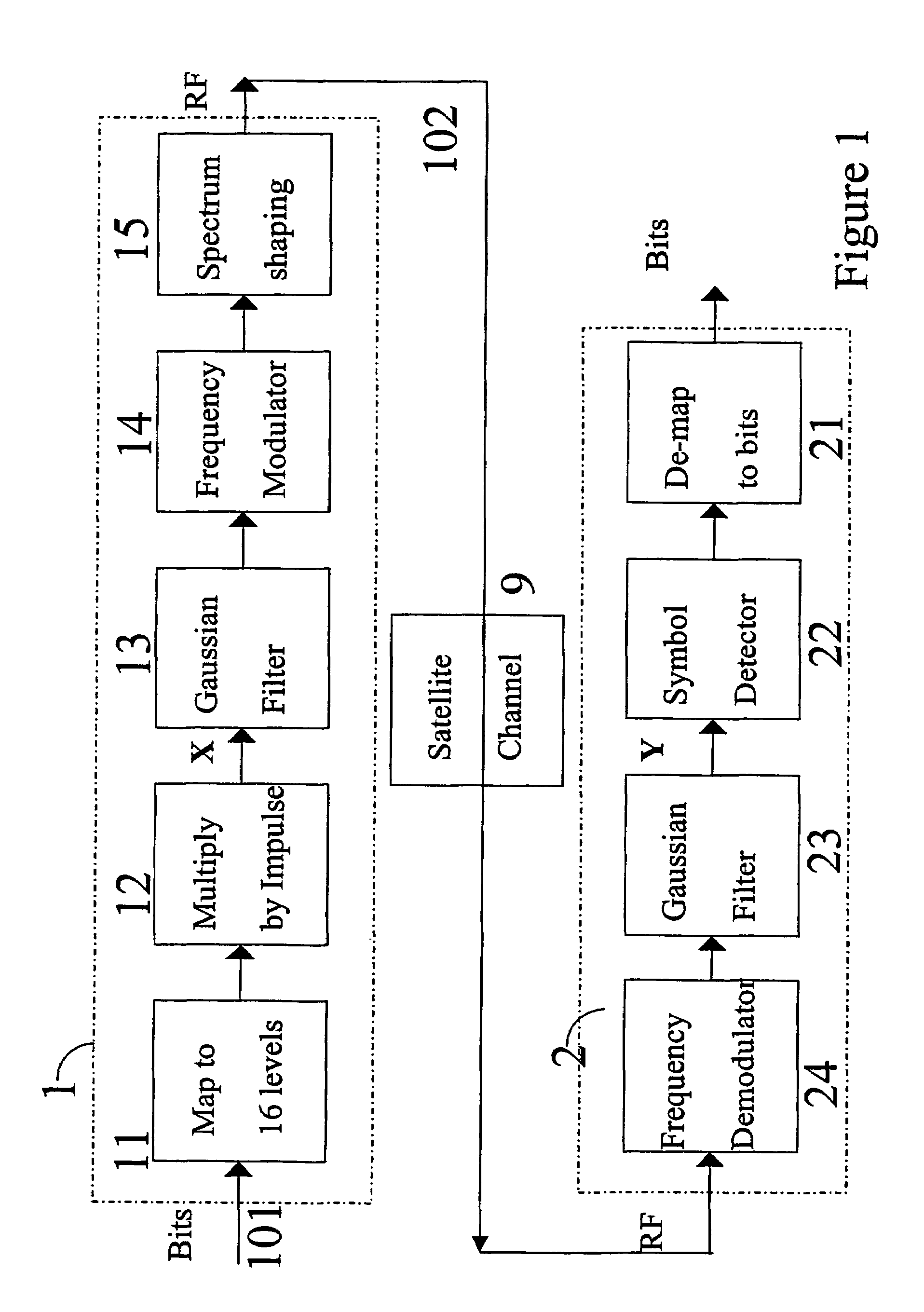
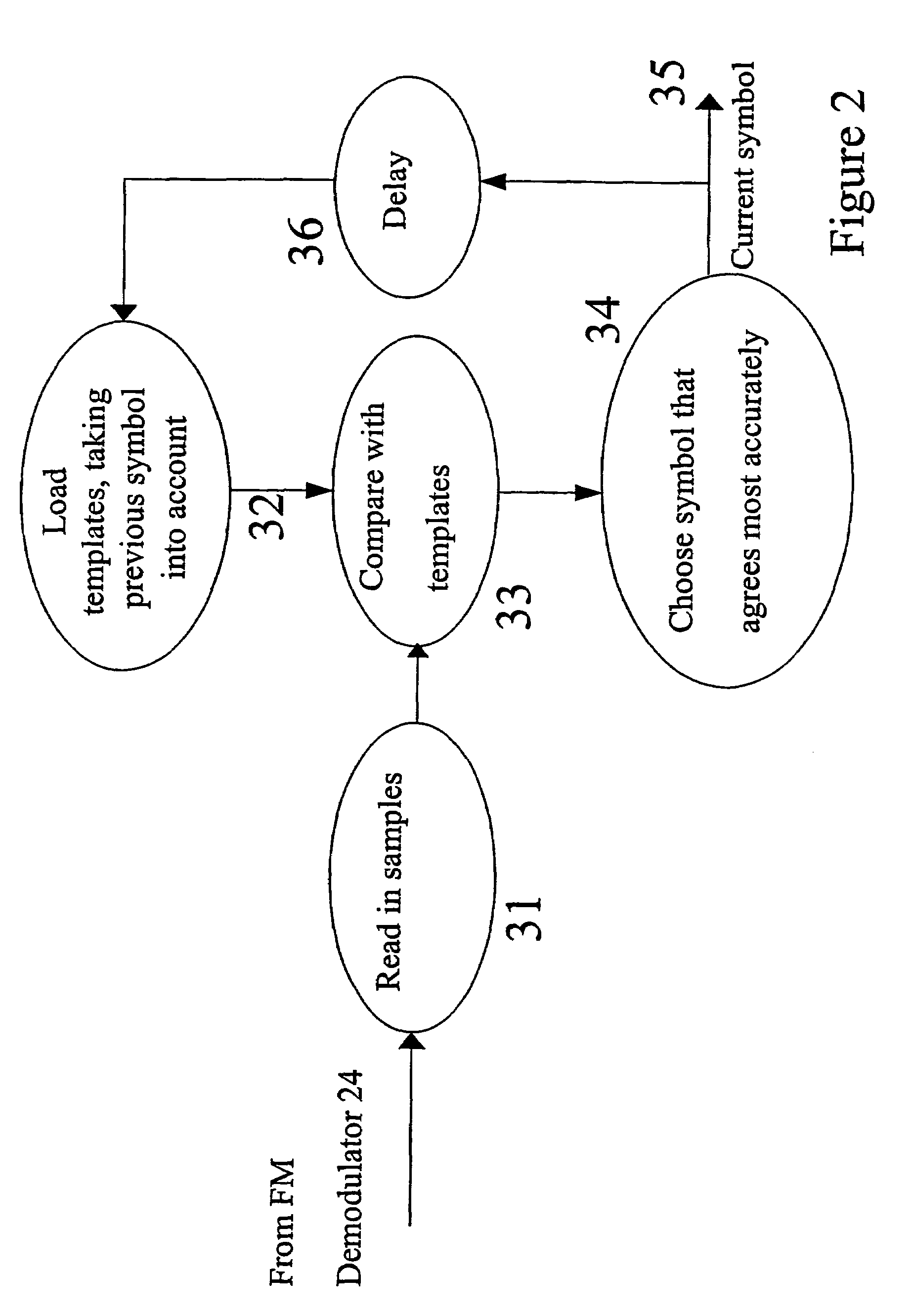
- A frequency modulation system using a filtered waveform with multiple levels and a partial response filter, where the impulse response extends over adjacent symbols, known as multiple-level Gaussian filtered frequency shift keying (MGFSK), which allows efficient bandwidth use and is tolerant to channel errors.

Computational generation of narrow-bandwidth digital signals
PatentInactiveEP2319178A1
Innovation
- A digital signal shaper that uses a phase-locked loop with a sigma-delta modulator to generate a monotonic change in oscillation frequency based on binary data bits, allowing for precise control of frequency ratios and reducing bandwidth through basic digital operations, thereby approximating Gaussian filtering.
Spectrum Regulatory Standards for FSK Applications
Spectrum regulatory standards for FSK applications are established by national and international telecommunications authorities to ensure efficient spectrum utilization and minimize interference between different communication systems. The International Telecommunication Union (ITU) provides the foundational framework through its Radio Regulations, which define frequency allocations and technical parameters for various radio services globally. Regional bodies such as the Federal Communications Commission (FCC) in the United States, the European Telecommunications Standards Institute (ETSI) in Europe, and similar organizations worldwide implement these guidelines through specific technical standards and certification requirements.
For FSK-based systems, regulatory compliance primarily focuses on occupied bandwidth limitations, spurious emission constraints, and power spectral density requirements. The occupied bandwidth regulations typically specify that 99% of the transmitted power must fall within designated frequency boundaries, with FSK systems generally required to maintain tighter spectral confinement compared to other modulation schemes. These requirements directly impact the choice between conventional FSK and GFSK implementations, as GFSK's superior spectral efficiency often makes it the preferred solution for bandwidth-constrained applications.
Industrial, Scientific, and Medical (ISM) bands represent a significant portion of FSK application deployments, operating under Part 15 regulations in the US and similar unlicensed spectrum provisions globally. The 2.4 GHz ISM band, for instance, permits FSK systems with specific bandwidth limitations and power restrictions, while the 868 MHz and 915 MHz bands have distinct regional variations in allowable parameters. These regulations mandate compliance with specific technical standards such as ETSI EN 300 220 for short-range devices and FCC Part 15.247 for spread spectrum systems.
Emerging regulatory trends emphasize dynamic spectrum access and cognitive radio capabilities, potentially affecting future FSK implementation strategies. Recent regulatory developments include updated emission mask requirements and enhanced coexistence protocols, particularly relevant for Internet of Things applications where FSK modulation remains prevalent. Compliance testing procedures have evolved to include more stringent adjacent channel power measurements and spurious emission testing, directly influencing the design considerations for both FSK and GFSK systems in commercial applications.
For FSK-based systems, regulatory compliance primarily focuses on occupied bandwidth limitations, spurious emission constraints, and power spectral density requirements. The occupied bandwidth regulations typically specify that 99% of the transmitted power must fall within designated frequency boundaries, with FSK systems generally required to maintain tighter spectral confinement compared to other modulation schemes. These requirements directly impact the choice between conventional FSK and GFSK implementations, as GFSK's superior spectral efficiency often makes it the preferred solution for bandwidth-constrained applications.
Industrial, Scientific, and Medical (ISM) bands represent a significant portion of FSK application deployments, operating under Part 15 regulations in the US and similar unlicensed spectrum provisions globally. The 2.4 GHz ISM band, for instance, permits FSK systems with specific bandwidth limitations and power restrictions, while the 868 MHz and 915 MHz bands have distinct regional variations in allowable parameters. These regulations mandate compliance with specific technical standards such as ETSI EN 300 220 for short-range devices and FCC Part 15.247 for spread spectrum systems.
Emerging regulatory trends emphasize dynamic spectrum access and cognitive radio capabilities, potentially affecting future FSK implementation strategies. Recent regulatory developments include updated emission mask requirements and enhanced coexistence protocols, particularly relevant for Internet of Things applications where FSK modulation remains prevalent. Compliance testing procedures have evolved to include more stringent adjacent channel power measurements and spurious emission testing, directly influencing the design considerations for both FSK and GFSK systems in commercial applications.
Power Efficiency vs Bandwidth Trade-offs Analysis
The fundamental trade-off between power efficiency and bandwidth utilization represents a critical design consideration when comparing FSK and GFSK modulation schemes. Traditional FSK systems demonstrate superior power efficiency characteristics due to their constant envelope properties, which enable the use of highly efficient Class C power amplifiers operating near saturation. This operational advantage translates to reduced power consumption and extended battery life in portable communication devices.
However, FSK's power efficiency comes at the cost of significantly increased bandwidth requirements. The abrupt frequency transitions inherent in FSK generate substantial spectral spreading, necessitating wider channel allocations to accommodate the signal's frequency domain characteristics. This bandwidth expansion directly impacts spectrum utilization efficiency and limits the number of concurrent channels within a given frequency band.
GFSK modulation addresses the bandwidth limitation through Gaussian pre-filtering, which smooths frequency transitions and reduces spectral occupancy by approximately 30-40% compared to conventional FSK. The filtering process eliminates high-frequency components responsible for excessive bandwidth consumption, enabling more efficient spectrum utilization and improved adjacent channel interference performance.
The bandwidth reduction in GFSK systems, however, introduces power efficiency penalties. The filtered signal exhibits envelope variations that prevent optimal power amplifier operation, requiring linear amplification with inherently lower efficiency ratings. Additionally, the Gaussian filtering process introduces intersymbol interference, necessitating more sophisticated receiver architectures and increased processing power for signal recovery.
Quantitative analysis reveals that FSK systems typically achieve power amplifier efficiencies of 70-85%, while GFSK implementations operate at 45-60% efficiency levels. Conversely, GFSK systems demonstrate 35-45% bandwidth reduction compared to FSK, enabling higher channel density and improved spectral efficiency metrics.
The optimal balance between power efficiency and bandwidth utilization depends on specific application requirements. Battery-powered devices operating in spectrum-abundant environments favor FSK's power efficiency, while high-density communication systems in congested frequency bands benefit from GFSK's bandwidth conservation properties. Modern implementations increasingly employ adaptive modulation techniques, dynamically switching between FSK and GFSK based on real-time power and bandwidth availability assessments.
However, FSK's power efficiency comes at the cost of significantly increased bandwidth requirements. The abrupt frequency transitions inherent in FSK generate substantial spectral spreading, necessitating wider channel allocations to accommodate the signal's frequency domain characteristics. This bandwidth expansion directly impacts spectrum utilization efficiency and limits the number of concurrent channels within a given frequency band.
GFSK modulation addresses the bandwidth limitation through Gaussian pre-filtering, which smooths frequency transitions and reduces spectral occupancy by approximately 30-40% compared to conventional FSK. The filtering process eliminates high-frequency components responsible for excessive bandwidth consumption, enabling more efficient spectrum utilization and improved adjacent channel interference performance.
The bandwidth reduction in GFSK systems, however, introduces power efficiency penalties. The filtered signal exhibits envelope variations that prevent optimal power amplifier operation, requiring linear amplification with inherently lower efficiency ratings. Additionally, the Gaussian filtering process introduces intersymbol interference, necessitating more sophisticated receiver architectures and increased processing power for signal recovery.
Quantitative analysis reveals that FSK systems typically achieve power amplifier efficiencies of 70-85%, while GFSK implementations operate at 45-60% efficiency levels. Conversely, GFSK systems demonstrate 35-45% bandwidth reduction compared to FSK, enabling higher channel density and improved spectral efficiency metrics.
The optimal balance between power efficiency and bandwidth utilization depends on specific application requirements. Battery-powered devices operating in spectrum-abundant environments favor FSK's power efficiency, while high-density communication systems in congested frequency bands benefit from GFSK's bandwidth conservation properties. Modern implementations increasingly employ adaptive modulation techniques, dynamically switching between FSK and GFSK based on real-time power and bandwidth availability assessments.
Unlock deeper insights with PatSnap Eureka Quick Research — get a full tech report to explore trends and direct your research. Try now!
Generate Your Research Report Instantly with AI Agent
Supercharge your innovation with PatSnap Eureka AI Agent Platform!