
Fuel Cell vs Supercapacitor: Charge/Discharge Cycle Efficiency
MAR 12, 20269 MIN READ
Generate Your Research Report Instantly with AI Agent
Patsnap Eureka helps you evaluate technical feasibility & market potential.
Fuel Cell and Supercapacitor Technology Background and Objectives
Fuel cells and supercapacitors represent two distinct yet complementary energy storage and conversion technologies that have evolved along different technological pathways over the past century. Fuel cells, first demonstrated by William Grove in 1839, convert chemical energy directly into electrical energy through electrochemical reactions, typically involving hydrogen and oxygen. The technology gained significant momentum during the space program era of the 1960s and has since diversified into various types including proton exchange membrane (PEM), solid oxide (SOFC), and alkaline fuel cells.
Supercapacitors, also known as ultracapacitors or electrochemical capacitors, emerged from conventional capacitor technology in the 1950s and experienced rapid development in the 1990s. These devices store energy through electrostatic charge accumulation at the electrode-electrolyte interface, offering fundamentally different energy storage mechanisms compared to fuel cells. The technology has evolved from basic carbon-based electrodes to advanced materials including graphene, carbon nanotubes, and hybrid electrode configurations.
The charge and discharge cycle efficiency comparison between these technologies has become increasingly critical as energy systems demand higher performance, reliability, and sustainability. Fuel cells typically demonstrate high energy density but face challenges in rapid charge-discharge cycling due to their electrochemical conversion processes and auxiliary system requirements. Their efficiency is influenced by factors including operating temperature, fuel purity, and system integration complexity.
Supercapacitors excel in power density and cycling capability, capable of millions of charge-discharge cycles with minimal degradation. However, they traditionally suffer from lower energy density compared to fuel cells. Recent technological advances have focused on bridging this gap through hybrid supercapacitor designs and novel electrode materials that enhance energy storage capacity while maintaining superior cycling performance.
The convergence of these technologies in hybrid energy systems has created new opportunities for optimizing overall system efficiency. Understanding the comparative charge-discharge cycle efficiency becomes essential for applications ranging from automotive powertrains to grid-scale energy storage, where different operational requirements demand careful technology selection and integration strategies.
Current research objectives focus on quantifying efficiency metrics under various operational conditions, developing standardized testing protocols, and identifying optimal application scenarios for each technology while exploring synergistic combinations that leverage the strengths of both fuel cells and supercapacitors.
Supercapacitors, also known as ultracapacitors or electrochemical capacitors, emerged from conventional capacitor technology in the 1950s and experienced rapid development in the 1990s. These devices store energy through electrostatic charge accumulation at the electrode-electrolyte interface, offering fundamentally different energy storage mechanisms compared to fuel cells. The technology has evolved from basic carbon-based electrodes to advanced materials including graphene, carbon nanotubes, and hybrid electrode configurations.
The charge and discharge cycle efficiency comparison between these technologies has become increasingly critical as energy systems demand higher performance, reliability, and sustainability. Fuel cells typically demonstrate high energy density but face challenges in rapid charge-discharge cycling due to their electrochemical conversion processes and auxiliary system requirements. Their efficiency is influenced by factors including operating temperature, fuel purity, and system integration complexity.
Supercapacitors excel in power density and cycling capability, capable of millions of charge-discharge cycles with minimal degradation. However, they traditionally suffer from lower energy density compared to fuel cells. Recent technological advances have focused on bridging this gap through hybrid supercapacitor designs and novel electrode materials that enhance energy storage capacity while maintaining superior cycling performance.
The convergence of these technologies in hybrid energy systems has created new opportunities for optimizing overall system efficiency. Understanding the comparative charge-discharge cycle efficiency becomes essential for applications ranging from automotive powertrains to grid-scale energy storage, where different operational requirements demand careful technology selection and integration strategies.
Current research objectives focus on quantifying efficiency metrics under various operational conditions, developing standardized testing protocols, and identifying optimal application scenarios for each technology while exploring synergistic combinations that leverage the strengths of both fuel cells and supercapacitors.
Market Demand Analysis for Energy Storage Solutions
The global energy storage market is experiencing unprecedented growth driven by the accelerating transition toward renewable energy systems and the increasing demand for grid stability solutions. Traditional energy storage technologies face mounting pressure to deliver higher efficiency, longer lifespan, and faster response times, creating substantial market opportunities for advanced solutions that can optimize charge and discharge cycle performance.
Electric vehicle manufacturers represent one of the most significant demand drivers, requiring energy storage systems that can deliver rapid charging capabilities while maintaining high cycle efficiency over extended operational periods. The automotive sector's shift toward electrification has intensified focus on technologies that can minimize energy losses during frequent charge-discharge cycles, directly impacting vehicle range and operational costs.
Grid-scale energy storage applications present another substantial market segment, where utilities and independent power producers seek solutions capable of efficiently storing excess renewable energy during peak generation periods and releasing it during high demand intervals. The intermittent nature of solar and wind power generation necessitates storage systems with superior cycle efficiency to maximize economic returns on renewable energy investments.
Industrial and commercial sectors increasingly demand backup power solutions that can provide reliable energy storage with minimal degradation over thousands of cycles. Data centers, manufacturing facilities, and critical infrastructure operators prioritize storage technologies that maintain consistent performance while minimizing total cost of ownership through efficient energy conversion processes.
The portable electronics and consumer device markets continue expanding, driving demand for compact energy storage solutions that can support frequent charging patterns without significant capacity degradation. Mobile device manufacturers and portable equipment producers require technologies that balance energy density with cycle longevity to meet consumer expectations for device reliability and performance.
Emerging applications in aerospace, marine, and remote power systems create specialized market niches where cycle efficiency directly correlates with mission success and operational feasibility. These sectors demand energy storage solutions capable of maintaining high performance under extreme conditions while delivering predictable charge-discharge characteristics over extended deployment periods.
Market analysis indicates growing preference for hybrid energy storage architectures that combine different technologies to optimize overall system efficiency, suggesting opportunities for integrated solutions that leverage the complementary characteristics of various storage mechanisms to address specific application requirements.
Electric vehicle manufacturers represent one of the most significant demand drivers, requiring energy storage systems that can deliver rapid charging capabilities while maintaining high cycle efficiency over extended operational periods. The automotive sector's shift toward electrification has intensified focus on technologies that can minimize energy losses during frequent charge-discharge cycles, directly impacting vehicle range and operational costs.
Grid-scale energy storage applications present another substantial market segment, where utilities and independent power producers seek solutions capable of efficiently storing excess renewable energy during peak generation periods and releasing it during high demand intervals. The intermittent nature of solar and wind power generation necessitates storage systems with superior cycle efficiency to maximize economic returns on renewable energy investments.
Industrial and commercial sectors increasingly demand backup power solutions that can provide reliable energy storage with minimal degradation over thousands of cycles. Data centers, manufacturing facilities, and critical infrastructure operators prioritize storage technologies that maintain consistent performance while minimizing total cost of ownership through efficient energy conversion processes.
The portable electronics and consumer device markets continue expanding, driving demand for compact energy storage solutions that can support frequent charging patterns without significant capacity degradation. Mobile device manufacturers and portable equipment producers require technologies that balance energy density with cycle longevity to meet consumer expectations for device reliability and performance.
Emerging applications in aerospace, marine, and remote power systems create specialized market niches where cycle efficiency directly correlates with mission success and operational feasibility. These sectors demand energy storage solutions capable of maintaining high performance under extreme conditions while delivering predictable charge-discharge characteristics over extended deployment periods.
Market analysis indicates growing preference for hybrid energy storage architectures that combine different technologies to optimize overall system efficiency, suggesting opportunities for integrated solutions that leverage the complementary characteristics of various storage mechanisms to address specific application requirements.
Current Status and Challenges in Charge/Discharge Efficiency
The current landscape of charge/discharge cycle efficiency presents distinct advantages and limitations for both fuel cells and supercapacitors. Fuel cells demonstrate exceptional energy conversion efficiency, typically achieving 40-60% electrical efficiency in practical applications, with some advanced systems reaching up to 80% under optimal conditions. However, their charge/discharge cycle performance is fundamentally different from traditional energy storage devices, as they continuously convert chemical energy rather than storing and releasing electrical energy directly.
Supercapacitors excel in charge/discharge cycle efficiency, consistently delivering over 95% round-trip efficiency across millions of cycles. Their ability to rapidly charge and discharge with minimal energy loss has established them as the preferred solution for applications requiring frequent cycling and high power density. The symmetric charge/discharge characteristics of supercapacitors enable predictable performance degradation patterns, typically maintaining 80% of initial capacity after 500,000 to 1 million cycles.
The primary challenge facing fuel cell systems lies in their dynamic response limitations and efficiency variations during transient operations. Start-up and shutdown procedures, load following capabilities, and thermal management significantly impact overall system efficiency. Additionally, fuel cell degradation mechanisms, including catalyst poisoning, membrane deterioration, and gas diffusion layer flooding, progressively reduce performance over operational cycles.
Supercapacitors encounter challenges related to energy density limitations and voltage decay characteristics. While their power density and cycling stability are superior, the relatively low energy storage capacity restricts their application scope. Self-discharge rates, though improved in recent years, remain higher than battery technologies, affecting long-term energy retention efficiency.
Temperature dependency represents a critical challenge for both technologies. Fuel cells experience reduced efficiency at low temperatures due to slower electrochemical kinetics and potential freezing issues, while high temperatures accelerate degradation processes. Supercapacitors show improved performance at elevated temperatures but face accelerated aging and increased self-discharge rates.
Manufacturing consistency and cost optimization remain significant hurdles. Fuel cell systems require precise control of multiple components including catalysts, membranes, and balance-of-plant equipment, leading to complex manufacturing processes and quality control challenges. Supercapacitor production faces difficulties in achieving uniform electrode materials and consistent electrolyte distribution, directly impacting cycle efficiency and lifetime performance.
Integration challenges emerge when combining these technologies in hybrid systems. Optimizing the power management between fuel cells and supercapacitors requires sophisticated control algorithms to maximize overall system efficiency while managing the distinct operational characteristics of each technology.
Supercapacitors excel in charge/discharge cycle efficiency, consistently delivering over 95% round-trip efficiency across millions of cycles. Their ability to rapidly charge and discharge with minimal energy loss has established them as the preferred solution for applications requiring frequent cycling and high power density. The symmetric charge/discharge characteristics of supercapacitors enable predictable performance degradation patterns, typically maintaining 80% of initial capacity after 500,000 to 1 million cycles.
The primary challenge facing fuel cell systems lies in their dynamic response limitations and efficiency variations during transient operations. Start-up and shutdown procedures, load following capabilities, and thermal management significantly impact overall system efficiency. Additionally, fuel cell degradation mechanisms, including catalyst poisoning, membrane deterioration, and gas diffusion layer flooding, progressively reduce performance over operational cycles.
Supercapacitors encounter challenges related to energy density limitations and voltage decay characteristics. While their power density and cycling stability are superior, the relatively low energy storage capacity restricts their application scope. Self-discharge rates, though improved in recent years, remain higher than battery technologies, affecting long-term energy retention efficiency.
Temperature dependency represents a critical challenge for both technologies. Fuel cells experience reduced efficiency at low temperatures due to slower electrochemical kinetics and potential freezing issues, while high temperatures accelerate degradation processes. Supercapacitors show improved performance at elevated temperatures but face accelerated aging and increased self-discharge rates.
Manufacturing consistency and cost optimization remain significant hurdles. Fuel cell systems require precise control of multiple components including catalysts, membranes, and balance-of-plant equipment, leading to complex manufacturing processes and quality control challenges. Supercapacitor production faces difficulties in achieving uniform electrode materials and consistent electrolyte distribution, directly impacting cycle efficiency and lifetime performance.
Integration challenges emerge when combining these technologies in hybrid systems. Optimizing the power management between fuel cells and supercapacitors requires sophisticated control algorithms to maximize overall system efficiency while managing the distinct operational characteristics of each technology.
Current Charge/Discharge Efficiency Solutions
01 Hybrid power systems combining fuel cells and supercapacitors
Integration of fuel cells with supercapacitors in hybrid power systems to optimize charge/discharge cycles and improve overall energy efficiency. The supercapacitor handles peak power demands and transient loads while the fuel cell provides steady-state power, resulting in enhanced cycle efficiency and extended system lifetime. This configuration allows for better energy management and reduced stress on individual components.- Hybrid power systems combining fuel cells and supercapacitors: Integration of fuel cells with supercapacitors in hybrid power systems to optimize charge/discharge cycles and improve overall energy efficiency. The supercapacitor handles peak power demands and transient loads while the fuel cell provides steady-state power, resulting in enhanced cycle efficiency and extended system lifetime. This configuration allows for better energy management and reduced stress on individual components.
- Advanced control strategies for charge/discharge management: Implementation of sophisticated control algorithms and power management systems to regulate the charging and discharging cycles between fuel cells and supercapacitors. These strategies include adaptive control methods, predictive algorithms, and real-time monitoring systems that optimize energy flow based on load demands and system conditions. The control systems ensure efficient energy distribution and maximize the cycle efficiency of both components.
- Energy storage optimization through material improvements: Development of advanced electrode materials and electrolytes for supercapacitors to enhance their charge/discharge cycle efficiency when paired with fuel cells. Innovations include nanostructured materials, composite electrodes, and novel electrolyte formulations that reduce internal resistance and improve energy density. These material advancements contribute to higher cycle stability and better overall system performance.
- Thermal management systems for efficiency enhancement: Integration of thermal management solutions to maintain optimal operating temperatures for both fuel cells and supercapacitors during charge/discharge cycles. Effective heat dissipation and temperature control prevent performance degradation and improve cycle efficiency. These systems include cooling mechanisms, heat exchangers, and temperature monitoring devices that ensure stable operation across varying load conditions.
- Monitoring and diagnostic systems for cycle performance: Development of real-time monitoring and diagnostic tools to assess and optimize the charge/discharge cycle efficiency of fuel cell and supercapacitor systems. These systems track key performance indicators such as voltage, current, state of charge, and degradation patterns. Advanced sensing technologies and data analytics enable predictive maintenance and operational adjustments to maintain high efficiency throughout the system lifecycle.
02 Advanced control strategies for charge/discharge management
Implementation of sophisticated control algorithms and power management systems to regulate the charging and discharging cycles between fuel cells and supercapacitors. These strategies include adaptive control methods, predictive algorithms, and real-time monitoring systems that optimize energy flow based on load demands and system conditions. The control systems ensure efficient energy distribution and maximize the cycle efficiency of both components.Expand Specific Solutions03 Energy storage optimization through material improvements
Enhancement of supercapacitor electrode materials and fuel cell components to improve charge/discharge cycle efficiency. This includes the development of advanced electrode materials with higher surface area, improved conductivity, and better electrochemical stability. Material innovations focus on reducing internal resistance, minimizing energy losses during cycling, and extending the operational lifespan of both fuel cells and supercapacitors.Expand Specific Solutions04 Thermal management systems for efficiency optimization
Design and implementation of thermal management solutions to maintain optimal operating temperatures during charge/discharge cycles. Effective heat dissipation and temperature control prevent performance degradation and improve the overall cycle efficiency of fuel cell and supercapacitor systems. These systems include cooling mechanisms, heat exchangers, and temperature monitoring devices that ensure stable operation under varying load conditions.Expand Specific Solutions05 Bidirectional power conversion and energy recovery
Development of bidirectional power converters and energy recovery systems that enable efficient charging and discharging between fuel cells and supercapacitors. These systems incorporate advanced power electronics, DC-DC converters, and regenerative braking capabilities to capture and store energy that would otherwise be wasted. The technology improves overall system efficiency by minimizing conversion losses and maximizing energy utilization during both charging and discharging phases.Expand Specific Solutions
Major Players in Fuel Cell and Supercapacitor Industries
The fuel cell versus supercapacitor charge/discharge cycle efficiency landscape represents a mature but rapidly evolving competitive arena. The industry is in a transitional phase, moving from research-focused development to commercial deployment across automotive, industrial automation, and energy storage sectors. Market growth is driven by electrification demands and energy efficiency requirements. Technology maturity varies significantly among players: automotive giants like Hyundai Motor, General Motors, and Audi AG lead in fuel cell integration, while companies like InnoCELL ApS and GS Yuasa International specialize in advanced capacitor and battery technologies. Research institutions including Central South University, Drexel University, and Oxford University Innovation contribute fundamental breakthroughs in efficiency optimization. Industrial players like OMRON Corp and Honeywell International focus on system-level integration solutions, creating a diverse ecosystem spanning from component manufacturers to end-user applications across multiple sectors.
GM Global Technology Operations LLC
Technical Solution: General Motors has developed the Ultium platform incorporating both fuel cell and supercapacitor technologies for enhanced charge/discharge efficiency. Their Hydrotec fuel cell system delivers up to 300kW power output with 55% electrical efficiency, while integrated supercapacitors provide rapid energy storage and release capabilities. GM's approach utilizes advanced power electronics to optimize energy flow between fuel cells and supercapacitors, achieving over 90% round-trip efficiency in hybrid configurations. Their system features predictive energy management algorithms that pre-charge supercapacitors based on driving patterns, reducing fuel cell cycling stress and extending system lifespan to over 200,000 miles.
Strengths: Scalable platform architecture, advanced power electronics integration, strong manufacturing capabilities. Weaknesses: High development costs, complex system architecture, requires specialized maintenance infrastructure.
Hyundai Motor Co., Ltd.
Technical Solution: Hyundai has developed advanced fuel cell systems for their NEXO hydrogen vehicle, featuring a fuel cell stack with 95kW power output and 60% system efficiency. Their technology focuses on optimizing charge/discharge cycles through intelligent power management systems that seamlessly switch between fuel cell generation and supercapacitor energy storage. The company has implemented regenerative braking systems that capture energy into supercapacitors with over 95% efficiency, while their fuel cell system maintains consistent performance across multiple charge cycles with minimal degradation over 150,000 miles of operation.
Strengths: High system integration expertise, proven automotive-grade reliability, extensive real-world testing data. Weaknesses: Higher manufacturing costs, limited hydrogen infrastructure dependency, complex thermal management requirements.
Core Technologies in Cycle Efficiency Optimization
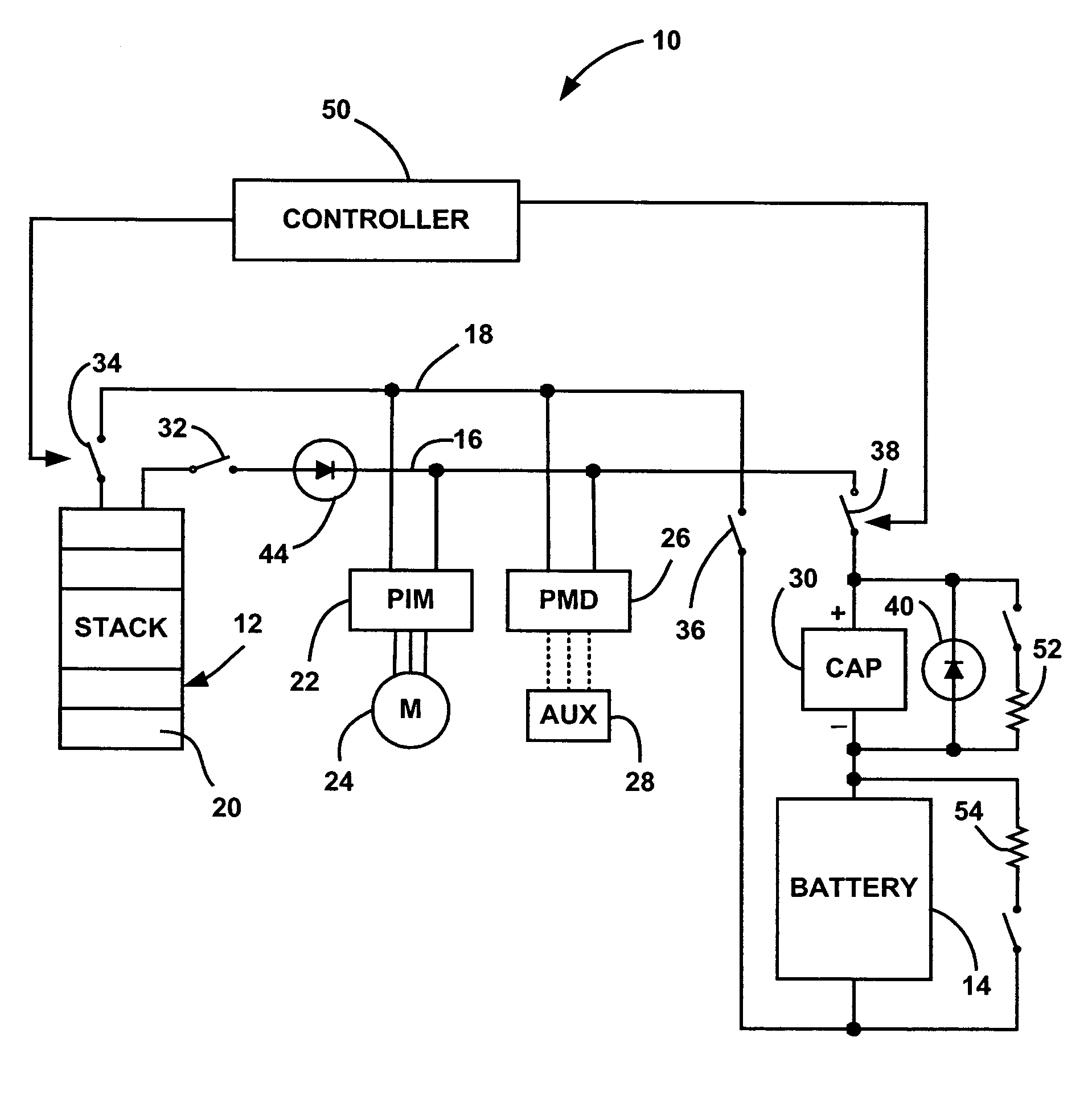
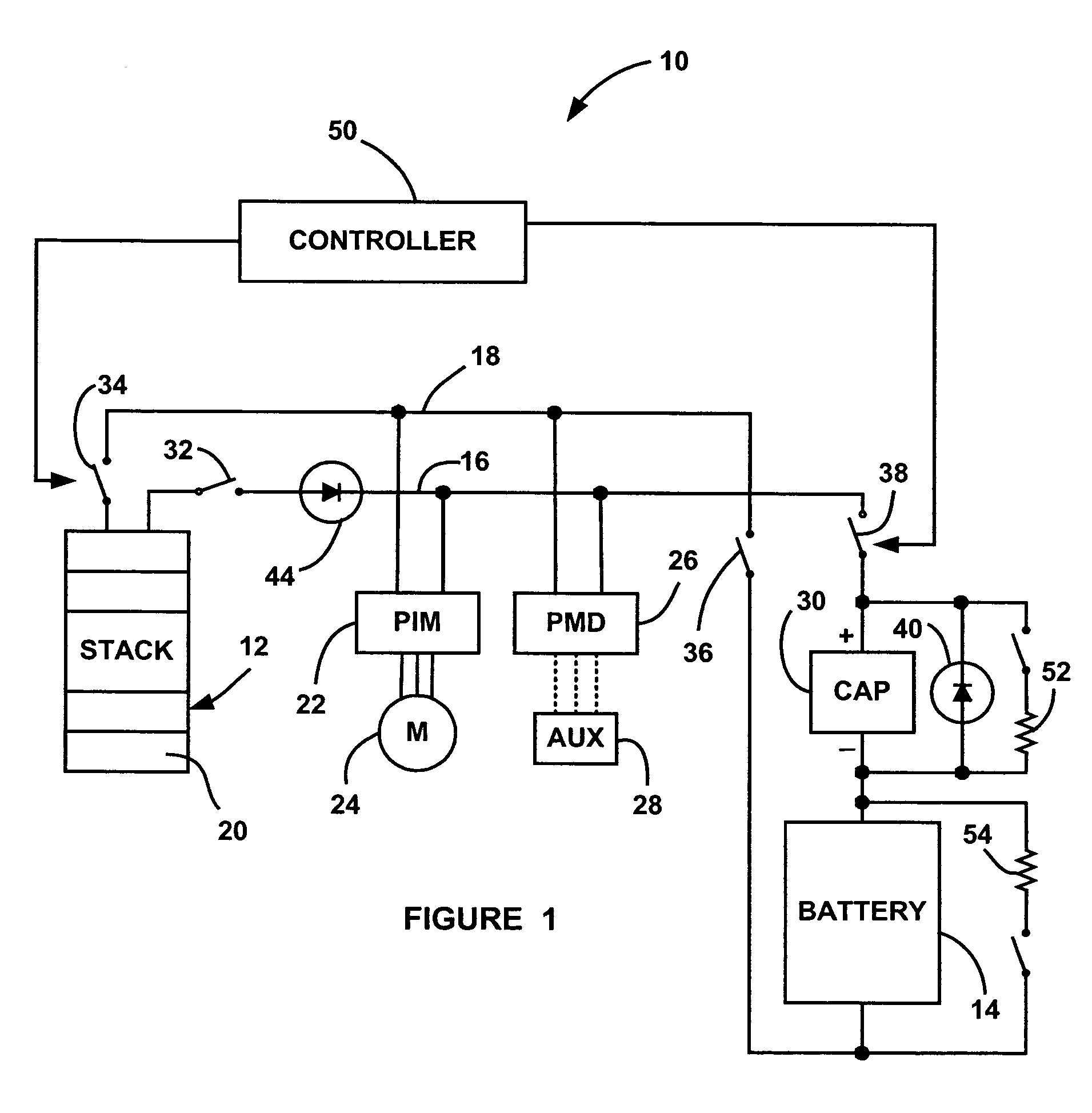
Hybrid fuel cell system with battery capacitor energy storage system
PatentInactiveUS20060127704A1
Innovation
- A fuel cell system that electrically couples a super capacitor and a battery in series and parallel with the fuel cell stack, where the super capacitor handles large voltage swings, reducing the battery's state of charge cycling and eliminating the need for a DC/DC converter.
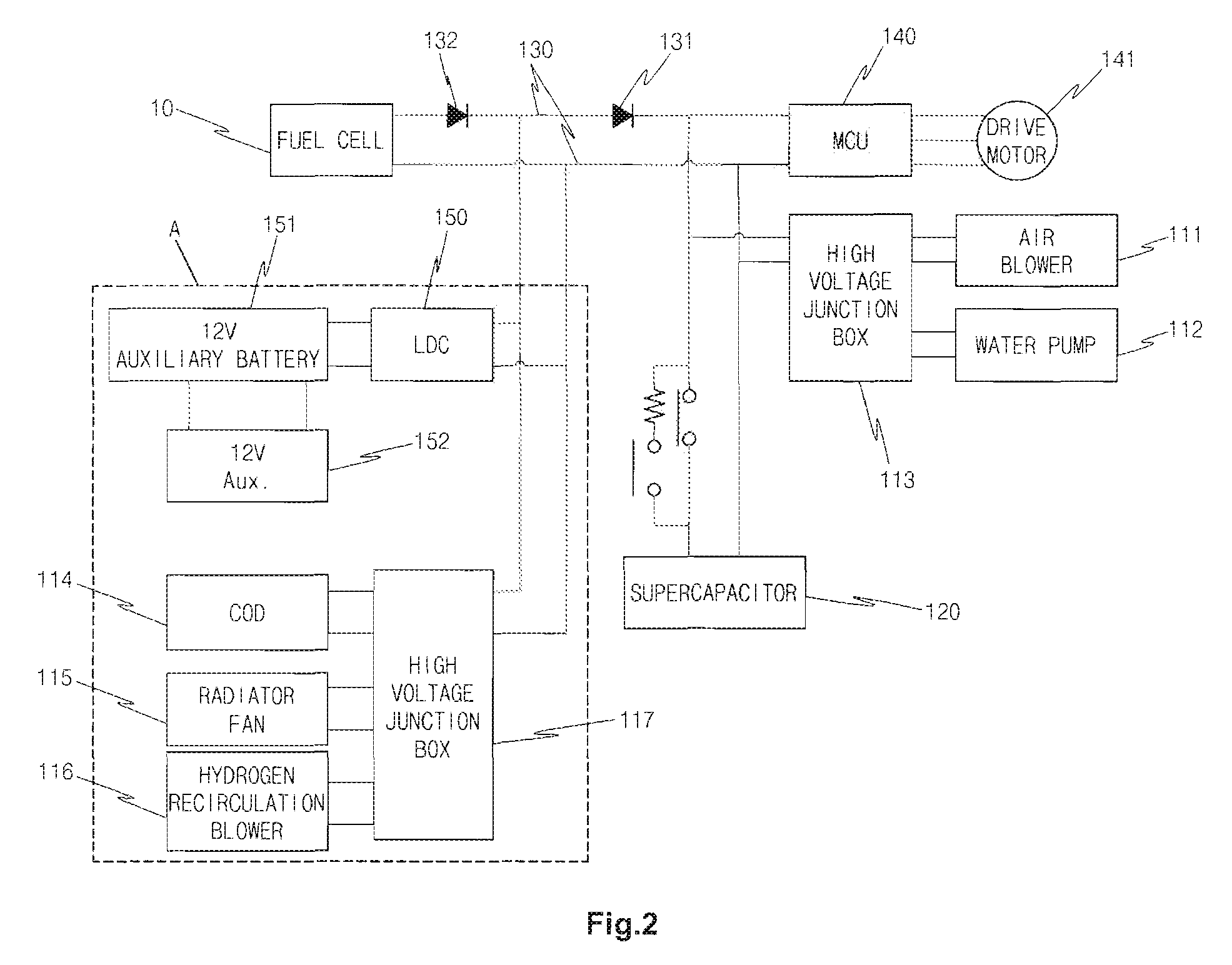
Power configuration system for fuel cell hybrid vehicle and method for controlling the same
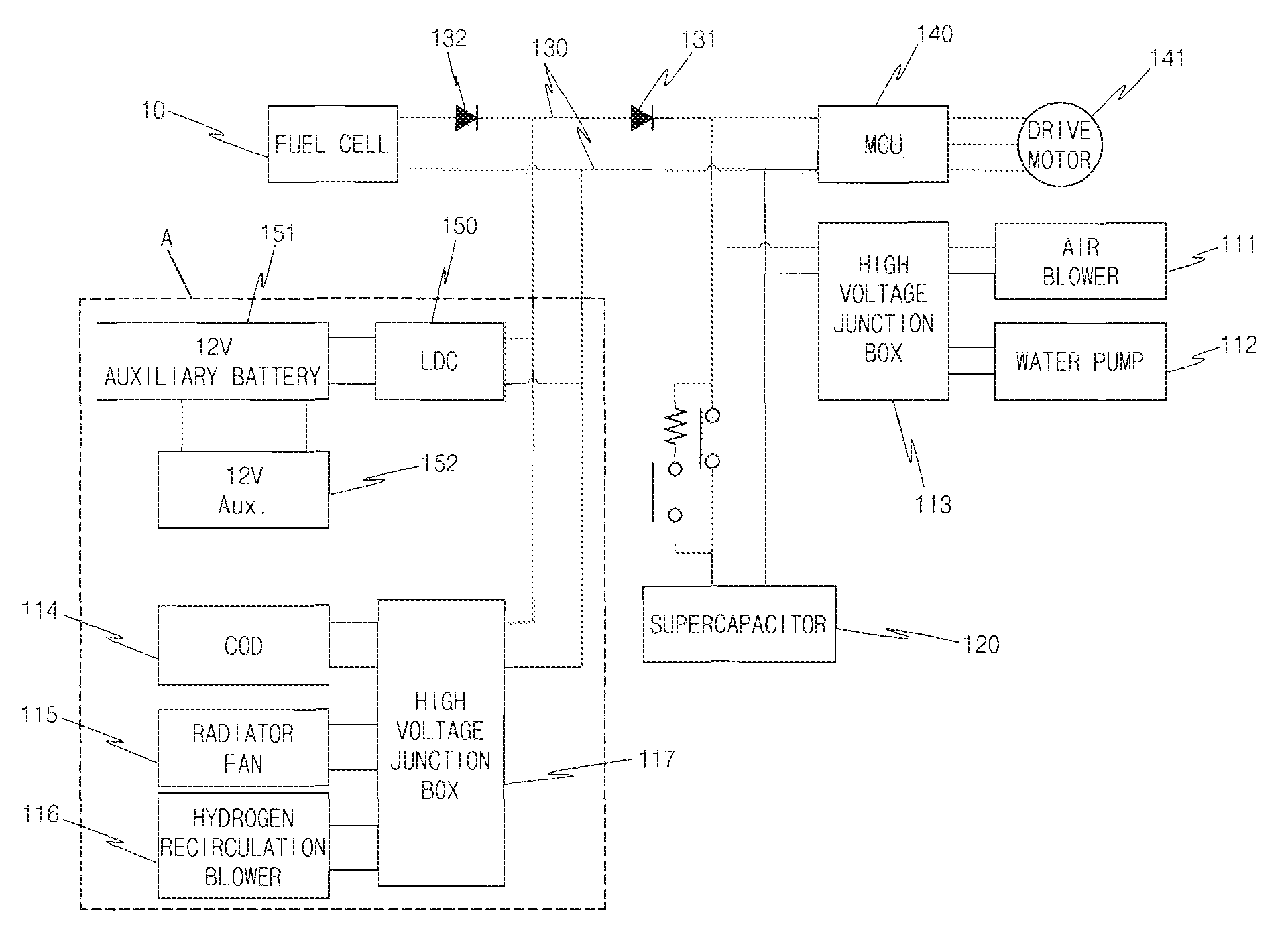
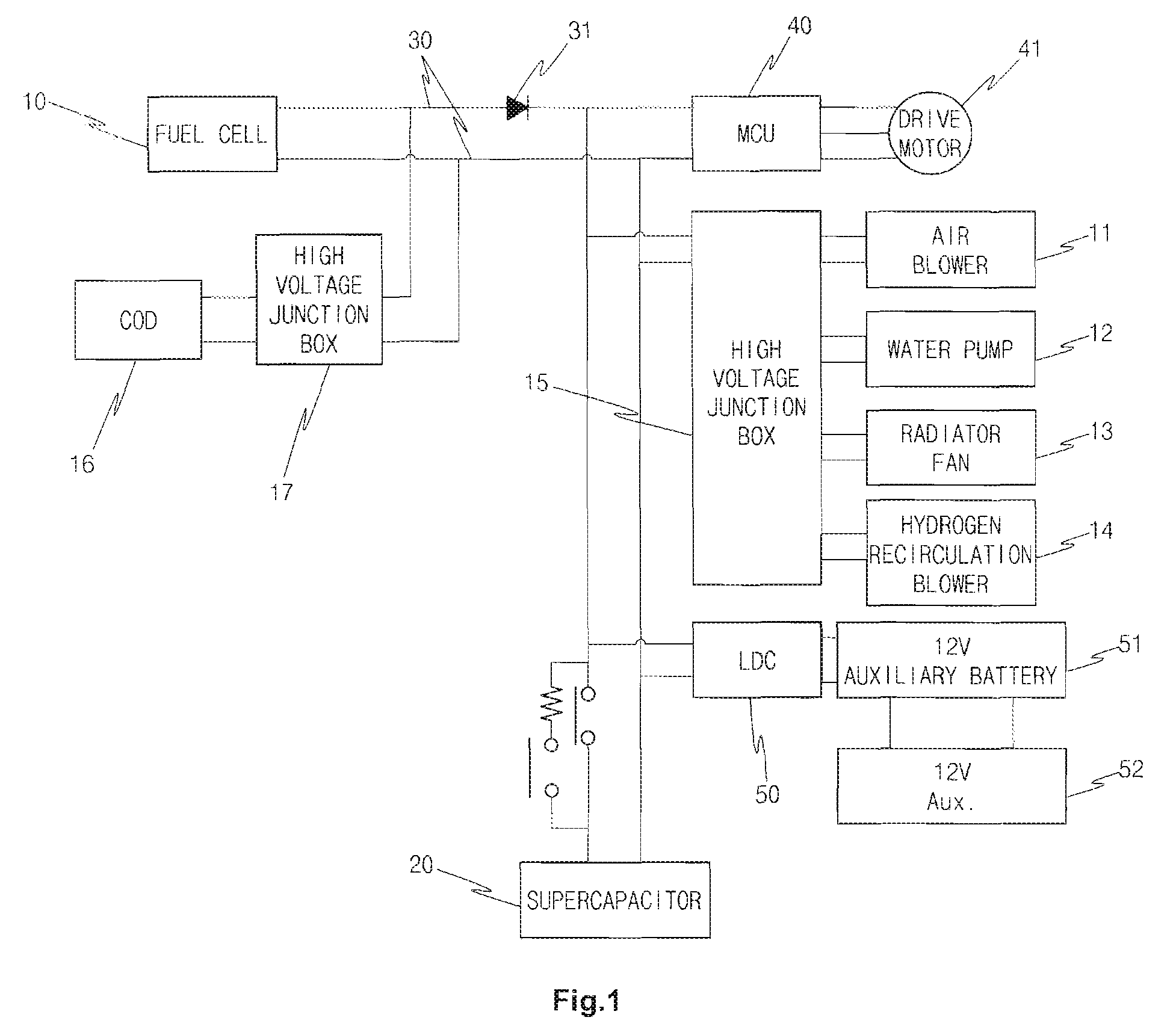
PatentActiveUS20100089672A1
Innovation
- A power configuration system where high voltage components are arranged in front of a blocking diode in the main bus terminal, consuming electric power from the fuel cell during regenerative braking to maintain its voltage below that of the storage means, preventing unnecessary charging and ensuring the fuel cell operates below a predetermined voltage level.

Environmental Impact Assessment of Energy Storage Technologies
The environmental implications of fuel cells and supercapacitors present distinctly different profiles throughout their operational lifecycles. Fuel cells, particularly hydrogen-based systems, demonstrate exceptional environmental performance during operation with zero direct emissions when utilizing green hydrogen. However, their environmental footprint heavily depends on hydrogen production methods, with steam methane reforming contributing significant carbon emissions compared to electrolysis powered by renewable energy sources.
Manufacturing processes reveal contrasting environmental burdens between these technologies. Fuel cell production involves platinum group metals and specialized membrane materials, creating substantial upstream environmental impacts through mining and processing activities. The extraction of platinum requires energy-intensive operations with associated ecosystem disruption. Conversely, supercapacitor manufacturing primarily utilizes carbon-based materials and common metals, resulting in lower material extraction impacts but requiring careful consideration of activated carbon production processes.
Lifecycle carbon footprints demonstrate technology-specific characteristics influenced by charge-discharge efficiency patterns. Supercapacitors exhibit superior round-trip efficiency exceeding 95%, minimizing energy losses and reducing indirect emissions from power generation. Fuel cells typically achieve 40-60% electrical efficiency, with thermal energy recovery potentially improving overall system performance but requiring additional infrastructure considerations.
End-of-life environmental management presents unique challenges for each technology. Fuel cell systems contain valuable platinum catalysts enabling effective recycling programs, though membrane disposal requires specialized treatment protocols. Supercapacitors offer simpler recycling pathways with carbon electrode materials potentially suitable for secondary applications, while electrolyte management demands appropriate handling procedures.
Resource depletion concerns vary significantly between technologies. Fuel cells face potential supply constraints for platinum and rare earth elements, driving research toward alternative catalyst materials. Supercapacitors demonstrate lower dependency on critical materials, utilizing abundant carbon sources and common electrolyte components, supporting more sustainable long-term deployment scenarios.
Water consumption patterns differ substantially across operational phases. Hydrogen fuel cell systems require significant water inputs for hydrogen production via electrolysis, while generating water vapor during electrochemical reactions. Supercapacitor systems demonstrate minimal direct water consumption during operation, though manufacturing processes involve water-intensive activated carbon production requiring environmental consideration in facility planning and resource management strategies.
Manufacturing processes reveal contrasting environmental burdens between these technologies. Fuel cell production involves platinum group metals and specialized membrane materials, creating substantial upstream environmental impacts through mining and processing activities. The extraction of platinum requires energy-intensive operations with associated ecosystem disruption. Conversely, supercapacitor manufacturing primarily utilizes carbon-based materials and common metals, resulting in lower material extraction impacts but requiring careful consideration of activated carbon production processes.
Lifecycle carbon footprints demonstrate technology-specific characteristics influenced by charge-discharge efficiency patterns. Supercapacitors exhibit superior round-trip efficiency exceeding 95%, minimizing energy losses and reducing indirect emissions from power generation. Fuel cells typically achieve 40-60% electrical efficiency, with thermal energy recovery potentially improving overall system performance but requiring additional infrastructure considerations.
End-of-life environmental management presents unique challenges for each technology. Fuel cell systems contain valuable platinum catalysts enabling effective recycling programs, though membrane disposal requires specialized treatment protocols. Supercapacitors offer simpler recycling pathways with carbon electrode materials potentially suitable for secondary applications, while electrolyte management demands appropriate handling procedures.
Resource depletion concerns vary significantly between technologies. Fuel cells face potential supply constraints for platinum and rare earth elements, driving research toward alternative catalyst materials. Supercapacitors demonstrate lower dependency on critical materials, utilizing abundant carbon sources and common electrolyte components, supporting more sustainable long-term deployment scenarios.
Water consumption patterns differ substantially across operational phases. Hydrogen fuel cell systems require significant water inputs for hydrogen production via electrolysis, while generating water vapor during electrochemical reactions. Supercapacitor systems demonstrate minimal direct water consumption during operation, though manufacturing processes involve water-intensive activated carbon production requiring environmental consideration in facility planning and resource management strategies.
Cost-Performance Trade-offs in Energy Storage Systems
The cost-performance dynamics between fuel cells and supercapacitors present fundamentally different value propositions in energy storage applications. Fuel cells typically exhibit higher initial capital expenditure due to complex manufacturing processes, precious metal catalysts, and sophisticated balance-of-plant components. However, their superior energy density translates to lower cost per unit of stored energy, making them economically attractive for applications requiring extended operational periods.
Supercapacitors demonstrate contrasting economics with moderate upfront costs but exceptional cycle life exceeding one million charge-discharge cycles. This longevity significantly reduces lifetime replacement costs and maintenance expenses. The rapid charge-discharge capability eliminates the need for complex thermal management systems, further reducing total system costs in high-frequency cycling applications.
Performance metrics reveal distinct operational advantages for each technology. Fuel cells achieve energy densities of 500-2000 Wh/kg compared to supercapacitors' 5-15 Wh/kg, enabling compact system designs for energy-intensive applications. Conversely, supercapacitors deliver power densities exceeding 10,000 W/kg, substantially outperforming fuel cells' typical 500-1000 W/kg range.
The efficiency profiles create additional cost implications. Fuel cells maintain 40-60% round-trip efficiency with gradual degradation over 5,000-10,000 cycles, necessitating periodic stack replacement. Supercapacitors sustain 85-95% efficiency throughout their operational lifetime with minimal performance degradation, reducing energy losses and associated costs.
Economic optimization increasingly favors hybrid configurations combining both technologies. Such systems leverage fuel cells for baseline energy provision while utilizing supercapacitors for peak power demands and regenerative energy capture. This approach maximizes overall system efficiency while minimizing total cost of ownership through optimized component sizing and operational strategies.
Market analysis indicates converging cost trajectories as manufacturing scales increase and material innovations reduce fuel cell complexity while enhancing supercapacitor energy density, potentially reshaping future cost-performance equilibrium points.
Supercapacitors demonstrate contrasting economics with moderate upfront costs but exceptional cycle life exceeding one million charge-discharge cycles. This longevity significantly reduces lifetime replacement costs and maintenance expenses. The rapid charge-discharge capability eliminates the need for complex thermal management systems, further reducing total system costs in high-frequency cycling applications.
Performance metrics reveal distinct operational advantages for each technology. Fuel cells achieve energy densities of 500-2000 Wh/kg compared to supercapacitors' 5-15 Wh/kg, enabling compact system designs for energy-intensive applications. Conversely, supercapacitors deliver power densities exceeding 10,000 W/kg, substantially outperforming fuel cells' typical 500-1000 W/kg range.
The efficiency profiles create additional cost implications. Fuel cells maintain 40-60% round-trip efficiency with gradual degradation over 5,000-10,000 cycles, necessitating periodic stack replacement. Supercapacitors sustain 85-95% efficiency throughout their operational lifetime with minimal performance degradation, reducing energy losses and associated costs.
Economic optimization increasingly favors hybrid configurations combining both technologies. Such systems leverage fuel cells for baseline energy provision while utilizing supercapacitors for peak power demands and regenerative energy capture. This approach maximizes overall system efficiency while minimizing total cost of ownership through optimized component sizing and operational strategies.
Market analysis indicates converging cost trajectories as manufacturing scales increase and material innovations reduce fuel cell complexity while enhancing supercapacitor energy density, potentially reshaping future cost-performance equilibrium points.
Unlock deeper insights with Patsnap Eureka Quick Research — get a full tech report to explore trends and direct your research. Try now!
Generate Your Research Report Instantly with AI Agent
Supercharge your innovation with Patsnap Eureka AI Agent Platform!