

Gear Tooth vs Gear Sector: Performance in Incremental Positioning
MAR 12, 20269 MIN READ
Generate Your Research Report Instantly with AI Agent
PatSnap Eureka helps you evaluate technical feasibility & market potential.
Gear Positioning Technology Background and Objectives
Gear positioning technology has evolved significantly over the past several decades, driven by the increasing demand for precision motion control across diverse industrial applications. The fundamental challenge lies in achieving accurate incremental positioning while maintaining system reliability, cost-effectiveness, and operational efficiency. Traditional gear systems have undergone substantial refinement, with particular focus on optimizing tooth geometry and sector configurations to enhance positioning accuracy.
The historical development of gear positioning systems can be traced back to early mechanical indexing mechanisms used in manufacturing equipment. Initial implementations relied on simple gear trains with limited precision capabilities. However, the advent of computer numerical control systems and advanced manufacturing processes has enabled the development of sophisticated gear positioning solutions capable of achieving sub-micron accuracy levels.
Current technological evolution trends indicate a strong emphasis on hybrid approaches that combine mechanical precision with electronic feedback systems. The integration of high-resolution encoders, servo motors, and advanced control algorithms has transformed traditional gear positioning from purely mechanical systems into intelligent mechatronic solutions. This evolution has been particularly pronounced in sectors requiring ultra-precise positioning, such as semiconductor manufacturing, optical equipment, and precision machining.
The primary technical objectives driving contemporary gear positioning research focus on maximizing positioning accuracy while minimizing backlash, reducing wear characteristics, and optimizing power transmission efficiency. Specific performance targets include achieving positioning repeatability within micrometers, minimizing angular errors during incremental movements, and maintaining consistent performance across extended operational cycles.
Modern applications demand gear positioning systems capable of handling varying load conditions while preserving accuracy standards. The comparison between complete gear tooth engagement and gear sector implementations has become increasingly relevant as system designers seek optimal solutions for specific positioning requirements. This technical challenge encompasses considerations of contact stress distribution, manufacturing tolerances, thermal stability, and long-term reliability under cyclic loading conditions.
The strategic importance of advancing gear positioning technology extends beyond immediate performance improvements, encompassing broader implications for automation efficiency, product quality enhancement, and manufacturing cost reduction across multiple industrial sectors.
The historical development of gear positioning systems can be traced back to early mechanical indexing mechanisms used in manufacturing equipment. Initial implementations relied on simple gear trains with limited precision capabilities. However, the advent of computer numerical control systems and advanced manufacturing processes has enabled the development of sophisticated gear positioning solutions capable of achieving sub-micron accuracy levels.
Current technological evolution trends indicate a strong emphasis on hybrid approaches that combine mechanical precision with electronic feedback systems. The integration of high-resolution encoders, servo motors, and advanced control algorithms has transformed traditional gear positioning from purely mechanical systems into intelligent mechatronic solutions. This evolution has been particularly pronounced in sectors requiring ultra-precise positioning, such as semiconductor manufacturing, optical equipment, and precision machining.
The primary technical objectives driving contemporary gear positioning research focus on maximizing positioning accuracy while minimizing backlash, reducing wear characteristics, and optimizing power transmission efficiency. Specific performance targets include achieving positioning repeatability within micrometers, minimizing angular errors during incremental movements, and maintaining consistent performance across extended operational cycles.
Modern applications demand gear positioning systems capable of handling varying load conditions while preserving accuracy standards. The comparison between complete gear tooth engagement and gear sector implementations has become increasingly relevant as system designers seek optimal solutions for specific positioning requirements. This technical challenge encompasses considerations of contact stress distribution, manufacturing tolerances, thermal stability, and long-term reliability under cyclic loading conditions.
The strategic importance of advancing gear positioning technology extends beyond immediate performance improvements, encompassing broader implications for automation efficiency, product quality enhancement, and manufacturing cost reduction across multiple industrial sectors.
Market Demand for Precision Incremental Positioning Systems
The global precision incremental positioning systems market has experienced substantial growth driven by the increasing automation demands across manufacturing, robotics, and industrial sectors. Industries requiring high-precision motion control, such as semiconductor manufacturing, medical device production, and aerospace assembly, have become primary drivers of market expansion. The shift toward Industry 4.0 and smart manufacturing has further accelerated the adoption of advanced positioning technologies.
Manufacturing automation represents the largest market segment, where precision incremental positioning systems enable accurate component placement, assembly operations, and quality control processes. The automotive industry particularly demands high-precision gear-based positioning systems for robotic assembly lines, paint applications, and component testing equipment. These applications require positioning accuracies within micrometers while maintaining repeatability across millions of operational cycles.
The robotics sector has emerged as a significant growth driver, with collaborative robots and industrial manipulators requiring sophisticated positioning mechanisms. Gear tooth and gear sector configurations serve different market niches within this segment, with gear sectors often preferred for limited-rotation applications such as robotic joints and actuators, while full gear tooth systems dominate continuous rotation requirements.
Medical and laboratory equipment markets demand exceptional precision for diagnostic instruments, surgical robots, and analytical equipment. These applications often require positioning systems capable of sub-micrometer accuracy with minimal backlash, driving innovation in gear design and manufacturing processes. The growing telemedicine and minimally invasive surgery trends have intensified requirements for compact, precise positioning mechanisms.
Emerging markets in Asia-Pacific have shown accelerated adoption rates, particularly in electronics manufacturing and automotive production facilities. The regional demand for cost-effective yet precise positioning solutions has influenced product development strategies, with manufacturers focusing on optimizing gear tooth versus gear sector designs for specific application requirements.
The market increasingly values integrated solutions combining mechanical precision with advanced control electronics, sensor feedback systems, and predictive maintenance capabilities. This trend has created opportunities for positioning system manufacturers to differentiate through comprehensive performance optimization rather than purely mechanical specifications.
Manufacturing automation represents the largest market segment, where precision incremental positioning systems enable accurate component placement, assembly operations, and quality control processes. The automotive industry particularly demands high-precision gear-based positioning systems for robotic assembly lines, paint applications, and component testing equipment. These applications require positioning accuracies within micrometers while maintaining repeatability across millions of operational cycles.
The robotics sector has emerged as a significant growth driver, with collaborative robots and industrial manipulators requiring sophisticated positioning mechanisms. Gear tooth and gear sector configurations serve different market niches within this segment, with gear sectors often preferred for limited-rotation applications such as robotic joints and actuators, while full gear tooth systems dominate continuous rotation requirements.
Medical and laboratory equipment markets demand exceptional precision for diagnostic instruments, surgical robots, and analytical equipment. These applications often require positioning systems capable of sub-micrometer accuracy with minimal backlash, driving innovation in gear design and manufacturing processes. The growing telemedicine and minimally invasive surgery trends have intensified requirements for compact, precise positioning mechanisms.
Emerging markets in Asia-Pacific have shown accelerated adoption rates, particularly in electronics manufacturing and automotive production facilities. The regional demand for cost-effective yet precise positioning solutions has influenced product development strategies, with manufacturers focusing on optimizing gear tooth versus gear sector designs for specific application requirements.
The market increasingly values integrated solutions combining mechanical precision with advanced control electronics, sensor feedback systems, and predictive maintenance capabilities. This trend has created opportunities for positioning system manufacturers to differentiate through comprehensive performance optimization rather than purely mechanical specifications.
Current State and Challenges in Gear-Based Positioning
Gear-based positioning systems currently face significant performance disparities between full gear tooth engagement and gear sector implementations, particularly in incremental positioning applications. Traditional gear systems predominantly utilize complete gear wheels with full tooth profiles, while gear sector approaches employ partial circular segments with limited tooth engagement ranges. This fundamental architectural difference creates distinct operational characteristics that directly impact positioning accuracy, response time, and system reliability.
The precision requirements for modern incremental positioning systems have intensified substantially, with many applications demanding sub-micron accuracy levels. Current gear tooth systems struggle to maintain consistent backlash control across extended operational periods, leading to cumulative positioning errors that compound over multiple incremental movements. Thermal expansion effects further exacerbate these challenges, as temperature variations cause differential expansion between gear materials and housing components, resulting in unpredictable positioning drift.
Manufacturing tolerances represent another critical constraint in contemporary gear-based positioning technology. Standard gear manufacturing processes typically achieve tolerances in the range of ±5 to ±15 micrometers, which proves insufficient for high-precision incremental positioning requirements. The cumulative effect of individual tooth profile variations, pitch errors, and runout tolerances creates systematic positioning uncertainties that limit overall system performance.
Gear sector implementations face unique challenges related to limited angular range and discontinuous operation. Unlike full gear systems that provide continuous rotational capability, gear sectors must operate within constrained angular boundaries, necessitating complex return mechanisms or bidirectional drive systems. This limitation significantly impacts system design flexibility and introduces additional mechanical complexity that can compromise reliability.
Dynamic performance characteristics differ substantially between gear tooth and gear sector configurations. Full gear systems exhibit relatively consistent inertial properties throughout their operational range, while gear sector systems experience variable moment of inertia depending on the engaged sector position. This variability complicates control system design and can introduce positioning overshoots or oscillations during rapid incremental movements.
Wear patterns and long-term durability present ongoing challenges for both approaches. Gear tooth systems distribute wear across the entire circumference, potentially providing extended operational life, while gear sector systems concentrate wear on limited tooth surfaces, potentially accelerating degradation in high-cycle applications. Current lubrication strategies often prove inadequate for maintaining consistent performance across extended operational periods, particularly in precision positioning applications where contamination sensitivity is critical.
Integration complexity with modern servo control systems remains a significant technical hurdle. Existing gear-based positioning systems often require sophisticated feedback mechanisms and compensation algorithms to achieve acceptable performance levels, increasing system cost and complexity while potentially introducing additional failure modes that compromise overall reliability.
The precision requirements for modern incremental positioning systems have intensified substantially, with many applications demanding sub-micron accuracy levels. Current gear tooth systems struggle to maintain consistent backlash control across extended operational periods, leading to cumulative positioning errors that compound over multiple incremental movements. Thermal expansion effects further exacerbate these challenges, as temperature variations cause differential expansion between gear materials and housing components, resulting in unpredictable positioning drift.
Manufacturing tolerances represent another critical constraint in contemporary gear-based positioning technology. Standard gear manufacturing processes typically achieve tolerances in the range of ±5 to ±15 micrometers, which proves insufficient for high-precision incremental positioning requirements. The cumulative effect of individual tooth profile variations, pitch errors, and runout tolerances creates systematic positioning uncertainties that limit overall system performance.
Gear sector implementations face unique challenges related to limited angular range and discontinuous operation. Unlike full gear systems that provide continuous rotational capability, gear sectors must operate within constrained angular boundaries, necessitating complex return mechanisms or bidirectional drive systems. This limitation significantly impacts system design flexibility and introduces additional mechanical complexity that can compromise reliability.
Dynamic performance characteristics differ substantially between gear tooth and gear sector configurations. Full gear systems exhibit relatively consistent inertial properties throughout their operational range, while gear sector systems experience variable moment of inertia depending on the engaged sector position. This variability complicates control system design and can introduce positioning overshoots or oscillations during rapid incremental movements.
Wear patterns and long-term durability present ongoing challenges for both approaches. Gear tooth systems distribute wear across the entire circumference, potentially providing extended operational life, while gear sector systems concentrate wear on limited tooth surfaces, potentially accelerating degradation in high-cycle applications. Current lubrication strategies often prove inadequate for maintaining consistent performance across extended operational periods, particularly in precision positioning applications where contamination sensitivity is critical.
Integration complexity with modern servo control systems remains a significant technical hurdle. Existing gear-based positioning systems often require sophisticated feedback mechanisms and compensation algorithms to achieve acceptable performance levels, increasing system cost and complexity while potentially introducing additional failure modes that compromise overall reliability.
Existing Gear Tooth vs Sector Positioning Solutions
01 Gear tooth profile optimization for positioning accuracy
Optimizing gear tooth profiles through modified involute curves, special tooth shapes, or precision grinding techniques can significantly improve incremental positioning accuracy. These modifications reduce backlash, minimize transmission errors, and enhance the meshing characteristics between gear teeth. Advanced tooth profile designs consider factors such as contact ratio, pressure angle variations, and tooth thickness modifications to achieve precise positioning in incremental systems.- Gear tooth profile optimization for positioning accuracy: Optimizing gear tooth profiles through modified involute curves, special tooth shapes, or precision grinding techniques can significantly improve incremental positioning accuracy. These modifications reduce backlash, minimize transmission errors, and enhance the meshing characteristics between gear teeth. Advanced tooth profile designs consider factors such as pressure angles, tooth thickness variations, and surface finish to achieve precise positioning in incremental systems.
- Gear sector design for limited rotation applications: Gear sectors designed for partial rotation applications utilize specialized geometries that optimize performance within limited angular ranges. These designs focus on reducing weight, minimizing inertia, and improving response time for incremental positioning systems. The sector configuration allows for compact packaging while maintaining high torque transmission and positioning repeatability through careful consideration of tooth engagement patterns and load distribution.
- Backlash compensation mechanisms in gear systems: Various mechanical and electronic compensation methods are employed to eliminate or reduce backlash in gear-based positioning systems. These include spring-loaded anti-backlash gears, split gear designs with adjustable preload, and dual-motor configurations. Advanced control algorithms can also compensate for backlash through predictive positioning and feedback correction, ensuring precise incremental movements without mechanical play affecting accuracy.
- Material selection and heat treatment for gear durability: The choice of materials and heat treatment processes directly impacts gear tooth wear resistance, fatigue life, and dimensional stability in incremental positioning applications. High-strength alloys, case-hardened steels, and specialized surface treatments enhance tooth surface hardness while maintaining core toughness. These material improvements reduce wear-induced positioning errors over extended operational cycles and maintain consistent performance under varying load conditions.
- Precision measurement and feedback systems for gear positioning: Integrated encoder systems, optical sensors, and magnetic position detectors provide real-time feedback for monitoring gear position and performance in incremental systems. These measurement technologies enable closed-loop control, allowing for error correction and adaptive positioning strategies. High-resolution sensing combined with advanced signal processing ensures accurate tracking of gear sector rotation and enables detection of wear, misalignment, or other performance degradation factors.
02 Backlash compensation mechanisms in gear sectors
Implementing backlash compensation mechanisms in gear sector designs improves positioning performance by eliminating or reducing the dead zone during direction changes. These mechanisms may include spring-loaded anti-backlash gears, split gear designs with preload systems, or adjustable gear mounting arrangements. Such compensation methods ensure consistent positioning accuracy and repeatability in incremental motion control applications.Expand Specific Solutions03 Material selection and heat treatment for gear durability
Selecting appropriate materials and applying specialized heat treatment processes enhances gear tooth wear resistance and dimensional stability, which are critical for maintaining long-term positioning performance. High-strength alloys, surface hardening techniques, and precision manufacturing processes reduce tooth deformation under load and minimize wear-related positioning errors over the operational lifetime of the gear system.Expand Specific Solutions04 Precision measurement and feedback systems for gear positioning
Integrating precision measurement systems such as encoders, resolvers, or optical sensors with gear mechanisms enables real-time monitoring and correction of positioning errors. These feedback systems detect actual gear position and compare it with commanded position, allowing for closed-loop control that compensates for mechanical imperfections, thermal expansion, and wear effects in incremental positioning applications.Expand Specific Solutions05 Gear sector geometry and tooth distribution optimization
Optimizing gear sector geometry including tooth count, pitch diameter, and tooth distribution patterns improves torque transmission uniformity and positioning resolution. Specialized sector designs with variable tooth spacing, asymmetric profiles, or multi-stage reduction configurations enhance positioning accuracy while maintaining compact dimensions. These geometric optimizations are particularly important for limited rotation applications requiring high precision incremental positioning.Expand Specific Solutions
Key Players in Precision Gear and Positioning Industry
The gear tooth versus gear sector performance in incremental positioning represents a mature technology domain experiencing steady growth driven by automation and precision manufacturing demands. The market demonstrates significant scale across automotive, aerospace, and industrial automation sectors, with established players commanding substantial market shares. Technology maturity varies considerably among key participants, with companies like Mitsubishi Electric Corp., ABB Ltd., and Rolls-Royce Plc leading in advanced precision positioning systems through decades of R&D investment. Japanese manufacturers including Nabtesco Corp., Musashi Seimitsu Industry Co., and O-Oka Corp. excel in high-precision gear manufacturing and motion control technologies. Automotive suppliers such as Ford Global Technologies LLC, American Axle & Manufacturing, and ZF Steering Gear demonstrate strong application-specific expertise. Emerging players like Chongqing Tianzuo Transmission Technology and specialized firms including Luren Precision Co. contribute innovative manufacturing approaches, while established industrial giants like Eaton Corp. and Svenska Kullagerfabriken AB provide comprehensive system integration capabilities, indicating a competitive landscape balancing traditional mechanical expertise with modern digital control technologies.
Ford Global Technologies LLC
Technical Solution: Ford has developed advanced gear tooth systems for incremental positioning in automotive applications, particularly focusing on transmission systems and steering mechanisms. Their technology emphasizes precision gear tooth profiles optimized for minimal backlash and enhanced positioning accuracy. Ford's approach integrates computer-aided design with manufacturing processes to achieve consistent tooth geometry, enabling precise incremental movements in powertrain and chassis systems. The company has invested significantly in gear manufacturing technologies that support both traditional full-tooth gears and sector gear applications, with particular attention to durability and performance under varying load conditions in automotive environments.
Strengths: Extensive automotive application experience, robust manufacturing capabilities, proven durability in harsh operating conditions. Weaknesses: Limited focus on non-automotive applications, potentially higher costs due to automotive-grade requirements.
Nabtesco Corp.
Technical Solution: Nabtesco specializes in precision reduction gears and positioning systems, offering both gear tooth and gear sector solutions for incremental positioning applications. Their technology focuses on high-precision manufacturing techniques that achieve exceptional accuracy in positioning systems, particularly for robotics and industrial automation. The company's gear systems feature advanced tooth profiles designed to minimize positioning errors and provide consistent performance across millions of cycles. Nabtesco's approach emphasizes the integration of gear design with control systems to optimize incremental positioning performance, utilizing proprietary manufacturing processes to achieve tight tolerances and superior surface finishes on gear teeth.
Strengths: High precision manufacturing capabilities, strong presence in robotics market, excellent repeatability and accuracy. Weaknesses: Higher cost compared to standard gear solutions, limited availability in some geographic markets.
Core Innovations in Gear Positioning Performance Analysis
Tapered Involute Sector Gear and Variable Ratio Rack Recirculating-Ball Style Steering Gearbox
PatentActiveUS20150101436A1
Innovation
- A recirculating-ball style steering system incorporating a variable ratio rack meshing with a tapered sector gear, where the involute teeth of the sector gear have helical meshing lines with decreasing leads radially outward, allowing for adjustable meshing load by longitudinal adjustment of the sector gear, and featuring concave and convex meshing surfaces for reduced interference.


Method and device for determining the angular inclination of a shaft in a rotating machine
PatentInactiveUS7135856B2
Innovation
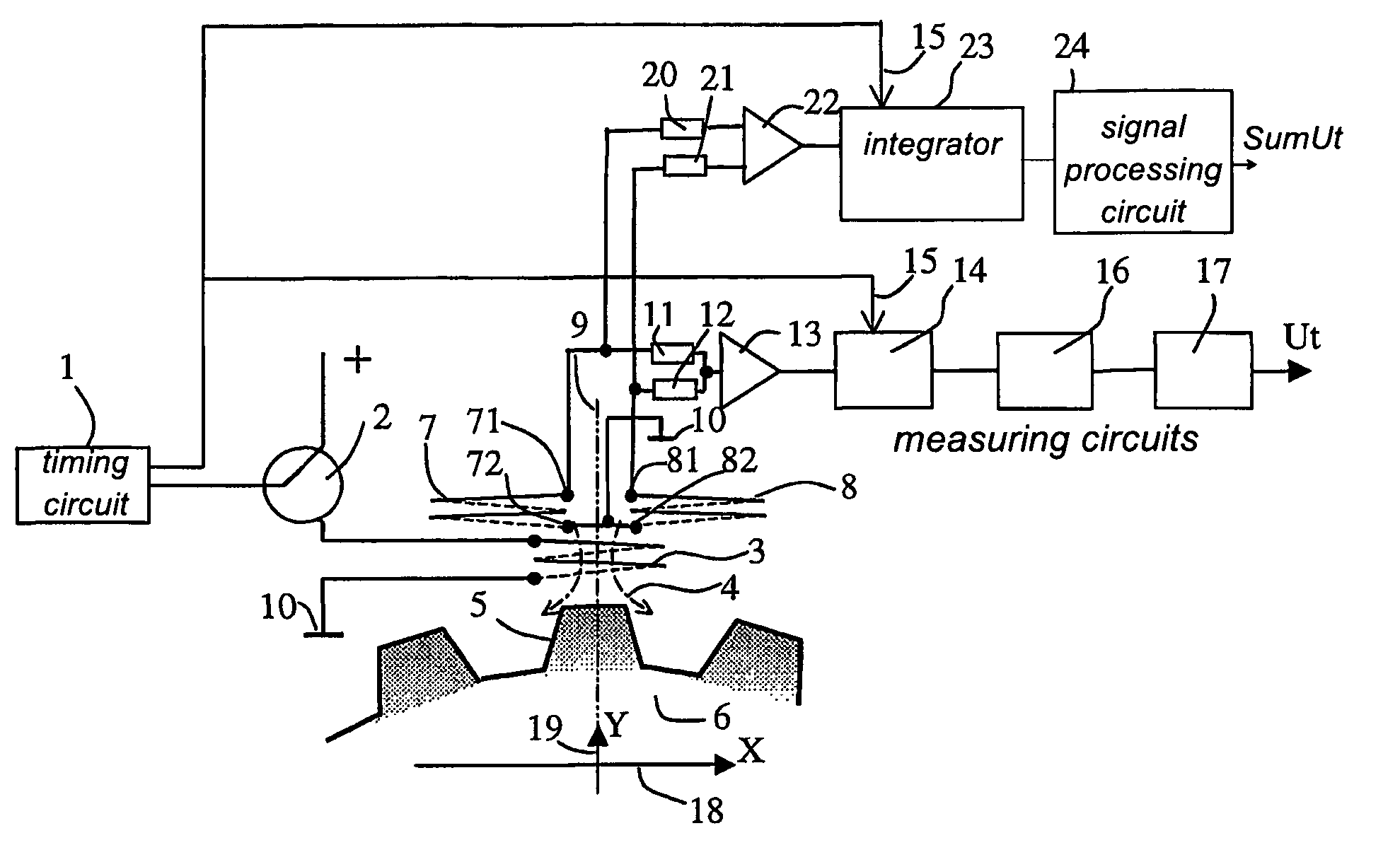
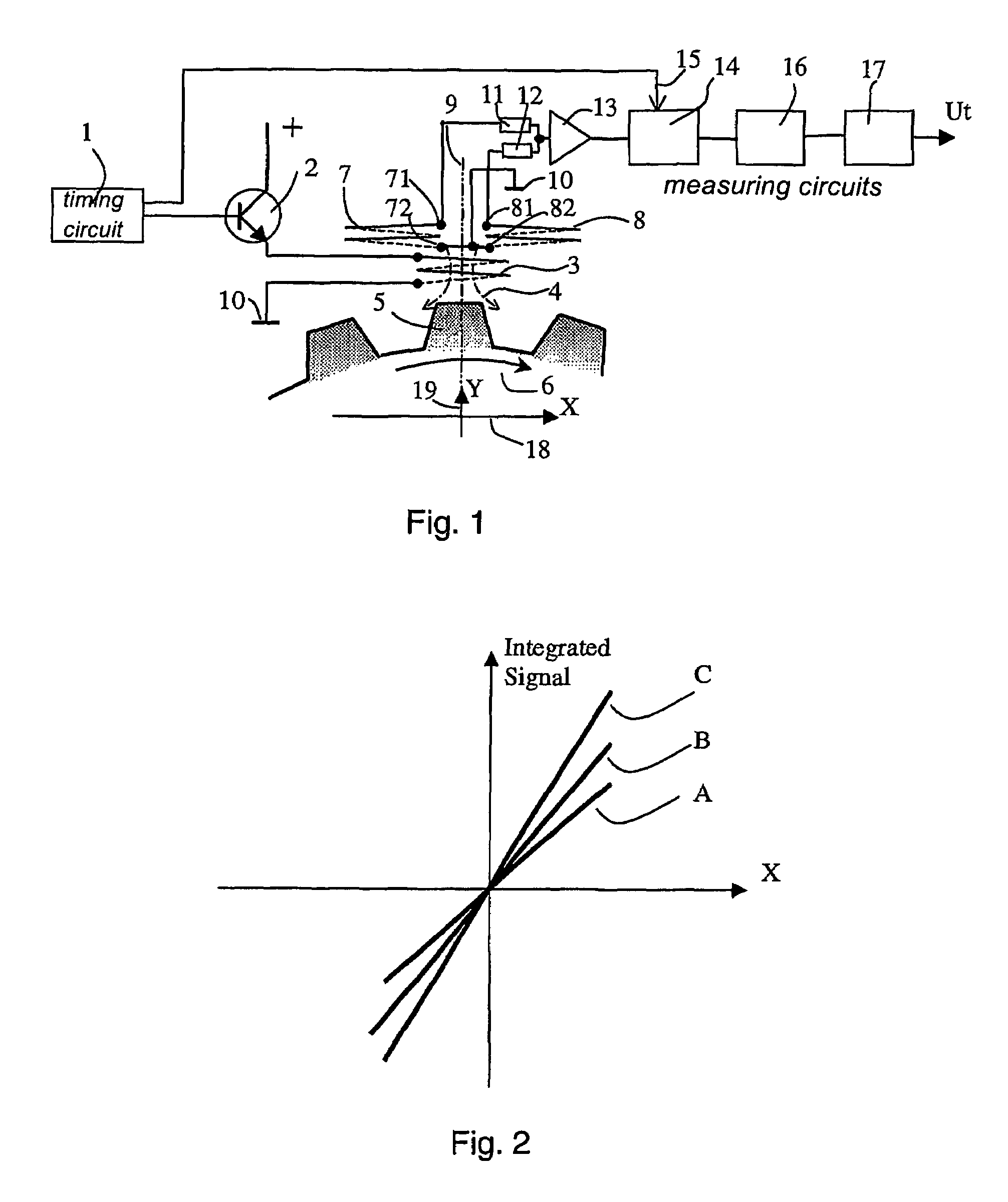
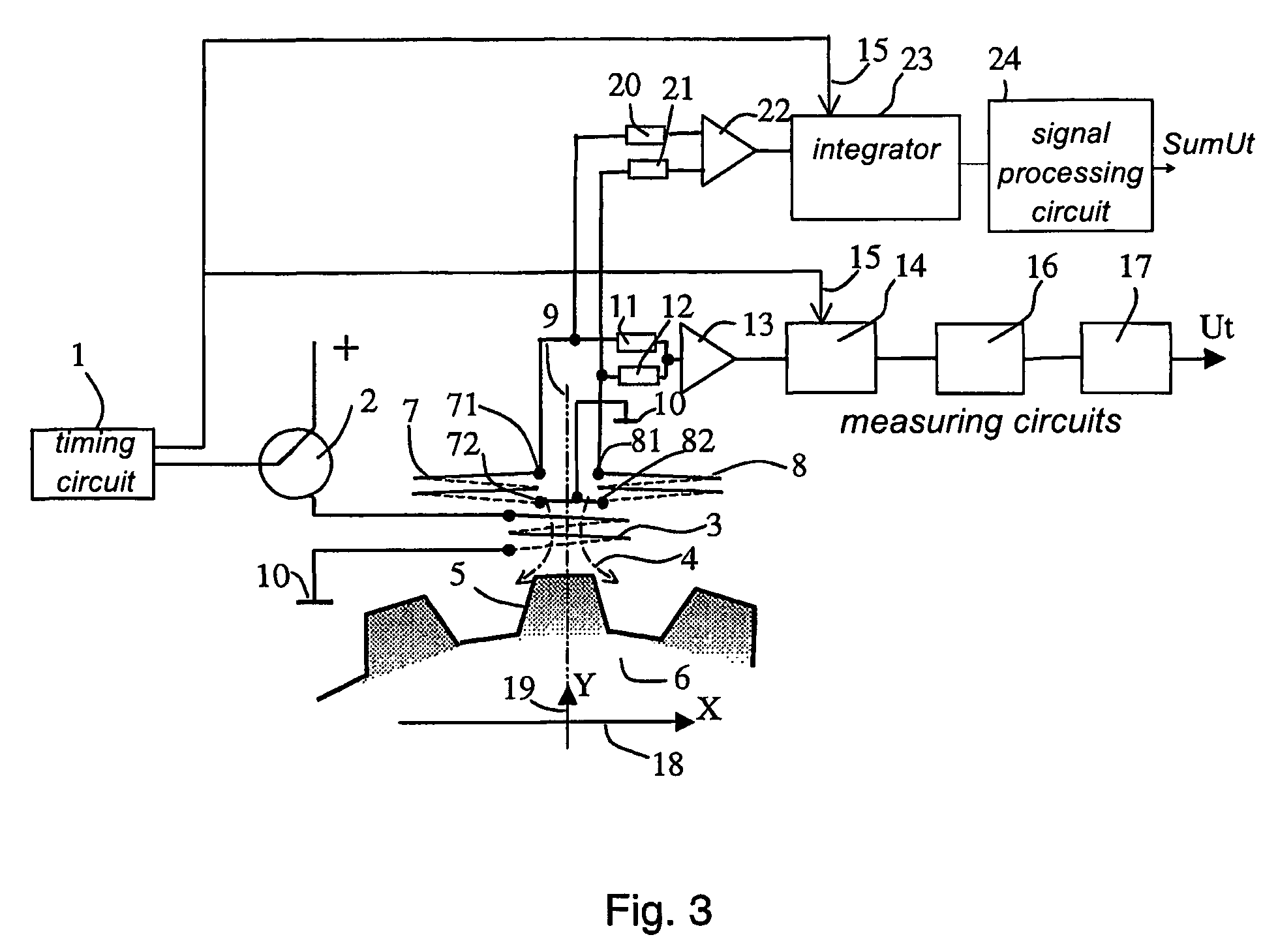
- A non-contact inductive measurement system using a transmitter coil and two receiver coils, where the transmitter coil is fed with a constant current suddenly cut off, and the signals from the receiver coils are subtracted and integrated to determine the midpoint of a gear tooth, minimizing the impact of material and magnetic characteristics, allowing for precise and rapid measurement of angular inclination.

Manufacturing Standards for Precision Gear Components
Manufacturing standards for precision gear components play a critical role in determining the performance characteristics of gear teeth and gear sectors in incremental positioning applications. The dimensional accuracy requirements for gear teeth typically follow ISO 1328 or AGMA 2015 standards, which specify tolerance classes ranging from IT5 to IT7 for high-precision applications. These standards directly impact the backlash control and positioning repeatability that are essential for incremental positioning systems.
Surface finish specifications constitute another fundamental aspect of precision gear manufacturing. The Ra values for gear tooth flanks in precision applications typically range from 0.2 to 0.8 micrometers, with gear sectors often requiring even tighter specifications due to their critical role in positioning accuracy. The manufacturing processes, including gear grinding and honing, must be carefully controlled to achieve these surface quality requirements while maintaining the geometric integrity of the tooth profile.
Material specifications and heat treatment standards significantly influence the long-term performance of both gear teeth and gear sectors. Common materials include case-hardened steels such as 20CrMnTi or 18CrNiMo7-6, with surface hardness requirements typically ranging from 58-62 HRC. The core hardness and case depth specifications must be precisely controlled to ensure optimal load distribution and minimize elastic deformation during incremental positioning operations.
Geometric accuracy standards encompass multiple parameters including pitch accuracy, profile accuracy, and lead accuracy. For incremental positioning applications, pitch accuracy is particularly critical, with Class 4 or higher precision typically required according to ISO standards. The cumulative pitch error directly affects the positioning accuracy over multiple incremental steps, making this parameter crucial for system performance evaluation.
Quality control and measurement standards define the inspection protocols and measurement uncertainty requirements for precision gear components. Coordinate measuring machines and specialized gear measuring instruments must maintain measurement uncertainties below 1 micrometer for critical dimensions. The measurement standards also specify the environmental conditions, including temperature control and vibration isolation, necessary for accurate dimensional verification of precision gear components used in incremental positioning systems.
Surface finish specifications constitute another fundamental aspect of precision gear manufacturing. The Ra values for gear tooth flanks in precision applications typically range from 0.2 to 0.8 micrometers, with gear sectors often requiring even tighter specifications due to their critical role in positioning accuracy. The manufacturing processes, including gear grinding and honing, must be carefully controlled to achieve these surface quality requirements while maintaining the geometric integrity of the tooth profile.
Material specifications and heat treatment standards significantly influence the long-term performance of both gear teeth and gear sectors. Common materials include case-hardened steels such as 20CrMnTi or 18CrNiMo7-6, with surface hardness requirements typically ranging from 58-62 HRC. The core hardness and case depth specifications must be precisely controlled to ensure optimal load distribution and minimize elastic deformation during incremental positioning operations.
Geometric accuracy standards encompass multiple parameters including pitch accuracy, profile accuracy, and lead accuracy. For incremental positioning applications, pitch accuracy is particularly critical, with Class 4 or higher precision typically required according to ISO standards. The cumulative pitch error directly affects the positioning accuracy over multiple incremental steps, making this parameter crucial for system performance evaluation.
Quality control and measurement standards define the inspection protocols and measurement uncertainty requirements for precision gear components. Coordinate measuring machines and specialized gear measuring instruments must maintain measurement uncertainties below 1 micrometer for critical dimensions. The measurement standards also specify the environmental conditions, including temperature control and vibration isolation, necessary for accurate dimensional verification of precision gear components used in incremental positioning systems.
Cost-Performance Trade-offs in Gear Positioning Systems
The cost-performance trade-offs in gear positioning systems represent a fundamental consideration in mechanical design, particularly when comparing gear tooth and gear sector implementations for incremental positioning applications. These trade-offs manifest across multiple dimensions including manufacturing complexity, material requirements, precision capabilities, and operational longevity.
Manufacturing costs constitute the primary economic factor distinguishing these approaches. Full gear tooth systems require comprehensive machining of the entire circumference, demanding higher material volumes and extended manufacturing time. The precision requirements for complete tooth profiles across 360 degrees significantly increase production costs, especially for high-accuracy applications. Conversely, gear sector implementations utilize only partial circumferential coverage, reducing material consumption by 40-70% depending on the angular range required.
Tooling and setup costs present another critical consideration. Gear tooth systems benefit from standardized manufacturing processes and readily available cutting tools, reducing initial setup investments. However, gear sectors often require specialized fixtures and custom tooling arrangements, increasing upfront costs but potentially offering long-term savings through material efficiency.
Performance characteristics directly impact the cost-effectiveness equation. Full gear tooth systems provide superior load distribution and enhanced durability due to multiple tooth engagement, justifying higher initial investments in applications requiring extended operational life. The continuous tooth profile enables smoother operation and reduced backlash, translating to improved positioning accuracy that may eliminate the need for additional correction mechanisms.
Gear sector systems offer compelling performance advantages in specific applications despite their structural limitations. The reduced inertia from lower mass enables faster acceleration and deceleration cycles, improving overall system responsiveness. This characteristic proves particularly valuable in high-frequency positioning applications where rapid settling times directly impact productivity.
Maintenance and replacement costs significantly influence long-term economic viability. Gear tooth systems typically exhibit superior wear characteristics due to load sharing across multiple teeth, extending service intervals and reducing maintenance frequency. However, when replacement becomes necessary, the entire gear assembly requires substitution. Gear sectors, while potentially experiencing more concentrated wear patterns, offer the advantage of partial replacement capabilities in modular designs.
The economic optimization point varies considerably based on application requirements, production volumes, and performance specifications, necessitating comprehensive analysis of total cost of ownership rather than initial acquisition costs alone.
Manufacturing costs constitute the primary economic factor distinguishing these approaches. Full gear tooth systems require comprehensive machining of the entire circumference, demanding higher material volumes and extended manufacturing time. The precision requirements for complete tooth profiles across 360 degrees significantly increase production costs, especially for high-accuracy applications. Conversely, gear sector implementations utilize only partial circumferential coverage, reducing material consumption by 40-70% depending on the angular range required.
Tooling and setup costs present another critical consideration. Gear tooth systems benefit from standardized manufacturing processes and readily available cutting tools, reducing initial setup investments. However, gear sectors often require specialized fixtures and custom tooling arrangements, increasing upfront costs but potentially offering long-term savings through material efficiency.
Performance characteristics directly impact the cost-effectiveness equation. Full gear tooth systems provide superior load distribution and enhanced durability due to multiple tooth engagement, justifying higher initial investments in applications requiring extended operational life. The continuous tooth profile enables smoother operation and reduced backlash, translating to improved positioning accuracy that may eliminate the need for additional correction mechanisms.
Gear sector systems offer compelling performance advantages in specific applications despite their structural limitations. The reduced inertia from lower mass enables faster acceleration and deceleration cycles, improving overall system responsiveness. This characteristic proves particularly valuable in high-frequency positioning applications where rapid settling times directly impact productivity.
Maintenance and replacement costs significantly influence long-term economic viability. Gear tooth systems typically exhibit superior wear characteristics due to load sharing across multiple teeth, extending service intervals and reducing maintenance frequency. However, when replacement becomes necessary, the entire gear assembly requires substitution. Gear sectors, while potentially experiencing more concentrated wear patterns, offer the advantage of partial replacement capabilities in modular designs.
The economic optimization point varies considerably based on application requirements, production volumes, and performance specifications, necessitating comprehensive analysis of total cost of ownership rather than initial acquisition costs alone.
Unlock deeper insights with PatSnap Eureka Quick Research — get a full tech report to explore trends and direct your research. Try now!
Generate Your Research Report Instantly with AI Agent
Supercharge your innovation with PatSnap Eureka AI Agent Platform!