

Graph-Constrained Reasoning vs Traditional Algorithms: Precision
MAR 17, 20269 MIN READ
Generate Your Research Report Instantly with AI Agent
PatSnap Eureka helps you evaluate technical feasibility & market potential.
Graph-Constrained Reasoning Background and Objectives
Graph-constrained reasoning represents a paradigm shift in computational problem-solving that leverages structured relationships and dependencies inherent in complex data systems. Unlike traditional algorithmic approaches that process information sequentially or through predetermined pathways, graph-constrained reasoning operates within explicitly defined network structures where nodes represent entities and edges encode relationships, constraints, or dependencies between these entities.
The evolution of graph-constrained reasoning stems from the recognition that many real-world problems exhibit inherently networked characteristics that traditional algorithms struggle to capture effectively. Early developments in this field emerged from graph theory applications in the 1960s, but significant advancement occurred with the rise of knowledge graphs, semantic networks, and more recently, graph neural networks. The integration of constraint satisfaction principles with graph-based representations has created a powerful framework for handling complex reasoning tasks.
Traditional algorithms, while computationally efficient in many scenarios, often face limitations when dealing with interconnected data where relationships between elements significantly impact solution quality. These conventional approaches typically rely on feature engineering, linear processing pipelines, or tree-based structures that may not adequately represent the multidimensional relationships present in complex domains such as knowledge reasoning, social network analysis, or molecular structure prediction.
The precision advantage of graph-constrained reasoning emerges from its ability to maintain contextual awareness throughout the reasoning process. By explicitly modeling relationships and constraints within the graph structure, these systems can propagate information more effectively, leading to more accurate inference and decision-making. This approach particularly excels in scenarios where local decisions must consider global context and where multiple interdependent factors influence outcomes.
Current objectives in graph-constrained reasoning focus on enhancing precision through improved constraint propagation mechanisms, developing more sophisticated graph neural architectures, and creating hybrid approaches that combine the computational efficiency of traditional algorithms with the contextual richness of graph-based methods. The field aims to establish standardized benchmarks for precision comparison and develop theoretical frameworks that can predict when graph-constrained approaches will outperform traditional alternatives.
The evolution of graph-constrained reasoning stems from the recognition that many real-world problems exhibit inherently networked characteristics that traditional algorithms struggle to capture effectively. Early developments in this field emerged from graph theory applications in the 1960s, but significant advancement occurred with the rise of knowledge graphs, semantic networks, and more recently, graph neural networks. The integration of constraint satisfaction principles with graph-based representations has created a powerful framework for handling complex reasoning tasks.
Traditional algorithms, while computationally efficient in many scenarios, often face limitations when dealing with interconnected data where relationships between elements significantly impact solution quality. These conventional approaches typically rely on feature engineering, linear processing pipelines, or tree-based structures that may not adequately represent the multidimensional relationships present in complex domains such as knowledge reasoning, social network analysis, or molecular structure prediction.
The precision advantage of graph-constrained reasoning emerges from its ability to maintain contextual awareness throughout the reasoning process. By explicitly modeling relationships and constraints within the graph structure, these systems can propagate information more effectively, leading to more accurate inference and decision-making. This approach particularly excels in scenarios where local decisions must consider global context and where multiple interdependent factors influence outcomes.
Current objectives in graph-constrained reasoning focus on enhancing precision through improved constraint propagation mechanisms, developing more sophisticated graph neural architectures, and creating hybrid approaches that combine the computational efficiency of traditional algorithms with the contextual richness of graph-based methods. The field aims to establish standardized benchmarks for precision comparison and develop theoretical frameworks that can predict when graph-constrained approaches will outperform traditional alternatives.
Market Demand for High-Precision Graph Reasoning Solutions
The demand for high-precision graph reasoning solutions is experiencing unprecedented growth across multiple industries as organizations increasingly recognize the limitations of traditional algorithmic approaches in handling complex, interconnected data structures. Financial institutions are driving significant market demand as they seek to enhance fraud detection capabilities, risk assessment models, and regulatory compliance systems. The interconnected nature of financial transactions, customer relationships, and market dependencies requires reasoning systems that can maintain high precision while processing vast networks of relationships.
Healthcare and pharmaceutical sectors represent another major demand driver, where precision in graph-constrained reasoning directly impacts patient outcomes and drug discovery processes. Medical knowledge graphs containing patient histories, genetic information, drug interactions, and treatment pathways require reasoning algorithms that can navigate complex relationships while maintaining accuracy levels that meet stringent regulatory standards. The cost of imprecision in these applications creates strong market incentives for superior reasoning technologies.
Supply chain management and logistics industries are increasingly adopting graph-based reasoning solutions to optimize complex networks involving suppliers, manufacturers, distributors, and customers. Traditional optimization algorithms often struggle with the dynamic, multi-constraint nature of modern supply chains, creating market opportunities for graph-constrained reasoning systems that can deliver higher precision in route optimization, inventory management, and risk mitigation.
The artificial intelligence and machine learning sectors are witnessing growing demand for graph reasoning solutions in knowledge representation, natural language processing, and recommendation systems. Social media platforms, e-commerce companies, and content providers require high-precision reasoning capabilities to understand user behavior patterns, content relationships, and preference networks that traditional algorithms cannot adequately capture.
Cybersecurity applications represent an emerging high-growth market segment where graph-constrained reasoning offers superior precision in threat detection, network analysis, and incident response. The ability to reason about complex attack patterns, system vulnerabilities, and network topologies with high accuracy creates substantial market value, particularly as cyber threats become increasingly sophisticated.
Research institutions and academic organizations are also contributing to market demand as they explore applications in computational biology, social network analysis, and complex systems modeling. The precision requirements in scientific research applications often exceed what traditional algorithms can deliver, driving adoption of advanced graph reasoning technologies.
Healthcare and pharmaceutical sectors represent another major demand driver, where precision in graph-constrained reasoning directly impacts patient outcomes and drug discovery processes. Medical knowledge graphs containing patient histories, genetic information, drug interactions, and treatment pathways require reasoning algorithms that can navigate complex relationships while maintaining accuracy levels that meet stringent regulatory standards. The cost of imprecision in these applications creates strong market incentives for superior reasoning technologies.
Supply chain management and logistics industries are increasingly adopting graph-based reasoning solutions to optimize complex networks involving suppliers, manufacturers, distributors, and customers. Traditional optimization algorithms often struggle with the dynamic, multi-constraint nature of modern supply chains, creating market opportunities for graph-constrained reasoning systems that can deliver higher precision in route optimization, inventory management, and risk mitigation.
The artificial intelligence and machine learning sectors are witnessing growing demand for graph reasoning solutions in knowledge representation, natural language processing, and recommendation systems. Social media platforms, e-commerce companies, and content providers require high-precision reasoning capabilities to understand user behavior patterns, content relationships, and preference networks that traditional algorithms cannot adequately capture.
Cybersecurity applications represent an emerging high-growth market segment where graph-constrained reasoning offers superior precision in threat detection, network analysis, and incident response. The ability to reason about complex attack patterns, system vulnerabilities, and network topologies with high accuracy creates substantial market value, particularly as cyber threats become increasingly sophisticated.
Research institutions and academic organizations are also contributing to market demand as they explore applications in computational biology, social network analysis, and complex systems modeling. The precision requirements in scientific research applications often exceed what traditional algorithms can deliver, driving adoption of advanced graph reasoning technologies.
Current State and Precision Challenges in Graph Algorithms
Graph algorithms currently face significant precision challenges that stem from both computational complexity and data representation limitations. Traditional graph algorithms, including shortest path algorithms like Dijkstra's and Bellman-Ford, often struggle with precision when dealing with large-scale networks containing millions or billions of nodes and edges. These algorithms typically rely on discrete optimization approaches that may converge to local optima rather than global solutions.
The precision bottleneck becomes particularly pronounced in dynamic graph environments where edge weights and node attributes change frequently. Classical algorithms must recalculate entire solutions when incremental changes occur, leading to accumulated numerical errors and reduced accuracy over time. This limitation is especially critical in applications such as social network analysis, recommendation systems, and supply chain optimization where precision directly impacts business outcomes.
Graph-constrained reasoning approaches have emerged as a promising alternative, leveraging machine learning techniques to improve precision through learned representations. These methods utilize graph neural networks (GNNs) and embedding techniques to capture complex topological relationships that traditional algorithms might miss. However, they introduce new precision challenges related to training data quality, model generalization, and interpretability of results.
Current precision measurement standards in graph algorithms vary significantly across different application domains. In transportation networks, precision is often measured by route optimality and travel time accuracy. In social networks, precision metrics focus on community detection accuracy and influence propagation fidelity. This lack of standardized precision benchmarks makes it difficult to compare algorithmic performance across different contexts.
The scalability-precision trade-off represents another fundamental challenge. Approximate algorithms like those used in graph sampling and clustering often sacrifice precision for computational efficiency. While these approaches can handle massive graphs, they introduce uncertainty bounds that may be unacceptable for mission-critical applications requiring high precision guarantees.
Emerging hybrid approaches attempt to combine the computational efficiency of traditional algorithms with the learning capabilities of graph-constrained reasoning methods. These solutions show promise in addressing precision challenges while maintaining reasonable computational complexity, though they require careful calibration and validation across diverse graph structures and application scenarios.
The precision bottleneck becomes particularly pronounced in dynamic graph environments where edge weights and node attributes change frequently. Classical algorithms must recalculate entire solutions when incremental changes occur, leading to accumulated numerical errors and reduced accuracy over time. This limitation is especially critical in applications such as social network analysis, recommendation systems, and supply chain optimization where precision directly impacts business outcomes.
Graph-constrained reasoning approaches have emerged as a promising alternative, leveraging machine learning techniques to improve precision through learned representations. These methods utilize graph neural networks (GNNs) and embedding techniques to capture complex topological relationships that traditional algorithms might miss. However, they introduce new precision challenges related to training data quality, model generalization, and interpretability of results.
Current precision measurement standards in graph algorithms vary significantly across different application domains. In transportation networks, precision is often measured by route optimality and travel time accuracy. In social networks, precision metrics focus on community detection accuracy and influence propagation fidelity. This lack of standardized precision benchmarks makes it difficult to compare algorithmic performance across different contexts.
The scalability-precision trade-off represents another fundamental challenge. Approximate algorithms like those used in graph sampling and clustering often sacrifice precision for computational efficiency. While these approaches can handle massive graphs, they introduce uncertainty bounds that may be unacceptable for mission-critical applications requiring high precision guarantees.
Emerging hybrid approaches attempt to combine the computational efficiency of traditional algorithms with the learning capabilities of graph-constrained reasoning methods. These solutions show promise in addressing precision challenges while maintaining reasonable computational complexity, though they require careful calibration and validation across diverse graph structures and application scenarios.
Existing Graph-Constrained vs Traditional Algorithm Solutions
01 Knowledge graph construction and constraint modeling for reasoning
Methods and systems for constructing knowledge graphs with explicit constraint relationships to improve reasoning precision. This involves defining entities, relationships, and constraints within graph structures to enable more accurate logical inference and decision-making processes. The constraint modeling helps eliminate invalid reasoning paths and ensures consistency in the reasoning process.- Knowledge graph construction and constraint modeling for reasoning: Methods and systems for constructing knowledge graphs with explicit constraint relationships to improve reasoning precision. This involves defining entities, relationships, and constraints within graph structures to enable more accurate logical inference and decision-making processes. The constraint modeling helps eliminate invalid reasoning paths and ensures consistency in the reasoning process.
- Graph neural networks with constraint-aware architectures: Implementation of specialized graph neural network architectures that incorporate constraint information during the learning and inference phases. These architectures use constraint-aware attention mechanisms and propagation rules to enhance reasoning accuracy by respecting predefined logical or structural constraints within the graph topology.
- Constraint satisfaction and optimization in graph-based reasoning: Techniques for formulating and solving constraint satisfaction problems within graph-based reasoning frameworks. This includes optimization algorithms that balance multiple constraints while performing inference tasks, ensuring that reasoning outputs satisfy all specified conditions and constraints simultaneously.
- Temporal and spatial constraint integration in graph reasoning: Methods for incorporating temporal and spatial constraints into graph-based reasoning systems to improve precision in dynamic environments. This involves modeling time-dependent relationships and spatial proximity constraints that guide the reasoning process and filter out temporally or spatially inconsistent inferences.
- Probabilistic reasoning with graph constraints and uncertainty handling: Approaches for performing probabilistic inference on graphs while respecting hard and soft constraints. These methods combine probabilistic graphical models with constraint propagation techniques to handle uncertainty while maintaining reasoning precision through constraint enforcement and confidence scoring mechanisms.
02 Graph neural networks with constraint-aware architectures
Implementation of specialized graph neural network architectures that incorporate constraint awareness during the reasoning process. These networks are designed to respect predefined constraints while performing inference tasks, utilizing attention mechanisms and message passing algorithms that are guided by constraint rules to enhance precision in graph-based reasoning applications.Expand Specific Solutions03 Constraint propagation and validation in reasoning systems
Techniques for propagating constraints through reasoning chains and validating intermediate results against defined rules. This approach ensures that each step in the reasoning process adheres to specified constraints, reducing errors and improving overall precision. The validation mechanisms check for consistency and correctness at multiple stages of the reasoning pipeline.Expand Specific Solutions04 Multi-hop reasoning with graph-based constraint enforcement
Systems for performing multi-hop reasoning across graph structures while enforcing constraints at each reasoning step. This involves traversing multiple nodes and edges in a knowledge graph while maintaining constraint satisfaction throughout the path. The methods improve precision by filtering out paths that violate constraints and prioritizing valid reasoning chains.Expand Specific Solutions05 Optimization algorithms for constraint-based graph reasoning
Advanced optimization algorithms designed to balance reasoning accuracy with computational efficiency in constraint-based graph systems. These algorithms employ techniques such as constraint relaxation, pruning strategies, and heuristic search methods to find optimal solutions while respecting graph constraints. The optimization process focuses on maximizing reasoning precision while minimizing computational overhead.Expand Specific Solutions
Key Players in Graph Computing and Reasoning Systems
The graph-constrained reasoning technology landscape represents an emerging field transitioning from early research to practical implementation phases. The market demonstrates significant growth potential as organizations increasingly recognize the precision advantages over traditional algorithmic approaches. Technology maturity varies considerably across market participants, with established tech giants like IBM, Microsoft, Google, and Huawei leading advanced development through substantial R&D investments and patent portfolios. Academic institutions including Columbia University, Johns Hopkins, and leading Chinese universities contribute foundational research breakthroughs. Mid-tier players such as NEC, Fujitsu, and Salesforce focus on specialized applications, while emerging companies like ModuleQ explore niche implementations. The competitive landscape shows a clear divide between research-intensive organizations developing core technologies and application-focused companies implementing graph-constrained solutions for specific use cases, indicating a maturing ecosystem with diverse technological capabilities.
International Business Machines Corp.
Technical Solution: IBM has developed Watson Knowledge Graph technology that integrates graph-constrained reasoning with traditional machine learning algorithms. Their approach combines symbolic reasoning with neural networks to achieve higher precision in complex decision-making tasks. The system utilizes knowledge graphs to constrain the reasoning process, ensuring logical consistency while maintaining computational efficiency. IBM's solution demonstrates significant improvements in precision compared to purely traditional algorithmic approaches, particularly in enterprise applications requiring explainable AI decisions.
Strengths: Strong enterprise integration capabilities and explainable AI features. Weaknesses: Higher computational overhead and complex implementation requirements.
Huawei Technologies Co., Ltd.
Technical Solution: Huawei has implemented graph-constrained reasoning in their AI chipsets and cloud computing platforms to achieve higher precision in edge computing scenarios. Their approach focuses on optimizing graph-based algorithms for mobile and IoT applications where precision is critical. The company's solution demonstrates significant improvements over traditional algorithms in resource-constrained environments while maintaining high accuracy levels. Huawei's implementation particularly excels in telecommunications and smart city applications where graph-constrained reasoning provides better precision than conventional algorithmic approaches.
Strengths: Optimized for edge computing and telecommunications applications with strong hardware-software integration. Weaknesses: Limited global market access due to regulatory restrictions and concerns about technology transfer.
Core Innovations in Graph-Constrained Precision Enhancement
System for creating a reasoning graph and for ranking of its nodes
PatentActiveUS10503791B2
Innovation
- The creation of a Reasoning Graph that collects and aggregates inferences and causality relationships from vast quantities of text, allowing computers to reason by analyzing and ranking nodes representing concepts, conditions, events, and properties, using crawlers, causality extractors, and deep learning networks to identify and extract cause/effect pairs and derive logical inferences.
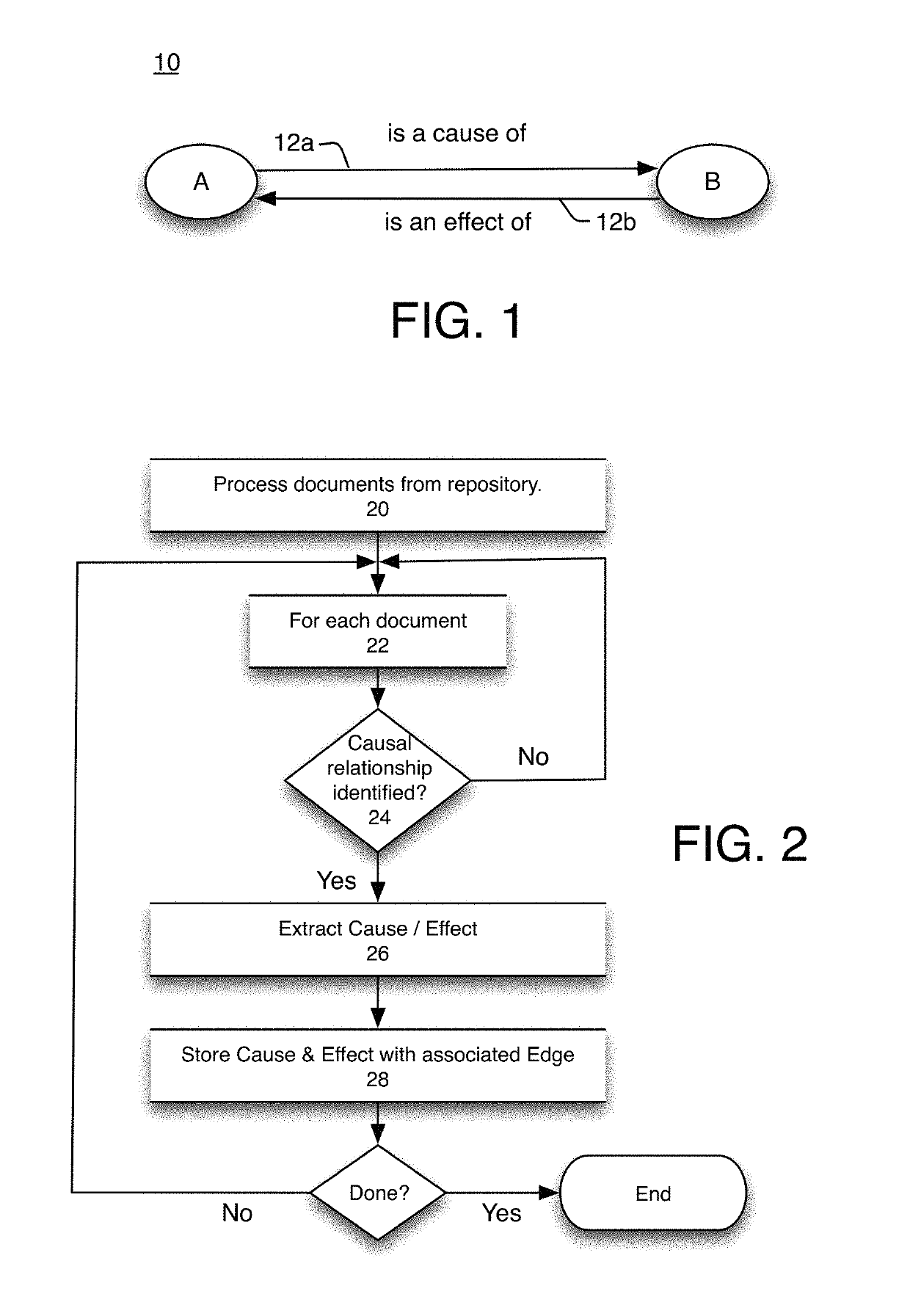
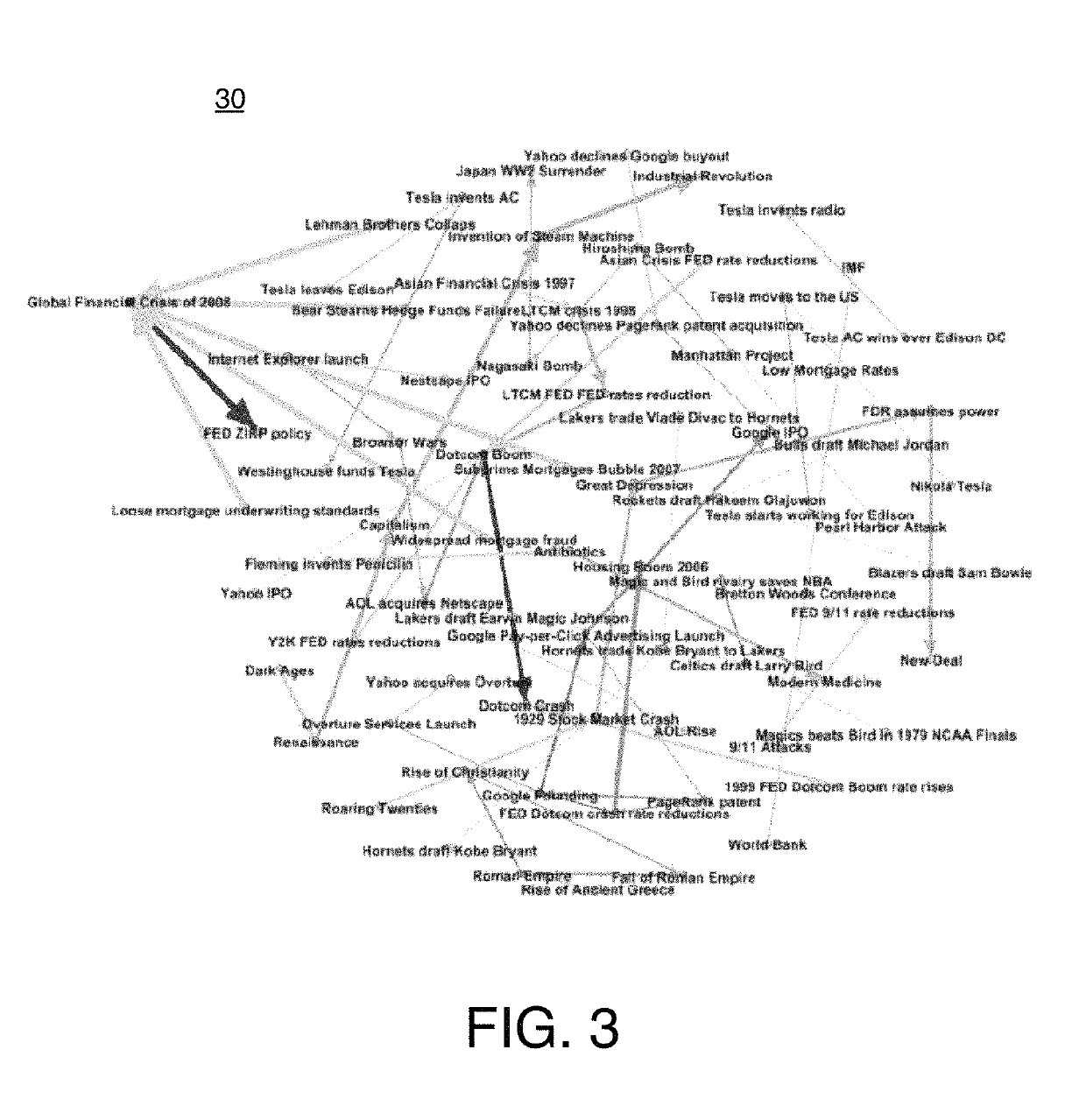
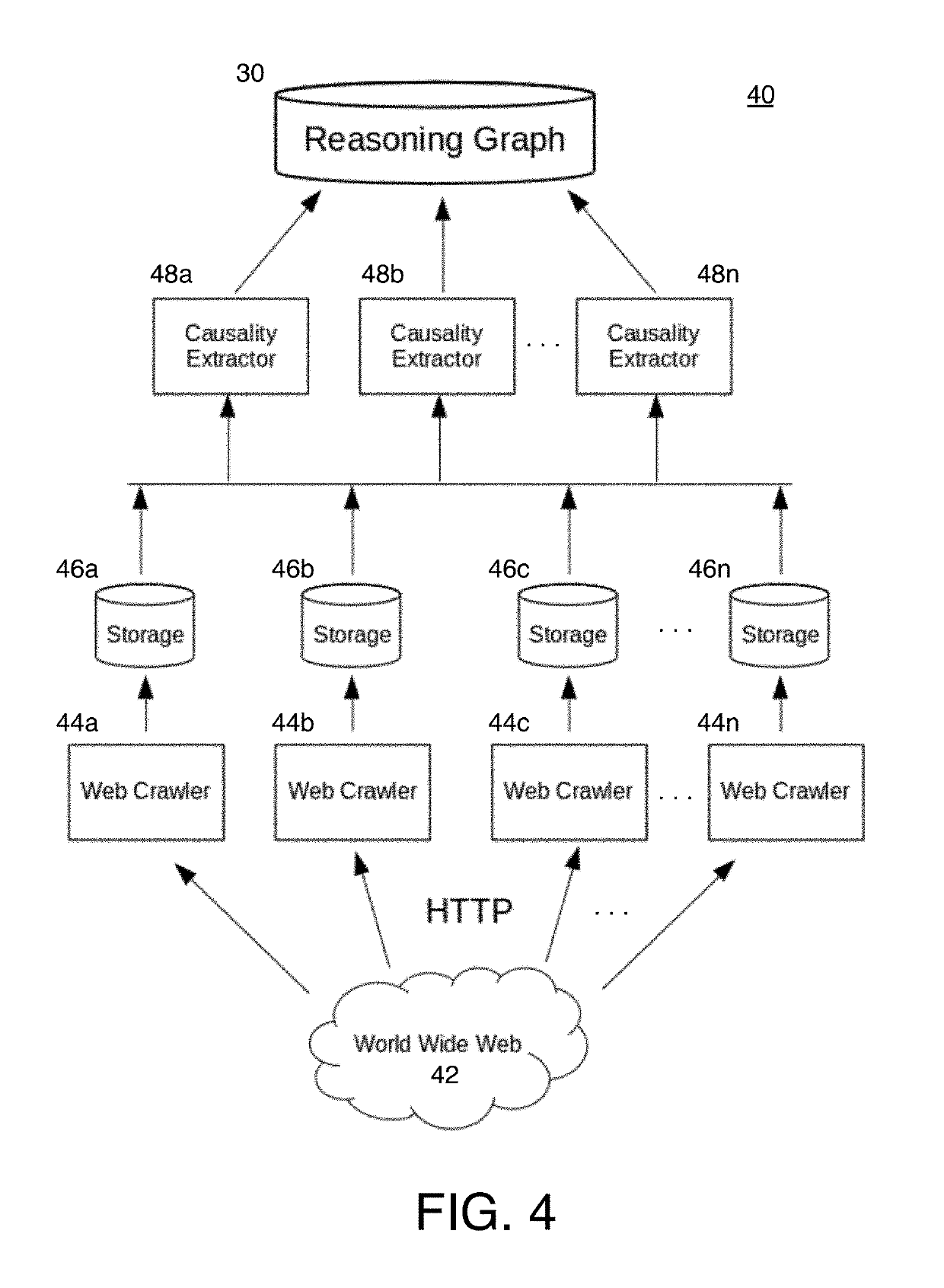
Accelerated reasoning graph evaluation
PatentActiveUS12340315B2
Innovation
- The method involves generating hashes from data sets and using these hashes to determine if new data sets match existing ones, thereby allowing for the direct association of outcomes with new data sets without the need for full processing through the reasoning graph.


Computational Complexity and Scalability Considerations
Graph-constrained reasoning algorithms exhibit fundamentally different computational complexity characteristics compared to traditional algorithmic approaches. The time complexity of graph-based methods typically scales as O(V + E) for basic traversal operations, where V represents vertices and E represents edges. However, when incorporating constraint satisfaction and reasoning mechanisms, complexity can escalate to O(V^k) or even exponential in worst-case scenarios, particularly for NP-complete problems involving graph coloring or maximum clique detection.
Traditional algorithms often demonstrate more predictable complexity patterns, with many classical approaches achieving polynomial time guarantees. For instance, dynamic programming solutions frequently maintain O(n^2) or O(n^3) complexity bounds, while greedy algorithms typically operate in O(n log n) time. This predictability becomes crucial when processing large-scale datasets where computational resources are constrained.
Scalability considerations reveal significant trade-offs between precision and computational efficiency. Graph-constrained reasoning methods excel in handling interconnected data structures but face memory bottlenecks as graph density increases. The space complexity grows quadratically with vertex count in dense graphs, potentially reaching O(V^2) memory requirements. This limitation becomes particularly pronounced in distributed computing environments where memory allocation across nodes becomes critical.
Memory access patterns differ substantially between approaches. Graph-based algorithms often exhibit irregular memory access due to pointer-following operations during traversal, leading to cache misses and reduced performance on modern CPU architectures. Traditional algorithms typically demonstrate better cache locality, especially when operating on contiguous data structures like arrays or matrices.
Parallel processing capabilities present another scalability dimension. Graph partitioning for distributed computation introduces communication overhead that can offset computational gains. Traditional algorithms often parallelize more naturally, particularly those following divide-and-conquer paradigms. However, certain graph operations like breadth-first search can achieve effective parallelization through level-synchronous approaches.
The scalability ceiling varies significantly based on problem characteristics. Graph-constrained methods may handle millions of vertices efficiently for sparse graphs but struggle with dense networks exceeding thousands of nodes. Traditional approaches often scale more linearly but may miss complex relational patterns that graph methods naturally capture, creating a fundamental precision-performance trade-off that requires careful evaluation based on specific application requirements.
Traditional algorithms often demonstrate more predictable complexity patterns, with many classical approaches achieving polynomial time guarantees. For instance, dynamic programming solutions frequently maintain O(n^2) or O(n^3) complexity bounds, while greedy algorithms typically operate in O(n log n) time. This predictability becomes crucial when processing large-scale datasets where computational resources are constrained.
Scalability considerations reveal significant trade-offs between precision and computational efficiency. Graph-constrained reasoning methods excel in handling interconnected data structures but face memory bottlenecks as graph density increases. The space complexity grows quadratically with vertex count in dense graphs, potentially reaching O(V^2) memory requirements. This limitation becomes particularly pronounced in distributed computing environments where memory allocation across nodes becomes critical.
Memory access patterns differ substantially between approaches. Graph-based algorithms often exhibit irregular memory access due to pointer-following operations during traversal, leading to cache misses and reduced performance on modern CPU architectures. Traditional algorithms typically demonstrate better cache locality, especially when operating on contiguous data structures like arrays or matrices.
Parallel processing capabilities present another scalability dimension. Graph partitioning for distributed computation introduces communication overhead that can offset computational gains. Traditional algorithms often parallelize more naturally, particularly those following divide-and-conquer paradigms. However, certain graph operations like breadth-first search can achieve effective parallelization through level-synchronous approaches.
The scalability ceiling varies significantly based on problem characteristics. Graph-constrained methods may handle millions of vertices efficiently for sparse graphs but struggle with dense networks exceeding thousands of nodes. Traditional approaches often scale more linearly but may miss complex relational patterns that graph methods naturally capture, creating a fundamental precision-performance trade-off that requires careful evaluation based on specific application requirements.
Benchmarking Standards for Graph Algorithm Precision
The establishment of robust benchmarking standards for graph algorithm precision represents a critical foundation for evaluating the comparative performance between graph-constrained reasoning and traditional algorithmic approaches. Current industry practices reveal significant inconsistencies in evaluation methodologies, creating challenges for meaningful performance comparisons across different research domains and commercial applications.
Precision measurement frameworks must address the unique characteristics of graph-based computations, where accuracy depends not only on numerical correctness but also on structural relationship preservation. Traditional metrics such as mean absolute error or root mean square error prove insufficient when evaluating algorithms that operate on complex network topologies. The development of specialized precision indicators, including graph structural similarity measures, node classification accuracy, and edge prediction reliability, becomes essential for comprehensive assessment.
Standardized datasets constitute another fundamental component of effective benchmarking systems. The research community has increasingly recognized the need for diverse, representative graph datasets that span various domains including social networks, biological systems, transportation networks, and knowledge graphs. These datasets must provide ground truth annotations and support reproducible experimental conditions across different algorithmic implementations.
Computational complexity considerations play a crucial role in precision benchmarking standards. Graph-constrained reasoning algorithms often exhibit different time and space complexity characteristics compared to traditional approaches, necessitating evaluation frameworks that account for these trade-offs. Precision measurements must be contextualized within computational resource constraints to provide practical insights for real-world deployment scenarios.
Cross-validation methodologies require adaptation for graph-structured data, where traditional random sampling approaches may violate structural dependencies. Specialized techniques such as temporal splitting for dynamic graphs, community-aware partitioning, and stratified sampling based on node degree distributions ensure more reliable precision estimates while maintaining statistical validity.
The integration of uncertainty quantification into precision benchmarking represents an emerging requirement, particularly for applications in critical domains where algorithmic reliability directly impacts decision-making processes. Standardized approaches for measuring and reporting confidence intervals, prediction uncertainty, and algorithmic robustness provide stakeholders with comprehensive performance insights beyond simple accuracy metrics.
Precision measurement frameworks must address the unique characteristics of graph-based computations, where accuracy depends not only on numerical correctness but also on structural relationship preservation. Traditional metrics such as mean absolute error or root mean square error prove insufficient when evaluating algorithms that operate on complex network topologies. The development of specialized precision indicators, including graph structural similarity measures, node classification accuracy, and edge prediction reliability, becomes essential for comprehensive assessment.
Standardized datasets constitute another fundamental component of effective benchmarking systems. The research community has increasingly recognized the need for diverse, representative graph datasets that span various domains including social networks, biological systems, transportation networks, and knowledge graphs. These datasets must provide ground truth annotations and support reproducible experimental conditions across different algorithmic implementations.
Computational complexity considerations play a crucial role in precision benchmarking standards. Graph-constrained reasoning algorithms often exhibit different time and space complexity characteristics compared to traditional approaches, necessitating evaluation frameworks that account for these trade-offs. Precision measurements must be contextualized within computational resource constraints to provide practical insights for real-world deployment scenarios.
Cross-validation methodologies require adaptation for graph-structured data, where traditional random sampling approaches may violate structural dependencies. Specialized techniques such as temporal splitting for dynamic graphs, community-aware partitioning, and stratified sampling based on node degree distributions ensure more reliable precision estimates while maintaining statistical validity.
The integration of uncertainty quantification into precision benchmarking represents an emerging requirement, particularly for applications in critical domains where algorithmic reliability directly impacts decision-making processes. Standardized approaches for measuring and reporting confidence intervals, prediction uncertainty, and algorithmic robustness provide stakeholders with comprehensive performance insights beyond simple accuracy metrics.
Unlock deeper insights with PatSnap Eureka Quick Research — get a full tech report to explore trends and direct your research. Try now!
Generate Your Research Report Instantly with AI Agent
Supercharge your innovation with PatSnap Eureka AI Agent Platform!