

Graphene Composites and Nanoparticle Interactions: A Theoretical Study
SEP 23, 20259 MIN READ
Generate Your Research Report Instantly with AI Agent
PatSnap Eureka helps you evaluate technical feasibility & market potential.
Graphene Composites Evolution and Research Objectives
Graphene, discovered in 2004, represents a revolutionary two-dimensional carbon material with exceptional mechanical, electrical, and thermal properties. The evolution of graphene composites has progressed through several distinct phases, beginning with initial isolation techniques and basic property characterization. Early research focused primarily on understanding graphene's intrinsic properties, while subsequent developments have expanded toward practical applications through composite formulation.
The field has witnessed significant advancement in fabrication methodologies, transitioning from mechanical exfoliation to chemical vapor deposition (CVD) and reduced graphene oxide (rGO) approaches. These manufacturing evolutions have enabled scalable production essential for commercial viability. Concurrently, the integration of nanoparticles with graphene structures has emerged as a critical research direction, offering enhanced functionality through synergistic property combinations.
Recent trends indicate growing interest in theoretical modeling of graphene-nanoparticle interactions at the molecular and atomic levels. Computational approaches including density functional theory (DFT), molecular dynamics simulations, and multi-scale modeling have become increasingly sophisticated, allowing researchers to predict composite behaviors with greater accuracy. This theoretical foundation has accelerated experimental progress by providing design principles for targeted property enhancement.
The current research landscape is characterized by a shift from purely empirical approaches toward theory-guided design of graphene composites. This transition represents a maturation of the field, where fundamental understanding increasingly drives application development. Particular emphasis has been placed on interface engineering between graphene and various nanoparticles, as these interfaces largely determine composite performance characteristics.
Our research objectives focus on developing comprehensive theoretical frameworks that can accurately predict and explain interaction mechanisms between graphene and diverse nanoparticle types. Specifically, we aim to elucidate electronic structure modifications, charge transfer dynamics, and mechanical coupling at graphene-nanoparticle interfaces. These investigations will employ advanced computational methods including time-dependent DFT and ab initio molecular dynamics.
Additionally, we seek to establish predictive models correlating nanoparticle characteristics (size, shape, surface chemistry) with resultant composite properties. This will enable rational design of graphene composites with tailored functionalities for specific applications. The ultimate goal is to bridge theoretical understanding with practical implementation, accelerating the development of next-generation graphene composite materials with enhanced performance profiles across multiple industrial sectors.
The field has witnessed significant advancement in fabrication methodologies, transitioning from mechanical exfoliation to chemical vapor deposition (CVD) and reduced graphene oxide (rGO) approaches. These manufacturing evolutions have enabled scalable production essential for commercial viability. Concurrently, the integration of nanoparticles with graphene structures has emerged as a critical research direction, offering enhanced functionality through synergistic property combinations.
Recent trends indicate growing interest in theoretical modeling of graphene-nanoparticle interactions at the molecular and atomic levels. Computational approaches including density functional theory (DFT), molecular dynamics simulations, and multi-scale modeling have become increasingly sophisticated, allowing researchers to predict composite behaviors with greater accuracy. This theoretical foundation has accelerated experimental progress by providing design principles for targeted property enhancement.
The current research landscape is characterized by a shift from purely empirical approaches toward theory-guided design of graphene composites. This transition represents a maturation of the field, where fundamental understanding increasingly drives application development. Particular emphasis has been placed on interface engineering between graphene and various nanoparticles, as these interfaces largely determine composite performance characteristics.
Our research objectives focus on developing comprehensive theoretical frameworks that can accurately predict and explain interaction mechanisms between graphene and diverse nanoparticle types. Specifically, we aim to elucidate electronic structure modifications, charge transfer dynamics, and mechanical coupling at graphene-nanoparticle interfaces. These investigations will employ advanced computational methods including time-dependent DFT and ab initio molecular dynamics.
Additionally, we seek to establish predictive models correlating nanoparticle characteristics (size, shape, surface chemistry) with resultant composite properties. This will enable rational design of graphene composites with tailored functionalities for specific applications. The ultimate goal is to bridge theoretical understanding with practical implementation, accelerating the development of next-generation graphene composite materials with enhanced performance profiles across multiple industrial sectors.
Market Applications and Demand Analysis for Graphene Composites
The graphene composites market has witnessed substantial growth in recent years, driven by the exceptional properties of graphene and its potential to enhance various materials. Current market analysis indicates that the global graphene composites market is projected to reach $1.6 billion by 2025, with a compound annual growth rate exceeding 40% from 2020 to 2025. This remarkable growth trajectory is primarily fueled by increasing demand across multiple industries seeking advanced material solutions.
The aerospace and automotive sectors represent the largest market segments for graphene composites, collectively accounting for approximately 45% of the total market share. These industries particularly value graphene composites for their lightweight characteristics combined with exceptional strength, which directly translates to fuel efficiency improvements and reduced emissions. Boeing and Airbus have already implemented graphene-enhanced components in their latest aircraft models, while automotive manufacturers like BMW and Tesla are exploring graphene-based materials for structural components and battery technologies.
Electronics and energy storage applications constitute another rapidly expanding market segment. The demand for flexible electronics, wearable devices, and high-capacity energy storage systems has created significant opportunities for graphene composites. Market research indicates that consumer electronics manufacturers are increasingly incorporating graphene-enhanced materials in smartphones, tablets, and wearable devices to improve durability while reducing weight.
The healthcare and biomedical sectors have emerged as promising growth areas for graphene composites. Applications include drug delivery systems, biosensors, tissue engineering scaffolds, and antimicrobial coatings. The biocompatibility of certain graphene composites, combined with their electrical conductivity and mechanical strength, makes them particularly valuable for next-generation medical devices and implants.
Construction and building materials represent an emerging but potentially massive market for graphene composites. Enhanced concrete formulations incorporating graphene have demonstrated superior strength, reduced water permeability, and improved thermal properties. Several major construction companies have begun pilot projects using graphene-enhanced concrete for infrastructure applications.
Regional market analysis reveals that Asia-Pacific currently leads in graphene composite adoption, accounting for approximately 40% of global demand, followed by North America and Europe. China, Japan, South Korea, and the United States are the primary markets driving innovation and commercialization in this space.
Despite the promising market outlook, challenges remain in scaling production and standardizing quality. The theoretical understanding of graphene-nanoparticle interactions is crucial for overcoming these barriers and unlocking the full commercial potential of graphene composites across these diverse market applications.
The aerospace and automotive sectors represent the largest market segments for graphene composites, collectively accounting for approximately 45% of the total market share. These industries particularly value graphene composites for their lightweight characteristics combined with exceptional strength, which directly translates to fuel efficiency improvements and reduced emissions. Boeing and Airbus have already implemented graphene-enhanced components in their latest aircraft models, while automotive manufacturers like BMW and Tesla are exploring graphene-based materials for structural components and battery technologies.
Electronics and energy storage applications constitute another rapidly expanding market segment. The demand for flexible electronics, wearable devices, and high-capacity energy storage systems has created significant opportunities for graphene composites. Market research indicates that consumer electronics manufacturers are increasingly incorporating graphene-enhanced materials in smartphones, tablets, and wearable devices to improve durability while reducing weight.
The healthcare and biomedical sectors have emerged as promising growth areas for graphene composites. Applications include drug delivery systems, biosensors, tissue engineering scaffolds, and antimicrobial coatings. The biocompatibility of certain graphene composites, combined with their electrical conductivity and mechanical strength, makes them particularly valuable for next-generation medical devices and implants.
Construction and building materials represent an emerging but potentially massive market for graphene composites. Enhanced concrete formulations incorporating graphene have demonstrated superior strength, reduced water permeability, and improved thermal properties. Several major construction companies have begun pilot projects using graphene-enhanced concrete for infrastructure applications.
Regional market analysis reveals that Asia-Pacific currently leads in graphene composite adoption, accounting for approximately 40% of global demand, followed by North America and Europe. China, Japan, South Korea, and the United States are the primary markets driving innovation and commercialization in this space.
Despite the promising market outlook, challenges remain in scaling production and standardizing quality. The theoretical understanding of graphene-nanoparticle interactions is crucial for overcoming these barriers and unlocking the full commercial potential of graphene composites across these diverse market applications.
Current Challenges in Graphene-Nanoparticle Interface Engineering
Despite significant advancements in graphene-nanoparticle composite development, several critical challenges persist at the interface engineering level. The primary obstacle remains achieving uniform dispersion of nanoparticles on graphene sheets. Current methods often result in agglomeration, which diminishes the synergistic properties of these composites and creates inconsistent performance across batches. This non-uniformity significantly impacts scalability for industrial applications.
Surface chemistry compatibility presents another substantial challenge. The interaction between graphene's sp² hybridized carbon structure and various nanoparticle surface chemistries is not fully understood, leading to unpredictable binding mechanisms. Researchers struggle to develop universal functionalization approaches that maintain graphene's exceptional properties while creating strong interfaces with diverse nanoparticle types.
Characterization limitations further complicate interface engineering efforts. Current analytical techniques provide insufficient resolution to fully visualize and quantify the atomic-level interactions at graphene-nanoparticle interfaces. This knowledge gap hinders the development of precise engineering protocols and theoretical models that could predict composite behavior under various conditions.
Stability issues under operational conditions represent a significant barrier to practical applications. Many graphene-nanoparticle interfaces degrade when exposed to environmental factors such as temperature fluctuations, mechanical stress, or chemical environments. This instability compromises long-term performance and reliability in real-world applications.
The lack of standardized fabrication protocols creates reproducibility challenges across research groups. Different synthesis methods produce varying interface qualities, making it difficult to compare results and establish definitive structure-property relationships. This inconsistency slows progress toward optimized interface engineering solutions.
Computational modeling limitations also impede progress. Current simulation approaches struggle to accurately represent the complex quantum and molecular interactions at graphene-nanoparticle interfaces, particularly for systems with multiple components or under dynamic conditions. More sophisticated multiscale modeling frameworks are needed to bridge theoretical predictions with experimental observations.
Finally, scalable manufacturing techniques for precisely engineered interfaces remain underdeveloped. Laboratory-scale methods that produce high-quality interfaces often cannot be translated to industrial production scales without significant property degradation. This manufacturing gap represents perhaps the most significant barrier to commercialization of graphene-nanoparticle composite technologies with engineered interfaces.
Surface chemistry compatibility presents another substantial challenge. The interaction between graphene's sp² hybridized carbon structure and various nanoparticle surface chemistries is not fully understood, leading to unpredictable binding mechanisms. Researchers struggle to develop universal functionalization approaches that maintain graphene's exceptional properties while creating strong interfaces with diverse nanoparticle types.
Characterization limitations further complicate interface engineering efforts. Current analytical techniques provide insufficient resolution to fully visualize and quantify the atomic-level interactions at graphene-nanoparticle interfaces. This knowledge gap hinders the development of precise engineering protocols and theoretical models that could predict composite behavior under various conditions.
Stability issues under operational conditions represent a significant barrier to practical applications. Many graphene-nanoparticle interfaces degrade when exposed to environmental factors such as temperature fluctuations, mechanical stress, or chemical environments. This instability compromises long-term performance and reliability in real-world applications.
The lack of standardized fabrication protocols creates reproducibility challenges across research groups. Different synthesis methods produce varying interface qualities, making it difficult to compare results and establish definitive structure-property relationships. This inconsistency slows progress toward optimized interface engineering solutions.
Computational modeling limitations also impede progress. Current simulation approaches struggle to accurately represent the complex quantum and molecular interactions at graphene-nanoparticle interfaces, particularly for systems with multiple components or under dynamic conditions. More sophisticated multiscale modeling frameworks are needed to bridge theoretical predictions with experimental observations.
Finally, scalable manufacturing techniques for precisely engineered interfaces remain underdeveloped. Laboratory-scale methods that produce high-quality interfaces often cannot be translated to industrial production scales without significant property degradation. This manufacturing gap represents perhaps the most significant barrier to commercialization of graphene-nanoparticle composite technologies with engineered interfaces.
Contemporary Theoretical Models for Graphene-Nanoparticle Systems
01 Graphene-nanoparticle composite structures for energy storage
Graphene-based composites incorporating various nanoparticles can be used to enhance energy storage capabilities. These composites combine the excellent electrical conductivity and high surface area of graphene with the specific properties of nanoparticles to create advanced materials for batteries, supercapacitors, and other energy storage devices. The interaction between graphene and nanoparticles creates synergistic effects that improve charge transfer, cycling stability, and overall performance.- Graphene-nanoparticle composite structures: Graphene can be combined with various nanoparticles to form composite structures with enhanced properties. These composites leverage the excellent electrical conductivity, mechanical strength, and large surface area of graphene while incorporating the unique properties of nanoparticles. The interaction between graphene and nanoparticles creates synergistic effects that can improve performance in applications such as energy storage, catalysis, and sensing. These composites often exhibit better stability and dispersion compared to the individual components.
- Functionalization methods for graphene-nanoparticle interfaces: Various functionalization techniques can be employed to enhance the interaction between graphene and nanoparticles. These methods include chemical modification of graphene surfaces, use of coupling agents, and introduction of functional groups that can bind to nanoparticles. Functionalization improves the dispersion of nanoparticles on graphene sheets and strengthens the interface between the components. This results in better load transfer, electrical contact, and overall stability of the composite material, leading to enhanced performance in applications such as electronics and energy storage devices.
- Graphene-metal nanoparticle hybrids for energy applications: Graphene combined with metal nanoparticles creates hybrid materials with exceptional properties for energy applications. These hybrids utilize the high conductivity of graphene and the catalytic or electrochemical properties of metal nanoparticles. The interaction between graphene and metal nanoparticles enhances electron transfer and catalytic activity. These materials show improved performance in batteries, supercapacitors, fuel cells, and photovoltaic devices. The graphene sheets provide a conductive network while the metal nanoparticles serve as active sites for energy conversion or storage processes.
- Graphene oxide-nanoparticle interactions and reduction processes: Graphene oxide serves as an excellent platform for nanoparticle attachment due to its abundant oxygen-containing functional groups. The interaction between graphene oxide and nanoparticles can be controlled through reduction processes that convert graphene oxide to reduced graphene oxide while simultaneously forming nanoparticles. This approach allows for in-situ synthesis of nanoparticles on graphene sheets with strong interfacial interactions. The reduction process can be achieved through chemical, thermal, or electrochemical methods, each resulting in different degrees of reduction and nanoparticle characteristics.
- Environmental and biomedical applications of graphene-nanoparticle composites: Graphene-nanoparticle composites offer unique advantages for environmental remediation and biomedical applications. In environmental applications, these materials can be used for water purification, pollutant degradation, and contaminant sensing due to their high adsorption capacity and catalytic activity. For biomedical applications, graphene-nanoparticle composites serve as platforms for drug delivery, biosensing, and antimicrobial agents. The interaction between graphene and nanoparticles enhances biocompatibility, targeting ability, and therapeutic efficacy while potentially reducing toxicity concerns associated with individual components.
02 Functionalization methods for graphene-nanoparticle interfaces
Various functionalization techniques can be employed to control and enhance the interactions between graphene and nanoparticles. These methods include chemical modification of graphene surfaces, use of coupling agents, and introduction of functional groups that facilitate strong bonding with nanoparticles. Proper functionalization improves dispersion stability, prevents agglomeration, and creates stronger interfaces between graphene sheets and nanoparticles, resulting in composites with superior mechanical, electrical, and thermal properties.Expand Specific Solutions03 Graphene-metal nanoparticle composites for catalytic applications
Composites of graphene with metal nanoparticles exhibit enhanced catalytic activity for various chemical reactions. The graphene support provides high surface area and excellent electron transfer capabilities, while metal nanoparticles offer specific catalytic functions. These composites show improved performance in applications such as fuel cells, chemical synthesis, environmental remediation, and sensors. The interaction between graphene and metal nanoparticles can be tuned to optimize catalytic efficiency, selectivity, and durability.Expand Specific Solutions04 Graphene-polymer nanocomposites with enhanced properties
Incorporating graphene into polymer matrices along with nanoparticles creates multifunctional composites with enhanced mechanical, electrical, thermal, and barrier properties. The interactions between graphene, nanoparticles, and polymer chains determine the final properties of these composites. Various processing techniques can be used to achieve uniform dispersion and strong interfacial bonding. These nanocomposites find applications in lightweight structural materials, electromagnetic shielding, conductive coatings, and packaging materials.Expand Specific Solutions05 Graphene-based nanocomposites for environmental and biomedical applications
Graphene composites with specific nanoparticles can be designed for environmental remediation and biomedical applications. In environmental applications, these composites can be used for water purification, contaminant removal, and pollution sensing. For biomedical purposes, graphene-nanoparticle composites serve as drug delivery systems, biosensors, antimicrobial agents, and tissue engineering scaffolds. The interactions between graphene and nanoparticles can be tailored to achieve targeted functionality, biocompatibility, and controlled release properties.Expand Specific Solutions
Leading Research Institutions and Industrial Stakeholders
Graphene composites and nanoparticle interactions research is currently in a growth phase, with the market expected to reach significant expansion as applications move from laboratory to commercial settings. The global graphene market is projected to grow substantially, driven by increasing demand in electronics, energy storage, and composite materials. Technologically, the field shows varying maturity levels across different applications. Leading institutions like Global Graphene Group and BASF are advancing commercial applications, while academic powerhouses such as University of Manchester (where graphene was first isolated) and Northwestern University are pushing theoretical boundaries. Research collaborations between industry players like Nanotek Instruments and academic centers including CNRS and King Fahd University are accelerating development of practical applications, particularly in energy storage and nanocomposites.
Northwestern University
Technical Solution: Northwestern University has developed advanced theoretical frameworks for understanding graphene-nanoparticle interactions at the atomic and molecular levels. Their research employs quantum mechanical calculations, molecular dynamics simulations, and continuum modeling approaches to predict the behavior of graphene-based nanocomposites. The university's theoretical studies have focused on elucidating the fundamental mechanisms of charge transfer, interfacial bonding, and mechanical coupling between graphene and various nanoparticles including metals, metal oxides, and quantum dots. Their models incorporate considerations of surface functionalization, defect engineering, and environmental effects on composite stability and performance. Northwestern's theoretical work has been particularly influential in predicting how nanoparticle size, shape, and distribution affect the electronic structure, mechanical properties, and thermal transport in graphene composites, providing crucial insights for designing next-generation materials for applications in electronics, energy storage, and catalysis.
Strengths: Sophisticated multi-scale modeling approaches; strong integration of theory with experimental validation; innovative methods for predicting emergent properties in complex composite systems. Weaknesses: Some theoretical predictions may be limited by computational constraints when modeling large-scale systems; challenges in accurately modeling dynamic processes under real-world conditions.
Global Graphene Group, Inc.
Technical Solution: Global Graphene Group has developed proprietary technology for graphene-nanoparticle composite materials with enhanced functionalities. Their approach involves precise control of interfacial interactions between graphene sheets and various nanoparticles (including metal oxides, semiconductors, and polymeric materials) to create tailored properties. Their theoretical framework combines density functional theory (DFT) calculations with molecular dynamics simulations to predict and optimize electron transfer mechanisms, mechanical reinforcement, and thermal conductivity pathways in these hybrid materials. The company has established a comprehensive understanding of how different nanoparticle morphologies, sizes, and surface chemistries affect the overall composite performance, enabling them to design materials with specific electrical, thermal, and mechanical characteristics for applications ranging from energy storage to structural composites.
Strengths: Comprehensive theoretical models that accurately predict composite behavior; ability to scale theoretical insights to commercial production; extensive IP portfolio covering various graphene-nanoparticle systems. Weaknesses: Some theoretical models may require further validation in complex real-world environments; computational limitations when modeling very large-scale composite systems.
Critical Scientific Literature on Interfacial Phenomena
Graphene metal nanoparticle-composite
PatentActiveUS11014817B2
Innovation
- A method involving the application of a shearing force to solutions containing graphite-based materials, metal precursors, capping agents, and reducing agents to exfoliate graphene and form metal nanoparticles, which are then physically combined with graphene using a shearing force, facilitating uniform distribution and mild reaction conditions.


Synthesis of graphene sheets and nanoparticle composites comprising same
PatentInactiveUS20110186789A1
Innovation
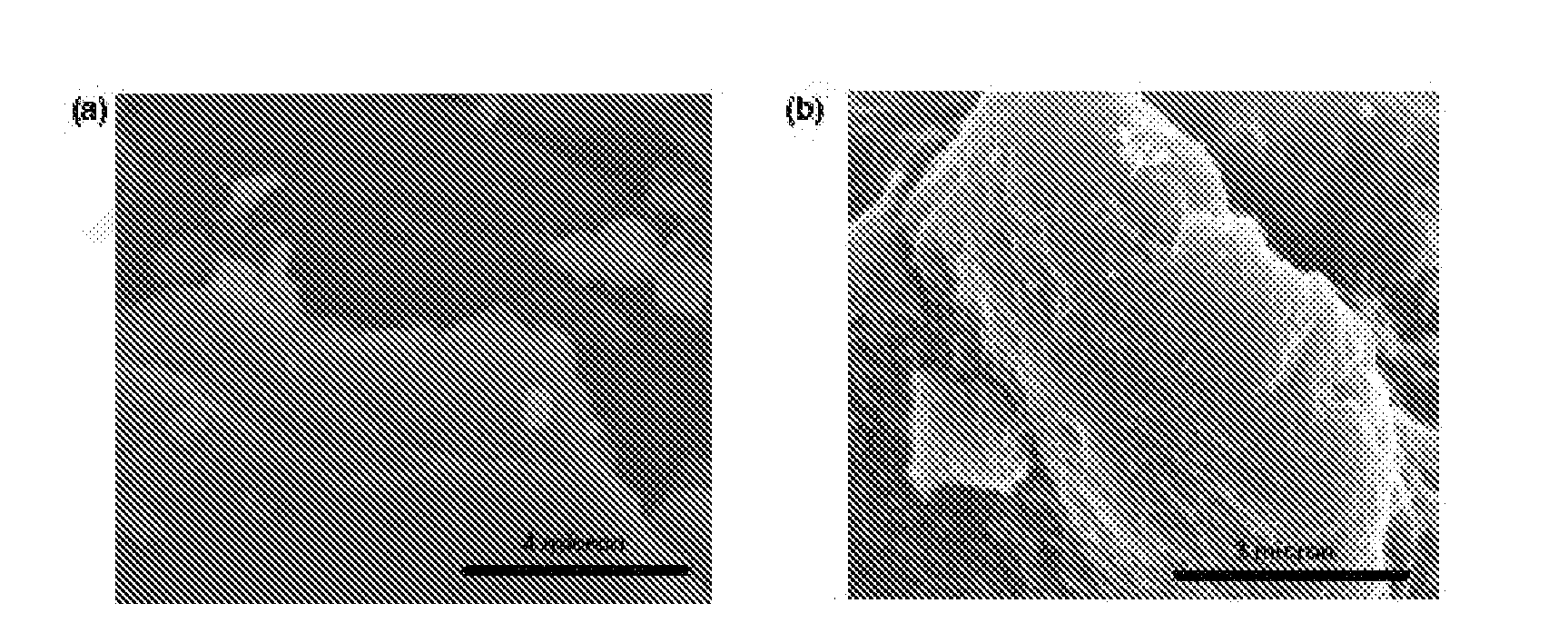
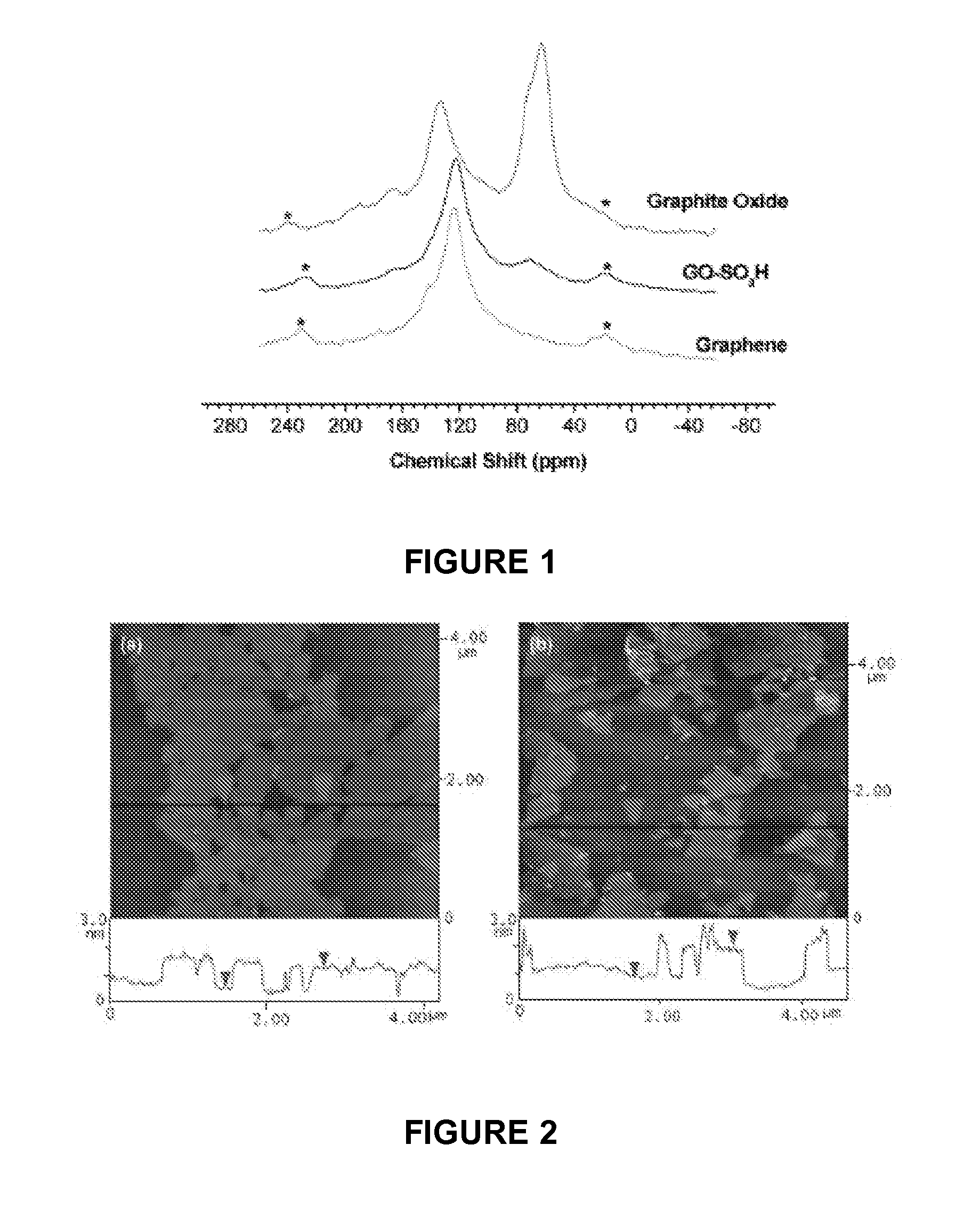
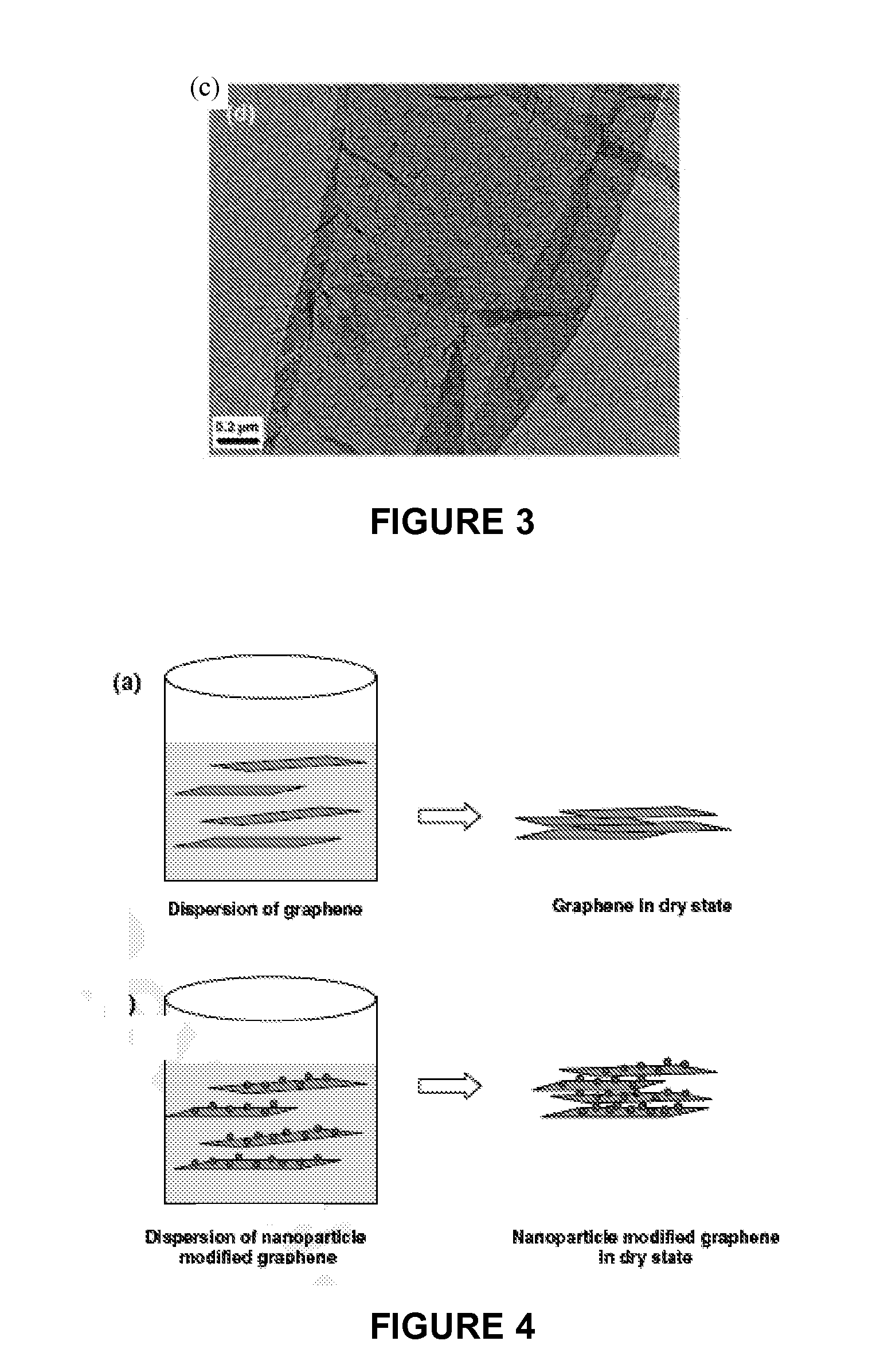
- A method involving the sonicating of graphite oxide to produce exfoliated graphene oxide, followed by reduction and sulfonation, without the use of ammonia or polymeric/surfactant stabilizers, results in partially sulfonated graphene sheets that are dispersible in aqueous and non-aqueous solutions, and further functionalization with alkyl, aryl, or alkoxy groups to enhance solubility, allowing for the creation of composite materials like metal nanoparticle-graphene and polymer-graphene composites.

Sustainability Aspects of Graphene Composite Materials
The environmental impact of graphene-based composites represents a critical dimension in their development and application trajectory. As these materials gain prominence in various industries, their sustainability profile becomes increasingly important for regulatory compliance, market acceptance, and long-term viability. Current life cycle assessments indicate that graphene production methods vary significantly in their environmental footprint, with chemical vapor deposition showing higher energy demands compared to chemical exfoliation techniques.
The recyclability of graphene composites presents both challenges and opportunities. While the strong interfacial bonding between graphene and matrix materials enhances mechanical properties, it simultaneously complicates end-of-life separation and recovery. Research indicates that approximately 65% of graphene can potentially be recovered from certain polymer composites through advanced solvent-based techniques, though commercial-scale implementation remains limited.
Biodegradability considerations reveal a complex picture. Pure graphene exhibits exceptional stability and resistance to environmental degradation, with estimated persistence times exceeding decades in natural conditions. However, functionalized graphene oxides demonstrate enhanced biodegradability pathways, particularly when incorporated with enzymatically degradable polymers. This dichotomy necessitates careful material design to balance performance requirements with end-of-life environmental impact.
Energy efficiency in manufacturing represents another crucial sustainability aspect. Theoretical models suggest that graphene-enhanced composites could reduce energy consumption in transportation applications by 12-18% through weight reduction and improved mechanical efficiency. However, these benefits must be weighed against the energy-intensive production processes currently employed for high-quality graphene synthesis.
Toxicological profiles of graphene nanoparticles within composite systems remain an active research area. Recent studies indicate that nanoparticle release from graphene composites varies significantly based on matrix type, with thermoplastic systems showing higher potential for particle shedding compared to thermoset matrices. The interaction between released graphene particles and environmental systems demonstrates size-dependent effects, with smaller particles exhibiting greater mobility and bioavailability.
Regulatory frameworks for graphene-based materials continue to evolve, with the EU's REACH regulations and similar international standards increasingly focusing on nanomaterial risk assessment. This evolving landscape creates both challenges for manufacturers and opportunities for those developing environmentally optimized graphene composite formulations.
The recyclability of graphene composites presents both challenges and opportunities. While the strong interfacial bonding between graphene and matrix materials enhances mechanical properties, it simultaneously complicates end-of-life separation and recovery. Research indicates that approximately 65% of graphene can potentially be recovered from certain polymer composites through advanced solvent-based techniques, though commercial-scale implementation remains limited.
Biodegradability considerations reveal a complex picture. Pure graphene exhibits exceptional stability and resistance to environmental degradation, with estimated persistence times exceeding decades in natural conditions. However, functionalized graphene oxides demonstrate enhanced biodegradability pathways, particularly when incorporated with enzymatically degradable polymers. This dichotomy necessitates careful material design to balance performance requirements with end-of-life environmental impact.
Energy efficiency in manufacturing represents another crucial sustainability aspect. Theoretical models suggest that graphene-enhanced composites could reduce energy consumption in transportation applications by 12-18% through weight reduction and improved mechanical efficiency. However, these benefits must be weighed against the energy-intensive production processes currently employed for high-quality graphene synthesis.
Toxicological profiles of graphene nanoparticles within composite systems remain an active research area. Recent studies indicate that nanoparticle release from graphene composites varies significantly based on matrix type, with thermoplastic systems showing higher potential for particle shedding compared to thermoset matrices. The interaction between released graphene particles and environmental systems demonstrates size-dependent effects, with smaller particles exhibiting greater mobility and bioavailability.
Regulatory frameworks for graphene-based materials continue to evolve, with the EU's REACH regulations and similar international standards increasingly focusing on nanomaterial risk assessment. This evolving landscape creates both challenges for manufacturers and opportunities for those developing environmentally optimized graphene composite formulations.
Quantum Mechanical Foundations of Nanoparticle Interactions
The quantum mechanical foundations of nanoparticle interactions with graphene composites represent a critical area of theoretical investigation. At the most fundamental level, these interactions are governed by quantum principles that determine electron behavior, energy states, and charge transfer mechanisms between graphene sheets and various nanoparticles.
The van der Waals forces play a predominant role in these interactions, arising from quantum fluctuations in the electron density. For graphene-nanoparticle systems, these forces manifest uniquely due to graphene's two-dimensional nature and distinctive electronic structure. The Lifshitz theory provides a mathematical framework for quantifying these interactions, incorporating both retardation effects and temperature dependencies.
Density Functional Theory (DFT) calculations have emerged as the primary computational approach for modeling these quantum interactions. Recent advancements in DFT methodologies have enabled more accurate representation of electron correlation effects, particularly important when modeling π-π stacking interactions between graphene and aromatic nanoparticles. The inclusion of dispersion corrections has significantly improved the accuracy of binding energy predictions.
Quantum tunneling phenomena also influence charge transfer processes between nanoparticles and graphene sheets. This becomes especially relevant when considering functionalized graphene composites, where functional groups can alter the potential energy landscape and modify tunneling probabilities. Time-dependent DFT studies have revealed the dynamics of these charge transfer processes occurring at femtosecond timescales.
The quantum confinement effects in nanoparticles introduce additional complexity to these interactions. As particle size decreases below certain thresholds, discrete energy levels emerge, dramatically altering how these particles interact with graphene's continuous band structure. This size-dependent quantum behavior creates opportunities for tuning electronic and optical properties of graphene-nanoparticle composites.
Spin-dependent interactions represent another quantum mechanical aspect worthy of consideration. Magnetic nanoparticles interacting with graphene exhibit spin-polarized electron transport, which can be leveraged for spintronic applications. Theoretical models incorporating the Hubbard model and spin-orbit coupling have successfully predicted experimental observations in these systems.
Recent theoretical advances have begun incorporating quantum field theory approaches to better understand collective excitations in these hybrid systems. Plasmon-polariton coupling between nanoparticles and graphene has been described using quantum electrodynamics frameworks, providing insights into enhanced optical responses observed experimentally.
Understanding these quantum mechanical foundations is essential for predicting and engineering the macroscopic properties of graphene-nanoparticle composites, including electrical conductivity, mechanical strength, and thermal transport characteristics.
The van der Waals forces play a predominant role in these interactions, arising from quantum fluctuations in the electron density. For graphene-nanoparticle systems, these forces manifest uniquely due to graphene's two-dimensional nature and distinctive electronic structure. The Lifshitz theory provides a mathematical framework for quantifying these interactions, incorporating both retardation effects and temperature dependencies.
Density Functional Theory (DFT) calculations have emerged as the primary computational approach for modeling these quantum interactions. Recent advancements in DFT methodologies have enabled more accurate representation of electron correlation effects, particularly important when modeling π-π stacking interactions between graphene and aromatic nanoparticles. The inclusion of dispersion corrections has significantly improved the accuracy of binding energy predictions.
Quantum tunneling phenomena also influence charge transfer processes between nanoparticles and graphene sheets. This becomes especially relevant when considering functionalized graphene composites, where functional groups can alter the potential energy landscape and modify tunneling probabilities. Time-dependent DFT studies have revealed the dynamics of these charge transfer processes occurring at femtosecond timescales.
The quantum confinement effects in nanoparticles introduce additional complexity to these interactions. As particle size decreases below certain thresholds, discrete energy levels emerge, dramatically altering how these particles interact with graphene's continuous band structure. This size-dependent quantum behavior creates opportunities for tuning electronic and optical properties of graphene-nanoparticle composites.
Spin-dependent interactions represent another quantum mechanical aspect worthy of consideration. Magnetic nanoparticles interacting with graphene exhibit spin-polarized electron transport, which can be leveraged for spintronic applications. Theoretical models incorporating the Hubbard model and spin-orbit coupling have successfully predicted experimental observations in these systems.
Recent theoretical advances have begun incorporating quantum field theory approaches to better understand collective excitations in these hybrid systems. Plasmon-polariton coupling between nanoparticles and graphene has been described using quantum electrodynamics frameworks, providing insights into enhanced optical responses observed experimentally.
Understanding these quantum mechanical foundations is essential for predicting and engineering the macroscopic properties of graphene-nanoparticle composites, including electrical conductivity, mechanical strength, and thermal transport characteristics.
Unlock deeper insights with PatSnap Eureka Quick Research — get a full tech report to explore trends and direct your research. Try now!
Generate Your Research Report Instantly with AI Agent
Supercharge your innovation with PatSnap Eureka AI Agent Platform!