

Heat Transfer Coefficient Considerations for High-Viscosity Fluids
JUN 10, 20269 MIN READ
Generate Your Research Report Instantly with AI Agent
Patsnap Eureka helps you evaluate technical feasibility & market potential.
High-Viscosity Fluid Heat Transfer Background and Objectives
Heat transfer in high-viscosity fluids represents a critical engineering challenge that spans multiple industrial sectors, from petroleum refining and chemical processing to food manufacturing and pharmaceutical production. The fundamental complexity arises from the inverse relationship between fluid viscosity and heat transfer efficiency, where increased viscosity typically correlates with reduced convective heat transfer rates and altered flow characteristics.
The historical development of high-viscosity fluid heat transfer research began in the early 20th century with foundational work on non-Newtonian fluid mechanics. Initial studies focused primarily on understanding how viscosity variations affect traditional heat transfer correlations developed for low-viscosity fluids. As industrial processes evolved to handle increasingly complex fluids such as polymer melts, heavy crude oils, and concentrated suspensions, the limitations of conventional heat transfer models became apparent.
Current technological evolution in this field is driven by the growing demand for energy-efficient processing of viscous materials. Industries are increasingly encountering fluids with viscosities ranging from hundreds to millions of centipoise, far exceeding the scope of traditional heat transfer design methodologies. This evolution has necessitated the development of specialized heat transfer enhancement techniques and modified correlations that account for viscosity-dependent thermal boundary layer behavior.
The primary technical objectives in high-viscosity fluid heat transfer research center on developing accurate predictive models for heat transfer coefficients under varying viscosity conditions. Key goals include establishing reliable correlations that incorporate temperature-dependent viscosity effects, understanding the transition between different heat transfer regimes, and optimizing heat exchanger designs for maximum thermal efficiency while minimizing pressure drop penalties.
Advanced computational fluid dynamics modeling has emerged as a crucial tool for understanding complex thermal and momentum transport phenomena in high-viscosity systems. These models aim to capture the intricate interactions between viscous forces, thermal gradients, and flow patterns that significantly influence overall heat transfer performance.
The ultimate technological target involves creating comprehensive design frameworks that enable engineers to accurately predict and optimize heat transfer performance for any high-viscosity fluid application, thereby reducing energy consumption and improving process economics across diverse industrial applications.
The historical development of high-viscosity fluid heat transfer research began in the early 20th century with foundational work on non-Newtonian fluid mechanics. Initial studies focused primarily on understanding how viscosity variations affect traditional heat transfer correlations developed for low-viscosity fluids. As industrial processes evolved to handle increasingly complex fluids such as polymer melts, heavy crude oils, and concentrated suspensions, the limitations of conventional heat transfer models became apparent.
Current technological evolution in this field is driven by the growing demand for energy-efficient processing of viscous materials. Industries are increasingly encountering fluids with viscosities ranging from hundreds to millions of centipoise, far exceeding the scope of traditional heat transfer design methodologies. This evolution has necessitated the development of specialized heat transfer enhancement techniques and modified correlations that account for viscosity-dependent thermal boundary layer behavior.
The primary technical objectives in high-viscosity fluid heat transfer research center on developing accurate predictive models for heat transfer coefficients under varying viscosity conditions. Key goals include establishing reliable correlations that incorporate temperature-dependent viscosity effects, understanding the transition between different heat transfer regimes, and optimizing heat exchanger designs for maximum thermal efficiency while minimizing pressure drop penalties.
Advanced computational fluid dynamics modeling has emerged as a crucial tool for understanding complex thermal and momentum transport phenomena in high-viscosity systems. These models aim to capture the intricate interactions between viscous forces, thermal gradients, and flow patterns that significantly influence overall heat transfer performance.
The ultimate technological target involves creating comprehensive design frameworks that enable engineers to accurately predict and optimize heat transfer performance for any high-viscosity fluid application, thereby reducing energy consumption and improving process economics across diverse industrial applications.
Market Demand for Enhanced Heat Transfer in Viscous Fluid Processing
The global market for enhanced heat transfer solutions in viscous fluid processing is experiencing substantial growth driven by increasing industrial demands across multiple sectors. Chemical processing industries, particularly those handling polymers, resins, and specialty chemicals, represent the largest market segment requiring advanced heat transfer technologies. These applications often involve fluids with viscosities ranging from hundreds to thousands of centipoise, where conventional heat transfer methods prove inadequate.
Food and beverage manufacturing constitutes another significant market driver, especially in processes involving chocolate tempering, dairy product processing, and syrup concentration. The pharmaceutical industry's growing emphasis on continuous manufacturing processes has created additional demand for efficient heat transfer solutions capable of handling high-viscosity formulations and active pharmaceutical ingredients.
Petrochemical refineries and lubricant manufacturing facilities are increasingly seeking enhanced heat transfer technologies to improve energy efficiency and reduce processing costs. The rising global demand for synthetic lubricants and specialty petroleum products has intensified the need for more effective thermal management systems in high-viscosity fluid applications.
Market growth is further accelerated by stringent environmental regulations promoting energy efficiency and reduced carbon emissions. Industries are compelled to adopt advanced heat transfer technologies that minimize energy consumption while maintaining optimal processing conditions. This regulatory pressure has created substantial opportunities for innovative heat transfer enhancement solutions.
The renewable energy sector, particularly biofuel production, presents emerging market opportunities. Biodiesel and bio-oil processing involve handling viscous feedstocks that require specialized heat transfer equipment. As renewable energy adoption expands globally, this segment is expected to contribute significantly to market growth.
Geographic market distribution shows strong demand concentration in North America, Europe, and Asia-Pacific regions, with developing economies in Southeast Asia and Latin America representing high-growth potential markets. Industrial expansion in these regions, coupled with modernization of existing facilities, continues to drive demand for advanced heat transfer technologies specifically designed for viscous fluid applications.
Food and beverage manufacturing constitutes another significant market driver, especially in processes involving chocolate tempering, dairy product processing, and syrup concentration. The pharmaceutical industry's growing emphasis on continuous manufacturing processes has created additional demand for efficient heat transfer solutions capable of handling high-viscosity formulations and active pharmaceutical ingredients.
Petrochemical refineries and lubricant manufacturing facilities are increasingly seeking enhanced heat transfer technologies to improve energy efficiency and reduce processing costs. The rising global demand for synthetic lubricants and specialty petroleum products has intensified the need for more effective thermal management systems in high-viscosity fluid applications.
Market growth is further accelerated by stringent environmental regulations promoting energy efficiency and reduced carbon emissions. Industries are compelled to adopt advanced heat transfer technologies that minimize energy consumption while maintaining optimal processing conditions. This regulatory pressure has created substantial opportunities for innovative heat transfer enhancement solutions.
The renewable energy sector, particularly biofuel production, presents emerging market opportunities. Biodiesel and bio-oil processing involve handling viscous feedstocks that require specialized heat transfer equipment. As renewable energy adoption expands globally, this segment is expected to contribute significantly to market growth.
Geographic market distribution shows strong demand concentration in North America, Europe, and Asia-Pacific regions, with developing economies in Southeast Asia and Latin America representing high-growth potential markets. Industrial expansion in these regions, coupled with modernization of existing facilities, continues to drive demand for advanced heat transfer technologies specifically designed for viscous fluid applications.
Current Challenges in Heat Transfer Coefficient Prediction for Viscous Fluids
The prediction of heat transfer coefficients for high-viscosity fluids presents numerous technical challenges that significantly impact industrial process design and optimization. Traditional correlations developed for low-viscosity fluids often fail to accurately capture the complex thermal behavior exhibited by viscous media, leading to substantial prediction errors that can compromise system performance and safety margins.
One of the primary challenges stems from the non-linear relationship between viscosity and temperature in high-viscosity fluids. As temperature increases, viscosity typically decreases exponentially, creating a strong coupling between thermal and momentum transport phenomena. This interdependency makes it difficult to establish reliable predictive models, as conventional heat transfer correlations assume relatively constant fluid properties that do not hold true for viscous systems.
The Reynolds number calculation becomes problematic for high-viscosity fluids, as the extremely low values often fall outside the validated range of existing correlations. Most established Nusselt number relationships were developed and validated for turbulent or transitional flow regimes, while high-viscosity fluids frequently operate in laminar conditions with Reynolds numbers below 100. This limitation necessitates extrapolation beyond correlation boundaries, introducing significant uncertainty in heat transfer coefficient predictions.
Viscous heating effects present another critical challenge, particularly in high-shear applications such as scraped surface heat exchangers or extruders. The mechanical energy dissipated due to viscous shear converts to thermal energy, creating internal heat generation that traditional heat transfer models do not account for. This phenomenon can lead to substantial temperature rises within the fluid, further altering viscosity and complicating the heat transfer analysis.
The wall effect becomes pronounced in high-viscosity applications, where the velocity and temperature profiles near heated surfaces deviate significantly from theoretical predictions. The development of thick thermal and momentum boundary layers creates complex interactions that are difficult to model accurately using conventional approaches. Additionally, the assumption of uniform wall temperature or heat flux, commonly used in correlation development, may not reflect actual operating conditions in viscous fluid systems.
Property variation across the fluid domain poses additional computational challenges. High-viscosity fluids often exhibit significant temperature-dependent property changes, requiring iterative solution methods that increase computational complexity and convergence difficulties. The lack of comprehensive property databases for many industrial viscous fluids further compounds prediction accuracy issues.
One of the primary challenges stems from the non-linear relationship between viscosity and temperature in high-viscosity fluids. As temperature increases, viscosity typically decreases exponentially, creating a strong coupling between thermal and momentum transport phenomena. This interdependency makes it difficult to establish reliable predictive models, as conventional heat transfer correlations assume relatively constant fluid properties that do not hold true for viscous systems.
The Reynolds number calculation becomes problematic for high-viscosity fluids, as the extremely low values often fall outside the validated range of existing correlations. Most established Nusselt number relationships were developed and validated for turbulent or transitional flow regimes, while high-viscosity fluids frequently operate in laminar conditions with Reynolds numbers below 100. This limitation necessitates extrapolation beyond correlation boundaries, introducing significant uncertainty in heat transfer coefficient predictions.
Viscous heating effects present another critical challenge, particularly in high-shear applications such as scraped surface heat exchangers or extruders. The mechanical energy dissipated due to viscous shear converts to thermal energy, creating internal heat generation that traditional heat transfer models do not account for. This phenomenon can lead to substantial temperature rises within the fluid, further altering viscosity and complicating the heat transfer analysis.
The wall effect becomes pronounced in high-viscosity applications, where the velocity and temperature profiles near heated surfaces deviate significantly from theoretical predictions. The development of thick thermal and momentum boundary layers creates complex interactions that are difficult to model accurately using conventional approaches. Additionally, the assumption of uniform wall temperature or heat flux, commonly used in correlation development, may not reflect actual operating conditions in viscous fluid systems.
Property variation across the fluid domain poses additional computational challenges. High-viscosity fluids often exhibit significant temperature-dependent property changes, requiring iterative solution methods that increase computational complexity and convergence difficulties. The lack of comprehensive property databases for many industrial viscous fluids further compounds prediction accuracy issues.
Existing Methods for Heat Transfer Coefficient Optimization
01 Heat exchanger design and configuration optimization
Various heat exchanger designs and configurations are developed to optimize heat transfer coefficients through improved fluid flow patterns, enhanced surface area, and optimized geometric arrangements. These designs focus on maximizing thermal efficiency while minimizing pressure drop and energy consumption.- Heat exchanger design and configuration optimization: Various heat exchanger designs and configurations are developed to optimize heat transfer coefficients through improved fluid flow patterns, enhanced surface area, and optimized geometric arrangements. These designs focus on maximizing thermal efficiency while minimizing pressure drop and energy consumption.
- Surface enhancement techniques for improved heat transfer: Surface modification and enhancement methods are employed to increase heat transfer coefficients by creating turbulence, increasing surface area, or improving thermal conductivity. These techniques include surface texturing, coating applications, and specialized surface treatments that promote better heat exchange between fluids and surfaces.
- Computational methods and measurement systems for heat transfer analysis: Advanced computational fluid dynamics models and measurement systems are developed to accurately predict and measure heat transfer coefficients under various operating conditions. These systems enable precise monitoring and optimization of thermal performance in real-time applications.
- Heat transfer enhancement through fluid dynamics and flow control: Flow control mechanisms and fluid dynamic optimization techniques are implemented to improve heat transfer coefficients by manipulating flow patterns, velocity profiles, and mixing characteristics. These approaches focus on creating optimal conditions for heat exchange through controlled fluid movement and distribution.
- Material properties and thermal conductivity optimization: Development of materials with enhanced thermal properties and optimization of material selection to improve overall heat transfer performance. This includes the use of high thermal conductivity materials, composite structures, and specialized coatings that facilitate better heat transfer characteristics in various applications.
02 Surface enhancement techniques for improved heat transfer
Surface modification and enhancement methods are employed to increase heat transfer coefficients by creating turbulence, increasing surface area, or improving thermal conductivity. These techniques include surface texturing, coating applications, and specialized surface treatments that promote better heat exchange between fluids and surfaces.Expand Specific Solutions03 Computational methods and measurement techniques for heat transfer analysis
Advanced computational fluid dynamics models and experimental measurement techniques are developed to accurately determine and predict heat transfer coefficients under various operating conditions. These methods enable precise characterization of thermal performance and optimization of heat transfer systems.Expand Specific Solutions04 Heat transfer enhancement through fluid dynamics and flow control
Flow control mechanisms and fluid dynamic optimization techniques are implemented to improve heat transfer coefficients by manipulating flow patterns, velocity profiles, and mixing characteristics. These approaches focus on creating optimal conditions for heat exchange through controlled fluid movement and distribution.Expand Specific Solutions05 Material properties and thermal conductivity optimization
Development of materials with enhanced thermal properties and optimization of material selection to improve overall heat transfer performance. This includes the use of high thermal conductivity materials, composite structures, and specialized coatings that contribute to increased heat transfer coefficients in various applications.Expand Specific Solutions
Key Players in Heat Exchanger and Viscous Fluid Processing Industry
The heat transfer coefficient considerations for high-viscosity fluids represent a mature yet evolving technological domain within the broader thermal management industry. The market demonstrates steady growth driven by applications in chemical processing, energy storage, and automotive sectors, with an estimated global market size exceeding $2 billion annually. The competitive landscape features established chemical giants like DuPont, ExxonMobil, and Arkema alongside specialized players such as Solutia and emerging companies like RheEnergise. Technology maturity varies significantly across applications, with traditional heat transfer fluids reaching commercial maturity while advanced formulations for extreme conditions remain in development phases. Academic institutions including Tsinghua University, University of Maryland, and Tohoku University contribute fundamental research, while industrial leaders focus on optimizing viscosity-thermal conductivity relationships and developing next-generation synthetic fluids for specialized applications.
DuPont de Nemours, Inc.
Technical Solution: DuPont has developed advanced heat transfer fluid formulations specifically designed for high-viscosity applications, incorporating proprietary polymer additives that maintain thermal conductivity while managing viscosity effects. Their Therminol and Dowtherm product lines feature specialized heat transfer fluids with enhanced viscosity-temperature characteristics, utilizing molecular engineering to optimize heat transfer coefficients in challenging fluid conditions. The company's approach includes computational fluid dynamics modeling to predict heat transfer performance in high-viscosity systems, combined with experimental validation using custom rheological testing equipment. Their solutions often incorporate viscosity index improvers and thermal stability enhancers that maintain consistent heat transfer properties across wide temperature ranges, particularly important for industrial processes involving thick oils, polymer melts, and other viscous media.
Strengths: Extensive experience in specialty chemicals and proven track record in heat transfer fluid development. Weaknesses: Solutions may be cost-prohibitive for some applications and require specialized handling procedures.
ExxonMobil Technology & Engineering Co.
Technical Solution: ExxonMobil has developed comprehensive methodologies for calculating heat transfer coefficients in high-viscosity petroleum products and synthetic lubricants. Their approach combines empirical correlations with advanced computational models that account for non-Newtonian fluid behavior and temperature-dependent viscosity changes. The company utilizes proprietary heat exchanger design software that incorporates viscosity correction factors and enhanced surface geometries to improve heat transfer performance. Their technology portfolio includes specialized heat transfer enhancement techniques such as micro-finned tubes and turbulence promoters specifically optimized for viscous fluids. ExxonMobil's solutions are particularly focused on refinery applications, heavy oil processing, and petrochemical manufacturing where high-viscosity fluids are common, incorporating decades of operational experience and extensive pilot plant testing data.
Strengths: Deep expertise in petroleum and chemical processing with extensive operational data. Weaknesses: Solutions primarily focused on hydrocarbon applications, limiting versatility across other industries.
Core Innovations in Viscous Fluid Heat Transfer Modeling
Heat transport fluid, heat transport structure, and heat transport method
PatentInactiveUS20080054217A1
Innovation
- A heat transport fluid comprising a solvent, particles with coating agents, and organic components that change between structured and unstructured states with temperature, allowing for a phase change that increases the energy level and thus the heat transfer coefficient, using materials like gold particles and specific organic substances such as sulfur-containing compounds.


Low viscosity heat transfer fluids with increasing flash point and thermal conductivity
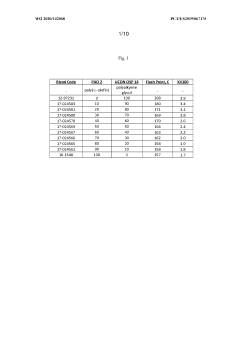
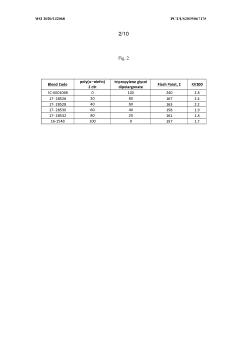
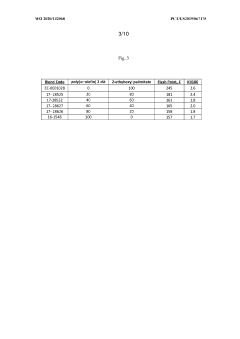
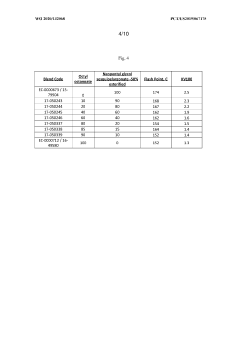
PatentWO2020132068A1
Innovation
- A heat transfer fluid with a mixed ester base stock system comprising partially esterified and fully esterified esters, which maintains or decreases viscosity while increasing flash point and thermal conductivity, allowing for enhanced heat transfer performance.
Energy Efficiency Standards for Industrial Heat Transfer Systems
Energy efficiency standards for industrial heat transfer systems involving high-viscosity fluids have evolved significantly over the past decade, driven by increasing environmental regulations and economic pressures. Current international standards, including ISO 50001 and ASME PTC 12.5, establish baseline requirements for thermal performance measurement and optimization in industrial applications.
The regulatory landscape encompasses multiple jurisdictions with varying stringency levels. The European Union's Energy Efficiency Directive mandates minimum efficiency thresholds for heat exchangers processing viscous media, while the United States implements standards through ASHRAE guidelines and DOE regulations. These frameworks typically require thermal efficiency ratings above 85% for new installations and 80% for retrofitted systems handling fluids with viscosities exceeding 100 cP.
Compliance measurement protocols present unique challenges when dealing with high-viscosity fluids. Standard testing procedures must account for non-Newtonian behavior, temperature-dependent viscosity variations, and extended residence times. The International Electrotechnical Commission has developed specialized methodologies for viscosity-corrected efficiency calculations, incorporating Reynolds number adjustments and Prandtl number modifications specific to thick fluid applications.
Industry-specific standards vary considerably across sectors. Petrochemical processing facilities must meet API 660 requirements, which specify minimum heat transfer coefficients adjusted for fluid rheological properties. Food processing operations follow FDA guidelines that balance thermal efficiency with product quality preservation, often requiring lower operating temperatures that impact overall system performance.
Emerging efficiency standards increasingly emphasize lifecycle energy consumption rather than instantaneous performance metrics. This shift recognizes that high-viscosity fluid systems often operate under varying load conditions, requiring dynamic efficiency assessments. Advanced monitoring requirements now mandate continuous performance tracking with real-time viscosity compensation algorithms.
Future regulatory trends indicate stricter efficiency mandates, with proposed standards targeting 90% minimum thermal efficiency for high-viscosity applications by 2030. These evolving requirements drive technological innovation in heat exchanger design, pumping systems, and process optimization strategies specifically tailored for challenging fluid characteristics.
The regulatory landscape encompasses multiple jurisdictions with varying stringency levels. The European Union's Energy Efficiency Directive mandates minimum efficiency thresholds for heat exchangers processing viscous media, while the United States implements standards through ASHRAE guidelines and DOE regulations. These frameworks typically require thermal efficiency ratings above 85% for new installations and 80% for retrofitted systems handling fluids with viscosities exceeding 100 cP.
Compliance measurement protocols present unique challenges when dealing with high-viscosity fluids. Standard testing procedures must account for non-Newtonian behavior, temperature-dependent viscosity variations, and extended residence times. The International Electrotechnical Commission has developed specialized methodologies for viscosity-corrected efficiency calculations, incorporating Reynolds number adjustments and Prandtl number modifications specific to thick fluid applications.
Industry-specific standards vary considerably across sectors. Petrochemical processing facilities must meet API 660 requirements, which specify minimum heat transfer coefficients adjusted for fluid rheological properties. Food processing operations follow FDA guidelines that balance thermal efficiency with product quality preservation, often requiring lower operating temperatures that impact overall system performance.
Emerging efficiency standards increasingly emphasize lifecycle energy consumption rather than instantaneous performance metrics. This shift recognizes that high-viscosity fluid systems often operate under varying load conditions, requiring dynamic efficiency assessments. Advanced monitoring requirements now mandate continuous performance tracking with real-time viscosity compensation algorithms.
Future regulatory trends indicate stricter efficiency mandates, with proposed standards targeting 90% minimum thermal efficiency for high-viscosity applications by 2030. These evolving requirements drive technological innovation in heat exchanger design, pumping systems, and process optimization strategies specifically tailored for challenging fluid characteristics.
Environmental Impact Assessment of Heat Transfer Process Optimization
The optimization of heat transfer processes for high-viscosity fluids presents significant environmental implications that require comprehensive assessment across multiple dimensions. Traditional heat transfer enhancement methods often rely on increased energy consumption, elevated operating temperatures, and extended processing times, all of which contribute to higher carbon emissions and resource depletion. The environmental burden becomes particularly pronounced when dealing with viscous fluids, as conventional approaches may require up to 40% more energy compared to standard fluid applications.
Energy efficiency improvements through optimized heat transfer coefficient management directly correlate with reduced environmental impact. Advanced surface modification techniques, such as micro-structured heat exchanger surfaces and enhanced tube geometries, can achieve 15-25% energy savings while maintaining equivalent thermal performance. These improvements translate to proportional reductions in greenhouse gas emissions, particularly in industrial sectors where high-viscosity fluid processing represents substantial energy consumption.
The selection of heat transfer enhancement methods significantly influences environmental sustainability metrics. Passive enhancement techniques, including surface roughening and twisted tape inserts, offer environmentally favorable alternatives to active methods requiring external power input. While active enhancement methods may achieve superior heat transfer coefficients, their environmental cost-benefit ratio often proves less favorable when lifecycle assessments incorporate manufacturing, operation, and disposal phases.
Waste heat recovery optimization presents substantial environmental benefits in high-viscosity fluid applications. Enhanced heat transfer coefficients enable more effective heat exchanger networks, allowing for improved thermal integration and reduced primary energy requirements. Studies indicate that optimized heat recovery systems can reduce overall process energy consumption by 20-35%, with corresponding decreases in environmental impact indicators.
The environmental assessment must also consider fluid degradation and fouling implications. Optimized heat transfer processes that minimize thermal stress on high-viscosity fluids reduce product degradation, thereby decreasing waste generation and improving overall process sustainability. Enhanced heat transfer coefficients enable lower operating temperatures while maintaining required thermal duties, reducing the risk of thermal decomposition and associated environmental releases.
Water consumption represents another critical environmental consideration, particularly in cooling systems supporting high-viscosity fluid processing. Improved heat transfer efficiency reduces cooling water requirements and associated thermal pollution in receiving water bodies. Advanced heat transfer optimization can achieve 10-20% reductions in cooling water consumption while maintaining process performance standards.
Energy efficiency improvements through optimized heat transfer coefficient management directly correlate with reduced environmental impact. Advanced surface modification techniques, such as micro-structured heat exchanger surfaces and enhanced tube geometries, can achieve 15-25% energy savings while maintaining equivalent thermal performance. These improvements translate to proportional reductions in greenhouse gas emissions, particularly in industrial sectors where high-viscosity fluid processing represents substantial energy consumption.
The selection of heat transfer enhancement methods significantly influences environmental sustainability metrics. Passive enhancement techniques, including surface roughening and twisted tape inserts, offer environmentally favorable alternatives to active methods requiring external power input. While active enhancement methods may achieve superior heat transfer coefficients, their environmental cost-benefit ratio often proves less favorable when lifecycle assessments incorporate manufacturing, operation, and disposal phases.
Waste heat recovery optimization presents substantial environmental benefits in high-viscosity fluid applications. Enhanced heat transfer coefficients enable more effective heat exchanger networks, allowing for improved thermal integration and reduced primary energy requirements. Studies indicate that optimized heat recovery systems can reduce overall process energy consumption by 20-35%, with corresponding decreases in environmental impact indicators.
The environmental assessment must also consider fluid degradation and fouling implications. Optimized heat transfer processes that minimize thermal stress on high-viscosity fluids reduce product degradation, thereby decreasing waste generation and improving overall process sustainability. Enhanced heat transfer coefficients enable lower operating temperatures while maintaining required thermal duties, reducing the risk of thermal decomposition and associated environmental releases.
Water consumption represents another critical environmental consideration, particularly in cooling systems supporting high-viscosity fluid processing. Improved heat transfer efficiency reduces cooling water requirements and associated thermal pollution in receiving water bodies. Advanced heat transfer optimization can achieve 10-20% reductions in cooling water consumption while maintaining process performance standards.
Unlock deeper insights with Patsnap Eureka Quick Research — get a full tech report to explore trends and direct your research. Try now!
Generate Your Research Report Instantly with AI Agent
Supercharge your innovation with Patsnap Eureka AI Agent Platform!