How Control Systems Improve Membrane Electrolysis Operation Efficiency
SEP 23, 20259 MIN READ
Generate Your Research Report Instantly with AI Agent
Patsnap Eureka helps you evaluate technical feasibility & market potential.
Membrane Electrolysis Control Systems Background and Objectives
Membrane electrolysis technology has evolved significantly over the past century, with major breakthroughs occurring in the 1960s and 1970s when ion-exchange membranes were first applied to industrial electrolysis processes. This technological advancement revolutionized chlor-alkali production and other electrochemical processes by offering higher energy efficiency and product purity compared to traditional methods. The evolution has continued with improvements in membrane materials, electrode designs, and most critically, control systems that optimize operational parameters.
The current trajectory of membrane electrolysis technology is moving toward greater precision, automation, and integration with renewable energy sources. As industrial sectors face increasing pressure to reduce carbon footprints while maintaining productivity, advanced control systems have emerged as a critical component in achieving these seemingly contradictory goals. The industry is witnessing a shift from basic control mechanisms to sophisticated systems incorporating artificial intelligence and machine learning algorithms.
Control systems in membrane electrolysis have historically focused on maintaining stable operating conditions such as temperature, pressure, and current density. However, modern control objectives have expanded to include dynamic response capabilities, predictive maintenance, and real-time optimization of energy consumption patterns. This evolution reflects the changing demands of the market and regulatory environment.
The primary technical objectives for membrane electrolysis control systems include reducing energy consumption per unit of product, extending membrane and electrode lifespans, minimizing downtime through predictive maintenance, and enabling flexible operation to accommodate fluctuating energy inputs from renewable sources. Additionally, there is a growing emphasis on developing control systems that can maintain optimal performance despite variations in feedstock quality and concentration.
From an industrial perspective, the goal is to develop control systems that can seamlessly integrate with existing plant infrastructure while providing clear pathways for future upgrades. This requires modular design approaches and standardized communication protocols that facilitate interoperability between different system components and higher-level plant management systems.
Research objectives in this field are increasingly focused on developing self-optimizing control systems that can learn from operational data and automatically adjust parameters to maximize efficiency under changing conditions. This includes exploring the potential of digital twins for virtual commissioning and optimization, as well as investigating novel sensor technologies that can provide more accurate and comprehensive monitoring of electrolysis processes.
The convergence of electrochemical engineering principles with advanced control theory represents a significant opportunity for innovation in this space, with potential applications extending beyond traditional chlor-alkali production to emerging fields such as hydrogen production, carbon capture, and advanced materials manufacturing.
The current trajectory of membrane electrolysis technology is moving toward greater precision, automation, and integration with renewable energy sources. As industrial sectors face increasing pressure to reduce carbon footprints while maintaining productivity, advanced control systems have emerged as a critical component in achieving these seemingly contradictory goals. The industry is witnessing a shift from basic control mechanisms to sophisticated systems incorporating artificial intelligence and machine learning algorithms.
Control systems in membrane electrolysis have historically focused on maintaining stable operating conditions such as temperature, pressure, and current density. However, modern control objectives have expanded to include dynamic response capabilities, predictive maintenance, and real-time optimization of energy consumption patterns. This evolution reflects the changing demands of the market and regulatory environment.
The primary technical objectives for membrane electrolysis control systems include reducing energy consumption per unit of product, extending membrane and electrode lifespans, minimizing downtime through predictive maintenance, and enabling flexible operation to accommodate fluctuating energy inputs from renewable sources. Additionally, there is a growing emphasis on developing control systems that can maintain optimal performance despite variations in feedstock quality and concentration.
From an industrial perspective, the goal is to develop control systems that can seamlessly integrate with existing plant infrastructure while providing clear pathways for future upgrades. This requires modular design approaches and standardized communication protocols that facilitate interoperability between different system components and higher-level plant management systems.
Research objectives in this field are increasingly focused on developing self-optimizing control systems that can learn from operational data and automatically adjust parameters to maximize efficiency under changing conditions. This includes exploring the potential of digital twins for virtual commissioning and optimization, as well as investigating novel sensor technologies that can provide more accurate and comprehensive monitoring of electrolysis processes.
The convergence of electrochemical engineering principles with advanced control theory represents a significant opportunity for innovation in this space, with potential applications extending beyond traditional chlor-alkali production to emerging fields such as hydrogen production, carbon capture, and advanced materials manufacturing.
Market Demand Analysis for Efficient Electrolysis Technologies
The global market for membrane electrolysis technologies is experiencing robust growth, driven primarily by increasing demand for hydrogen as a clean energy carrier and the rising need for chlor-alkali products across various industries. The market size for industrial electrolysis equipment reached approximately $22 billion in 2022 and is projected to grow at a compound annual growth rate of 6.8% through 2030, with membrane-based systems accounting for over 40% of this market.
Energy efficiency has emerged as the primary market driver, as energy costs typically represent 60-70% of operational expenses in electrolysis processes. Industries are actively seeking advanced control systems that can optimize energy consumption while maintaining or improving production output. A survey of major chemical manufacturers revealed that 78% consider energy efficiency improvements in electrolysis as a high-priority investment area for the next five years.
The renewable energy sector presents a particularly promising market segment for efficient electrolysis technologies. As intermittent renewable power sources like wind and solar continue to expand globally, the demand for electrolysis systems that can operate efficiently under variable power conditions is growing exponentially. Market analysis indicates that green hydrogen production capacity is expected to increase from 0.3 GW in 2022 to over 100 GW by 2030, creating substantial demand for advanced control systems.
Geographically, Europe leads in adoption of efficient electrolysis technologies, driven by stringent carbon reduction policies and substantial investments in hydrogen infrastructure. The European Clean Hydrogen Alliance has mobilized over €45 billion for hydrogen projects, with approximately 30% allocated to improving electrolysis efficiency. Asia-Pacific represents the fastest-growing market, with China, Japan, and South Korea making significant investments in hydrogen technology development.
Industry-specific demand analysis shows that chemical manufacturing remains the largest market segment, accounting for approximately 45% of demand for advanced electrolysis control systems. However, emerging applications in steel manufacturing, ammonia production, and transportation fuels are expanding rapidly, with projected growth rates exceeding 25% annually in these sectors.
Customer requirements are increasingly focused on integrated control systems that offer real-time monitoring, predictive maintenance capabilities, and autonomous optimization. Market research indicates that solutions providing demonstrable energy savings of at least 15% compared to conventional systems command premium pricing, with payback periods of less than three years being the benchmark for widespread adoption.
Energy efficiency has emerged as the primary market driver, as energy costs typically represent 60-70% of operational expenses in electrolysis processes. Industries are actively seeking advanced control systems that can optimize energy consumption while maintaining or improving production output. A survey of major chemical manufacturers revealed that 78% consider energy efficiency improvements in electrolysis as a high-priority investment area for the next five years.
The renewable energy sector presents a particularly promising market segment for efficient electrolysis technologies. As intermittent renewable power sources like wind and solar continue to expand globally, the demand for electrolysis systems that can operate efficiently under variable power conditions is growing exponentially. Market analysis indicates that green hydrogen production capacity is expected to increase from 0.3 GW in 2022 to over 100 GW by 2030, creating substantial demand for advanced control systems.
Geographically, Europe leads in adoption of efficient electrolysis technologies, driven by stringent carbon reduction policies and substantial investments in hydrogen infrastructure. The European Clean Hydrogen Alliance has mobilized over €45 billion for hydrogen projects, with approximately 30% allocated to improving electrolysis efficiency. Asia-Pacific represents the fastest-growing market, with China, Japan, and South Korea making significant investments in hydrogen technology development.
Industry-specific demand analysis shows that chemical manufacturing remains the largest market segment, accounting for approximately 45% of demand for advanced electrolysis control systems. However, emerging applications in steel manufacturing, ammonia production, and transportation fuels are expanding rapidly, with projected growth rates exceeding 25% annually in these sectors.
Customer requirements are increasingly focused on integrated control systems that offer real-time monitoring, predictive maintenance capabilities, and autonomous optimization. Market research indicates that solutions providing demonstrable energy savings of at least 15% compared to conventional systems command premium pricing, with payback periods of less than three years being the benchmark for widespread adoption.
Current State and Challenges in Membrane Electrolysis Control
Membrane electrolysis technology has witnessed significant advancements globally, yet control systems remain a critical bottleneck in achieving optimal operational efficiency. Current membrane electrolysis systems employ various control methodologies ranging from traditional PID controllers to more sophisticated model predictive control (MPC) approaches. However, these systems often struggle with the complex, nonlinear dynamics inherent in electrochemical processes, resulting in suboptimal performance and energy utilization.
The primary technical challenges in membrane electrolysis control stem from the multivariable nature of the process, where parameters such as temperature, pressure, electrolyte concentration, and current density interact in complex ways. Conventional control systems frequently fail to account for these interactions, leading to inefficiencies particularly during transient operations and load changes. Additionally, membrane degradation mechanisms remain poorly integrated into control strategies, despite their significant impact on long-term system performance.
Geographically, advanced control system development shows distinct patterns, with European research institutions focusing on model-based approaches, while North American entities emphasize data-driven methodologies. Asian manufacturers, particularly in China and Japan, have made substantial progress in implementing hybrid control systems that combine classical and advanced techniques for industrial-scale applications.
A significant limitation in current control architectures is the inadequate real-time monitoring of critical parameters such as local current density distribution and membrane hydration status. The available sensor technologies often lack the spatial and temporal resolution necessary for truly optimized control, creating a technological gap between theoretical control capabilities and practical implementation.
Energy efficiency remains a paramount concern, with current control systems achieving 70-85% efficiency in industrial settings—significantly below theoretical maximums. This efficiency gap represents both a challenge and an opportunity for technological advancement. The integration of renewable energy sources introduces additional variability, requiring more adaptive and predictive control strategies than currently deployed systems can provide.
Standardization presents another substantial challenge, with different manufacturers employing proprietary control architectures that limit interoperability and knowledge transfer across the industry. This fragmentation impedes the establishment of best practices and slows the overall pace of innovation in membrane electrolysis control systems.
Cybersecurity vulnerabilities in increasingly digitalized control systems represent an emerging concern, particularly for critical infrastructure applications such as hydrogen production facilities. Current security protocols often lag behind the rapid evolution of threat landscapes, creating potential risks for system integrity and operational continuity.
The primary technical challenges in membrane electrolysis control stem from the multivariable nature of the process, where parameters such as temperature, pressure, electrolyte concentration, and current density interact in complex ways. Conventional control systems frequently fail to account for these interactions, leading to inefficiencies particularly during transient operations and load changes. Additionally, membrane degradation mechanisms remain poorly integrated into control strategies, despite their significant impact on long-term system performance.
Geographically, advanced control system development shows distinct patterns, with European research institutions focusing on model-based approaches, while North American entities emphasize data-driven methodologies. Asian manufacturers, particularly in China and Japan, have made substantial progress in implementing hybrid control systems that combine classical and advanced techniques for industrial-scale applications.
A significant limitation in current control architectures is the inadequate real-time monitoring of critical parameters such as local current density distribution and membrane hydration status. The available sensor technologies often lack the spatial and temporal resolution necessary for truly optimized control, creating a technological gap between theoretical control capabilities and practical implementation.
Energy efficiency remains a paramount concern, with current control systems achieving 70-85% efficiency in industrial settings—significantly below theoretical maximums. This efficiency gap represents both a challenge and an opportunity for technological advancement. The integration of renewable energy sources introduces additional variability, requiring more adaptive and predictive control strategies than currently deployed systems can provide.
Standardization presents another substantial challenge, with different manufacturers employing proprietary control architectures that limit interoperability and knowledge transfer across the industry. This fragmentation impedes the establishment of best practices and slows the overall pace of innovation in membrane electrolysis control systems.
Cybersecurity vulnerabilities in increasingly digitalized control systems represent an emerging concern, particularly for critical infrastructure applications such as hydrogen production facilities. Current security protocols often lag behind the rapid evolution of threat landscapes, creating potential risks for system integrity and operational continuity.
Current Control System Solutions for Membrane Electrolysis
01 Advanced control systems for membrane electrolysis
Advanced control systems utilize real-time monitoring and feedback mechanisms to optimize membrane electrolysis operations. These systems incorporate sensors for measuring key parameters such as current density, temperature, and electrolyte concentration, allowing for precise adjustments to maintain optimal operating conditions. By implementing sophisticated control algorithms, these systems can automatically respond to variations in process conditions, thereby enhancing overall efficiency and reducing energy consumption in electrolysis operations.- Advanced control systems for membrane electrolysis: Advanced control systems utilize real-time monitoring and feedback mechanisms to optimize membrane electrolysis operations. These systems incorporate sensors that measure key parameters such as voltage, current density, temperature, and electrolyte concentration. By continuously adjusting operating conditions based on these measurements, the control systems can maintain optimal efficiency while preventing membrane degradation. Machine learning algorithms can further enhance these systems by predicting performance trends and recommending preventive maintenance.
- Energy optimization techniques for electrolysis cells: Various techniques can be employed to optimize energy consumption in membrane electrolysis systems. These include pulse width modulation for power supply, dynamic adjustment of current density based on load requirements, and intelligent power distribution across cell stacks. Energy recovery systems can capture and reuse waste heat generated during the electrolysis process. Additionally, specialized algorithms can determine the most energy-efficient operating points based on production demands and electricity costs, significantly improving overall system efficiency.
- Membrane performance monitoring and maintenance systems: Systems designed to monitor and maintain membrane performance are crucial for efficient electrolysis operations. These systems track membrane resistance, permeability, and degradation over time. Automated cleaning protocols can be triggered when performance metrics fall below predetermined thresholds. Some advanced systems incorporate predictive maintenance schedules based on operational history and membrane condition assessment. Continuous monitoring helps prevent catastrophic failures and extends membrane lifetime, thereby improving long-term operational efficiency.
- Electrolyte composition control and circulation systems: Precise control of electrolyte composition and circulation is essential for efficient membrane electrolysis. These systems maintain optimal pH, concentration, and temperature of the electrolyte solution. Automated dosing systems adjust chemical composition in real-time based on sensor readings. Advanced circulation designs ensure uniform distribution of electrolyte across membrane surfaces, preventing concentration gradients that reduce efficiency. Some systems incorporate filtration mechanisms to remove impurities that could foul membranes or reduce conductivity.
- Integration of renewable energy sources with electrolysis systems: Control systems that integrate renewable energy sources with membrane electrolysis operations can significantly improve overall efficiency and sustainability. These systems manage the variable nature of renewable power inputs by adjusting electrolysis parameters in real-time. Load-following capabilities allow the electrolysis system to ramp up or down based on available renewable energy. Advanced power electronics and buffer systems help smooth power fluctuations, while predictive algorithms can optimize operations based on weather forecasts for solar or wind power availability.
02 Energy optimization techniques in electrolysis processes
Energy optimization techniques focus on reducing power consumption while maintaining high production rates in membrane electrolysis. These approaches include dynamic power management systems that adjust electrical input based on production demands, implementation of pulse width modulation for current control, and optimization of electrode spacing and configuration. Advanced energy recovery systems can capture and reuse waste heat generated during the electrolysis process, significantly improving overall energy efficiency and reducing operational costs.Expand Specific Solutions03 Membrane performance monitoring and maintenance systems
Systems for monitoring and maintaining membrane performance are crucial for efficient electrolysis operations. These include automated diagnostics that detect membrane fouling or degradation, predictive maintenance algorithms that schedule interventions before failure occurs, and self-cleaning mechanisms that extend membrane life. Continuous monitoring of membrane resistance and selectivity allows for timely interventions, preventing efficiency losses and reducing downtime associated with membrane replacement or cleaning procedures.Expand Specific Solutions04 Electrolyte composition control and management
Precise control of electrolyte composition is essential for maintaining optimal membrane electrolysis efficiency. Systems that continuously monitor and adjust electrolyte pH, concentration, and purity help prevent membrane fouling and electrode degradation. Automated dosing systems can maintain ideal electrolyte conditions by adding chemicals as needed, while purification subsystems remove contaminants that could interfere with the electrolysis process. These control mechanisms ensure consistent product quality while maximizing operational efficiency.Expand Specific Solutions05 Integration of AI and machine learning for process optimization
Artificial intelligence and machine learning technologies are being integrated into membrane electrolysis control systems to achieve unprecedented levels of efficiency. These systems analyze vast amounts of operational data to identify optimal parameter combinations that might not be apparent through conventional analysis. Predictive models can anticipate system behavior under varying conditions, enabling proactive adjustments to maintain peak efficiency. Self-learning algorithms continuously refine control strategies based on operational outcomes, leading to progressive efficiency improvements over time.Expand Specific Solutions
Key Industry Players in Membrane Electrolysis Technology
The membrane electrolysis control systems market is in a growth phase, with increasing demand driven by the global push for green hydrogen production. The market size is expanding rapidly as industrial decarbonization efforts accelerate, projected to reach significant scale by 2030. Technologically, the field shows varying maturity levels, with established players like Siemens Energy, Linde, and Toshiba Energy Systems offering commercial solutions, while research institutions including MIT, Tsinghua University, and Fraunhofer-Gesellschaft drive innovation. Emerging companies such as Electric Hydrogen, H2Pro, and Hoeller Electrolyzer are developing next-generation control systems with enhanced efficiency. Automotive manufacturers including Honda, Nissan, and Volkswagen are increasingly investing in this technology to support their hydrogen strategies, indicating cross-industry adoption and technological convergence toward more sophisticated automation and monitoring solutions.
Electric Hydrogen Co.
Technical Solution: Electric Hydrogen has developed advanced control systems for high-current density membrane electrolysis that optimize operation across varying power inputs. Their platform integrates real-time monitoring with predictive algorithms to maintain optimal membrane hydration, temperature distribution, and gas separation efficiency. The system employs dynamic response mechanisms that adjust operational parameters based on input power fluctuations, particularly valuable when paired with renewable energy sources. Their proprietary control architecture includes fault detection algorithms that identify performance degradation patterns before they become critical issues, enabling preventative maintenance. Electric Hydrogen's control systems also feature adaptive pressure management that maintains differential pressure within safe operating parameters while maximizing efficiency across varying production rates.
Strengths: Exceptional integration with renewable energy sources through rapid response algorithms; advanced predictive maintenance capabilities reduce downtime. Weaknesses: System complexity requires specialized technical expertise for installation and maintenance; higher initial capital investment compared to conventional control systems.
Siemens Energy Global GmbH & Co. KG
Technical Solution: Siemens Energy has developed a comprehensive Industrial Control System (ICS) specifically for membrane electrolysis operations that combines SIMATIC PCS 7 process control technology with specialized electrochemical process expertise. Their system implements advanced model predictive control (MPC) algorithms that continuously optimize operational parameters including current density, temperature, pressure, and feed water quality. The control architecture incorporates digital twins of electrolysis stacks to predict performance under varying conditions and identify optimal setpoints. Siemens' solution features integrated power management systems that harmonize electrolysis operation with grid demands, enabling participation in grid balancing services while maintaining production efficiency. Their control systems also implement sophisticated safety protocols that monitor for hydrogen leakage, membrane integrity issues, and other critical operational parameters to prevent dangerous conditions.
Strengths: Exceptional integration with existing industrial automation infrastructure; comprehensive digital twin capabilities enable sophisticated optimization scenarios. Weaknesses: Higher implementation costs compared to simpler control solutions; requires significant customization for optimal performance in specific electrolysis technologies.
Core Control Algorithms and Feedback Mechanisms Analysis
Water electrolysis apparatus and control method of water electrolysis apparatus
PatentActiveJP2020143346A
Innovation
- The device includes a water volume estimation unit and control unit to adjust water supply based on estimated water levels, ensuring sufficient water is provided to both the oxygen and hydrogen electrode channels, with mechanisms to intersect water flow directions and manage current density to prevent membrane drying and overheating.


Electrolysis system and operation method thereof
PatentPendingUS20250215591A1
Innovation
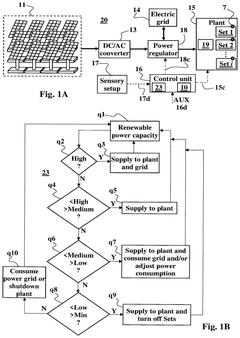
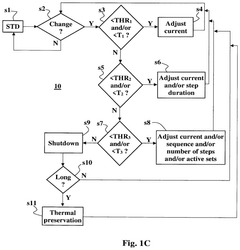
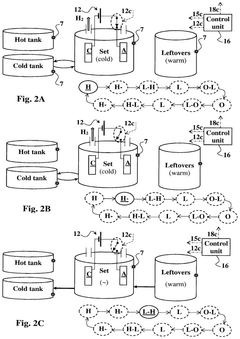
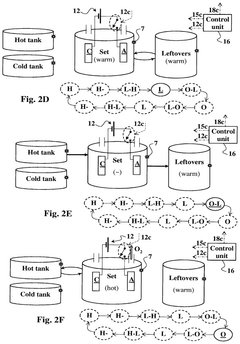
- A control system for electrolysis systems that adjusts power management and phase-shifted electrolysis processes to optimize operation with fluctuating renewable power, including activating/deactivating reactors, adjusting power supply, and managing electrolyte phases to maintain efficiency and safety.
Energy Efficiency Metrics and Sustainability Considerations
Energy efficiency metrics in membrane electrolysis systems provide essential frameworks for evaluating operational performance and sustainability impacts. The primary efficiency indicator is Specific Energy Consumption (SEC), typically measured in kWh per unit of product (e.g., kWh/kg H₂ or kWh/ton NaOH). Current state-of-the-art membrane electrolysis systems achieve SEC values of 4.5-5.0 kWh/kg for hydrogen production and 2.0-2.4 kWh/kg for chlor-alkali processes, representing significant improvements over previous generations.
Advanced control systems contribute substantially to efficiency optimization by implementing real-time monitoring of Current Efficiency (CE), which measures the percentage of electrical current effectively utilized for the desired electrochemical reaction. Modern membrane electrolyzers typically operate at 90-98% current efficiency, with variations primarily attributed to parasitic reactions and membrane crossover effects.
Energy Return on Investment (EROI) has emerged as a critical sustainability metric, particularly for green hydrogen production systems. Control systems that optimize the integration of renewable energy sources can improve EROI from typical values of 1.5-2.0 to over 3.0 in advanced systems, significantly enhancing the sustainability profile of electrolysis operations.
Carbon intensity metrics (kg CO₂e/kg product) provide another essential sustainability indicator. Advanced control systems that optimize load-following capabilities enable better integration with low-carbon electricity sources, potentially reducing carbon intensity by 60-80% compared to conventional production methods. This metric has gained prominence with the development of carbon pricing mechanisms and sustainability certification schemes.
Water consumption efficiency, measured as liters of water per kg of product, represents an increasingly important sustainability consideration. Modern membrane electrolysis systems require 9-15 liters of water per kg of hydrogen produced, with advanced control systems capable of reducing this by 15-25% through optimized operation and water recovery systems.
Life Cycle Assessment (LCA) methodologies have been integrated into comprehensive control system frameworks, enabling real-time sustainability performance monitoring. These systems track embodied energy, resource depletion, and environmental impact indicators throughout the operational lifecycle, facilitating data-driven sustainability improvements and regulatory compliance.
The development of standardized efficiency benchmarking protocols has accelerated industry-wide improvements, with initiatives like the International Hydrogen Energy Centre (IHEC) and the European Clean Hydrogen Alliance establishing performance metrics that inform control system design and optimization strategies across the global electrolysis sector.
Advanced control systems contribute substantially to efficiency optimization by implementing real-time monitoring of Current Efficiency (CE), which measures the percentage of electrical current effectively utilized for the desired electrochemical reaction. Modern membrane electrolyzers typically operate at 90-98% current efficiency, with variations primarily attributed to parasitic reactions and membrane crossover effects.
Energy Return on Investment (EROI) has emerged as a critical sustainability metric, particularly for green hydrogen production systems. Control systems that optimize the integration of renewable energy sources can improve EROI from typical values of 1.5-2.0 to over 3.0 in advanced systems, significantly enhancing the sustainability profile of electrolysis operations.
Carbon intensity metrics (kg CO₂e/kg product) provide another essential sustainability indicator. Advanced control systems that optimize load-following capabilities enable better integration with low-carbon electricity sources, potentially reducing carbon intensity by 60-80% compared to conventional production methods. This metric has gained prominence with the development of carbon pricing mechanisms and sustainability certification schemes.
Water consumption efficiency, measured as liters of water per kg of product, represents an increasingly important sustainability consideration. Modern membrane electrolysis systems require 9-15 liters of water per kg of hydrogen produced, with advanced control systems capable of reducing this by 15-25% through optimized operation and water recovery systems.
Life Cycle Assessment (LCA) methodologies have been integrated into comprehensive control system frameworks, enabling real-time sustainability performance monitoring. These systems track embodied energy, resource depletion, and environmental impact indicators throughout the operational lifecycle, facilitating data-driven sustainability improvements and regulatory compliance.
The development of standardized efficiency benchmarking protocols has accelerated industry-wide improvements, with initiatives like the International Hydrogen Energy Centre (IHEC) and the European Clean Hydrogen Alliance establishing performance metrics that inform control system design and optimization strategies across the global electrolysis sector.
Economic Impact and ROI of Advanced Control Implementation
The implementation of advanced control systems in membrane electrolysis operations represents a significant capital investment that requires thorough economic justification. Initial implementation costs typically range from $250,000 to $2 million depending on facility size, complexity of operations, and the sophistication of the control system being deployed. These investments encompass hardware components, software licenses, integration services, and staff training.
When properly implemented, advanced control systems deliver substantial economic returns through multiple value streams. Energy consumption reductions of 5-15% are commonly reported across industrial membrane electrolysis installations, translating to annual savings of $100,000-$500,000 for medium-sized operations. Given that electricity costs represent 30-40% of operational expenses in electrolysis processes, these efficiency gains significantly impact the bottom line.
Beyond energy savings, advanced control systems extend membrane lifespans by 15-30% through more stable operating conditions and reduced stress cycling. With replacement membranes costing $50,000-$200,000 per stack, the deferred capital expenditure represents a major economic benefit. Additionally, production throughput increases of 3-8% have been documented, allowing facilities to process more material without physical expansion.
Maintenance cost reductions of 10-25% further enhance ROI, as predictive analytics capabilities identify potential failures before they occur, reducing unplanned downtime by up to 35%. This improved operational reliability translates to approximately $150,000-$750,000 in avoided production losses annually for typical industrial installations.
The payback period for advanced control implementations typically ranges from 12 to 36 months, with most installations achieving ROI within 18-24 months. Long-term financial analysis indicates that over a 10-year operational period, the net present value of control system investments frequently exceeds 300% of initial costs, with internal rates of return between 25-45%.
Environmental compliance benefits also contribute to economic value, as precise control reduces waste generation and emissions, potentially avoiding regulatory penalties and creating carbon credit opportunities in applicable markets. These factors, combined with the operational benefits, create a compelling economic case for implementing advanced control systems in membrane electrolysis operations.
When properly implemented, advanced control systems deliver substantial economic returns through multiple value streams. Energy consumption reductions of 5-15% are commonly reported across industrial membrane electrolysis installations, translating to annual savings of $100,000-$500,000 for medium-sized operations. Given that electricity costs represent 30-40% of operational expenses in electrolysis processes, these efficiency gains significantly impact the bottom line.
Beyond energy savings, advanced control systems extend membrane lifespans by 15-30% through more stable operating conditions and reduced stress cycling. With replacement membranes costing $50,000-$200,000 per stack, the deferred capital expenditure represents a major economic benefit. Additionally, production throughput increases of 3-8% have been documented, allowing facilities to process more material without physical expansion.
Maintenance cost reductions of 10-25% further enhance ROI, as predictive analytics capabilities identify potential failures before they occur, reducing unplanned downtime by up to 35%. This improved operational reliability translates to approximately $150,000-$750,000 in avoided production losses annually for typical industrial installations.
The payback period for advanced control implementations typically ranges from 12 to 36 months, with most installations achieving ROI within 18-24 months. Long-term financial analysis indicates that over a 10-year operational period, the net present value of control system investments frequently exceeds 300% of initial costs, with internal rates of return between 25-45%.
Environmental compliance benefits also contribute to economic value, as precise control reduces waste generation and emissions, potentially avoiding regulatory penalties and creating carbon credit opportunities in applicable markets. These factors, combined with the operational benefits, create a compelling economic case for implementing advanced control systems in membrane electrolysis operations.
Unlock deeper insights with Patsnap Eureka Quick Research — get a full tech report to explore trends and direct your research. Try now!
Generate Your Research Report Instantly with AI Agent
Supercharge your innovation with Patsnap Eureka AI Agent Platform!