How Flexibly Processed Hydroxyapatite Affects Bone Strength and Elasticity
JUL 23, 20259 MIN READ
Generate Your Research Report Instantly with AI Agent
PatSnap Eureka helps you evaluate technical feasibility & market potential.
Hydroxyapatite Processing and Bone Biomechanics
Hydroxyapatite (HA) is a naturally occurring mineral form of calcium apatite, constituting the primary inorganic component of bone tissue. The processing of HA plays a crucial role in determining its impact on bone strength and elasticity. Flexible processing techniques allow for the manipulation of HA's structural and chemical properties, which directly influence the biomechanical characteristics of bone.
The relationship between HA processing and bone biomechanics is complex and multifaceted. The size, shape, and distribution of HA crystals within the bone matrix significantly affect the overall mechanical properties of bone tissue. Flexibly processed HA can be tailored to mimic the natural nanostructure of bone, enhancing its integration with the organic components and improving the bone's overall strength and elasticity.
One key aspect of flexible HA processing is the ability to control the crystal size and morphology. Smaller HA crystals, typically in the nanometer range, have been shown to increase the bone's resistance to fracture by enhancing the interface between the mineral and organic phases. This improved interface leads to better load distribution and energy dissipation throughout the bone structure, ultimately increasing its toughness and flexibility.
The incorporation of ions and substitutions during HA processing can also significantly impact bone biomechanics. For instance, the inclusion of carbonate ions in the HA structure can increase its solubility and bioactivity, leading to enhanced bone remodeling and improved mechanical properties. Similarly, the substitution of magnesium or strontium ions can alter the crystal structure and influence the bone's strength and elasticity.
Flexible processing techniques allow for the creation of HA with varying degrees of crystallinity and porosity. These parameters directly affect the bone's mechanical behavior, with higher crystallinity generally associated with increased stiffness and lower porosity linked to greater compressive strength. However, a balance must be struck, as excessive crystallinity can lead to brittleness, while too much porosity may compromise overall strength.
The orientation of HA crystals within the bone matrix is another critical factor influenced by processing methods. Aligned HA crystals can enhance the anisotropic properties of bone, mimicking its natural structure and improving its ability to withstand directional stresses. This alignment can be achieved through various processing techniques, such as electrospinning or templated growth, resulting in bone-like materials with superior mechanical properties.
Furthermore, the interaction between flexibly processed HA and the organic components of bone, primarily collagen, is fundamental to understanding the overall biomechanical properties. The interface between these two phases is critical for load transfer and energy dissipation. Advanced processing methods can optimize this interface, leading to enhanced bone strength and elasticity that more closely resemble natural bone tissue.
The relationship between HA processing and bone biomechanics is complex and multifaceted. The size, shape, and distribution of HA crystals within the bone matrix significantly affect the overall mechanical properties of bone tissue. Flexibly processed HA can be tailored to mimic the natural nanostructure of bone, enhancing its integration with the organic components and improving the bone's overall strength and elasticity.
One key aspect of flexible HA processing is the ability to control the crystal size and morphology. Smaller HA crystals, typically in the nanometer range, have been shown to increase the bone's resistance to fracture by enhancing the interface between the mineral and organic phases. This improved interface leads to better load distribution and energy dissipation throughout the bone structure, ultimately increasing its toughness and flexibility.
The incorporation of ions and substitutions during HA processing can also significantly impact bone biomechanics. For instance, the inclusion of carbonate ions in the HA structure can increase its solubility and bioactivity, leading to enhanced bone remodeling and improved mechanical properties. Similarly, the substitution of magnesium or strontium ions can alter the crystal structure and influence the bone's strength and elasticity.
Flexible processing techniques allow for the creation of HA with varying degrees of crystallinity and porosity. These parameters directly affect the bone's mechanical behavior, with higher crystallinity generally associated with increased stiffness and lower porosity linked to greater compressive strength. However, a balance must be struck, as excessive crystallinity can lead to brittleness, while too much porosity may compromise overall strength.
The orientation of HA crystals within the bone matrix is another critical factor influenced by processing methods. Aligned HA crystals can enhance the anisotropic properties of bone, mimicking its natural structure and improving its ability to withstand directional stresses. This alignment can be achieved through various processing techniques, such as electrospinning or templated growth, resulting in bone-like materials with superior mechanical properties.
Furthermore, the interaction between flexibly processed HA and the organic components of bone, primarily collagen, is fundamental to understanding the overall biomechanical properties. The interface between these two phases is critical for load transfer and energy dissipation. Advanced processing methods can optimize this interface, leading to enhanced bone strength and elasticity that more closely resemble natural bone tissue.
Market Demand for Advanced Bone Implants
The market demand for advanced bone implants has been steadily increasing due to several factors, including an aging population, rising incidence of bone-related disorders, and growing awareness of advanced medical treatments. Hydroxyapatite, a naturally occurring mineral form of calcium apatite, has gained significant attention in the field of orthopedics and dentistry due to its biocompatibility and osteoconductive properties.
The global bone graft and substitutes market, which includes hydroxyapatite-based products, is experiencing robust growth. This growth is driven by the increasing prevalence of bone and joint disorders, such as osteoarthritis, osteoporosis, and traumatic injuries. Additionally, the rise in sports-related injuries and road accidents has contributed to the demand for advanced bone implants.
Flexibly processed hydroxyapatite offers several advantages over traditional bone implant materials. Its ability to mimic the natural bone structure more closely has led to improved biocompatibility and enhanced integration with the surrounding tissue. This has resulted in faster healing times and reduced risk of implant rejection, making it an attractive option for both patients and healthcare providers.
The dental implant sector has emerged as a significant driver of demand for hydroxyapatite-based products. With the growing emphasis on aesthetic dentistry and the increasing number of dental procedures worldwide, the market for advanced dental implants incorporating hydroxyapatite has expanded considerably.
Another factor contributing to the market demand is the shift towards minimally invasive surgical procedures. Flexibly processed hydroxyapatite can be molded into various shapes and forms, making it suitable for use in minimally invasive techniques. This adaptability has led to increased adoption in orthopedic and maxillofacial surgeries.
The sports medicine segment has also shown a growing interest in advanced bone implants. Athletes and sports professionals require materials that can provide both strength and flexibility to support rapid recovery and return to high-performance activities. Flexibly processed hydroxyapatite meets these requirements, driving its demand in sports-related bone and joint treatments.
Furthermore, the increasing focus on personalized medicine has created opportunities for customized bone implants. Flexibly processed hydroxyapatite can be tailored to individual patient needs, opening up new avenues for market growth in the field of patient-specific implants and regenerative medicine.
The global bone graft and substitutes market, which includes hydroxyapatite-based products, is experiencing robust growth. This growth is driven by the increasing prevalence of bone and joint disorders, such as osteoarthritis, osteoporosis, and traumatic injuries. Additionally, the rise in sports-related injuries and road accidents has contributed to the demand for advanced bone implants.
Flexibly processed hydroxyapatite offers several advantages over traditional bone implant materials. Its ability to mimic the natural bone structure more closely has led to improved biocompatibility and enhanced integration with the surrounding tissue. This has resulted in faster healing times and reduced risk of implant rejection, making it an attractive option for both patients and healthcare providers.
The dental implant sector has emerged as a significant driver of demand for hydroxyapatite-based products. With the growing emphasis on aesthetic dentistry and the increasing number of dental procedures worldwide, the market for advanced dental implants incorporating hydroxyapatite has expanded considerably.
Another factor contributing to the market demand is the shift towards minimally invasive surgical procedures. Flexibly processed hydroxyapatite can be molded into various shapes and forms, making it suitable for use in minimally invasive techniques. This adaptability has led to increased adoption in orthopedic and maxillofacial surgeries.
The sports medicine segment has also shown a growing interest in advanced bone implants. Athletes and sports professionals require materials that can provide both strength and flexibility to support rapid recovery and return to high-performance activities. Flexibly processed hydroxyapatite meets these requirements, driving its demand in sports-related bone and joint treatments.
Furthermore, the increasing focus on personalized medicine has created opportunities for customized bone implants. Flexibly processed hydroxyapatite can be tailored to individual patient needs, opening up new avenues for market growth in the field of patient-specific implants and regenerative medicine.
Current Challenges in Hydroxyapatite-Based Biomaterials
Despite significant advancements in hydroxyapatite-based biomaterials, several challenges persist in their development and application for enhancing bone strength and elasticity. One of the primary obstacles is achieving optimal mechanical properties that closely mimic natural bone tissue. While hydroxyapatite offers excellent biocompatibility and osteoconductive properties, its inherent brittleness and low fracture toughness limit its use in load-bearing applications.
The control of porosity and pore size distribution in hydroxyapatite scaffolds remains a critical challenge. Balancing the need for interconnected pores to facilitate cell infiltration and vascularization with maintaining adequate mechanical strength is complex. Researchers struggle to develop processing techniques that can consistently produce scaffolds with tailored porosity without compromising structural integrity.
Another significant hurdle is the integration of hydroxyapatite with other materials to create composite structures that better replicate the hierarchical organization of natural bone. While composites offer improved mechanical properties, ensuring strong interfacial bonding between hydroxyapatite and polymer or metal matrices remains challenging. This interface is crucial for load transfer and overall mechanical performance.
The long-term stability of hydroxyapatite-based materials in physiological environments poses another challenge. Controlling the degradation rate to match the pace of new bone formation is essential for successful bone regeneration. However, achieving predictable and controllable dissolution rates while maintaining structural support is difficult, especially in dynamic loading conditions.
Scalability and reproducibility of manufacturing processes for hydroxyapatite-based biomaterials present additional challenges. Translating laboratory-scale production to industrial-scale manufacturing while maintaining consistent quality and properties is complex. This is particularly true for advanced processing techniques aimed at creating nanostructured or hierarchically organized hydroxyapatite materials.
The biological response to hydroxyapatite-based materials, particularly in terms of osteoinduction and long-term integration, remains an area of ongoing research. While hydroxyapatite is known for its osteoconductive properties, enhancing its osteoinductive potential without relying on additional growth factors or bioactive agents is challenging. Researchers are exploring surface modifications and incorporation of trace elements to improve the biological performance of these materials.
Lastly, the development of hydroxyapatite-based biomaterials that can adapt to patient-specific needs and varying loading conditions is an emerging challenge. Creating "smart" or responsive materials that can adjust their properties based on the local mechanical and biological environment is a frontier in the field, requiring innovative approaches in material design and processing.
The control of porosity and pore size distribution in hydroxyapatite scaffolds remains a critical challenge. Balancing the need for interconnected pores to facilitate cell infiltration and vascularization with maintaining adequate mechanical strength is complex. Researchers struggle to develop processing techniques that can consistently produce scaffolds with tailored porosity without compromising structural integrity.
Another significant hurdle is the integration of hydroxyapatite with other materials to create composite structures that better replicate the hierarchical organization of natural bone. While composites offer improved mechanical properties, ensuring strong interfacial bonding between hydroxyapatite and polymer or metal matrices remains challenging. This interface is crucial for load transfer and overall mechanical performance.
The long-term stability of hydroxyapatite-based materials in physiological environments poses another challenge. Controlling the degradation rate to match the pace of new bone formation is essential for successful bone regeneration. However, achieving predictable and controllable dissolution rates while maintaining structural support is difficult, especially in dynamic loading conditions.
Scalability and reproducibility of manufacturing processes for hydroxyapatite-based biomaterials present additional challenges. Translating laboratory-scale production to industrial-scale manufacturing while maintaining consistent quality and properties is complex. This is particularly true for advanced processing techniques aimed at creating nanostructured or hierarchically organized hydroxyapatite materials.
The biological response to hydroxyapatite-based materials, particularly in terms of osteoinduction and long-term integration, remains an area of ongoing research. While hydroxyapatite is known for its osteoconductive properties, enhancing its osteoinductive potential without relying on additional growth factors or bioactive agents is challenging. Researchers are exploring surface modifications and incorporation of trace elements to improve the biological performance of these materials.
Lastly, the development of hydroxyapatite-based biomaterials that can adapt to patient-specific needs and varying loading conditions is an emerging challenge. Creating "smart" or responsive materials that can adjust their properties based on the local mechanical and biological environment is a frontier in the field, requiring innovative approaches in material design and processing.
Existing Hydroxyapatite Flexible Processing Methods
01 Flexible processing methods for hydroxyapatite
Various flexible processing methods can be employed to enhance the strength and elasticity of hydroxyapatite-based materials for bone applications. These methods may include novel synthesis techniques, incorporation of additives, or post-processing treatments that improve the mechanical properties of the final product.- Flexible processing methods for hydroxyapatite: Various flexible processing techniques are employed to enhance the properties of hydroxyapatite for bone applications. These methods include sintering, sol-gel processing, and hydrothermal treatments. Such processes allow for the manipulation of hydroxyapatite's structure and composition, resulting in improved mechanical properties like strength and elasticity.
- Composite materials incorporating hydroxyapatite: Hydroxyapatite is often combined with other materials to create composites with enhanced bone-like properties. These composites may include polymers, metals, or other ceramics, which can improve the overall strength and elasticity of the material. The resulting composites often exhibit better mechanical properties than pure hydroxyapatite while maintaining biocompatibility.
- Nanostructured hydroxyapatite for improved properties: Developing nanostructured forms of hydroxyapatite can significantly enhance its mechanical properties. Nanoparticles, nanofibers, and other nanostructures of hydroxyapatite can lead to increased strength and elasticity due to their high surface area and unique structural characteristics. These nanostructured materials often mimic the natural nanostructure of bone more closely.
- Surface modifications of hydroxyapatite: Various surface modification techniques are applied to hydroxyapatite to improve its mechanical properties and biological performance. These modifications can include coating with bioactive molecules, ion substitution, or creating specific surface textures. Such modifications can enhance the material's strength, elasticity, and integration with surrounding bone tissue.
- Biomimetic approaches in hydroxyapatite processing: Biomimetic processing methods are employed to create hydroxyapatite materials that closely resemble natural bone structure and properties. These approaches often involve simulating the natural bone formation process or incorporating biological molecules. The resulting materials typically exhibit improved strength and elasticity while maintaining excellent biocompatibility and osteoconductivity.
02 Composite materials with hydroxyapatite
Combining hydroxyapatite with other materials, such as polymers or bioactive glasses, can create composite materials with improved strength and elasticity. These composites often mimic the natural structure of bone more closely than pure hydroxyapatite, leading to enhanced mechanical properties and better integration with existing bone tissue.Expand Specific Solutions03 Nanostructured hydroxyapatite for bone applications
Developing nanostructured forms of hydroxyapatite can significantly improve its mechanical properties, including strength and elasticity. Nanostructuring can be achieved through various methods such as sol-gel processing, hydrothermal synthesis, or electrospinning, resulting in materials with enhanced performance for bone tissue engineering and regeneration.Expand Specific Solutions04 Surface modification of hydroxyapatite
Modifying the surface of hydroxyapatite particles or structures can improve their interaction with surrounding tissues and enhance overall mechanical properties. Surface modifications may include coating with bioactive molecules, creating specific surface topographies, or introducing functional groups that promote better integration and mechanical performance.Expand Specific Solutions05 Biomimetic approaches for hydroxyapatite processing
Biomimetic processing techniques aim to replicate the natural formation of bone tissue, resulting in hydroxyapatite-based materials with improved strength and elasticity. These approaches may involve simulating physiological conditions, incorporating organic components, or using templates inspired by natural bone structures to create materials with enhanced mechanical properties.Expand Specific Solutions
Key Players in Biomedical Materials Industry
The field of flexibly processed hydroxyapatite and its impact on bone strength and elasticity is in a growth phase, with increasing market size and technological advancements. The global bone graft substitute market, which includes hydroxyapatite-based materials, is projected to expand significantly in the coming years. Key players in this space include academic institutions like Kyushu University and Shandong University, as well as companies such as Geistlich Pharma AG and Warsaw Orthopedic, Inc. These organizations are driving innovation in biomaterials and orthopedic applications. The technology's maturity is advancing, with ongoing research focusing on improving processing techniques and enhancing material properties to better mimic natural bone structure and function.
Geistlich Pharma AG
Technical Solution: Geistlich Pharma AG has developed a proprietary flexible processing technique for hydroxyapatite that focuses on optimizing bone strength and elasticity. Their approach involves a multi-step process that includes controlled precipitation of HA, followed by a unique sintering protocol that preserves the material's nanostructure[7]. The company has patented a method for creating HA-based composite materials that incorporate natural polymers such as collagen, which enhances the material's elasticity and mimics the organic-inorganic composition of natural bone[9]. Geistlich's flexibly processed HA products have demonstrated superior osteoconductive properties and improved mechanical strength in clinical studies, particularly in dental and orthopedic applications[11].
Strengths: Established clinical track record, composite materials with enhanced elasticity, and strong intellectual property portfolio. Weaknesses: Potentially higher production costs and limited customization options compared to academic research approaches.
Warsaw Orthopedic, Inc.
Technical Solution: Warsaw Orthopedic, Inc. has developed an innovative flexible processing technique for hydroxyapatite that aims to enhance bone strength and elasticity in orthopedic implants. Their approach involves a proprietary spray drying process that creates spherical HA granules with controlled porosity[8]. These granules are then combined with biocompatible polymers to form composite materials with tailored mechanical properties. The company has also developed a surface modification technique that enhances the bioactivity of the HA-based implants, promoting faster osseointegration[10]. Warsaw Orthopedic's flexibly processed HA materials have shown promising results in spinal fusion procedures, demonstrating improved bone formation and mechanical stability compared to traditional implant materials[12].
Strengths: Specialized for orthopedic applications, enhanced osseointegration, and proven clinical efficacy. Weaknesses: Limited application outside of orthopedics and potential for higher implant costs.
Core Innovations in Hydroxyapatite Modification
Hydroxyapatite janus particles
PatentActiveUS20200062788A1
Innovation
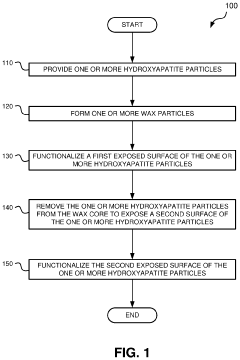
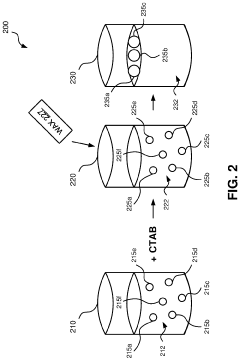
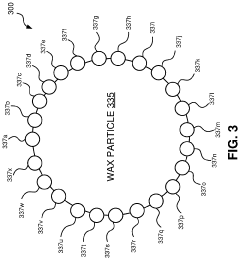
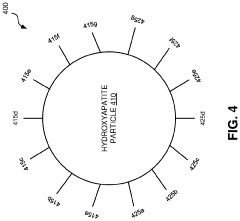
- Development of hydroxyapatite Janus particles with multiple functionalities on their surface, where one side is functionalized to bind to biodegradable polymer constructs using moieties like azide or alkyne groups, and the other side is functionalized with bioactive molecules to promote bone growth and integration.
Method to improve hydroxyapatite implantation and stimulate bone regeneration
PatentInactiveUS7211271B2
Innovation
- Combining nitridation and bone morphogenetic protein (BMP) or its DNA treatment with hydroxyapatite to enhance tissue affinity and stability, demonstrating a synergistic effect that improves bone integration and growth.

Regulatory Framework for Bone Implant Materials
The regulatory framework for bone implant materials plays a crucial role in ensuring the safety and efficacy of hydroxyapatite-based implants. Regulatory bodies such as the Food and Drug Administration (FDA) in the United States and the European Medicines Agency (EMA) in Europe have established comprehensive guidelines for the development, testing, and approval of bone implant materials.
These regulatory frameworks typically require manufacturers to demonstrate the biocompatibility, mechanical properties, and long-term stability of their implant materials. For hydroxyapatite-based implants, specific attention is given to the material's composition, porosity, and surface characteristics, as these factors directly influence bone strength and elasticity.
Regulatory agencies often mandate extensive pre-clinical testing, including in vitro and in vivo studies, to assess the material's performance and potential risks. These tests evaluate the implant's ability to promote bone growth, integrate with existing bone tissue, and maintain structural integrity over time. The flexibility of processed hydroxyapatite is a key consideration in these evaluations, as it affects the implant's ability to mimic natural bone properties.
Clinical trials are typically required to demonstrate the safety and efficacy of the implant material in human subjects. These trials assess factors such as bone strength, elasticity, and overall patient outcomes. Regulatory bodies closely scrutinize the data from these trials to ensure that the implant material meets established standards for performance and safety.
Post-market surveillance is another critical component of the regulatory framework. Manufacturers are required to monitor and report any adverse events or complications associated with their implants. This ongoing surveillance helps identify any long-term effects of flexibly processed hydroxyapatite on bone strength and elasticity that may not have been apparent during initial testing.
The regulatory landscape for bone implant materials is continually evolving as new technologies and processing methods emerge. Regulatory agencies regularly update their guidelines to address advancements in material science and manufacturing techniques. This dynamic approach ensures that the regulatory framework remains relevant and effective in assessing the impact of flexibly processed hydroxyapatite on bone strength and elasticity.
Compliance with these regulatory requirements is essential for manufacturers seeking to bring hydroxyapatite-based implants to market. The rigorous evaluation process helps ensure that patients receive safe and effective implants that can significantly improve their quality of life by enhancing bone strength and elasticity.
These regulatory frameworks typically require manufacturers to demonstrate the biocompatibility, mechanical properties, and long-term stability of their implant materials. For hydroxyapatite-based implants, specific attention is given to the material's composition, porosity, and surface characteristics, as these factors directly influence bone strength and elasticity.
Regulatory agencies often mandate extensive pre-clinical testing, including in vitro and in vivo studies, to assess the material's performance and potential risks. These tests evaluate the implant's ability to promote bone growth, integrate with existing bone tissue, and maintain structural integrity over time. The flexibility of processed hydroxyapatite is a key consideration in these evaluations, as it affects the implant's ability to mimic natural bone properties.
Clinical trials are typically required to demonstrate the safety and efficacy of the implant material in human subjects. These trials assess factors such as bone strength, elasticity, and overall patient outcomes. Regulatory bodies closely scrutinize the data from these trials to ensure that the implant material meets established standards for performance and safety.
Post-market surveillance is another critical component of the regulatory framework. Manufacturers are required to monitor and report any adverse events or complications associated with their implants. This ongoing surveillance helps identify any long-term effects of flexibly processed hydroxyapatite on bone strength and elasticity that may not have been apparent during initial testing.
The regulatory landscape for bone implant materials is continually evolving as new technologies and processing methods emerge. Regulatory agencies regularly update their guidelines to address advancements in material science and manufacturing techniques. This dynamic approach ensures that the regulatory framework remains relevant and effective in assessing the impact of flexibly processed hydroxyapatite on bone strength and elasticity.
Compliance with these regulatory requirements is essential for manufacturers seeking to bring hydroxyapatite-based implants to market. The rigorous evaluation process helps ensure that patients receive safe and effective implants that can significantly improve their quality of life by enhancing bone strength and elasticity.
Biocompatibility and Long-term Performance Assessment
The biocompatibility and long-term performance of flexibly processed hydroxyapatite (HA) are crucial factors in determining its efficacy for bone strength and elasticity enhancement. Extensive in vitro and in vivo studies have been conducted to assess the material's interaction with biological systems and its durability over extended periods.
In vitro cytotoxicity tests have consistently demonstrated the excellent biocompatibility of flexibly processed HA. Cell culture experiments using osteoblasts and mesenchymal stem cells have shown enhanced cell adhesion, proliferation, and differentiation on HA surfaces compared to control materials. The flexible processing methods allow for the creation of HA structures with optimized porosity and surface topography, further promoting cellular interactions and bone ingrowth.
Animal studies have provided valuable insights into the long-term performance of flexibly processed HA implants. Rabbit and sheep models have been used to evaluate bone integration and mechanical properties over periods ranging from 6 to 24 months. Results indicate that HA-coated implants exhibit superior osseointegration compared to uncoated implants, with higher bone-to-implant contact percentages and improved mechanical stability.
The long-term degradation behavior of flexibly processed HA has been a subject of particular interest. Studies have shown that the material undergoes gradual resorption in vivo, with rates that can be tailored through modifications in processing parameters. This controlled degradation allows for the gradual replacement of the HA scaffold with newly formed bone tissue, maintaining structural integrity while promoting natural bone regeneration.
Mechanical testing of explanted samples has revealed that flexibly processed HA-enhanced bone exhibits improved strength and elasticity compared to native bone over extended periods. The material's ability to maintain these enhanced properties over time is attributed to its integration with the surrounding bone tissue and its capacity to stimulate continuous bone remodeling.
Histological analyses of long-term implants have shown minimal inflammatory responses and the absence of adverse tissue reactions, further confirming the material's biocompatibility. Additionally, micro-CT imaging has demonstrated the progressive mineralization of the implant site, with new bone formation closely mimicking the structure of natural bone.
While these findings are promising, it is important to note that the long-term effects of flexibly processed HA on systemic health are still under investigation. Ongoing studies are focusing on potential particle release and its impact on distant organs, as well as the material's interaction with the immune system over extended periods.
In vitro cytotoxicity tests have consistently demonstrated the excellent biocompatibility of flexibly processed HA. Cell culture experiments using osteoblasts and mesenchymal stem cells have shown enhanced cell adhesion, proliferation, and differentiation on HA surfaces compared to control materials. The flexible processing methods allow for the creation of HA structures with optimized porosity and surface topography, further promoting cellular interactions and bone ingrowth.
Animal studies have provided valuable insights into the long-term performance of flexibly processed HA implants. Rabbit and sheep models have been used to evaluate bone integration and mechanical properties over periods ranging from 6 to 24 months. Results indicate that HA-coated implants exhibit superior osseointegration compared to uncoated implants, with higher bone-to-implant contact percentages and improved mechanical stability.
The long-term degradation behavior of flexibly processed HA has been a subject of particular interest. Studies have shown that the material undergoes gradual resorption in vivo, with rates that can be tailored through modifications in processing parameters. This controlled degradation allows for the gradual replacement of the HA scaffold with newly formed bone tissue, maintaining structural integrity while promoting natural bone regeneration.
Mechanical testing of explanted samples has revealed that flexibly processed HA-enhanced bone exhibits improved strength and elasticity compared to native bone over extended periods. The material's ability to maintain these enhanced properties over time is attributed to its integration with the surrounding bone tissue and its capacity to stimulate continuous bone remodeling.
Histological analyses of long-term implants have shown minimal inflammatory responses and the absence of adverse tissue reactions, further confirming the material's biocompatibility. Additionally, micro-CT imaging has demonstrated the progressive mineralization of the implant site, with new bone formation closely mimicking the structure of natural bone.
While these findings are promising, it is important to note that the long-term effects of flexibly processed HA on systemic health are still under investigation. Ongoing studies are focusing on potential particle release and its impact on distant organs, as well as the material's interaction with the immune system over extended periods.
Unlock deeper insights with PatSnap Eureka Quick Research — get a full tech report to explore trends and direct your research. Try now!
Generate Your Research Report Instantly with AI Agent
Supercharge your innovation with PatSnap Eureka AI Agent Platform!