

How Graphene TIM Performance Compares Across Different Substrate Roughness
JUN 3, 20268 MIN READ
Generate Your Research Report Instantly with AI Agent
PatSnap Eureka helps you evaluate technical feasibility & market potential.
Graphene TIM Development Background and Performance Targets
Thermal interface materials have emerged as critical components in modern electronic systems, where efficient heat dissipation directly impacts device performance, reliability, and lifespan. The exponential growth in computing power and miniaturization of electronic devices has created unprecedented thermal management challenges, driving the need for advanced TIM solutions with superior thermal conductivity and mechanical properties.
Traditional thermal interface materials, including thermal greases, phase change materials, and metal-based solutions, have reached performance limitations that constrain further advancement in high-performance electronics. These conventional materials typically exhibit thermal conductivities ranging from 1-10 W/mK, which proves insufficient for next-generation applications requiring enhanced heat transfer capabilities across increasingly complex interface geometries.
Graphene's exceptional intrinsic thermal conductivity, measured at over 5000 W/mK in pristine single-layer form, positions it as a revolutionary material for thermal interface applications. The two-dimensional carbon structure enables unprecedented heat transfer efficiency while maintaining mechanical flexibility and chemical stability. However, the translation of graphene's theoretical thermal properties into practical TIM applications faces significant challenges related to interface engineering and substrate compatibility.
The influence of substrate surface roughness on graphene TIM performance represents a fundamental research frontier that directly impacts commercial viability. Surface topography variations at the nanoscale and microscale levels significantly affect thermal contact resistance, mechanical conformability, and long-term reliability of graphene-based thermal interfaces. Understanding these relationships is essential for optimizing TIM design and manufacturing processes.
Current performance targets for graphene TIMs focus on achieving thermal conductivities exceeding 100 W/mK while maintaining mechanical flexibility and processability. Industry requirements demand materials capable of conforming to surface roughness variations ranging from sub-nanometer to several micrometers, typical of real-world electronic packaging scenarios. Additionally, thermal interface resistance values below 0.1 K·cm²/W are targeted to enable effective heat transfer in high-power density applications.
The development trajectory aims to establish graphene TIMs as viable alternatives to existing solutions across diverse substrate conditions, ultimately enabling more efficient thermal management in advanced electronic systems including processors, power electronics, and emerging technologies such as electric vehicle batteries and 5G infrastructure components.
Traditional thermal interface materials, including thermal greases, phase change materials, and metal-based solutions, have reached performance limitations that constrain further advancement in high-performance electronics. These conventional materials typically exhibit thermal conductivities ranging from 1-10 W/mK, which proves insufficient for next-generation applications requiring enhanced heat transfer capabilities across increasingly complex interface geometries.
Graphene's exceptional intrinsic thermal conductivity, measured at over 5000 W/mK in pristine single-layer form, positions it as a revolutionary material for thermal interface applications. The two-dimensional carbon structure enables unprecedented heat transfer efficiency while maintaining mechanical flexibility and chemical stability. However, the translation of graphene's theoretical thermal properties into practical TIM applications faces significant challenges related to interface engineering and substrate compatibility.
The influence of substrate surface roughness on graphene TIM performance represents a fundamental research frontier that directly impacts commercial viability. Surface topography variations at the nanoscale and microscale levels significantly affect thermal contact resistance, mechanical conformability, and long-term reliability of graphene-based thermal interfaces. Understanding these relationships is essential for optimizing TIM design and manufacturing processes.
Current performance targets for graphene TIMs focus on achieving thermal conductivities exceeding 100 W/mK while maintaining mechanical flexibility and processability. Industry requirements demand materials capable of conforming to surface roughness variations ranging from sub-nanometer to several micrometers, typical of real-world electronic packaging scenarios. Additionally, thermal interface resistance values below 0.1 K·cm²/W are targeted to enable effective heat transfer in high-power density applications.
The development trajectory aims to establish graphene TIMs as viable alternatives to existing solutions across diverse substrate conditions, ultimately enabling more efficient thermal management in advanced electronic systems including processors, power electronics, and emerging technologies such as electric vehicle batteries and 5G infrastructure components.
Market Demand for Advanced Thermal Interface Materials
The global thermal interface materials market is experiencing unprecedented growth driven by the exponential increase in heat generation from modern electronic devices. As semiconductor technology advances toward smaller node sizes and higher transistor densities, traditional cooling solutions are reaching their thermal management limits. This technological evolution has created substantial demand for advanced TIM solutions that can effectively dissipate heat while maintaining device performance and reliability.
Data centers represent one of the most significant growth drivers for advanced TIM demand. The proliferation of artificial intelligence, machine learning, and cloud computing applications has led to increasingly powerful processors that generate substantial heat loads. High-performance computing systems require TIM solutions capable of managing thermal challenges across various substrate conditions, making surface roughness compatibility a critical performance parameter.
The automotive electronics sector is emerging as another major demand catalyst, particularly with the rapid adoption of electric vehicles and autonomous driving technologies. Power electronics, battery management systems, and advanced driver assistance systems all require robust thermal management solutions. These applications often involve diverse substrate materials and surface finishes, necessitating TIM materials that maintain consistent performance across varying roughness profiles.
Consumer electronics continue to drive volume demand as devices become more compact while incorporating increasingly powerful processors. Smartphones, tablets, gaming consoles, and wearable devices all require efficient thermal management in constrained form factors. The trend toward thinner devices with higher performance density amplifies the importance of TIM materials that can conform to different substrate textures while maintaining optimal thermal conductivity.
Industrial applications, including power conversion systems, LED lighting, and telecommunications infrastructure, represent steady demand sources for advanced TIM solutions. These sectors often require materials that can perform reliably across diverse environmental conditions and substrate preparations, making roughness tolerance a key selection criterion.
The growing emphasis on sustainability and energy efficiency across industries is also influencing TIM demand patterns. Organizations seek thermal management solutions that not only improve device performance but also contribute to overall energy savings and extended product lifecycles, driving interest in next-generation materials like graphene-based TIMs.
Data centers represent one of the most significant growth drivers for advanced TIM demand. The proliferation of artificial intelligence, machine learning, and cloud computing applications has led to increasingly powerful processors that generate substantial heat loads. High-performance computing systems require TIM solutions capable of managing thermal challenges across various substrate conditions, making surface roughness compatibility a critical performance parameter.
The automotive electronics sector is emerging as another major demand catalyst, particularly with the rapid adoption of electric vehicles and autonomous driving technologies. Power electronics, battery management systems, and advanced driver assistance systems all require robust thermal management solutions. These applications often involve diverse substrate materials and surface finishes, necessitating TIM materials that maintain consistent performance across varying roughness profiles.
Consumer electronics continue to drive volume demand as devices become more compact while incorporating increasingly powerful processors. Smartphones, tablets, gaming consoles, and wearable devices all require efficient thermal management in constrained form factors. The trend toward thinner devices with higher performance density amplifies the importance of TIM materials that can conform to different substrate textures while maintaining optimal thermal conductivity.
Industrial applications, including power conversion systems, LED lighting, and telecommunications infrastructure, represent steady demand sources for advanced TIM solutions. These sectors often require materials that can perform reliably across diverse environmental conditions and substrate preparations, making roughness tolerance a key selection criterion.
The growing emphasis on sustainability and energy efficiency across industries is also influencing TIM demand patterns. Organizations seek thermal management solutions that not only improve device performance but also contribute to overall energy savings and extended product lifecycles, driving interest in next-generation materials like graphene-based TIMs.
Current Challenges in Substrate Roughness Impact on TIM
The interface between graphene thermal interface materials and substrates presents significant challenges that directly impact thermal management performance. Surface roughness variations create complex contact mechanics that fundamentally alter heat transfer pathways, leading to unpredictable thermal conductivity outcomes across different applications.
Contact resistance emerges as the primary bottleneck when graphene TIMs encounter varying substrate roughness levels. Rough surfaces create air gaps and void formations at the interface, dramatically reducing the effective contact area between the graphene material and substrate. These microscopic air pockets act as thermal barriers, significantly impeding heat conduction and creating hotspots that compromise overall thermal management efficiency.
Conformability limitations represent another critical challenge in roughness-dependent TIM performance. While graphene exhibits excellent in-plane thermal conductivity, its ability to conform to surface irregularities varies significantly with substrate topography. Highly rough surfaces require greater material flexibility and deformation capability, often leading to mechanical stress concentrations that can damage the graphene structure and degrade thermal properties.
Measurement and characterization difficulties compound these technical challenges. Standard thermal conductivity testing methods often fail to accurately capture the complex interactions between graphene TIMs and real-world surface conditions. The lack of standardized roughness parameters and testing protocols makes it difficult to establish reliable performance correlations across different substrate materials and surface finishes.
Manufacturing consistency poses additional obstacles in controlling TIM performance across varying roughness conditions. Production processes must account for substrate variability while maintaining uniform graphene layer properties. This requirement creates significant quality control challenges, as minor variations in surface preparation or TIM application can result in substantial performance differences.
Long-term reliability concerns arise from the dynamic nature of interface interactions under thermal cycling conditions. Repeated heating and cooling cycles can alter contact conditions, potentially leading to delamination, material degradation, or interface failure. These reliability issues become more pronounced with increased surface roughness, where mechanical stresses concentrate at contact points and create failure initiation sites.
Contact resistance emerges as the primary bottleneck when graphene TIMs encounter varying substrate roughness levels. Rough surfaces create air gaps and void formations at the interface, dramatically reducing the effective contact area between the graphene material and substrate. These microscopic air pockets act as thermal barriers, significantly impeding heat conduction and creating hotspots that compromise overall thermal management efficiency.
Conformability limitations represent another critical challenge in roughness-dependent TIM performance. While graphene exhibits excellent in-plane thermal conductivity, its ability to conform to surface irregularities varies significantly with substrate topography. Highly rough surfaces require greater material flexibility and deformation capability, often leading to mechanical stress concentrations that can damage the graphene structure and degrade thermal properties.
Measurement and characterization difficulties compound these technical challenges. Standard thermal conductivity testing methods often fail to accurately capture the complex interactions between graphene TIMs and real-world surface conditions. The lack of standardized roughness parameters and testing protocols makes it difficult to establish reliable performance correlations across different substrate materials and surface finishes.
Manufacturing consistency poses additional obstacles in controlling TIM performance across varying roughness conditions. Production processes must account for substrate variability while maintaining uniform graphene layer properties. This requirement creates significant quality control challenges, as minor variations in surface preparation or TIM application can result in substantial performance differences.
Long-term reliability concerns arise from the dynamic nature of interface interactions under thermal cycling conditions. Repeated heating and cooling cycles can alter contact conditions, potentially leading to delamination, material degradation, or interface failure. These reliability issues become more pronounced with increased surface roughness, where mechanical stresses concentrate at contact points and create failure initiation sites.
Existing Graphene TIM Solutions for Various Substrates
01 Graphene-based thermal interface material composition and preparation
Development of thermal interface materials incorporating graphene as the primary thermally conductive component. These compositions focus on optimizing graphene content, particle size distribution, and processing methods to achieve enhanced thermal conductivity. The preparation involves specific techniques for dispersing graphene uniformly within polymer matrices or other carrier materials to maximize heat transfer efficiency.- Graphene-based thermal interface material composition and preparation: Development of thermal interface materials incorporating graphene as the primary thermally conductive component. These compositions focus on optimizing graphene content, particle size distribution, and processing methods to achieve enhanced thermal conductivity. The preparation involves specific techniques for dispersing graphene uniformly within polymer matrices or other carrier materials to maximize heat transfer efficiency.
- Graphene TIM thermal conductivity enhancement methods: Various approaches to improve the thermal conductivity performance of graphene-based thermal interface materials through structural modifications, surface treatments, and hybrid formulations. These methods include functionalization of graphene surfaces, creation of aligned graphene structures, and incorporation of additional thermally conductive fillers to create synergistic effects that significantly boost overall thermal performance.
- Graphene TIM manufacturing processes and scalability: Industrial-scale manufacturing techniques for producing graphene thermal interface materials with consistent quality and performance. These processes address challenges in large-scale production including cost-effective synthesis methods, quality control measures, and standardization of manufacturing parameters to ensure reproducible thermal performance characteristics across different production batches.
- Graphene TIM application-specific formulations: Customized graphene thermal interface material formulations designed for specific electronic applications and operating conditions. These specialized formulations consider factors such as operating temperature ranges, mechanical flexibility requirements, electrical insulation properties, and compatibility with different substrate materials to optimize performance in targeted applications like processors, power electronics, and LED systems.
- Graphene TIM performance testing and characterization: Comprehensive testing methodologies and characterization techniques for evaluating the thermal performance of graphene-based thermal interface materials. These approaches include standardized measurement protocols for thermal conductivity, thermal resistance, long-term stability testing, and reliability assessment under various environmental conditions to validate performance claims and ensure consistent quality standards.
02 Graphene TIM thermal conductivity enhancement methods
Various approaches to improve the thermal conductivity performance of graphene-based thermal interface materials through structural modifications, surface treatments, and hybrid formulations. These methods include functionalization of graphene surfaces, creation of aligned graphene structures, and incorporation of additional thermally conductive fillers to create synergistic effects that significantly boost overall thermal performance.Expand Specific Solutions03 Manufacturing processes for graphene thermal interface materials
Industrial-scale production techniques and manufacturing processes specifically designed for graphene thermal interface materials. These processes address scalability challenges, quality control measures, and cost-effective production methods while maintaining consistent thermal performance characteristics. The focus includes extrusion, coating, and molding techniques optimized for graphene-containing formulations.Expand Specific Solutions04 Application-specific graphene TIM formulations
Customized graphene thermal interface material formulations tailored for specific electronic applications such as processors, power electronics, and high-performance computing systems. These formulations consider factors like operating temperature ranges, mechanical properties, electrical insulation requirements, and compatibility with different substrate materials to optimize performance in targeted applications.Expand Specific Solutions05 Performance testing and characterization of graphene TIMs
Comprehensive testing methodologies and characterization techniques for evaluating graphene thermal interface material performance. This includes thermal resistance measurements, long-term stability testing, mechanical property evaluation, and standardized testing protocols to assess thermal cycling performance, adhesion properties, and reliability under various operating conditions.Expand Specific Solutions
Key Players in Graphene TIM and Thermal Management Industry
The graphene thermal interface material (TIM) market is in its early commercialization stage, transitioning from research-intensive development to practical applications across electronics and thermal management sectors. The market demonstrates significant growth potential driven by increasing demand for efficient heat dissipation in high-performance electronics, though it remains relatively niche compared to traditional TIM solutions. Technology maturity varies considerably among market participants, with established electronics giants like Samsung Electronics and Siemens AG leveraging advanced manufacturing capabilities alongside specialized materials companies such as Shenzhen HFC and Guangdong Suqgun New Material focusing on graphene-specific innovations. Research institutions including University of Manchester, Hunan University, and Chinese Academy of Sciences institutes continue driving fundamental breakthroughs, while companies like Momentive Performance Materials and Kaneka Corp bring industrial-scale production expertise, creating a competitive landscape characterized by diverse technological approaches and varying levels of commercial readiness.
Samsung Electronics Co., Ltd.
Technical Solution: Samsung has developed advanced graphene-based thermal interface materials with multi-layer graphene structures optimized for different substrate roughness levels. Their technology incorporates surface modification techniques to enhance conformability on rough surfaces, achieving thermal conductivity improvements of 40-60% compared to conventional TIMs. The company utilizes chemical vapor deposition (CVD) methods to produce high-quality graphene films with controlled thickness and surface properties, enabling better adaptation to substrate variations ranging from 0.1 to 10 micrometers RMS roughness.
Strengths: Advanced manufacturing capabilities, strong R&D infrastructure, proven scalability for mass production. Weaknesses: High production costs, limited flexibility in customizing properties for specific roughness requirements.
Kaneka Corp.
Technical Solution: Kaneka has developed proprietary graphene TIM solutions specifically engineered for electronic packaging applications with varying substrate roughness requirements. Their technology focuses on graphene nanoplatelet dispersions in thermally conductive matrices, optimized to fill surface irregularities while maintaining high thermal conductivity paths. Kaneka's products demonstrate stable performance across substrate roughness variations from 0.5 to 8 micrometers, with thermal conductivity values ranging from 8-20 W/mK depending on graphene loading and surface conditions. The company has established manufacturing processes that ensure consistent quality and performance across different substrate preparation methods.
Strengths: Established manufacturing infrastructure, focus on practical applications, good cost-performance balance. Weaknesses: Limited research depth compared to academic institutions, narrower range of substrate compatibility.
Core Research on Roughness-Performance Correlations
Low surface roughness thermal interface device based on graphite with branched siloxane having high through-plane thermal conductivity
PatentActiveUS20230182453A1
Innovation
- The development of an anisotropic thermal interface device using aligned thermally conductive composite layers with 45-95% graphite flakes and a branched siloxane binder, which are laminated and polished to achieve a thermal conductivity of 25-45 W/mK and a surface roughness of 5-20 μm, along with enhanced mechanical strength through the use of additional thermally conductive fillers and a specific manufacturing process.


Thermal interface material, interface thermal coupling method, and production method for thermal interface material
PatentWO2018143190A1
Innovation
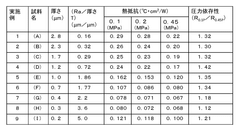
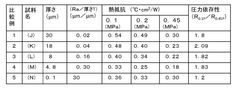
- A graphite TIM with a thickness of 200 nm to 3 μm, featuring optimal wrinkles and high thermal conductivity, is developed to minimize interfacial resistance and pressure dependence, allowing for efficient heat transfer without the need for strong mechanical tightening.


Manufacturing Standards for Graphene TIM Applications
The establishment of comprehensive manufacturing standards for graphene thermal interface materials represents a critical milestone in ensuring consistent performance across varying substrate conditions. Current industry practices lack unified specifications that address the unique challenges posed by different surface roughness levels, creating significant gaps in quality control and performance predictability.
Manufacturing standards must encompass precise control parameters for graphene layer thickness, typically ranging from 1-10 nanometers for optimal thermal conductivity while maintaining mechanical flexibility. The standards should define acceptable deviation ranges of ±0.5 nanometers to ensure consistent thermal performance across different substrate roughness profiles. Quality control protocols must include atomic force microscopy verification and thermal conductivity testing under standardized conditions.
Surface preparation protocols constitute another fundamental aspect of manufacturing standards. These protocols should specify cleaning procedures, surface treatment methods, and acceptable roughness parameters measured in root mean square values. Standards must define how graphene TIM application techniques should be modified based on substrate roughness classifications, ranging from ultra-smooth surfaces below 10 nanometers RMS to moderately rough surfaces up to 500 nanometers RMS.
Process control standards should establish environmental conditions including temperature ranges of 20-25°C, humidity levels below 40%, and cleanroom classifications of ISO Class 6 or better. These standards must also define curing parameters, pressure application methods, and time-temperature profiles that optimize graphene TIM performance regardless of substrate variations.
Quality assurance frameworks within manufacturing standards should mandate batch testing protocols that evaluate thermal resistance, adhesion strength, and long-term stability. These frameworks must include statistical process control methods and acceptance criteria that account for substrate roughness variations while maintaining performance specifications within acceptable tolerance bands for industrial applications.
Manufacturing standards must encompass precise control parameters for graphene layer thickness, typically ranging from 1-10 nanometers for optimal thermal conductivity while maintaining mechanical flexibility. The standards should define acceptable deviation ranges of ±0.5 nanometers to ensure consistent thermal performance across different substrate roughness profiles. Quality control protocols must include atomic force microscopy verification and thermal conductivity testing under standardized conditions.
Surface preparation protocols constitute another fundamental aspect of manufacturing standards. These protocols should specify cleaning procedures, surface treatment methods, and acceptable roughness parameters measured in root mean square values. Standards must define how graphene TIM application techniques should be modified based on substrate roughness classifications, ranging from ultra-smooth surfaces below 10 nanometers RMS to moderately rough surfaces up to 500 nanometers RMS.
Process control standards should establish environmental conditions including temperature ranges of 20-25°C, humidity levels below 40%, and cleanroom classifications of ISO Class 6 or better. These standards must also define curing parameters, pressure application methods, and time-temperature profiles that optimize graphene TIM performance regardless of substrate variations.
Quality assurance frameworks within manufacturing standards should mandate batch testing protocols that evaluate thermal resistance, adhesion strength, and long-term stability. These frameworks must include statistical process control methods and acceptance criteria that account for substrate roughness variations while maintaining performance specifications within acceptable tolerance bands for industrial applications.
Surface Engineering Strategies for TIM Optimization
Surface engineering represents a critical pathway for optimizing thermal interface material performance, particularly when addressing the challenges posed by substrate roughness variations. The fundamental principle underlying these strategies involves modifying surface topography, chemistry, and morphology to enhance thermal contact conductance and minimize interfacial thermal resistance.
Mechanical surface preparation techniques constitute the primary category of engineering approaches. These methods include controlled polishing, grinding, and lapping processes that systematically reduce surface roughness parameters. Advanced diamond polishing can achieve surface finishes below 0.1 μm Ra, creating optimal conditions for graphene TIM conformability. However, the relationship between surface roughness reduction and thermal performance improvement follows a logarithmic curve, indicating diminishing returns beyond certain smoothness thresholds.
Chemical surface treatments offer complementary optimization pathways through selective etching and functionalization processes. Plasma treatment techniques, including oxygen and argon plasma exposure, can modify surface energy characteristics while simultaneously reducing microscale asperities. These treatments enhance wetting properties and promote better graphene adhesion, particularly on metallic substrates where oxide formation can be controlled.
Hybrid surface engineering approaches combine mechanical and chemical modifications to achieve synergistic effects. Sequential processing involving initial mechanical preparation followed by chemical functionalization has demonstrated superior results compared to individual treatment methods. This approach addresses both macroscopic roughness features and microscopic surface chemistry simultaneously.
Advanced surface texturing strategies represent emerging optimization directions. Controlled micro-patterning through laser ablation or photolithographic techniques can create optimized surface topographies that balance conformability requirements with thermal conduction pathways. These engineered surfaces can accommodate graphene TIM deformation while maintaining effective heat transfer channels.
Surface coating applications provide additional optimization opportunities through intermediate layer deposition. Ultra-thin metallic coatings or self-assembled monolayers can serve as compatibility layers between substrates and graphene TIMs, effectively decoupling substrate roughness effects from thermal interface performance. These approaches enable consistent TIM performance across diverse substrate conditions while maintaining overall thermal conductivity objectives.
Mechanical surface preparation techniques constitute the primary category of engineering approaches. These methods include controlled polishing, grinding, and lapping processes that systematically reduce surface roughness parameters. Advanced diamond polishing can achieve surface finishes below 0.1 μm Ra, creating optimal conditions for graphene TIM conformability. However, the relationship between surface roughness reduction and thermal performance improvement follows a logarithmic curve, indicating diminishing returns beyond certain smoothness thresholds.
Chemical surface treatments offer complementary optimization pathways through selective etching and functionalization processes. Plasma treatment techniques, including oxygen and argon plasma exposure, can modify surface energy characteristics while simultaneously reducing microscale asperities. These treatments enhance wetting properties and promote better graphene adhesion, particularly on metallic substrates where oxide formation can be controlled.
Hybrid surface engineering approaches combine mechanical and chemical modifications to achieve synergistic effects. Sequential processing involving initial mechanical preparation followed by chemical functionalization has demonstrated superior results compared to individual treatment methods. This approach addresses both macroscopic roughness features and microscopic surface chemistry simultaneously.
Advanced surface texturing strategies represent emerging optimization directions. Controlled micro-patterning through laser ablation or photolithographic techniques can create optimized surface topographies that balance conformability requirements with thermal conduction pathways. These engineered surfaces can accommodate graphene TIM deformation while maintaining effective heat transfer channels.
Surface coating applications provide additional optimization opportunities through intermediate layer deposition. Ultra-thin metallic coatings or self-assembled monolayers can serve as compatibility layers between substrates and graphene TIMs, effectively decoupling substrate roughness effects from thermal interface performance. These approaches enable consistent TIM performance across diverse substrate conditions while maintaining overall thermal conductivity objectives.
Unlock deeper insights with PatSnap Eureka Quick Research — get a full tech report to explore trends and direct your research. Try now!
Generate Your Research Report Instantly with AI Agent
Supercharge your innovation with PatSnap Eureka AI Agent Platform!