

How laryngoscope blade geometry affects visualization.
JUL 14, 20258 MIN READ
Generate Your Research Report Instantly with AI Agent
PatSnap Eureka helps you evaluate technical feasibility & market potential.
Laryngoscope Evolution
The laryngoscope has undergone significant evolution since its inception in the early 19th century. Initially developed as a simple tool for examining the larynx, it has transformed into a sophisticated device crucial for airway management and intubation procedures. The evolution of laryngoscope blade geometry has played a pivotal role in improving visualization and ease of use.
In the 1940s, Robert Macintosh introduced the curved laryngoscope blade, which marked a significant milestone in laryngoscope design. This curved geometry allowed for indirect elevation of the epiglottis, providing a clearer view of the vocal cords. The Macintosh blade quickly became the standard for adult intubation due to its effectiveness in most patients.
Parallel to the Macintosh design, the straight blade, popularized by Robert Miller in the 1940s, offered an alternative approach. The Miller blade's straight geometry was particularly useful for directly lifting the epiglottis, making it advantageous in pediatric patients and those with anterior larynges.
The 1960s and 1970s saw further refinements in blade geometry. The Wisconsin blade, introduced by Bambrough and Lyons, featured a unique curved design with a hinged tip, allowing for easier manipulation of the epiglottis. This innovation demonstrated the ongoing efforts to optimize blade geometry for improved visualization.
As technology advanced, the 1990s and 2000s witnessed the emergence of video laryngoscopes. These devices incorporated miniature cameras and LED lights into the blade, revolutionizing the approach to difficult airways. The blade geometry of video laryngoscopes often featured more pronounced curvatures, as direct line-of-sight was no longer necessary for intubation.
Recent years have seen a focus on optimizing blade geometry for specific patient populations and clinical scenarios. For instance, the development of hyperangulated blades has addressed challenges in patients with limited neck mobility or obesity. These blades feature a more extreme curvature, allowing for improved visualization in difficult anatomies.
The evolution of laryngoscope blade geometry continues to be driven by advancements in materials science and manufacturing techniques. 3D printing technology, for example, has enabled the rapid prototyping and testing of novel blade designs, accelerating the pace of innovation in this field.
Throughout this evolution, the primary goal has remained consistent: to enhance visualization of the laryngeal structures and facilitate successful intubation. Each iteration in blade geometry has sought to address specific challenges encountered in clinical practice, demonstrating the ongoing interplay between technological innovation and practical application in airway management.
In the 1940s, Robert Macintosh introduced the curved laryngoscope blade, which marked a significant milestone in laryngoscope design. This curved geometry allowed for indirect elevation of the epiglottis, providing a clearer view of the vocal cords. The Macintosh blade quickly became the standard for adult intubation due to its effectiveness in most patients.
Parallel to the Macintosh design, the straight blade, popularized by Robert Miller in the 1940s, offered an alternative approach. The Miller blade's straight geometry was particularly useful for directly lifting the epiglottis, making it advantageous in pediatric patients and those with anterior larynges.
The 1960s and 1970s saw further refinements in blade geometry. The Wisconsin blade, introduced by Bambrough and Lyons, featured a unique curved design with a hinged tip, allowing for easier manipulation of the epiglottis. This innovation demonstrated the ongoing efforts to optimize blade geometry for improved visualization.
As technology advanced, the 1990s and 2000s witnessed the emergence of video laryngoscopes. These devices incorporated miniature cameras and LED lights into the blade, revolutionizing the approach to difficult airways. The blade geometry of video laryngoscopes often featured more pronounced curvatures, as direct line-of-sight was no longer necessary for intubation.
Recent years have seen a focus on optimizing blade geometry for specific patient populations and clinical scenarios. For instance, the development of hyperangulated blades has addressed challenges in patients with limited neck mobility or obesity. These blades feature a more extreme curvature, allowing for improved visualization in difficult anatomies.
The evolution of laryngoscope blade geometry continues to be driven by advancements in materials science and manufacturing techniques. 3D printing technology, for example, has enabled the rapid prototyping and testing of novel blade designs, accelerating the pace of innovation in this field.
Throughout this evolution, the primary goal has remained consistent: to enhance visualization of the laryngeal structures and facilitate successful intubation. Each iteration in blade geometry has sought to address specific challenges encountered in clinical practice, demonstrating the ongoing interplay between technological innovation and practical application in airway management.
Clinical Demand Analysis
The demand for improved laryngoscope blade geometry in clinical settings has been steadily increasing due to its critical role in airway management and intubation procedures. Healthcare professionals, particularly anesthesiologists and emergency medicine practitioners, require optimal visualization of the laryngeal structures to ensure successful and safe intubation. The geometry of laryngoscope blades significantly impacts the ease and effectiveness of these procedures, making it a crucial area for technological advancement and clinical research.
In recent years, there has been a growing recognition of the limitations associated with traditional laryngoscope blade designs. Clinicians have reported challenges in obtaining clear views of the glottic opening, especially in patients with difficult airways or anatomical variations. This has led to an increased demand for innovative blade geometries that can enhance visualization while minimizing the risk of complications during intubation attempts.
The market for advanced laryngoscope blades has expanded considerably, driven by the need for improved patient outcomes and reduced procedural complications. Hospitals and healthcare facilities are actively seeking laryngoscope designs that offer better maneuverability, reduced force application, and enhanced visual field. This demand is further fueled by the rising number of surgical procedures, emergency interventions, and the growing prevalence of obesity, which often complicates airway management.
Clinical studies have highlighted the potential benefits of optimized blade geometries in reducing intubation time, improving first-attempt success rates, and minimizing trauma to the airway tissues. These factors have created a substantial market opportunity for manufacturers to develop and introduce innovative laryngoscope blade designs that address these clinical needs.
The aging population and the increasing incidence of chronic respiratory conditions have also contributed to the demand for advanced laryngoscope technologies. As the complexity of airway management cases rises, there is a parallel increase in the need for specialized blade geometries that can accommodate a wide range of patient anatomies and clinical scenarios.
Furthermore, the COVID-19 pandemic has underscored the importance of efficient and safe intubation techniques, particularly in critically ill patients. This has accelerated the adoption of video laryngoscopes and novel blade designs that offer improved visualization while maintaining a safe distance between the healthcare provider and the patient's airway.
In response to these clinical demands, research and development efforts have intensified, focusing on innovative materials, ergonomic designs, and integration of advanced imaging technologies into laryngoscope blades. The market is witnessing a shift towards customizable and patient-specific blade geometries, driven by the recognition that a one-size-fits-all approach may not be optimal for all clinical situations.
In recent years, there has been a growing recognition of the limitations associated with traditional laryngoscope blade designs. Clinicians have reported challenges in obtaining clear views of the glottic opening, especially in patients with difficult airways or anatomical variations. This has led to an increased demand for innovative blade geometries that can enhance visualization while minimizing the risk of complications during intubation attempts.
The market for advanced laryngoscope blades has expanded considerably, driven by the need for improved patient outcomes and reduced procedural complications. Hospitals and healthcare facilities are actively seeking laryngoscope designs that offer better maneuverability, reduced force application, and enhanced visual field. This demand is further fueled by the rising number of surgical procedures, emergency interventions, and the growing prevalence of obesity, which often complicates airway management.
Clinical studies have highlighted the potential benefits of optimized blade geometries in reducing intubation time, improving first-attempt success rates, and minimizing trauma to the airway tissues. These factors have created a substantial market opportunity for manufacturers to develop and introduce innovative laryngoscope blade designs that address these clinical needs.
The aging population and the increasing incidence of chronic respiratory conditions have also contributed to the demand for advanced laryngoscope technologies. As the complexity of airway management cases rises, there is a parallel increase in the need for specialized blade geometries that can accommodate a wide range of patient anatomies and clinical scenarios.
Furthermore, the COVID-19 pandemic has underscored the importance of efficient and safe intubation techniques, particularly in critically ill patients. This has accelerated the adoption of video laryngoscopes and novel blade designs that offer improved visualization while maintaining a safe distance between the healthcare provider and the patient's airway.
In response to these clinical demands, research and development efforts have intensified, focusing on innovative materials, ergonomic designs, and integration of advanced imaging technologies into laryngoscope blades. The market is witnessing a shift towards customizable and patient-specific blade geometries, driven by the recognition that a one-size-fits-all approach may not be optimal for all clinical situations.
Blade Geometry Challenges
The geometry of laryngoscope blades presents several significant challenges in achieving optimal visualization during intubation procedures. One of the primary issues is the trade-off between blade curvature and the field of view. A more curved blade can provide better lifting of the epiglottis and tongue, potentially improving the view of the glottic opening. However, excessive curvature can also limit the line of sight, especially in patients with anatomical variations or restricted mouth opening.
Another challenge lies in the blade's width and thickness. A wider blade may offer better tongue displacement but can be more difficult to insert and maneuver, particularly in patients with limited oral space. Conversely, a narrower blade may be easier to insert but might not provide adequate retraction of soft tissues, potentially compromising the view of the laryngeal structures.
The length of the blade also presents a dilemma. Longer blades can reach deeper into the oropharynx, which may be beneficial for patients with anterior larynges or those with larger neck circumferences. However, longer blades can be more challenging to manipulate and may increase the risk of dental trauma during insertion and removal.
The tip design of the laryngoscope blade is another critical factor affecting visualization. A flange or "lip" at the distal end can help in lifting the epiglottis, but if too pronounced, it may obstruct the view or cause tissue trauma. Balancing the effectiveness of the tip in manipulating anatomical structures with maintaining a clear line of sight is a persistent challenge in blade design.
Illumination is intricately linked to blade geometry. The placement and angle of the light source on the blade can significantly impact the quality of visualization. Shadows cast by the blade itself or anatomical structures can hinder the view, necessitating careful consideration of the light's position relative to the blade's shape and curvature.
Furthermore, the material properties of the blade, while not strictly geometric, interact with the blade's shape to affect performance. Rigid blades offer stability but may be less adaptable to individual patient anatomy. Attempts to create more flexible or adjustable blades to accommodate different anatomical variations while maintaining optimal geometry for visualization have met with mixed success.
Lastly, the interface between the blade and the handle presents design challenges. The angle and mechanism of attachment can affect the overall ergonomics and the ability to apply appropriate force during laryngoscopy. Balancing these factors with the need for a clear, unobstructed view remains an ongoing challenge in laryngoscope design.
Another challenge lies in the blade's width and thickness. A wider blade may offer better tongue displacement but can be more difficult to insert and maneuver, particularly in patients with limited oral space. Conversely, a narrower blade may be easier to insert but might not provide adequate retraction of soft tissues, potentially compromising the view of the laryngeal structures.
The length of the blade also presents a dilemma. Longer blades can reach deeper into the oropharynx, which may be beneficial for patients with anterior larynges or those with larger neck circumferences. However, longer blades can be more challenging to manipulate and may increase the risk of dental trauma during insertion and removal.
The tip design of the laryngoscope blade is another critical factor affecting visualization. A flange or "lip" at the distal end can help in lifting the epiglottis, but if too pronounced, it may obstruct the view or cause tissue trauma. Balancing the effectiveness of the tip in manipulating anatomical structures with maintaining a clear line of sight is a persistent challenge in blade design.
Illumination is intricately linked to blade geometry. The placement and angle of the light source on the blade can significantly impact the quality of visualization. Shadows cast by the blade itself or anatomical structures can hinder the view, necessitating careful consideration of the light's position relative to the blade's shape and curvature.
Furthermore, the material properties of the blade, while not strictly geometric, interact with the blade's shape to affect performance. Rigid blades offer stability but may be less adaptable to individual patient anatomy. Attempts to create more flexible or adjustable blades to accommodate different anatomical variations while maintaining optimal geometry for visualization have met with mixed success.
Lastly, the interface between the blade and the handle presents design challenges. The angle and mechanism of attachment can affect the overall ergonomics and the ability to apply appropriate force during laryngoscopy. Balancing these factors with the need for a clear, unobstructed view remains an ongoing challenge in laryngoscope design.
Current Blade Designs
01 Optical imaging systems for laryngoscope blades
Advanced optical imaging systems are integrated into laryngoscope blades to enhance visualization during intubation procedures. These systems may include high-resolution cameras, fiber optic bundles, or miniaturized lenses to provide clear, real-time images of the airway. The improved visualization aids in accurate placement of endotracheal tubes and reduces the risk of complications.- Illumination systems for laryngoscope blades: Various illumination systems are integrated into laryngoscope blades to enhance visualization during intubation. These systems may include LED lights, fiber optic cables, or other light sources positioned strategically on the blade to provide optimal illumination of the airway.
- Camera-equipped laryngoscope blades: Laryngoscope blades incorporating miniature cameras or imaging sensors allow for real-time video visualization of the intubation process. These devices often include display screens or connectivity to external monitors, enabling better guidance and documentation of the procedure.
- Disposable laryngoscope blades with visualization features: Single-use laryngoscope blades designed with integrated visualization technologies, such as disposable light sources or low-cost imaging systems. These blades aim to reduce the risk of cross-contamination while maintaining effective airway visualization.
- Enhanced blade designs for improved visualization: Innovative blade shapes and materials designed to improve the line of sight and access to the airway during laryngoscopy. These designs may include curved or articulating blades, transparent materials, or specialized coatings to enhance visibility and reduce fogging.
- Integration of advanced imaging technologies: Incorporation of advanced imaging technologies such as augmented reality, 3D visualization, or image enhancement algorithms into laryngoscope systems. These technologies aim to provide more detailed and accurate views of the airway anatomy during intubation procedures.
02 Illumination techniques for laryngoscope blades
Various illumination techniques are employed to improve visibility in laryngoscope blades. These may include LED lights, fiber optic light guides, or specialized light-directing structures integrated into the blade design. Enhanced illumination ensures better visualization of the laryngeal structures, even in challenging anatomical conditions.Expand Specific Solutions03 Video laryngoscope systems
Video laryngoscope systems incorporate small cameras and display screens to provide a magnified view of the airway during intubation. These systems often feature adjustable viewing angles, recording capabilities, and image enhancement technologies to optimize visualization and facilitate training and documentation.Expand Specific Solutions04 Disposable and sterile visualization components
Disposable or easily sterilizable visualization components are designed for laryngoscope blades to maintain hygiene and prevent cross-contamination between patients. These may include removable camera sheaths, disposable optical elements, or single-use blade designs with integrated visualization features.Expand Specific Solutions05 Augmented reality and image processing for laryngoscopy
Advanced image processing techniques and augmented reality features are incorporated into laryngoscope visualization systems. These technologies can provide real-time guidance, highlight anatomical structures, or overlay relevant patient information to assist healthcare providers during intubation procedures.Expand Specific Solutions
Key Manufacturers Review
The laryngoscope blade geometry market is in a growth phase, driven by increasing demand for advanced airway management tools in healthcare settings. The global market size is estimated to be over $1 billion, with steady annual growth projected. Technologically, the field is evolving rapidly, with companies like Karl Storz, Ambu A/S, and Teleflex Medical leading innovation in blade design and visualization capabilities. These firms are investing heavily in R&D to improve intubation success rates and reduce complications. Emerging players like Zhejiang Youyi Medical Equipment and Changsha Maijier Medical Technology are also contributing to market competitiveness by introducing cost-effective solutions with enhanced ergonomics and imaging features.
Karl Storz SE & Co. KG
Technical Solution: Karl Storz has developed the C-MAC video laryngoscope system, which incorporates a unique blade geometry designed to optimize visualization during intubation. The C-MAC system features a Macintosh-style blade with a more pronounced curvature and a wider flange, which helps to displace soft tissues and provide a clearer view of the glottic opening[1]. The blade also integrates a high-resolution camera at its distal tip, allowing for both direct and indirect laryngoscopy. This design enables the practitioner to maintain a familiar technique while benefiting from enhanced visualization. Karl Storz has also introduced the D-BLADE, a highly curved blade specifically designed for difficult airways, which provides an extended field of view and improved maneuverability in challenging cases[2].
Strengths: Versatile system accommodating both direct and video laryngoscopy; specialized blade designs for difficult airways. Weaknesses: Higher cost compared to traditional laryngoscopes; requires training for optimal use of video technology.
Ambu A/S
Technical Solution: Ambu has innovated with the King Vision video laryngoscope, featuring a unique blade geometry that combines the benefits of traditional Macintosh blades with modern video technology. The King Vision utilizes a channeled blade design, which guides the endotracheal tube along a predetermined path, potentially reducing the need for stylets and minimizing trauma[3]. The blade's shape is optimized to provide a clear view of the vocal cords while requiring minimal lifting force. Ambu has also developed disposable blades with anti-fog coating to ensure consistent visualization. The company's aScope 4 RhinoLaryngo, while primarily designed for ENT procedures, incorporates learnings from laryngoscope blade geometry to improve visualization in upper airway examinations[4].
Strengths: Disposable blades reduce cross-contamination risk; channeled design may simplify intubation process. Weaknesses: Limited blade size options compared to some competitors; channeled design may be less suitable for certain difficult airway scenarios.
Innovative Geometry Patents
Laryngoscope blade with tongue controlling wing sections
PatentInactiveUS5993383A
Innovation
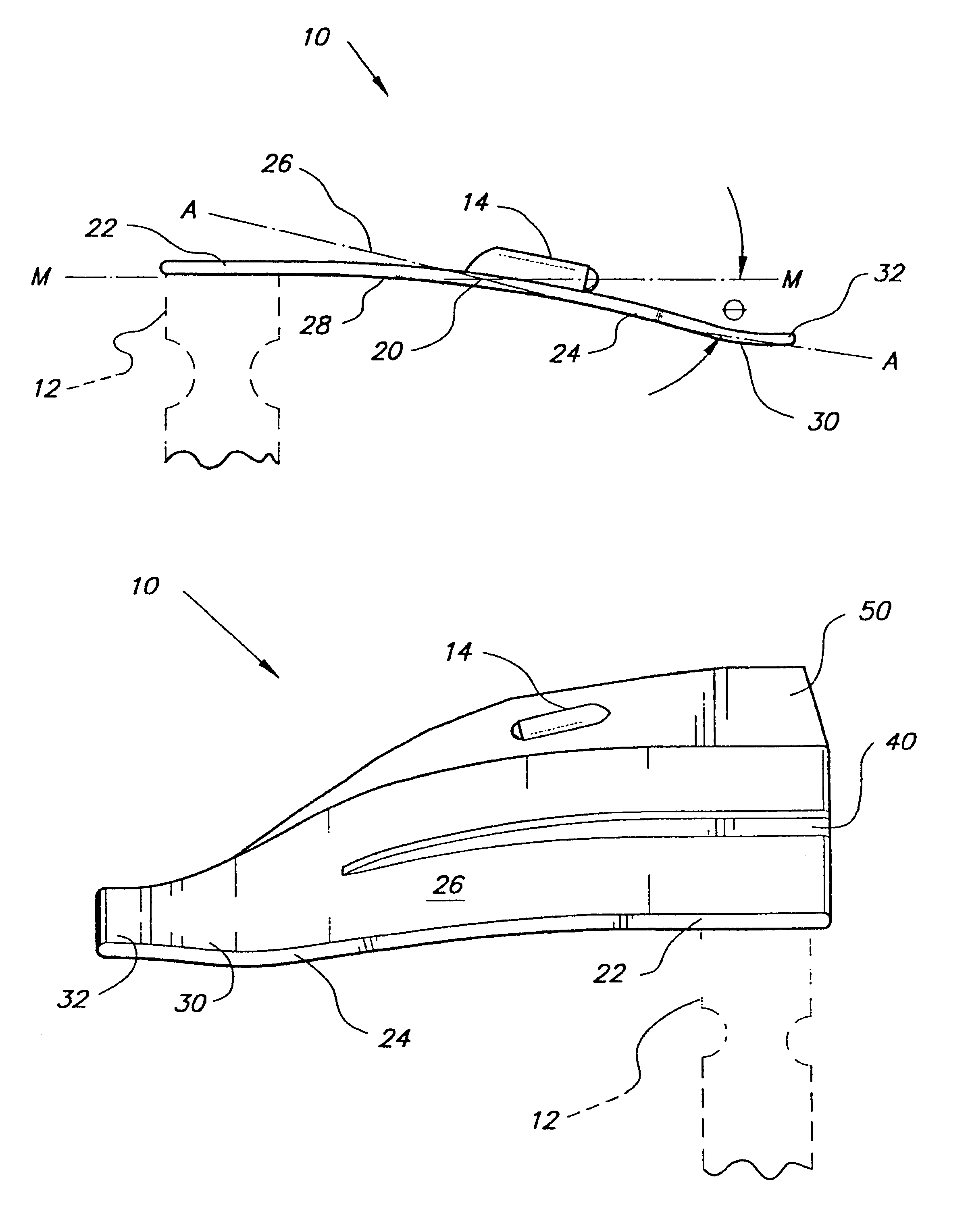
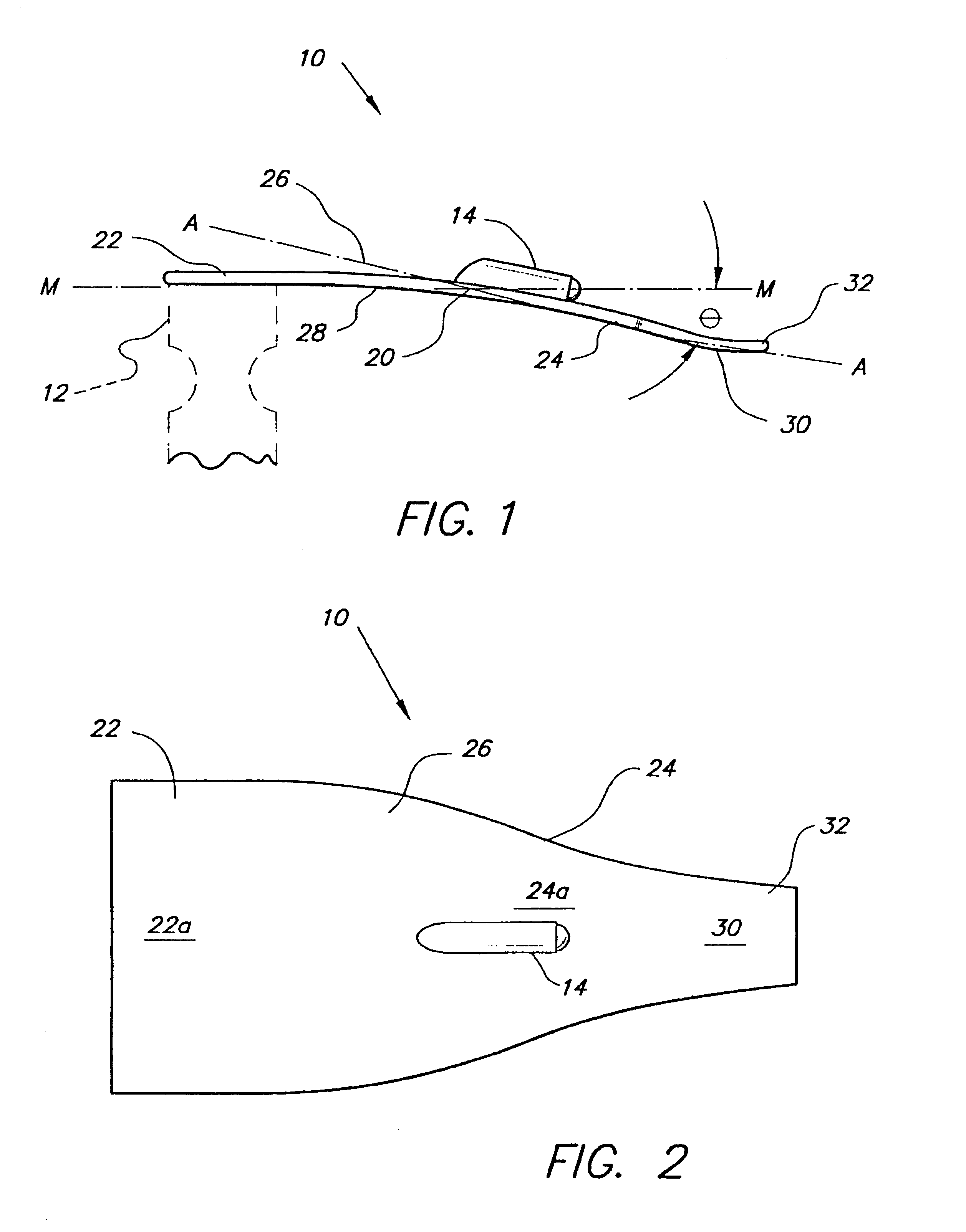
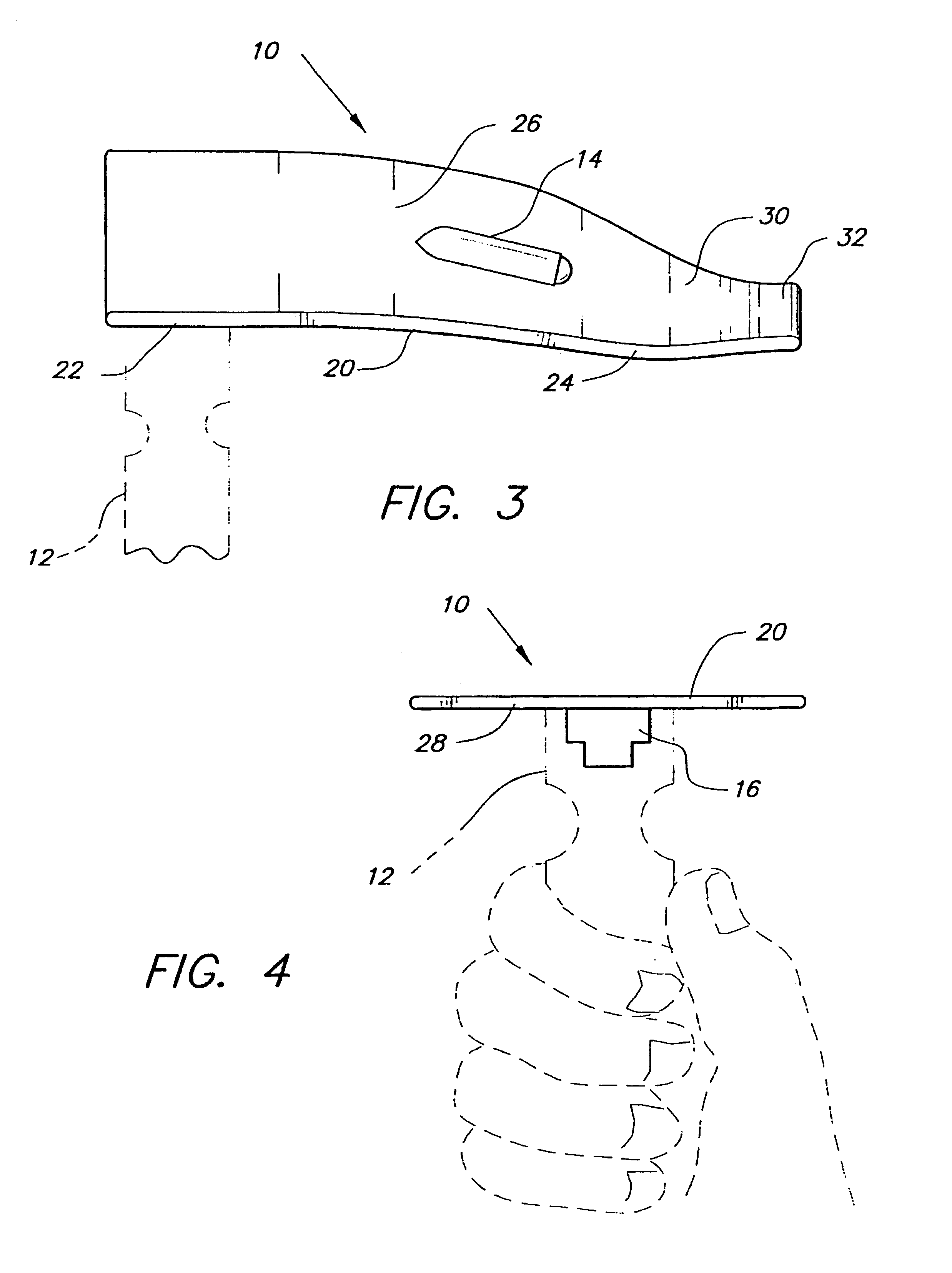
- Incorporation of left and right frustrum shaped, mirror image wing sections on the laryngoscope blade that extend outwardly from the side edges, positioned at specific distances and angles to control and depress the tongue, allowing for better visualization of the vocal cords.


Laryngoscope blade
PatentInactiveUSRE37861E1
Innovation
- A laryngoscope blade with a gradual curvature throughout its length and a small reverse curve at the tip, designed to provide better visualization of the larynx, along with a contoured proximal part to match the width and shape of the mouth for improved control of the tongue, and features like a tip extension for depth indication and raised areas for guiding the endotracheal tube.

Ergonomic Considerations
The ergonomic considerations of laryngoscope blade geometry are crucial for optimizing visualization during intubation procedures. The design of the blade significantly impacts the user's comfort, efficiency, and overall performance.
One key aspect is the curvature of the blade. A more pronounced curve can provide better lifting force on the tongue and soft tissues, potentially improving the view of the glottis. However, an excessively curved blade may increase the difficulty of insertion and cause discomfort for the patient. Finding the optimal balance between curvature and ease of use is essential for ergonomic design.
The length and width of the blade also play vital roles in ergonomics. A longer blade may offer better reach and control, especially in patients with challenging anatomy. Conversely, a shorter blade can be more maneuverable in confined spaces. The width of the blade affects the amount of space available for visualization and instrument passage. A wider blade may provide a better view but could be more challenging to insert and manipulate.
The handle design and its connection to the blade are equally important ergonomic factors. A well-designed handle should provide a comfortable grip and allow for precise control of the laryngoscope. The angle between the handle and blade can affect the user's wrist position and the force required for laryngoscopy. An optimal angle can reduce hand fatigue and improve the user's ability to apply the correct pressure and direction.
Weight distribution is another critical consideration. A well-balanced laryngoscope can reduce hand fatigue during prolonged procedures. The center of gravity should ideally be close to the user's hand to minimize the effort required to maintain the correct position.
The material choice for the blade can impact both its performance and ergonomics. Lighter materials can reduce overall weight, while materials with appropriate rigidity ensure effective lifting of tissues without excessive flexing. The surface texture of the blade can also affect grip and control during use.
Incorporating adjustable features, such as interchangeable blades or variable angles, can enhance ergonomics by allowing customization for different users and patient anatomies. This adaptability can improve comfort and effectiveness across a range of clinical scenarios.
One key aspect is the curvature of the blade. A more pronounced curve can provide better lifting force on the tongue and soft tissues, potentially improving the view of the glottis. However, an excessively curved blade may increase the difficulty of insertion and cause discomfort for the patient. Finding the optimal balance between curvature and ease of use is essential for ergonomic design.
The length and width of the blade also play vital roles in ergonomics. A longer blade may offer better reach and control, especially in patients with challenging anatomy. Conversely, a shorter blade can be more maneuverable in confined spaces. The width of the blade affects the amount of space available for visualization and instrument passage. A wider blade may provide a better view but could be more challenging to insert and manipulate.
The handle design and its connection to the blade are equally important ergonomic factors. A well-designed handle should provide a comfortable grip and allow for precise control of the laryngoscope. The angle between the handle and blade can affect the user's wrist position and the force required for laryngoscopy. An optimal angle can reduce hand fatigue and improve the user's ability to apply the correct pressure and direction.
Weight distribution is another critical consideration. A well-balanced laryngoscope can reduce hand fatigue during prolonged procedures. The center of gravity should ideally be close to the user's hand to minimize the effort required to maintain the correct position.
The material choice for the blade can impact both its performance and ergonomics. Lighter materials can reduce overall weight, while materials with appropriate rigidity ensure effective lifting of tissues without excessive flexing. The surface texture of the blade can also affect grip and control during use.
Incorporating adjustable features, such as interchangeable blades or variable angles, can enhance ergonomics by allowing customization for different users and patient anatomies. This adaptability can improve comfort and effectiveness across a range of clinical scenarios.
Regulatory Compliance
Regulatory compliance is a critical aspect of laryngoscope design and manufacturing, particularly concerning blade geometry and its impact on visualization. The regulatory landscape for medical devices, including laryngoscopes, is complex and varies across different regions and countries. In the United States, the Food and Drug Administration (FDA) classifies laryngoscopes as Class I medical devices, which are subject to general controls but typically exempt from premarket notification requirements.
However, manufacturers must still adhere to Good Manufacturing Practices (GMP) and ensure their devices meet safety and effectiveness standards. The FDA's guidance document on laryngoscopes emphasizes the importance of proper blade design for optimal visualization of the larynx. Manufacturers must demonstrate that their blade geometry provides adequate illumination and exposure of the vocal cords without causing undue trauma to the patient's airway.
In the European Union, laryngoscopes fall under the Medical Device Regulation (MDR), which came into effect in May 2021. The MDR places greater emphasis on clinical evidence and post-market surveillance. Manufacturers must provide detailed technical documentation, including data on how blade geometry affects visualization, to obtain CE marking for their devices.
International standards, such as ISO 7376:2020 for anaesthetic and respiratory equipment, provide specific requirements for laryngoscopes. This standard includes guidelines on blade design, materials, and performance testing. Compliance with these standards is often necessary to meet regulatory requirements in various markets.
Regulatory bodies also focus on the sterilization and reprocessing of laryngoscope blades. The geometry of the blade can affect the efficacy of cleaning and sterilization procedures. Manufacturers must provide validated instructions for reprocessing that take into account the specific design features of their blades.
As technology advances, regulatory frameworks are evolving to address new innovations in laryngoscope design. For instance, video laryngoscopes with unique blade geometries may require additional regulatory considerations. Manufacturers must stay abreast of these changes and ensure their products continue to meet evolving compliance standards.
Ultimately, regulatory compliance in the context of laryngoscope blade geometry and visualization requires a comprehensive approach. This includes rigorous testing, documentation of design rationale, and ongoing post-market surveillance to ensure patient safety and device effectiveness.
However, manufacturers must still adhere to Good Manufacturing Practices (GMP) and ensure their devices meet safety and effectiveness standards. The FDA's guidance document on laryngoscopes emphasizes the importance of proper blade design for optimal visualization of the larynx. Manufacturers must demonstrate that their blade geometry provides adequate illumination and exposure of the vocal cords without causing undue trauma to the patient's airway.
In the European Union, laryngoscopes fall under the Medical Device Regulation (MDR), which came into effect in May 2021. The MDR places greater emphasis on clinical evidence and post-market surveillance. Manufacturers must provide detailed technical documentation, including data on how blade geometry affects visualization, to obtain CE marking for their devices.
International standards, such as ISO 7376:2020 for anaesthetic and respiratory equipment, provide specific requirements for laryngoscopes. This standard includes guidelines on blade design, materials, and performance testing. Compliance with these standards is often necessary to meet regulatory requirements in various markets.
Regulatory bodies also focus on the sterilization and reprocessing of laryngoscope blades. The geometry of the blade can affect the efficacy of cleaning and sterilization procedures. Manufacturers must provide validated instructions for reprocessing that take into account the specific design features of their blades.
As technology advances, regulatory frameworks are evolving to address new innovations in laryngoscope design. For instance, video laryngoscopes with unique blade geometries may require additional regulatory considerations. Manufacturers must stay abreast of these changes and ensure their products continue to meet evolving compliance standards.
Ultimately, regulatory compliance in the context of laryngoscope blade geometry and visualization requires a comprehensive approach. This includes rigorous testing, documentation of design rationale, and ongoing post-market surveillance to ensure patient safety and device effectiveness.
Unlock deeper insights with PatSnap Eureka Quick Research — get a full tech report to explore trends and direct your research. Try now!
Generate Your Research Report Instantly with AI Agent
Supercharge your innovation with PatSnap Eureka AI Agent Platform!