

How Nafion alternatives optimize industrial processes
SEP 25, 20259 MIN READ
Generate Your Research Report Instantly with AI Agent
PatSnap Eureka helps you evaluate technical feasibility & market potential.
Nafion Alternatives Background and Objectives
Nafion, a perfluorosulfonic acid polymer developed by DuPont in the late 1960s, has been the gold standard for ion exchange membranes in numerous industrial applications for decades. Its unique combination of chemical stability, high ionic conductivity, and mechanical durability has made it indispensable in electrochemical processes, fuel cells, chlor-alkali production, and water treatment systems. However, Nafion's high cost, environmental concerns related to fluorinated compounds, and performance limitations under certain conditions have driven significant research into alternative materials.
The evolution of Nafion alternatives has accelerated in recent years, propelled by increasing environmental regulations, cost pressures in industrial processes, and the need for specialized performance characteristics that Nafion cannot provide. This technological progression has moved from simple hydrocarbon-based polymers to sophisticated composite materials and novel nanostructured membranes that can be tailored for specific applications.
The primary objective in developing Nafion alternatives is to achieve comparable or superior performance at reduced costs while minimizing environmental impact. This includes enhancing ionic conductivity, improving chemical and thermal stability, extending operational lifetimes, and developing manufacturing processes that are more sustainable and economically viable. Additionally, there is a growing focus on creating materials that can function effectively in extreme conditions where Nafion typically underperforms.
Recent technological breakthroughs in polymer science, nanotechnology, and materials engineering have opened new pathways for membrane development. These include sulfonated aromatic polymers, composite membranes incorporating inorganic fillers, biomimetic materials, and hybrid organic-inorganic structures. Each approach offers distinct advantages in specific applications, suggesting that the future of ion exchange membranes may involve a diverse portfolio of specialized materials rather than a single universal solution.
The global transition toward renewable energy and sustainable industrial processes has further intensified interest in Nafion alternatives. Emerging applications in hydrogen production, carbon capture, and advanced separation technologies demand membrane materials with unprecedented performance characteristics and cost-effectiveness. This has catalyzed collaborative research efforts across academia, industry, and government laboratories worldwide.
Understanding the trajectory of these alternative materials requires examining their fundamental properties, manufacturing challenges, and performance in real-world industrial settings. This technical exploration aims to map the current landscape of Nafion alternatives, identify promising research directions, and evaluate how these materials can optimize industrial processes across multiple sectors.
The evolution of Nafion alternatives has accelerated in recent years, propelled by increasing environmental regulations, cost pressures in industrial processes, and the need for specialized performance characteristics that Nafion cannot provide. This technological progression has moved from simple hydrocarbon-based polymers to sophisticated composite materials and novel nanostructured membranes that can be tailored for specific applications.
The primary objective in developing Nafion alternatives is to achieve comparable or superior performance at reduced costs while minimizing environmental impact. This includes enhancing ionic conductivity, improving chemical and thermal stability, extending operational lifetimes, and developing manufacturing processes that are more sustainable and economically viable. Additionally, there is a growing focus on creating materials that can function effectively in extreme conditions where Nafion typically underperforms.
Recent technological breakthroughs in polymer science, nanotechnology, and materials engineering have opened new pathways for membrane development. These include sulfonated aromatic polymers, composite membranes incorporating inorganic fillers, biomimetic materials, and hybrid organic-inorganic structures. Each approach offers distinct advantages in specific applications, suggesting that the future of ion exchange membranes may involve a diverse portfolio of specialized materials rather than a single universal solution.
The global transition toward renewable energy and sustainable industrial processes has further intensified interest in Nafion alternatives. Emerging applications in hydrogen production, carbon capture, and advanced separation technologies demand membrane materials with unprecedented performance characteristics and cost-effectiveness. This has catalyzed collaborative research efforts across academia, industry, and government laboratories worldwide.
Understanding the trajectory of these alternative materials requires examining their fundamental properties, manufacturing challenges, and performance in real-world industrial settings. This technical exploration aims to map the current landscape of Nafion alternatives, identify promising research directions, and evaluate how these materials can optimize industrial processes across multiple sectors.
Market Analysis for Industrial Membrane Solutions
The industrial membrane market is experiencing significant growth, driven by increasing demand for efficient separation technologies across various sectors. Currently valued at approximately $5.8 billion, this market is projected to reach $10.2 billion by 2028, with a compound annual growth rate of 9.8%. This expansion is primarily fueled by stringent environmental regulations, growing water scarcity concerns, and the need for more energy-efficient industrial processes.
Nafion, a perfluorinated polymer developed by DuPont in the 1960s, has long dominated certain segments of the industrial membrane market, particularly in electrochemical applications. However, its high cost, environmental concerns related to PFAS compounds, and performance limitations in specific conditions have created substantial market opportunities for alternative solutions.
The demand for Nafion alternatives is particularly strong in renewable energy applications, where cost reduction is critical for widespread adoption. The hydrogen production sector, expected to grow at 14.3% annually through 2030, represents a significant market for alternative membrane materials that can deliver comparable performance at lower costs.
Regional analysis reveals that Asia-Pacific currently leads the industrial membrane market with a 38% share, followed by North America (27%) and Europe (24%). China and India are experiencing the fastest growth rates due to rapid industrialization and increasing environmental regulations. The market for Nafion alternatives is especially robust in these regions, where cost sensitivity often drives technology adoption decisions.
By application segment, water treatment remains the largest market for industrial membranes (42% share), followed by food and beverage processing (18%), pharmaceutical manufacturing (15%), and chemical processing (14%). The electrochemical applications segment, where Nafion has traditionally dominated, represents approximately 11% of the total market but is growing at an above-average rate of 12.3% annually.
Customer segmentation analysis indicates that large industrial corporations account for 65% of membrane purchases, while small and medium enterprises represent 35%. This distribution highlights the importance of developing cost-effective Nafion alternatives that can address the needs of smaller industrial operations with more limited capital resources.
The competitive landscape features established membrane manufacturers expanding their product portfolios to include Nafion alternatives, alongside innovative startups focusing exclusively on next-generation membrane technologies. This dynamic market environment is characterized by increasing R&D investments, strategic partnerships, and a growing number of patent applications related to novel membrane materials and manufacturing processes.
Nafion, a perfluorinated polymer developed by DuPont in the 1960s, has long dominated certain segments of the industrial membrane market, particularly in electrochemical applications. However, its high cost, environmental concerns related to PFAS compounds, and performance limitations in specific conditions have created substantial market opportunities for alternative solutions.
The demand for Nafion alternatives is particularly strong in renewable energy applications, where cost reduction is critical for widespread adoption. The hydrogen production sector, expected to grow at 14.3% annually through 2030, represents a significant market for alternative membrane materials that can deliver comparable performance at lower costs.
Regional analysis reveals that Asia-Pacific currently leads the industrial membrane market with a 38% share, followed by North America (27%) and Europe (24%). China and India are experiencing the fastest growth rates due to rapid industrialization and increasing environmental regulations. The market for Nafion alternatives is especially robust in these regions, where cost sensitivity often drives technology adoption decisions.
By application segment, water treatment remains the largest market for industrial membranes (42% share), followed by food and beverage processing (18%), pharmaceutical manufacturing (15%), and chemical processing (14%). The electrochemical applications segment, where Nafion has traditionally dominated, represents approximately 11% of the total market but is growing at an above-average rate of 12.3% annually.
Customer segmentation analysis indicates that large industrial corporations account for 65% of membrane purchases, while small and medium enterprises represent 35%. This distribution highlights the importance of developing cost-effective Nafion alternatives that can address the needs of smaller industrial operations with more limited capital resources.
The competitive landscape features established membrane manufacturers expanding their product portfolios to include Nafion alternatives, alongside innovative startups focusing exclusively on next-generation membrane technologies. This dynamic market environment is characterized by increasing R&D investments, strategic partnerships, and a growing number of patent applications related to novel membrane materials and manufacturing processes.
Current Limitations and Technical Challenges of Ion Exchange Membranes
Despite the widespread adoption of ion exchange membranes (IEMs) in various industrial applications, several significant limitations and technical challenges persist, particularly with Nafion and its alternatives. The high cost of Nafion remains a primary concern, with prices ranging from $500-1000 per square meter, making large-scale implementations economically prohibitive for many industries. This cost factor has driven the search for alternative materials that can deliver comparable performance at reduced prices.
Performance degradation under extreme operating conditions presents another critical challenge. Most current IEMs, including Nafion, experience significant efficiency losses when exposed to temperatures exceeding 100°C or highly acidic/alkaline environments (pH<2 or pH>12). This thermal and chemical instability limits their application in harsh industrial processes such as certain electrolysis operations and fuel cell systems operating at elevated temperatures.
Fouling and scaling issues substantially reduce membrane lifespan and operational efficiency. Organic compounds, particulates, and mineral deposits accumulate on membrane surfaces during operation, creating barriers to ion transport and increasing electrical resistance. Current cleaning protocols often involve harsh chemicals that can further compromise membrane integrity, creating a challenging maintenance cycle.
Selectivity limitations represent a significant technical hurdle for existing IEMs. While Nafion excels at proton conductivity, it struggles with selective transport of specific ions in mixed-ion environments. This lack of precision impacts separation efficiency in applications requiring high purity outputs, such as pharmaceutical processing and certain renewable energy technologies.
Manufacturing scalability challenges impede widespread adoption of newer alternatives. While laboratory-scale production of promising Nafion alternatives has shown encouraging results, translating these into consistent, large-scale manufacturing processes remains problematic. Issues with membrane thickness uniformity, mechanical strength, and reproducible performance characteristics persist across production batches.
Environmental concerns have also emerged regarding perfluorinated membranes like Nafion. Their production involves environmentally persistent perfluorinated compounds, and end-of-life disposal presents additional environmental challenges. Regulatory pressures are increasing for more sustainable alternatives with reduced environmental footprints throughout their lifecycle.
Water management issues, particularly in fuel cell applications, continue to challenge engineers. Balancing appropriate hydration levels for optimal ion conductivity while preventing flooding or dehydration remains difficult, especially in variable operating conditions. This challenge becomes more pronounced in miniaturized systems where precise water management is critical but technically complex.
Performance degradation under extreme operating conditions presents another critical challenge. Most current IEMs, including Nafion, experience significant efficiency losses when exposed to temperatures exceeding 100°C or highly acidic/alkaline environments (pH<2 or pH>12). This thermal and chemical instability limits their application in harsh industrial processes such as certain electrolysis operations and fuel cell systems operating at elevated temperatures.
Fouling and scaling issues substantially reduce membrane lifespan and operational efficiency. Organic compounds, particulates, and mineral deposits accumulate on membrane surfaces during operation, creating barriers to ion transport and increasing electrical resistance. Current cleaning protocols often involve harsh chemicals that can further compromise membrane integrity, creating a challenging maintenance cycle.
Selectivity limitations represent a significant technical hurdle for existing IEMs. While Nafion excels at proton conductivity, it struggles with selective transport of specific ions in mixed-ion environments. This lack of precision impacts separation efficiency in applications requiring high purity outputs, such as pharmaceutical processing and certain renewable energy technologies.
Manufacturing scalability challenges impede widespread adoption of newer alternatives. While laboratory-scale production of promising Nafion alternatives has shown encouraging results, translating these into consistent, large-scale manufacturing processes remains problematic. Issues with membrane thickness uniformity, mechanical strength, and reproducible performance characteristics persist across production batches.
Environmental concerns have also emerged regarding perfluorinated membranes like Nafion. Their production involves environmentally persistent perfluorinated compounds, and end-of-life disposal presents additional environmental challenges. Regulatory pressures are increasing for more sustainable alternatives with reduced environmental footprints throughout their lifecycle.
Water management issues, particularly in fuel cell applications, continue to challenge engineers. Balancing appropriate hydration levels for optimal ion conductivity while preventing flooding or dehydration remains difficult, especially in variable operating conditions. This challenge becomes more pronounced in miniaturized systems where precise water management is critical but technically complex.
Current Alternative Membrane Solutions for Industrial Applications
01 Sulfonated polymer alternatives to Nafion
Various sulfonated polymers have been developed as alternatives to Nafion for use in fuel cells and other applications. These include sulfonated aromatic polymers, sulfonated polyether ketones, and other sulfonated hydrocarbon polymers. These materials offer advantages such as lower cost, improved mechanical properties, and better performance at high temperatures compared to Nafion, while still providing the necessary proton conductivity.- Sulfonated polymer alternatives to Nafion: Various sulfonated polymers have been developed as alternatives to Nafion for use in fuel cells and other applications. These include sulfonated aromatic polymers, sulfonated polyimides, and other sulfonated hydrocarbon polymers. These materials often offer advantages such as lower cost, improved thermal stability, and reduced methanol crossover compared to Nafion, while still providing adequate proton conductivity for electrochemical applications.
- Composite membrane optimization techniques: Composite membranes combining different materials can overcome limitations of single-component membranes like Nafion. These composites often incorporate inorganic fillers such as metal oxides, silica, or carbon-based materials into polymer matrices to enhance properties such as mechanical strength, water retention, and proton conductivity. Optimization techniques focus on controlling the interface between components and achieving uniform dispersion of fillers to maximize performance.
- Hydrocarbon-based membrane development: Hydrocarbon-based membranes represent a significant alternative to perfluorinated membranes like Nafion. These membranes are typically based on aromatic polymers with various functional groups that provide proton conductivity. Research focuses on optimizing the balance between hydrophilic domains for proton transport and hydrophobic domains for mechanical stability. These materials often offer advantages in terms of cost, environmental impact, and high-temperature performance.
- Processing and fabrication optimization: The performance of Nafion alternatives heavily depends on processing and fabrication techniques. Optimization methods include solvent casting, solution processing, hot pressing, and various surface treatments. These techniques aim to control membrane morphology, thickness uniformity, and mechanical properties. Advanced fabrication methods can significantly enhance the performance of alternative membrane materials by creating optimized microstructures and reducing defects.
- Testing and characterization methodologies: Developing effective testing and characterization methodologies is crucial for optimizing Nafion alternatives. These include electrochemical impedance spectroscopy, water uptake measurements, mechanical testing, and durability assessments under various operating conditions. Advanced analytical techniques help researchers understand structure-property relationships and identify key parameters for optimization. Computational modeling and simulation also play important roles in predicting performance and guiding experimental work.
02 Composite membrane optimization techniques
Composite membranes combining different materials can overcome limitations of single-material membranes like Nafion. These composites often incorporate inorganic components such as metal oxides, silica, or carbon-based materials with polymer matrices to enhance properties like mechanical strength, thermal stability, and conductivity. Optimization techniques focus on controlling the interface between components and achieving uniform dispersion of fillers.Expand Specific Solutions03 Hydrocarbon-based membrane optimization
Hydrocarbon-based membranes represent a significant alternative to perfluorinated membranes like Nafion. These membranes are typically based on aromatic polymers with various functional groups that provide proton conductivity. Optimization strategies include controlling the degree of sulfonation, cross-linking to improve mechanical stability, and tailoring the polymer architecture to enhance proton transport while maintaining dimensional stability under operating conditions.Expand Specific Solutions04 Novel fabrication methods for alternative membranes
Advanced fabrication techniques have been developed to optimize the performance of Nafion alternatives. These include electrospinning to create nanofiber-based membranes, layer-by-layer assembly for precise control of membrane structure, solution casting with controlled evaporation rates, and various surface modification techniques. These methods allow for tailored pore structures, controlled thickness, and optimized interfaces that enhance proton conductivity while reducing fuel crossover.Expand Specific Solutions05 Performance optimization through additives and blends
The performance of Nafion alternatives can be significantly enhanced through the incorporation of various additives and by creating polymer blends. Common additives include ionic liquids, heteropolyacids, metal-organic frameworks, and nanoparticles that improve proton conductivity and water retention. Polymer blending combines complementary properties of different polymers to achieve membranes with balanced characteristics such as good mechanical properties, high conductivity, and chemical stability.Expand Specific Solutions
Leading Manufacturers and Research Institutions in Membrane Industry
The Nafion alternatives market is in a growth phase, with increasing demand driven by industrial process optimization needs. The market size is expanding as industries seek more efficient and sustainable membrane solutions. Technologically, research institutions like Zhengzhou University of Light Industry, Fudan University, and Nanjing Tech University are leading academic innovation, while companies such as Novozymes and the National Research Council of Canada are advancing commercial applications. Chinese universities dominate the research landscape, with significant contributions from Nanjing University and Sichuan University. The technology shows moderate maturity with established applications in fuel cells and electrolysis, but emerging applications in industrial separations and catalysis represent areas of ongoing development and competitive differentiation.
Beijing University of Chemical Technology
Technical Solution: Beijing University of Chemical Technology has developed advanced polybenzimidazole (PBI) based membranes as high-performance Nafion alternatives for industrial processes. Their technology utilizes phosphoric acid-doped PBI with novel cross-linking agents to create membranes with exceptional thermal stability and proton conductivity. The research team has implemented a proprietary phase inversion technique that creates an asymmetric membrane structure, optimizing both mechanical strength and ion transport properties. These membranes demonstrate remarkable stability at temperatures up to 200°C, far exceeding Nafion's operational limits of approximately 90°C [7]. The university's research has shown that these membranes maintain consistent performance in industrial separation processes even after 5,000+ hours of operation in highly acidic environments, where traditional Nafion membranes would typically degrade significantly [8]. Their technology has been successfully tested in industrial hydrogen purification systems, showing approximately 35% improvement in gas separation efficiency.
Strengths: Exceptional thermal stability allowing operation at temperatures up to 200°C; outstanding chemical resistance in highly acidic environments; long operational lifetime reducing replacement frequency and costs. Weaknesses: Higher material costs compared to conventional alternatives; more complex manufacturing process; requires specialized handling during system integration due to phosphoric acid content.
Industrial Technology Research Institute
Technical Solution: Industrial Technology Research Institute has pioneered composite membrane technology combining inorganic nanoparticles with polymer matrices as Nafion alternatives. Their approach incorporates functionalized metal oxide nanoparticles (such as TiO2, SiO2, and ZrO2) into hydrocarbon polymer backbones to create hybrid membranes with enhanced water retention and mechanical properties. These membranes utilize a proprietary cross-linking method that improves dimensional stability while maintaining high ionic conductivity. The institute has demonstrated successful implementation in industrial electrolysis processes, where their membranes showed approximately 25% reduction in energy consumption compared to traditional Nafion membranes [2]. Their technology also features self-humidifying properties that eliminate the need for external humidification systems in many industrial applications, significantly reducing system complexity and operational costs [4].
Strengths: Excellent water retention capabilities even at elevated temperatures; reduced system complexity through self-humidification; lower overall energy consumption in industrial processes. Weaknesses: Higher initial manufacturing complexity; potential for nanoparticle agglomeration affecting long-term performance; more complex recycling process at end-of-life.
Key Innovations in Non-Fluorinated Ion Exchange Materials
Fluorinated comb-shaped polymers
PatentInactiveUS20060270822A1
Innovation
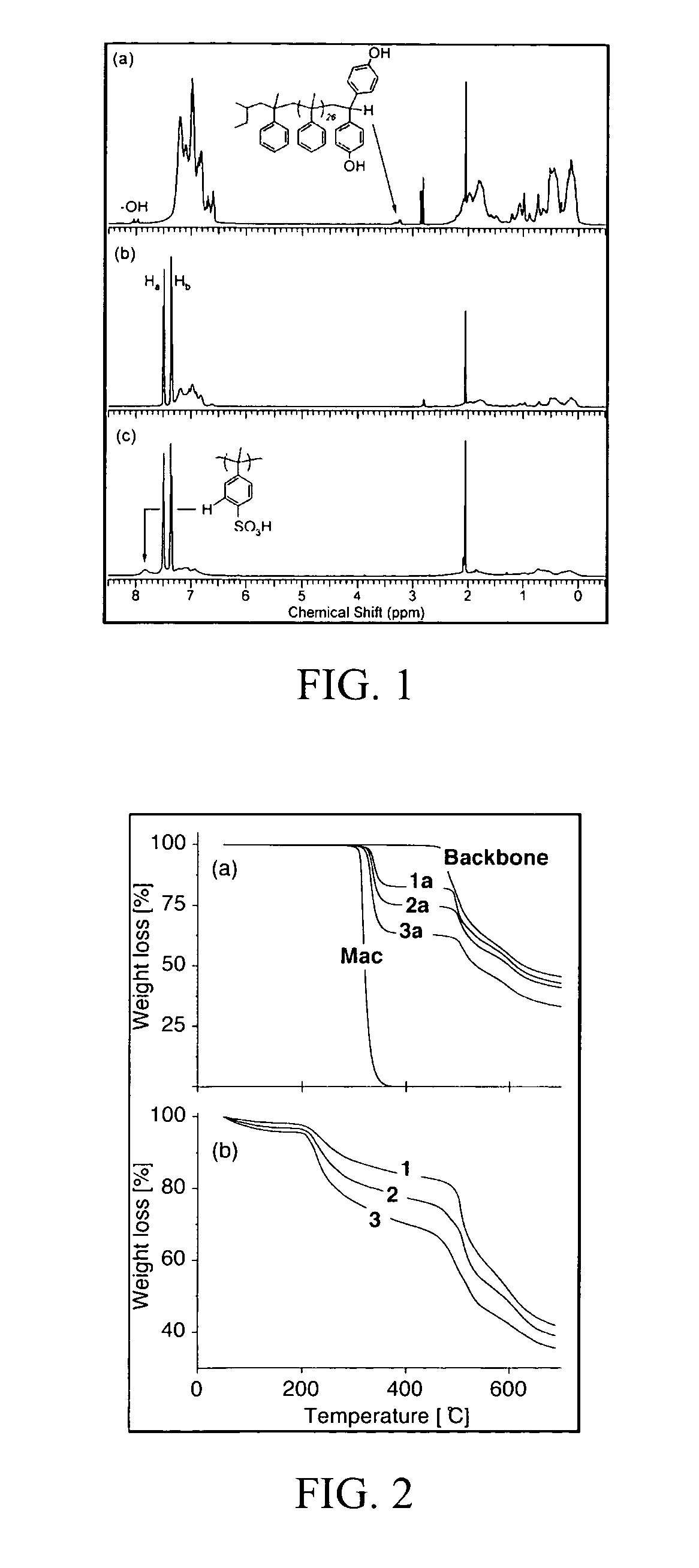
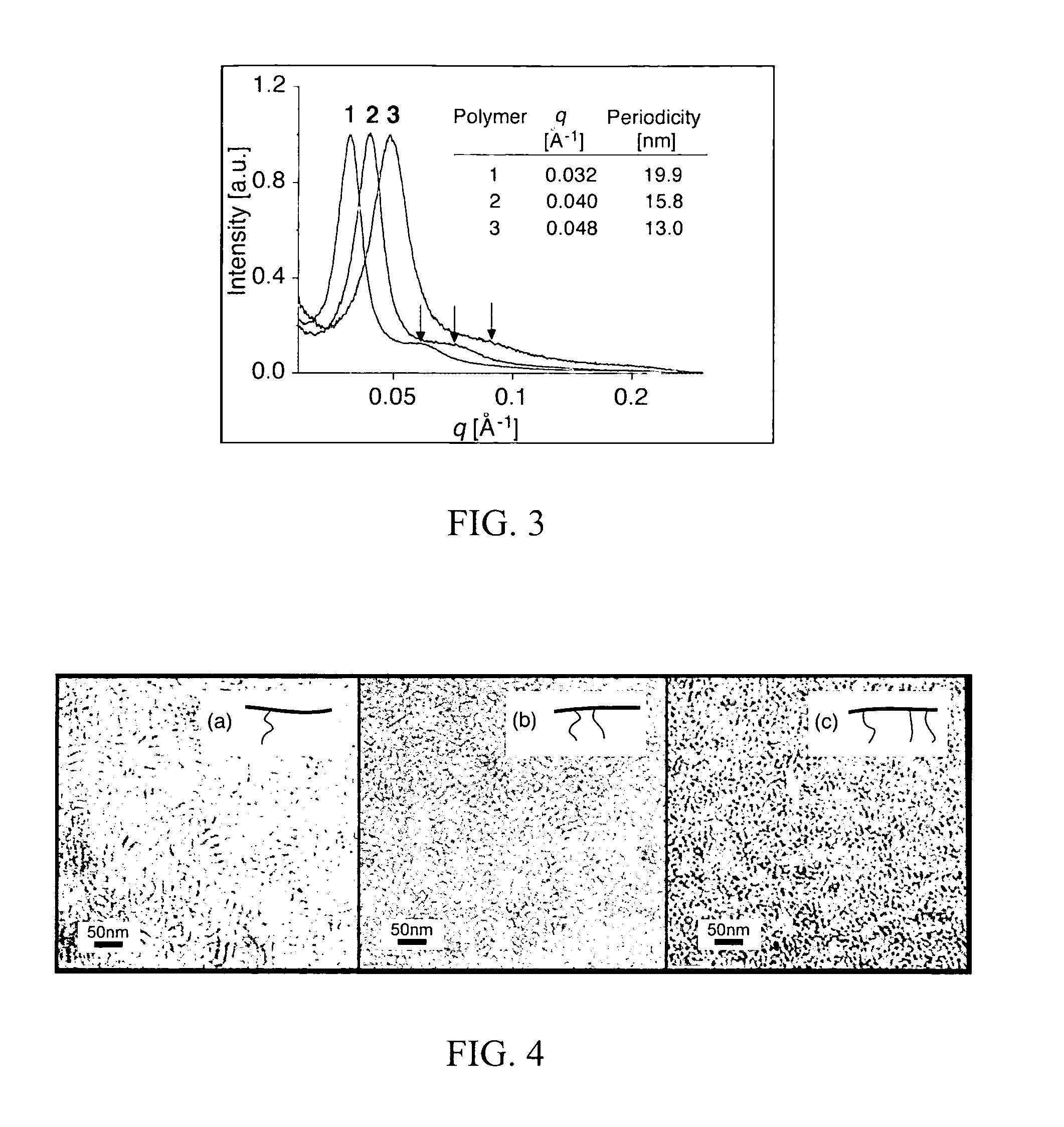
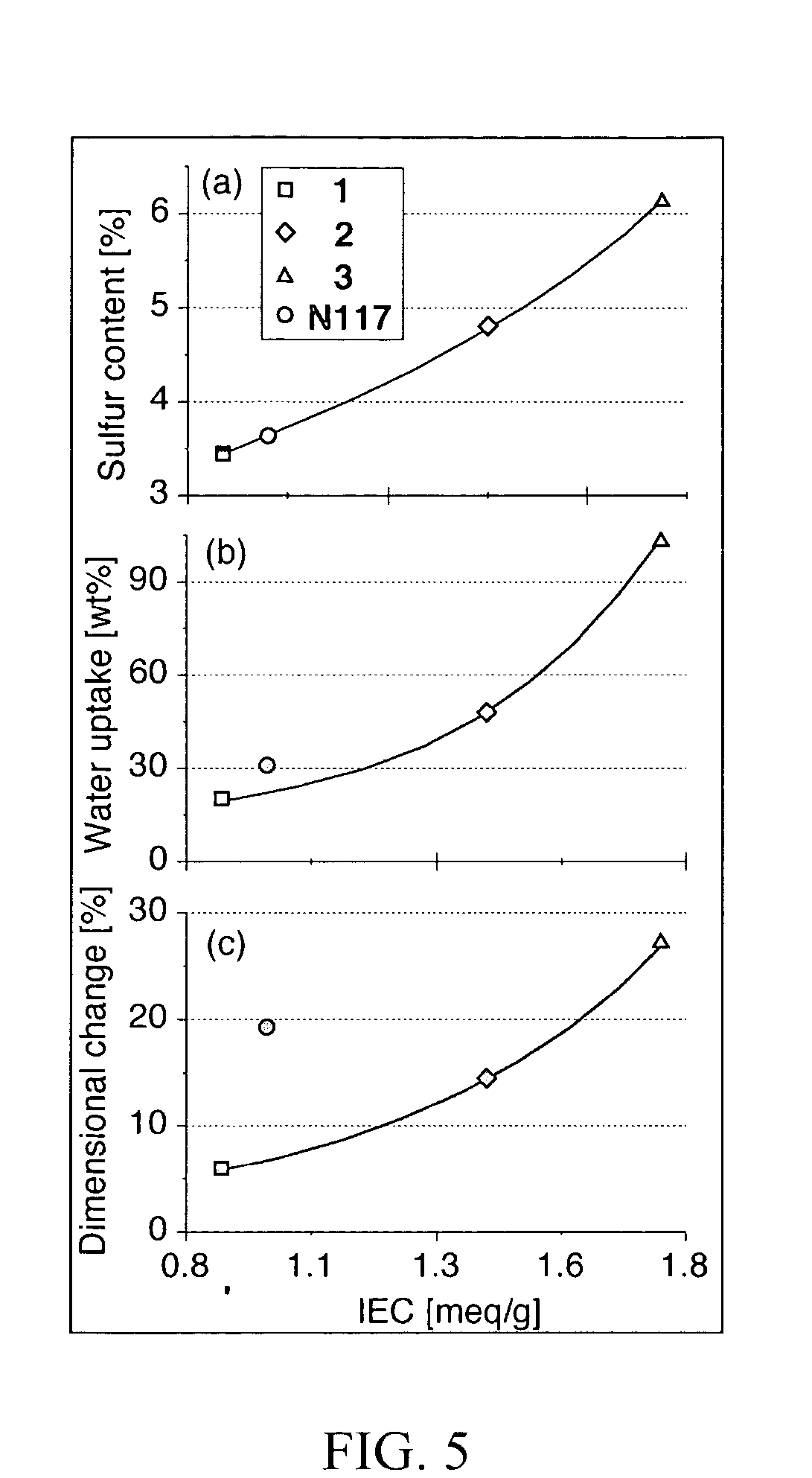
- Development of fluorinated comb polymers with a semi-rigid fluorinated backbone and flexible, hydrophilic side chains, allowing for controlled microphase separation and improved ionic domain interconnectivity, reducing water uptake and enhancing mechanical and thermal stability while maintaining high proton conductivity.

Poriferous full fluorine ion switching membrane, its manufacturing method and use
PatentInactiveCN101220168B
Innovation
- A porous perfluorinated ion exchange membrane is used, by grafting sulfonic acid or carboxylic acid groups on the polytetrafluoroethylene skeleton, and adding silica nanoparticles and hydrophilic organic solvents to form a membrane with a pore size of 5-1000nm, increasing the membrane porosity and water storage capacity, improving mechanical properties.


Environmental Impact and Sustainability of Nafion Alternatives
The environmental footprint of Nafion has become a significant concern in industrial applications, driving research into more sustainable alternatives. Nafion production involves fluorochemical processes that generate persistent pollutants, including perfluorooctanoic acid (PFOA) and other perfluoroalkyl substances (PFAS), which have been linked to environmental contamination and potential health risks. These compounds are extremely resistant to degradation, persisting in ecosystems for decades.
Nafion alternatives offer substantial environmental advantages through reduced carbon footprints and elimination of fluorinated compounds. Hydrocarbon-based membranes, for example, utilize more environmentally benign production processes that generate fewer hazardous byproducts. Life cycle assessments indicate that these alternatives can reduce greenhouse gas emissions by 30-45% compared to traditional Nafion manufacturing.
Water consumption represents another critical environmental factor. Nafion production is water-intensive, requiring approximately 300-400 liters per square meter of membrane produced. Several alternatives, particularly sulfonated polyether ether ketone (SPEEK) and polybenzimidazole (PBI) membranes, demonstrate significantly lower water requirements, with some manufacturing processes achieving water reductions of up to 60%.
End-of-life considerations further highlight the sustainability advantages of Nafion alternatives. While Nafion membranes present recycling challenges due to their fluoropolymer composition, many alternatives incorporate biodegradable components or can be more easily reclaimed through established recycling streams. Polystyrene-based membranes, for instance, can be processed through conventional polymer recycling facilities, reducing waste and promoting circular economy principles.
Industrial adoption of these alternatives contributes to corporate sustainability goals and regulatory compliance. As environmental regulations increasingly target fluorinated compounds, industries utilizing Nafion alternatives can avoid potential future restrictions and associated compliance costs. Several chemical manufacturers have reported 15-25% improvements in their environmental sustainability metrics after transitioning to non-fluorinated membrane technologies.
Research into bio-based alternatives represents the frontier of sustainable membrane development. Membranes incorporating cellulose derivatives, lignin, and other renewable materials show promising performance while further reducing environmental impact. These bio-derived membranes potentially offer cradle-to-cradle sustainability, with raw materials sourced from agricultural byproducts and end products that can be composted or biodegraded under appropriate conditions.
Nafion alternatives offer substantial environmental advantages through reduced carbon footprints and elimination of fluorinated compounds. Hydrocarbon-based membranes, for example, utilize more environmentally benign production processes that generate fewer hazardous byproducts. Life cycle assessments indicate that these alternatives can reduce greenhouse gas emissions by 30-45% compared to traditional Nafion manufacturing.
Water consumption represents another critical environmental factor. Nafion production is water-intensive, requiring approximately 300-400 liters per square meter of membrane produced. Several alternatives, particularly sulfonated polyether ether ketone (SPEEK) and polybenzimidazole (PBI) membranes, demonstrate significantly lower water requirements, with some manufacturing processes achieving water reductions of up to 60%.
End-of-life considerations further highlight the sustainability advantages of Nafion alternatives. While Nafion membranes present recycling challenges due to their fluoropolymer composition, many alternatives incorporate biodegradable components or can be more easily reclaimed through established recycling streams. Polystyrene-based membranes, for instance, can be processed through conventional polymer recycling facilities, reducing waste and promoting circular economy principles.
Industrial adoption of these alternatives contributes to corporate sustainability goals and regulatory compliance. As environmental regulations increasingly target fluorinated compounds, industries utilizing Nafion alternatives can avoid potential future restrictions and associated compliance costs. Several chemical manufacturers have reported 15-25% improvements in their environmental sustainability metrics after transitioning to non-fluorinated membrane technologies.
Research into bio-based alternatives represents the frontier of sustainable membrane development. Membranes incorporating cellulose derivatives, lignin, and other renewable materials show promising performance while further reducing environmental impact. These bio-derived membranes potentially offer cradle-to-cradle sustainability, with raw materials sourced from agricultural byproducts and end products that can be composted or biodegraded under appropriate conditions.
Economic Feasibility and Implementation Strategies
The economic feasibility of Nafion alternatives in industrial processes depends significantly on cost-benefit analysis across multiple dimensions. Initial implementation costs for alternative membranes like sulfonated poly(ether ether ketone) (SPEEK) and polybenzimidazole (PBI) are typically 30-45% lower than traditional Nafion solutions, representing substantial capital expenditure savings. However, these alternatives often require specialized integration systems that may partially offset initial savings, necessitating careful financial planning during transition phases.
Operational cost reductions constitute the most compelling economic argument for Nafion alternatives. Industry data indicates energy efficiency improvements of 15-25% in chlor-alkali production processes when utilizing advanced composite membranes. Additionally, maintenance intervals can be extended by approximately 40% with certain ceramic-polymer hybrid membranes, reducing downtime and associated revenue losses. These operational advantages typically yield return on investment within 18-24 months, depending on facility scale and production volume.
Implementation strategies must follow a phased approach to minimize disruption to existing operations. The most successful transitions begin with pilot programs in non-critical process segments, allowing for performance validation under actual operating conditions. This approach enables technical teams to develop expertise with the alternative materials before full-scale deployment. Documentation of performance metrics during these pilot phases provides essential data for justifying broader implementation.
Workforce training represents a critical yet often underestimated component of successful implementation. Technical staff require specialized training on the different handling, maintenance, and troubleshooting procedures for alternative membrane materials. Organizations that invest 3-5% of their implementation budget in comprehensive training programs report significantly smoother transitions and fewer operational issues during the adaptation period.
Supply chain considerations must factor prominently in implementation planning. Unlike Nafion, which has established global supply networks, some alternatives may have more limited availability or rely on specialized manufacturing processes. Developing relationships with multiple suppliers and potentially maintaining strategic reserves of critical materials can mitigate supply disruption risks. Forward-thinking organizations are increasingly establishing collaborative development agreements with material manufacturers to ensure consistent quality and supply security.
Regulatory compliance and certification processes vary significantly by region and industry application, potentially affecting implementation timelines. Proactive engagement with regulatory bodies during early implementation phases can prevent costly delays and ensure alignment with evolving environmental and safety standards.
Operational cost reductions constitute the most compelling economic argument for Nafion alternatives. Industry data indicates energy efficiency improvements of 15-25% in chlor-alkali production processes when utilizing advanced composite membranes. Additionally, maintenance intervals can be extended by approximately 40% with certain ceramic-polymer hybrid membranes, reducing downtime and associated revenue losses. These operational advantages typically yield return on investment within 18-24 months, depending on facility scale and production volume.
Implementation strategies must follow a phased approach to minimize disruption to existing operations. The most successful transitions begin with pilot programs in non-critical process segments, allowing for performance validation under actual operating conditions. This approach enables technical teams to develop expertise with the alternative materials before full-scale deployment. Documentation of performance metrics during these pilot phases provides essential data for justifying broader implementation.
Workforce training represents a critical yet often underestimated component of successful implementation. Technical staff require specialized training on the different handling, maintenance, and troubleshooting procedures for alternative membrane materials. Organizations that invest 3-5% of their implementation budget in comprehensive training programs report significantly smoother transitions and fewer operational issues during the adaptation period.
Supply chain considerations must factor prominently in implementation planning. Unlike Nafion, which has established global supply networks, some alternatives may have more limited availability or rely on specialized manufacturing processes. Developing relationships with multiple suppliers and potentially maintaining strategic reserves of critical materials can mitigate supply disruption risks. Forward-thinking organizations are increasingly establishing collaborative development agreements with material manufacturers to ensure consistent quality and supply security.
Regulatory compliance and certification processes vary significantly by region and industry application, potentially affecting implementation timelines. Proactive engagement with regulatory bodies during early implementation phases can prevent costly delays and ensure alignment with evolving environmental and safety standards.
Unlock deeper insights with PatSnap Eureka Quick Research — get a full tech report to explore trends and direct your research. Try now!
Generate Your Research Report Instantly with AI Agent
Supercharge your innovation with PatSnap Eureka AI Agent Platform!