

How Plasma Electrolytic Oxidation Outperforms Other Coating Processes
APR 8, 20269 MIN READ
Generate Your Research Report Instantly with AI Agent
PatSnap Eureka helps you evaluate technical feasibility & market potential.
PEO Technology Background and Performance Objectives
Plasma Electrolytic Oxidation represents a revolutionary advancement in surface treatment technology that emerged from the convergence of electrochemical processing and plasma physics. This innovative coating process evolved from traditional anodizing techniques, incorporating high-voltage electrical discharges to create dense, adherent ceramic-like oxide layers on lightweight metals, particularly aluminum, magnesium, and titanium alloys.
The technology's development trajectory began in the 1970s with Soviet research into micro-arc oxidation, subsequently refined through decades of international collaboration. Unlike conventional coating methods that rely solely on chemical or physical deposition, PEO harnesses the power of localized plasma discharges occurring at the electrolyte-substrate interface, enabling the formation of complex oxide structures with exceptional properties.
The fundamental mechanism involves applying high-voltage alternating current to a metal substrate immersed in an alkaline electrolyte solution. When the breakdown voltage is exceeded, micro-plasma discharges initiate at the surface, creating localized high-temperature zones exceeding 10,000K. These plasma channels facilitate rapid oxidation and incorporation of electrolyte components, resulting in composite oxide coatings with unique microstructures.
The primary performance objectives driving PEO technology development center on achieving superior coating characteristics that surpass traditional methods. Enhanced corrosion resistance stands as a paramount goal, with PEO coatings demonstrating exceptional barrier properties against aggressive environments. The technology aims to produce coatings with significantly improved wear resistance, targeting applications where mechanical durability is critical.
Thermal barrier performance represents another key objective, as PEO coatings exhibit excellent thermal stability and insulation properties. The process seeks to optimize coating thickness uniformity while maintaining strong substrate adhesion, addressing common failure modes observed in alternative coating technologies. Additionally, environmental sustainability objectives drive the development of eco-friendly electrolyte formulations, eliminating hazardous chemicals typically associated with conventional surface treatments.
The technology's evolution continues toward achieving multifunctional coatings that combine protective, decorative, and specialized properties within a single treatment cycle, positioning PEO as a comprehensive solution for advanced surface engineering applications across aerospace, automotive, and biomedical industries.
The technology's development trajectory began in the 1970s with Soviet research into micro-arc oxidation, subsequently refined through decades of international collaboration. Unlike conventional coating methods that rely solely on chemical or physical deposition, PEO harnesses the power of localized plasma discharges occurring at the electrolyte-substrate interface, enabling the formation of complex oxide structures with exceptional properties.
The fundamental mechanism involves applying high-voltage alternating current to a metal substrate immersed in an alkaline electrolyte solution. When the breakdown voltage is exceeded, micro-plasma discharges initiate at the surface, creating localized high-temperature zones exceeding 10,000K. These plasma channels facilitate rapid oxidation and incorporation of electrolyte components, resulting in composite oxide coatings with unique microstructures.
The primary performance objectives driving PEO technology development center on achieving superior coating characteristics that surpass traditional methods. Enhanced corrosion resistance stands as a paramount goal, with PEO coatings demonstrating exceptional barrier properties against aggressive environments. The technology aims to produce coatings with significantly improved wear resistance, targeting applications where mechanical durability is critical.
Thermal barrier performance represents another key objective, as PEO coatings exhibit excellent thermal stability and insulation properties. The process seeks to optimize coating thickness uniformity while maintaining strong substrate adhesion, addressing common failure modes observed in alternative coating technologies. Additionally, environmental sustainability objectives drive the development of eco-friendly electrolyte formulations, eliminating hazardous chemicals typically associated with conventional surface treatments.
The technology's evolution continues toward achieving multifunctional coatings that combine protective, decorative, and specialized properties within a single treatment cycle, positioning PEO as a comprehensive solution for advanced surface engineering applications across aerospace, automotive, and biomedical industries.
Market Demand for Advanced Surface Coating Solutions
The global surface coating industry is experiencing unprecedented growth driven by escalating demands for enhanced material performance across multiple sectors. Aerospace manufacturers require coatings that can withstand extreme temperatures, corrosive environments, and mechanical stress while maintaining lightweight characteristics. The automotive industry seeks solutions that provide superior wear resistance, corrosion protection, and aesthetic appeal to meet stringent durability standards and consumer expectations.
Medical device manufacturers face increasingly complex regulatory requirements demanding biocompatible coatings with exceptional surface properties. These applications require precise control over surface roughness, chemical composition, and biological interaction characteristics. Traditional coating methods often fall short of meeting these exacting specifications, creating substantial market opportunities for advanced technologies.
The electronics sector drives demand for coatings offering electromagnetic interference shielding, thermal management, and electrical insulation properties. As electronic devices become smaller and more powerful, the need for multifunctional coatings that can address multiple performance requirements simultaneously has intensified significantly.
Industrial equipment manufacturers require coatings that extend operational lifespans in harsh environments while reducing maintenance costs. Mining, oil and gas, and chemical processing industries particularly value solutions that resist abrasion, chemical attack, and thermal cycling. These sectors prioritize long-term performance over initial cost considerations.
Emerging applications in renewable energy infrastructure, including wind turbines and solar panel components, demand coatings with exceptional weather resistance and longevity. The marine industry continues seeking solutions for saltwater corrosion protection that outperform conventional methods.
Market pressures increasingly favor coating technologies that offer superior adhesion, uniform thickness distribution, and the ability to coat complex geometries effectively. Environmental regulations drive demand for processes with reduced chemical waste and energy consumption compared to traditional methods.
The convergence of these market forces creates substantial opportunities for plasma electrolytic oxidation technology, which addresses multiple performance requirements while offering environmental advantages over conventional coating processes.
Medical device manufacturers face increasingly complex regulatory requirements demanding biocompatible coatings with exceptional surface properties. These applications require precise control over surface roughness, chemical composition, and biological interaction characteristics. Traditional coating methods often fall short of meeting these exacting specifications, creating substantial market opportunities for advanced technologies.
The electronics sector drives demand for coatings offering electromagnetic interference shielding, thermal management, and electrical insulation properties. As electronic devices become smaller and more powerful, the need for multifunctional coatings that can address multiple performance requirements simultaneously has intensified significantly.
Industrial equipment manufacturers require coatings that extend operational lifespans in harsh environments while reducing maintenance costs. Mining, oil and gas, and chemical processing industries particularly value solutions that resist abrasion, chemical attack, and thermal cycling. These sectors prioritize long-term performance over initial cost considerations.
Emerging applications in renewable energy infrastructure, including wind turbines and solar panel components, demand coatings with exceptional weather resistance and longevity. The marine industry continues seeking solutions for saltwater corrosion protection that outperform conventional methods.
Market pressures increasingly favor coating technologies that offer superior adhesion, uniform thickness distribution, and the ability to coat complex geometries effectively. Environmental regulations drive demand for processes with reduced chemical waste and energy consumption compared to traditional methods.
The convergence of these market forces creates substantial opportunities for plasma electrolytic oxidation technology, which addresses multiple performance requirements while offering environmental advantages over conventional coating processes.
Current State and Challenges of PEO Technology
Plasma Electrolytic Oxidation technology has reached a significant level of maturity in recent years, with successful commercial implementations across aerospace, automotive, and biomedical industries. The process demonstrates exceptional capability in producing ceramic-like oxide coatings on lightweight metals, particularly aluminum, magnesium, and titanium alloys. Current PEO systems can achieve coating thicknesses ranging from 10 to 200 micrometers with hardness values exceeding 1500 HV, substantially outperforming conventional anodizing processes.
The geographical distribution of PEO technology development shows concentrated expertise in Europe, North America, and East Asia. Germany and the United Kingdom lead in automotive applications, while the United States dominates aerospace implementations. Russia maintains strong fundamental research capabilities, and China has emerged as a major player in both research and industrial scaling. Japan focuses primarily on precision applications in electronics and medical devices.
Despite technological advances, several critical challenges continue to impede widespread PEO adoption. Energy consumption remains a primary concern, with typical processes requiring 10-50 kWh per square meter of treated surface, significantly higher than conventional coating methods. This energy intensity directly impacts operational costs and environmental sustainability, limiting adoption in cost-sensitive applications.
Process control represents another significant challenge. The complex plasma discharge phenomena create inherent variability in coating properties, making consistent quality control difficult to achieve. Real-time monitoring systems are still developing, and most current implementations rely on post-process inspection rather than in-situ control mechanisms.
Coating uniformity on complex geometries poses substantial technical difficulties. The electric field distribution during PEO processing tends to concentrate at edges and corners, resulting in non-uniform coating thickness and properties. This limitation restricts the technology's applicability to components with intricate shapes or internal surfaces.
Electrolyte management and environmental considerations present ongoing challenges. PEO processes typically require alkaline electrolytes containing various additives, creating waste management issues and necessitating careful handling procedures. The development of more environmentally friendly electrolyte systems remains an active area of research.
Scale-up limitations continue to constrain industrial adoption. While laboratory-scale PEO processes demonstrate excellent results, maintaining consistent quality and process control in large-scale production environments proves challenging. Equipment costs for industrial-scale PEO systems remain substantially higher than conventional coating alternatives, affecting return on investment calculations for potential adopters.
The geographical distribution of PEO technology development shows concentrated expertise in Europe, North America, and East Asia. Germany and the United Kingdom lead in automotive applications, while the United States dominates aerospace implementations. Russia maintains strong fundamental research capabilities, and China has emerged as a major player in both research and industrial scaling. Japan focuses primarily on precision applications in electronics and medical devices.
Despite technological advances, several critical challenges continue to impede widespread PEO adoption. Energy consumption remains a primary concern, with typical processes requiring 10-50 kWh per square meter of treated surface, significantly higher than conventional coating methods. This energy intensity directly impacts operational costs and environmental sustainability, limiting adoption in cost-sensitive applications.
Process control represents another significant challenge. The complex plasma discharge phenomena create inherent variability in coating properties, making consistent quality control difficult to achieve. Real-time monitoring systems are still developing, and most current implementations rely on post-process inspection rather than in-situ control mechanisms.
Coating uniformity on complex geometries poses substantial technical difficulties. The electric field distribution during PEO processing tends to concentrate at edges and corners, resulting in non-uniform coating thickness and properties. This limitation restricts the technology's applicability to components with intricate shapes or internal surfaces.
Electrolyte management and environmental considerations present ongoing challenges. PEO processes typically require alkaline electrolytes containing various additives, creating waste management issues and necessitating careful handling procedures. The development of more environmentally friendly electrolyte systems remains an active area of research.
Scale-up limitations continue to constrain industrial adoption. While laboratory-scale PEO processes demonstrate excellent results, maintaining consistent quality and process control in large-scale production environments proves challenging. Equipment costs for industrial-scale PEO systems remain substantially higher than conventional coating alternatives, affecting return on investment calculations for potential adopters.
Current PEO Process Solutions and Methodologies
01 Enhanced corrosion resistance through PEO coating
Plasma electrolytic oxidation creates ceramic-like oxide coatings on metal surfaces that provide superior corrosion resistance compared to conventional anodizing methods. The process forms dense, adherent oxide layers with excellent barrier properties that protect the substrate from corrosive environments. The coating thickness and composition can be controlled through electrolyte formulation and process parameters to optimize corrosion protection performance.- Enhanced corrosion resistance through plasma electrolytic oxidation coating: Plasma electrolytic oxidation (PEO) treatment creates ceramic-like oxide coatings on metal surfaces that significantly improve corrosion resistance. The process forms dense, adherent oxide layers with excellent barrier properties against corrosive environments. The coating thickness and composition can be controlled through process parameters to optimize protection performance. This method is particularly effective for light metals and alloys used in harsh environmental conditions.
- Improved wear resistance and hardness properties: The ceramic oxide layers produced by plasma electrolytic oxidation exhibit superior wear resistance and surface hardness compared to untreated substrates. The hard oxide phases formed during the process provide excellent tribological properties and extended service life. The coating microstructure can be tailored to achieve specific hardness levels suitable for various applications. This enhancement makes treated components suitable for high-friction and abrasive environments.
- Electrolyte composition optimization for enhanced coating properties: The composition of electrolyte solutions plays a crucial role in determining the quality and characteristics of plasma electrolytic oxidation coatings. Various additives and compounds in the electrolyte can be adjusted to control coating morphology, thickness, and functional properties. Optimized electrolyte formulations enable the production of coatings with specific desired characteristics such as improved adhesion and uniformity. The selection of appropriate electrolyte components directly influences the efficiency and effectiveness of the oxidation process.
- Process parameter control for superior coating formation: Precise control of electrical parameters including voltage, current density, and frequency is essential for achieving optimal plasma electrolytic oxidation performance. Treatment duration and temperature management significantly affect the coating growth rate and final properties. Advanced process control strategies enable the production of uniform coatings with consistent quality across complex geometries. Systematic optimization of these parameters results in enhanced coating adhesion, reduced defects, and improved overall performance.
- Multi-functional coating development with enhanced properties: Advanced plasma electrolytic oxidation techniques enable the creation of multi-functional coatings that combine multiple beneficial properties simultaneously. These coatings can provide integrated solutions including corrosion protection, wear resistance, thermal stability, and electrical insulation. The incorporation of specific elements or compounds during the process allows for customization of coating functionality. This approach offers superior performance compared to conventional single-function surface treatments.
02 Improved wear resistance and hardness properties
The ceramic oxide layers produced by plasma electrolytic oxidation exhibit significantly higher hardness and wear resistance compared to untreated metal surfaces. The coating microstructure contains hard ceramic phases that provide excellent tribological properties, making them suitable for applications requiring durability under friction and abrasive conditions. The wear performance can be further enhanced through incorporation of hard particles or optimization of coating morphology.Expand Specific Solutions03 Electrolyte composition optimization for coating quality
The composition of the electrolyte solution plays a critical role in determining the properties and performance of plasma electrolytic oxidation coatings. Various additives including silicates, phosphates, and nanoparticles can be incorporated into the electrolyte to modify coating characteristics such as thickness, porosity, and phase composition. Proper selection and concentration of electrolyte components enables tailoring of coating properties for specific application requirements.Expand Specific Solutions04 Process parameter control for coating uniformity
Critical process parameters including voltage, current density, frequency, and treatment time significantly influence the formation and quality of plasma electrolytic oxidation coatings. Precise control of electrical parameters ensures uniform coating growth and consistent properties across the treated surface. Advanced process control strategies enable production of coatings with optimized microstructure and minimal defects for enhanced performance.Expand Specific Solutions05 Multi-functional coating development
Plasma electrolytic oxidation technology enables development of multi-functional coatings that combine multiple beneficial properties such as corrosion resistance, wear resistance, thermal barrier capability, and biocompatibility. Hybrid coatings can be created through incorporation of various functional additives or post-treatment processes to meet complex application requirements. These advanced coatings provide superior overall performance compared to single-function surface treatments.Expand Specific Solutions
Key Players in PEO and Surface Treatment Industry
The plasma electrolytic oxidation (PEO) technology landscape represents a rapidly evolving market in the growth stage, driven by increasing demand for advanced surface treatment solutions across aerospace, automotive, and electronics industries. The market demonstrates significant expansion potential as manufacturers seek environmentally-friendly alternatives to traditional coating processes. Technology maturity varies considerably among key players, with Keronite International Ltd. leading as the most advanced commercial PEO technology provider, while semiconductor equipment giants like Applied Materials Inc., Tokyo Electron Ltd., and Lam Research Corp. integrate PEO into broader manufacturing systems. Research institutions including Chinese Academy of Sciences institutes and Fraunhofer-Gesellschaft drive fundamental innovations, while industrial leaders such as Henkel AG, BASF Coatings GmbH, and automotive manufacturers like Volkswagen AG focus on application-specific developments, creating a competitive ecosystem spanning from research-stage concepts to mature commercial solutions.
Keronite International Ltd.
Technical Solution: Keronite has developed proprietary Plasma Electrolytic Oxidation (PEO) technology that creates ceramic-like coatings on light metals including aluminum, magnesium, and titanium alloys. Their process operates at relatively low temperatures compared to thermal spray methods, typically below 100°C, which prevents substrate distortion and maintains dimensional accuracy. The company's PEO technology produces coatings with exceptional hardness values exceeding 1500 HV, superior corrosion resistance, and excellent adhesion properties. Their process is environmentally friendly, using water-based electrolytes without hazardous chemicals, and can coat complex geometries uniformly including internal surfaces and blind holes that are challenging for other coating methods.
Strengths: Industry-leading PEO expertise, environmentally sustainable process, excellent coating uniformity on complex parts. Weaknesses: Limited to light metal substrates, higher initial equipment costs compared to conventional anodizing.
Meotec SAS
Technical Solution: Meotec specializes in advanced PEO coating solutions with focus on automotive and aerospace applications. Their technology utilizes pulsed DC power supplies with precise control over voltage, current density, and frequency parameters to optimize coating properties. The company has developed specialized electrolyte formulations that enable coating thickness control from 10-200 micrometers with tailored porosity levels. Their PEO process achieves superior wear resistance compared to hard anodizing, with wear rates reduced by up to 90% in tribological testing. Meotec's technology offers significant advantages over traditional coating methods including elimination of line-of-sight limitations, reduced processing temperatures, and ability to coat assembled components without masking requirements.
Strengths: Advanced process control systems, customizable coating properties, strong automotive industry partnerships. Weaknesses: Relatively smaller scale operations, limited global presence compared to major coating service providers.
Core PEO Patents and Technical Innovations
Plasma electrolytic oxidation automatic control device and method
PatentInactiveCN1936098B
Innovation
- Design an automatic control system that uses voltage sensors and current sensors to collect signals, adjust current and voltage through computers and circuit pulse width control devices, ensure constant current density, achieve accurate control of process parameters, and reduce the temperature through hollow electrolytic tank coolant .


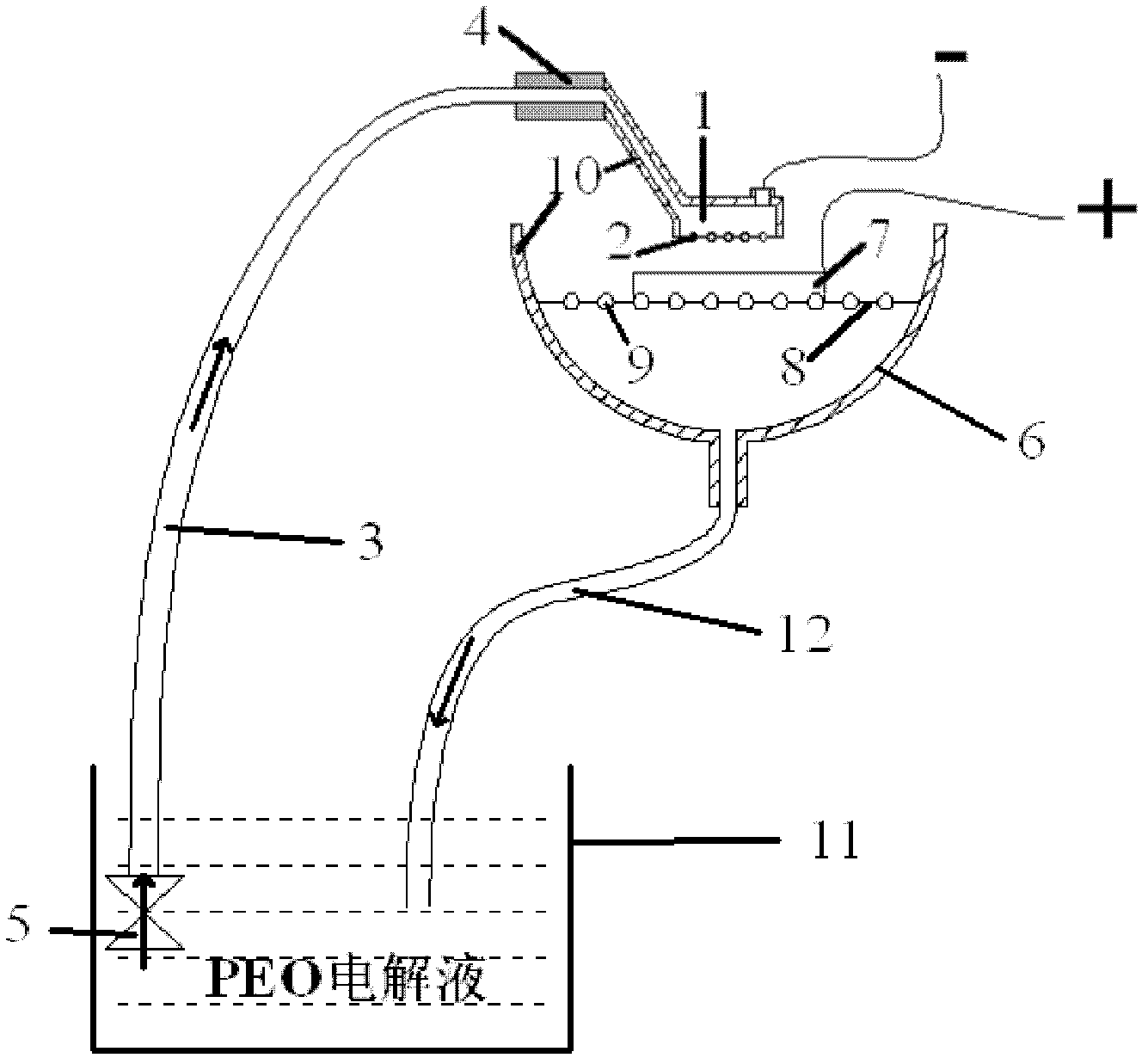
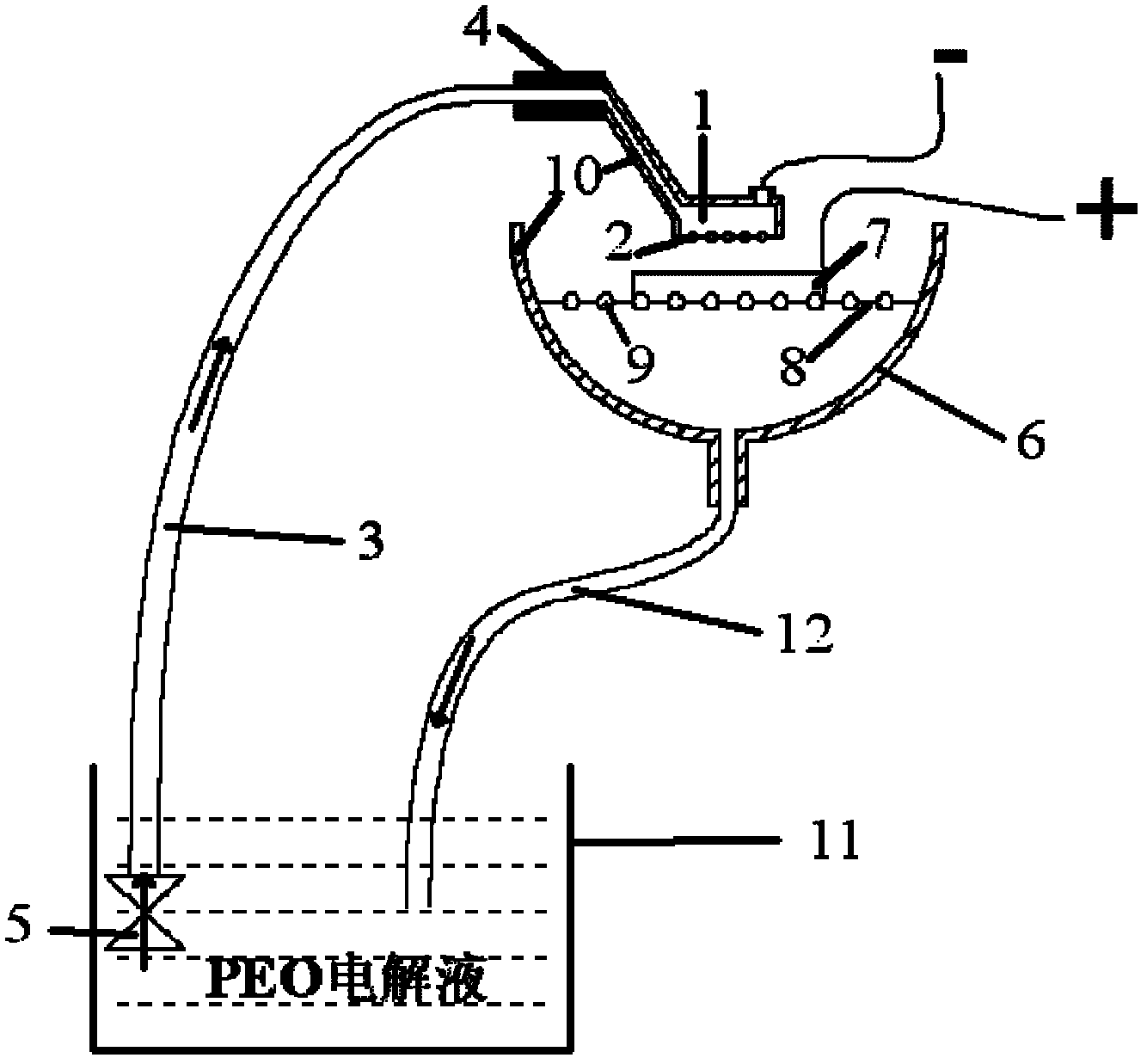
Apparatus for growing ceramic coating by electrolyte injection discharge and method thereof
PatentInactiveCN102492975A
Innovation
- A device including an electrolytic cell, a nozzle and an electrolyte collection tank is designed. The electrolyte is pumped into the circulating pump. The nozzle has multiple nozzle holes and a flat head body. The cathode-electrolyte-anode is directly connected to optimize the electric field distribution. Realize local repair and large-area continuous processing.
Environmental Impact and Sustainability of PEO
Plasma Electrolytic Oxidation demonstrates superior environmental performance compared to conventional coating processes through its elimination of hazardous chemicals and reduced waste generation. Unlike traditional electroplating methods that rely on toxic chromium compounds, cyanides, and heavy metal solutions, PEO operates using environmentally benign alkaline electrolytes primarily composed of silicates, phosphates, and aluminates. This fundamental difference eliminates the need for complex waste treatment systems and reduces the risk of groundwater contamination.
The energy efficiency of PEO processes contributes significantly to its sustainability profile. While initial energy consumption appears higher due to high-voltage requirements, the overall energy footprint remains competitive when considering the elimination of multiple pre-treatment and post-treatment steps required by conventional methods. Traditional coating processes often require extensive surface preparation, multiple chemical baths, and lengthy curing cycles, whereas PEO achieves superior coating properties in a single-step process.
Water consumption and wastewater management represent critical sustainability advantages for PEO technology. The process generates minimal liquid waste, with spent electrolytes being recyclable through filtration and reconstitution. Conventional plating operations typically require continuous fresh water input for rinsing cycles and generate substantial volumes of contaminated wastewater requiring expensive treatment before disposal. PEO systems can operate in closed-loop configurations, dramatically reducing water consumption and eliminating discharge of toxic effluents.
The longevity and durability of PEO coatings contribute to long-term sustainability by extending component service life and reducing replacement frequency. Enhanced corrosion resistance and wear properties achieved through PEO treatment result in reduced maintenance requirements and lower lifecycle environmental impact. This durability advantage becomes particularly significant in applications where coating failure leads to premature component replacement or environmental contamination.
Regulatory compliance presents another sustainability benefit, as PEO processes align with increasingly stringent environmental regulations governing industrial coating operations. The absence of volatile organic compounds, heavy metals, and carcinogenic substances simplifies permitting requirements and reduces compliance costs. This regulatory advantage positions PEO as a future-proof technology capable of meeting evolving environmental standards without requiring substantial process modifications.
The energy efficiency of PEO processes contributes significantly to its sustainability profile. While initial energy consumption appears higher due to high-voltage requirements, the overall energy footprint remains competitive when considering the elimination of multiple pre-treatment and post-treatment steps required by conventional methods. Traditional coating processes often require extensive surface preparation, multiple chemical baths, and lengthy curing cycles, whereas PEO achieves superior coating properties in a single-step process.
Water consumption and wastewater management represent critical sustainability advantages for PEO technology. The process generates minimal liquid waste, with spent electrolytes being recyclable through filtration and reconstitution. Conventional plating operations typically require continuous fresh water input for rinsing cycles and generate substantial volumes of contaminated wastewater requiring expensive treatment before disposal. PEO systems can operate in closed-loop configurations, dramatically reducing water consumption and eliminating discharge of toxic effluents.
The longevity and durability of PEO coatings contribute to long-term sustainability by extending component service life and reducing replacement frequency. Enhanced corrosion resistance and wear properties achieved through PEO treatment result in reduced maintenance requirements and lower lifecycle environmental impact. This durability advantage becomes particularly significant in applications where coating failure leads to premature component replacement or environmental contamination.
Regulatory compliance presents another sustainability benefit, as PEO processes align with increasingly stringent environmental regulations governing industrial coating operations. The absence of volatile organic compounds, heavy metals, and carcinogenic substances simplifies permitting requirements and reduces compliance costs. This regulatory advantage positions PEO as a future-proof technology capable of meeting evolving environmental standards without requiring substantial process modifications.
Cost-Benefit Analysis of PEO vs Traditional Coatings
The economic evaluation of Plasma Electrolytic Oxidation (PEO) versus traditional coating methods reveals significant long-term advantages despite higher initial investment requirements. While PEO equipment typically demands 30-40% higher capital expenditure compared to conventional anodizing or chemical conversion coating systems, the total cost of ownership demonstrates substantial benefits over operational lifecycles.
Initial setup costs for PEO systems range from $200,000 to $500,000 for industrial-scale operations, compared to $150,000 to $350,000 for traditional anodizing lines. However, PEO's single-step process eliminates multiple pre-treatment stages required by conventional methods, reducing facility footprint requirements by approximately 25-35% and associated infrastructure costs.
Operational cost analysis reveals PEO's superior efficiency through reduced processing time and energy consumption per unit area. Traditional multi-step coating processes typically require 45-90 minutes per batch, while PEO achieves equivalent or superior coating quality in 15-30 minutes. Energy consumption per square meter is reduced by 20-30% due to elimination of heating and drying stages required in conventional processes.
Material cost advantages emerge from PEO's environmentally benign electrolyte solutions, which maintain stability for extended periods compared to traditional chemical baths requiring frequent replacement. Waste treatment costs are significantly lower, as PEO generates minimal hazardous waste compared to chromate-based or other toxic coating processes, reducing disposal expenses by 60-80%.
The most compelling economic advantage lies in coating performance longevity. PEO coatings demonstrate 3-5 times longer service life compared to traditional alternatives in corrosive environments. This extended durability translates to reduced maintenance frequencies, lower replacement part costs, and decreased system downtime. In aerospace applications, PEO-coated components show 40-60% reduction in maintenance-related costs over 10-year operational periods.
Quality-related cost benefits include reduced rejection rates due to PEO's superior process control and coating uniformity. Traditional processes typically experience 5-8% rejection rates, while PEO maintains rejection rates below 2%, significantly improving manufacturing yield and reducing rework expenses.
Return on investment calculations indicate PEO systems typically achieve payback within 18-24 months in high-volume production environments, primarily driven by reduced processing time, lower operational costs, and improved product quality. For specialized applications requiring superior corrosion resistance, the economic justification becomes even more compelling due to extended component lifecycles and reduced total system costs.
Initial setup costs for PEO systems range from $200,000 to $500,000 for industrial-scale operations, compared to $150,000 to $350,000 for traditional anodizing lines. However, PEO's single-step process eliminates multiple pre-treatment stages required by conventional methods, reducing facility footprint requirements by approximately 25-35% and associated infrastructure costs.
Operational cost analysis reveals PEO's superior efficiency through reduced processing time and energy consumption per unit area. Traditional multi-step coating processes typically require 45-90 minutes per batch, while PEO achieves equivalent or superior coating quality in 15-30 minutes. Energy consumption per square meter is reduced by 20-30% due to elimination of heating and drying stages required in conventional processes.
Material cost advantages emerge from PEO's environmentally benign electrolyte solutions, which maintain stability for extended periods compared to traditional chemical baths requiring frequent replacement. Waste treatment costs are significantly lower, as PEO generates minimal hazardous waste compared to chromate-based or other toxic coating processes, reducing disposal expenses by 60-80%.
The most compelling economic advantage lies in coating performance longevity. PEO coatings demonstrate 3-5 times longer service life compared to traditional alternatives in corrosive environments. This extended durability translates to reduced maintenance frequencies, lower replacement part costs, and decreased system downtime. In aerospace applications, PEO-coated components show 40-60% reduction in maintenance-related costs over 10-year operational periods.
Quality-related cost benefits include reduced rejection rates due to PEO's superior process control and coating uniformity. Traditional processes typically experience 5-8% rejection rates, while PEO maintains rejection rates below 2%, significantly improving manufacturing yield and reducing rework expenses.
Return on investment calculations indicate PEO systems typically achieve payback within 18-24 months in high-volume production environments, primarily driven by reduced processing time, lower operational costs, and improved product quality. For specialized applications requiring superior corrosion resistance, the economic justification becomes even more compelling due to extended component lifecycles and reduced total system costs.
Unlock deeper insights with PatSnap Eureka Quick Research — get a full tech report to explore trends and direct your research. Try now!
Generate Your Research Report Instantly with AI Agent
Supercharge your innovation with PatSnap Eureka AI Agent Platform!