
How Thermal Runaway Barriers Protect Solid-State Battery Systems
MAY 15, 202610 MIN READ
Generate Your Research Report Instantly with AI Agent
Patsnap Eureka helps you evaluate technical feasibility & market potential.
Solid-State Battery Thermal Safety Background and Goals
Solid-state batteries represent a paradigm shift in energy storage technology, emerging from decades of research aimed at overcoming the fundamental limitations of conventional lithium-ion batteries. The evolution from liquid electrolyte systems to solid-state architectures has been driven by the pursuit of higher energy density, enhanced safety, and improved longevity. This technological transition addresses critical challenges including electrolyte leakage, flammability risks, and thermal instability that have constrained traditional battery applications in electric vehicles, consumer electronics, and grid storage systems.
The historical development of solid-state battery technology traces back to early ionic conductor research in the 1960s, with significant breakthroughs occurring in ceramic and polymer electrolyte materials throughout the following decades. Recent advances in sulfide-based and oxide-based solid electrolytes have accelerated commercial viability, positioning solid-state batteries as the next-generation solution for high-performance energy storage applications.
Thermal safety emerges as a paramount concern in solid-state battery development, despite the inherently improved safety profile compared to liquid electrolyte systems. While solid electrolytes eliminate many traditional thermal runaway triggers, new challenges arise from interface stability, mechanical stress-induced failures, and localized heating effects. The absence of liquid electrolyte reduces fire and explosion risks, yet thermal management remains critical for maintaining performance and preventing catastrophic failures.
The primary technical objectives for solid-state battery thermal safety focus on developing comprehensive thermal runaway prevention and mitigation strategies. Key goals include establishing robust thermal barriers that can contain and redirect heat propagation, implementing early detection systems for thermal anomalies, and designing fail-safe mechanisms that prevent cascading failures across battery modules. These objectives encompass both material-level innovations in thermal interface materials and system-level integration of protective barriers.
Advanced thermal runaway barriers represent a critical enabling technology for solid-state battery commercialization. The target specifications include thermal conductivity management, electrical isolation maintenance, and mechanical integrity preservation under extreme temperature conditions. These barriers must demonstrate effectiveness across diverse operating environments while maintaining compatibility with solid-state battery manufacturing processes and form factor requirements.
The strategic importance of thermal safety solutions extends beyond immediate safety concerns to encompass regulatory compliance, consumer acceptance, and market penetration objectives. Achieving comprehensive thermal protection enables solid-state batteries to realize their full potential in demanding applications, supporting the broader transition toward sustainable energy storage technologies across automotive, aerospace, and stationary storage markets.
The historical development of solid-state battery technology traces back to early ionic conductor research in the 1960s, with significant breakthroughs occurring in ceramic and polymer electrolyte materials throughout the following decades. Recent advances in sulfide-based and oxide-based solid electrolytes have accelerated commercial viability, positioning solid-state batteries as the next-generation solution for high-performance energy storage applications.
Thermal safety emerges as a paramount concern in solid-state battery development, despite the inherently improved safety profile compared to liquid electrolyte systems. While solid electrolytes eliminate many traditional thermal runaway triggers, new challenges arise from interface stability, mechanical stress-induced failures, and localized heating effects. The absence of liquid electrolyte reduces fire and explosion risks, yet thermal management remains critical for maintaining performance and preventing catastrophic failures.
The primary technical objectives for solid-state battery thermal safety focus on developing comprehensive thermal runaway prevention and mitigation strategies. Key goals include establishing robust thermal barriers that can contain and redirect heat propagation, implementing early detection systems for thermal anomalies, and designing fail-safe mechanisms that prevent cascading failures across battery modules. These objectives encompass both material-level innovations in thermal interface materials and system-level integration of protective barriers.
Advanced thermal runaway barriers represent a critical enabling technology for solid-state battery commercialization. The target specifications include thermal conductivity management, electrical isolation maintenance, and mechanical integrity preservation under extreme temperature conditions. These barriers must demonstrate effectiveness across diverse operating environments while maintaining compatibility with solid-state battery manufacturing processes and form factor requirements.
The strategic importance of thermal safety solutions extends beyond immediate safety concerns to encompass regulatory compliance, consumer acceptance, and market penetration objectives. Achieving comprehensive thermal protection enables solid-state batteries to realize their full potential in demanding applications, supporting the broader transition toward sustainable energy storage technologies across automotive, aerospace, and stationary storage markets.
Market Demand for Safer Battery Technologies
The global battery market is experiencing unprecedented demand for enhanced safety technologies, driven by the rapid expansion of electric vehicles, energy storage systems, and portable electronics. Traditional lithium-ion batteries have demonstrated significant safety vulnerabilities, particularly thermal runaway incidents that have resulted in fires, explosions, and substantial property damage. These safety concerns have created urgent market pressure for more reliable battery technologies that can prevent catastrophic failures while maintaining high performance standards.
Solid-state batteries represent a revolutionary advancement in addressing these safety challenges, with thermal runaway barriers serving as critical protective mechanisms. The automotive industry, which accounts for the largest segment of battery demand, has identified battery safety as a primary barrier to widespread electric vehicle adoption. Consumer confidence remains fragile following high-profile incidents involving battery fires in electric vehicles and consumer electronics, creating substantial market incentives for manufacturers to invest in safer alternatives.
The energy storage sector, particularly grid-scale applications, demands exceptionally robust safety systems due to the massive scale of installations and proximity to populated areas. Thermal runaway barriers in solid-state battery systems offer superior protection compared to conventional liquid electrolyte batteries, as they can prevent heat propagation between cells and maintain structural integrity under extreme conditions. This capability addresses critical market requirements for utility-scale deployments where safety failures could have catastrophic consequences.
Regulatory frameworks worldwide are increasingly stringent regarding battery safety standards, with organizations such as UL, IEC, and various national safety agencies implementing more rigorous testing requirements. These evolving regulations create market demand for advanced safety technologies that can meet or exceed emerging standards. Solid-state batteries with integrated thermal runaway barriers provide manufacturers with a pathway to compliance while potentially reducing insurance costs and liability exposure.
The consumer electronics market continues to drive demand for safer battery technologies, particularly in applications where batteries are in close proximity to users. Smartphones, laptops, and wearable devices require compact battery solutions that eliminate the risk of thermal events. Market research indicates that consumers are increasingly willing to pay premium prices for products that demonstrate superior safety credentials, creating economic incentives for manufacturers to adopt advanced battery technologies.
Industrial applications, including aerospace, medical devices, and critical infrastructure, represent high-value market segments where safety requirements are paramount. These sectors often operate under strict regulatory oversight and cannot tolerate battery-related safety incidents. The superior safety profile offered by thermal runaway barriers in solid-state systems positions these technologies as essential solutions for mission-critical applications where failure is not acceptable.
Solid-state batteries represent a revolutionary advancement in addressing these safety challenges, with thermal runaway barriers serving as critical protective mechanisms. The automotive industry, which accounts for the largest segment of battery demand, has identified battery safety as a primary barrier to widespread electric vehicle adoption. Consumer confidence remains fragile following high-profile incidents involving battery fires in electric vehicles and consumer electronics, creating substantial market incentives for manufacturers to invest in safer alternatives.
The energy storage sector, particularly grid-scale applications, demands exceptionally robust safety systems due to the massive scale of installations and proximity to populated areas. Thermal runaway barriers in solid-state battery systems offer superior protection compared to conventional liquid electrolyte batteries, as they can prevent heat propagation between cells and maintain structural integrity under extreme conditions. This capability addresses critical market requirements for utility-scale deployments where safety failures could have catastrophic consequences.
Regulatory frameworks worldwide are increasingly stringent regarding battery safety standards, with organizations such as UL, IEC, and various national safety agencies implementing more rigorous testing requirements. These evolving regulations create market demand for advanced safety technologies that can meet or exceed emerging standards. Solid-state batteries with integrated thermal runaway barriers provide manufacturers with a pathway to compliance while potentially reducing insurance costs and liability exposure.
The consumer electronics market continues to drive demand for safer battery technologies, particularly in applications where batteries are in close proximity to users. Smartphones, laptops, and wearable devices require compact battery solutions that eliminate the risk of thermal events. Market research indicates that consumers are increasingly willing to pay premium prices for products that demonstrate superior safety credentials, creating economic incentives for manufacturers to adopt advanced battery technologies.
Industrial applications, including aerospace, medical devices, and critical infrastructure, represent high-value market segments where safety requirements are paramount. These sectors often operate under strict regulatory oversight and cannot tolerate battery-related safety incidents. The superior safety profile offered by thermal runaway barriers in solid-state systems positions these technologies as essential solutions for mission-critical applications where failure is not acceptable.
Current Thermal Runaway Challenges in Solid-State Systems
Solid-state battery systems face unique thermal runaway challenges that differ significantly from conventional lithium-ion batteries. While solid electrolytes inherently offer improved thermal stability compared to liquid electrolytes, thermal runaway remains a critical safety concern that can compromise system integrity and performance. The solid-state architecture introduces new failure modes and propagation mechanisms that require specialized understanding and mitigation strategies.
The primary thermal runaway challenge in solid-state systems stems from interface instability between solid electrolytes and electrode materials. At elevated temperatures, typically above 200°C, chemical reactions at these interfaces can generate heat and gas, initiating a cascade of thermal events. Unlike liquid electrolyte systems where thermal runaway often begins with electrolyte decomposition, solid-state systems experience interface-driven thermal instability that can be more difficult to detect and control.
Mechanical stress-induced failures represent another significant challenge in solid-state battery thermal management. Temperature fluctuations cause differential thermal expansion between various solid components, creating mechanical stress concentrations. These stresses can lead to crack formation in solid electrolytes, creating localized hot spots and potential pathways for thermal runaway propagation. The rigid nature of solid-state components makes them particularly susceptible to thermal stress-related failures.
Current detection and monitoring systems face limitations in solid-state environments. Traditional thermal runaway detection methods rely on gas sensors and temperature monitoring, but solid-state systems may not produce the same gaseous byproducts as liquid systems. The absence of conventional warning signals makes early detection challenging, potentially allowing thermal events to progress further before intervention becomes possible.
Heat dissipation presents unique challenges in solid-state battery packs due to the thermal properties of solid electrolytes. Many solid electrolyte materials exhibit lower thermal conductivity compared to liquid electrolytes, creating potential for heat accumulation and uneven temperature distribution. This thermal management complexity is compounded by the need to maintain optimal operating temperatures for ionic conductivity while preventing thermal runaway conditions.
Manufacturing defects and material impurities pose elevated risks in solid-state systems. Void formation, grain boundary irregularities, and contamination during solid electrolyte processing can create localized resistance increases and hot spot formation. These manufacturing-related challenges require stringent quality control measures and advanced characterization techniques to identify potential thermal runaway initiation sites before system deployment.
The primary thermal runaway challenge in solid-state systems stems from interface instability between solid electrolytes and electrode materials. At elevated temperatures, typically above 200°C, chemical reactions at these interfaces can generate heat and gas, initiating a cascade of thermal events. Unlike liquid electrolyte systems where thermal runaway often begins with electrolyte decomposition, solid-state systems experience interface-driven thermal instability that can be more difficult to detect and control.
Mechanical stress-induced failures represent another significant challenge in solid-state battery thermal management. Temperature fluctuations cause differential thermal expansion between various solid components, creating mechanical stress concentrations. These stresses can lead to crack formation in solid electrolytes, creating localized hot spots and potential pathways for thermal runaway propagation. The rigid nature of solid-state components makes them particularly susceptible to thermal stress-related failures.
Current detection and monitoring systems face limitations in solid-state environments. Traditional thermal runaway detection methods rely on gas sensors and temperature monitoring, but solid-state systems may not produce the same gaseous byproducts as liquid systems. The absence of conventional warning signals makes early detection challenging, potentially allowing thermal events to progress further before intervention becomes possible.
Heat dissipation presents unique challenges in solid-state battery packs due to the thermal properties of solid electrolytes. Many solid electrolyte materials exhibit lower thermal conductivity compared to liquid electrolytes, creating potential for heat accumulation and uneven temperature distribution. This thermal management complexity is compounded by the need to maintain optimal operating temperatures for ionic conductivity while preventing thermal runaway conditions.
Manufacturing defects and material impurities pose elevated risks in solid-state systems. Void formation, grain boundary irregularities, and contamination during solid electrolyte processing can create localized resistance increases and hot spot formation. These manufacturing-related challenges require stringent quality control measures and advanced characterization techniques to identify potential thermal runaway initiation sites before system deployment.
Existing Thermal Runaway Barrier Technologies
01 Battery thermal management systems with barrier materials
Implementation of specialized barrier materials and thermal management systems designed to prevent or contain thermal runaway events in battery systems. These systems incorporate heat-resistant materials, thermal insulation layers, and containment structures that can withstand high temperatures and prevent the spread of thermal events between battery cells or modules.- Battery thermal management systems with barrier materials: Implementation of specialized barrier materials and thermal management systems designed to prevent or contain thermal runaway events in battery systems. These systems incorporate heat-resistant materials, thermal insulation layers, and containment structures that can withstand high temperatures and prevent the spread of thermal events between battery cells or modules.
- Fire suppression and extinguishing systems for thermal protection: Integration of fire suppression mechanisms and extinguishing agents specifically designed to combat thermal runaway incidents. These systems include automatic detection and response mechanisms that can quickly identify thermal events and deploy appropriate suppression materials to prevent fire spread and minimize damage.
- Structural containment and isolation barriers: Development of physical containment structures and isolation barriers that compartmentalize battery systems to prevent thermal runaway propagation. These barriers are engineered to maintain structural integrity under extreme thermal conditions and provide effective isolation between different battery sections or adjacent systems.
- Advanced cooling and heat dissipation technologies: Implementation of sophisticated cooling systems and heat dissipation technologies that actively manage thermal conditions to prevent runaway scenarios. These technologies include enhanced heat exchangers, phase change materials, and active cooling circuits that maintain optimal operating temperatures and provide rapid heat removal during thermal events.
- Monitoring and early warning detection systems: Deployment of comprehensive monitoring systems and early warning detection technologies that can identify precursor conditions leading to thermal runaway. These systems utilize various sensors, diagnostic algorithms, and predictive analytics to provide advance warning and enable preventive measures before critical thermal events occur.
02 Fire suppression and extinguishing systems for thermal protection
Integration of fire suppression mechanisms and extinguishing agents specifically designed to combat thermal runaway incidents. These systems include automatic detection and response mechanisms that can quickly identify thermal events and deploy appropriate suppression materials to prevent fire spread and minimize damage.Expand Specific Solutions03 Structural design modifications for thermal runaway containment
Engineering approaches that modify the physical structure and housing of battery systems to create effective barriers against thermal propagation. These modifications include specialized enclosures, ventilation systems, and compartmentalization techniques that isolate individual cells or battery modules to prevent cascading thermal failures.Expand Specific Solutions04 Advanced monitoring and early warning systems
Development of sophisticated monitoring technologies that can detect early signs of thermal runaway conditions and provide timely warnings. These systems utilize various sensors, algorithms, and predictive analytics to identify temperature anomalies, gas emissions, or other indicators that precede thermal runaway events, enabling proactive protective measures.Expand Specific Solutions05 Cooling and heat dissipation technologies
Implementation of active and passive cooling solutions designed to manage heat generation and dissipation in battery systems. These technologies include liquid cooling systems, phase change materials, heat sinks, and thermal interface materials that help maintain optimal operating temperatures and prevent conditions that could lead to thermal runaway.Expand Specific Solutions
Key Players in Solid-State Battery Safety Solutions
The thermal runaway barrier technology for solid-state battery systems represents an emerging market segment within the rapidly expanding electric vehicle and energy storage industries. The industry is currently in a transitional phase, moving from traditional lithium-ion to solid-state battery technologies, with the global solid-state battery market projected to reach significant scale by 2030. Technology maturity varies considerably across market participants, with established battery manufacturers like LG Energy Solution, Samsung SDI, Contemporary Amperex Technology (CATL), and BYD leading in commercial applications, while materials specialists such as Aspen Aerogels, 3M Innovative Properties, and KULR Technology focus on advanced thermal management solutions. Automotive giants including Mercedes-Benz, AUDI, and GM Global Technology Operations are driving demand through integration requirements, while emerging players like Advanced Innergy and Viridi Parente contribute specialized safety technologies, creating a competitive landscape characterized by diverse technological approaches and varying levels of commercial readiness.
LG Energy Solution Ltd.
Technical Solution: LG Energy Solution has developed advanced thermal runaway barrier systems for solid-state batteries using multi-layered ceramic-polymer composite materials that can withstand temperatures up to 1200°C. Their approach incorporates phase-change materials (PCMs) within the barrier structure to absorb excess heat during thermal events, while maintaining ionic conductivity pathways. The company's proprietary thermal barrier technology includes flame-retardant separators with shutdown functionality that activates at 130-140°C to prevent further heat generation. Additionally, they implement thermal interface materials with high thermal conductivity (>5 W/mK) to efficiently dissipate heat away from critical battery components, ensuring system-level protection in electric vehicle applications.
Strengths: Proven track record in large-scale battery manufacturing, advanced materials expertise, strong automotive partnerships. Weaknesses: Higher manufacturing costs due to complex multi-layer structures, potential ionic conductivity reduction at barrier interfaces.
3M Innovative Properties Co.
Technical Solution: 3M has developed specialized thermal barrier films and adhesive systems specifically engineered for solid-state battery protection, utilizing their proprietary microstructured materials technology. Their thermal runaway barriers feature multi-functional films with thermal conductivity ranging from 0.1-10 W/mK depending on application requirements, combined with flame-retardant properties that meet UL94 V-0 standards. The company's solution includes pressure-sensitive adhesives that maintain bonding strength up to 200°C while providing electrical insulation exceeding 1000V. 3M's barrier systems incorporate reflective heat shields with emissivity values below 0.1, effectively redirecting radiant heat away from adjacent battery cells. Their modular design allows for customizable thermal protection based on specific battery chemistry and form factor requirements, with proven effectiveness in preventing thermal propagation between cells.
Strengths: Advanced materials science expertise, proven industrial applications, customizable solutions, strong adhesive technologies. Weaknesses: Limited direct battery manufacturing experience, higher material costs, potential adhesive degradation over time.
Core Innovations in Solid-State Thermal Protection
Thermal barrier structure for containing thermal runaway propagation within a battery pack
PatentActiveUS20100136404A1
Innovation
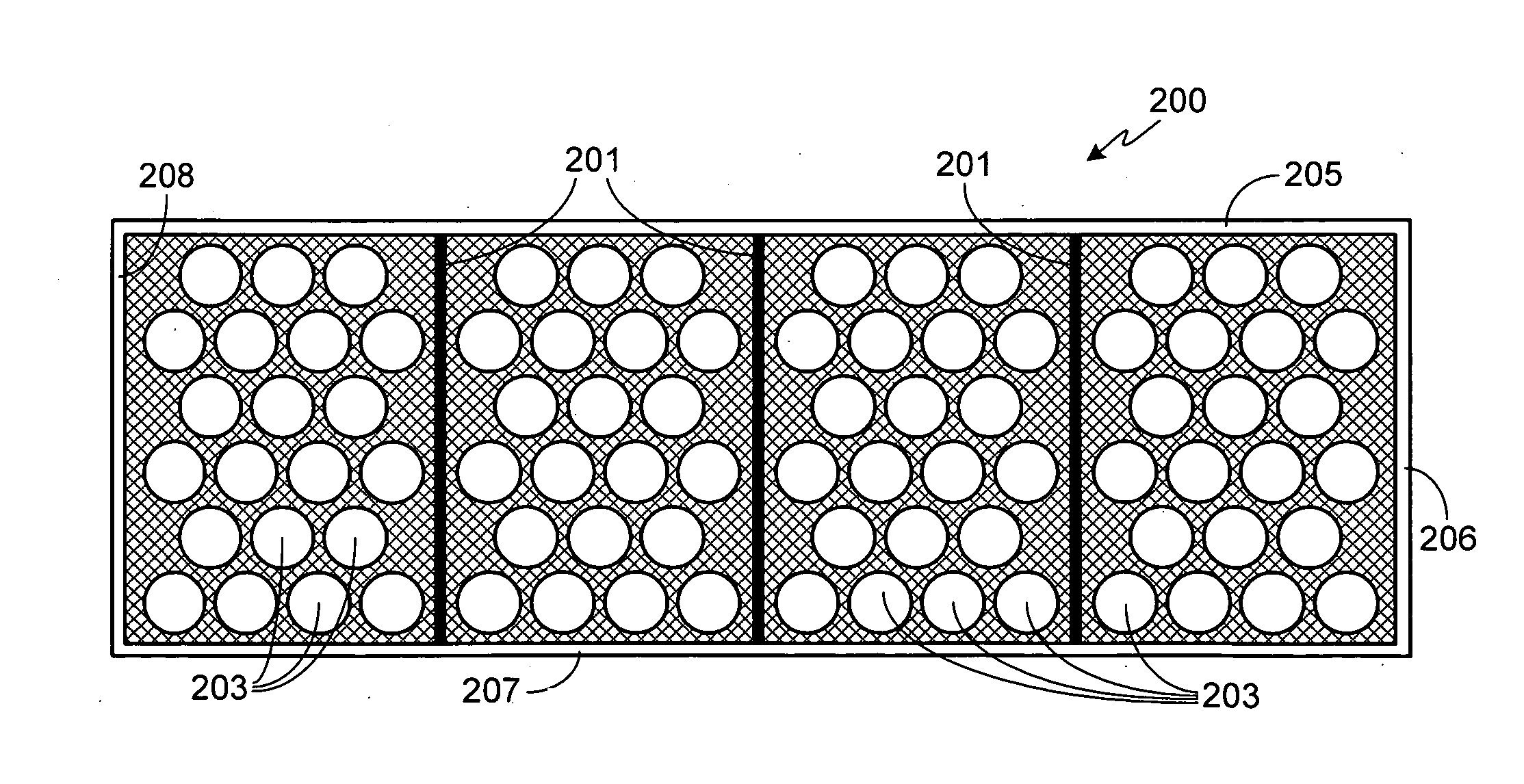
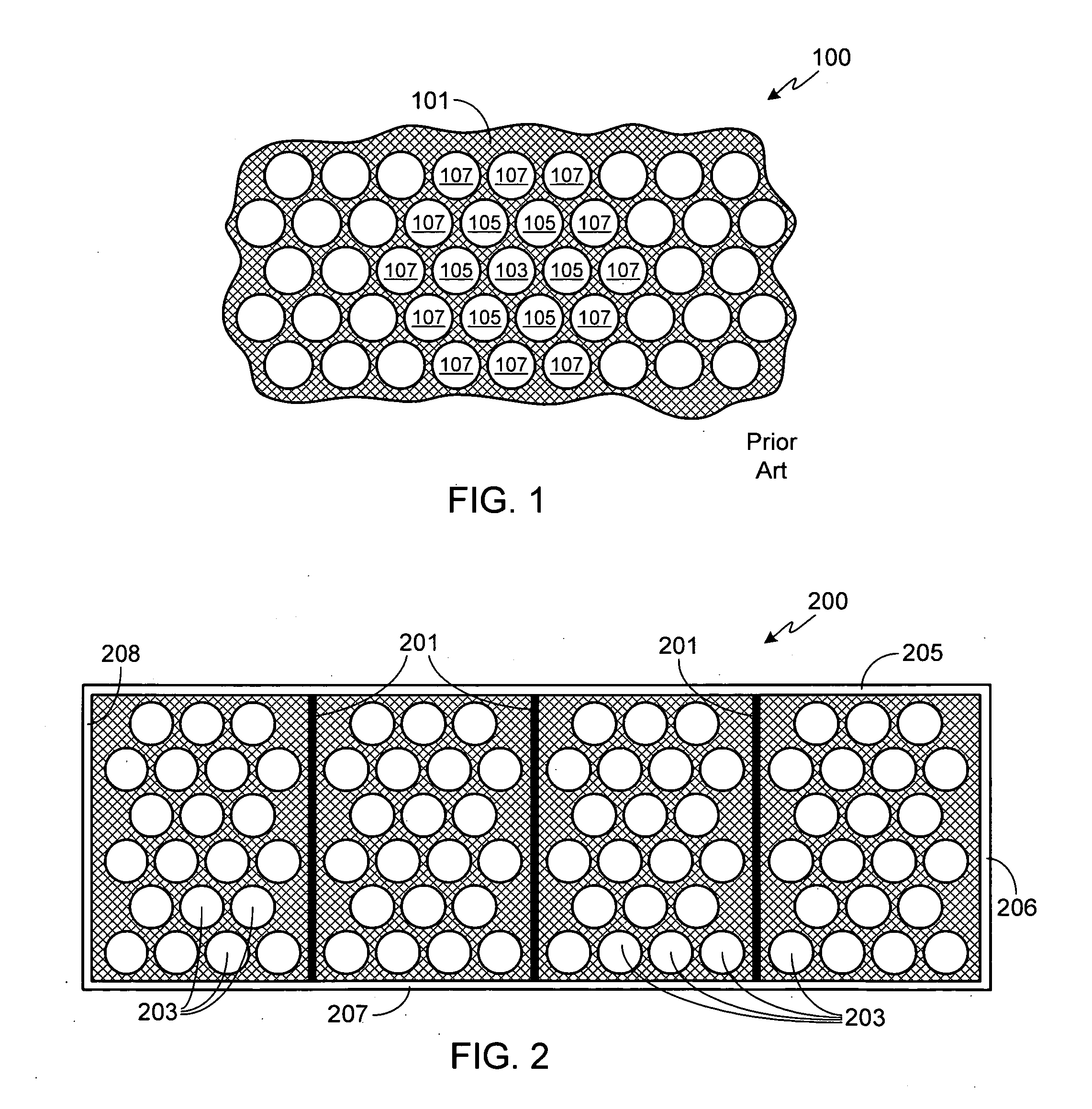
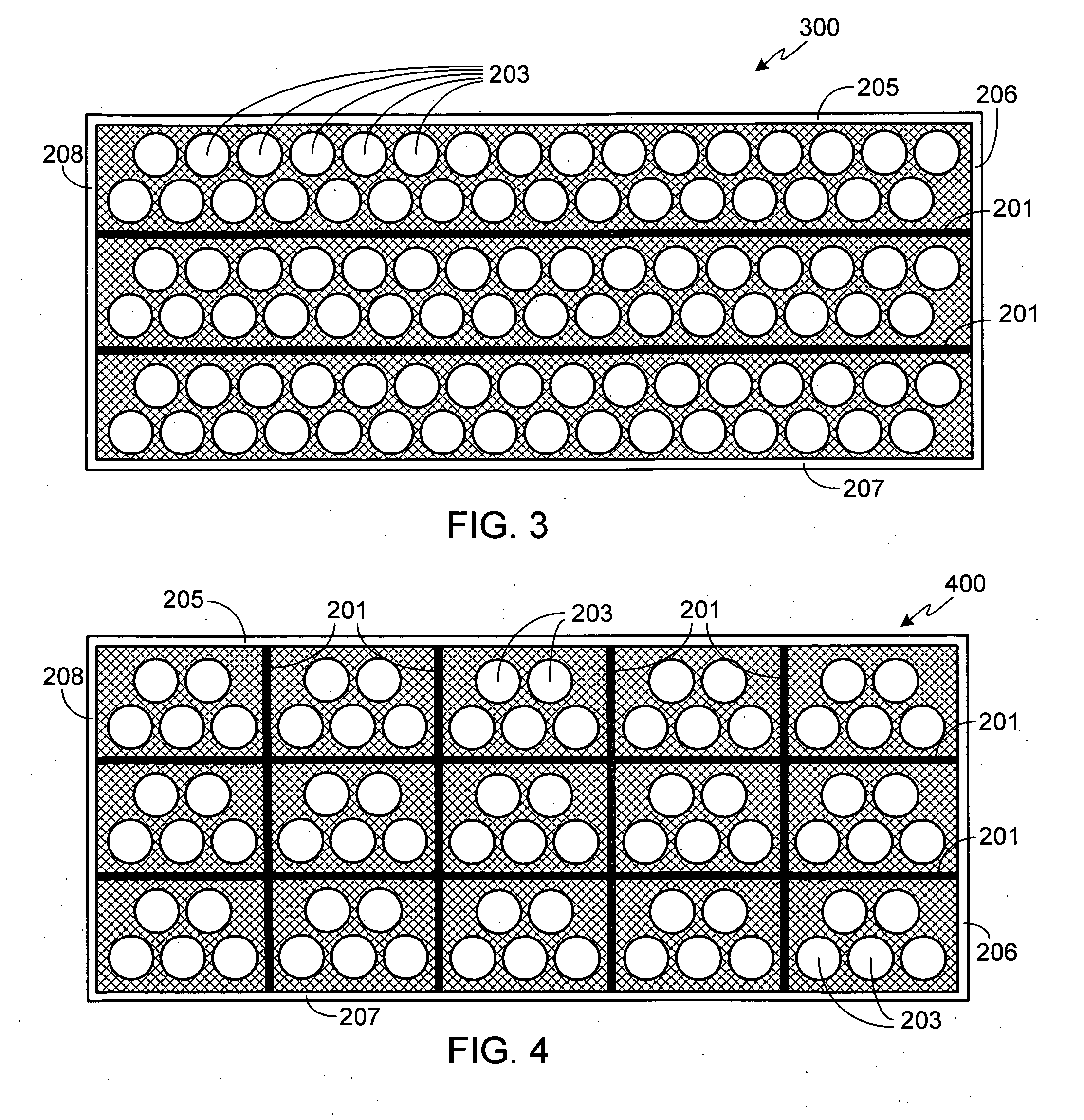
- The implementation of thermal barrier elements within battery packs to divide cells into groups, preventing the propagation of thermal runaway events by using materials with high melting temperatures and low thermal conductivity, and integrating heat transfer channels coupled to passive or active cooling systems.

Load distributing thermal runaway barrier for a battery cell
PatentActiveUS20230395900A1
Innovation
- A load distributing thermal runaway barrier system comprising Belleville springs and thermally insulating pads between separator plates in a battery cell pack, designed to absorb and distribute internal pressure and minimize thermal energy transfer between cells, constructed from stainless or high-strength steel and aerogel materials.


Safety Standards for Solid-State Battery Systems
The development of comprehensive safety standards for solid-state battery systems represents a critical milestone in the commercialization of next-generation energy storage technologies. Current regulatory frameworks primarily address conventional lithium-ion batteries, creating significant gaps in safety protocols specifically designed for solid-state architectures. International standardization bodies, including IEC, UL, and ISO, are actively developing new testing methodologies and certification requirements that account for the unique characteristics of solid electrolytes and their thermal behavior.
Existing safety standards such as IEC 62133 and UL 2054 require substantial modifications to accommodate solid-state battery systems. These adaptations focus on thermal runaway propagation mechanisms, which differ significantly from liquid electrolyte systems due to the absence of flammable organic solvents. New testing protocols emphasize elevated temperature exposure, mechanical stress evaluation, and long-term stability assessments under various environmental conditions.
The integration of thermal runaway barriers into solid-state battery designs necessitates specific performance criteria within safety standards. These criteria include thermal conductivity thresholds, fire resistance ratings, and structural integrity requirements under extreme conditions. Standards must define acceptable barrier materials, installation methods, and performance validation procedures to ensure consistent implementation across manufacturers.
Certification processes for solid-state battery systems incorporating thermal barriers require multi-stage testing approaches. Initial assessments focus on individual cell performance, followed by module-level evaluations that examine barrier effectiveness during cascading thermal events. System-level testing validates overall safety architecture, including barrier integration with battery management systems and emergency response protocols.
Regulatory harmonization across different markets remains a significant challenge for solid-state battery deployment. Regional variations in safety requirements create compliance complexities for manufacturers seeking global market access. Ongoing collaborative efforts between international standards organizations aim to establish unified safety frameworks that facilitate technology adoption while maintaining rigorous protection standards.
Future safety standard evolution will incorporate real-world performance data as solid-state battery systems achieve commercial deployment. Continuous refinement of testing methodologies and performance criteria will ensure standards remain relevant as thermal barrier technologies advance and new materials emerge in the solid-state battery ecosystem.
Existing safety standards such as IEC 62133 and UL 2054 require substantial modifications to accommodate solid-state battery systems. These adaptations focus on thermal runaway propagation mechanisms, which differ significantly from liquid electrolyte systems due to the absence of flammable organic solvents. New testing protocols emphasize elevated temperature exposure, mechanical stress evaluation, and long-term stability assessments under various environmental conditions.
The integration of thermal runaway barriers into solid-state battery designs necessitates specific performance criteria within safety standards. These criteria include thermal conductivity thresholds, fire resistance ratings, and structural integrity requirements under extreme conditions. Standards must define acceptable barrier materials, installation methods, and performance validation procedures to ensure consistent implementation across manufacturers.
Certification processes for solid-state battery systems incorporating thermal barriers require multi-stage testing approaches. Initial assessments focus on individual cell performance, followed by module-level evaluations that examine barrier effectiveness during cascading thermal events. System-level testing validates overall safety architecture, including barrier integration with battery management systems and emergency response protocols.
Regulatory harmonization across different markets remains a significant challenge for solid-state battery deployment. Regional variations in safety requirements create compliance complexities for manufacturers seeking global market access. Ongoing collaborative efforts between international standards organizations aim to establish unified safety frameworks that facilitate technology adoption while maintaining rigorous protection standards.
Future safety standard evolution will incorporate real-world performance data as solid-state battery systems achieve commercial deployment. Continuous refinement of testing methodologies and performance criteria will ensure standards remain relevant as thermal barrier technologies advance and new materials emerge in the solid-state battery ecosystem.
Environmental Impact of Battery Thermal Management
The environmental implications of thermal management systems in solid-state batteries represent a critical consideration in the transition toward sustainable energy storage solutions. Unlike conventional lithium-ion batteries that require extensive cooling infrastructure and energy-intensive thermal regulation, solid-state battery systems with integrated thermal runaway barriers offer significant environmental advantages through reduced energy consumption and material efficiency.
Traditional battery thermal management systems typically consume 15-25% of the total system energy through active cooling mechanisms, refrigeration units, and continuous monitoring systems. In contrast, solid-state batteries equipped with thermal runaway barriers operate with passive thermal regulation, substantially reducing the parasitic energy losses associated with temperature control. This efficiency improvement translates directly into reduced carbon footprint during operational phases, particularly in large-scale applications such as electric vehicle fleets and grid storage systems.
The manufacturing environmental impact of thermal runaway barriers presents both challenges and opportunities. While the production of advanced ceramic and polymer barrier materials requires specialized processing techniques and higher initial energy investment, the overall lifecycle assessment demonstrates favorable outcomes. The elimination of complex liquid cooling systems, heat exchangers, and associated pumping mechanisms reduces the total material footprint by approximately 30-40% compared to conventional thermal management approaches.
Material sustainability considerations favor solid-state thermal management solutions due to their reliance on abundant elements such as silicon, aluminum oxide, and various ceramic compounds rather than rare earth materials commonly used in active cooling systems. The thermal barriers typically incorporate recyclable materials that can be recovered and reprocessed at end-of-life, supporting circular economy principles in battery manufacturing.
The reduced thermal management complexity also minimizes the environmental impact associated with system maintenance and replacement. Conventional cooling systems require periodic refrigerant replacement, filter changes, and pump maintenance, each contributing to ongoing environmental burden. Passive thermal runaway barriers eliminate these maintenance requirements, reducing both material consumption and waste generation throughout the system lifecycle.
Furthermore, the enhanced safety profile provided by thermal runaway barriers reduces the environmental risks associated with battery failures, including toxic gas emissions, fire suppression chemical usage, and contamination of surrounding environments during thermal events.
Traditional battery thermal management systems typically consume 15-25% of the total system energy through active cooling mechanisms, refrigeration units, and continuous monitoring systems. In contrast, solid-state batteries equipped with thermal runaway barriers operate with passive thermal regulation, substantially reducing the parasitic energy losses associated with temperature control. This efficiency improvement translates directly into reduced carbon footprint during operational phases, particularly in large-scale applications such as electric vehicle fleets and grid storage systems.
The manufacturing environmental impact of thermal runaway barriers presents both challenges and opportunities. While the production of advanced ceramic and polymer barrier materials requires specialized processing techniques and higher initial energy investment, the overall lifecycle assessment demonstrates favorable outcomes. The elimination of complex liquid cooling systems, heat exchangers, and associated pumping mechanisms reduces the total material footprint by approximately 30-40% compared to conventional thermal management approaches.
Material sustainability considerations favor solid-state thermal management solutions due to their reliance on abundant elements such as silicon, aluminum oxide, and various ceramic compounds rather than rare earth materials commonly used in active cooling systems. The thermal barriers typically incorporate recyclable materials that can be recovered and reprocessed at end-of-life, supporting circular economy principles in battery manufacturing.
The reduced thermal management complexity also minimizes the environmental impact associated with system maintenance and replacement. Conventional cooling systems require periodic refrigerant replacement, filter changes, and pump maintenance, each contributing to ongoing environmental burden. Passive thermal runaway barriers eliminate these maintenance requirements, reducing both material consumption and waste generation throughout the system lifecycle.
Furthermore, the enhanced safety profile provided by thermal runaway barriers reduces the environmental risks associated with battery failures, including toxic gas emissions, fire suppression chemical usage, and contamination of surrounding environments during thermal events.
Unlock deeper insights with Patsnap Eureka Quick Research — get a full tech report to explore trends and direct your research. Try now!
Generate Your Research Report Instantly with AI Agent
Supercharge your innovation with Patsnap Eureka AI Agent Platform!