
How to Accommodate Feed Variability in Pyrolysis Design
MAR 9, 20268 MIN READ
Generate Your Research Report Instantly with AI Agent
Patsnap Eureka helps you evaluate technical feasibility & market potential.
Feed Variability Challenges in Pyrolysis Technology
Feed variability represents one of the most significant operational challenges in pyrolysis technology, fundamentally impacting process efficiency, product quality, and economic viability. The heterogeneous nature of feedstock materials creates cascading effects throughout the entire pyrolysis system, from initial preprocessing stages to final product separation and purification.
The primary challenge stems from compositional inconsistencies in feedstock materials. Biomass feedstocks exhibit substantial variations in moisture content, lignin-to-cellulose ratios, ash content, and particle size distribution. These variations directly influence thermal decomposition kinetics, requiring continuous adjustments to operating parameters such as temperature profiles, residence times, and heating rates to maintain optimal conversion efficiency.
Moisture content fluctuations pose particularly acute challenges, as water presence significantly affects heat transfer dynamics and energy requirements. High moisture content necessitates additional energy input for water evaporation, reducing overall thermal efficiency and potentially causing temperature instabilities within the reactor. Conversely, overly dry feedstock can lead to rapid thermal decomposition, creating hot spots and uneven product distribution.
Particle size heterogeneity creates mass and heat transfer limitations that compromise process uniformity. Large particles may undergo incomplete pyrolysis due to insufficient heat penetration, while fine particles can cause channeling effects and uneven gas flow distribution. This size variability necessitates sophisticated feeding systems and potentially multiple preprocessing steps to achieve acceptable uniformity.
Chemical composition variations directly impact product yield distributions and quality specifications. Different feedstock types produce varying ratios of bio-oil, syngas, and biochar, making it challenging to maintain consistent product specifications for downstream applications. The presence of contaminants such as metals, sulfur compounds, or chlorine can also affect catalyst performance in catalytic pyrolysis systems.
Seasonal and geographical variations in feedstock availability compound these challenges, requiring pyrolysis facilities to adapt to different material sources throughout operational cycles. This variability demands flexible process designs capable of handling multiple feedstock types while maintaining economic viability and environmental compliance standards.
The primary challenge stems from compositional inconsistencies in feedstock materials. Biomass feedstocks exhibit substantial variations in moisture content, lignin-to-cellulose ratios, ash content, and particle size distribution. These variations directly influence thermal decomposition kinetics, requiring continuous adjustments to operating parameters such as temperature profiles, residence times, and heating rates to maintain optimal conversion efficiency.
Moisture content fluctuations pose particularly acute challenges, as water presence significantly affects heat transfer dynamics and energy requirements. High moisture content necessitates additional energy input for water evaporation, reducing overall thermal efficiency and potentially causing temperature instabilities within the reactor. Conversely, overly dry feedstock can lead to rapid thermal decomposition, creating hot spots and uneven product distribution.
Particle size heterogeneity creates mass and heat transfer limitations that compromise process uniformity. Large particles may undergo incomplete pyrolysis due to insufficient heat penetration, while fine particles can cause channeling effects and uneven gas flow distribution. This size variability necessitates sophisticated feeding systems and potentially multiple preprocessing steps to achieve acceptable uniformity.
Chemical composition variations directly impact product yield distributions and quality specifications. Different feedstock types produce varying ratios of bio-oil, syngas, and biochar, making it challenging to maintain consistent product specifications for downstream applications. The presence of contaminants such as metals, sulfur compounds, or chlorine can also affect catalyst performance in catalytic pyrolysis systems.
Seasonal and geographical variations in feedstock availability compound these challenges, requiring pyrolysis facilities to adapt to different material sources throughout operational cycles. This variability demands flexible process designs capable of handling multiple feedstock types while maintaining economic viability and environmental compliance standards.
Market Demand for Flexible Pyrolysis Systems
The global pyrolysis market is experiencing unprecedented growth driven by increasing environmental regulations and the urgent need for sustainable waste management solutions. Traditional pyrolysis systems, designed for specific feedstock types, are proving inadequate in meeting the diverse and evolving demands of modern waste streams. This limitation has created a substantial market opportunity for flexible pyrolysis systems capable of processing variable feed compositions.
Industrial waste generators face significant challenges with feedstock consistency, as waste streams often contain mixed materials with varying moisture content, particle sizes, and chemical compositions. Manufacturing facilities, municipal waste management authorities, and agricultural processors require pyrolysis solutions that can adapt to seasonal variations and changing waste profiles without compromising operational efficiency or product quality.
The circular economy movement has intensified demand for versatile pyrolysis technologies that can handle multiple waste types within a single facility. Companies are increasingly seeking systems that can process plastic waste, biomass, rubber, and organic materials interchangeably, maximizing asset utilization and return on investment. This flexibility requirement has become a critical factor in procurement decisions across various industries.
Emerging markets in developing countries present particularly strong demand for adaptable pyrolysis systems due to their heterogeneous waste streams and limited infrastructure for waste segregation. These markets require robust technologies that can operate effectively despite inconsistent feed quality and composition, making flexibility a fundamental rather than optional feature.
The renewable energy sector's expansion has further amplified market demand for flexible pyrolysis systems. Energy companies are investing in technologies that can convert diverse biomass sources into valuable products, requiring systems capable of handling seasonal agricultural residues, forestry waste, and energy crops with varying characteristics throughout the year.
Recent market analysis indicates that end-users are willing to invest in premium flexible pyrolysis solutions that offer operational versatility, reduced downtime, and improved economic viability. The ability to accommodate feed variability has become a key differentiator in competitive bidding processes, with flexibility features often determining contract awards in major industrial projects.
Industrial waste generators face significant challenges with feedstock consistency, as waste streams often contain mixed materials with varying moisture content, particle sizes, and chemical compositions. Manufacturing facilities, municipal waste management authorities, and agricultural processors require pyrolysis solutions that can adapt to seasonal variations and changing waste profiles without compromising operational efficiency or product quality.
The circular economy movement has intensified demand for versatile pyrolysis technologies that can handle multiple waste types within a single facility. Companies are increasingly seeking systems that can process plastic waste, biomass, rubber, and organic materials interchangeably, maximizing asset utilization and return on investment. This flexibility requirement has become a critical factor in procurement decisions across various industries.
Emerging markets in developing countries present particularly strong demand for adaptable pyrolysis systems due to their heterogeneous waste streams and limited infrastructure for waste segregation. These markets require robust technologies that can operate effectively despite inconsistent feed quality and composition, making flexibility a fundamental rather than optional feature.
The renewable energy sector's expansion has further amplified market demand for flexible pyrolysis systems. Energy companies are investing in technologies that can convert diverse biomass sources into valuable products, requiring systems capable of handling seasonal agricultural residues, forestry waste, and energy crops with varying characteristics throughout the year.
Recent market analysis indicates that end-users are willing to invest in premium flexible pyrolysis solutions that offer operational versatility, reduced downtime, and improved economic viability. The ability to accommodate feed variability has become a key differentiator in competitive bidding processes, with flexibility features often determining contract awards in major industrial projects.
Current Limitations in Handling Diverse Feedstock
The pyrolysis industry faces significant challenges when dealing with diverse feedstock compositions, as current reactor designs and process control systems are predominantly optimized for specific, homogeneous materials. Most commercial pyrolysis facilities are engineered around single feedstock types such as wood chips, agricultural residues, or specific plastic polymers, creating inherent limitations when attempting to process mixed or variable feed streams.
Traditional pyrolysis reactor configurations, including fixed-bed, fluidized-bed, and rotating kiln systems, typically operate within narrow parameter windows that are calibrated for predetermined feedstock characteristics. These systems struggle to accommodate variations in moisture content, particle size distribution, chemical composition, and thermal properties that naturally occur in diverse feedstock streams. The rigid design parameters often result in suboptimal conversion efficiency, inconsistent product quality, and potential operational instabilities when feedstock variability exceeds design tolerances.
Process control systems represent another critical limitation in handling feedstock diversity. Current monitoring and control technologies primarily rely on temperature and pressure measurements, with limited real-time analysis of feedstock composition or pyrolysis product characteristics. This reactive approach prevents proactive adjustments to process parameters, leading to delayed responses to feedstock variations and potential product quality deviations.
Heat transfer mechanisms in existing pyrolysis designs are particularly sensitive to feedstock variability. Different materials exhibit varying thermal conductivity, specific heat capacity, and decomposition kinetics, requiring distinct heating profiles for optimal conversion. Current systems lack the flexibility to dynamically adjust heat transfer rates and distribution patterns based on real-time feedstock analysis, resulting in incomplete conversion or thermal degradation of valuable products.
Product separation and purification systems also face constraints when processing diverse feedstocks. The composition and properties of pyrolysis vapors, bio-oils, and char products vary significantly with different feed materials, yet most separation systems are designed for specific product profiles. This mismatch leads to reduced separation efficiency, cross-contamination of product streams, and difficulties in meeting consistent product specifications across varying feedstock inputs.
Traditional pyrolysis reactor configurations, including fixed-bed, fluidized-bed, and rotating kiln systems, typically operate within narrow parameter windows that are calibrated for predetermined feedstock characteristics. These systems struggle to accommodate variations in moisture content, particle size distribution, chemical composition, and thermal properties that naturally occur in diverse feedstock streams. The rigid design parameters often result in suboptimal conversion efficiency, inconsistent product quality, and potential operational instabilities when feedstock variability exceeds design tolerances.
Process control systems represent another critical limitation in handling feedstock diversity. Current monitoring and control technologies primarily rely on temperature and pressure measurements, with limited real-time analysis of feedstock composition or pyrolysis product characteristics. This reactive approach prevents proactive adjustments to process parameters, leading to delayed responses to feedstock variations and potential product quality deviations.
Heat transfer mechanisms in existing pyrolysis designs are particularly sensitive to feedstock variability. Different materials exhibit varying thermal conductivity, specific heat capacity, and decomposition kinetics, requiring distinct heating profiles for optimal conversion. Current systems lack the flexibility to dynamically adjust heat transfer rates and distribution patterns based on real-time feedstock analysis, resulting in incomplete conversion or thermal degradation of valuable products.
Product separation and purification systems also face constraints when processing diverse feedstocks. The composition and properties of pyrolysis vapors, bio-oils, and char products vary significantly with different feed materials, yet most separation systems are designed for specific product profiles. This mismatch leads to reduced separation efficiency, cross-contamination of product streams, and difficulties in meeting consistent product specifications across varying feedstock inputs.
Existing Solutions for Feed Variability Management
01 Feed pretreatment and characterization methods
Various methods for pretreating and characterizing pyrolysis feedstock to address variability issues. This includes techniques for analyzing feed composition, moisture content, particle size distribution, and contaminant levels before pyrolysis. Pretreatment processes such as drying, grinding, and sorting can standardize feed properties to ensure consistent pyrolysis performance and product quality.- Feed pretreatment and conditioning methods: Various pretreatment methods can be employed to standardize pyrolysis feedstock before processing. These include drying, grinding, screening, and blending operations to achieve consistent particle size distribution and moisture content. Conditioning processes help reduce variability in feed composition and improve the uniformity of pyrolysis reactions. Such pretreatment steps enable better control over product yields and quality by minimizing fluctuations in feed characteristics.
- Real-time feed characterization and monitoring systems: Advanced monitoring systems can be integrated into pyrolysis processes to continuously analyze feed properties during operation. These systems measure parameters such as composition, heating value, moisture content, and contaminant levels in real-time. By detecting variations in feedstock quality, operators can make immediate adjustments to process conditions. This approach allows for dynamic optimization of pyrolysis parameters to accommodate feed variability and maintain consistent product output.
- Adaptive process control strategies: Flexible control systems can be implemented to automatically adjust pyrolysis operating conditions in response to feed variations. These strategies involve modifying temperature profiles, residence times, heating rates, and catalyst usage based on detected changes in feedstock properties. Advanced control algorithms and feedback mechanisms enable the process to compensate for feed inconsistencies. Such adaptive approaches help maintain stable operation and consistent product quality despite variations in input materials.
- Feed blending and homogenization techniques: Systematic blending of different feedstock sources can reduce overall variability in pyrolysis feed. Homogenization methods involve mixing materials with complementary properties to achieve a more uniform feed composition. Storage and handling systems can be designed to facilitate controlled blending of feedstocks with different characteristics. These techniques help stabilize feed quality and minimize the impact of individual feedstock variations on process performance.
- Multi-feedstock compatible reactor designs: Specialized reactor configurations can be developed to handle a wide range of feedstock types and compositions. These designs incorporate features such as adjustable heating zones, variable residence time capabilities, and flexible catalyst systems. Robust reactor geometries and materials of construction enable processing of feeds with varying physical and chemical properties. Such versatile designs reduce sensitivity to feed variability and expand the range of acceptable feedstock materials for pyrolysis operations.
02 Adaptive process control systems
Implementation of advanced control systems that can adjust pyrolysis operating parameters in real-time based on feed variability. These systems monitor feed characteristics and automatically modify temperature, residence time, heating rate, and other process conditions to maintain optimal conversion efficiency and product yields despite variations in feedstock composition.Expand Specific Solutions03 Feed blending and homogenization techniques
Methods for blending different feedstock sources or batches to create a more uniform feed mixture with consistent properties. This approach involves mixing various feed materials in specific ratios to average out compositional variations and achieve stable pyrolysis conditions. Homogenization processes ensure even distribution of components throughout the feed stream.Expand Specific Solutions04 Multi-stage pyrolysis reactor designs
Reactor configurations featuring multiple stages or zones that can accommodate varying feed characteristics. These designs allow for sequential processing where different sections operate under distinct conditions, enabling the system to handle feedstock variability more effectively. The staged approach provides flexibility in processing diverse feed materials while maintaining product quality.Expand Specific Solutions05 Product quality monitoring and adjustment
Systems for continuous monitoring of pyrolysis products and implementing corrective measures when feed variability affects output quality. This includes analytical techniques for real-time product characterization and feedback mechanisms that trigger process adjustments. Post-processing treatments can also be modified to compensate for variations in product properties resulting from feed inconsistencies.Expand Specific Solutions
Key Players in Flexible Pyrolysis Equipment Industry
The pyrolysis industry for accommodating feed variability is in a mature development stage, driven by increasing waste-to-energy demands and circular economy initiatives. The market demonstrates substantial growth potential, particularly in waste tire and plastic recycling sectors, with established players like Shell Oil Co., ExxonMobil, and UOP LLC leading traditional petrochemical applications. Technology maturity varies significantly across segments, with companies like Niutech Environment Technology Corp. and Anellotech Inc. advancing specialized continuous pyrolysis systems for diverse feedstocks. Chinese entities including PetroChina, SINOPEC Engineering, and research institutes from Chinese Academy of Sciences are rapidly developing adaptive pyrolysis technologies. Academic institutions like University of Groningen and Huazhong University of Science & Technology contribute fundamental research on feed flexibility optimization, while emerging players like Ekona Power focus on hydrogen production applications, indicating a competitive landscape transitioning toward more sophisticated, feedstock-agnostic pyrolysis solutions.
ExxonMobil Chemical Patents, Inc.
Technical Solution: ExxonMobil has developed sophisticated pyrolysis technologies that address feed variability through advanced preprocessing systems and multi-stage reactor configurations. Their approach includes comprehensive feedstock characterization protocols that enable predictive modeling of pyrolysis behavior for different feed compositions. The technology incorporates flexible operating parameters including variable residence times, temperature gradients, and catalyst systems that can be adjusted based on feedstock properties to maintain consistent product yields and quality across diverse biomass sources.
Strengths: Extensive R&D resources and comprehensive feedstock analysis capabilities. Weaknesses: Technology primarily focused on petroleum-based applications with limited biomass experience.
UOP LLC
Technical Solution: UOP LLC has developed advanced pyrolysis reactor designs that incorporate flexible feedstock handling systems capable of processing various biomass types with different moisture contents, particle sizes, and chemical compositions. Their technology utilizes adaptive temperature control systems that can adjust heating profiles based on real-time feedstock analysis, ensuring optimal conversion efficiency regardless of feed variability. The company's modular reactor design allows for quick reconfiguration when switching between different feedstock types, minimizing downtime and maintaining consistent product quality.
Strengths: Proven industrial-scale experience and robust adaptive control systems. Weaknesses: High capital investment requirements and complex operational procedures.
Core Innovations in Adaptive Pyrolysis Design
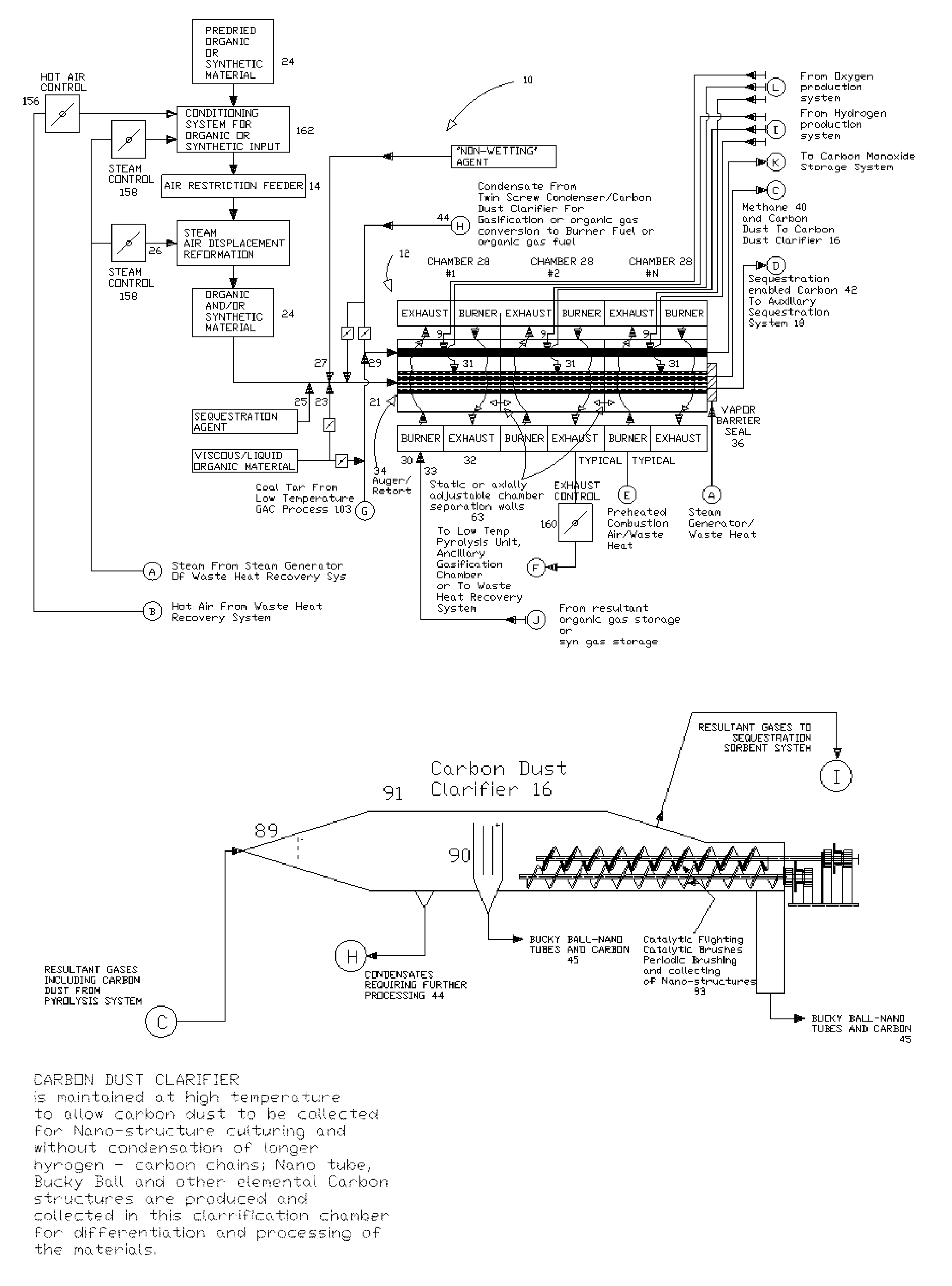
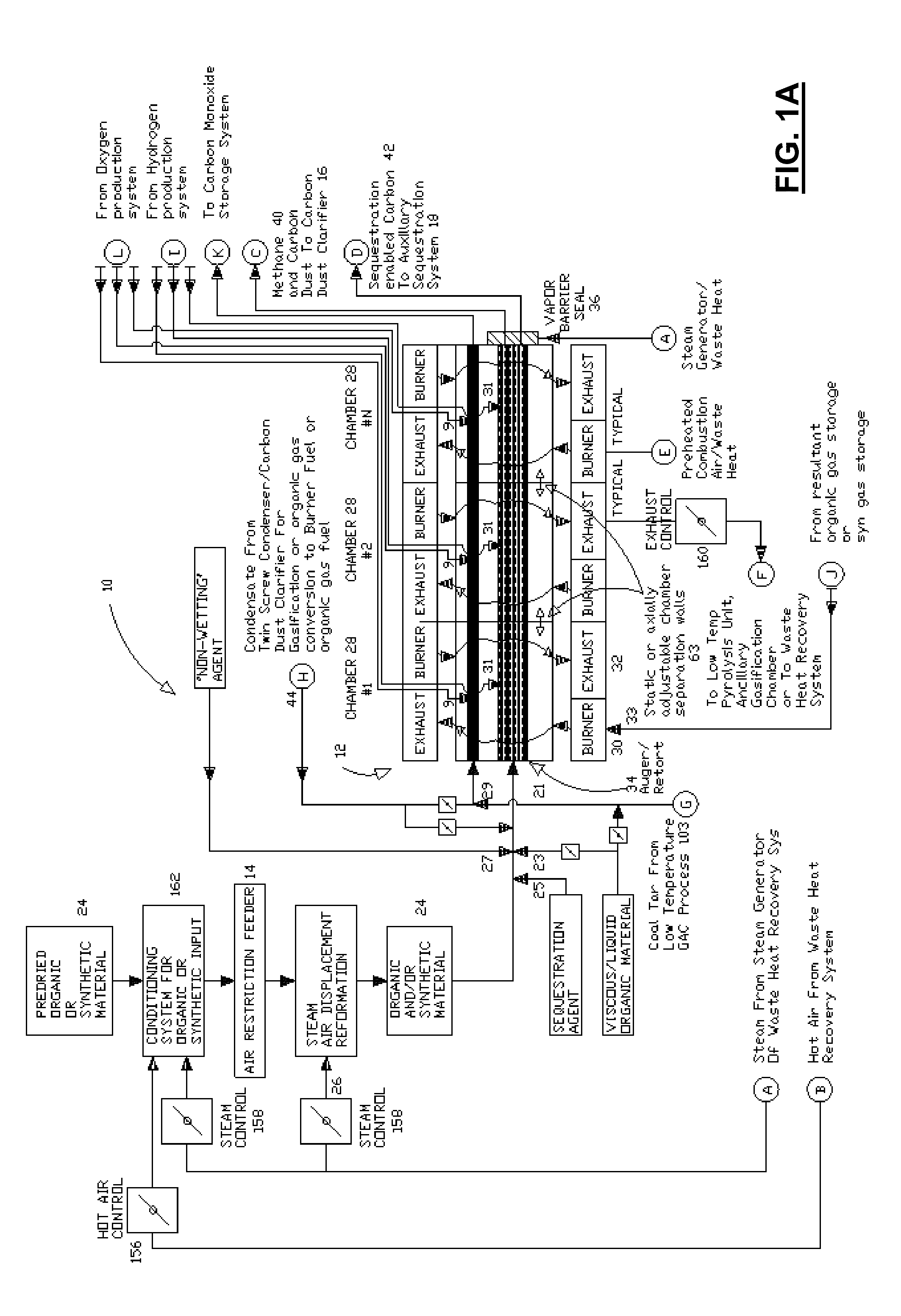
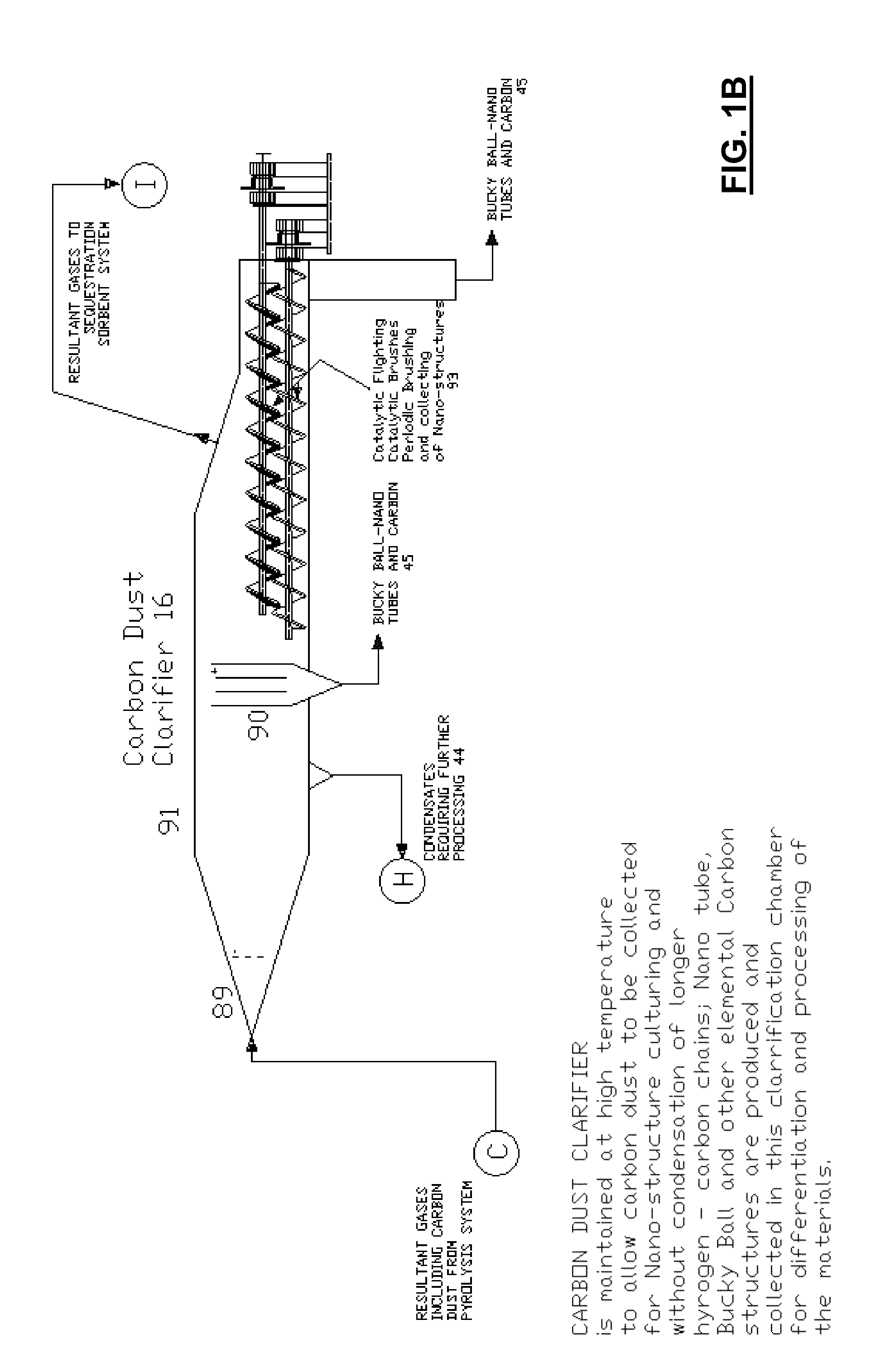
Pyrolysis and gasification systems, methods, and resultants derived therefrom
PatentInactiveUS20140301934A1
Innovation
- The system employs feedback loop-controlled pyrolysis and gasification processes with sequestration-enabled Carbon compounds to produce high-quality methane and Carbon products, using multiple feeding devices, high-temperature chemical sequestration, and catalytic processes to manage heat transfer and impurity removal, while integrating waste heat for efficient operation.

Method and system for adjusting input to pyrolysis reactor to improve performance
PatentActiveJP2024087767A
Innovation
- A method and system that adjusts fuel/oxidizer equivalence ratios to manage coke deposits by using lean and rich burn conditions, combined with controlled oxidant injection to react with carbon deposits, allowing continuous pyrolysis operation.


Environmental Regulations for Pyrolysis Operations
Environmental regulations governing pyrolysis operations have become increasingly stringent as governments worldwide recognize the need to balance waste-to-energy technologies with environmental protection. The regulatory landscape varies significantly across jurisdictions, with the European Union leading through comprehensive frameworks like the Industrial Emissions Directive and Waste Framework Directive, while the United States relies on EPA regulations under the Clean Air Act and Resource Conservation and Recovery Act.
Air quality standards represent the most critical regulatory aspect for pyrolysis facilities. Emission limits for particulate matter, nitrogen oxides, sulfur compounds, and volatile organic compounds are strictly enforced, requiring continuous monitoring systems and advanced pollution control equipment. The challenge intensifies when accommodating variable feedstock compositions, as different waste materials generate distinct emission profiles that must remain within regulatory thresholds regardless of input variations.
Waste classification and pre-treatment requirements significantly impact pyrolysis design flexibility. Regulations typically categorize acceptable feedstock materials, establishing contamination limits and preparation standards. Variable feed streams must comply with these classifications, necessitating robust sorting and cleaning systems. Hazardous waste regulations impose additional constraints, requiring specialized handling procedures and enhanced monitoring protocols when processing mixed waste streams.
Water discharge and soil protection regulations affect pyrolysis facility design, particularly regarding condensate treatment and ash disposal. Variable feedstock moisture content and composition directly influence wastewater characteristics, requiring adaptive treatment systems capable of handling fluctuating pollutant loads while maintaining compliance with discharge standards.
Permitting processes for pyrolysis facilities increasingly emphasize operational flexibility documentation. Regulatory authorities require detailed assessments of how facilities will maintain environmental compliance across the full range of anticipated feedstock variations. This includes demonstrating adequate pollution control system capacity, establishing operational parameter ranges, and implementing real-time monitoring protocols.
Emerging regulations focus on product quality standards for pyrolysis outputs, particularly pyrolysis oil and char products. These standards influence acceptable feedstock variability ranges, as regulatory compliance for end products constrains the degree of input variation that facilities can accommodate while maintaining market-acceptable output specifications.
Air quality standards represent the most critical regulatory aspect for pyrolysis facilities. Emission limits for particulate matter, nitrogen oxides, sulfur compounds, and volatile organic compounds are strictly enforced, requiring continuous monitoring systems and advanced pollution control equipment. The challenge intensifies when accommodating variable feedstock compositions, as different waste materials generate distinct emission profiles that must remain within regulatory thresholds regardless of input variations.
Waste classification and pre-treatment requirements significantly impact pyrolysis design flexibility. Regulations typically categorize acceptable feedstock materials, establishing contamination limits and preparation standards. Variable feed streams must comply with these classifications, necessitating robust sorting and cleaning systems. Hazardous waste regulations impose additional constraints, requiring specialized handling procedures and enhanced monitoring protocols when processing mixed waste streams.
Water discharge and soil protection regulations affect pyrolysis facility design, particularly regarding condensate treatment and ash disposal. Variable feedstock moisture content and composition directly influence wastewater characteristics, requiring adaptive treatment systems capable of handling fluctuating pollutant loads while maintaining compliance with discharge standards.
Permitting processes for pyrolysis facilities increasingly emphasize operational flexibility documentation. Regulatory authorities require detailed assessments of how facilities will maintain environmental compliance across the full range of anticipated feedstock variations. This includes demonstrating adequate pollution control system capacity, establishing operational parameter ranges, and implementing real-time monitoring protocols.
Emerging regulations focus on product quality standards for pyrolysis outputs, particularly pyrolysis oil and char products. These standards influence acceptable feedstock variability ranges, as regulatory compliance for end products constrains the degree of input variation that facilities can accommodate while maintaining market-acceptable output specifications.
Economic Feasibility of Multi-Feedstock Systems
The economic feasibility of multi-feedstock pyrolysis systems presents a compelling business case when properly designed to handle feed variability. Capital expenditure analysis reveals that flexible reactor designs capable of processing diverse feedstocks typically require 15-25% higher initial investment compared to single-feedstock systems. However, this premium is offset by enhanced revenue stability and reduced feedstock procurement risks.
Multi-feedstock systems demonstrate superior economic resilience through diversified supply chains. When one feedstock becomes scarce or expensive, operators can seamlessly transition to alternative materials without significant operational disruptions. This flexibility translates to improved capacity utilization rates, often exceeding 85% compared to 65-75% for single-feedstock facilities that face seasonal availability constraints.
Revenue optimization opportunities emerge from the ability to process high-value waste streams alongside traditional biomass feedstocks. Tipping fees from waste processing can generate additional income streams of $20-80 per ton, significantly improving project economics. Furthermore, multi-feedstock systems can capitalize on regional feedstock price variations by sourcing materials from multiple suppliers and geographic locations.
Operating cost analysis indicates that while multi-feedstock systems require more sophisticated control systems and operator training, the incremental costs are typically 8-12% of total operating expenses. These costs are generally offset by reduced feedstock procurement costs through competitive sourcing and the ability to utilize lower-cost opportunity feedstocks when available.
Financial modeling demonstrates that multi-feedstock pyrolysis projects achieve break-even points 12-18 months earlier than single-feedstock alternatives, primarily due to higher capacity utilization and revenue diversification. Internal rates of return typically improve by 2-4 percentage points, making these systems more attractive to investors and lenders seeking stable, predictable returns in the renewable energy sector.
Multi-feedstock systems demonstrate superior economic resilience through diversified supply chains. When one feedstock becomes scarce or expensive, operators can seamlessly transition to alternative materials without significant operational disruptions. This flexibility translates to improved capacity utilization rates, often exceeding 85% compared to 65-75% for single-feedstock facilities that face seasonal availability constraints.
Revenue optimization opportunities emerge from the ability to process high-value waste streams alongside traditional biomass feedstocks. Tipping fees from waste processing can generate additional income streams of $20-80 per ton, significantly improving project economics. Furthermore, multi-feedstock systems can capitalize on regional feedstock price variations by sourcing materials from multiple suppliers and geographic locations.
Operating cost analysis indicates that while multi-feedstock systems require more sophisticated control systems and operator training, the incremental costs are typically 8-12% of total operating expenses. These costs are generally offset by reduced feedstock procurement costs through competitive sourcing and the ability to utilize lower-cost opportunity feedstocks when available.
Financial modeling demonstrates that multi-feedstock pyrolysis projects achieve break-even points 12-18 months earlier than single-feedstock alternatives, primarily due to higher capacity utilization and revenue diversification. Internal rates of return typically improve by 2-4 percentage points, making these systems more attractive to investors and lenders seeking stable, predictable returns in the renewable energy sector.
Unlock deeper insights with Patsnap Eureka Quick Research — get a full tech report to explore trends and direct your research. Try now!
Generate Your Research Report Instantly with AI Agent
Supercharge your innovation with Patsnap Eureka AI Agent Platform!