

How to Align Ionomer Binder Layers for Maximum Efficiency
MAY 15, 20269 MIN READ
Generate Your Research Report Instantly with AI Agent
PatSnap Eureka helps you evaluate technical feasibility & market potential.
Ionomer Binder Alignment Technology Background and Objectives
Ionomer binder alignment technology has emerged as a critical frontier in electrochemical energy conversion systems, particularly within fuel cells and electrolyzers. The fundamental challenge lies in optimizing the three-dimensional arrangement of ionomer chains within catalyst layers to create efficient pathways for proton conduction while maintaining optimal catalyst utilization. This technology addresses the inherent complexity of ionomer distribution at the nanoscale, where molecular orientation directly impacts device performance.
The historical development of ionomer binder systems began with early perfluorosulfonic acid polymers in the 1960s, initially designed for chlor-alkali applications. The transition to fuel cell applications revealed significant performance limitations attributed to random ionomer distribution and poor interfacial contact between catalyst particles and proton-conducting phases. Early research focused primarily on ionomer loading optimization rather than structural alignment, resulting in suboptimal performance despite high catalyst loadings.
Current technological evolution has shifted toward understanding and controlling ionomer morphology at the molecular level. Advanced characterization techniques including atomic force microscopy, neutron scattering, and molecular dynamics simulations have revealed that ionomer alignment significantly influences water management, proton transport resistance, and catalyst accessibility. The recognition that ionomer chains can form ordered structures under specific processing conditions has opened new avenues for performance enhancement.
The primary objective of ionomer binder alignment technology centers on achieving maximum electrochemical efficiency through controlled polymer chain orientation. This involves developing processing methodologies that promote preferential alignment of ionomer backbone structures parallel to electrode surfaces, thereby creating continuous proton conduction pathways with minimal tortuosity. The target is to reduce proton transport resistance by 30-50% compared to conventional random distribution approaches.
Secondary objectives include enhancing catalyst utilization efficiency by ensuring uniform ionomer coverage across catalyst surfaces while maintaining optimal pore structure for reactant gas transport. The technology aims to establish predictable relationships between processing parameters and resulting ionomer morphology, enabling systematic optimization of electrode architectures. Long-term goals encompass developing scalable manufacturing processes that can consistently produce aligned ionomer structures in commercial electrode production environments.
The strategic importance of this technology extends beyond immediate performance gains, as it represents a pathway toward next-generation electrochemical devices with significantly improved power density and durability characteristics.
The historical development of ionomer binder systems began with early perfluorosulfonic acid polymers in the 1960s, initially designed for chlor-alkali applications. The transition to fuel cell applications revealed significant performance limitations attributed to random ionomer distribution and poor interfacial contact between catalyst particles and proton-conducting phases. Early research focused primarily on ionomer loading optimization rather than structural alignment, resulting in suboptimal performance despite high catalyst loadings.
Current technological evolution has shifted toward understanding and controlling ionomer morphology at the molecular level. Advanced characterization techniques including atomic force microscopy, neutron scattering, and molecular dynamics simulations have revealed that ionomer alignment significantly influences water management, proton transport resistance, and catalyst accessibility. The recognition that ionomer chains can form ordered structures under specific processing conditions has opened new avenues for performance enhancement.
The primary objective of ionomer binder alignment technology centers on achieving maximum electrochemical efficiency through controlled polymer chain orientation. This involves developing processing methodologies that promote preferential alignment of ionomer backbone structures parallel to electrode surfaces, thereby creating continuous proton conduction pathways with minimal tortuosity. The target is to reduce proton transport resistance by 30-50% compared to conventional random distribution approaches.
Secondary objectives include enhancing catalyst utilization efficiency by ensuring uniform ionomer coverage across catalyst surfaces while maintaining optimal pore structure for reactant gas transport. The technology aims to establish predictable relationships between processing parameters and resulting ionomer morphology, enabling systematic optimization of electrode architectures. Long-term goals encompass developing scalable manufacturing processes that can consistently produce aligned ionomer structures in commercial electrode production environments.
The strategic importance of this technology extends beyond immediate performance gains, as it represents a pathway toward next-generation electrochemical devices with significantly improved power density and durability characteristics.
Market Demand for High-Efficiency Ionomer Applications
The global fuel cell market has experienced substantial growth driven by increasing demand for clean energy solutions and stringent environmental regulations. Proton exchange membrane fuel cells (PEMFCs) represent a critical segment within this market, with ionomer binder layers serving as essential components that directly impact overall system efficiency. The automotive sector leads market demand, particularly with the expansion of hydrogen fuel cell vehicles by major manufacturers including Toyota, Hyundai, and emerging Chinese automakers.
Stationary power generation applications constitute another significant demand driver, especially in regions prioritizing energy security and carbon neutrality goals. Data centers, backup power systems, and distributed energy networks increasingly adopt fuel cell technologies where ionomer efficiency directly correlates with operational costs and system reliability. The alignment quality of ionomer binder layers becomes crucial in these applications where continuous operation and maximum energy conversion efficiency are paramount.
Industrial applications in materials handling, particularly fuel cell forklifts and warehouse equipment, demonstrate growing adoption rates due to superior performance characteristics compared to battery alternatives. These applications demand consistent power output and rapid refueling capabilities, making ionomer layer optimization essential for maintaining competitive advantages in operational efficiency.
The aerospace and marine sectors represent emerging high-value markets where weight reduction and energy density optimization drive premium pricing for advanced ionomer technologies. These applications tolerate higher costs in exchange for superior performance, creating opportunities for innovative alignment techniques and advanced manufacturing processes.
Regional demand patterns show concentrated growth in Asia-Pacific markets, particularly Japan, South Korea, and China, where government policies actively support hydrogen economy development. European markets focus on industrial and transportation applications, while North American demand centers on backup power and material handling applications.
Market drivers include increasingly stringent emission regulations, declining hydrogen production costs, and growing infrastructure development. The demand for high-efficiency ionomer applications correlates directly with system-level performance requirements, where even marginal improvements in layer alignment can translate to significant operational advantages and cost savings over equipment lifecycles.
Stationary power generation applications constitute another significant demand driver, especially in regions prioritizing energy security and carbon neutrality goals. Data centers, backup power systems, and distributed energy networks increasingly adopt fuel cell technologies where ionomer efficiency directly correlates with operational costs and system reliability. The alignment quality of ionomer binder layers becomes crucial in these applications where continuous operation and maximum energy conversion efficiency are paramount.
Industrial applications in materials handling, particularly fuel cell forklifts and warehouse equipment, demonstrate growing adoption rates due to superior performance characteristics compared to battery alternatives. These applications demand consistent power output and rapid refueling capabilities, making ionomer layer optimization essential for maintaining competitive advantages in operational efficiency.
The aerospace and marine sectors represent emerging high-value markets where weight reduction and energy density optimization drive premium pricing for advanced ionomer technologies. These applications tolerate higher costs in exchange for superior performance, creating opportunities for innovative alignment techniques and advanced manufacturing processes.
Regional demand patterns show concentrated growth in Asia-Pacific markets, particularly Japan, South Korea, and China, where government policies actively support hydrogen economy development. European markets focus on industrial and transportation applications, while North American demand centers on backup power and material handling applications.
Market drivers include increasingly stringent emission regulations, declining hydrogen production costs, and growing infrastructure development. The demand for high-efficiency ionomer applications correlates directly with system-level performance requirements, where even marginal improvements in layer alignment can translate to significant operational advantages and cost savings over equipment lifecycles.
Current Ionomer Alignment Challenges and Technical Barriers
Ionomer binder layer alignment in fuel cells and electrochemical devices faces significant technical barriers that limit overall system efficiency. The primary challenge stems from the inherent molecular structure of ionomers, which exhibit complex phase separation behavior between hydrophobic polymer backbones and hydrophilic ionic side chains. This dual-phase nature creates difficulties in achieving uniform distribution and optimal orientation during manufacturing processes.
Manufacturing-induced alignment issues represent a critical bottleneck in current production methods. Conventional coating techniques, including doctor blade coating and slot-die coating, often result in random ionomer chain orientation due to inadequate control over drying kinetics and substrate interactions. The rapid solvent evaporation typically employed in industrial settings prevents sufficient time for ionomer chains to self-organize into optimal configurations, leading to suboptimal proton conductivity pathways.
Interfacial compatibility between ionomer layers and adjacent components poses another substantial challenge. Poor adhesion between catalyst layers and ionomer binders creates microscopic gaps and discontinuities that impede efficient ion transport. The mismatch in thermal expansion coefficients between different materials further exacerbates delamination issues during temperature cycling operations, compromising long-term performance stability.
Scale-up difficulties from laboratory to industrial production represent a persistent technical barrier. While research-scale samples can achieve improved alignment through specialized techniques such as magnetic field orientation or controlled thermal annealing, these methods prove economically unfeasible for large-scale manufacturing. The transition from small-area prototypes to commercial-sized membrane electrode assemblies introduces additional complexity in maintaining uniform alignment across extended surfaces.
Environmental sensitivity of ionomer materials creates operational constraints that limit alignment optimization strategies. Humidity fluctuations cause dimensional changes in ionomer structures, disrupting carefully established molecular orientations. Temperature variations similarly affect chain mobility and can lead to reorganization of previously aligned structures, particularly during device startup and shutdown cycles.
Current characterization limitations hinder comprehensive understanding of alignment-performance relationships. Existing analytical techniques provide insufficient spatial resolution to accurately map ionomer orientation at the nanoscale level where critical transport phenomena occur. This measurement gap impedes the development of targeted solutions and makes it difficult to establish clear correlations between processing parameters and final alignment quality.
Manufacturing-induced alignment issues represent a critical bottleneck in current production methods. Conventional coating techniques, including doctor blade coating and slot-die coating, often result in random ionomer chain orientation due to inadequate control over drying kinetics and substrate interactions. The rapid solvent evaporation typically employed in industrial settings prevents sufficient time for ionomer chains to self-organize into optimal configurations, leading to suboptimal proton conductivity pathways.
Interfacial compatibility between ionomer layers and adjacent components poses another substantial challenge. Poor adhesion between catalyst layers and ionomer binders creates microscopic gaps and discontinuities that impede efficient ion transport. The mismatch in thermal expansion coefficients between different materials further exacerbates delamination issues during temperature cycling operations, compromising long-term performance stability.
Scale-up difficulties from laboratory to industrial production represent a persistent technical barrier. While research-scale samples can achieve improved alignment through specialized techniques such as magnetic field orientation or controlled thermal annealing, these methods prove economically unfeasible for large-scale manufacturing. The transition from small-area prototypes to commercial-sized membrane electrode assemblies introduces additional complexity in maintaining uniform alignment across extended surfaces.
Environmental sensitivity of ionomer materials creates operational constraints that limit alignment optimization strategies. Humidity fluctuations cause dimensional changes in ionomer structures, disrupting carefully established molecular orientations. Temperature variations similarly affect chain mobility and can lead to reorganization of previously aligned structures, particularly during device startup and shutdown cycles.
Current characterization limitations hinder comprehensive understanding of alignment-performance relationships. Existing analytical techniques provide insufficient spatial resolution to accurately map ionomer orientation at the nanoscale level where critical transport phenomena occur. This measurement gap impedes the development of targeted solutions and makes it difficult to establish clear correlations between processing parameters and final alignment quality.
Existing Ionomer Layer Alignment Solutions
01 Ionomer composition and structure optimization
Optimization of ionomer binder composition involves modifying the polymer backbone structure, ionic content, and crosslinking density to enhance binding efficiency. The molecular weight distribution and acid content of the ionomer significantly affect the mechanical properties and adhesion characteristics of the binder layer. Structural modifications can improve the balance between flexibility and strength in the final composite material.- Ionomer composition and structure optimization: Optimization of ionomer chemical composition and molecular structure to enhance binding efficiency in layer applications. This involves modifying the ionic content, polymer backbone, and crosslinking density to achieve improved mechanical properties and adhesion characteristics. The structural modifications can significantly impact the performance of the binder layer in various applications.
- Processing methods for ionomer binder layers: Advanced processing techniques and manufacturing methods for producing high-efficiency ionomer binder layers. These methods include specific coating processes, curing conditions, and layer formation techniques that optimize the distribution and orientation of ionomer chains. The processing parameters directly influence the final performance characteristics of the binder system.
- Multi-layer ionomer systems and interfaces: Development of multi-layered structures incorporating ionomer binders with enhanced interfacial properties. These systems focus on improving adhesion between different layers and optimizing the interface characteristics to achieve superior overall performance. The design considers layer thickness, composition gradients, and interfacial bonding mechanisms.
- Additive incorporation for enhanced performance: Integration of various additives and reinforcing agents into ionomer binder systems to improve efficiency and functionality. These additives can include nanoparticles, plasticizers, crosslinking agents, and other performance-enhancing compounds that modify the mechanical, thermal, or electrical properties of the binder layer.
- Application-specific ionomer binder optimization: Tailoring ionomer binder layer properties for specific end-use applications such as fuel cells, batteries, or membrane systems. This involves optimizing parameters like ionic conductivity, chemical resistance, and mechanical durability based on the operational requirements of the target application. The optimization process considers environmental conditions and performance criteria.
02 Processing conditions and manufacturing parameters
The efficiency of ionomer binder layers is significantly influenced by processing temperature, pressure, and curing time during manufacturing. Optimal processing conditions ensure proper flow characteristics and uniform distribution of the ionomer throughout the substrate. Temperature control during processing affects the viscosity and wetting properties, which directly impact the final bond strength and layer uniformity.Expand Specific Solutions03 Interface adhesion and bonding mechanisms
The bonding efficiency between ionomer layers and substrates depends on surface preparation, chemical compatibility, and interfacial interactions. Surface treatment methods can enhance wetting and promote chemical bonding at the interface. The ionic nature of the binder creates specific interactions with various substrate materials, leading to improved adhesion strength and durability of the bonded assembly.Expand Specific Solutions04 Thermal and environmental stability
Ionomer binder layers must maintain their efficiency under various environmental conditions including temperature fluctuations, humidity, and chemical exposure. The thermal stability of the ionomer affects its long-term performance and determines the operating temperature range of the final product. Environmental resistance properties ensure consistent binding performance throughout the service life of the application.Expand Specific Solutions05 Mechanical properties and performance enhancement
The mechanical efficiency of ionomer binder layers encompasses tensile strength, elongation, impact resistance, and fatigue performance. Reinforcement strategies using fillers or additives can improve the mechanical properties while maintaining the binding characteristics. The balance between stiffness and flexibility is crucial for applications requiring both structural integrity and conformability to substrate deformation.Expand Specific Solutions
Key Players in Ionomer and Membrane Technology Industry
The ionomer binder layer alignment technology represents a rapidly evolving sector within the advanced materials and energy storage industry, currently in its growth phase with significant market expansion driven by increasing demand for high-performance fuel cells and battery systems. The market demonstrates substantial potential, particularly in automotive and stationary energy applications, with projected growth rates exceeding traditional materials sectors. Technology maturity varies significantly across key players, with established semiconductor equipment manufacturers like Applied Materials, Tokyo Electron, and Lam Research leveraging their precision coating and deposition expertise to develop advanced alignment solutions. Chemical giants including DuPont de Nemours and Evonik Operations bring deep materials science capabilities, while specialized companies such as ULVAC and Axcelis Technologies contribute vacuum processing and ion implantation technologies essential for precise layer control. The competitive landscape shows a convergence of semiconductor processing expertise with advanced materials chemistry, creating opportunities for breakthrough innovations in ionomer alignment methodologies.
DuPont de Nemours, Inc.
Technical Solution: DuPont has developed advanced ionomer binder technologies specifically for fuel cell applications, focusing on perfluorosulfonic acid (PFSA) ionomers that provide optimal proton conductivity and mechanical stability. Their Nafion-based ionomer solutions utilize controlled molecular weight distribution and side-chain architecture to enhance membrane-electrode assembly performance. The company employs sophisticated coating techniques including slot-die coating and spray deposition methods to achieve uniform ionomer distribution across catalyst layers. Their alignment strategy involves optimizing the ionomer-to-carbon ratio and controlling solvent evaporation rates during the coating process to minimize phase separation and maximize three-phase boundary formation between catalyst, ionomer, and gas phases.
Strengths: Market-leading ionomer chemistry expertise, proven Nafion technology platform, extensive fuel cell application experience. Weaknesses: High material costs, limited flexibility in customizing ionomer properties for specific applications.
Dow Global Technologies LLC
Technical Solution: Dow has developed innovative ionomer binder alignment technologies through their advanced materials division, focusing on hydrocarbon-based ionomer alternatives that offer cost advantages over traditional PFSA materials. Their approach utilizes sulfonated poly(arylene ether) ionomers with tailored molecular architecture to achieve optimal proton conductivity while maintaining chemical stability. The company employs advanced processing techniques including electrospray deposition and layer-by-layer assembly methods to control ionomer distribution and orientation within electrode structures. Their alignment methodology incorporates real-time monitoring of film formation using in-situ characterization tools to optimize processing parameters and ensure consistent performance across large-area applications.
Strengths: Cost-effective hydrocarbon ionomer alternatives, scalable manufacturing processes, strong materials science capabilities. Weaknesses: Lower proton conductivity compared to PFSA materials, potential durability concerns in harsh operating conditions.
Core Patents in Ionomer Binder Alignment Methods
Method for manufacturing catalyst layer of membrane electrode assembly
PatentInactiveUS20090280976A1
Innovation
- A method involving the formation of a catalyst slurry with different densities of ionomer binder and catalyst, achieved by applying centrifugal force during separation and subsequent evaporation and drying, to create a biased distribution of ionomer binder, enhancing porosity and adhesive force at the catalyst and ion exchange layer interfaces.


Ionomer laminates and articles formed from ionomer laminates
PatentInactiveUS20050227022A1
Innovation
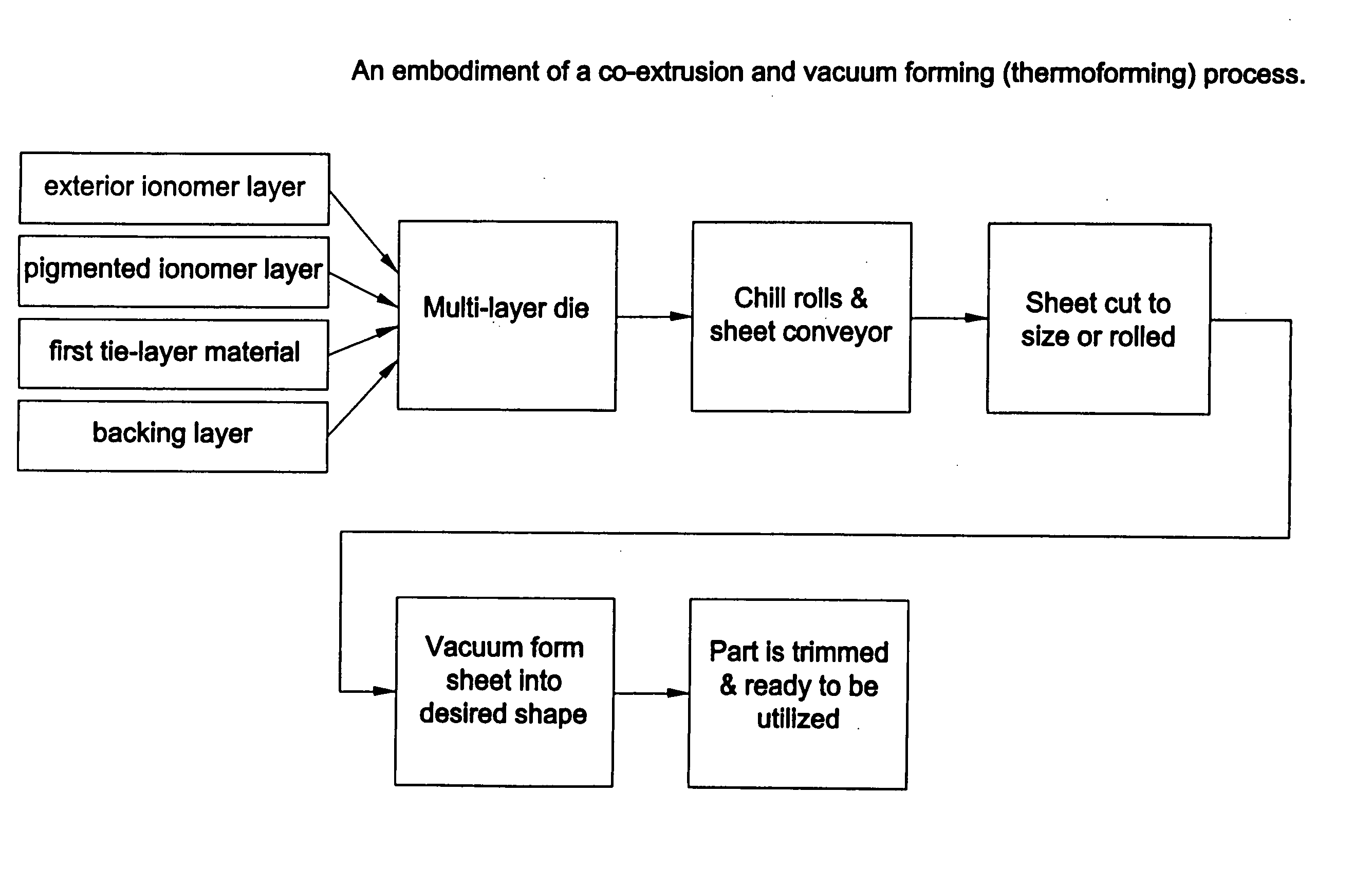
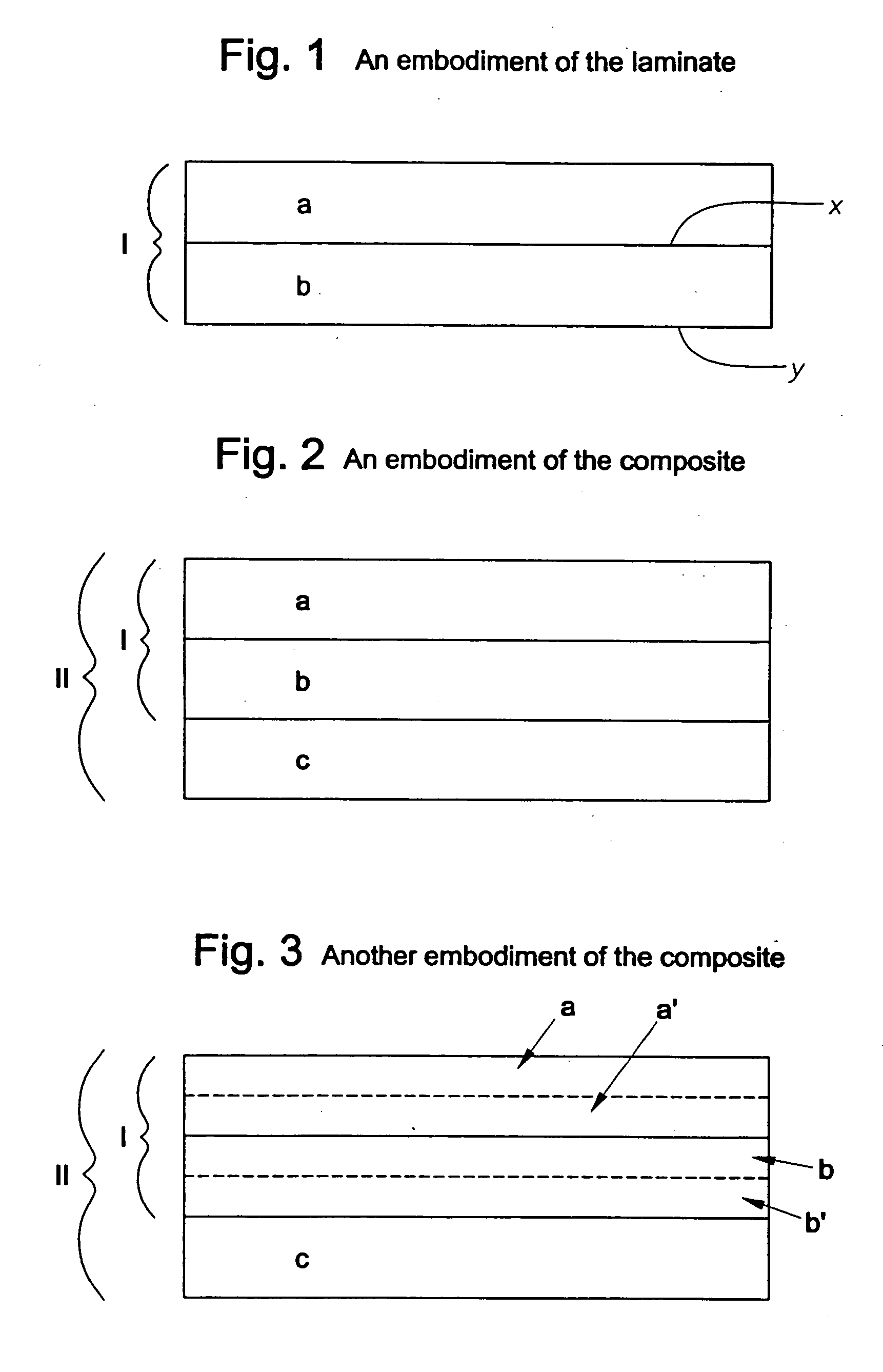
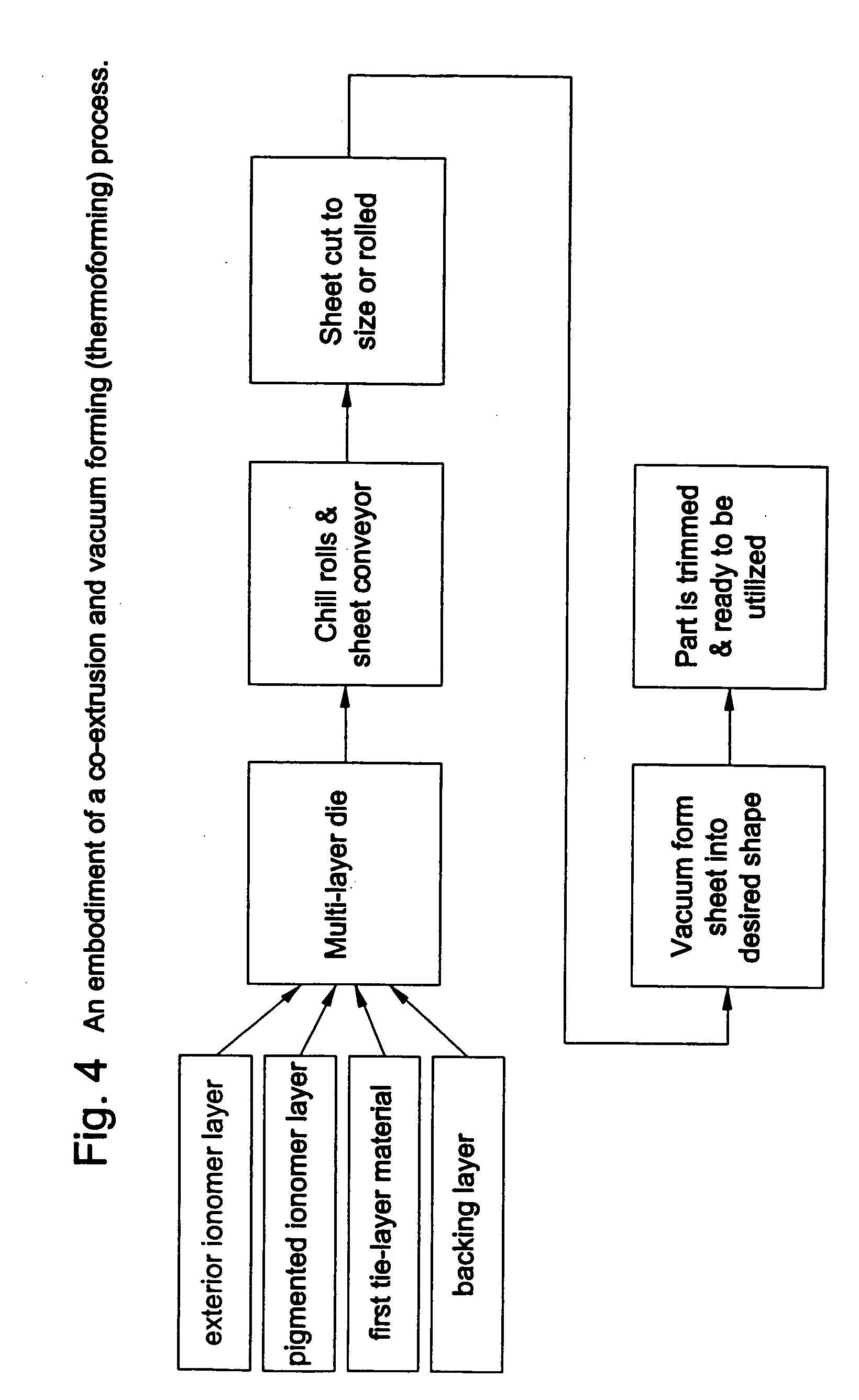
- A composite article formed by a laminate comprising at least one ionomer layer and a tie-layer, where the ionomer and tie-layer are co-extruded and shaped to conform to a desired article, then secured to a substrate using injection molding, eliminating the need for painting and enhancing aesthetic appeal and durability.

Environmental Impact of Ionomer Manufacturing Processes
The manufacturing of ionomer materials presents significant environmental challenges that require careful consideration throughout the production lifecycle. Traditional ionomer synthesis processes typically involve fluorinated compounds and organic solvents that pose substantial environmental risks. The production of perfluorinated ionomers, commonly used in fuel cell applications, generates persistent organic pollutants that can accumulate in ecosystems and resist natural degradation processes.
Solvent-based manufacturing processes constitute a primary environmental concern, as they release volatile organic compounds into the atmosphere during production and processing stages. These emissions contribute to air quality degradation and require sophisticated capture and treatment systems to minimize environmental impact. The energy-intensive nature of ionomer polymerization reactions further amplifies the carbon footprint, particularly when powered by fossil fuel-based energy sources.
Water consumption and wastewater generation represent additional environmental burdens in ionomer manufacturing. The purification and washing processes required to achieve high-purity ionomer products generate contaminated water streams containing fluorinated compounds and organic residues. These effluents require specialized treatment technologies to prevent groundwater contamination and aquatic ecosystem damage.
The disposal of manufacturing waste and end-of-life ionomer products poses long-term environmental challenges due to the chemical stability that makes these materials valuable in applications. Fluorinated ionomers exhibit exceptional resistance to degradation, leading to persistent environmental accumulation when not properly managed through recycling or controlled incineration processes.
Recent developments in green chemistry approaches aim to reduce environmental impact through alternative synthesis routes and bio-based precursors. Supercritical carbon dioxide processing and aqueous-based manufacturing methods show promise for eliminating harmful organic solvents. Additionally, the development of recyclable ionomer formulations and closed-loop manufacturing systems represents emerging strategies to minimize waste generation and resource consumption throughout the production cycle.
Solvent-based manufacturing processes constitute a primary environmental concern, as they release volatile organic compounds into the atmosphere during production and processing stages. These emissions contribute to air quality degradation and require sophisticated capture and treatment systems to minimize environmental impact. The energy-intensive nature of ionomer polymerization reactions further amplifies the carbon footprint, particularly when powered by fossil fuel-based energy sources.
Water consumption and wastewater generation represent additional environmental burdens in ionomer manufacturing. The purification and washing processes required to achieve high-purity ionomer products generate contaminated water streams containing fluorinated compounds and organic residues. These effluents require specialized treatment technologies to prevent groundwater contamination and aquatic ecosystem damage.
The disposal of manufacturing waste and end-of-life ionomer products poses long-term environmental challenges due to the chemical stability that makes these materials valuable in applications. Fluorinated ionomers exhibit exceptional resistance to degradation, leading to persistent environmental accumulation when not properly managed through recycling or controlled incineration processes.
Recent developments in green chemistry approaches aim to reduce environmental impact through alternative synthesis routes and bio-based precursors. Supercritical carbon dioxide processing and aqueous-based manufacturing methods show promise for eliminating harmful organic solvents. Additionally, the development of recyclable ionomer formulations and closed-loop manufacturing systems represents emerging strategies to minimize waste generation and resource consumption throughout the production cycle.
Quality Control Standards for Ionomer Layer Alignment
Establishing comprehensive quality control standards for ionomer layer alignment requires a multi-faceted approach that encompasses both measurement precision and process validation. The foundation of effective quality control lies in defining quantitative metrics that can accurately assess alignment quality across different scales, from microscopic molecular orientation to macroscopic layer uniformity.
Dimensional accuracy standards form the cornerstone of alignment quality control, with tolerances typically specified within nanometer ranges for critical applications. Layer thickness uniformity must be maintained within ±2% deviation across the entire surface area, while angular alignment precision should not exceed 0.5 degrees from the target orientation. These specifications ensure consistent performance characteristics and prevent localized efficiency losses that could compromise overall system functionality.
Surface characterization protocols constitute another critical component of quality standards. Atomic force microscopy and scanning electron microscopy techniques provide essential data on surface roughness, with acceptable Ra values typically ranging from 1-5 nanometers depending on application requirements. Contact angle measurements serve as indicators of surface energy uniformity, with variations not exceeding ±3 degrees across measurement points to ensure consistent interfacial properties.
Electrical performance validation standards encompass conductivity mapping and impedance spectroscopy measurements. Ionic conductivity variations should remain within 5% of target values across the aligned layer, while interfacial resistance measurements must demonstrate consistent values below specified thresholds. These electrical characterization standards directly correlate with efficiency performance and provide quantitative benchmarks for alignment quality assessment.
Process control parameters require continuous monitoring throughout the alignment procedure. Temperature stability within ±1°C, humidity control at specified levels, and mechanical stress monitoring ensure reproducible alignment conditions. Real-time feedback systems enable immediate corrective actions when parameters deviate from established ranges, preventing the production of non-conforming layers.
Statistical process control methodologies provide the framework for ongoing quality assurance. Control charts tracking key alignment parameters enable trend identification and process optimization opportunities. Capability studies demonstrate process stability and help establish realistic specification limits based on actual process performance rather than theoretical requirements.
Documentation and traceability standards ensure comprehensive quality records for each aligned ionomer layer. Batch tracking systems maintain complete process histories, enabling rapid identification of root causes when quality issues arise and facilitating continuous improvement initiatives through systematic data analysis.
Dimensional accuracy standards form the cornerstone of alignment quality control, with tolerances typically specified within nanometer ranges for critical applications. Layer thickness uniformity must be maintained within ±2% deviation across the entire surface area, while angular alignment precision should not exceed 0.5 degrees from the target orientation. These specifications ensure consistent performance characteristics and prevent localized efficiency losses that could compromise overall system functionality.
Surface characterization protocols constitute another critical component of quality standards. Atomic force microscopy and scanning electron microscopy techniques provide essential data on surface roughness, with acceptable Ra values typically ranging from 1-5 nanometers depending on application requirements. Contact angle measurements serve as indicators of surface energy uniformity, with variations not exceeding ±3 degrees across measurement points to ensure consistent interfacial properties.
Electrical performance validation standards encompass conductivity mapping and impedance spectroscopy measurements. Ionic conductivity variations should remain within 5% of target values across the aligned layer, while interfacial resistance measurements must demonstrate consistent values below specified thresholds. These electrical characterization standards directly correlate with efficiency performance and provide quantitative benchmarks for alignment quality assessment.
Process control parameters require continuous monitoring throughout the alignment procedure. Temperature stability within ±1°C, humidity control at specified levels, and mechanical stress monitoring ensure reproducible alignment conditions. Real-time feedback systems enable immediate corrective actions when parameters deviate from established ranges, preventing the production of non-conforming layers.
Statistical process control methodologies provide the framework for ongoing quality assurance. Control charts tracking key alignment parameters enable trend identification and process optimization opportunities. Capability studies demonstrate process stability and help establish realistic specification limits based on actual process performance rather than theoretical requirements.
Documentation and traceability standards ensure comprehensive quality records for each aligned ionomer layer. Batch tracking systems maintain complete process histories, enabling rapid identification of root causes when quality issues arise and facilitating continuous improvement initiatives through systematic data analysis.
Unlock deeper insights with PatSnap Eureka Quick Research — get a full tech report to explore trends and direct your research. Try now!
Generate Your Research Report Instantly with AI Agent
Supercharge your innovation with PatSnap Eureka AI Agent Platform!