

How to Boost Wideband Functionality for Hyperbolic Metamaterial Films
MAY 14, 20269 MIN READ
Generate Your Research Report Instantly with AI Agent
PatSnap Eureka helps you evaluate technical feasibility & market potential.
Hyperbolic Metamaterial Wideband Enhancement Background and Goals
Hyperbolic metamaterials represent a revolutionary class of artificially engineered materials that exhibit extraordinary electromagnetic properties not found in natural materials. These structures are characterized by their hyperbolic dispersion relation, where the permittivity tensor components have opposite signs along different spatial directions. This unique property enables unprecedented control over electromagnetic wave propagation, making them highly attractive for advanced photonic applications.
The development of hyperbolic metamaterials has evolved significantly since their theoretical foundation in the early 2000s. Initial research focused on understanding the fundamental physics of negative index materials and their potential applications. The field gained momentum with the demonstration of practical implementations using metal-dielectric multilayer structures and wire array configurations. Recent advances have shifted toward thin-film architectures that offer enhanced manufacturability and integration capabilities.
Current technological trends indicate a strong demand for broadband electromagnetic devices across multiple sectors, including telecommunications, sensing, imaging, and energy harvesting. The exponential growth in data transmission requirements and the emergence of 6G wireless technologies necessitate materials with enhanced bandwidth capabilities. Traditional metamaterial designs often suffer from narrow operational bandwidths, limiting their practical deployment in real-world applications.
The primary objective of enhancing wideband functionality in hyperbolic metamaterial films is to overcome the inherent bandwidth limitations that restrict their commercial viability. Conventional hyperbolic metamaterials typically operate effectively within narrow frequency ranges due to material dispersion and structural resonances. Expanding the operational bandwidth would enable these materials to support multiple frequency channels simultaneously, dramatically increasing their utility in modern communication systems.
Key technical goals include developing novel design methodologies that can maintain hyperbolic dispersion characteristics across extended frequency ranges while preserving the desired electromagnetic properties. This involves optimizing material compositions, geometric parameters, and structural configurations to minimize frequency-dependent losses and maintain consistent performance metrics. Additionally, achieving scalable manufacturing processes for wideband hyperbolic metamaterial films represents a critical milestone for transitioning from laboratory demonstrations to industrial applications.
The successful realization of wideband hyperbolic metamaterial films would enable transformative applications in super-resolution imaging, enhanced antenna systems, and next-generation optical devices, positioning these materials as cornerstone technologies for future electromagnetic systems.
The development of hyperbolic metamaterials has evolved significantly since their theoretical foundation in the early 2000s. Initial research focused on understanding the fundamental physics of negative index materials and their potential applications. The field gained momentum with the demonstration of practical implementations using metal-dielectric multilayer structures and wire array configurations. Recent advances have shifted toward thin-film architectures that offer enhanced manufacturability and integration capabilities.
Current technological trends indicate a strong demand for broadband electromagnetic devices across multiple sectors, including telecommunications, sensing, imaging, and energy harvesting. The exponential growth in data transmission requirements and the emergence of 6G wireless technologies necessitate materials with enhanced bandwidth capabilities. Traditional metamaterial designs often suffer from narrow operational bandwidths, limiting their practical deployment in real-world applications.
The primary objective of enhancing wideband functionality in hyperbolic metamaterial films is to overcome the inherent bandwidth limitations that restrict their commercial viability. Conventional hyperbolic metamaterials typically operate effectively within narrow frequency ranges due to material dispersion and structural resonances. Expanding the operational bandwidth would enable these materials to support multiple frequency channels simultaneously, dramatically increasing their utility in modern communication systems.
Key technical goals include developing novel design methodologies that can maintain hyperbolic dispersion characteristics across extended frequency ranges while preserving the desired electromagnetic properties. This involves optimizing material compositions, geometric parameters, and structural configurations to minimize frequency-dependent losses and maintain consistent performance metrics. Additionally, achieving scalable manufacturing processes for wideband hyperbolic metamaterial films represents a critical milestone for transitioning from laboratory demonstrations to industrial applications.
The successful realization of wideband hyperbolic metamaterial films would enable transformative applications in super-resolution imaging, enhanced antenna systems, and next-generation optical devices, positioning these materials as cornerstone technologies for future electromagnetic systems.
Market Demand for Wideband Hyperbolic Metamaterial Applications
The telecommunications industry represents the largest market segment driving demand for wideband hyperbolic metamaterial applications. Next-generation wireless communication systems, including 5G and emerging 6G networks, require advanced antenna technologies capable of operating across multiple frequency bands simultaneously. Hyperbolic metamaterials offer unique dispersion properties that enable the development of compact, multi-band antennas with enhanced bandwidth characteristics. The growing deployment of small cell networks and massive MIMO systems creates substantial opportunities for metamaterial-based solutions that can achieve superior performance in confined spaces.
Optical sensing and imaging applications constitute another rapidly expanding market for wideband hyperbolic metamaterials. The healthcare sector increasingly demands advanced diagnostic equipment with enhanced spectral resolution and sensitivity. Hyperbolic metamaterials enable the development of hyperlenses and super-resolution imaging systems that surpass conventional diffraction limits. Medical imaging modalities, including optical coherence tomography and fluorescence microscopy, benefit significantly from the broadband enhancement capabilities of these materials.
The defense and aerospace industries present significant market potential for wideband metamaterial technologies. Military radar systems require materials that can provide stealth capabilities across multiple frequency ranges while maintaining operational effectiveness. Hyperbolic metamaterials offer promising solutions for developing adaptive camouflage systems and advanced electronic warfare applications. Satellite communication systems also drive demand for lightweight, broadband metamaterial components that can operate reliably in harsh space environments.
Consumer electronics markets increasingly seek miniaturized devices with enhanced functionality. Wideband hyperbolic metamaterials enable the integration of multiple communication protocols within single devices, supporting the Internet of Things ecosystem expansion. Smart devices require antennas that can simultaneously handle WiFi, Bluetooth, cellular, and emerging communication standards without compromising performance or increasing device size.
The renewable energy sector presents emerging opportunities for metamaterial applications in solar energy harvesting and thermal management systems. Wideband metamaterials can enhance light absorption efficiency across broader spectral ranges, potentially improving photovoltaic cell performance. Additionally, the growing emphasis on energy-efficient technologies drives demand for metamaterial-based thermal regulation solutions in various industrial applications.
Market growth is further accelerated by increasing research investments from both government agencies and private corporations. The convergence of artificial intelligence, machine learning, and metamaterial design is opening new application possibilities that were previously considered impractical or impossible to achieve with conventional materials.
Optical sensing and imaging applications constitute another rapidly expanding market for wideband hyperbolic metamaterials. The healthcare sector increasingly demands advanced diagnostic equipment with enhanced spectral resolution and sensitivity. Hyperbolic metamaterials enable the development of hyperlenses and super-resolution imaging systems that surpass conventional diffraction limits. Medical imaging modalities, including optical coherence tomography and fluorescence microscopy, benefit significantly from the broadband enhancement capabilities of these materials.
The defense and aerospace industries present significant market potential for wideband metamaterial technologies. Military radar systems require materials that can provide stealth capabilities across multiple frequency ranges while maintaining operational effectiveness. Hyperbolic metamaterials offer promising solutions for developing adaptive camouflage systems and advanced electronic warfare applications. Satellite communication systems also drive demand for lightweight, broadband metamaterial components that can operate reliably in harsh space environments.
Consumer electronics markets increasingly seek miniaturized devices with enhanced functionality. Wideband hyperbolic metamaterials enable the integration of multiple communication protocols within single devices, supporting the Internet of Things ecosystem expansion. Smart devices require antennas that can simultaneously handle WiFi, Bluetooth, cellular, and emerging communication standards without compromising performance or increasing device size.
The renewable energy sector presents emerging opportunities for metamaterial applications in solar energy harvesting and thermal management systems. Wideband metamaterials can enhance light absorption efficiency across broader spectral ranges, potentially improving photovoltaic cell performance. Additionally, the growing emphasis on energy-efficient technologies drives demand for metamaterial-based thermal regulation solutions in various industrial applications.
Market growth is further accelerated by increasing research investments from both government agencies and private corporations. The convergence of artificial intelligence, machine learning, and metamaterial design is opening new application possibilities that were previously considered impractical or impossible to achieve with conventional materials.
Current State and Bandwidth Limitations of Hyperbolic Films
Hyperbolic metamaterial films represent a revolutionary class of engineered materials that exhibit extraordinary optical properties through their unique anisotropic permittivity tensor. These artificially structured materials demonstrate hyperbolic dispersion characteristics, where the principal components of the permittivity tensor possess opposite signs, enabling unprecedented control over electromagnetic wave propagation. Current implementations primarily utilize metal-dielectric multilayer structures or wire-grid configurations to achieve the desired hyperbolic dispersion relations.
The present state of hyperbolic metamaterial films demonstrates remarkable capabilities in specific frequency ranges, particularly in the near-infrared and visible spectrum regions. Leading research institutions have successfully fabricated films using alternating layers of metals such as silver or gold with dielectric materials like titanium dioxide or aluminum oxide. These structures typically achieve hyperbolic behavior within narrow spectral windows, enabling applications in super-resolution imaging, enhanced spontaneous emission, and negative refraction phenomena.
However, significant bandwidth limitations severely constrain the practical deployment of hyperbolic metamaterial films. The fundamental challenge stems from the inherent material dispersion properties of constituent metals and dielectrics, which restrict the hyperbolic response to relatively narrow frequency bands. Most current implementations exhibit effective hyperbolic behavior across bandwidths of only 100-200 nanometers in the optical regime, representing a fraction of the desired operational spectrum.
Material losses constitute another critical limitation affecting bandwidth performance. Metallic components introduce substantial ohmic losses, particularly at optical frequencies where metals approach their plasma frequency. These losses not only reduce the overall efficiency but also limit the achievable bandwidth by degrading the hyperbolic dispersion characteristics at the band edges. The quality factor of current hyperbolic films rarely exceeds 10-15, significantly below theoretical predictions.
Fabrication constraints further compound bandwidth limitations in existing hyperbolic metamaterial films. Achieving precise control over layer thickness, interface quality, and structural uniformity across large areas remains challenging with current manufacturing techniques. Variations in these parameters directly impact the dispersion characteristics and contribute to bandwidth narrowing. Additionally, the discrete nature of multilayer structures introduces higher-order diffraction effects that can disrupt the desired hyperbolic response at certain frequencies.
Geometric limitations also play a crucial role in bandwidth restrictions. The effective medium approximation, fundamental to hyperbolic metamaterial operation, requires subwavelength feature sizes. As the operational bandwidth increases, maintaining this condition becomes increasingly difficult, particularly when spanning multiple octaves. Current designs struggle to simultaneously satisfy subwavelength requirements across broad frequency ranges while maintaining the necessary fill factors for hyperbolic dispersion.
The present state of hyperbolic metamaterial films demonstrates remarkable capabilities in specific frequency ranges, particularly in the near-infrared and visible spectrum regions. Leading research institutions have successfully fabricated films using alternating layers of metals such as silver or gold with dielectric materials like titanium dioxide or aluminum oxide. These structures typically achieve hyperbolic behavior within narrow spectral windows, enabling applications in super-resolution imaging, enhanced spontaneous emission, and negative refraction phenomena.
However, significant bandwidth limitations severely constrain the practical deployment of hyperbolic metamaterial films. The fundamental challenge stems from the inherent material dispersion properties of constituent metals and dielectrics, which restrict the hyperbolic response to relatively narrow frequency bands. Most current implementations exhibit effective hyperbolic behavior across bandwidths of only 100-200 nanometers in the optical regime, representing a fraction of the desired operational spectrum.
Material losses constitute another critical limitation affecting bandwidth performance. Metallic components introduce substantial ohmic losses, particularly at optical frequencies where metals approach their plasma frequency. These losses not only reduce the overall efficiency but also limit the achievable bandwidth by degrading the hyperbolic dispersion characteristics at the band edges. The quality factor of current hyperbolic films rarely exceeds 10-15, significantly below theoretical predictions.
Fabrication constraints further compound bandwidth limitations in existing hyperbolic metamaterial films. Achieving precise control over layer thickness, interface quality, and structural uniformity across large areas remains challenging with current manufacturing techniques. Variations in these parameters directly impact the dispersion characteristics and contribute to bandwidth narrowing. Additionally, the discrete nature of multilayer structures introduces higher-order diffraction effects that can disrupt the desired hyperbolic response at certain frequencies.
Geometric limitations also play a crucial role in bandwidth restrictions. The effective medium approximation, fundamental to hyperbolic metamaterial operation, requires subwavelength feature sizes. As the operational bandwidth increases, maintaining this condition becomes increasingly difficult, particularly when spanning multiple octaves. Current designs struggle to simultaneously satisfy subwavelength requirements across broad frequency ranges while maintaining the necessary fill factors for hyperbolic dispersion.
Existing Solutions for Metamaterial Wideband Functionality
01 Hyperbolic metamaterial structures for broadband electromagnetic response
Hyperbolic metamaterials are engineered structures that exhibit unique electromagnetic properties across wide frequency ranges. These materials are designed with anisotropic permittivity tensors where one component is positive and another is negative, enabling extraordinary wave propagation characteristics. The structures can be implemented as multilayer films or nanostructured composites to achieve broadband functionality for various electromagnetic applications.- Hyperbolic metamaterial structures for broadband electromagnetic response: Hyperbolic metamaterials are engineered structures that exhibit unique electromagnetic properties across wide frequency ranges. These materials are designed with anisotropic permittivity tensors where one component is positive while others are negative, enabling extraordinary wave propagation characteristics. The structures can be implemented as multilayer films or nanostructured arrays to achieve broadband functionality for various electromagnetic applications.
- Wideband absorption and transmission control mechanisms: Advanced metamaterial films incorporate sophisticated absorption and transmission control mechanisms to operate effectively across broad frequency spectrums. These mechanisms utilize resonant structures, gradient designs, and multi-scale architectures to manipulate electromagnetic waves. The films can achieve near-perfect absorption or selective transmission properties while maintaining stable performance across extended bandwidth ranges.
- Tunable and reconfigurable metamaterial film designs: Metamaterial films with tunable properties enable dynamic control of electromagnetic responses through external stimuli such as electrical bias, temperature, or mechanical stress. These reconfigurable designs incorporate active elements or phase-change materials that allow real-time adjustment of optical and electromagnetic characteristics. The tunability extends the operational bandwidth and enhances the versatility of metamaterial applications.
- Fabrication techniques for scalable metamaterial film production: Manufacturing approaches for metamaterial films focus on scalable production methods that maintain precise control over structural parameters. These techniques include lithographic patterning, self-assembly processes, and layer-by-layer deposition methods. The fabrication strategies ensure consistent electromagnetic properties across large areas while enabling cost-effective production for practical applications requiring wideband functionality.
- Applications in antenna systems and electromagnetic devices: Hyperbolic metamaterial films find extensive applications in advanced antenna systems and electromagnetic devices where wideband performance is critical. These applications leverage the unique dispersion properties and field enhancement capabilities of metamaterials to improve device efficiency and bandwidth. The films enable compact device designs with enhanced electromagnetic coupling and improved signal processing capabilities across multiple frequency bands.
02 Wideband absorption and transmission control mechanisms
Advanced metamaterial films incorporate sophisticated design principles to control electromagnetic wave absorption and transmission across broad frequency bands. These mechanisms utilize resonant structures, periodic arrangements, and gradient index profiles to manipulate wave propagation. The films can be engineered to provide selective frequency response, enabling applications in stealth technology, electromagnetic shielding, and optical devices.Expand Specific Solutions03 Multilayer film architectures for enhanced bandwidth performance
Multilayer metamaterial film configurations are designed to extend operational bandwidth through strategic layer stacking and interface engineering. These architectures combine different metamaterial unit cells or vary geometric parameters across layers to achieve cumulative broadband effects. The approach enables fine-tuning of electromagnetic response while maintaining film thickness constraints for practical applications.Expand Specific Solutions04 Tunable and reconfigurable wideband metamaterial systems
Dynamic metamaterial films incorporate tunable elements that allow real-time adjustment of electromagnetic properties across wide frequency ranges. These systems utilize active components, phase change materials, or mechanical reconfiguration to modify the metamaterial response. The tunability enables adaptive functionality for applications requiring variable electromagnetic characteristics while maintaining broadband operation.Expand Specific Solutions05 Applications in antenna systems and electromagnetic compatibility
Hyperbolic metamaterial films find extensive applications in antenna enhancement and electromagnetic compatibility solutions. These materials can improve antenna radiation patterns, increase gain, and provide wideband impedance matching. Additionally, they serve as electromagnetic interference suppression layers and radar cross-section reduction coatings, offering multifunctional capabilities for communication systems and electronic device protection.Expand Specific Solutions
Key Players in Hyperbolic Metamaterial and Photonics Industry
The hyperbolic metamaterial films technology for wideband functionality enhancement represents an emerging field in the early development stage, characterized by significant research activity but limited commercial deployment. The market remains nascent with substantial growth potential, driven by applications in optical devices, telecommunications, and advanced materials. Technology maturity varies considerably across the competitive landscape, with leading academic institutions like University of Electronic Science & Technology of China, Nanyang Technological University, and Purdue Research Foundation spearheading fundamental research breakthroughs. Industrial players including TDK Corp., Canon Inc., and FUJIFILM Corp. are advancing practical applications, while specialized companies like Nanjing Wavelength Opto-Electronic demonstrate focused expertise in optical components. Defense contractors such as BAE Systems and Northrop Grumman Systems are exploring military applications. The technology shows promise but requires continued R&D investment to achieve commercial viability and widespread adoption across target markets.
University of Electronic Science & Technology of China
Technical Solution: UESTC conducts comprehensive research on wideband hyperbolic metamaterial films through innovative design approaches including gradient metamaterials and multi-resonant structures. Their research focuses on developing broadband hyperbolic metamaterials by optimizing the geometric parameters of metallic wire arrays and implementing cascaded metamaterial layers with different resonant frequencies. The university's approach involves using genetic algorithms and machine learning techniques to optimize metamaterial unit cell designs for maximum bandwidth enhancement. They have demonstrated significant progress in creating metamaterial films that maintain hyperbolic dispersion characteristics across terahertz and infrared frequency ranges through careful engineering of material composition and structural periodicity.
Strengths: Strong theoretical research foundation and advanced computational modeling capabilities for metamaterial design optimization. Weaknesses: Limited industrial manufacturing experience and challenges in scaling laboratory prototypes to commercial production levels.
BAE Systems Information & Electronic Sys Integration, Inc.
Technical Solution: BAE Systems develops advanced metamaterial-based electromagnetic solutions for defense applications, focusing on wideband hyperbolic metamaterial films for radar and communication systems. Their approach utilizes multilayer metallic-dielectric structures with engineered anisotropy to achieve hyperbolic dispersion across broad frequency ranges. The company employs sophisticated fabrication techniques including electron beam lithography and atomic layer deposition to create precise nanostructures that maintain hyperbolic properties over extended bandwidths. Their metamaterial films incorporate gradient index designs and optimized unit cell geometries to minimize losses while maximizing operational bandwidth for military electronic warfare applications.
Strengths: Strong defense industry expertise and advanced fabrication capabilities for military-grade metamaterial systems. Weaknesses: Limited commercial applications and high manufacturing costs restrict broader market adoption.
Core Innovations in Hyperbolic Metamaterial Design
Wideband negative-permittivity and negative-permeability metamaterials utilizing non-foster elements
PatentActiveUS20130207737A1
Innovation
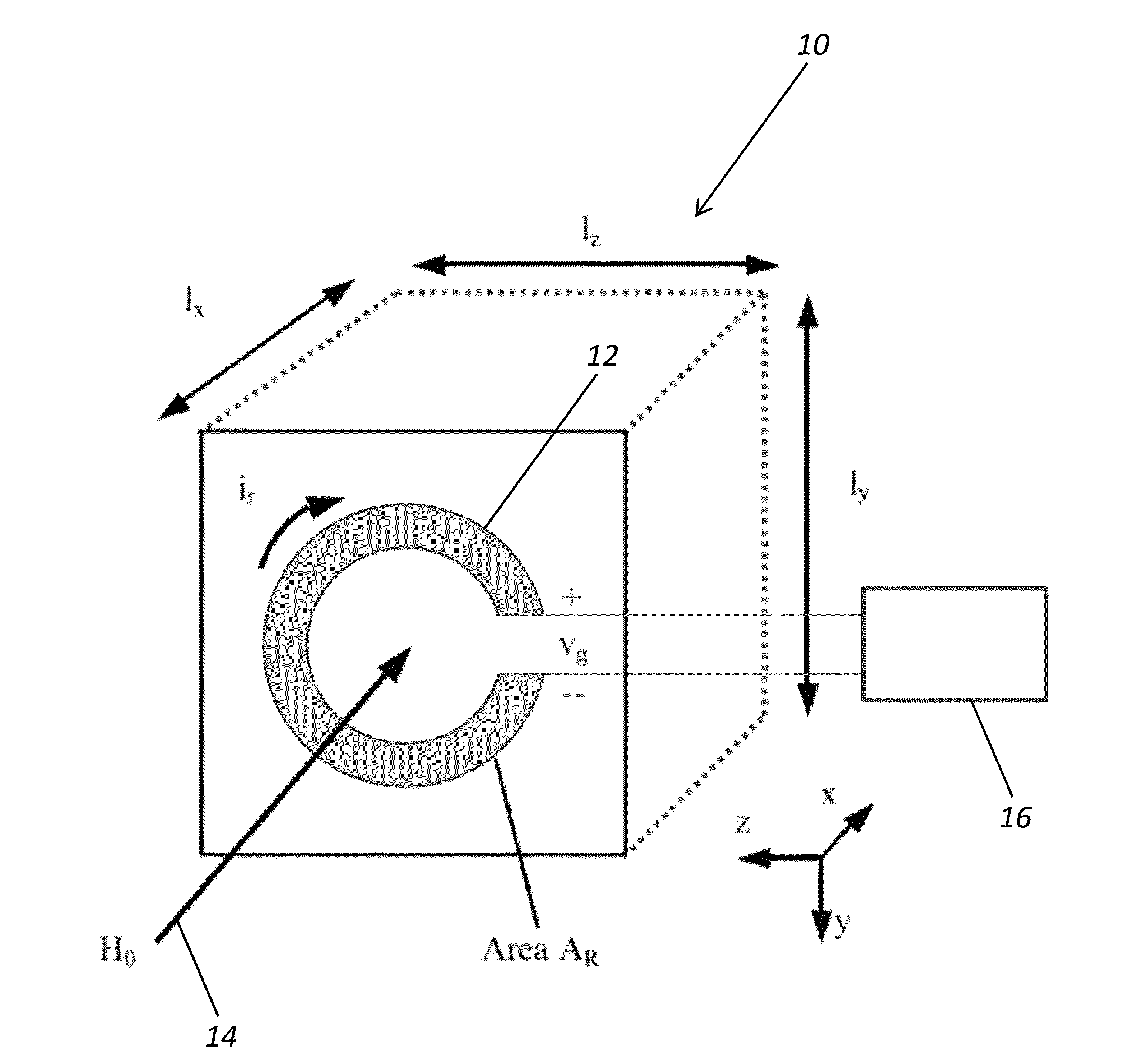
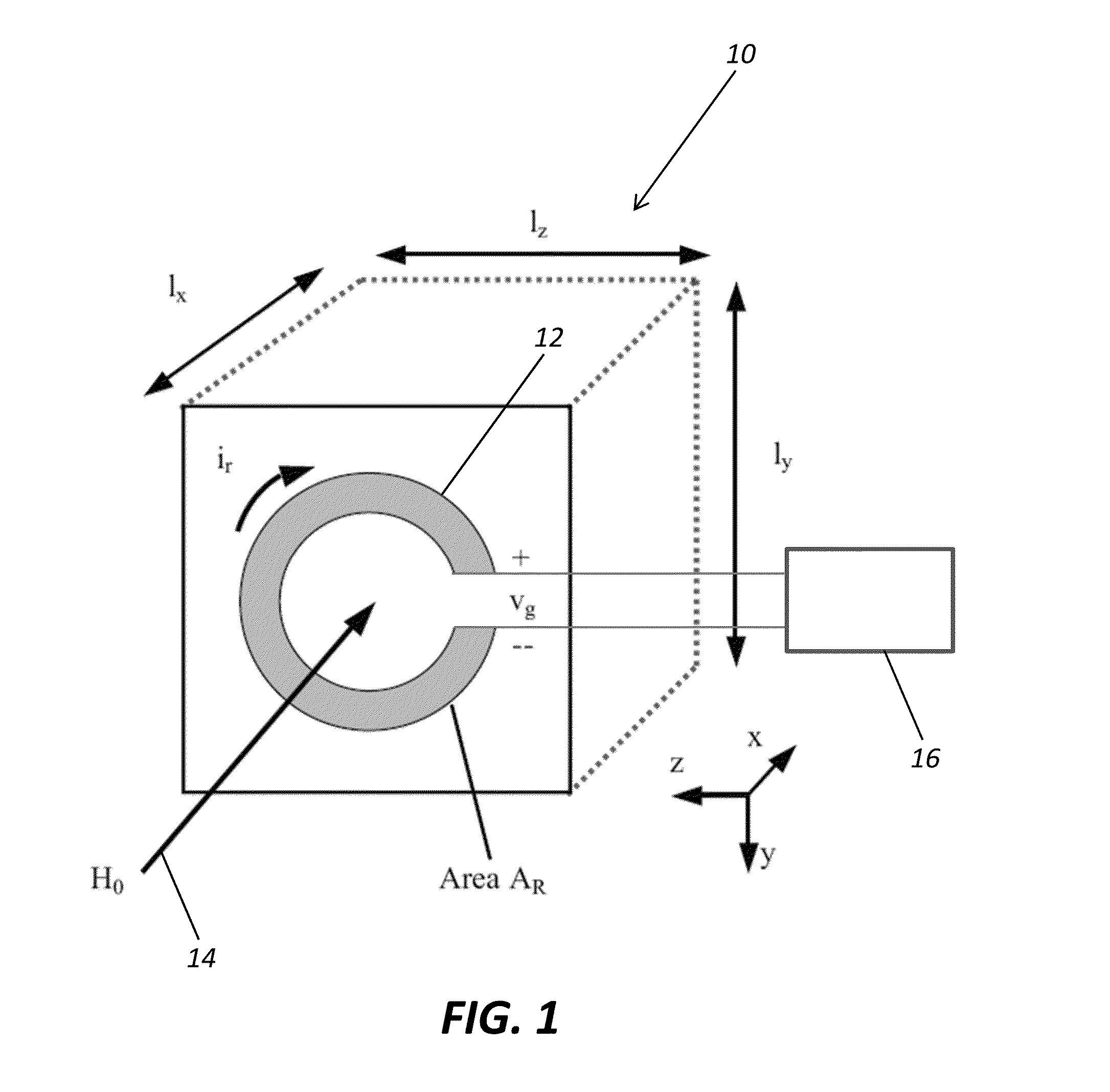
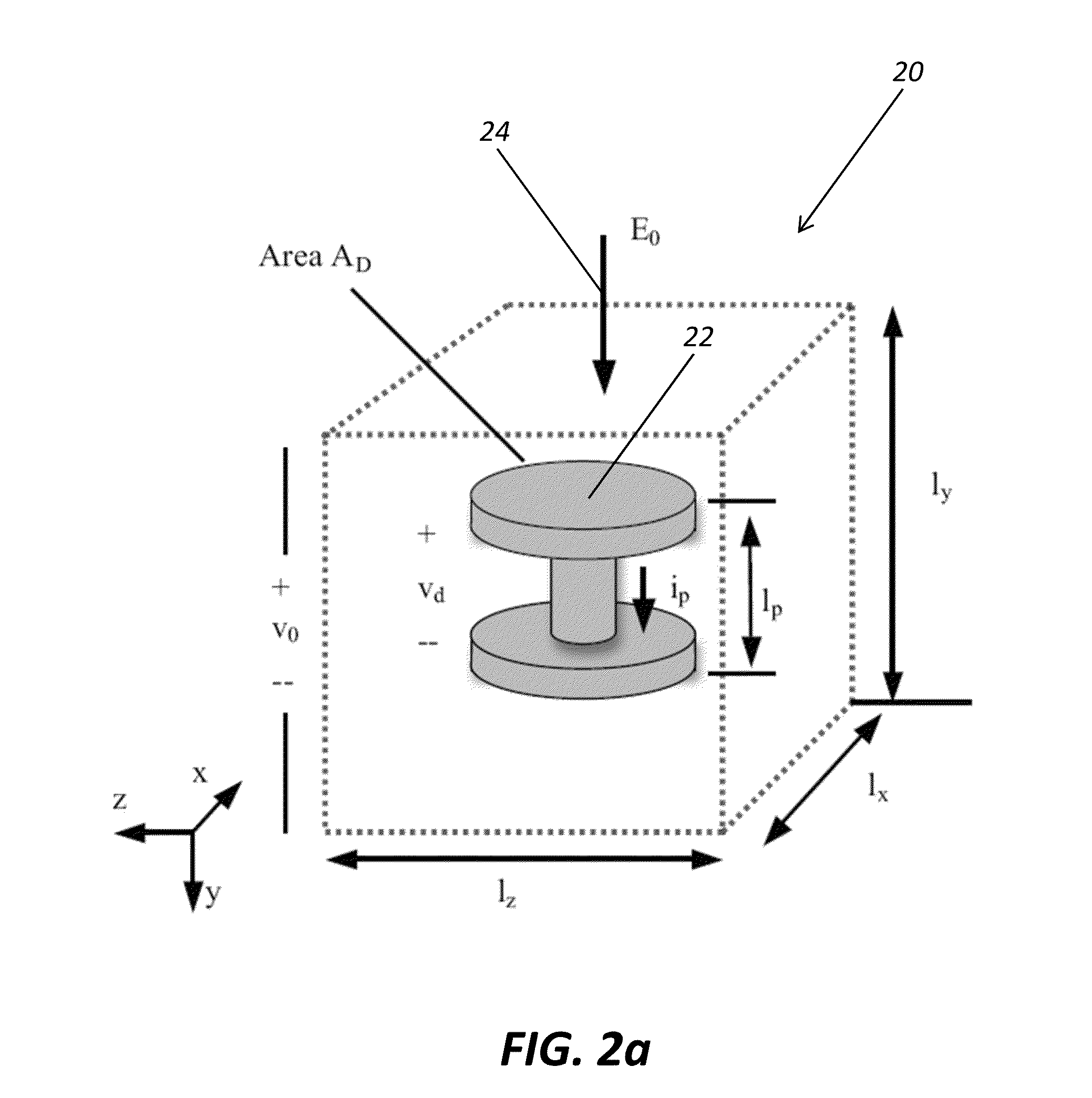
- The use of non-Foster circuit elements, such as negative capacitors and inductors, coupled with electric and magnetic fields using split-ring resonators and electric disk resonators, allows for the derivation of wideband negative effective permittivity and permeability, eliminating resonant behavior and enabling stable, three-dimensional metamaterial designs with relative permittivity and permeability below unity.

Broadband absorbers via nanostructures
PatentWO2018136972A1
Innovation
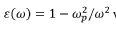
- Development of transferrable hyper-crystals (THC) constructed from hyperbolic metamaterial units with alternating dielectric and plasmonic layers, fabricated using atomic layer deposition, which exhibit strong optical anisotropy and can be easily transferred to secondary substrates while maintaining optical performance, utilizing materials like aluminum-doped zinc oxide (AZO) and titanium nitride (TiN) for tunable plasmonic responses in the infrared range.


Manufacturing Standards for Metamaterial Film Production
The manufacturing of hyperbolic metamaterial films for wideband functionality requires stringent quality control standards that address both structural precision and electromagnetic performance characteristics. Current industry practices lack comprehensive standardization frameworks specifically tailored to metamaterial production, creating significant challenges in achieving consistent wideband enhancement across different manufacturing facilities and production batches.
Dimensional tolerance standards represent a critical foundation for metamaterial film manufacturing. The periodic structures that enable hyperbolic dispersion properties demand nanoscale precision in feature dimensions, with typical tolerances requiring sub-10 nanometer accuracy for optimal wideband performance. Manufacturing standards must establish clear specifications for unit cell dimensions, layer thickness uniformity, and interface roughness parameters that directly impact electromagnetic wave propagation characteristics.
Material purity and composition standards play an equally vital role in ensuring consistent wideband functionality. The dielectric and metallic components used in hyperbolic metamaterial films must meet specific conductivity, permittivity, and loss tangent requirements. Standardized testing protocols should define acceptable ranges for material properties, including temperature-dependent variations that could affect wideband performance across operational environments.
Process control standards encompass critical manufacturing parameters such as deposition rates, substrate temperature, chamber pressure, and annealing conditions. These parameters directly influence the microstructural properties that determine hyperbolic dispersion characteristics. Establishing standardized process windows with defined control limits ensures reproducible electromagnetic properties essential for wideband functionality enhancement.
Quality assurance protocols must integrate both structural and electromagnetic characterization methods. Standards should specify required measurement techniques including ellipsometry for optical properties, scanning electron microscopy for structural verification, and vector network analyzer testing for electromagnetic response validation. Statistical process control methodologies should be implemented to monitor production consistency and identify process deviations that could compromise wideband performance.
Traceability and documentation standards ensure manufacturing reproducibility and enable continuous improvement initiatives. Comprehensive record-keeping requirements should cover raw material specifications, process parameters, intermediate quality checks, and final performance validation results, creating a complete manufacturing history for each metamaterial film batch produced.
Dimensional tolerance standards represent a critical foundation for metamaterial film manufacturing. The periodic structures that enable hyperbolic dispersion properties demand nanoscale precision in feature dimensions, with typical tolerances requiring sub-10 nanometer accuracy for optimal wideband performance. Manufacturing standards must establish clear specifications for unit cell dimensions, layer thickness uniformity, and interface roughness parameters that directly impact electromagnetic wave propagation characteristics.
Material purity and composition standards play an equally vital role in ensuring consistent wideband functionality. The dielectric and metallic components used in hyperbolic metamaterial films must meet specific conductivity, permittivity, and loss tangent requirements. Standardized testing protocols should define acceptable ranges for material properties, including temperature-dependent variations that could affect wideband performance across operational environments.
Process control standards encompass critical manufacturing parameters such as deposition rates, substrate temperature, chamber pressure, and annealing conditions. These parameters directly influence the microstructural properties that determine hyperbolic dispersion characteristics. Establishing standardized process windows with defined control limits ensures reproducible electromagnetic properties essential for wideband functionality enhancement.
Quality assurance protocols must integrate both structural and electromagnetic characterization methods. Standards should specify required measurement techniques including ellipsometry for optical properties, scanning electron microscopy for structural verification, and vector network analyzer testing for electromagnetic response validation. Statistical process control methodologies should be implemented to monitor production consistency and identify process deviations that could compromise wideband performance.
Traceability and documentation standards ensure manufacturing reproducibility and enable continuous improvement initiatives. Comprehensive record-keeping requirements should cover raw material specifications, process parameters, intermediate quality checks, and final performance validation results, creating a complete manufacturing history for each metamaterial film batch produced.
Integration Challenges in Metamaterial Device Applications
The integration of hyperbolic metamaterial films into practical device applications presents multifaceted challenges that significantly impact their wideband functionality enhancement potential. Manufacturing scalability remains a primary obstacle, as the precise nanoscale structures required for hyperbolic dispersion properties demand sophisticated fabrication techniques that are difficult to scale beyond laboratory prototypes. Current lithographic and deposition methods struggle to maintain the dimensional accuracy and material quality consistency necessary for reliable wideband performance across large-area substrates.
Thermal management issues pose another critical integration challenge, particularly when hyperbolic metamaterial films operate under high-power conditions or in thermally demanding environments. The metallic components within these structures exhibit significant ohmic losses, generating localized heating that can degrade performance and alter the metamaterial's dispersion characteristics. This thermal sensitivity becomes especially problematic in wideband applications where consistent performance across frequency ranges is essential.
Interface compatibility between hyperbolic metamaterial films and conventional optical or electronic components creates substantial design constraints. The impedance mismatch at material boundaries often results in unwanted reflections and coupling losses that diminish the intended wideband enhancement effects. Additionally, the anisotropic nature of hyperbolic metamaterials complicates the design of transition regions and coupling structures.
Mechanical stability and environmental durability represent ongoing concerns for practical deployment. The multilayered architecture typical of hyperbolic metamaterial films makes them susceptible to delamination, thermal expansion mismatches, and environmental degradation. These factors directly impact the long-term reliability of wideband functionality in real-world applications.
Packaging and interconnection challenges further complicate integration efforts. Traditional packaging approaches often fail to accommodate the unique electromagnetic properties of hyperbolic metamaterials, potentially compromising their wideband performance characteristics. The development of specialized packaging solutions that preserve metamaterial functionality while providing adequate protection and connectivity remains an active area of research requiring innovative engineering approaches.
Thermal management issues pose another critical integration challenge, particularly when hyperbolic metamaterial films operate under high-power conditions or in thermally demanding environments. The metallic components within these structures exhibit significant ohmic losses, generating localized heating that can degrade performance and alter the metamaterial's dispersion characteristics. This thermal sensitivity becomes especially problematic in wideband applications where consistent performance across frequency ranges is essential.
Interface compatibility between hyperbolic metamaterial films and conventional optical or electronic components creates substantial design constraints. The impedance mismatch at material boundaries often results in unwanted reflections and coupling losses that diminish the intended wideband enhancement effects. Additionally, the anisotropic nature of hyperbolic metamaterials complicates the design of transition regions and coupling structures.
Mechanical stability and environmental durability represent ongoing concerns for practical deployment. The multilayered architecture typical of hyperbolic metamaterial films makes them susceptible to delamination, thermal expansion mismatches, and environmental degradation. These factors directly impact the long-term reliability of wideband functionality in real-world applications.
Packaging and interconnection challenges further complicate integration efforts. Traditional packaging approaches often fail to accommodate the unique electromagnetic properties of hyperbolic metamaterials, potentially compromising their wideband performance characteristics. The development of specialized packaging solutions that preserve metamaterial functionality while providing adequate protection and connectivity remains an active area of research requiring innovative engineering approaches.
Unlock deeper insights with PatSnap Eureka Quick Research — get a full tech report to explore trends and direct your research. Try now!
Generate Your Research Report Instantly with AI Agent
Supercharge your innovation with PatSnap Eureka AI Agent Platform!