

How to Develop Advanced Flywheel Rotors With Better Torque
MAR 12, 202610 MIN READ
Generate Your Research Report Instantly with AI Agent
PatSnap Eureka helps you evaluate technical feasibility & market potential.
Flywheel Rotor Technology Background and Torque Enhancement Goals
Flywheel energy storage systems have emerged as a critical technology for grid stabilization, renewable energy integration, and high-power applications since the 1970s. Early flywheel designs primarily focused on basic energy storage capabilities, utilizing steel rotors operating at relatively low speeds. The evolution toward advanced composite materials and high-speed operation has fundamentally transformed the technology landscape, enabling significantly higher energy densities and improved performance characteristics.
The historical development of flywheel rotors demonstrates a clear progression from conventional steel-based designs to sophisticated carbon fiber composite structures. Initial systems operated at speeds below 10,000 RPM due to material limitations and safety concerns. The introduction of advanced composite materials in the 1990s enabled rotational speeds exceeding 50,000 RPM, dramatically increasing both energy storage capacity and torque output capabilities.
Modern flywheel rotor technology has reached a pivotal stage where torque enhancement represents the primary bottleneck for widespread commercial adoption. Contemporary applications demand not only high energy storage density but also superior torque characteristics for rapid charge-discharge cycles and dynamic load management. The integration of magnetic bearings, vacuum enclosures, and advanced motor-generator systems has created new opportunities for optimizing rotor designs specifically for enhanced torque performance.
Current market drivers emphasize the critical importance of torque optimization in flywheel systems. Grid-scale energy storage applications require rapid response times and high power output, directly correlating with rotor torque capabilities. Electric vehicle applications demand lightweight, high-torque flywheel systems for regenerative braking and power assistance. Industrial applications increasingly require flywheel systems capable of delivering consistent torque across varying operational conditions.
The primary technical objectives for advanced flywheel rotor development center on achieving maximum torque-to-weight ratios while maintaining operational safety and longevity. Target specifications include torque densities exceeding 50 Nm/kg, operational speeds above 60,000 RPM, and cycle life extending beyond 100,000 charge-discharge cycles. These goals necessitate revolutionary approaches to rotor geometry, material selection, and electromagnetic integration.
Emerging torque enhancement strategies focus on optimizing rotor mass distribution, implementing variable geometry designs, and integrating advanced magnetic coupling systems. The convergence of computational fluid dynamics, advanced materials science, and precision manufacturing techniques has created unprecedented opportunities for developing next-generation flywheel rotors with superior torque characteristics and enhanced operational efficiency.
The historical development of flywheel rotors demonstrates a clear progression from conventional steel-based designs to sophisticated carbon fiber composite structures. Initial systems operated at speeds below 10,000 RPM due to material limitations and safety concerns. The introduction of advanced composite materials in the 1990s enabled rotational speeds exceeding 50,000 RPM, dramatically increasing both energy storage capacity and torque output capabilities.
Modern flywheel rotor technology has reached a pivotal stage where torque enhancement represents the primary bottleneck for widespread commercial adoption. Contemporary applications demand not only high energy storage density but also superior torque characteristics for rapid charge-discharge cycles and dynamic load management. The integration of magnetic bearings, vacuum enclosures, and advanced motor-generator systems has created new opportunities for optimizing rotor designs specifically for enhanced torque performance.
Current market drivers emphasize the critical importance of torque optimization in flywheel systems. Grid-scale energy storage applications require rapid response times and high power output, directly correlating with rotor torque capabilities. Electric vehicle applications demand lightweight, high-torque flywheel systems for regenerative braking and power assistance. Industrial applications increasingly require flywheel systems capable of delivering consistent torque across varying operational conditions.
The primary technical objectives for advanced flywheel rotor development center on achieving maximum torque-to-weight ratios while maintaining operational safety and longevity. Target specifications include torque densities exceeding 50 Nm/kg, operational speeds above 60,000 RPM, and cycle life extending beyond 100,000 charge-discharge cycles. These goals necessitate revolutionary approaches to rotor geometry, material selection, and electromagnetic integration.
Emerging torque enhancement strategies focus on optimizing rotor mass distribution, implementing variable geometry designs, and integrating advanced magnetic coupling systems. The convergence of computational fluid dynamics, advanced materials science, and precision manufacturing techniques has created unprecedented opportunities for developing next-generation flywheel rotors with superior torque characteristics and enhanced operational efficiency.
Market Demand for High-Performance Flywheel Energy Storage Systems
The global energy storage market is experiencing unprecedented growth driven by the urgent need for grid stabilization, renewable energy integration, and sustainable power solutions. Flywheel energy storage systems have emerged as a critical technology for applications requiring high power density, rapid response times, and exceptional cycle life performance. The demand for advanced flywheel systems with superior torque characteristics is particularly pronounced in sectors where traditional battery technologies fall short.
Industrial applications represent a substantial market segment for high-performance flywheel energy storage systems. Manufacturing facilities, data centers, and critical infrastructure require uninterruptible power supply solutions that can deliver instantaneous power during grid disturbances. These applications demand flywheel rotors capable of maintaining consistent torque output across varying operational conditions, making rotor design optimization a key market differentiator.
The renewable energy sector drives significant demand for flywheel systems with enhanced torque capabilities. Wind and solar installations require energy storage solutions that can rapidly absorb and discharge power to smooth output fluctuations. Advanced flywheel rotors with improved torque characteristics enable more efficient energy capture during peak generation periods and provide stable power delivery during low renewable output phases.
Transportation electrification creates emerging opportunities for flywheel energy storage systems. Electric vehicle charging infrastructure, hybrid transit systems, and rail applications benefit from flywheel technology's ability to provide high-power bursts for acceleration and regenerative braking energy recovery. The market demands rotors that can withstand frequent charge-discharge cycles while maintaining optimal torque performance throughout their operational lifetime.
Grid-scale energy storage applications increasingly favor flywheel systems for frequency regulation and load balancing services. Utility companies seek storage solutions that can respond within milliseconds to grid frequency variations, requiring flywheel rotors with precise torque control capabilities. The growing penetration of intermittent renewable energy sources amplifies this market need, as grid operators require fast-responding storage systems to maintain power quality and system stability.
Aerospace and defense sectors present specialized market opportunities for advanced flywheel energy storage systems. Satellite power systems, military installations, and aerospace applications require compact, high-performance energy storage solutions capable of operating in extreme environments. These applications demand flywheel rotors with exceptional torque-to-weight ratios and robust performance characteristics under challenging operational conditions.
The market trajectory indicates sustained growth in demand for flywheel energy storage systems with superior torque performance. Technological advancements in materials science, magnetic bearing systems, and power electronics continue to expand the addressable market by improving system efficiency and reducing operational costs. Market adoption accelerates as organizations recognize the long-term economic benefits of flywheel systems, including minimal maintenance requirements, extended operational lifespans, and environmental sustainability advantages over chemical battery alternatives.
Industrial applications represent a substantial market segment for high-performance flywheel energy storage systems. Manufacturing facilities, data centers, and critical infrastructure require uninterruptible power supply solutions that can deliver instantaneous power during grid disturbances. These applications demand flywheel rotors capable of maintaining consistent torque output across varying operational conditions, making rotor design optimization a key market differentiator.
The renewable energy sector drives significant demand for flywheel systems with enhanced torque capabilities. Wind and solar installations require energy storage solutions that can rapidly absorb and discharge power to smooth output fluctuations. Advanced flywheel rotors with improved torque characteristics enable more efficient energy capture during peak generation periods and provide stable power delivery during low renewable output phases.
Transportation electrification creates emerging opportunities for flywheel energy storage systems. Electric vehicle charging infrastructure, hybrid transit systems, and rail applications benefit from flywheel technology's ability to provide high-power bursts for acceleration and regenerative braking energy recovery. The market demands rotors that can withstand frequent charge-discharge cycles while maintaining optimal torque performance throughout their operational lifetime.
Grid-scale energy storage applications increasingly favor flywheel systems for frequency regulation and load balancing services. Utility companies seek storage solutions that can respond within milliseconds to grid frequency variations, requiring flywheel rotors with precise torque control capabilities. The growing penetration of intermittent renewable energy sources amplifies this market need, as grid operators require fast-responding storage systems to maintain power quality and system stability.
Aerospace and defense sectors present specialized market opportunities for advanced flywheel energy storage systems. Satellite power systems, military installations, and aerospace applications require compact, high-performance energy storage solutions capable of operating in extreme environments. These applications demand flywheel rotors with exceptional torque-to-weight ratios and robust performance characteristics under challenging operational conditions.
The market trajectory indicates sustained growth in demand for flywheel energy storage systems with superior torque performance. Technological advancements in materials science, magnetic bearing systems, and power electronics continue to expand the addressable market by improving system efficiency and reducing operational costs. Market adoption accelerates as organizations recognize the long-term economic benefits of flywheel systems, including minimal maintenance requirements, extended operational lifespans, and environmental sustainability advantages over chemical battery alternatives.
Current State and Challenges in Advanced Flywheel Rotor Development
Advanced flywheel rotor technology currently operates within a complex landscape of competing design philosophies and material science limitations. The global flywheel energy storage market has witnessed significant growth, with systems ranging from small-scale uninterruptible power supplies to large-scale grid stabilization applications. Contemporary flywheel rotors predominantly utilize carbon fiber composite materials, steel alloys, and hybrid configurations to achieve optimal torque characteristics while maintaining structural integrity at high rotational speeds.
The fundamental challenge in developing advanced flywheel rotors with enhanced torque lies in the inherent trade-off between rotational speed, material strength, and energy density. Current rotor designs face critical limitations in achieving simultaneous optimization of torque output and operational safety margins. Most existing systems operate at speeds between 20,000 to 50,000 RPM, where material stress approaches critical thresholds, constraining further torque improvements through conventional speed increases.
Material science constraints represent the primary bottleneck in rotor advancement. Carbon fiber composites, while offering excellent strength-to-weight ratios, exhibit anisotropic properties that create complex stress distributions under high-speed rotation. Steel rotors provide superior isotropic characteristics but suffer from weight penalties that limit achievable speeds. The challenge intensifies when considering fatigue resistance, as repeated acceleration and deceleration cycles gradually degrade material properties, particularly at fiber-matrix interfaces in composite structures.
Manufacturing precision emerges as another critical challenge, where microscopic imbalances can generate catastrophic vibrations at operational speeds. Current manufacturing tolerances struggle to meet the demanding requirements for rotors operating beyond 40,000 RPM, necessitating expensive precision machining and balancing procedures that significantly impact commercial viability.
Thermal management presents additional complexity, as high-speed rotation generates substantial heat through air resistance and bearing friction. Existing cooling systems often compromise rotor design efficiency, creating parasitic losses that reduce overall torque output. The integration of effective thermal management without sacrificing performance remains an ongoing technical challenge.
Bearing technology limitations further constrain rotor development, as conventional mechanical bearings cannot sustain the extreme speeds required for maximum torque generation. While magnetic bearing systems offer solutions, they introduce complexity, cost, and control system dependencies that limit widespread adoption. The development of hybrid bearing solutions continues to face technical and economic barriers.
Safety considerations impose additional constraints on rotor design optimization. Containment systems must withstand potential rotor failure scenarios, requiring robust housing designs that add system weight and complexity. Regulatory frameworks increasingly demand comprehensive safety validation, extending development timelines and increasing certification costs for advanced rotor configurations.
The fundamental challenge in developing advanced flywheel rotors with enhanced torque lies in the inherent trade-off between rotational speed, material strength, and energy density. Current rotor designs face critical limitations in achieving simultaneous optimization of torque output and operational safety margins. Most existing systems operate at speeds between 20,000 to 50,000 RPM, where material stress approaches critical thresholds, constraining further torque improvements through conventional speed increases.
Material science constraints represent the primary bottleneck in rotor advancement. Carbon fiber composites, while offering excellent strength-to-weight ratios, exhibit anisotropic properties that create complex stress distributions under high-speed rotation. Steel rotors provide superior isotropic characteristics but suffer from weight penalties that limit achievable speeds. The challenge intensifies when considering fatigue resistance, as repeated acceleration and deceleration cycles gradually degrade material properties, particularly at fiber-matrix interfaces in composite structures.
Manufacturing precision emerges as another critical challenge, where microscopic imbalances can generate catastrophic vibrations at operational speeds. Current manufacturing tolerances struggle to meet the demanding requirements for rotors operating beyond 40,000 RPM, necessitating expensive precision machining and balancing procedures that significantly impact commercial viability.
Thermal management presents additional complexity, as high-speed rotation generates substantial heat through air resistance and bearing friction. Existing cooling systems often compromise rotor design efficiency, creating parasitic losses that reduce overall torque output. The integration of effective thermal management without sacrificing performance remains an ongoing technical challenge.
Bearing technology limitations further constrain rotor development, as conventional mechanical bearings cannot sustain the extreme speeds required for maximum torque generation. While magnetic bearing systems offer solutions, they introduce complexity, cost, and control system dependencies that limit widespread adoption. The development of hybrid bearing solutions continues to face technical and economic barriers.
Safety considerations impose additional constraints on rotor design optimization. Containment systems must withstand potential rotor failure scenarios, requiring robust housing designs that add system weight and complexity. Regulatory frameworks increasingly demand comprehensive safety validation, extending development timelines and increasing certification costs for advanced rotor configurations.
Current Solutions for Flywheel Rotor Torque Improvement
01 Flywheel rotor design for torque optimization
Flywheel rotors can be designed with specific geometric configurations and material selections to optimize torque transmission and storage capacity. The design considerations include rotor diameter, thickness, and mass distribution to achieve desired rotational inertia. Advanced rotor designs incorporate composite materials and optimized shapes to maximize energy storage density while maintaining structural integrity under high rotational speeds.- Flywheel rotor design for torque optimization: Flywheel rotors can be designed with specific geometric configurations and material selections to optimize torque transmission and storage capacity. The rotor design includes considerations for mass distribution, radius optimization, and structural integrity to maximize rotational inertia while maintaining mechanical stability. Advanced designs incorporate composite materials and optimized shapes to achieve higher energy density and torque output.
- Torque control mechanisms in flywheel systems: Control mechanisms are implemented to regulate torque delivery from flywheel rotors during energy storage and release cycles. These systems include variable speed control, electromagnetic coupling devices, and mechanical transmission systems that enable precise torque management. The control strategies ensure smooth power transfer and prevent excessive stress on the rotor assembly during acceleration and deceleration phases.
- Bearing and mounting systems for torque transmission: Specialized bearing and mounting configurations are utilized to support flywheel rotors while enabling efficient torque transmission. These systems include magnetic bearings, mechanical bearings with low friction coefficients, and flexible mounting arrangements that accommodate thermal expansion and dynamic loads. The bearing design minimizes energy losses and ensures stable operation under varying torque conditions.
- Composite and hybrid rotor construction for enhanced torque capacity: Flywheel rotors are constructed using composite materials and hybrid structures to achieve superior torque handling capabilities. These constructions combine high-strength fibers, metallic components, and advanced bonding techniques to create rotors with improved strength-to-weight ratios. The hybrid approach allows for higher rotational speeds and greater torque capacity while reducing overall system weight.
- Torque measurement and monitoring in flywheel applications: Integrated sensing and monitoring systems are employed to measure and track torque parameters in flywheel rotor assemblies. These systems utilize strain gauges, torque sensors, and real-time data acquisition methods to monitor operational conditions. The measurement data enables predictive maintenance, performance optimization, and safety monitoring by detecting abnormal torque fluctuations or mechanical stress conditions.
02 Torque transmission mechanisms in flywheel systems
Various mechanical coupling and transmission mechanisms are employed to efficiently transfer torque between flywheel rotors and connected systems. These mechanisms include clutch assemblies, gear systems, and direct drive configurations that enable controlled engagement and disengagement. The transmission systems are designed to handle high torque loads while minimizing energy losses during power transfer operations.Expand Specific Solutions03 Magnetic bearing systems for flywheel torque control
Magnetic bearing technologies provide contactless support for flywheel rotors, enabling precise torque control and reduced friction losses. These systems utilize electromagnetic forces to maintain rotor position and stability during operation. Active magnetic bearing control systems can dynamically adjust bearing forces to compensate for torque variations and maintain optimal rotor alignment throughout the operational speed range.Expand Specific Solutions04 Composite rotor construction for enhanced torque capacity
Composite material construction techniques enable the fabrication of high-strength flywheel rotors with improved torque handling capabilities. These rotors utilize fiber-reinforced polymers and advanced layering techniques to achieve superior strength-to-weight ratios. The composite construction allows for higher rotational speeds and greater energy storage capacity while maintaining structural stability under extreme centrifugal forces.Expand Specific Solutions05 Torque measurement and monitoring systems
Integrated sensing and monitoring systems provide real-time measurement of torque parameters in flywheel applications. These systems employ strain gauges, optical sensors, and other measurement technologies to track torque variations during operation. The monitoring data enables precise control of flywheel performance and early detection of potential mechanical issues, ensuring safe and efficient operation under varying load conditions.Expand Specific Solutions
Key Players in Flywheel Technology and Rotor Manufacturing
The advanced flywheel rotor technology market is experiencing significant growth driven by increasing demand for energy storage solutions and automotive applications. The industry is in a mature development stage with established aerospace giants like Boeing, Toshiba, and Mitsubishi Electric leading innovation alongside specialized companies such as Beacon Power, which focuses specifically on flywheel energy storage systems. The market spans multiple sectors including automotive (Hyundai, Mercedes-Benz, Dana Limited), aerospace (Hamilton Sundstrand, GKN Hybrid Power), and energy utilities (State Grid Corp, Korea Electric Power Corp). Technology maturity varies significantly across applications, with companies like Schaeffler Technologies and Valeo Embrayages advancing mechanical components, while firms like Nexfi Technology develop high-voltage power electronics integration. The competitive landscape shows strong participation from both traditional industrial manufacturers and emerging technology specialists, indicating robust market potential and diverse technological approaches to enhancing flywheel rotor torque performance.
The Boeing Co.
Technical Solution: Boeing has developed advanced flywheel rotor systems for aerospace applications, utilizing cutting-edge composite materials and precision manufacturing techniques. Their flywheel technology features carbon fiber rotors designed to operate in space environments, with specialized torque transmission systems for satellite attitude control and power management. The company's rotor designs incorporate advanced fiber layup techniques and high-temperature resin systems to withstand extreme operational conditions. Boeing's flywheel systems achieve high energy density through optimized rotor geometry and advanced magnetic bearing systems that eliminate mechanical wear while providing precise torque control for spacecraft maneuvering and power conditioning applications in both commercial and military aerospace platforms.
Strengths: Aerospace engineering excellence, advanced composite manufacturing capabilities, space-qualified systems. Weaknesses: Extremely high development costs, long development cycles, limited to specialized aerospace applications.
Hyundai Motor Co., Ltd.
Technical Solution: Hyundai Motor has developed flywheel rotor technology for automotive hybrid systems, focusing on lightweight steel and composite rotor designs that integrate with vehicle powertrains. Their flywheel systems operate at speeds up to 60,000 RPM and feature advanced torque coupling mechanisms for seamless energy transfer during acceleration and braking. The company's rotor technology incorporates optimized mass distribution and advanced bearing systems to minimize energy losses while maximizing torque delivery efficiency. Hyundai's flywheel rotors are designed with safety containment systems and utilize advanced materials to withstand the extreme centrifugal forces generated during high-speed operation, targeting applications in kinetic energy recovery systems for improved fuel efficiency.
Strengths: Automotive industry expertise, mass production capabilities, integration with hybrid vehicle systems. Weaknesses: Limited to automotive applications, constrained by vehicle packaging requirements.
Core Innovations in Advanced Flywheel Rotor Technologies
Advanced Flywheel Hub and Method
PatentInactiveUS20100206126A1
Innovation
- A composite hub with a layered configuration, featuring axially oriented fibers in the first layer and hoop-oriented fibers in the second layer, which increases the bending mode frequency and radial stiffness, ensuring engagement up to high rotational speeds while managing deformations and vibrations.


Flywheel energy storage device with induction torque transfer
PatentInactiveUS10340768B2
Innovation
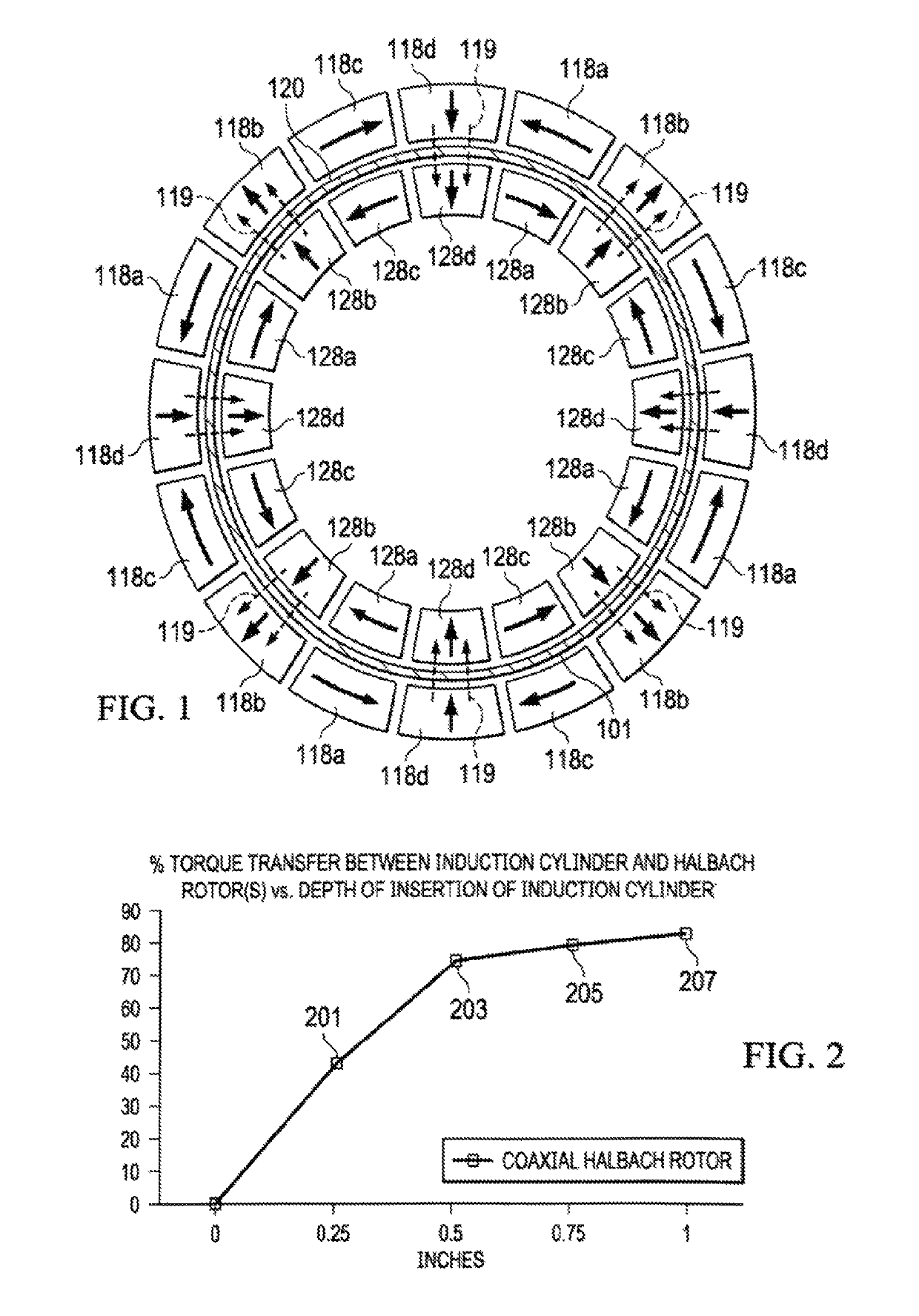
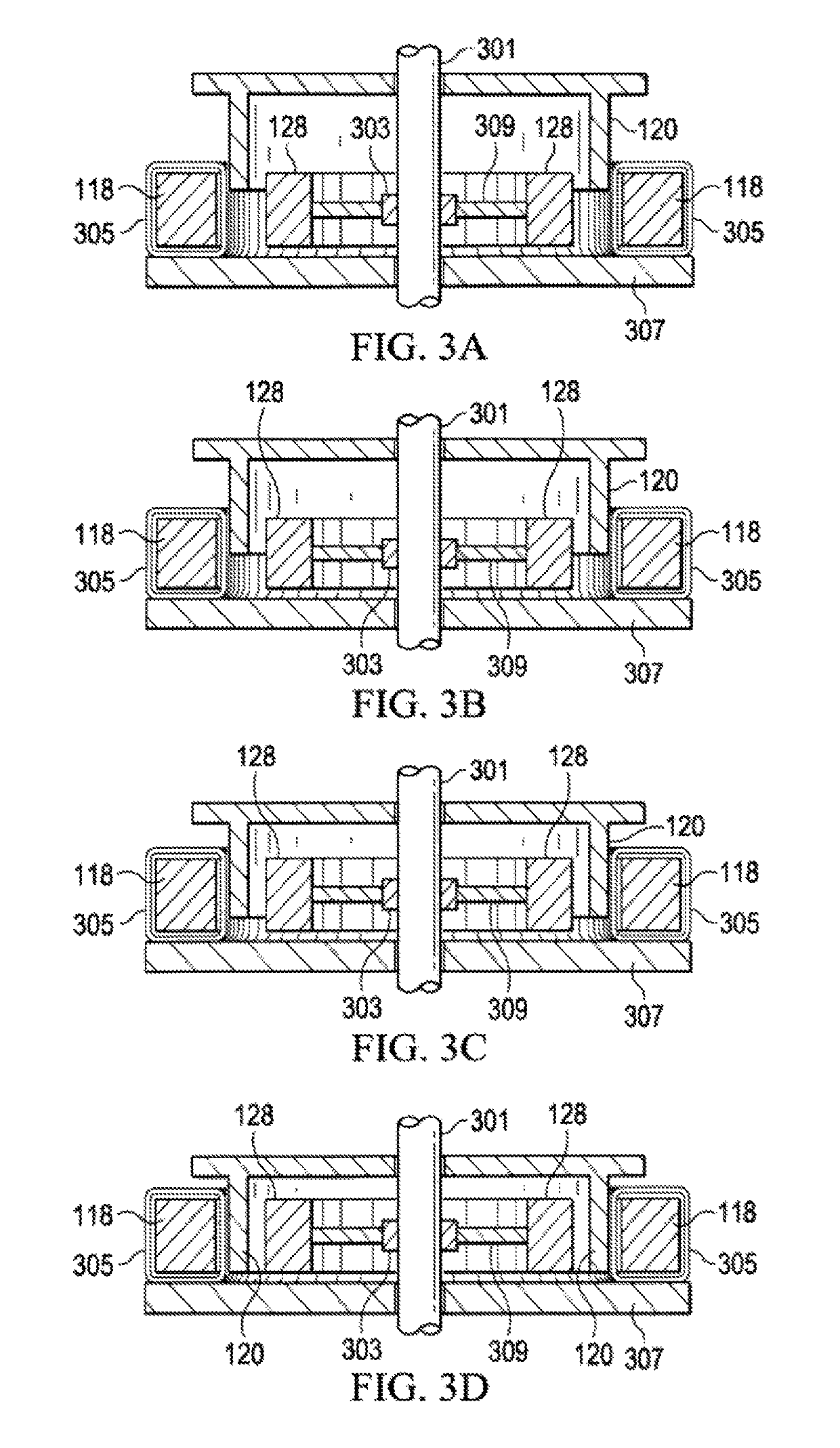
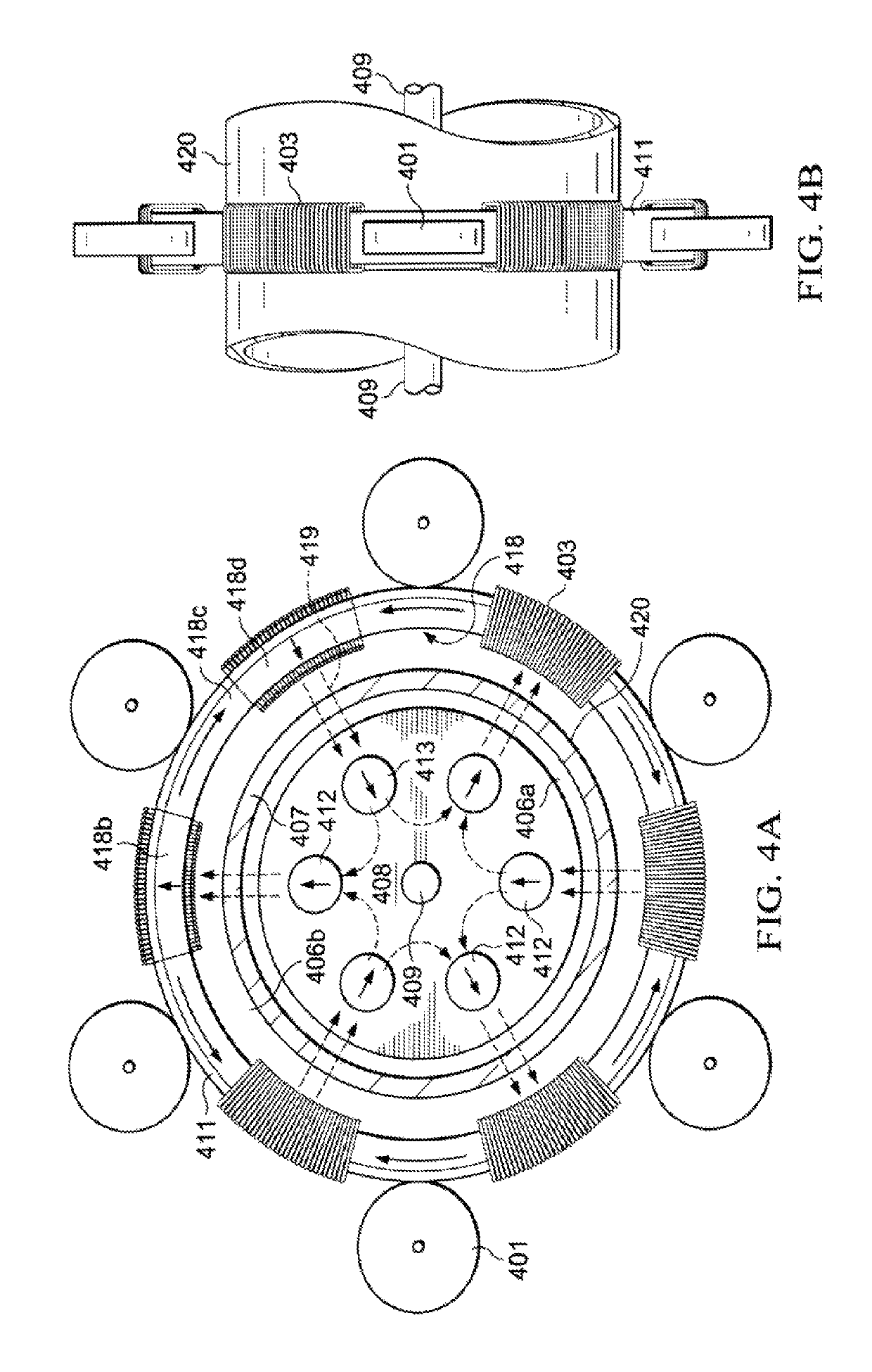
- The Halbach Motor and Generator (HMG) with Rolling Biphasic Coil Control (RBCC) and Continuously Variable Magnetic Induction Transmission (CVMIT) utilize coaxial Halbach cylinders for magnetic coupling, and the Axial-Loading Magnetic Reluctance Device (AMR) for passive magnetic levitation, enabling friction-free torque transfer and energy conversion.

Material Science Advances for High-Torque Flywheel Rotors
The development of high-torque flywheel rotors fundamentally depends on breakthrough advances in material science, particularly in the realm of high-strength, lightweight composite materials. Carbon fiber reinforced polymers (CFRP) have emerged as the dominant material choice, with recent innovations focusing on ultra-high modulus carbon fibers that can withstand rotational speeds exceeding 100,000 RPM while maintaining structural integrity under extreme centrifugal forces.
Advanced fiber architectures represent a critical frontier in flywheel rotor development. Multi-directional fiber layups, including quasi-isotropic and angle-ply configurations, have demonstrated superior torque transmission capabilities compared to traditional unidirectional arrangements. Recent research has explored hybrid fiber systems combining carbon, glass, and aramid fibers to optimize the balance between tensile strength, fatigue resistance, and cost-effectiveness.
Matrix material innovations have significantly enhanced rotor performance characteristics. Thermoplastic matrices, particularly polyetheretherketone (PEEK) and polyphenylene sulfide (PPS), offer superior toughness and damage tolerance compared to traditional thermoset resins. These materials enable better stress distribution during high-torque operations and provide enhanced resistance to delamination under cyclic loading conditions.
Nanocomposite integration has opened new possibilities for flywheel rotor enhancement. Carbon nanotube and graphene reinforcements, when properly dispersed within the polymer matrix, can increase both the elastic modulus and ultimate strength by 15-30%. These nanoscale reinforcements also improve the interfacial bonding between fiber and matrix, resulting in more efficient load transfer and higher torque capacity.
Manufacturing process innovations have enabled the production of rotors with unprecedented material properties. Automated fiber placement (AFP) and filament winding techniques now achieve fiber volume fractions exceeding 65%, maximizing the structural efficiency of composite rotors. Advanced curing processes, including out-of-autoclave methods and electron beam curing, have reduced manufacturing costs while maintaining superior material properties.
Surface treatment technologies have become increasingly sophisticated, with plasma treatments and chemical functionalization improving fiber-matrix adhesion by up to 40%. These advances directly translate to enhanced torque transmission capabilities and extended operational lifespans under demanding service conditions.
Advanced fiber architectures represent a critical frontier in flywheel rotor development. Multi-directional fiber layups, including quasi-isotropic and angle-ply configurations, have demonstrated superior torque transmission capabilities compared to traditional unidirectional arrangements. Recent research has explored hybrid fiber systems combining carbon, glass, and aramid fibers to optimize the balance between tensile strength, fatigue resistance, and cost-effectiveness.
Matrix material innovations have significantly enhanced rotor performance characteristics. Thermoplastic matrices, particularly polyetheretherketone (PEEK) and polyphenylene sulfide (PPS), offer superior toughness and damage tolerance compared to traditional thermoset resins. These materials enable better stress distribution during high-torque operations and provide enhanced resistance to delamination under cyclic loading conditions.
Nanocomposite integration has opened new possibilities for flywheel rotor enhancement. Carbon nanotube and graphene reinforcements, when properly dispersed within the polymer matrix, can increase both the elastic modulus and ultimate strength by 15-30%. These nanoscale reinforcements also improve the interfacial bonding between fiber and matrix, resulting in more efficient load transfer and higher torque capacity.
Manufacturing process innovations have enabled the production of rotors with unprecedented material properties. Automated fiber placement (AFP) and filament winding techniques now achieve fiber volume fractions exceeding 65%, maximizing the structural efficiency of composite rotors. Advanced curing processes, including out-of-autoclave methods and electron beam curing, have reduced manufacturing costs while maintaining superior material properties.
Surface treatment technologies have become increasingly sophisticated, with plasma treatments and chemical functionalization improving fiber-matrix adhesion by up to 40%. These advances directly translate to enhanced torque transmission capabilities and extended operational lifespans under demanding service conditions.
Safety Standards and Testing Protocols for Advanced Flywheels
The development of advanced flywheel rotors with enhanced torque capabilities necessitates comprehensive safety standards and rigorous testing protocols to ensure operational reliability and prevent catastrophic failures. Current safety frameworks for flywheel energy storage systems primarily focus on containment structures, rotational speed limitations, and material integrity assessments under extreme operational conditions.
International safety standards such as IEC 62933-4-4 and IEEE 1547 provide foundational guidelines for flywheel systems, emphasizing containment vessel design requirements and emergency shutdown procedures. These standards mandate that flywheel rotors must withstand burst speeds at least 25% higher than maximum operational velocity, ensuring adequate safety margins during high-torque applications. Additionally, UL 1741 certification requirements address electrical safety aspects and grid interconnection protocols for flywheel-based energy storage systems.
Testing protocols for advanced flywheel rotors encompass multiple phases, beginning with material characterization tests including tensile strength analysis, fatigue resistance evaluation, and thermal cycling assessments. Composite rotor materials undergo specialized testing for delamination resistance and fiber-matrix bond integrity under centrifugal loading conditions. Dynamic balancing tests ensure rotational stability across the entire operational speed range, preventing vibration-induced failures that could compromise torque delivery performance.
Overspeed testing represents a critical validation phase, where rotors undergo controlled acceleration beyond design limits to verify containment effectiveness and failure mode predictability. High-speed cameras and strain gauge monitoring systems capture real-time data during these destructive tests, providing insights into crack propagation patterns and structural behavior under extreme stress conditions.
Environmental testing protocols simulate operational conditions including temperature variations, humidity exposure, and electromagnetic interference effects on rotor performance. Vacuum chamber testing validates bearing systems and magnetic levitation components under operational vacuum conditions, ensuring consistent torque output across varying environmental parameters.
Continuous monitoring systems integrated into flywheel installations provide real-time safety oversight through vibration sensors, temperature monitoring, and rotational speed tracking. These systems enable predictive maintenance strategies and automatic shutdown sequences when operational parameters exceed predetermined safety thresholds, protecting both equipment and personnel from potential rotor failure incidents.
International safety standards such as IEC 62933-4-4 and IEEE 1547 provide foundational guidelines for flywheel systems, emphasizing containment vessel design requirements and emergency shutdown procedures. These standards mandate that flywheel rotors must withstand burst speeds at least 25% higher than maximum operational velocity, ensuring adequate safety margins during high-torque applications. Additionally, UL 1741 certification requirements address electrical safety aspects and grid interconnection protocols for flywheel-based energy storage systems.
Testing protocols for advanced flywheel rotors encompass multiple phases, beginning with material characterization tests including tensile strength analysis, fatigue resistance evaluation, and thermal cycling assessments. Composite rotor materials undergo specialized testing for delamination resistance and fiber-matrix bond integrity under centrifugal loading conditions. Dynamic balancing tests ensure rotational stability across the entire operational speed range, preventing vibration-induced failures that could compromise torque delivery performance.
Overspeed testing represents a critical validation phase, where rotors undergo controlled acceleration beyond design limits to verify containment effectiveness and failure mode predictability. High-speed cameras and strain gauge monitoring systems capture real-time data during these destructive tests, providing insights into crack propagation patterns and structural behavior under extreme stress conditions.
Environmental testing protocols simulate operational conditions including temperature variations, humidity exposure, and electromagnetic interference effects on rotor performance. Vacuum chamber testing validates bearing systems and magnetic levitation components under operational vacuum conditions, ensuring consistent torque output across varying environmental parameters.
Continuous monitoring systems integrated into flywheel installations provide real-time safety oversight through vibration sensors, temperature monitoring, and rotational speed tracking. These systems enable predictive maintenance strategies and automatic shutdown sequences when operational parameters exceed predetermined safety thresholds, protecting both equipment and personnel from potential rotor failure incidents.
Unlock deeper insights with PatSnap Eureka Quick Research — get a full tech report to explore trends and direct your research. Try now!
Generate Your Research Report Instantly with AI Agent
Supercharge your innovation with PatSnap Eureka AI Agent Platform!