

How to Develop Resin Molding for Extreme Temperature Usage
MAR 6, 20269 MIN READ
Generate Your Research Report Instantly with AI Agent
PatSnap Eureka helps you evaluate technical feasibility & market potential.
Extreme Temperature Resin Molding Background and Objectives
Extreme temperature resin molding represents a critical frontier in advanced materials engineering, addressing the growing demand for polymer-based components that can withstand harsh thermal environments. Traditional thermoplastic and thermoset resins typically operate within limited temperature ranges, often failing catastrophically when exposed to extreme heat or cold conditions exceeding their glass transition or decomposition temperatures.
The evolution of extreme temperature resin molding has been driven by aerospace, automotive, energy, and defense industries, where components must maintain structural integrity and functional performance under severe thermal stress. Early developments in the 1960s focused on aromatic polyimides and polybenzimidazoles, establishing the foundation for high-temperature polymer chemistry. Subsequent decades witnessed the emergence of polyetheretherketone (PEEK), polyphenylene sulfide (PPS), and liquid crystal polymers, each pushing the boundaries of thermal stability.
Modern extreme temperature applications demand resins capable of continuous operation at temperatures ranging from -200°C to +400°C, with some specialized applications requiring even broader ranges. These materials must exhibit minimal thermal expansion, excellent dimensional stability, and resistance to thermal cycling fatigue. The molding processes themselves present unique challenges, requiring specialized equipment, precise temperature control, and modified processing parameters to achieve optimal part quality.
Current technological objectives center on developing next-generation resin formulations that combine exceptional thermal performance with processability and cost-effectiveness. Key focus areas include enhancing molecular chain architecture through advanced polymer synthesis, incorporating thermally stable fillers and reinforcements, and optimizing cross-linking mechanisms for thermoset systems. Additionally, there is significant emphasis on developing molding techniques that can handle the elevated processing temperatures required for these advanced materials while maintaining dimensional accuracy and surface quality.
The strategic importance of extreme temperature resin molding extends beyond material properties to encompass manufacturing efficiency and scalability. Future developments aim to bridge the gap between laboratory-scale innovations and industrial-scale production, ensuring that breakthrough materials can be economically manufactured for widespread adoption across temperature-critical applications.
The evolution of extreme temperature resin molding has been driven by aerospace, automotive, energy, and defense industries, where components must maintain structural integrity and functional performance under severe thermal stress. Early developments in the 1960s focused on aromatic polyimides and polybenzimidazoles, establishing the foundation for high-temperature polymer chemistry. Subsequent decades witnessed the emergence of polyetheretherketone (PEEK), polyphenylene sulfide (PPS), and liquid crystal polymers, each pushing the boundaries of thermal stability.
Modern extreme temperature applications demand resins capable of continuous operation at temperatures ranging from -200°C to +400°C, with some specialized applications requiring even broader ranges. These materials must exhibit minimal thermal expansion, excellent dimensional stability, and resistance to thermal cycling fatigue. The molding processes themselves present unique challenges, requiring specialized equipment, precise temperature control, and modified processing parameters to achieve optimal part quality.
Current technological objectives center on developing next-generation resin formulations that combine exceptional thermal performance with processability and cost-effectiveness. Key focus areas include enhancing molecular chain architecture through advanced polymer synthesis, incorporating thermally stable fillers and reinforcements, and optimizing cross-linking mechanisms for thermoset systems. Additionally, there is significant emphasis on developing molding techniques that can handle the elevated processing temperatures required for these advanced materials while maintaining dimensional accuracy and surface quality.
The strategic importance of extreme temperature resin molding extends beyond material properties to encompass manufacturing efficiency and scalability. Future developments aim to bridge the gap between laboratory-scale innovations and industrial-scale production, ensuring that breakthrough materials can be economically manufactured for widespread adoption across temperature-critical applications.
Market Demand for High-Temperature Resistant Resin Components
The aerospace industry represents the largest and most demanding market segment for high-temperature resistant resin components. Aircraft engines, particularly in commercial aviation and military applications, require materials that can withstand continuous exposure to temperatures exceeding 300°C while maintaining structural integrity. Components such as turbine housings, exhaust ducts, and thermal barriers drive substantial demand for advanced resin molding solutions. The growing trend toward more fuel-efficient engines with higher operating temperatures further intensifies this requirement.
Automotive applications constitute another significant market driver, especially with the increasing adoption of electric vehicles and advanced internal combustion engines. High-temperature resin components are essential for battery thermal management systems, electric motor housings, and exhaust after-treatment systems. The automotive sector's push toward lightweighting while maintaining performance standards creates opportunities for specialized resin molding technologies that can replace traditional metal components.
The electronics and semiconductor manufacturing industries present rapidly expanding market opportunities. As electronic devices become more powerful and compact, thermal management becomes critical. High-temperature resistant resin components are increasingly needed for semiconductor packaging, LED lighting systems, and power electronics applications where operating temperatures can reach extreme levels during normal operation.
Industrial processing equipment represents a substantial market segment requiring durable resin components for chemical processing, oil and gas operations, and manufacturing equipment. These applications demand materials that can withstand not only high temperatures but also exposure to corrosive chemicals and mechanical stress. The trend toward more efficient industrial processes often involves higher operating temperatures, driving demand for advanced resin solutions.
The renewable energy sector, particularly solar and geothermal applications, creates emerging market demand. Solar concentrator systems and geothermal power generation equipment require components that can function reliably under extreme thermal conditions while maintaining cost-effectiveness over extended operational periods.
Market growth is further supported by regulatory requirements in various industries that mandate improved safety standards and environmental performance. These regulations often necessitate the replacement of traditional materials with advanced resin systems that can meet stringent performance criteria while reducing overall system weight and improving energy efficiency.
Automotive applications constitute another significant market driver, especially with the increasing adoption of electric vehicles and advanced internal combustion engines. High-temperature resin components are essential for battery thermal management systems, electric motor housings, and exhaust after-treatment systems. The automotive sector's push toward lightweighting while maintaining performance standards creates opportunities for specialized resin molding technologies that can replace traditional metal components.
The electronics and semiconductor manufacturing industries present rapidly expanding market opportunities. As electronic devices become more powerful and compact, thermal management becomes critical. High-temperature resistant resin components are increasingly needed for semiconductor packaging, LED lighting systems, and power electronics applications where operating temperatures can reach extreme levels during normal operation.
Industrial processing equipment represents a substantial market segment requiring durable resin components for chemical processing, oil and gas operations, and manufacturing equipment. These applications demand materials that can withstand not only high temperatures but also exposure to corrosive chemicals and mechanical stress. The trend toward more efficient industrial processes often involves higher operating temperatures, driving demand for advanced resin solutions.
The renewable energy sector, particularly solar and geothermal applications, creates emerging market demand. Solar concentrator systems and geothermal power generation equipment require components that can function reliably under extreme thermal conditions while maintaining cost-effectiveness over extended operational periods.
Market growth is further supported by regulatory requirements in various industries that mandate improved safety standards and environmental performance. These regulations often necessitate the replacement of traditional materials with advanced resin systems that can meet stringent performance criteria while reducing overall system weight and improving energy efficiency.
Current State and Challenges of Extreme Temperature Resin Molding
The development of resin molding for extreme temperature applications represents a critical frontier in advanced materials engineering, where conventional polymer systems face fundamental limitations. Current thermoplastic and thermoset resins typically operate within temperature ranges of -40°C to 200°C, which proves insufficient for aerospace, automotive, and industrial applications requiring performance at temperatures exceeding 300°C or below -100°C.
High-temperature resin molding faces significant molecular stability challenges. Traditional polymer chains undergo thermal degradation, oxidation, and cross-link breakdown at elevated temperatures, leading to mechanical property deterioration and dimensional instability. Polyimides and polyetheretherketone (PEEK) represent current high-performance solutions, yet they encounter processing difficulties including high melt viscosities and narrow processing windows that complicate molding operations.
Low-temperature applications present equally formidable obstacles. Conventional resins experience embrittlement due to reduced molecular mobility, resulting in catastrophic failure under mechanical stress. Glass transition temperatures shift dramatically, causing unexpected property changes that compromise structural integrity in cryogenic environments.
Processing technology limitations compound material challenges. Extreme temperature molding requires specialized equipment capable of maintaining precise thermal control while managing increased energy consumption and extended cycle times. Mold materials must withstand repeated thermal cycling without dimensional changes, demanding expensive tooling solutions that increase manufacturing costs significantly.
Geographic distribution of extreme temperature resin capabilities remains concentrated in developed regions. North America and Europe dominate high-performance polymer development, with companies like Victrex, Solvay, and DuPont leading innovation efforts. Asia-Pacific markets show growing investment in extreme temperature applications, particularly in China and Japan, driven by aerospace and electronics industry demands.
Manufacturing scalability presents ongoing constraints. Laboratory-scale successes often fail to translate to industrial production due to processing complexity and quality control challenges. Achieving consistent properties across large-scale production runs requires sophisticated monitoring systems and process optimization that many manufacturers struggle to implement effectively.
Cost considerations significantly impact market adoption. Extreme temperature resins typically cost 5-10 times more than conventional materials, while specialized processing equipment requires substantial capital investment. This economic barrier limits widespread adoption despite proven technical benefits in critical applications.
Quality assurance and testing methodologies for extreme temperature performance remain underdeveloped. Standard testing protocols inadequately simulate real-world conditions, creating uncertainty about long-term reliability and performance degradation patterns under sustained extreme temperature exposure.
High-temperature resin molding faces significant molecular stability challenges. Traditional polymer chains undergo thermal degradation, oxidation, and cross-link breakdown at elevated temperatures, leading to mechanical property deterioration and dimensional instability. Polyimides and polyetheretherketone (PEEK) represent current high-performance solutions, yet they encounter processing difficulties including high melt viscosities and narrow processing windows that complicate molding operations.
Low-temperature applications present equally formidable obstacles. Conventional resins experience embrittlement due to reduced molecular mobility, resulting in catastrophic failure under mechanical stress. Glass transition temperatures shift dramatically, causing unexpected property changes that compromise structural integrity in cryogenic environments.
Processing technology limitations compound material challenges. Extreme temperature molding requires specialized equipment capable of maintaining precise thermal control while managing increased energy consumption and extended cycle times. Mold materials must withstand repeated thermal cycling without dimensional changes, demanding expensive tooling solutions that increase manufacturing costs significantly.
Geographic distribution of extreme temperature resin capabilities remains concentrated in developed regions. North America and Europe dominate high-performance polymer development, with companies like Victrex, Solvay, and DuPont leading innovation efforts. Asia-Pacific markets show growing investment in extreme temperature applications, particularly in China and Japan, driven by aerospace and electronics industry demands.
Manufacturing scalability presents ongoing constraints. Laboratory-scale successes often fail to translate to industrial production due to processing complexity and quality control challenges. Achieving consistent properties across large-scale production runs requires sophisticated monitoring systems and process optimization that many manufacturers struggle to implement effectively.
Cost considerations significantly impact market adoption. Extreme temperature resins typically cost 5-10 times more than conventional materials, while specialized processing equipment requires substantial capital investment. This economic barrier limits widespread adoption despite proven technical benefits in critical applications.
Quality assurance and testing methodologies for extreme temperature performance remain underdeveloped. Standard testing protocols inadequately simulate real-world conditions, creating uncertainty about long-term reliability and performance degradation patterns under sustained extreme temperature exposure.
Existing High-Temperature Resin Molding Solutions
01 Use of high-performance thermoplastic resins with enhanced heat resistance
High-performance thermoplastic resins such as polyetherimide, polyphenylene sulfide, and liquid crystal polymers can be used in molding applications to achieve superior temperature resistance. These resins maintain their mechanical properties and dimensional stability at elevated temperatures, making them suitable for applications requiring long-term thermal exposure. The molecular structure of these polymers provides inherent heat resistance through rigid aromatic backbones and strong intermolecular forces.- Use of high-performance thermoplastic resins with enhanced heat resistance: High-performance thermoplastic resins such as polyetherimide, polyphenylene sulfide, and liquid crystal polymers can be used in molding applications to achieve superior temperature resistance. These resins maintain their mechanical properties and dimensional stability at elevated temperatures, making them suitable for applications requiring long-term thermal exposure. The molecular structure of these polymers provides inherent heat resistance through rigid aromatic backbones and strong intermolecular forces.
- Incorporation of heat-resistant fillers and reinforcing agents: The addition of inorganic fillers such as glass fibers, carbon fibers, ceramic particles, and mineral fillers can significantly improve the temperature resistance of resin molding compounds. These reinforcing agents enhance the heat deflection temperature and reduce thermal expansion while maintaining structural integrity at high temperatures. The fillers act as heat sinks and provide dimensional stability by restricting polymer chain movement during thermal exposure.
- Optimization of molding process parameters for temperature resistance: Controlling molding process parameters such as injection temperature, mold temperature, pressure, and cooling rate is critical for achieving optimal temperature resistance in molded resin products. Proper temperature profiles during processing ensure complete polymer crystallization and minimize residual stress, which can affect thermal performance. Post-molding heat treatment and annealing processes can further enhance the temperature resistance by promoting crystallinity and relieving internal stresses.
- Development of thermosetting resin systems with high thermal stability: Thermosetting resins including epoxy, phenolic, polyimide, and bismaleimide systems offer excellent temperature resistance due to their highly cross-linked three-dimensional network structure. These resins undergo irreversible curing reactions that create strong covalent bonds, providing superior thermal stability and resistance to thermal degradation. The cross-linked structure prevents polymer chain mobility at elevated temperatures, maintaining mechanical properties under thermal stress.
- Application of heat stabilizers and thermal additives: Heat stabilizers, antioxidants, and thermal additives can be incorporated into resin formulations to prevent thermal degradation and extend the service life at elevated temperatures. These additives work by scavenging free radicals, preventing oxidative degradation, and stabilizing the polymer structure during thermal exposure. The use of synergistic combinations of primary and secondary stabilizers provides comprehensive protection against thermal breakdown mechanisms.
02 Incorporation of heat-resistant fillers and reinforcing agents
The addition of inorganic fillers such as glass fibers, carbon fibers, ceramic particles, and mineral fillers can significantly improve the temperature resistance of resin molding compounds. These reinforcing agents enhance the heat deflection temperature and reduce thermal expansion while maintaining structural integrity at high temperatures. The fillers act as heat sinks and provide dimensional stability by restricting polymer chain movement during thermal exposure.Expand Specific Solutions03 Optimization of molding process parameters for temperature resistance
Controlling molding process parameters such as injection temperature, mold temperature, pressure, and cooling rate is critical for achieving optimal temperature resistance in molded resin products. Proper temperature control during processing ensures complete polymer crystallization, reduces internal stress, and prevents thermal degradation. Post-molding heat treatment and annealing processes can further enhance the thermal stability and heat resistance of the final products.Expand Specific Solutions04 Development of heat-resistant resin blends and composites
Blending different resins or creating composite materials can synergistically improve temperature resistance beyond what individual components can achieve. Polymer alloys combining engineering plastics with heat-resistant additives create materials with balanced properties including thermal stability, mechanical strength, and processability. The compatibility between blend components and proper dispersion of phases are key factors in achieving enhanced heat resistance.Expand Specific Solutions05 Application of heat stabilizers and thermal protective additives
Heat stabilizers, antioxidants, and thermal protective additives can be incorporated into resin formulations to prevent thermal degradation during molding and service life. These additives work by scavenging free radicals, absorbing UV radiation, and preventing oxidative chain reactions that occur at elevated temperatures. The selection of appropriate stabilizer systems depends on the base resin type, processing conditions, and end-use temperature requirements.Expand Specific Solutions
Key Players in Extreme Temperature Resin and Molding Industry
The resin molding for extreme temperature applications market is in a mature growth phase, driven by increasing demand from aerospace, automotive, and industrial sectors requiring materials that withstand harsh thermal conditions. The market demonstrates substantial scale with established players like BASF Corp., Sumitomo Chemical, and SABIC Global Technologies leading through advanced polymer chemistry expertise. Technology maturity varies significantly across the competitive landscape - while companies like Toray Industries and Polyplastics Co., Ltd. have achieved high technical sophistication in specialized high-performance resins, emerging players such as TBM Co., Ltd. are developing innovative bio-based alternatives. Traditional chemical giants including Merck Patent GmbH and Idemitsu Kosan leverage decades of materials science experience, while automotive suppliers like Toyota Boshoku Corp. focus on application-specific solutions. The sector shows strong consolidation around proven thermoplastic and thermoset technologies, with ongoing innovation in molecular engineering and processing techniques to achieve superior thermal stability and mechanical properties.
Polyplastics Co., Ltd.
Technical Solution: Polyplastics specializes in developing high-performance engineering plastics for extreme temperature molding applications, particularly their DURACON POM and TENAC POM-C series. Their materials are engineered to maintain dimensional stability and mechanical properties at elevated temperatures up to 180°C through specialized molecular weight distribution and advanced stabilizer systems. The company employs precision injection molding with multi-stage temperature control and optimized cooling cycles to achieve superior surface finish and minimize thermal stress. Their resin formulations incorporate heat-resistant additives and nucleating agents to enhance crystallization behavior and thermal performance. Polyplastics utilizes computer-aided engineering for mold design optimization and process parameter development.
Strengths: Excellent dimensional precision, strong presence in Asian markets, cost-effective solutions for high-volume production. Weaknesses: Lower maximum operating temperature compared to specialty polymers, limited chemical resistance in harsh environments, requires careful moisture control during processing.
SABIC Global Technologies BV
Technical Solution: SABIC develops advanced resin molding technologies for extreme temperature applications using their ULTEM polyetherimide and NORYL polyphenylene oxide platforms. Their materials can withstand continuous operating temperatures up to 200°C while maintaining excellent electrical properties and flame resistance. The company utilizes advanced compounding techniques with glass fiber reinforcement and mineral fillers to enhance thermal dimensional stability. Their molding process features optimized barrel temperature profiles, specialized screw designs for high-viscosity materials, and controlled atmosphere processing to prevent degradation. SABIC's approach includes comprehensive mold flow analysis and thermal simulation to optimize part design and processing parameters for extreme temperature performance.
Strengths: Strong automotive industry presence, comprehensive material characterization, innovative processing solutions. Weaknesses: Limited availability in some regions, high minimum order quantities, specialized equipment requirements for processing.
Core Innovations in Extreme Temperature Resin Formulations
Blends of high temperature resins suitable for fabrication using powdered metal or compression molding techniques
PatentInactiveUS20080227907A1
Innovation
- A dry blending process of non-melt processible resin particulates, specifically polyimide resin particulates, followed by compression molding, which reduces moisture pickup by up to 55% compared to expected values, while maintaining excellent mechanical and thermal properties.


Resins and compositions for high temperature applications
PatentInactiveUS20180127537A1
Innovation
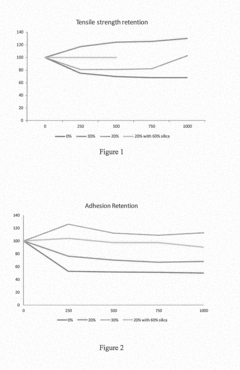
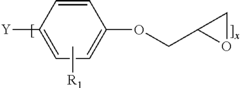
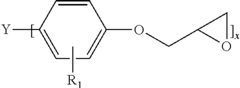
- The use of reactive monomers initiated by two distinct curing mechanisms, one at temperatures up to 200°C and another that activates at higher temperatures, enhancing thermal stability, tensile strength, adhesive properties, and minimizing weight loss in thermoset resin materials.

Material Safety Standards for Extreme Temperature Applications
Material safety standards for extreme temperature applications represent a critical framework governing the development and deployment of resin molding systems in harsh thermal environments. These standards encompass comprehensive testing protocols, certification requirements, and performance benchmarks that ensure both operational reliability and personnel safety across temperature ranges extending from cryogenic conditions below -200°C to high-temperature applications exceeding 300°C.
International standards organizations including ASTM, ISO, and UL have established rigorous testing methodologies specifically addressing thermal cycling, dimensional stability, and chemical resistance under extreme conditions. ASTM D648 defines heat deflection temperature protocols, while ISO 75 establishes standardized procedures for determining thermal behavior under load. These standards mandate extensive validation through accelerated aging tests, thermal shock assessments, and long-term exposure evaluations to simulate decades of operational stress within compressed timeframes.
Safety certification requirements for extreme temperature resin applications demand comprehensive documentation of material composition, thermal degradation pathways, and potential hazardous byproduct formation. Materials must demonstrate compliance with fire safety standards such as UL 94 for flammability classification and ASTM E84 for surface burning characteristics. Additionally, outgassing specifications following ASTM E595 become particularly critical in aerospace and semiconductor applications where contamination control is paramount.
Regulatory frameworks vary significantly across industries, with aerospace applications governed by FAA and EASA requirements, automotive systems following SAE standards, and industrial applications adhering to OSHA workplace safety guidelines. Each sector imposes specific performance thresholds for thermal stability, mechanical integrity, and environmental compatibility that directly influence material selection and processing parameters.
Emerging safety considerations address the environmental impact of extreme temperature resin systems, including end-of-life disposal protocols and recycling compatibility. New standards are being developed to evaluate the long-term environmental fate of high-performance polymers and their degradation products, reflecting growing sustainability concerns within the materials engineering community.
International standards organizations including ASTM, ISO, and UL have established rigorous testing methodologies specifically addressing thermal cycling, dimensional stability, and chemical resistance under extreme conditions. ASTM D648 defines heat deflection temperature protocols, while ISO 75 establishes standardized procedures for determining thermal behavior under load. These standards mandate extensive validation through accelerated aging tests, thermal shock assessments, and long-term exposure evaluations to simulate decades of operational stress within compressed timeframes.
Safety certification requirements for extreme temperature resin applications demand comprehensive documentation of material composition, thermal degradation pathways, and potential hazardous byproduct formation. Materials must demonstrate compliance with fire safety standards such as UL 94 for flammability classification and ASTM E84 for surface burning characteristics. Additionally, outgassing specifications following ASTM E595 become particularly critical in aerospace and semiconductor applications where contamination control is paramount.
Regulatory frameworks vary significantly across industries, with aerospace applications governed by FAA and EASA requirements, automotive systems following SAE standards, and industrial applications adhering to OSHA workplace safety guidelines. Each sector imposes specific performance thresholds for thermal stability, mechanical integrity, and environmental compatibility that directly influence material selection and processing parameters.
Emerging safety considerations address the environmental impact of extreme temperature resin systems, including end-of-life disposal protocols and recycling compatibility. New standards are being developed to evaluate the long-term environmental fate of high-performance polymers and their degradation products, reflecting growing sustainability concerns within the materials engineering community.
Sustainability Considerations in High-Performance Resin Development
The development of high-performance resins for extreme temperature applications presents significant sustainability challenges that must be addressed through innovative approaches and responsible manufacturing practices. Traditional high-temperature resistant polymers often rely on fluorinated compounds or other environmentally persistent materials that pose long-term ecological risks. The industry is increasingly recognizing the need to balance performance requirements with environmental stewardship, driving research toward more sustainable alternatives.
Bio-based feedstock integration represents a promising pathway for reducing the environmental footprint of extreme temperature resins. Advanced bio-derived monomers and oligomers are being developed to partially or fully replace petroleum-based precursors while maintaining thermal stability above 300°C. These renewable raw materials, sourced from agricultural waste, algae, or engineered biomass, can significantly reduce carbon emissions during production while preserving the essential thermal and mechanical properties required for extreme temperature applications.
Circular economy principles are becoming integral to high-performance resin development strategies. Chemical recycling technologies, including depolymerization and molecular breakdown processes, enable the recovery of valuable monomers from end-of-life thermoset resins that were previously considered non-recyclable. This approach not only reduces waste streams but also creates closed-loop material cycles that minimize resource consumption and environmental impact.
Energy-efficient manufacturing processes are crucial for sustainable high-temperature resin production. Advanced catalytic systems and optimized reaction conditions can reduce processing temperatures and energy requirements during polymerization. Solvent-free or water-based formulations eliminate volatile organic compound emissions while maintaining product performance standards. These process improvements can reduce manufacturing energy consumption by up to 40% compared to conventional methods.
Life cycle assessment methodologies are being employed to evaluate the comprehensive environmental impact of extreme temperature resins from raw material extraction through end-of-life disposal. These assessments guide material selection decisions and identify optimization opportunities throughout the product lifecycle. Sustainable design principles emphasize durability and longevity to maximize service life and minimize replacement frequency in demanding applications.
Regulatory compliance and environmental standards are driving innovation in sustainable resin chemistry. Emerging regulations on persistent organic pollutants and greenhouse gas emissions are pushing manufacturers to develop alternative formulations that meet both performance and environmental criteria. This regulatory landscape creates opportunities for breakthrough technologies that can deliver superior sustainability profiles without compromising thermal performance capabilities.
Bio-based feedstock integration represents a promising pathway for reducing the environmental footprint of extreme temperature resins. Advanced bio-derived monomers and oligomers are being developed to partially or fully replace petroleum-based precursors while maintaining thermal stability above 300°C. These renewable raw materials, sourced from agricultural waste, algae, or engineered biomass, can significantly reduce carbon emissions during production while preserving the essential thermal and mechanical properties required for extreme temperature applications.
Circular economy principles are becoming integral to high-performance resin development strategies. Chemical recycling technologies, including depolymerization and molecular breakdown processes, enable the recovery of valuable monomers from end-of-life thermoset resins that were previously considered non-recyclable. This approach not only reduces waste streams but also creates closed-loop material cycles that minimize resource consumption and environmental impact.
Energy-efficient manufacturing processes are crucial for sustainable high-temperature resin production. Advanced catalytic systems and optimized reaction conditions can reduce processing temperatures and energy requirements during polymerization. Solvent-free or water-based formulations eliminate volatile organic compound emissions while maintaining product performance standards. These process improvements can reduce manufacturing energy consumption by up to 40% compared to conventional methods.
Life cycle assessment methodologies are being employed to evaluate the comprehensive environmental impact of extreme temperature resins from raw material extraction through end-of-life disposal. These assessments guide material selection decisions and identify optimization opportunities throughout the product lifecycle. Sustainable design principles emphasize durability and longevity to maximize service life and minimize replacement frequency in demanding applications.
Regulatory compliance and environmental standards are driving innovation in sustainable resin chemistry. Emerging regulations on persistent organic pollutants and greenhouse gas emissions are pushing manufacturers to develop alternative formulations that meet both performance and environmental criteria. This regulatory landscape creates opportunities for breakthrough technologies that can deliver superior sustainability profiles without compromising thermal performance capabilities.
Unlock deeper insights with PatSnap Eureka Quick Research — get a full tech report to explore trends and direct your research. Try now!
Generate Your Research Report Instantly with AI Agent
Supercharge your innovation with PatSnap Eureka AI Agent Platform!